Ming's Wanderings (part 3 of 3: 2012–2016)
Text from my old travel blog, Ming’s Wanderings, written between 2020 and 2023. Edited for clarity and for fun. Posts are ordered chronologically, most recent first. Original posting date is noted under each.
This is part 3 of 3.
The California Zephyr (2016)
Posted 5 February 2022
During my first visit to the US, instead of flying like a normal person, I took Amtrak’s California Zephyr from the San Francisco Bay Area to Chicago. This was an incredible (and incredibly affordable) three-day trip across the North American continent. I saw scenic vistas of seven states, met a colourful array of fellow travellers, and even had breakfast one morning with an Amish family. Few people would call a long train ride a highlight of an American summer holiday, but I had a blast!
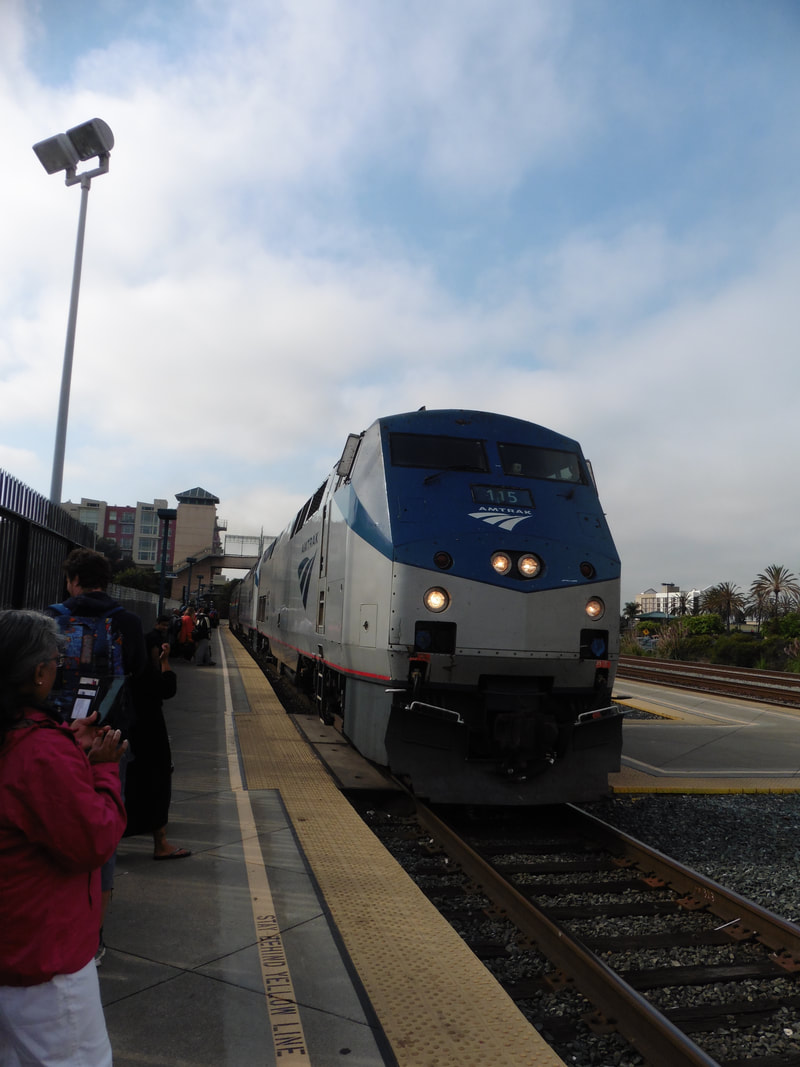
Boarding the California Zephyr from Emeryville in the Bay Area…
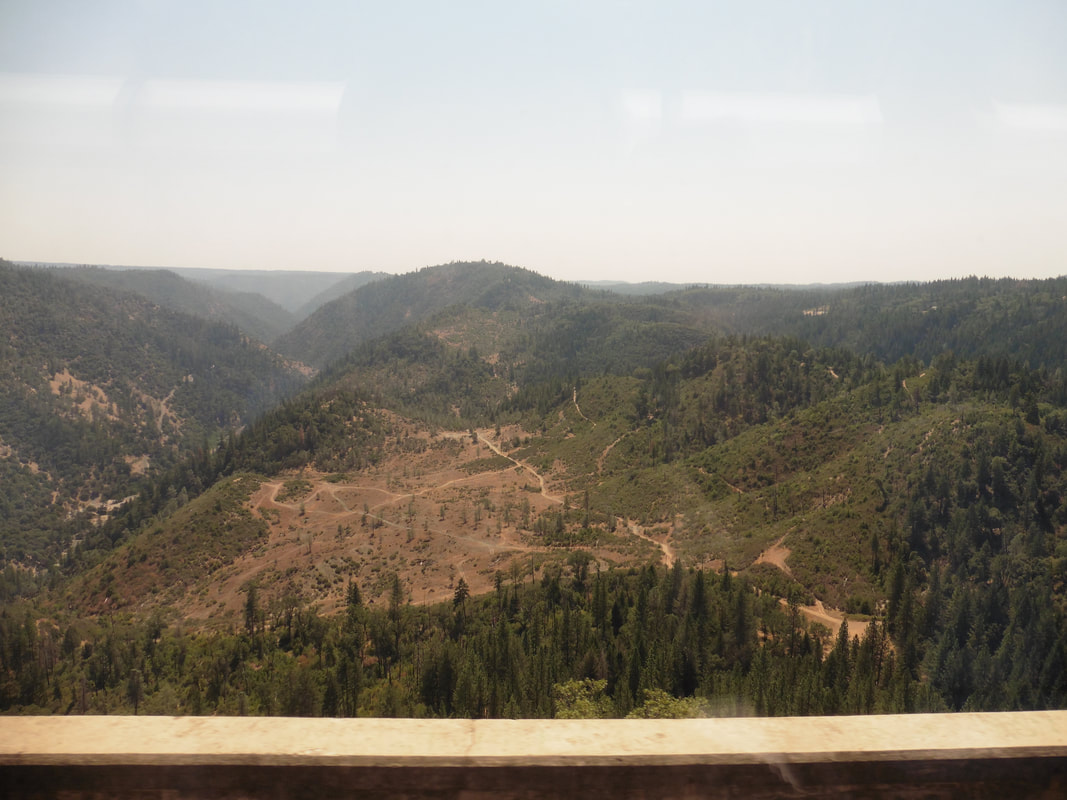
A valley around the American River…
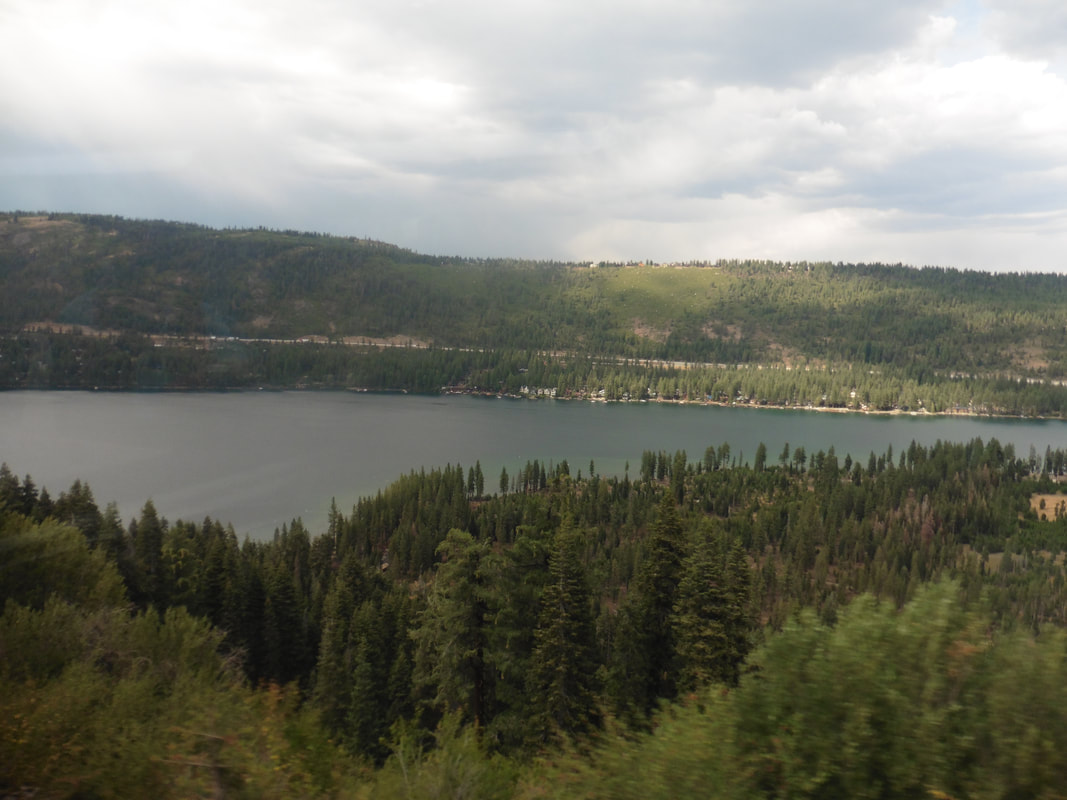
Donner Lake, near the site of the infamous Donner Party…
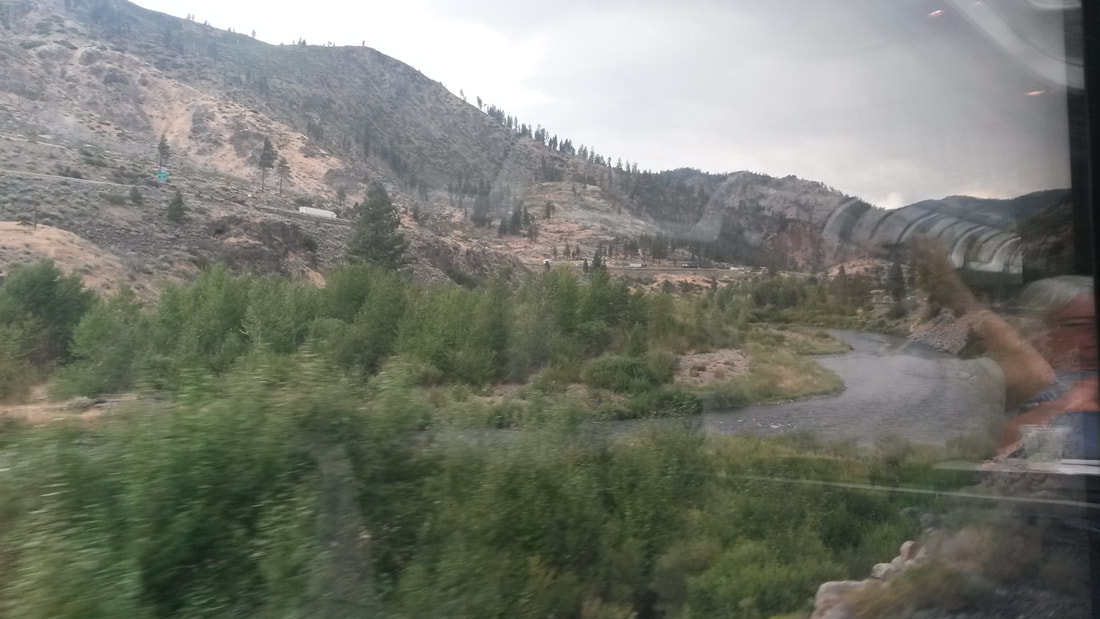
Somewhere in the Sierra Nevada…
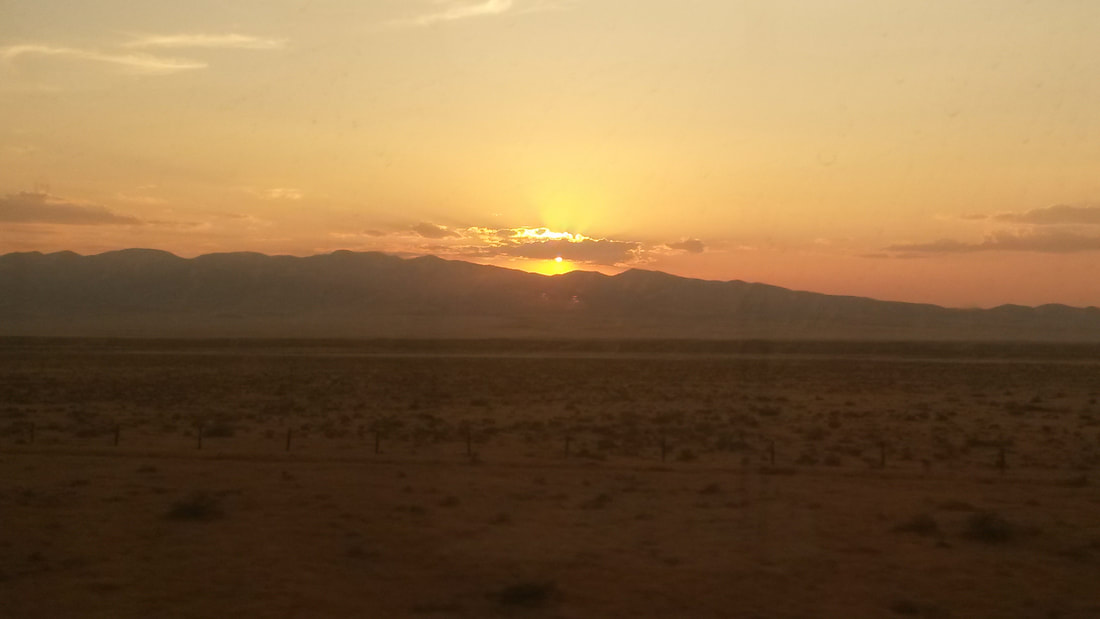
And sunset over Nevada as well…
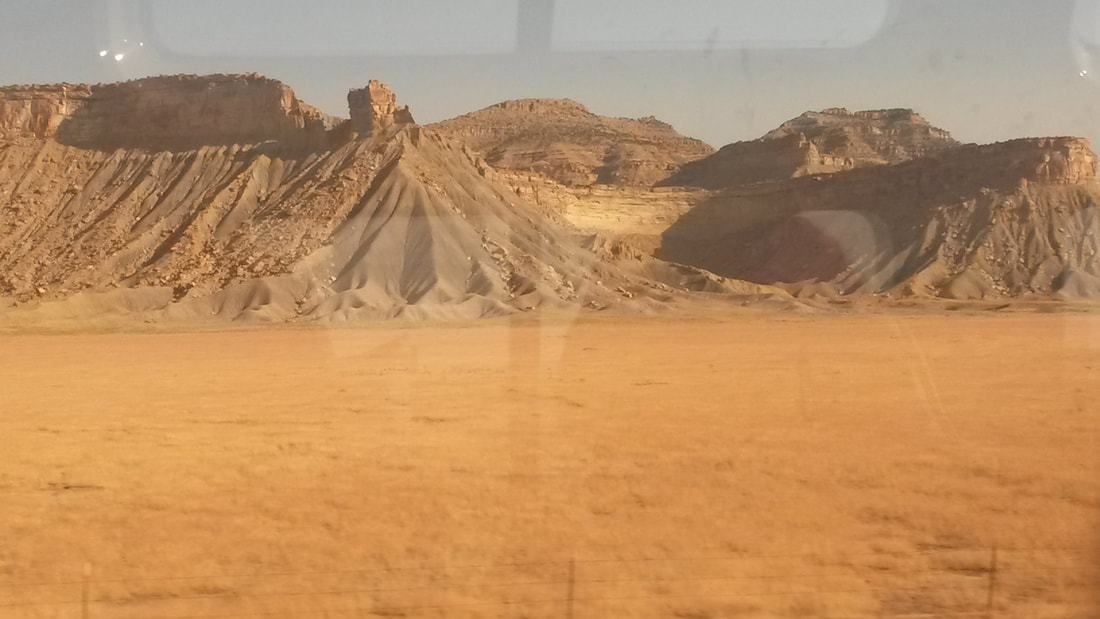
The arid Utah desertscape. There are dinosaur bones out there somewhere…
And the Colorado River, of course…
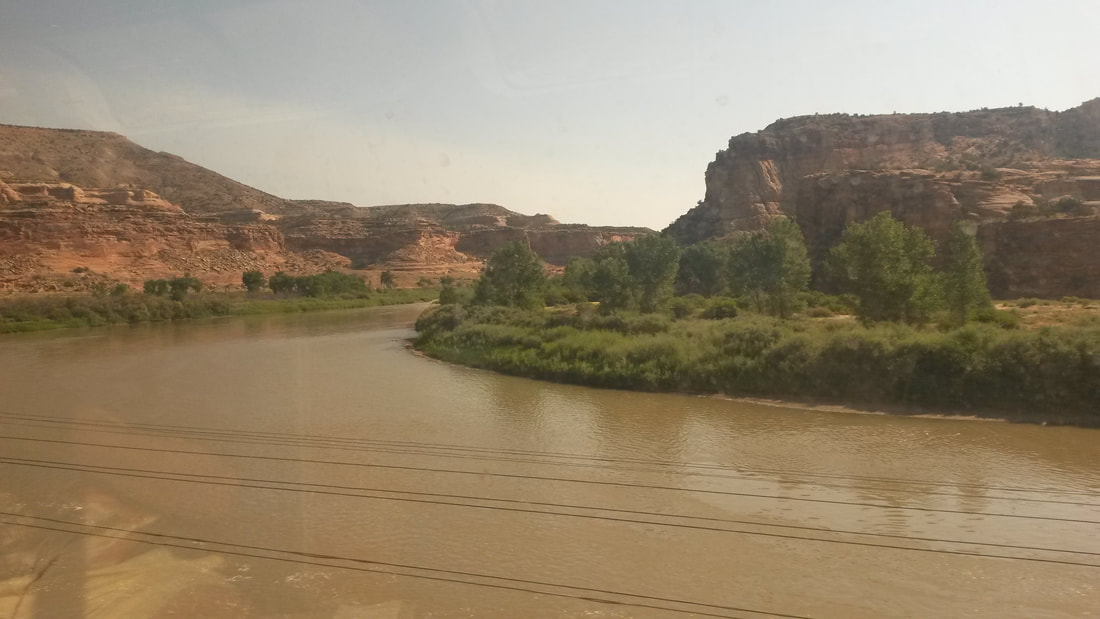
(Not pictured: rafters mooning us from the river.)
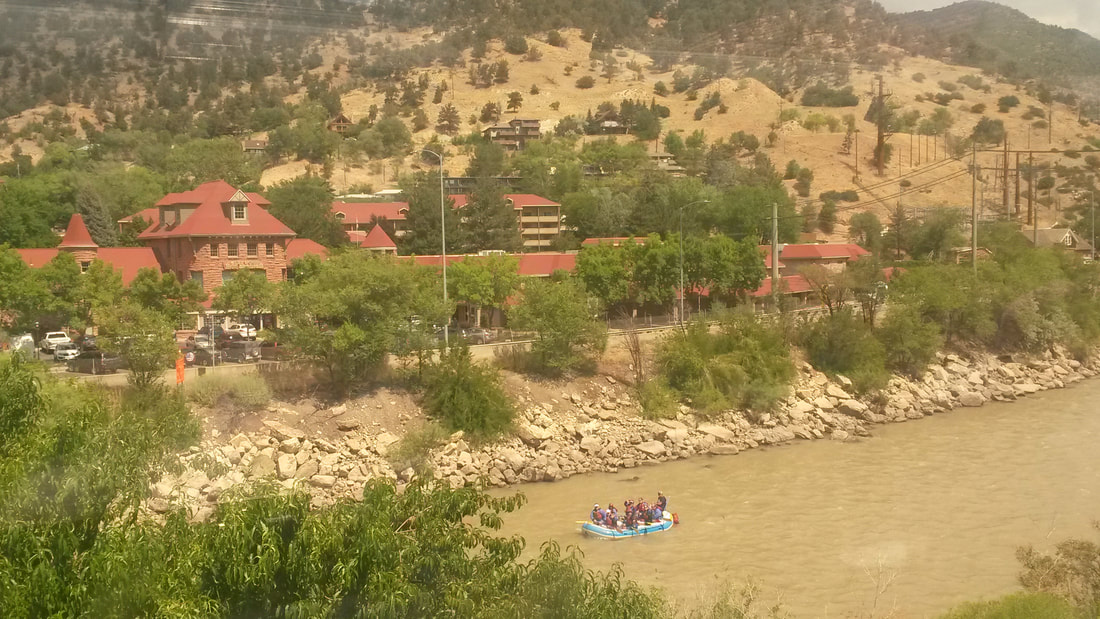
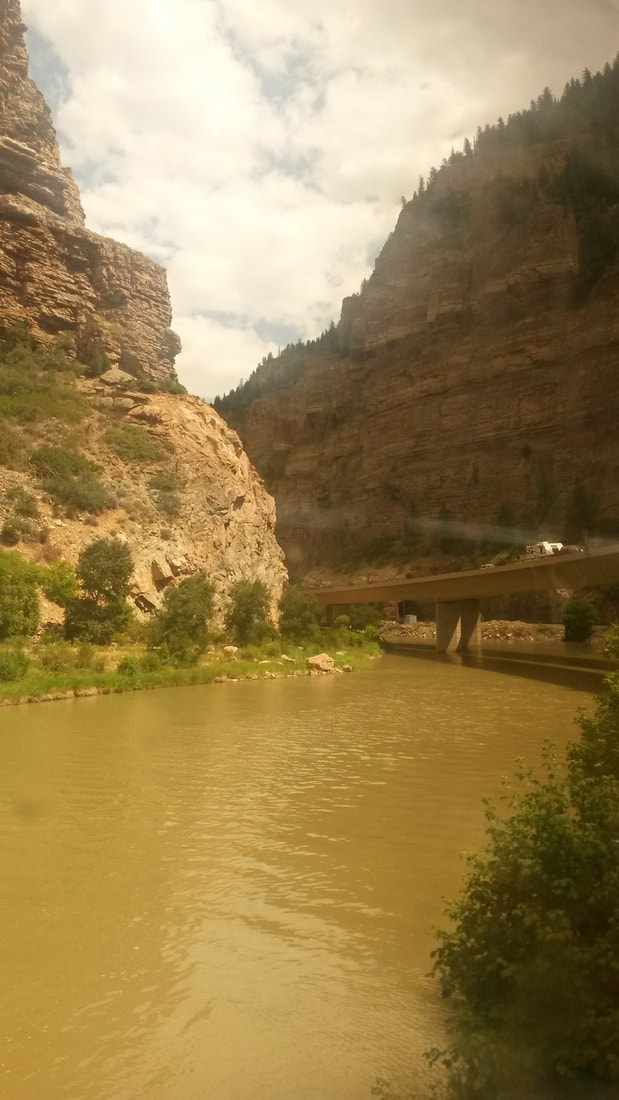
The stunning Glenwood Canyon. I wish I’d made a stop here to explore further…
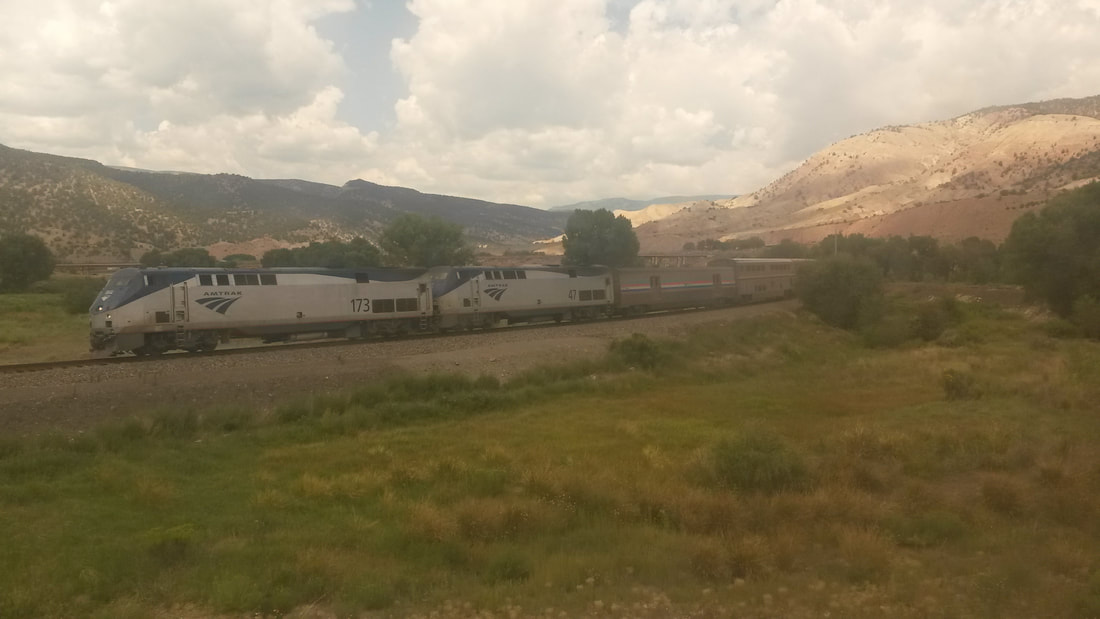
The hot, dry heartland. A California Zephyr heads west.
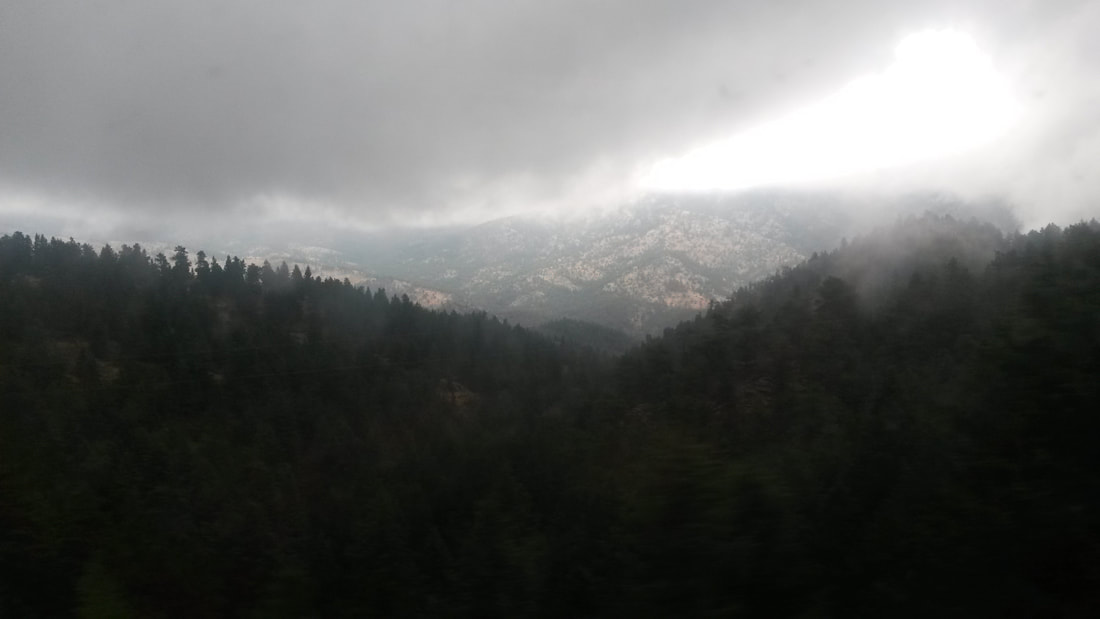
A rainy day in the Rocky Mountains…
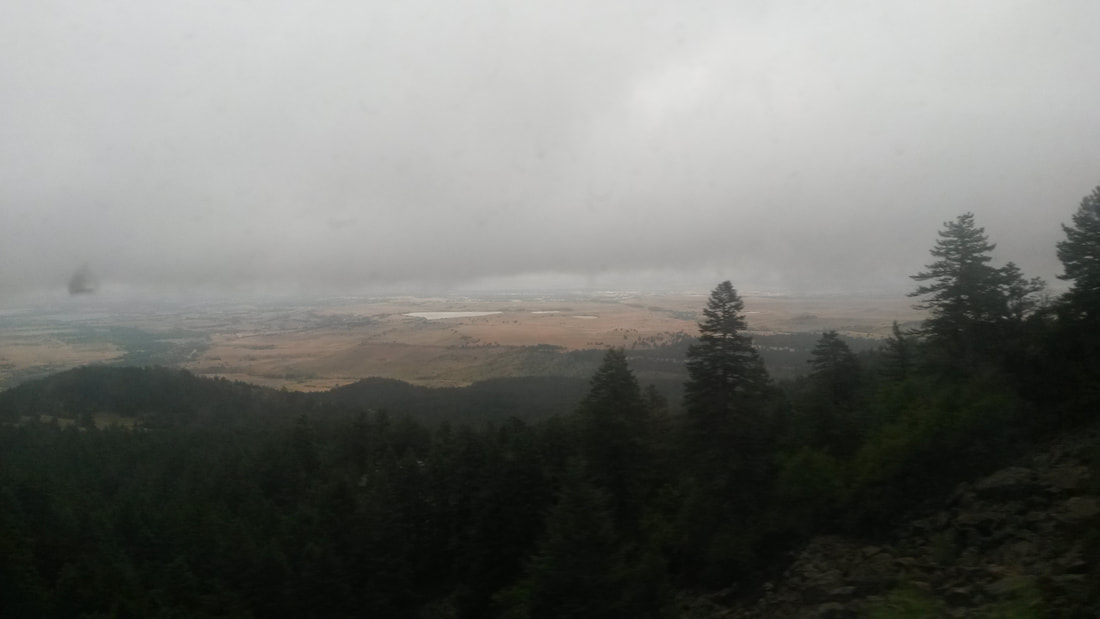
Behold! The High Plains!
Corn! Iowa!
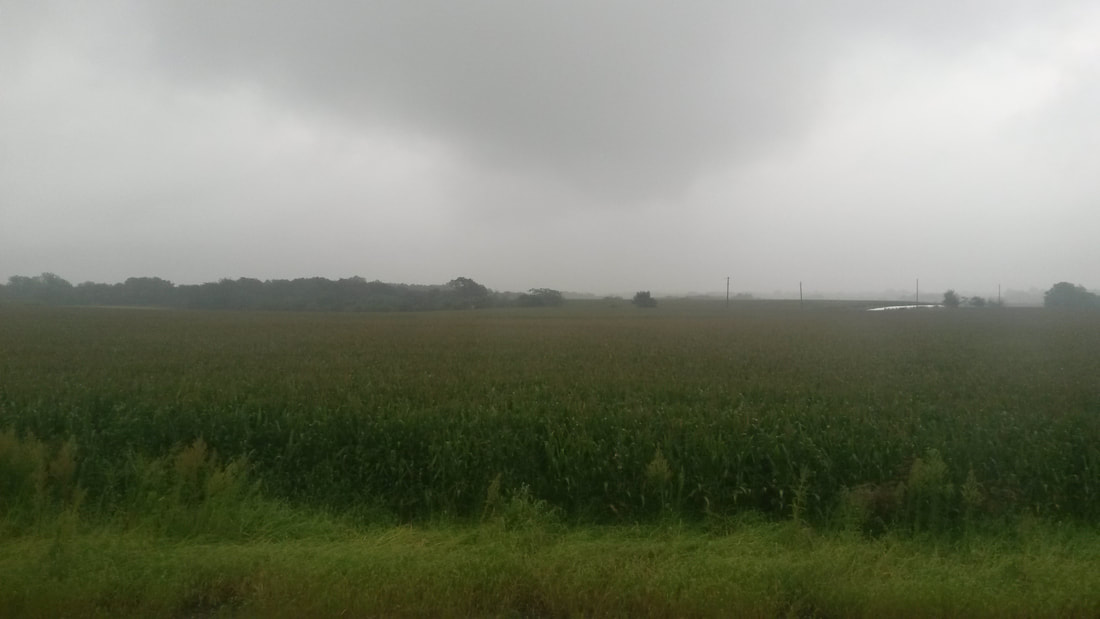
Crossing the Mississippi River…
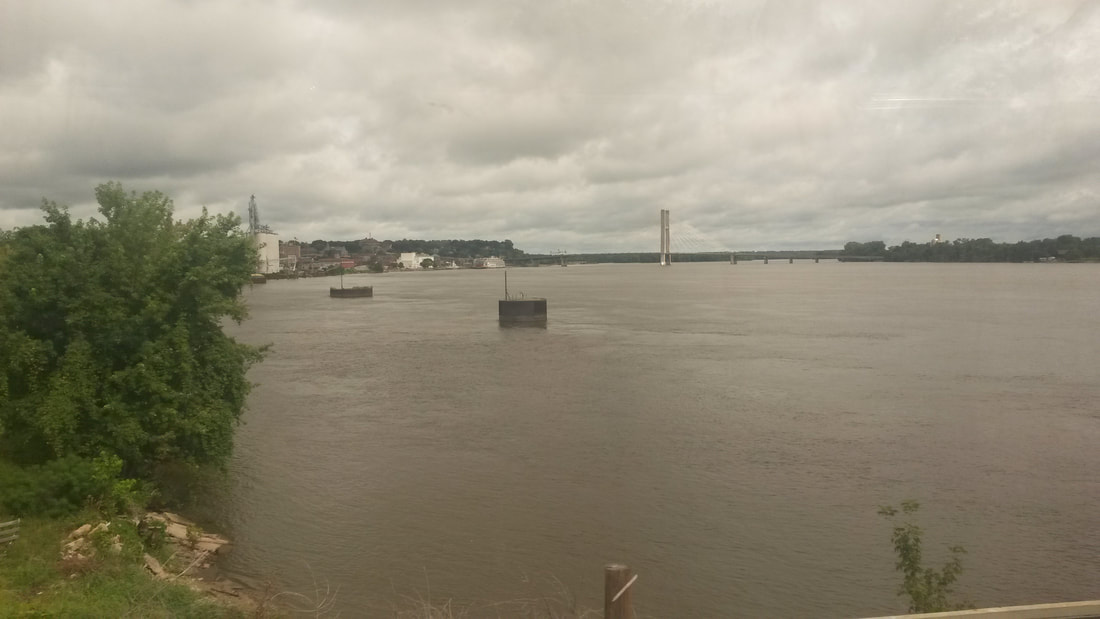
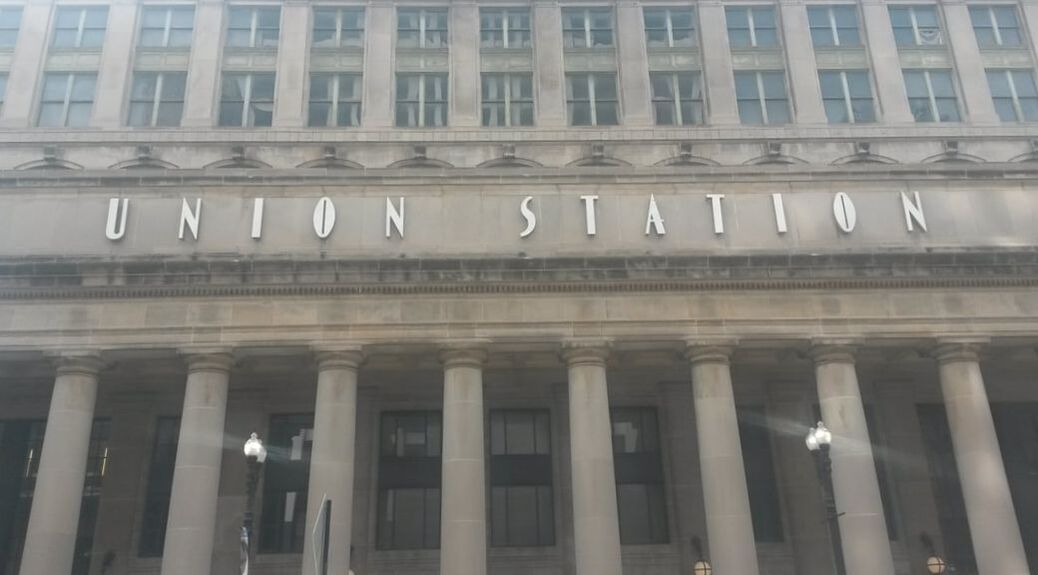
And at last, I arrive in Chicago…
The Grand Canyon and Las Vegas (2016)
Posted 1 February 2022
Part of the Grand Canyon seen from my flight into Vegas On the final leg of my visit to the United States, I went to Las Vegas in Nevada to do two things: visit the Grand Canyon and to go down to a firing range and experience for the first time what it’s like to shoot a gun. And I am proud to say that I accomplished both these missions.
On the highway into Grand Canyon National Park…
Ah, the mildly memorable highway from Vegas into Arizona! The rocky, sun-grim landscape. The scraggly, spike-fisted Joshua trees. And a brief stop by the engineering marvel that is the Hoover Dam on the border between Nevada and Arizona.
Perhaps the greatest thing to come out of the Great Depression?
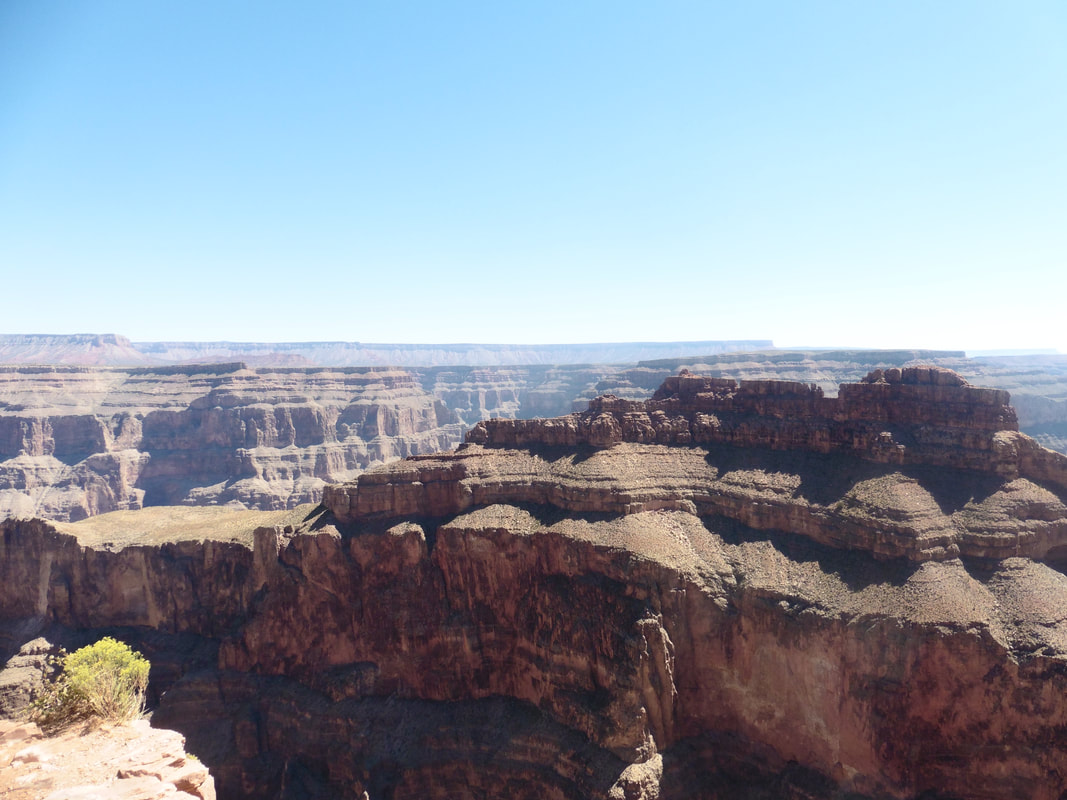
As for the final destination, all I can frankly say is that the Grand Canyon is nigh indescribably epic. Photos cannot do the dramatic geography justice. Layers upon layers of sheer geological time, carved by the slithering Colorado River.
I could tell you that it is nearly 450 km long, nearly 30 km wide and hits a depth of over 1.8 km. But those figures don’t mean much to me. Instead, I stood there imagining what it would’ve been like for the first person to see it as a giant wound in the earth. She was a child perhaps. Perhaps the ancestor from tribes that have lived continuously in this area for countless generations. I can imagine her finding herself on the edge of the sky itself. Tiptoeing on a precipice, where the earth in front simply fell away like rain.
Then hundreds of years later, some European interloper mapping passage down the Colorado River would ink its contours and dub it ‘Grand’. But that word doesn’t begin to capture the dizzying power, the sheer canyons of imagination that this place can conjure up.
And the city of American excess…
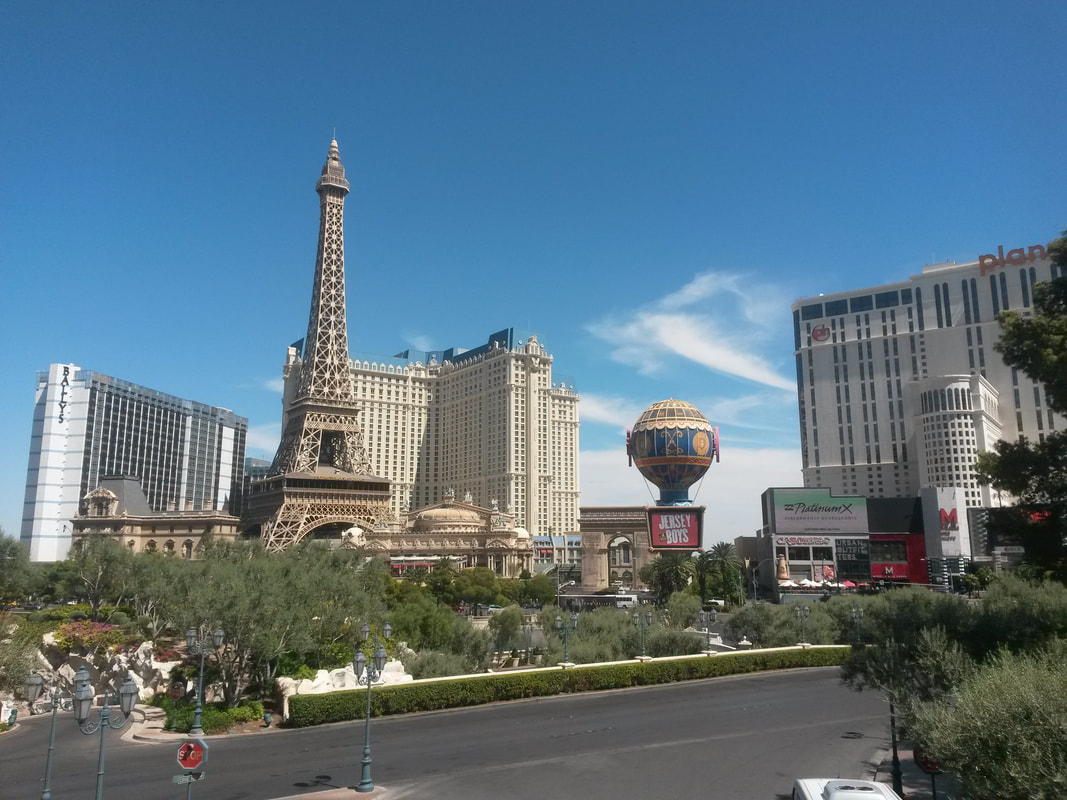
Anyway, I also hung out around Las Vegas for a while, ate American fast food, tried the buffet at Caesars’ Palace, and got bored at the gross slot machines. It’s an amusement city for easily entertained adults with its flamingos, fake Eiffel Tower, fake Venetian canals, fake everything. A weird, plasticky, and not even properly sleazy gambling mecca.
A crummy Disneyland for adults. Maybe.
Other highlights(?) include:
- The artificial volcano in front of The Mirage, a Polynesian-themed casino resort. It erupts away nightly with music and pyrotechnics.
- The Fountains of Bellagio, hard to miss with its meticulously choreographed music and lights water show.
- A “Street Experience” in notorious Fremont, the touristy pedestrian mall located a respectable distance away from the main Las Vegas Strip. I recommend it for anyone after something a little grittier and grimier. And something a little more bewildering.
But don’t assume my negative vibes here are reflective of my thoughts on the United States as a whole! Oh, America (i.e. Home of the Brave, Land of the Free), you’ve provided an amazing journey… you’ve made me feel like I’ve soared atop a bald eagle, pistol duelled Alexander Hamilton, stolen Colonel Sanders’ secret fried chicken recipe, and shared a Bud Light with the last of the buffalo.
But alas, as the sun sets over the red, white, and blue, I must depart the city of Vegas for a mildly saner one. Anyway, I’m done! I’m out! This particular place is not for me.
The Waikato, New Zealand (2016)
Posted 1 October 2020
Welcome to the upper North Island
They often say one of the best places to explore is your own backyard. And I have to admit: despite having lived in New Zealand most of my childhood and teenage years, I never had the chance to roam around the North Island all that much. So back at the start of 2016, I jumped at the opportunity to see some close friends in Hamilton and see the surrounding region. From Coromandel to King Country, from hillock to highway, the Waikato has countless treats to uncover.
Hear the bellbird? See the fantail? Even the ferns and mosses are whispering something…
My first stop: Whakarewarewa Forest on the outskirts of Rotorua, known for its coastal redwoods. These are Californian Redwoods and are, therefore, quite obviously, not native to the country. The trees were originally planted back in the 1900s as a commercial forestry trial and have since transformed into a pleasant recreational forest.
Afterwards, I wandered around Rotorua proper and took a soak in the local hot thermal springs. Rotorua (alias: ‘Roto-Vegas’, ‘Rotten-rua’, ‘Sulphur City’) is known for its strong geothermal activity, which fills the air with pungent hydrogen sulphide emissions. Translation? The city often has the fragrance of rotten eggs about it. Lovely!
My visit to Rotorua also meant a visit to Whakarewarewa Geothermal Valley. It is a world of hot pools, stinking gases, boiling mud, and – of course – roaring geysers. The local Māori have lived here for centuries, drawing on the valley’s geothermal potency for heating and cooking.
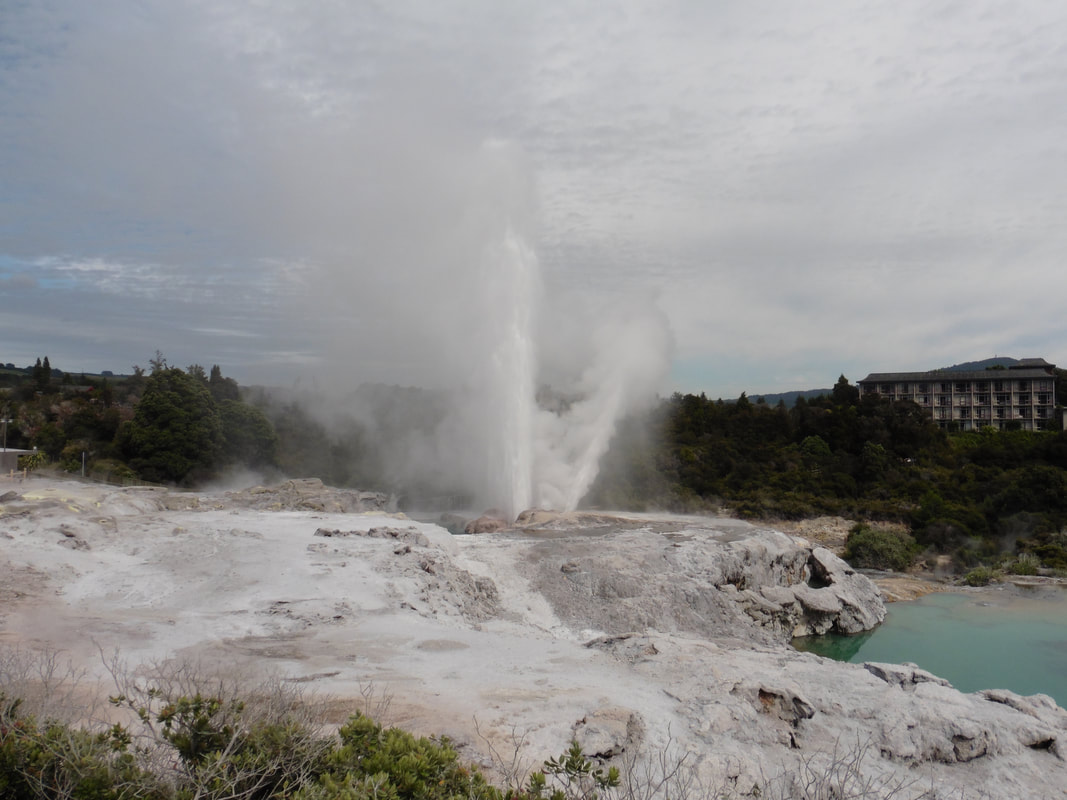
Occasionally, when the geothermal agony of the underworld can be contained no longer, the boiling crucible beneath the valley explodes through rock pores. This can be seen at sites such as Pohutu Geyser where a jet of silica and scorching water will launch towards the sky (30m, in all) before drizzling back down the geyser’s ghostly white terraces.
After Rotorua, I spent a day at Lake Taupo, the largest lake in New Zealand. Fact: that was created when is a caldera lake the a supervolcanic erupted over 26,000 years ago. It is hard for the human mind to imagine the explosion that would’ve punched a hole this big in the ground all those eons ago.
I also had the opportunity to briefly hike alongside the Waikato River (which means Flowing Water in Māori). It is the longest river in the country, snaking indolently from Lake Taupo, through to Hamilton, and finally into the Tasman Sea. The Waikato region is a food bowl for the country even before European settlement and the river was historically used by local tribes to transport produce far and wide.
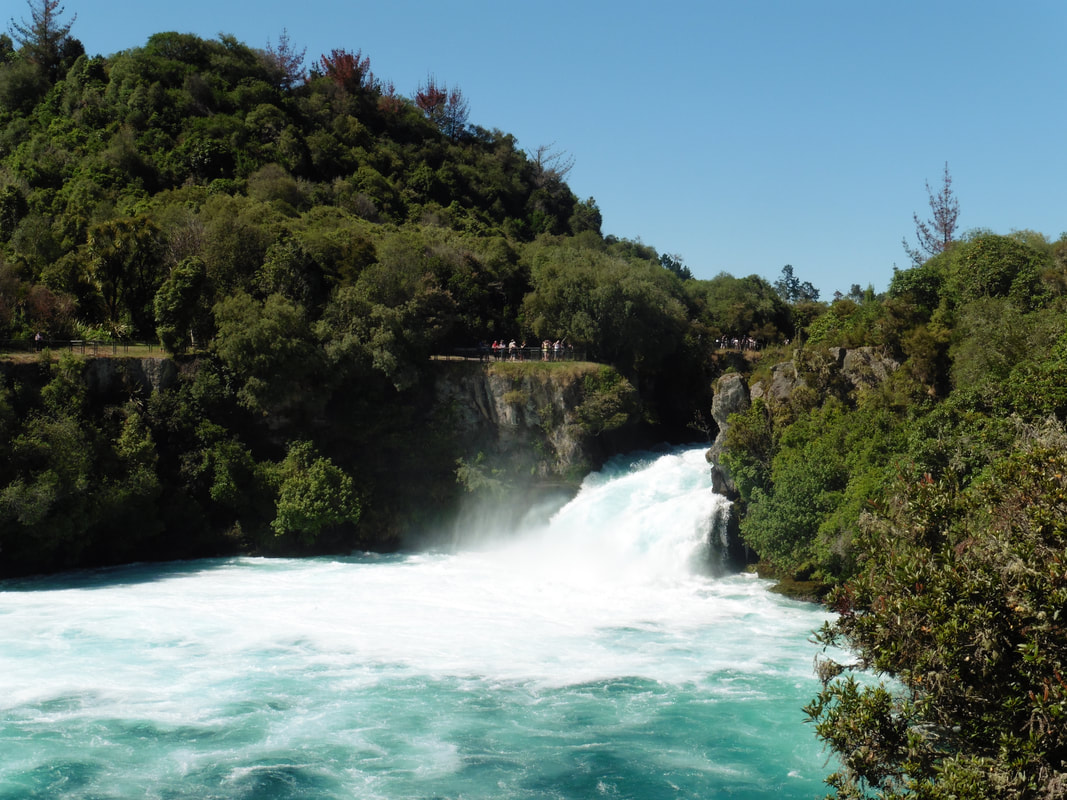
And in the picture below is Huka Falls near Taupo. As the languid Waikato River is forced through a narrow trench of volcanic rock, it emerges as a thundering cascade of crystal white. Or to put it less lyrically: around 200,000 litres of water surge down Huka Falls every second.
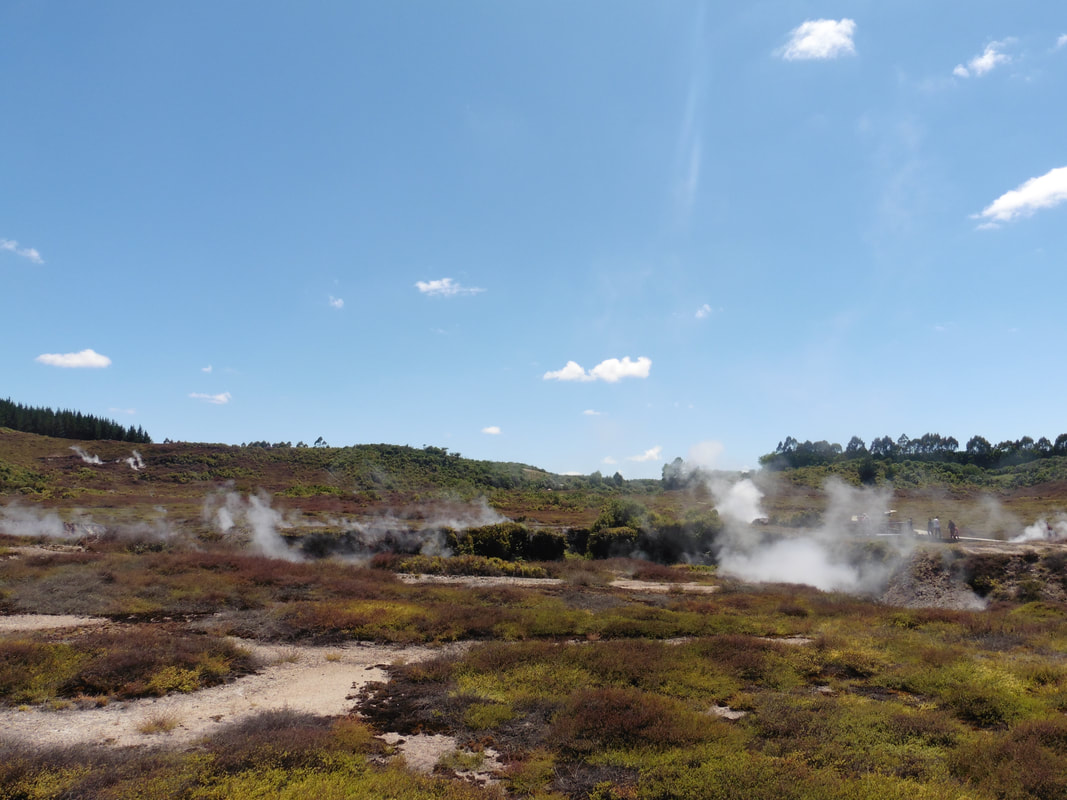
Another point of interest: Craters of the Moon, north of Taupo. Ghostly steam vents are scattered across this geothermal landscape. Its soil radiates an eerie heat. And the sulphurous smell can be at times, uh, very musky. It is an otherworldy place to stroll around.
Lastly, I concluded with a simple trip to Hamilton Gardens. It is one of the Waikato’s most popular visitor attractions and features 21 gardens the aesthetics and floral compositions of different cultures and civilisations. There’s an interpretation of a Chinese Scholar’s Garden, a Japanese Garden, an Indian Mughal Garden, an Italian Renaissance Garden, among others.
While not extremely dramatic, Hamilton Gardens provided an adequate coda to my brief Waikato excursion. A chance to sniff the blossoms, hang out with my friends, and say goodbye to the North Island for the time being.
Yosemite National Park (2016)
Posted 5 February 2022
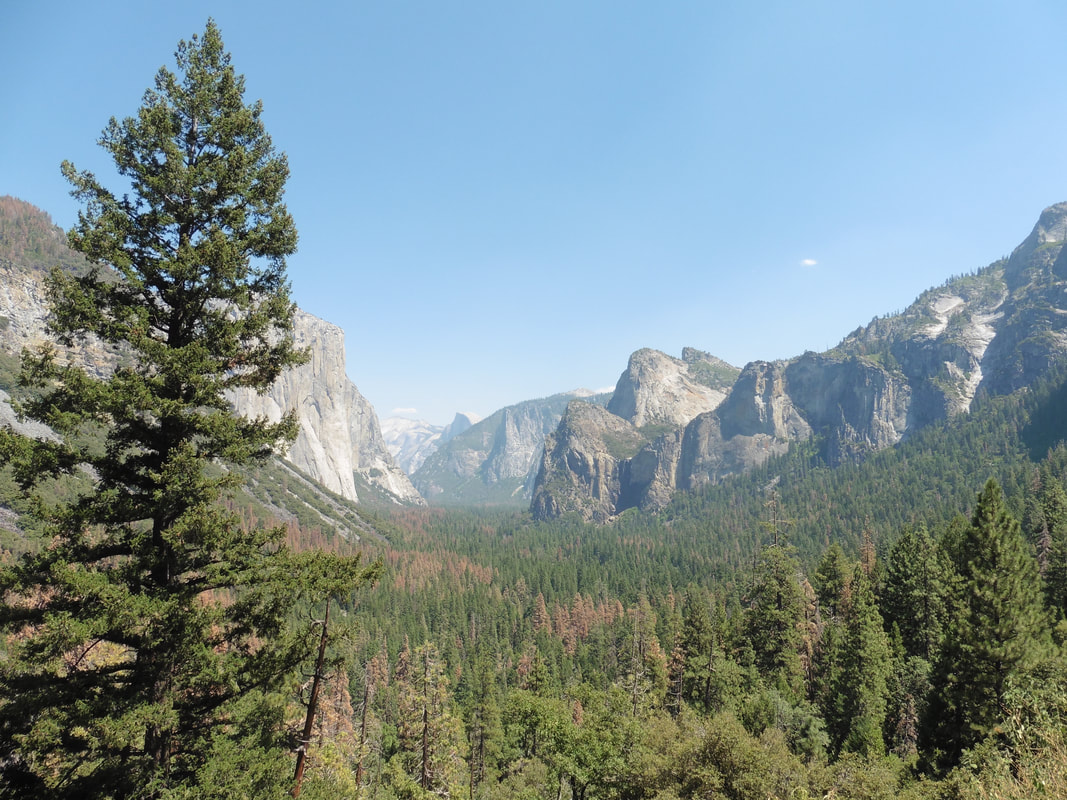
A photo from my day trip to California’s famed Yosemite National Park, situated in the picturesque Sierra Nevada mountains…
Aoraki National Park (2015)
Posted 30 September 2020
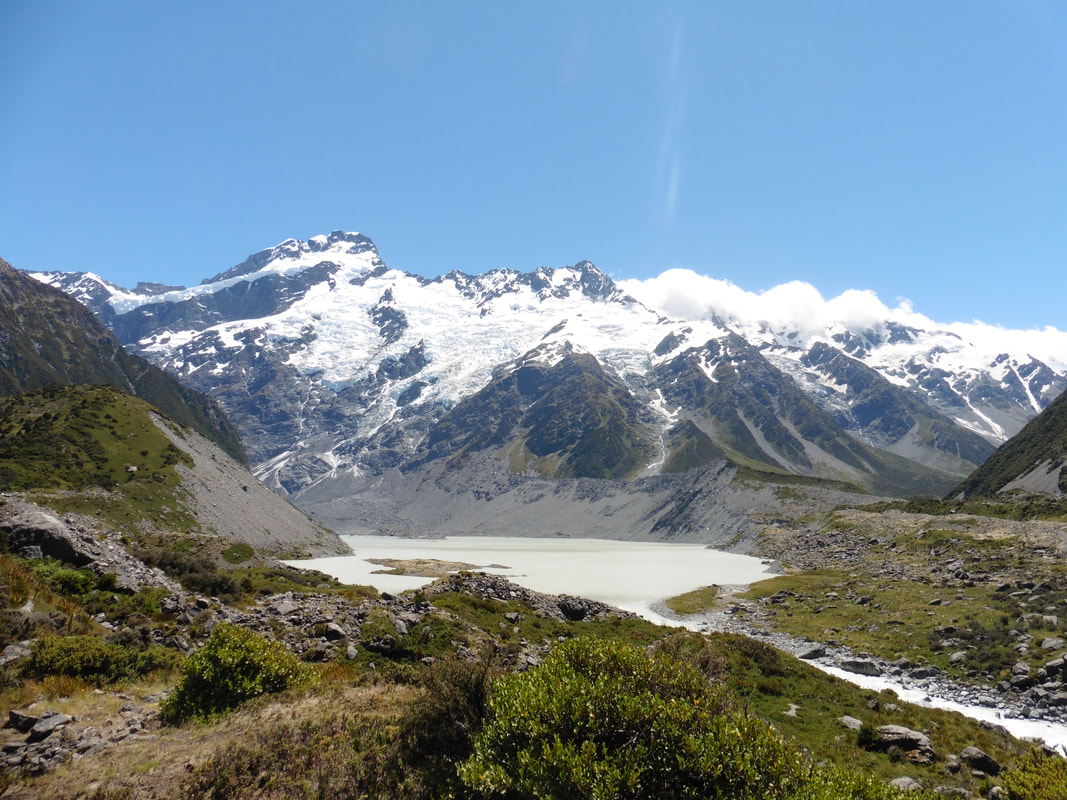
A picture on the road to Aoraki/Mount Cook, the highest mountain in New Zealand…
Ayutthaya Historical Park (2015)
Posted 9 September 2020
Cycling across the Ayutthaya Kingdom
85 km north of Bangkok is a little archaeological gem known as the Ayutthaya Historical Park, once the capital of a fabulous Siamese kingdom and now a UNESCO World Heritage Site. Like most tourists, a friend and I visited the site as a day-trip destination from chaotic Bangkok. The train ride there from Bangkok’s Hualamphong Train Station was surprisingly clean, undramatic and very, very affordable.
While these days Ayutthaya is a dusty little city, sweltering in the sticky Thai sun, it was at one point one of the finest cities on the planet. It is estimated that by the year 1700, its population had reached 1 million, making it one of, if not the, largest city of its time. European travellers spoke of it as a resplendent place with fine palaces, trading vessels, and canals reminiscent of Venice. This all ended in 1767 when the Burmese invaded the kingdom and the great city, after over four centuries of existence, was almost entirely razed to the ground.
But enough about the sad grind of history. How best to explore this place? By bicycle, of course! Firstly, you need to take a short trip by ferry across the river to the old capital. The historic park is, in a sort of idyllic way, located on an island surrounded by three rivers. After that, it doesn’t take much effort to find a cheap bicycle rental to zip from temple to temple. Just be careful with the rough and tumble Thai traffic! My friend and I certainly found it a bit of a hair-raising experience at times.
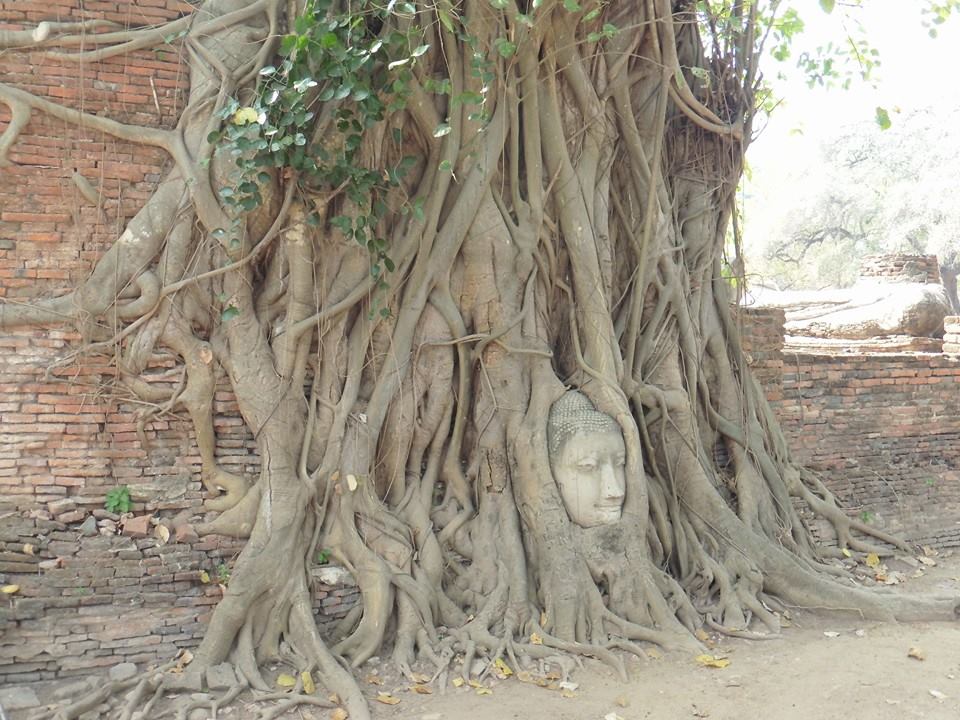
One of the most noteworthy sites in the historic park is Wat Mahathat. Called ‘The Temple of the Great Relic’, it was at one point in the forgotten past the most important monasteries of the Ayutthaya Historic City and a major venue for royal ceremonies and celebrations. These days, the former temple grounds are most famous among foreign visitors for a statue of Buddha that has been photogenically enveloped in tree roots. See below, obviously.
Oh, marvellous and crumbling ruins! How I love them! Be it in Asia or Europe or anywhere else on the globe, there’s something about the shattered remains of bygone civilisations that will forever intrigue me. The potential for every stone to tell a story. The tilting and decaying towers, the bricks older than memory, a row of headless Buddhas. Faith, endurance, destruction.
Wat Phra Si Sanphet is another fascinating archaeological spot on the city island. Dating back to around the mid-15th century, the temple was once located within the royal palace grounds. Because of this, it had no resident monks and was used exclusively by the Ayutthaya royal family for their ceremonies and for storing royal relics.
The most striking thing about Wat Phra Si Sanphet is its three large and pale bell-shaped ‘chedis’ or stupas. These three chedis were once believed to have enshrined the ashes of three kings as well as relics of the Buddha. Who knows? Maybe they are still sealed away somewhere deep inside them.
And, like in many other touristy parts of Thailand, in Ayutthaya, you’ll come across the chance to feed, pet, and ride captive elephants. I’m sure I don’t need to say this, but don’t forget to not support the local Thai elephant industry. It ain’t a pleasant business.
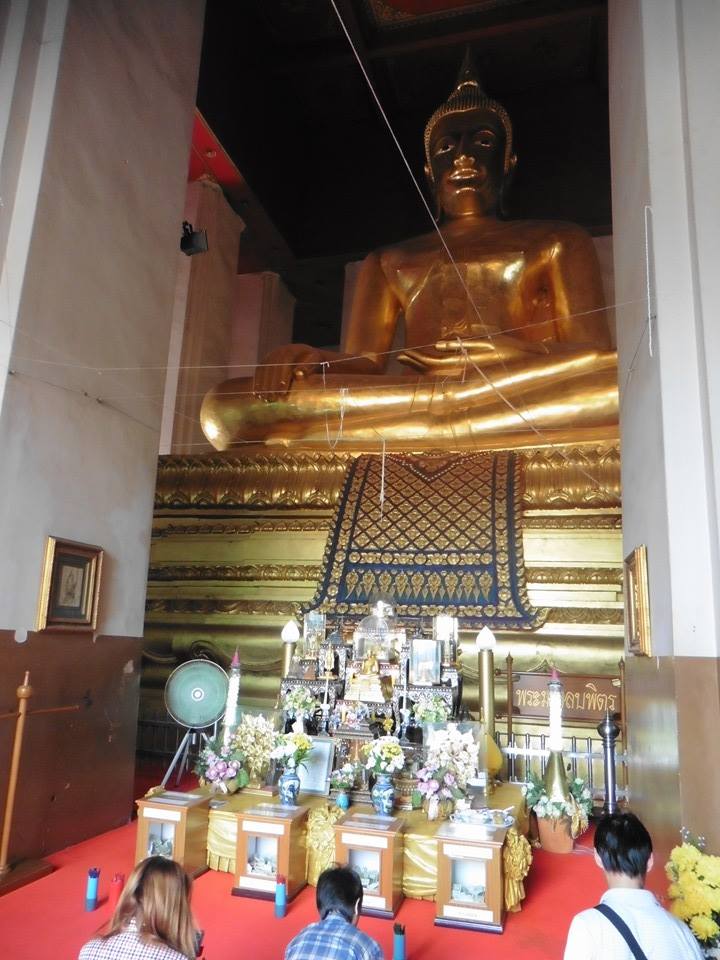
One of our final stops on the island was at Wihan Phra Mongkhon Bophit. Unlike its more fragmentary surrounding locales, this is a beautiful and bustling modern temple. Just look at that stunning gold-and-red roof structure.
A wihan, also called a vihara, is a dedicated building in which an image of the Buddha is enshrined. Its big claim to fame? It houses one of the largest bronze Buddhas in Thailand. According to a nearby sign, the statue is almost 17 metres tall. Trust me, it’s more impressive than my photograph lets on.
And that concludes all I have to say about Ayutthaya. It was a short trip (we sadly weren’t able to knock out all the suggested highlights in the historic area) but it was a memorable one. While we could only glimpse a fraction of its former glory, what we did see stirred my imagination. The surviving, eroded remnants of many yesterdays ago are crying out. What are they saying? What are they trying to convey? Each of us has to listen and interpret on our own.
Reflections on tourism in Angkor (2015)
Posted 29 September 2020
Meditations on a trip to Cambodia
“To be a mass tourist… is to spoil, by way of sheer ontology, the very unspoiledness you are there to experience, It is to impose yourself on places that in all non-economic ways would be better, realer, without you. It is… to confront a dimension of yourself that is as inescapable as it is painful: As a tourist, you become economically significant but existentially loathsome, an insect on a dead thing.”
– David Foster Wallace
Of the hundred temples scattered across Cambodia’s Angkor Of Archaeological Park, none are more iconic than Angkor Wat. Built in the 12th century in dedication to the Supreme God Vishnu, Angkor Wat is the holy jewel of the Khmer Empire and is heralded as the largest religious monument in the world. It is a delirious marriage of theology and architecture. Its moat represents the Ocean of Milk from which the universe was born, its bas-reliefs depict the great battles of Hindu epics, and its central tower represents Mount Meru, the nexus of all creation. It is a wonder of stone and time.
But even excluding Angkor Wat, the Archaeological Park is a menagerie of long-lost treasures. One moment, you are gazing up at the crumbling, smiling faces of the Bayon, the next you are stumbling through the jungle temples of Ta Prohm and Preah Khan, where tree roots have fused like shadows into the stonework. One hour, you are cycling between the dusty red sandstone carcasses of Pre Rup and East Mebon, the next you are crossing a walkway towards the island of Neak Pean, over haunting swampland.
Yet despite being surrounded by wonder, it is hard to ignore that grinding feeling in your stomach that something is, well, a bit wrong. As you bump into fellow travellers in narrow temple corridors, as you clumsily dodge out of family photos, as you wave away the souvenir hawkers and trinket touts, the marvel of Angkor begins to slowly grind away. You start wondering: Are all these stones merely bait in one giant South-East Asian tourist trap?
And once the realisation fully sinks into your chest, it’s all over. You realise that it’s you. You are both the trapped and the trapper. You are truly in the thick of it, in the deep end. You are just another insect in the global locust swarm of mass tourism. There is no escaping it.
Indeed, we all come in great hordes via tour bus, tuk-tuk, and bicycle. We come for that perfect photo of sunrise over Angkor Wat, for an (ethically dubious) elephant ride around the Bayon, for that silly selfie on top of the Terrace of the Leper King. Even the orange-robed monks that visit Angkor shake the authenticity of the experience, as they also reveal themselves to be mere tourists, whipping out smartphones and waving selfie sticks. As David Foster Wallace puts it so starkly: As tourists, we are all insects on a dead thing. We come, we go, and Angkor remains a lifeless, breathless empire.
But another thought also emerges. A thought that is reserved for those seeking a story that speaks not of a cadaverous empire, but of a modern nation-state. The thought is simply that perhaps it is contemporary Cambodia, and not just these ancient Khmer ruins, that is also a dead or dying thing?
Cambodia’s recent history is a wretched one, that much is certain. Pol Pot. The Khmer Rouge. Year Zero. Three million Cambodians murdered by a deranged agrarian socialist experiment, or tortured and executed in the Killing Fields. To this day, the country remains one of the poorest in South-East Asia. While the country’s prospects are beginning to improve, over a third of the population is still living in poverty. To complicate matters, Cambodia’s current leader, Prime Minister Hun Sen, is by all accounts a strongman who has solidified power through corruption, cronyism and political violence.
To this day, the country remains one of the poorest in South-East Asia. While the country’s prospects are beginning to improve, over a third of the population is still living in poverty. To complicate matters, Cambodia’s current leader, Prime Minister Hun Sen, is by all accounts a strongman who has solidified power through corruption, cronyism and political violence.
In visiting Angkor, you can observe many of the challenges the country faces. You can see Cambodia’s weak education system in the children who run up to you, asking you to buy their postcards. You can see the country’s difficulties with unexploded ordinances in the disabled musicians who play at temple entrances. The beauty of stone ruins juxtaposed with the bluntness of social reality. It’s quite the contrast.
Its no wonder that many Cambodians have elevated Khmer’s ancient past when the recent past has offered them so little. But does all our tourism, our buzzing mass tourism, only exacerbate the problem? By visiting only its distant, bas-relief past, are we encouraging Cambodia to form a national identity that is inherently backwardlooking? Honestly, I don’t have an answer. Cambodia very clearly has a future, it is just a question of whether it can realise it, just as how the ancient Khmer kings realised the magnificence of Angkor Wat.
Perhaps in places like Cambodia at least, David Foster Wallace gets it backwards. Perhaps the dead thing needs the insects in order to remind itself, that deep down beneath the broken stones, it is still alive.
Kamakura and Yokohama (2012)
9/26/2020
During my summer university stay in Tokyo back in 2012, I took a few memorable jaunts out of the city. One was to Kamakura, a seaside city to the south of the capital, as part of a class trip and the another to Yokohama, also to the south and the second-largest city in the country.
Kamakura
The Great Buddha of Kamakura, a enormous 13th century bronze statue:
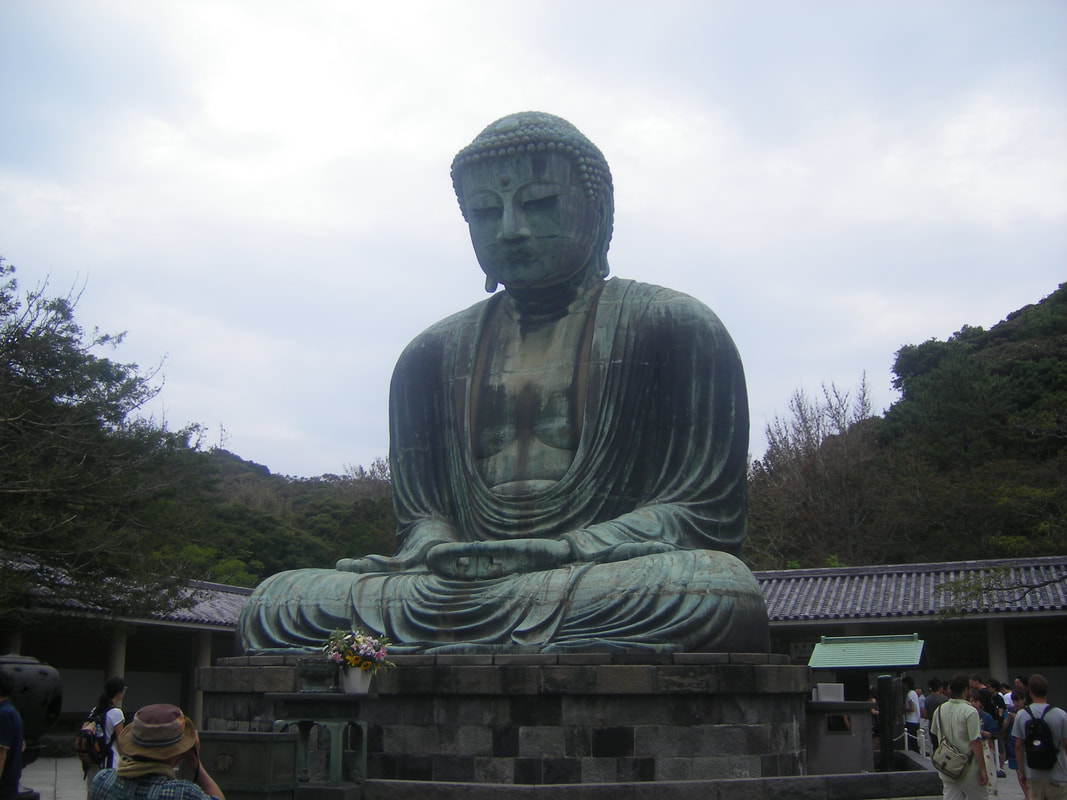
Our visit to Kamakura was mainly focussed on Kōtoku-in, a famous Buddhist temple. I’m sure I say something similar to this about the religious sites I’ve explored around the world, but I feel that Japanese temples are truly something unique in terms of their ambience and ability to blend in with the natural world.
One thing in particular I love about Japanese temples and shrines are the colourful decorative sake barrels on display. They are known and are empty barrels meant to honour the gods – the as kazaridaru traditional idea being that delicious, delicious Japanese rice wine is meant to connect the people to the deities themselves.
Kōtoku-is temple of the Jōdo-shū or “The Pure Land School” of Buddhism which was introduced to Japan in the 12th century and continues to be one of the most widely practised forms of Buddhism in the country.
The literal and spiritual focal point of the temple is the Great Buddha. Excluding the platform, this magnificent bronze statue sits at a height of over 13 metres and weighs over 120 tonnes. It’s also unusual for being an open-air buddha. This is because a tsunami washed away the original building housing it in 1498 and the statue was the only thing that endured. It’s remained out and open to the elements ever since.
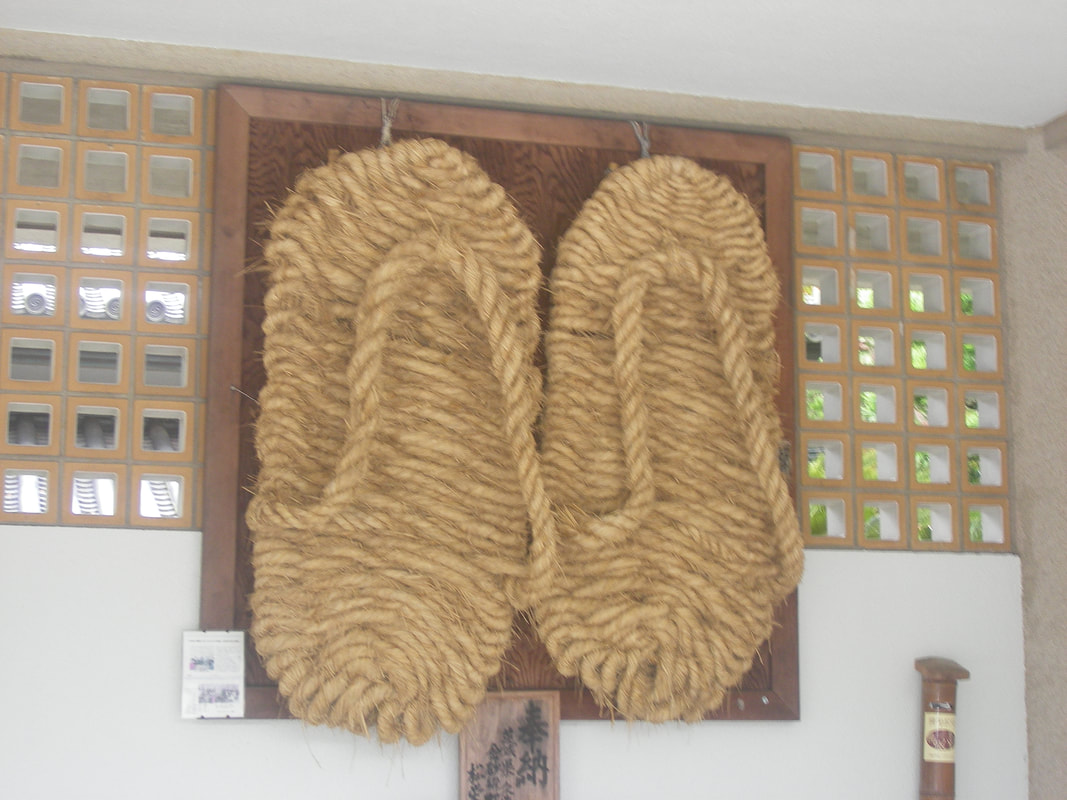
Fun fact: close to the Great Buddha are a pair of huge traditional Japanese straw sandals that are nearly two metres long and weigh around 45 kilograms. These sandals were first woven and donated by a group of children back in 1951 when the country was still recovering from the ravages of the Second World War. The wish of these children was that “the Great Buddha would don them to walk around Japan, bringing happiness to the people”. To this day, children will create and gift a new pair of giant sandals to Kōtoku-in every few years.
Yokohama
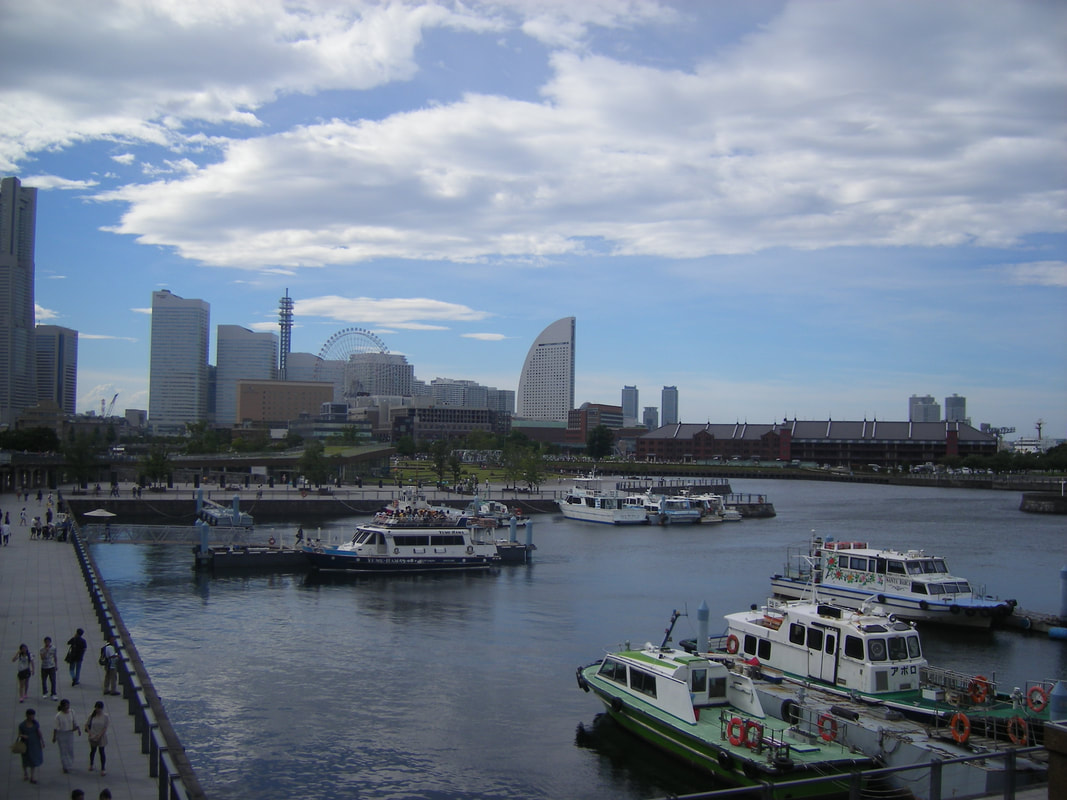
I visited the coastal city of Yokohama with a friend on Marine Day, a Japanese public holiday that gives thanks to the bounties and riches of the ocean.
It was a pleasant outing to an important Japanese port city. Although it is a short train ride from the heart of Tokyo, it is a breezy, relaxed and walkable international city that provides a welcome respite from Tokyo’s frenetic energy.
I’ll be honest. My trip to Japan permanently changed me. It was my first extended trip abroad on my own (this being back in my poor university student days) and I’ve never looked back. I got bit by the travel bug hard and that fiery wanderlust has been with me ever since. I have to travel. I have to keep seeing the world for the rest of my life. Is this a curse? A gift? An integral feature of my personality? Even now, all these years later, it is still difficult for me to coherently express.
Temple Run: Bangkok edition (2015)
Posted 9 September 2022
Day One: The Grand Palace, Wat Phra Kaew, Wat Saket, and Wat Suthat. Day Two: Wat Pho, and Wat Arun. Day Three: Caught a head cold.
What better way to start the speedrun than taking the passenger ferry down the great and muddy Chao Phraya River?
Damn. I review my Thailand travel album from early 2015 and have to both laugh and cringe a bit at my younger self. How different I used to look! How chubby and sweaty. That unfortunate haircut and inelegant pose. What kind of a small boy, half-man, soft animal I was, both outside and within! Funny what the years can do to my perspectives on things.
The Grand Palace and Wat Phra Kaew
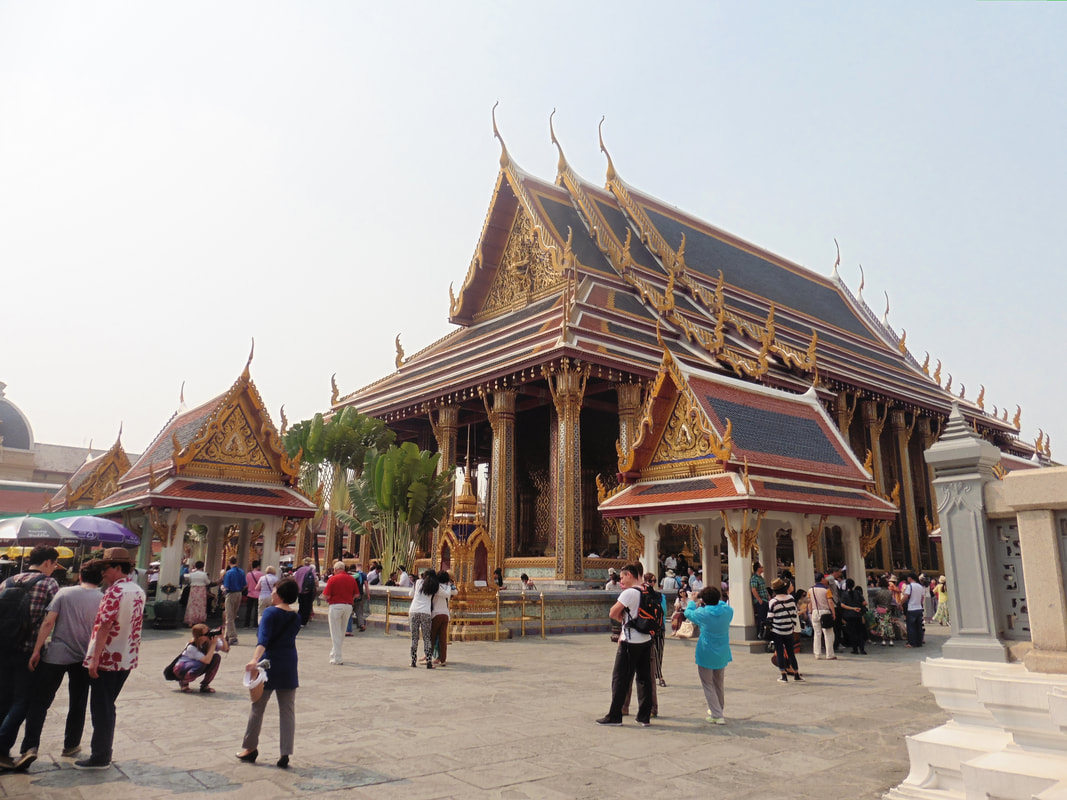
The Grand Palace: the official residence of the King of Siam. An organic jumble of halls, courtyards, pavilions, gardens, lawns. And an inorganic jumble of tourists, both foreign and Thai. But that aspect of the visit is easy enough to ignore. It’s stunning. It’s so bloody stunning.
And as for Wat Phra Kaew, situated within the palace complex, it’s the most sacred Buddhist temple in all of Thailand. Also commonly known as the Temple of the Emerald Buddha, Wat Phra Kaew houses a green gemstone Gautama that’s considered the nation’s most sacred image of the Enlightened One.
Wat Saket
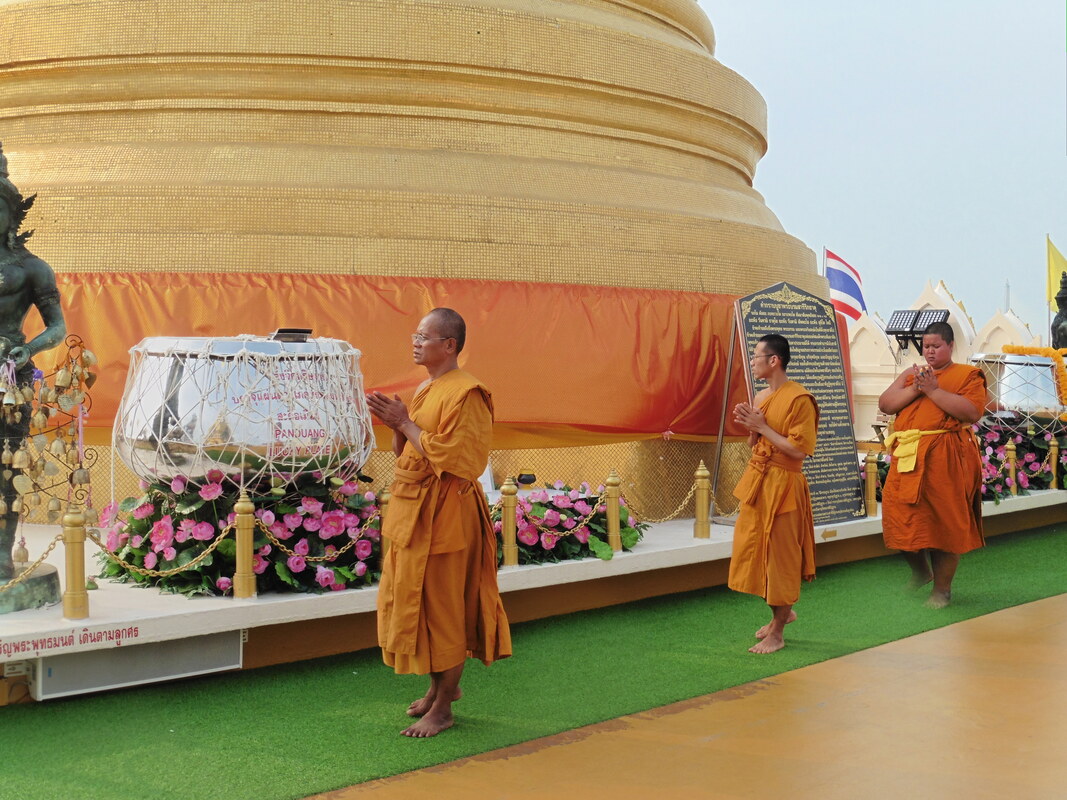
Wat Saket. The Temple of the Golden Mount. A panoramic view from atop an 80-metre high artificial hill. It was a steep and winding 318-step climb, which led to a damp and dumpy me mounting the Golden Mount against the hot and smoggy Bangkok cityscape.
Wat Suthat
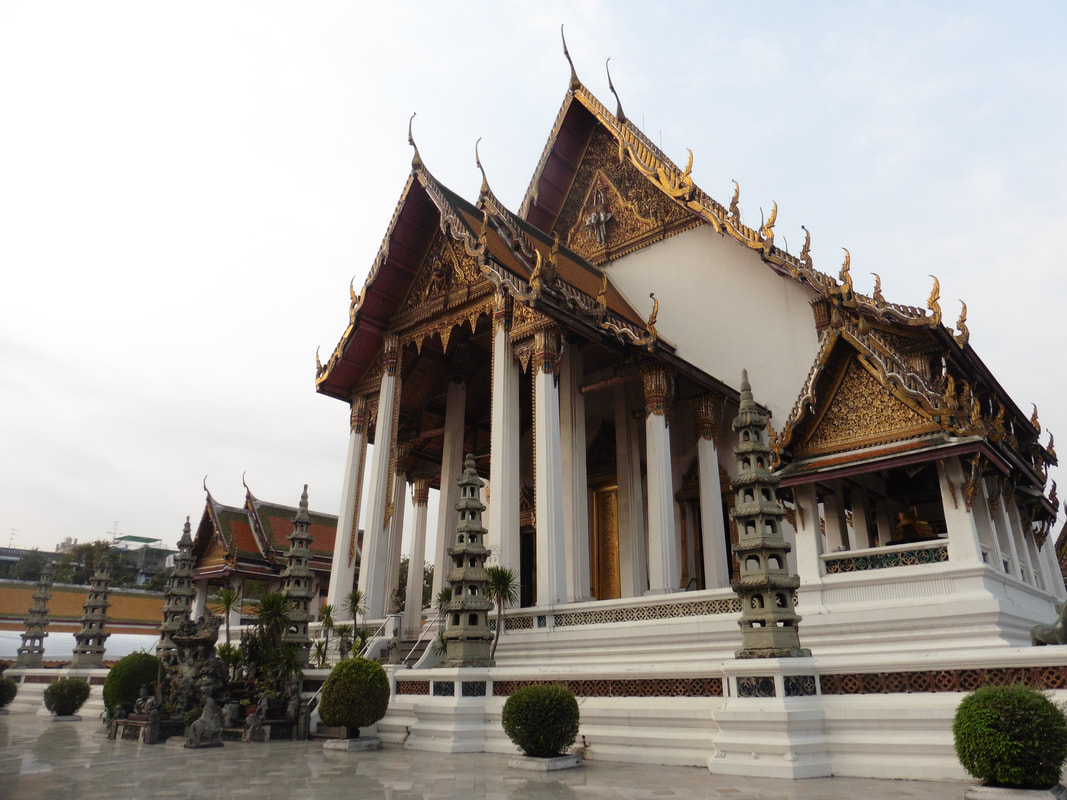
Wat Suthat Thepwararam. Another elegant structure. Endless images of Buddha. The iconic Giant Swing stands in front of the temple, a towering and crimson gate-like structure. Come and enter, it says. Come and look further.
Wat Pho
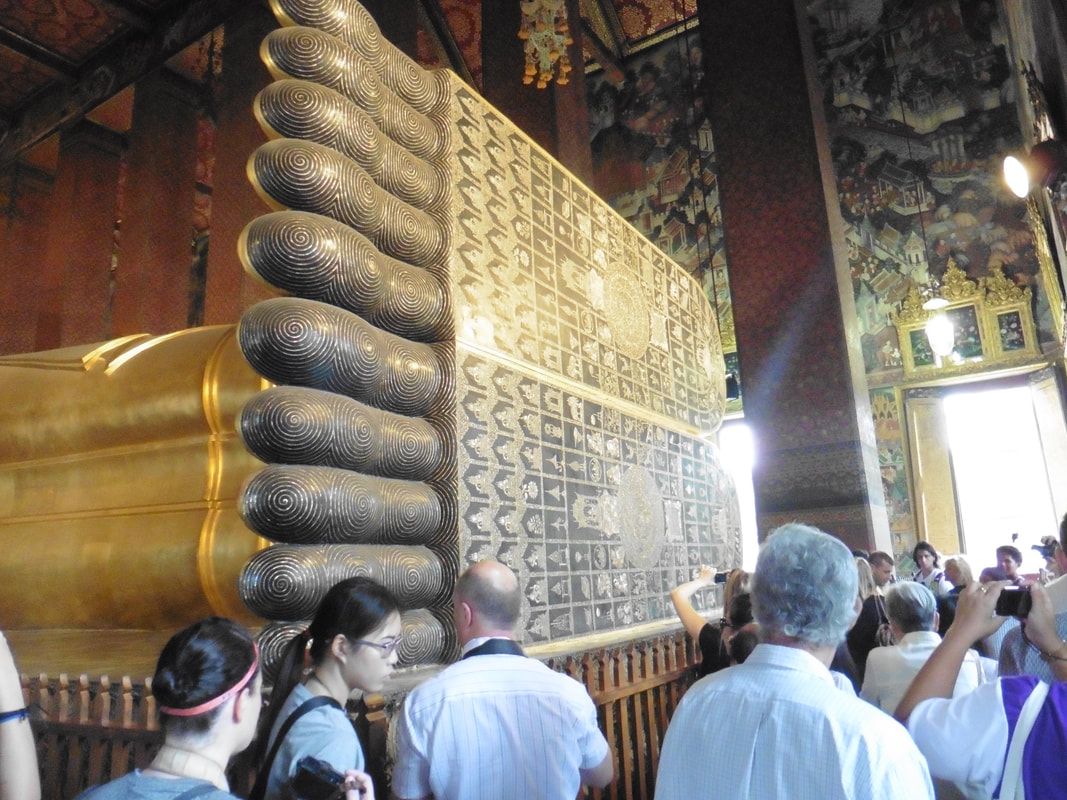
Wat Phra Chetuphon Wimon Mangkhalaram Rajwaramahawihan, to give it its official title. What a great name!
The Temple of the Reclining Buddha. 46-metres long goes its golden repose. There are 108 bronze alms bowls in the temple. Go ahead, grab some coins and drop them in. The sound rings sweetly and good fortune is sure to follow.
Wat Arun
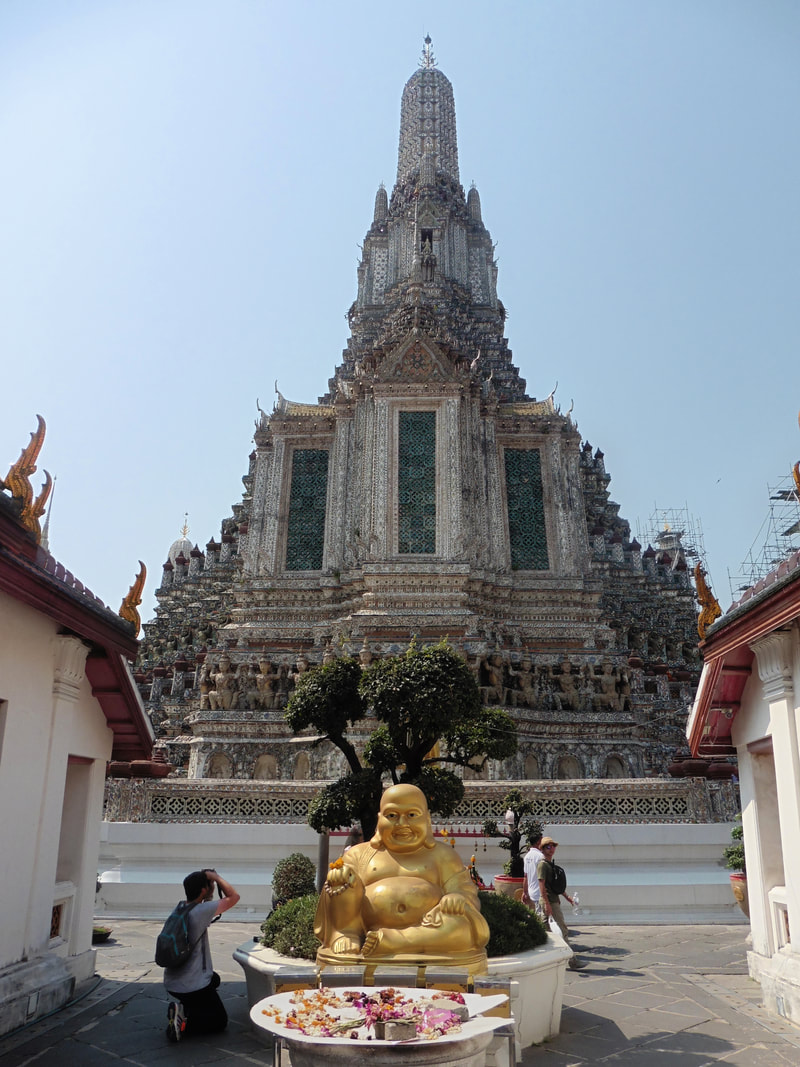
Wat Arun Ratchawararam Ratchawaramahawihan. This is probably my favourite temple of the bunch, named for the Hindu god Aruna, charioteer of the Sun God Surya. Encrusted ceramic complexities. Dazzling architectural richness. Its structures spear into the pale, cloudless sky. Hours could be spent here, walking and gazing, gazing and walking.
Its striking centrepoint spire, or ‘prang’, symbolises Mount Meru, the sacred peak of Hindu, Jain, and Buddhist cosmology and the nexus of the material, metaphysical, and spiritual realms.
Climb up this tower of porcelain puzzle pieces. Don’t be shy. Climb up it and take in the wide and languid Chao Phraya. It’s not quite the apex of the multiverse one might hope for in a Mount Meru, but at least the electric rush of Bangkok seems to fade away from this vantage point. If only for a few moments.
The Twelve Apostles (2015)
Posted 20 September 2020
Ah! The relentless hammering and chiselling of the sea along the Great Ocean Road in Victoria, Australia. Highlights along the road such as Loch Ard Gorge, the London Arch, and the celebrated Twelve Apostles (of which there were never twelve in the first place) are just stacks of limestone carved by the harsh waves of time. Who knows when the next stone stack will collapse? Who knows when the next formation will be born, cleaved from the cliff walls?
Dresden (2014)
Posted 14 October 2020
Dresden. So it goes.
Dresden, the capital of Saxony, a city of over half-a-million, a major historic and industrial centre along the Elbe River. I came here, during my winter tour of Europe in 2014, to visit a friend who was on exchange at university here.
Once a city of cultural and artistic wonder, Dresden suffered calamitous damage as a result of the deeply controversial bombing of Dresden. From the 13th to the 15th of February 1945, the city was almost completely flattened by high-explosive bombs and incendiary devices dropped by British and American air forces.
One needs to only briefly stroll around Dresden’s Altstadt, or Old Town, to see the consequences of these events. Where there should be tightly packed historical buildings, there are instead yawning gaps in the cityscape. Huge, empty spaces in the city centre are like eerie deletions, like solemn omissions, like gouges out of time and space. And the reconstruction of Dresden’s monuments continues to this day.
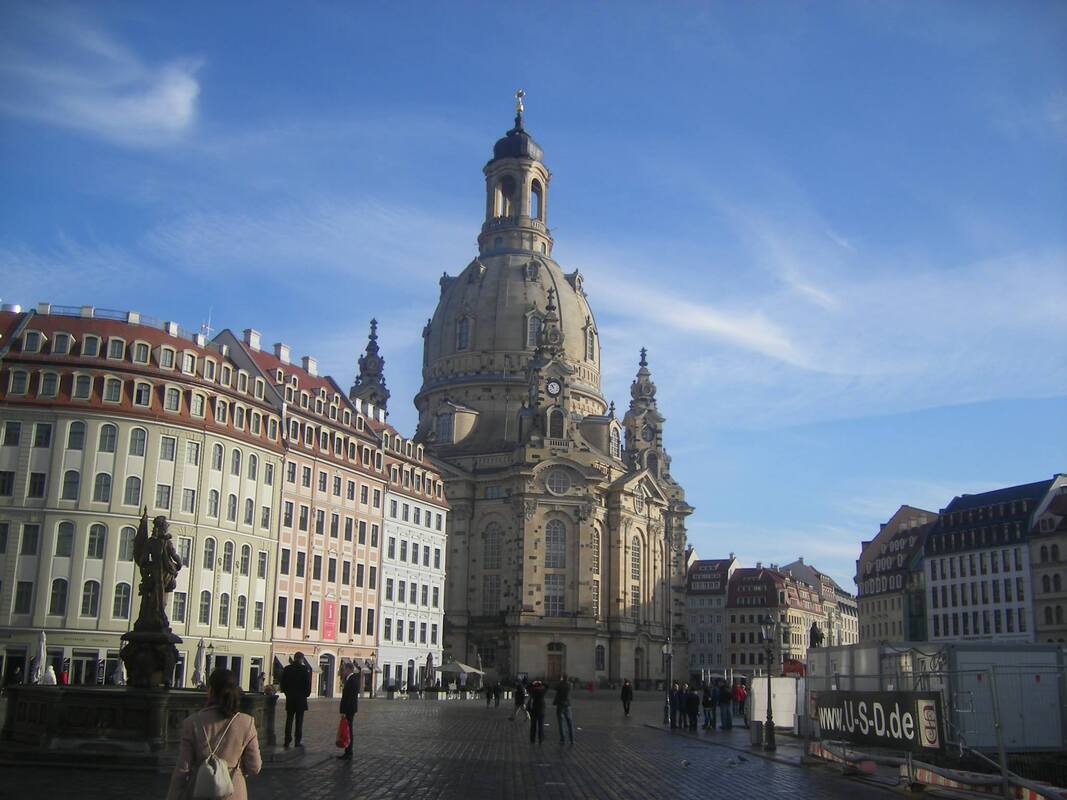 The Dresden Frauenkirche, destroyed in the city’s bombing during World War II and rebuilt by 2005.
What there is to see (and has been mostly reconstructed) is lovely, however… The Albertinum, a modern art museum. Dresden’s iconic Frauenkirche, a Lutheran church. The Schlossplatz, or the Palace Square.
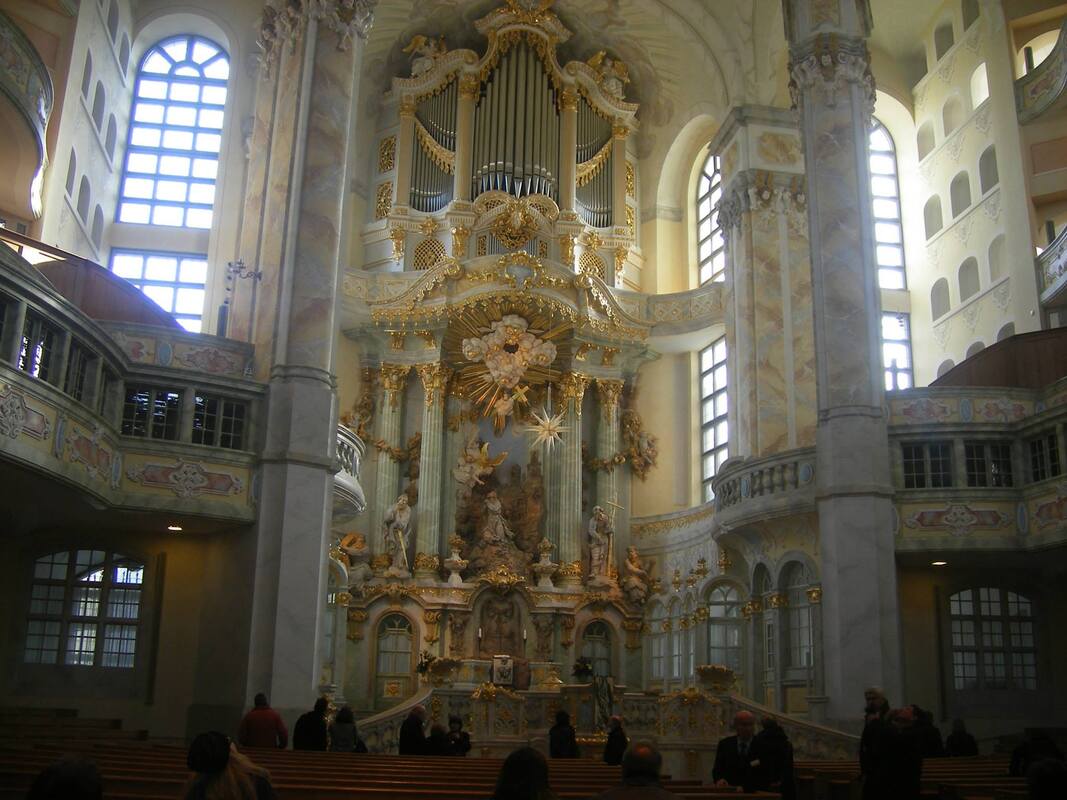 The restored interior of the Frauenkirche.
The Procession of Princes, an enormous mural of Saxony’s royalty and noblemen. The Semper Opera House, which once premiered the works of Wagner and Strauss. A monument to Martin Luther, that titan of the Protestant Reformation, stands stoically for all to witness.
Even the communist propaganda mural on the wall of the Kulturpalast, a modernist hall from the era of the German Democratic Republic, speaks of the enduring history of Dresden.
The was once a city called the ‘Florence on the Elbe’ before it was reduced to rubble. Historians have debated endlessly as to the legitimacy of the Allied bombing campaign in terms of morality and strategy and tactical reasoning. All I can say is that it was an unequivocal tragedy for the civilian population.
The American writer Kurt Vonnegut, who himself was a survivor of the bombings when he was a prisoner of war, speaks powerfully from his experience of its aftermath in his novel ‘Slaughterhouse-Five’:
There was a fire-storm out there. Dresden was one big flame. The one flame ate everything organic, everything that would burn.
It wasn’t safe to come out of the shelter until noon the next day. When the Americans and their guards did come out, the sky was black with smoke. The sun was an angry little pinhead. Dresden was like the moon now, nothing but minerals. The stones were hot. Everybody else in the neighborhood was dead. So it goes.
One of the must-visit places in Dresden, I feel, is its Military History Museum. The museum’s façade is striking - the architect added a caged arrowhead structure to it, with the idea that it represents the openness and transparency of Germany’s modern democratic society, in contrast to the rigidness of the existing building, which represents the severe, authoritarian past.
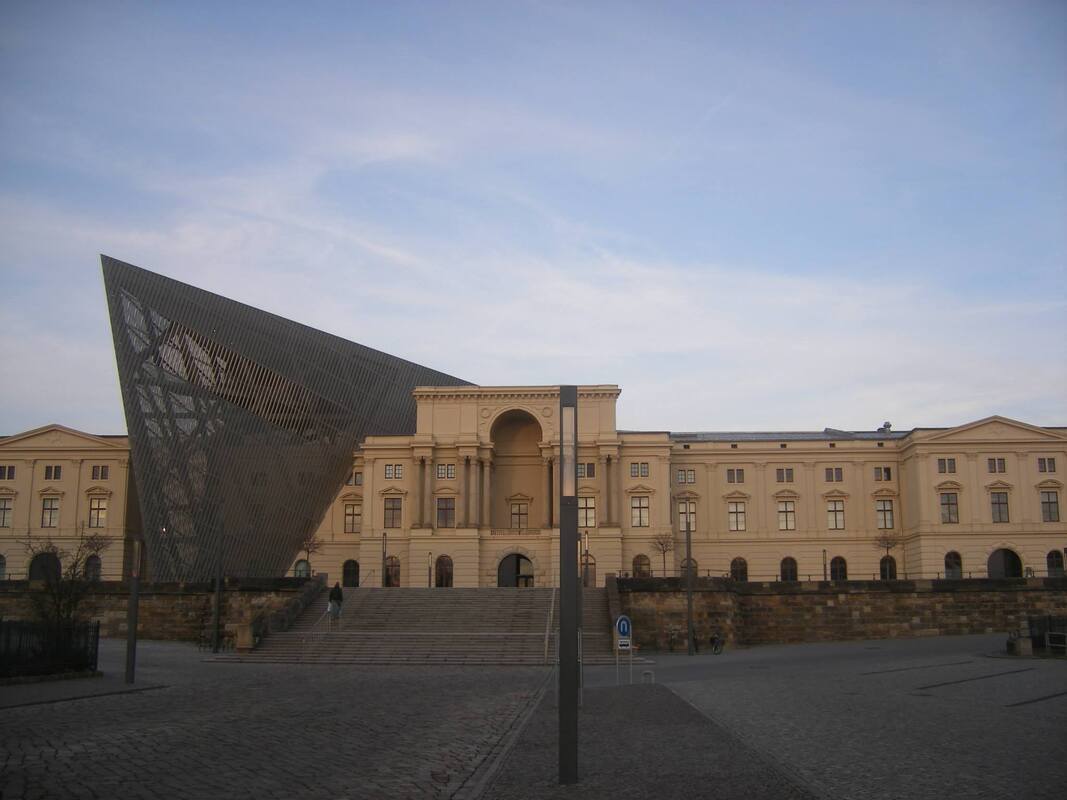 The Bundeswehr Military History Museum
This museum showcases Germany’s complicated relationship with warfare. The permanent exhibition guides visitors through German military history, from the Middle Ages, through to the devastating World Wars, to contemporary times. It is intended to be unbiased and explore human violence as a historical, cultural and anthropological phenomenon – one which shapes our shared understanding of the past, present, and future.
I also had the opportunity to experience some of Dresden’s high culture with a night at the opera. I went along with my exchange friend and one of her German friends to see , a comic opera The Marriage of Figaro composed by Mozart. To be honest, I had zero idea what was going on, but the German friend assured me that it was ‘very, very funny’.
And I had the chance to enjoy some low, or perhaps ‘alternative’, culture. For instance, I found Dresden’s Neustadt to be a very hip, very lively neighbourhood. My friend also took me to the Elbeflohmarkt, one of the oldest flea markets in the city. Here, I was able to admire piles upon piles of retro junk, East German communist paraphernalia, and potential trash-turned-treasure for sale.
I think I would like to visit this city again in ten, no, twenty years time…
Perhaps by then the gaps of Dresden’s Altstadt will have blossomed out, back into its former stony glory. Perhaps with time the Frauenkirche will no longer resemble the inside of a Hungarian bathhouse. Anything is possible with time enough to heal.
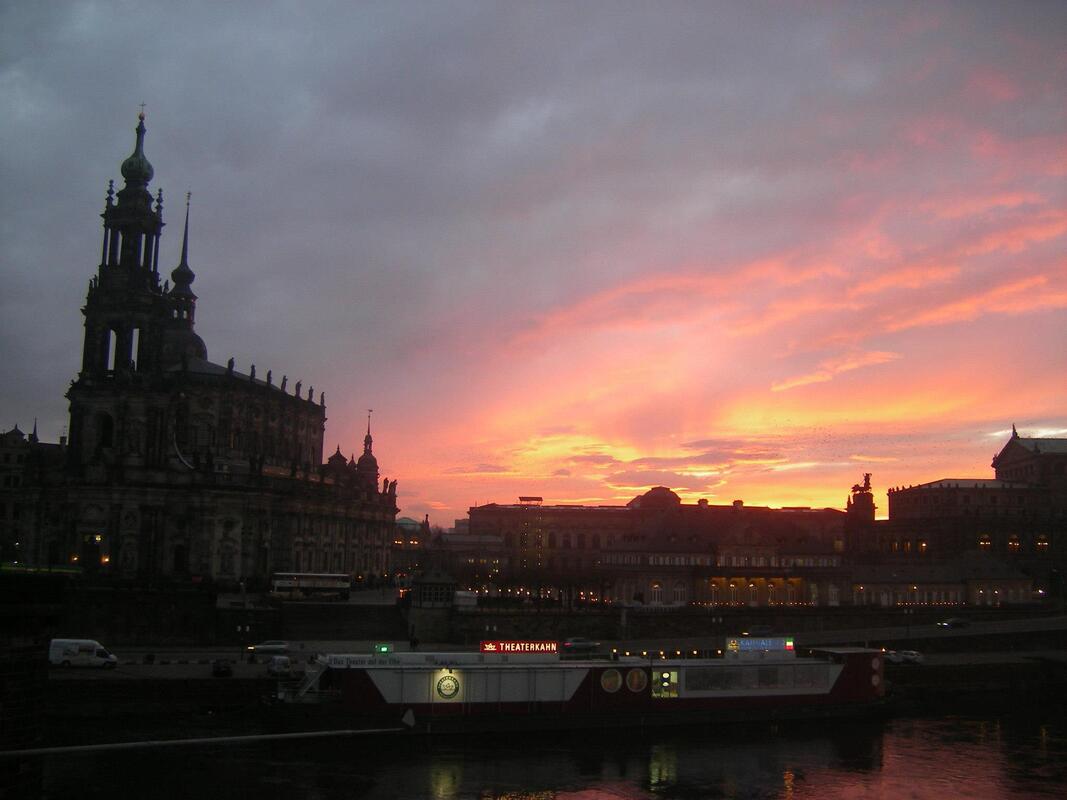 The Elbe at sunset.
Ah! Imagine that, Elbflorenz reborn!
How I would love to waltz down Dresden’s wide streets again. I would trace my fingers along the street art and ride the rumbling trams. I would kick through the dead leaves of Alaunpark and wander through the riverside flea market, before sailing down the Elbe itself to find out where all the pretty Saxony girls are.
Budapest (2014)
Posted 1 December 2020
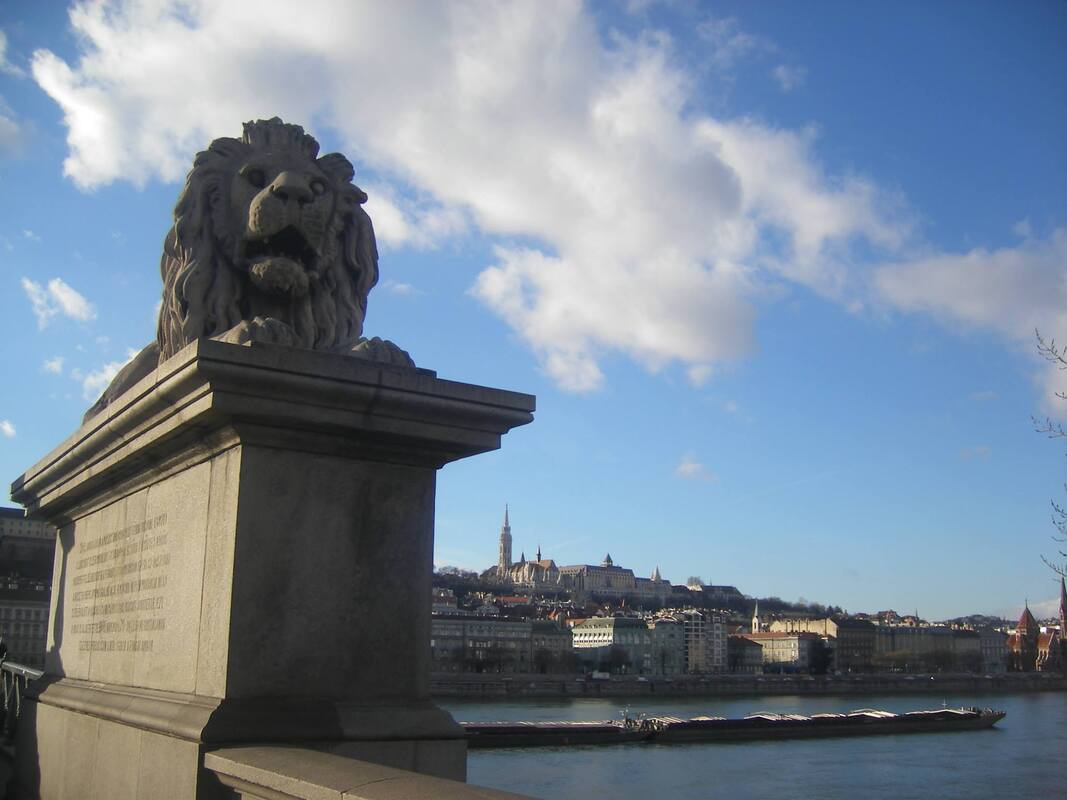
Budapest. Capital of Hungary. Lady of the Danube.
In the miserly sun of a winter’s day, it is cold, beautiful, and stony. A city of baroque and neoclassical houses, churches, monuments. A thrumming heart of hills and bridges in the land of Magyars.
A quick stroll along the riverfront reveals the Hungarian Parliament Building. A demonic doom fortress, more like. The neo-gothic architecture is undoubtedly incredible – it is just that in a certain light it looks like a monstrous redback spider stalking the banks of the Danube…
Strolling across the bridge, from the flat eastern half of inner Budapest to its hillier western portion, you reach the Fisherman’s Bastion with its Neo-Romanesque, fairy tale towers located in the Buda Castle area. Here, I will always remember my conversation with an old Hungarian man who was surprised by the colour of my skin when I was a New Zealander, going as far as to rub my cheek briefly in curiosity.
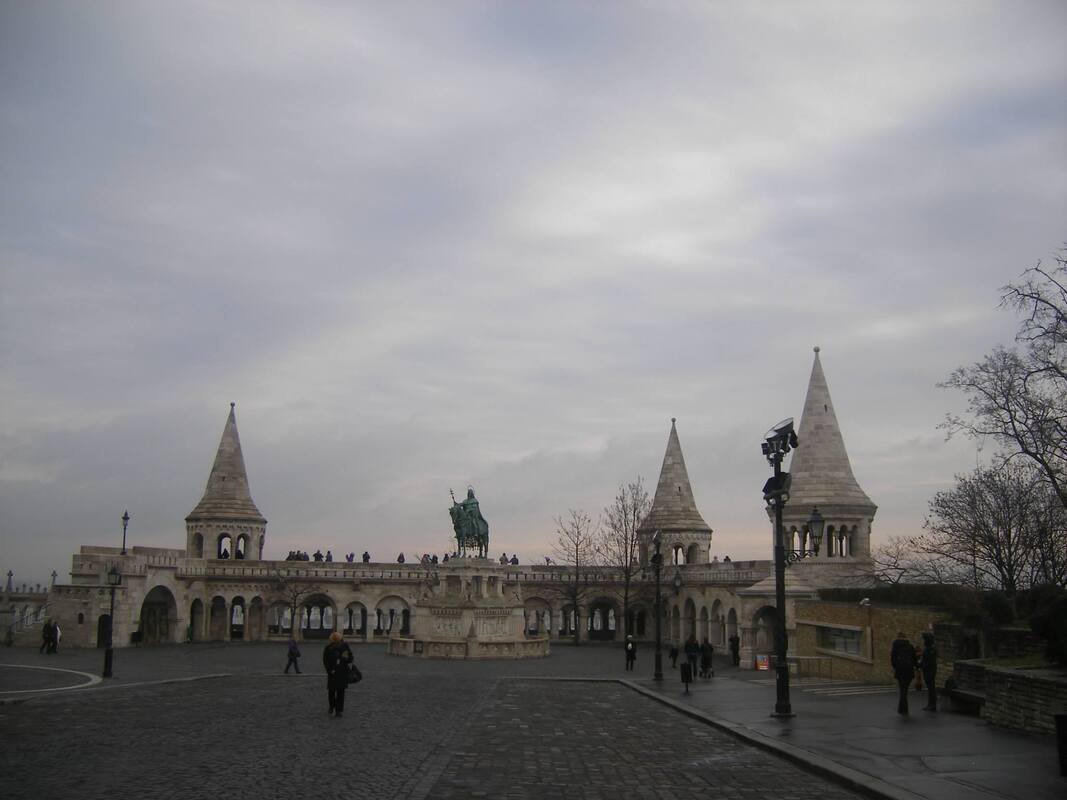
Located next door is Matthias Church, also known as the Church of the Assumption of the Buda Castle, a Roman Catholic church whose long-lost foundations date back to the 11th century. Whatever had originally stood there was destroyed during the Mongol invasions, its predecessor was severely damaged by the Ottoman invasions of Hungary, as well as bombarded by Allied forces near the end of World War II. But the peaceful decades that followed has been kind to this location, allowing it to heal back to glory.
Speaking of the region’s history, the name ‘Budapest’ came about from the 1873 unification of three separate towns in the area called Buda, Óbuda, and Pest.
Today, Budapest is a youthful, culturally zestful city but this was a hard-won status. It suffered under not only Nazi Germany, but also under Soviet military occupation during the Cold War era, all the way to 1991. Political change has been largely kind to Budapest.
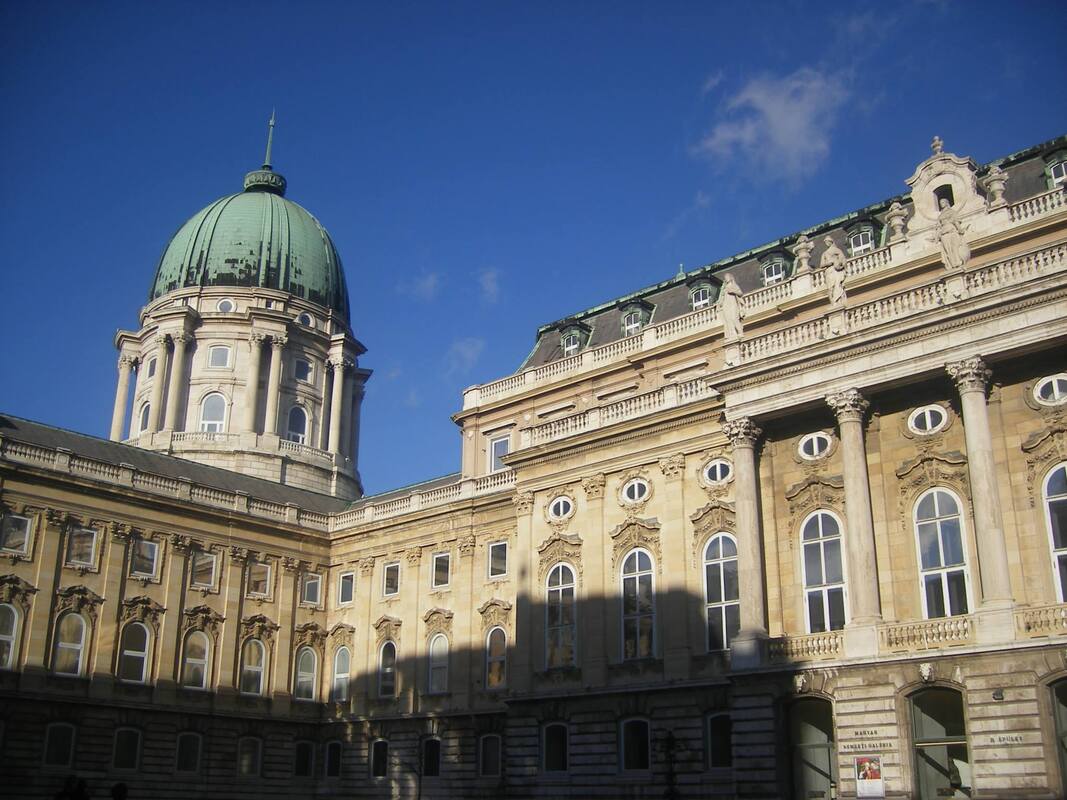
Another highlight: Buda Castle, a historical castle and palace complex that once belonged to the Hungarian kings of yore. It is pleasant to visit, but if the architecture seems a little dry then you should know that your instincts are correct. The palace was gutted in the 1950s since the communist government of Hungary considered it a symbol of the former regime. What visitors now see is largely a ‘modernist’ creation, reconstructed in the vision of a new post-war order.
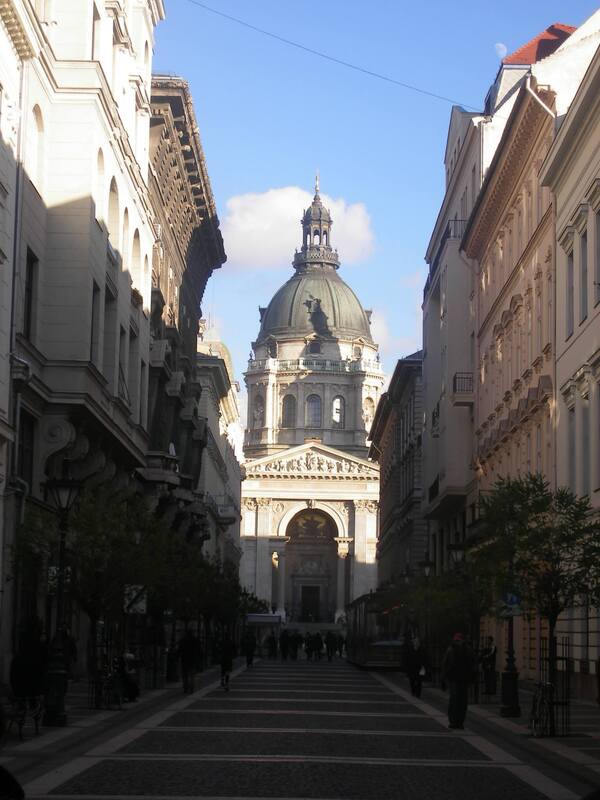
And behold: St. Stephen’s Basilica, a neoclassical Roman Catholic basilica named in honour of the first King of Hungary and undoubtedly the most important church structure in Hungary. When I visited it, the sunlight struck its interior in such a delicate way, I felt as though I was walking around in a meditative, dreamlike state. I gazed at its finely painted cupola, at its sanctuary and altar, at its statues and stained glass windows. I floated. I was washed in wordless wool-gathering.
And there’s Dohány Street Synagogue, the largest synagogue in Europe and the second-largest on the planet. And over there, the striking Anker Palace, an eclectic-style building constructed for a Viennese insurance company in 1908.
The Hospital in the Rock. Constructed in the caverns under Buda Castle, it served once as a vital medical station during the Siege of Budapest in WW2 and is now a museum that recreates those desperate days.
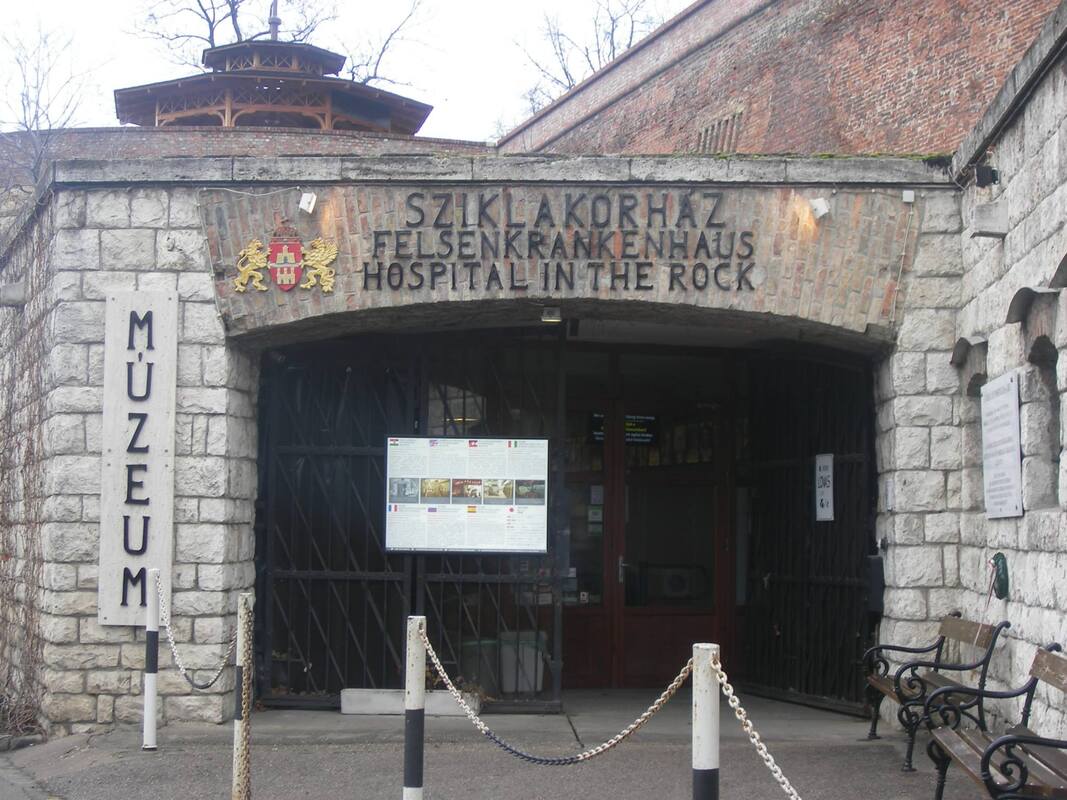
The Budapest Cave Church. A modest if unusual church cut into side of Gellért Hill which overlooks the Danube. Once said to be the abode of a hermetic monk.
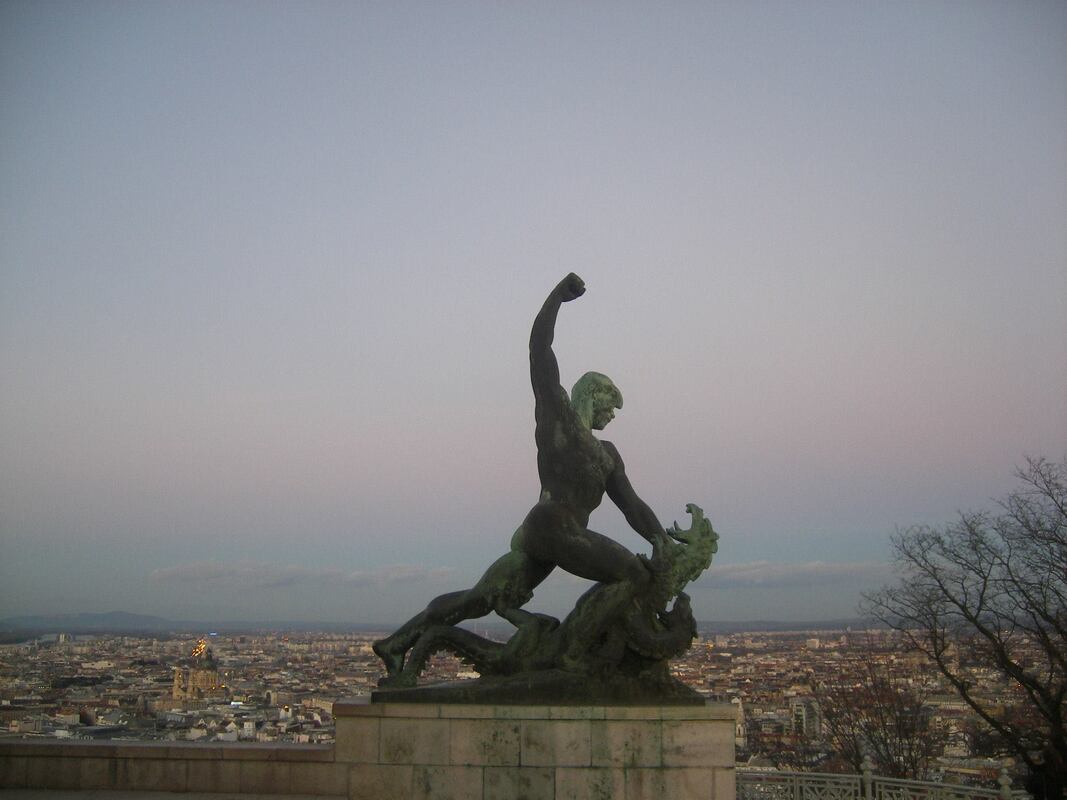
The Liberty Statue, also on Gellért Hill. It is a monument to the Hungarians who sacrificed their lives for the independence, freedom, and prosperity of the nation. And may those days become renewed in Hungary soon…
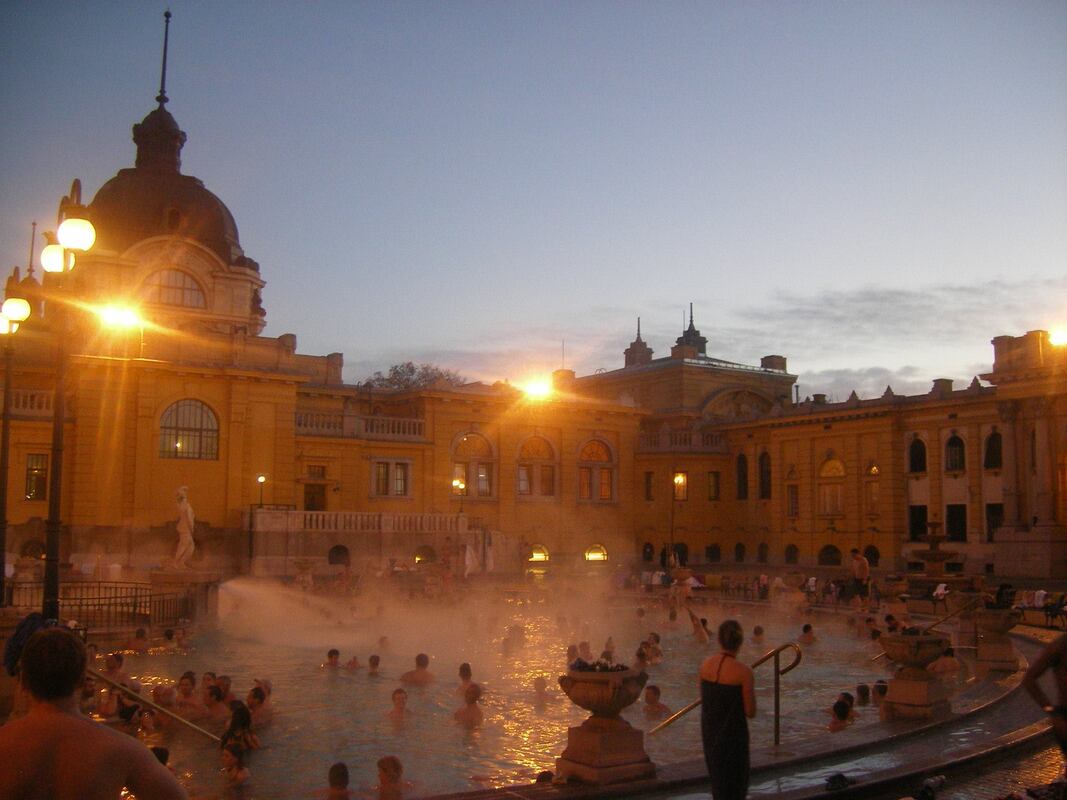
After nightfall, Budapest is bathed in golden electricity. It becomes, regardless of whether it is in crisp darkness or torpid fog, a city encased in amber, suspended like a gemstone.
See here the bullet hole markers on the side of the Ministry of Agriculture Building. These mark the scars of Hungary’s failed 1956 Revolution against Soviet domination. Then see the Soviet War Memorial in Liberty Square. Bizarrely, it is situated in the same square as a statue of US president Ronald Reagan. All hail Ronald of House Reagan, Czar of All America, Conqueror of Grenada, Redeemer of Nicaragua, and Destroyer of Communism!
But enough about the politics and the past (for now). When I was in Budapest, I was able to link up with some friends who were also touring Europe and together we visited one of the city’s hip and famous ruin bars – alcoholic lubrication establishments located in old, dilapidated and occasionally abandoned buildings.
And Budapest, of course, is also nicknamed the Spa City. As such, no touristy visit to the city would be complete without a dip in the Széchenyi Medicinal Bath, the largest medicinal bath in Europe. Drawing on thermal springs, these public baths feature anywhere from pleasant 18°C pools to scalding 38°C hot pots.
Nearby is the Heroes’ Square, one of the major squares in the city. It is notable for its statue complex, depicting important national leaders as well as the legendary leaders of the seven tribes of the Hungarians that supposedly led their people into Central Europe near the end of the 9th century.
And that concludes my remarks on Budapest, the so-called ‘Paris of the East’ and one of the best European cities to visit. I thought it was better than Prague, in fact (a city with a similar layout consisting of a flat eastern section and a palatial and hilly western quarter, divided by a river). Budapest is certainly a must-visit for any first-timers to this part of the continent.
“And although she may have studied with an expert dialectician and grammarian, I can tell that she was born… HUNGARIAN!”
Roma invicta (2013, 2014)
Posted 1 August 2020
“I have traveled a great deal in my life, and I should very much have liked to go to Rome, but I felt that I was not really up to the impression the city would have made upon me.”
– Carl Jung, Memories, Dreams, Reflections
So wrote Carl Gustav Jung, the famous Swiss psychotherapist and former discipline of Freud, in a partially autobiographical book. For Jung, Rome was where “classical antiquity still lived in all its splendour and ruthlessness”. The city was an overpowering place of classical heritage which he feared his mind would be unable to cope with and, indeed, when Jung once attempted to purchase a ticket to Rome in his old age, he was “stricken with a faint” after which “the plans for a trip to Rome were once and for all laid aside”
It is hard for most people, myself included, to empathise with Jung’s mind-state. Every year, millions of visitors descend upon the Italian capital, and — while many may see it as an intellectual or historical pilgrimage of sorts — few would have described its incoming presence in such potent, dizzying terms.
What new is there to say about Rome? Very little, I imagine. And the hidden narratives of the Eternal City may well be like Jung’s swooning fear: too fraught, too colossal, too ambitious to completely cognise.
Late December in Rome
Piazza della Repubblica and the Fountain of the Naiads:
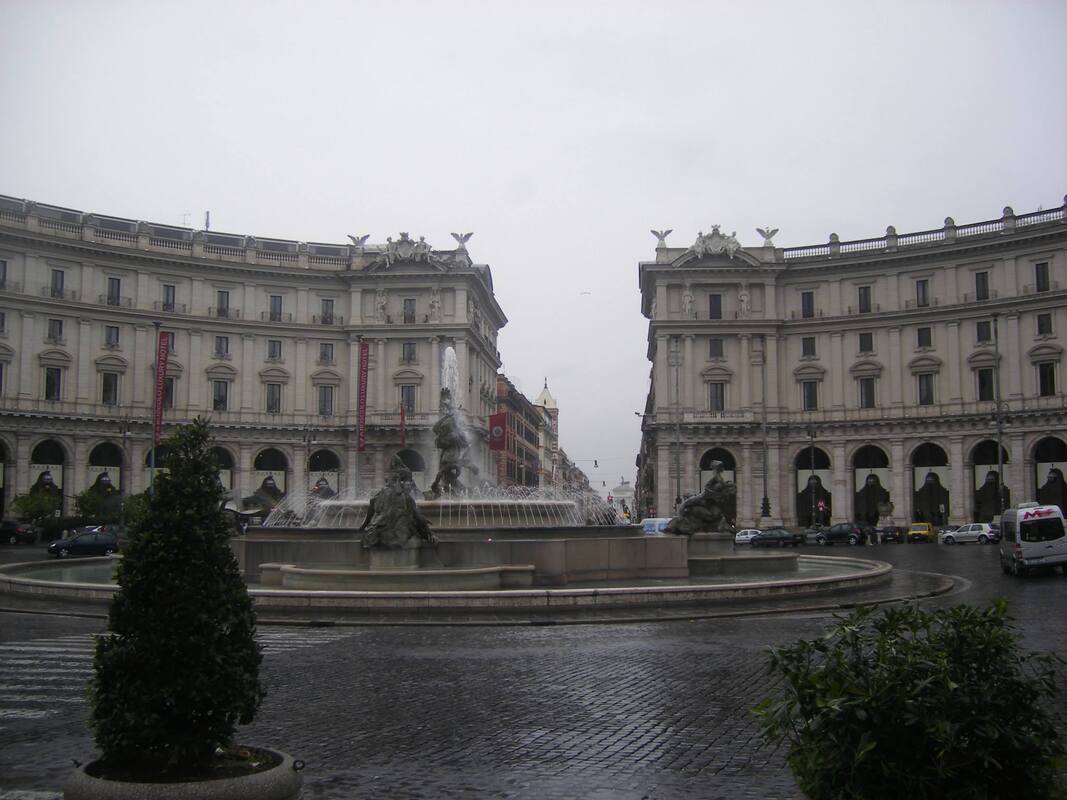
Maybe it was because it was the tourist off-season, or maybe it was because I was lucky, but I found Roman drivers very manageable and not as hectic as people have told me. In fact, it was the pedestrians that seemed to be the bad actors much of the time. Mind you, I’ve been to plenty of wild traffic places in Asia and elsewhere, so maybe my standards have fallen.
The Basilica of St. Mary of the Angels and the Martyr:
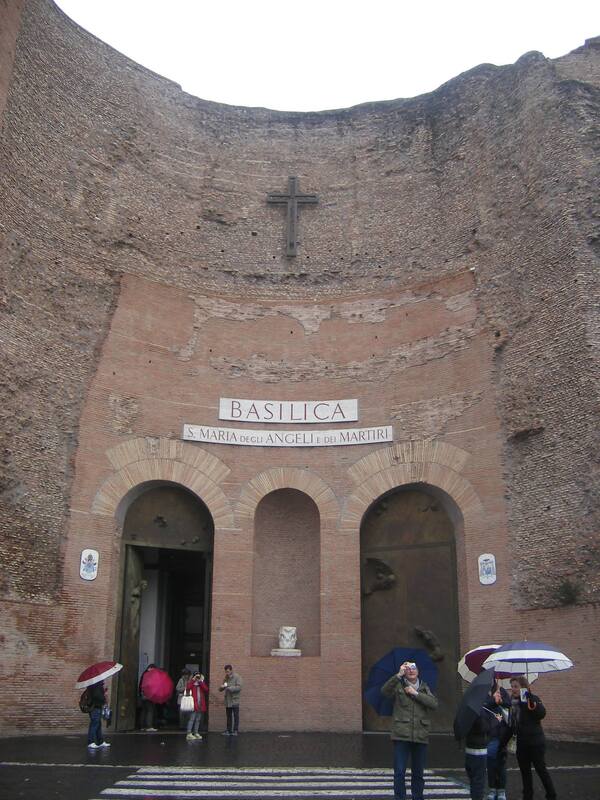
This is an example of the history and heritage layered upon history and heritage that probably bothered Jung. A 16th century basilica dedicated to Christian martyrs, it was built into the ruins of the Baths of Diocletian, the largest of the public baths of ancient Rome — hence the church’s unusual, hulking facade.
Inside, however, the basilica is a thing of beauty based on the designs of none other than Michaelangelo. The soaring transept vaults. The granite and stuccoed columns. The red pilasters. All housed in the forgotten, ruined bowels of an ancient Roman wonder.
The Vittorio Emanuele II Monument with Trajan’s Column in the foreground — a victory column erected around 113 AD to commemorate the Roman Empire’s victory against the Dacians:
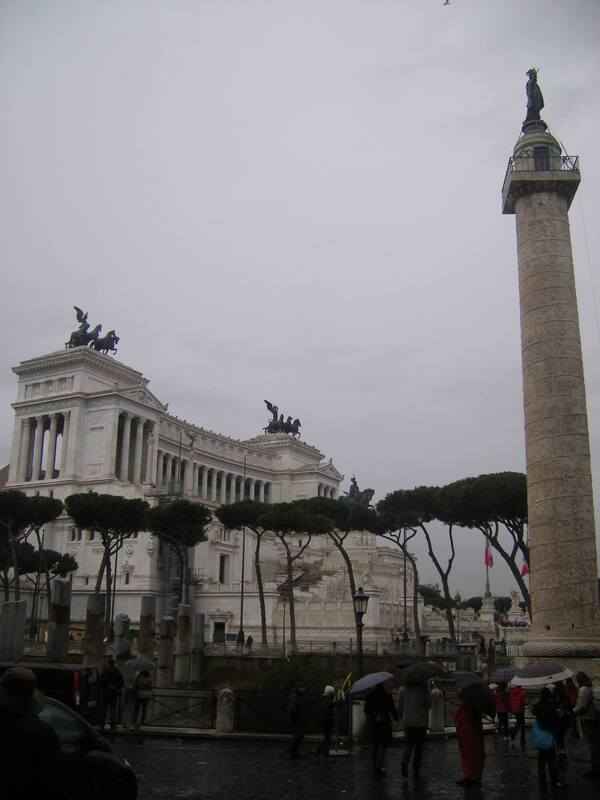
Due to my poor research efforts before arriving in Rome, I was unaware of the existence of this grandiose marble building — The Vittorio Emanuele II Monument. Also known as Altare della Patria (Altar to the Fatherland), it honours the first king after Italian unification in the 19th century and was a marvellous structure to come across.
Amusingly, the monument has been criticised for its appearance and has been compared to a wedding cake (white and layered), a set of dentures (with toothy columns), and a typewriter (wide and boxy). The monument also doubles as a war memorial, honouring Italy’s dead from the First World War. There is a Tomb of the Unknown Soldier, as well as an eternal flame, under the watchful gaze of a statue of Roma — the ancient Roman goddess personifying the city itself.
A dreary climate harangued me throughout Europe in December and January. I did not even bother packing an umbrella, thinking that the dampness would eventually clear (or even better, turn to snow). Sadly, this was not to be. Nevertheless, it was moments like these — such as when I had an awe-inspiring view of the Colosseum straight down the middle of the road — that made me forget the misery of rainfall and slippery asphalt.
The alluring, yet moody ruins of Rome. Tree stumps of marble. A ribcage of pillars. Mossy foundation stones. All of it ossified, suspended in both time and space, signifying a glorious and dead past that will never truly die as long as people continue to speculate and fantasise about it.
The Arch of Constantine during restoration work and half-obscured by scaffolding:
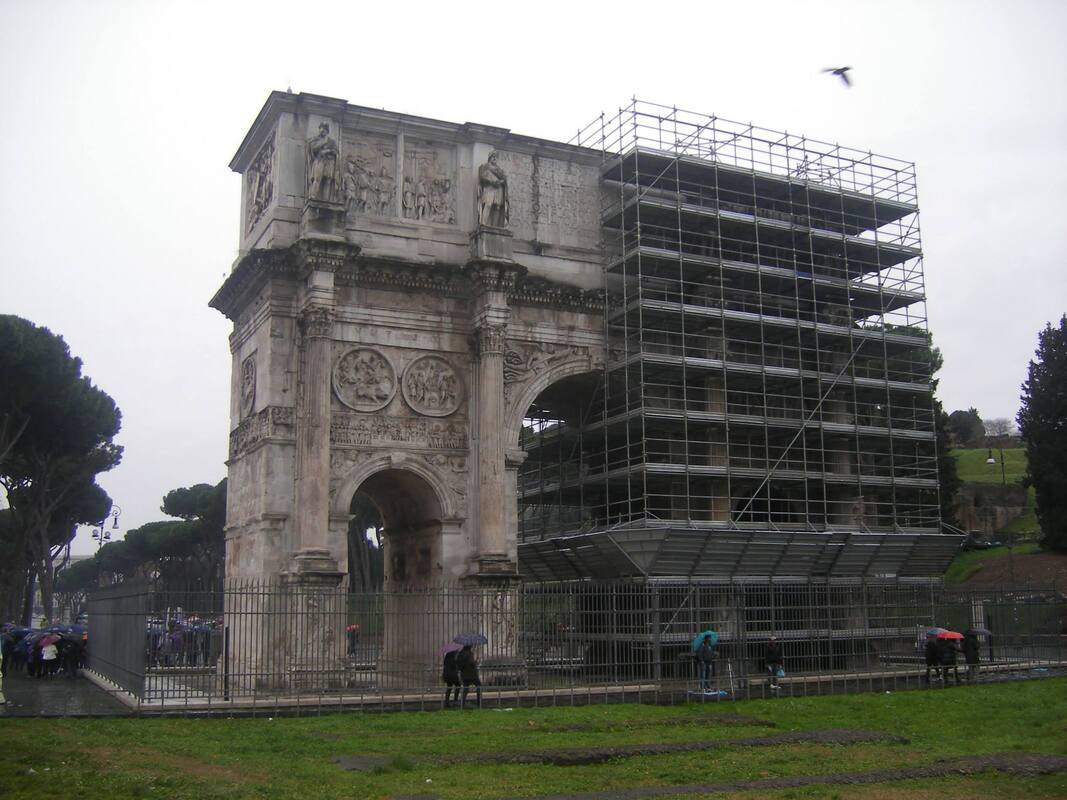
It was erected in 315 AD in honour of Emperor Constantine’s victory at the Battle of the Milvian Bridge, a battle which is traditionally marked as the beginning of his, and the Roman Empire’s, conversion to Christianity.What’s interesting about this arch is that it is effectively an ancient Roman hack-job. Almost all the sculptures on this arch were taken from earlier Roman monuments, with the faces of previous emperors crudely recut to look like Constantine’s. The arch was, as the English classicist Mary Beard puts it in SPQR, “a costly and destructive exercise in nostalgia” that sought to place “the new emperor in the illustrious tradition of the old”.
The Roman Forum is a sprawl of archaeological treasures. Every cluster of fragments, every clutter of excavated matter tells hundreds upon hundreds of stories. The Tabularium. The Temple of Antoninus and Faustina. The Arch of Titus. The Column of Phokas. The Basilica of Maxentius and Constantine. And much, much more. Each one contains a story that you can spend a whole lifetime studying.
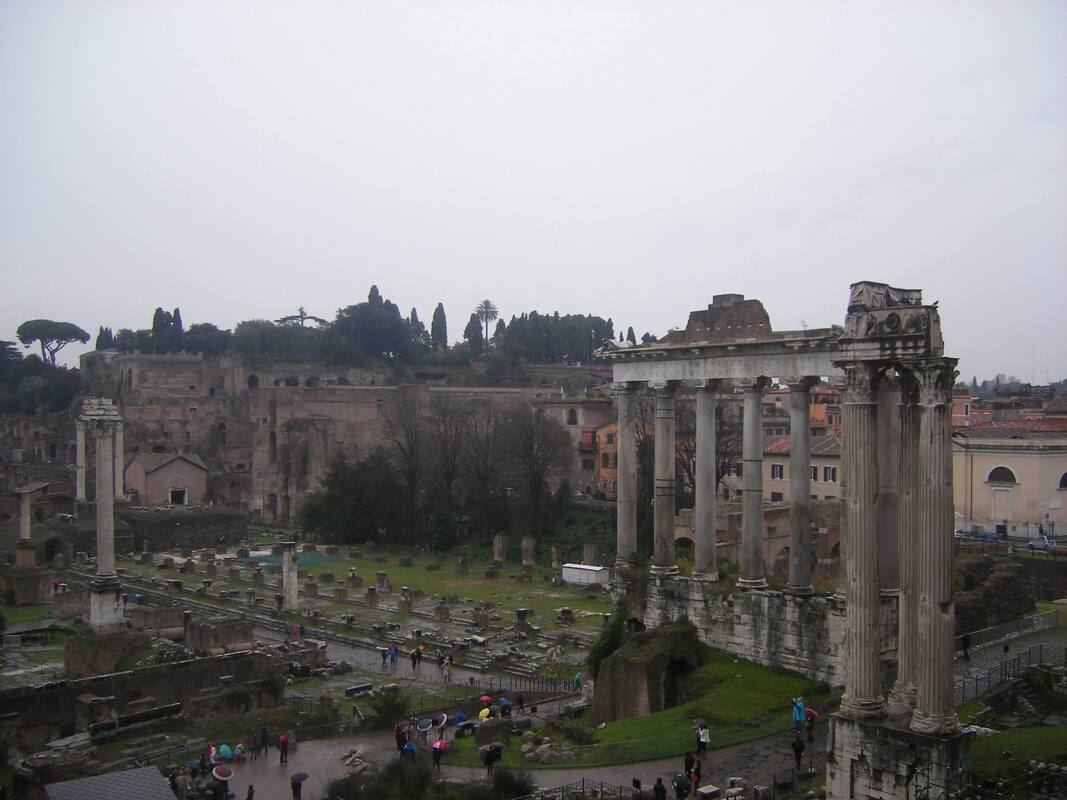
To quote Ezra Pound: “Behold how pride and ruin can befall One who hath set the whole world ‘neath her laws, All-conquering, now conquered, because She is Time’s prey, and Time conquereth all.”
Trevi Fountain is, without a doubt, the most famous fountain in all of Europe (if not the entire world):
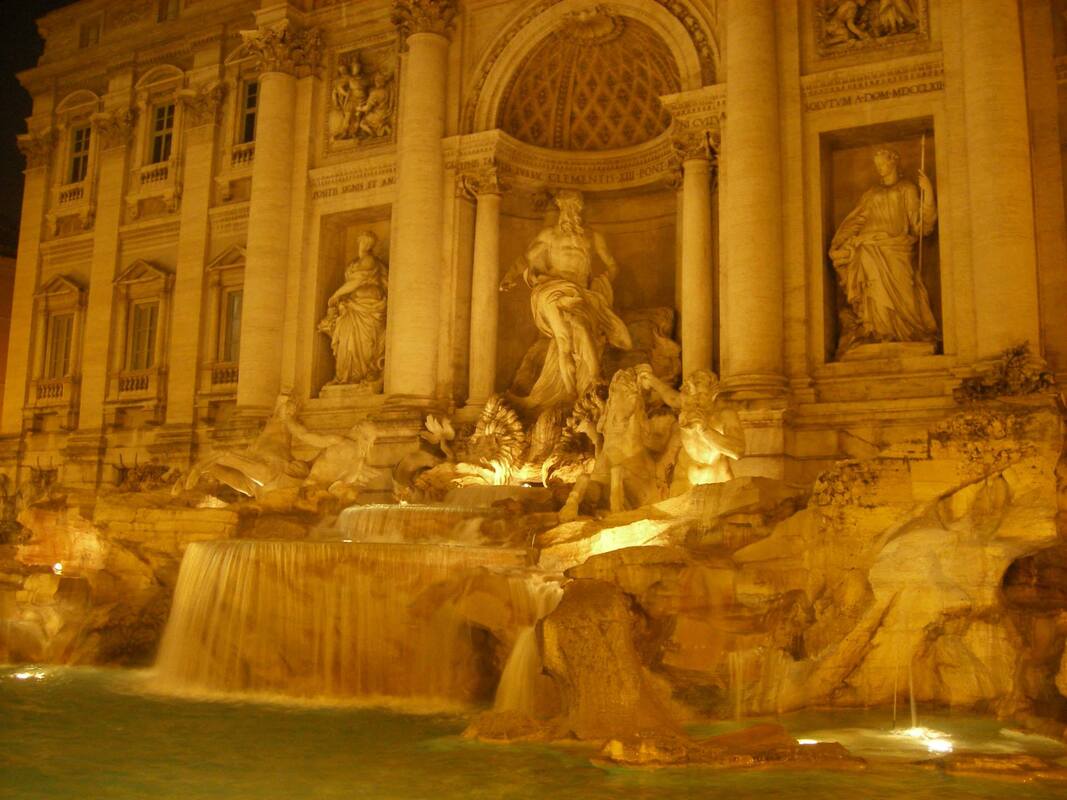
I found its resplendent Baroque imagery and salubrious rush of water quite captivating. And yes — I did the cheesy touristy thing and threw a coin into the fountain. And no one should feel bad about it either! Apparently, thousands of Euros land in it every day, which is then scooped up to fund food for the poor.
The next day and a visit to the Colosseum first thing in the morning in order to beat the crowds:
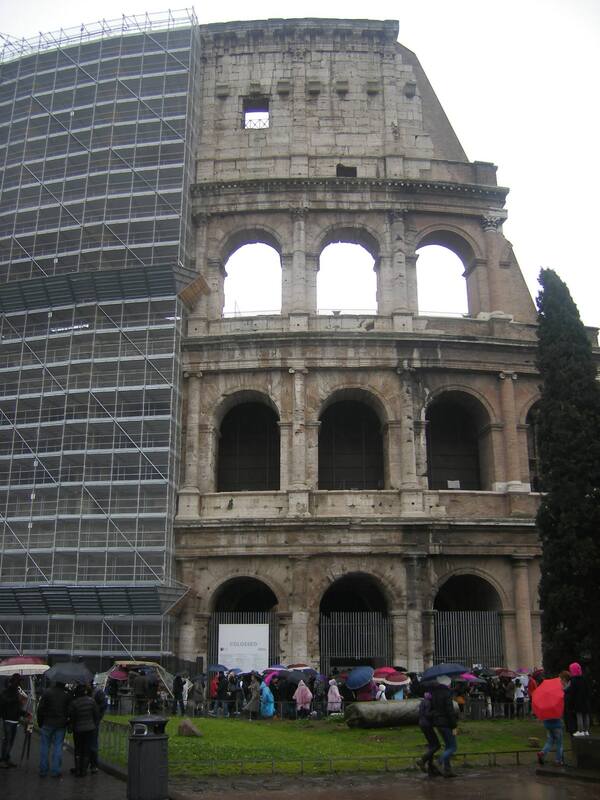
The Flavian Amphitheatre. The true icon of the Roman universe. The largest open-air arena the Romans ever built. I came, I saw, and I was wowed by it. Can you imagine what it must’ve been like? Can anyone? The clashing gladiators. The infamous mock sea battles. Eighty thousand cheering spectators. Exotic wild beasts. The execution of criminals. The religious ceremonies. Panem et circenses. Bread and games.
The Castel Sant’Angelo:
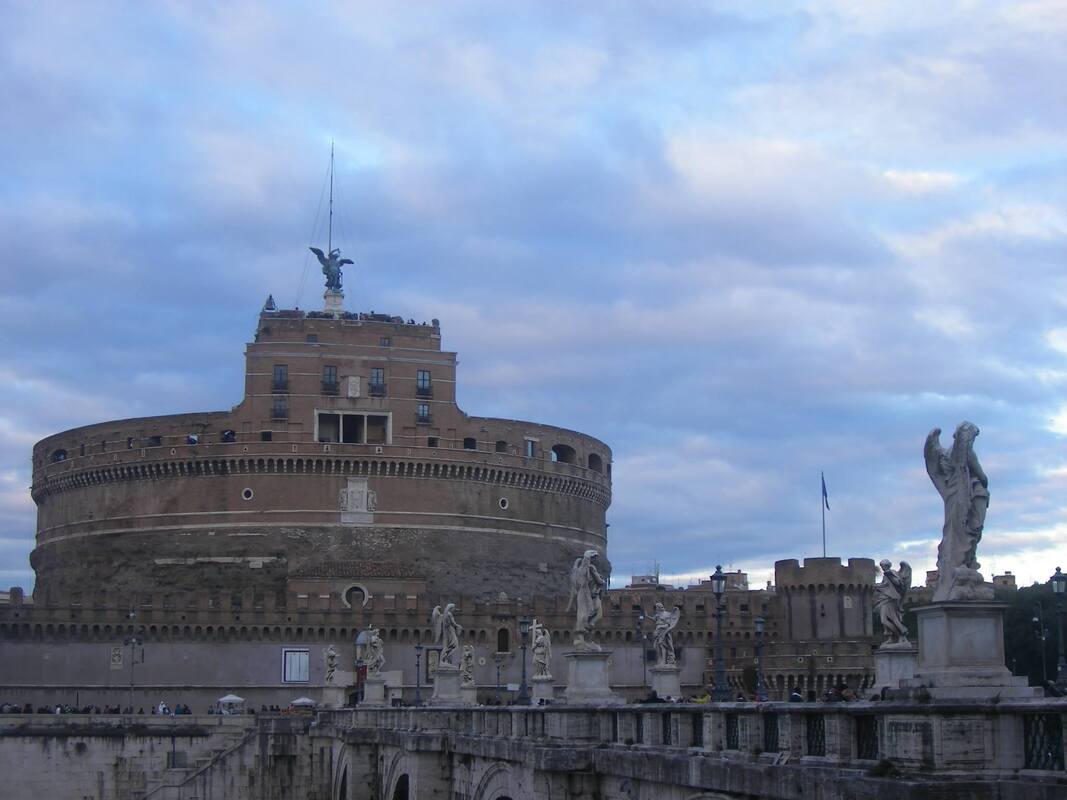
A striking cylindrical building near the Vatican City. The “Castle of the Holy Angel”, as it is sometimes called in English, has lived many different lives — originally, it was the family mausoleum of Emperor Hadrian, later it was used as a papal military fortress, a prison, and an execution site. But these days, as with so many historied parts in Rome, its war-weathered walls have been washed of blood and the castle has settled into its final form as a museum and tourist destination.
The Church of the Sacred Heart of Jesus in Prati:
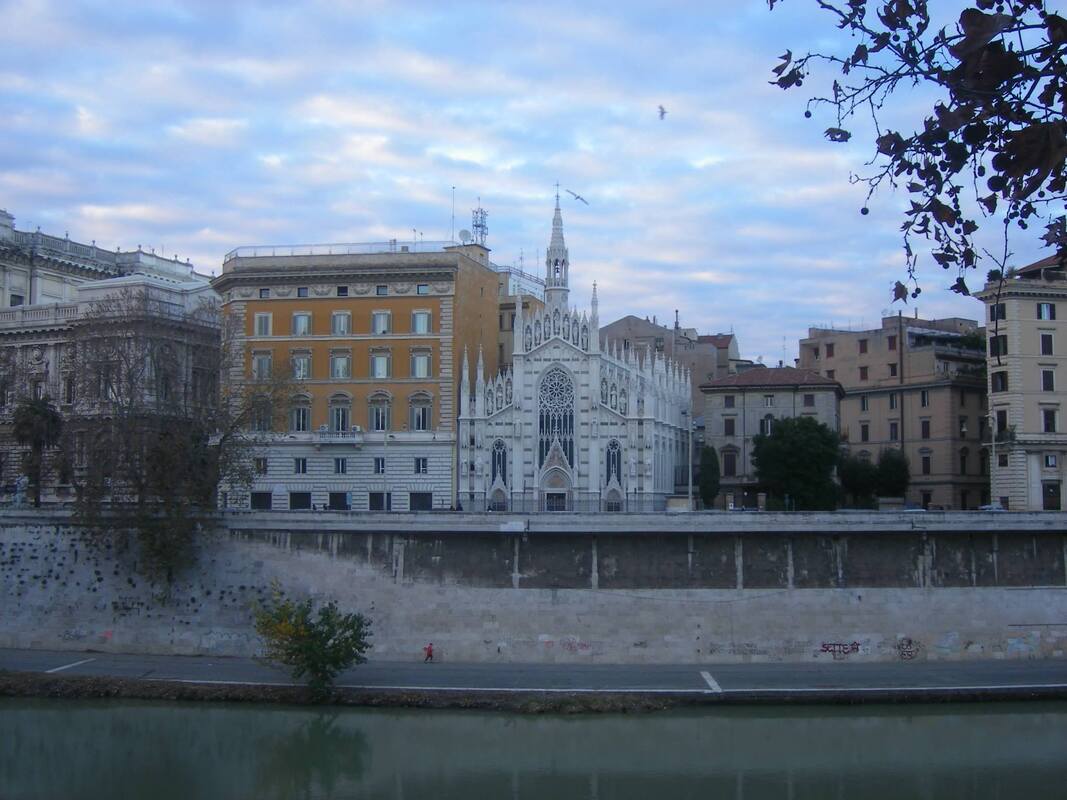
A small Neo-Gothic church on the River Tiber. Starkly white and oddly out of place. Just something that caught my eye during my stroll through the city.
New Year’s Eve…
I followed the rainbow lights on the night. I, along with two friends I made at my hostel, ended up at the Colosseum watching the New Year’s countdown. A vale to 2013 and a salvē 2014!
As you expect, fireworks were launched and bottles of wine were popped. Buon Anno! That said, the dark crowds made us easy pickpocket targets and one of my friends was unfortunate enough to have a Swiss Army knife stolen. Every seasoned traveller to Europe knows a frustrating Roman theft story and this was ours.
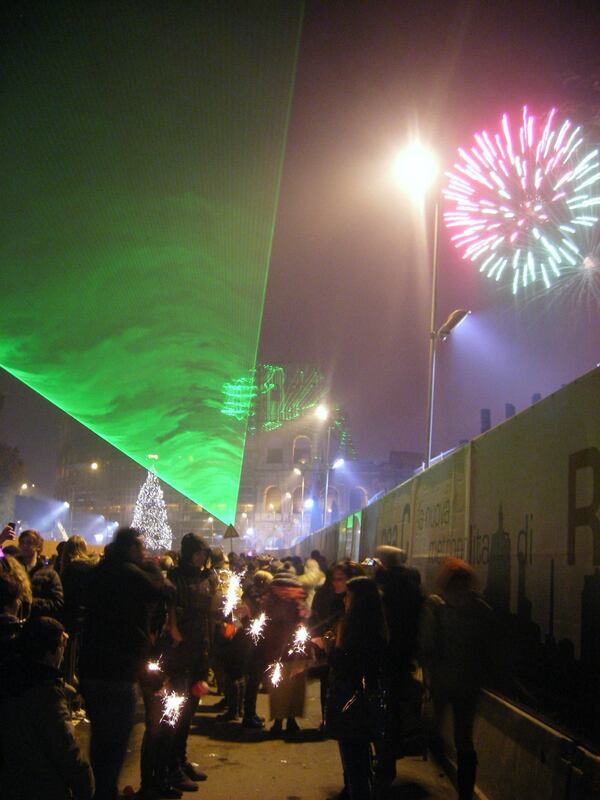
New Year’s Day
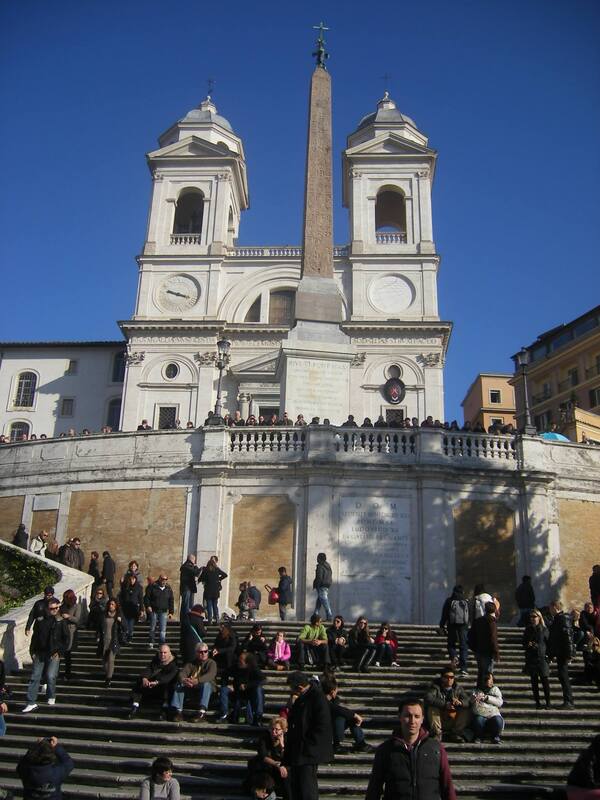
All alone on the first day of January. I crossed Rome’s slick and lazy streets with a contradictory mix of both melancholy and happiness. I found myself at the intersection of Via delle Quattro Fontane and Via del Quirinale with its four Renaissance fountains. I found myself chilling on the Spanish Steps, a well-known stairway linking the church of the Santissima Trinità dei Monti above to the Piazza di Spagna below. As nice as it is though, is there anything innately and inordinately exceptional about these steps? I’d argue that the Spanish Steps’ modern reputation largely derives from its depictions in beloved classic films such as Roman Holiday.
Thankfully, my sceptical musings about the Spanish Steps quickly ceased… there was a live band playing at the bottom of the steps on New Year’s Day, which made for a vivacious atmosphere. Bravo!
I passed the Temple of Hadrian:
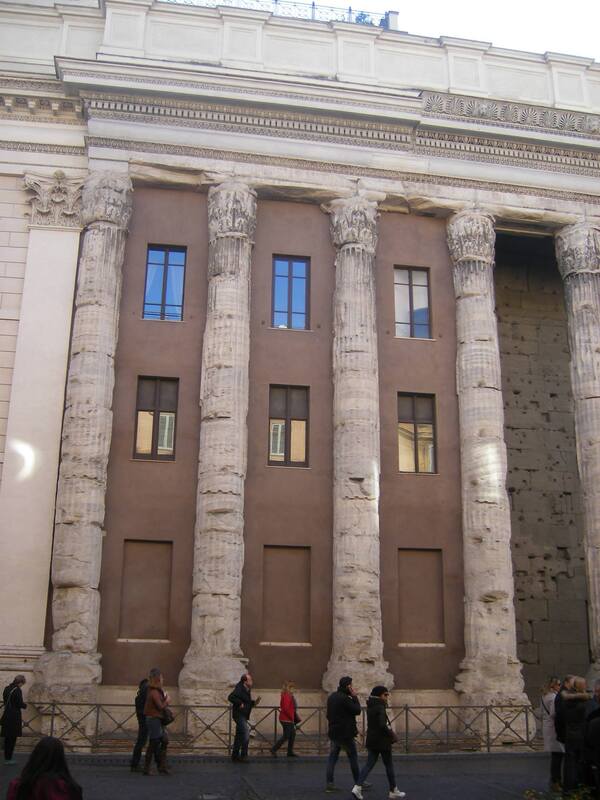
Or rather, what remains of its original structure. A melted, half-temple. A ghost temple. Its ancient, external colonnades subsumed into a much newer building…
I made my way to Piazza Navona on this brisk, winter’s day, alive with crowds, stalls, and buskers. An obelisk appropriating the ancient Egyptian artistic style, and dating back around 1,900 years ago to the time of Emperor Domitian, pierces the core of the square. Personally, I’ll always remember Piazza Navona as the place where (in a fit of madness) I bought a cone of very overpriced gelato.
The Fountain of Neptune at Piazza Navona:
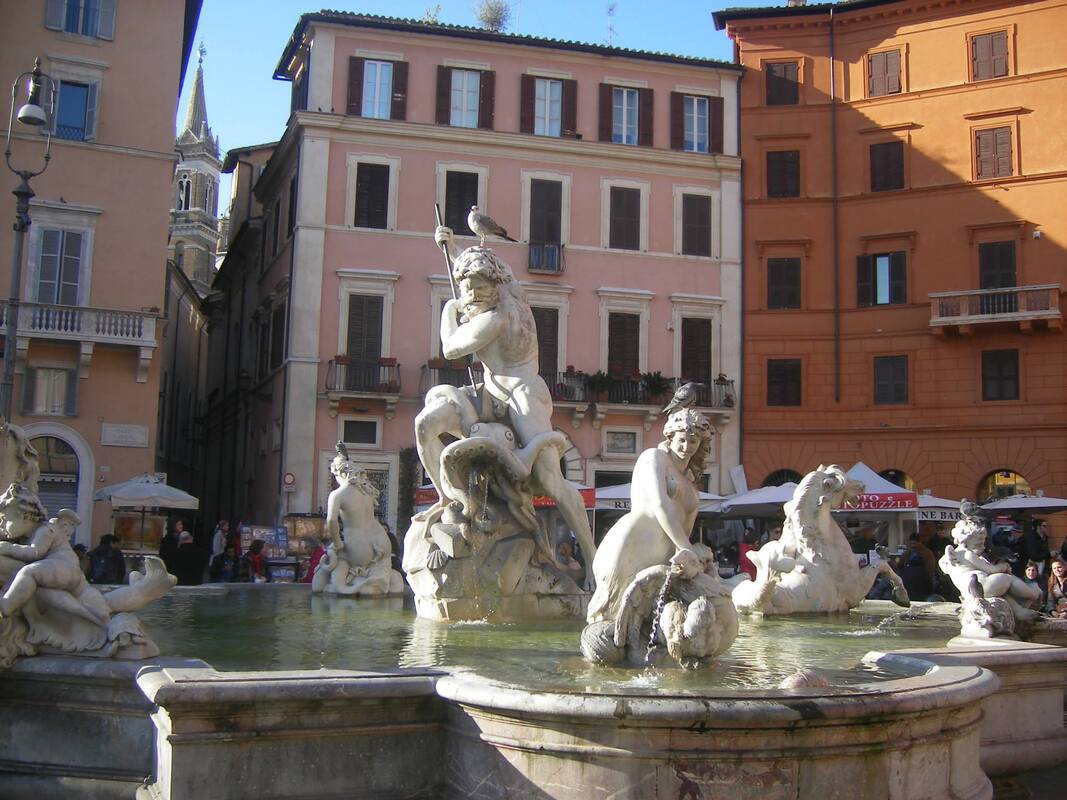
One of three fountains in the square, this one is clearly the best since it depicts the Roman god of the sea about to skewer a goofy looking octopus for lunch. (Also, Neptune has a seagull for a hat in the photo. I’m easily amused.)
Largo di Torre Argentina:
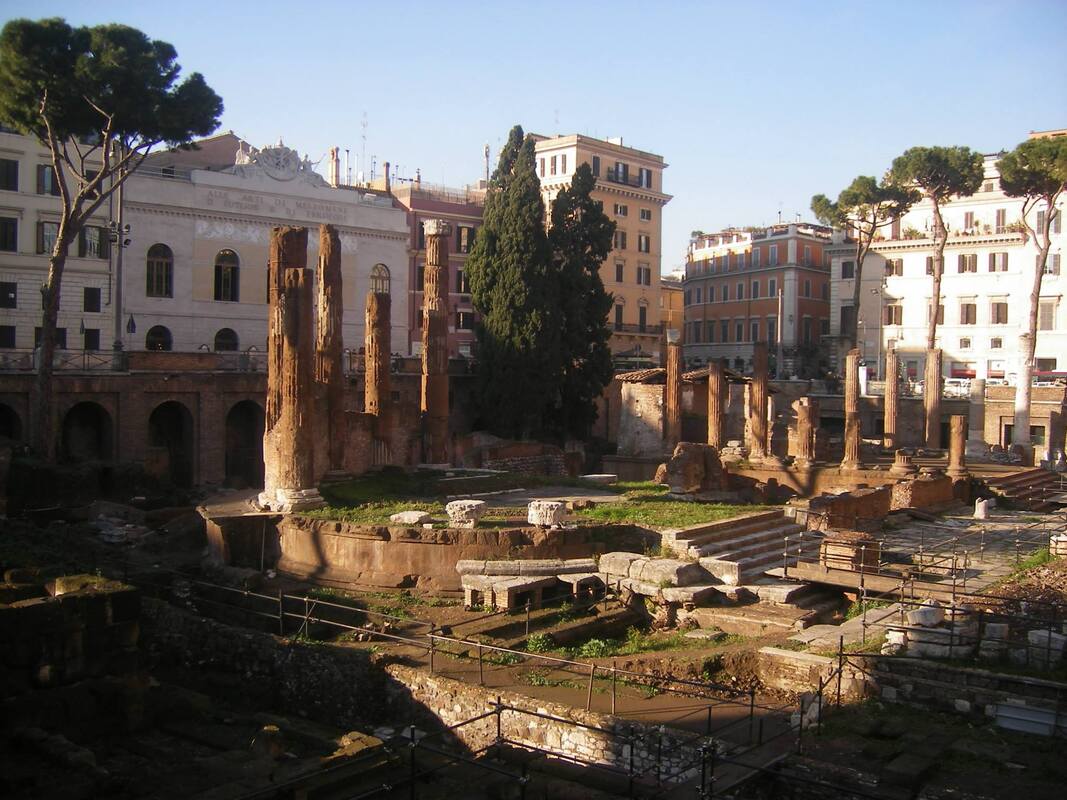
This charming, sunken archaeological space contains the crumbling remains of four Roman Republican temples and part of the Theatre of Pompey. It was on this spot (or rather, vaguely around this area) that Julius Caesar was famously assassinated in the Ides of March, 44 BC.
Fun fact: These ruins also double as a cat shelter! The Torre Argentina Cat Sanctuary proudly calls itself the oldest in all of Rome and is dedicated to feeding, vaccinating, and sterilising the feral cats that live in and around the temple ruins. As a cat lover, I was delighted to see a number of them lounging in the sun, napping on the ancient stonework.
The Pantheon of Rome:
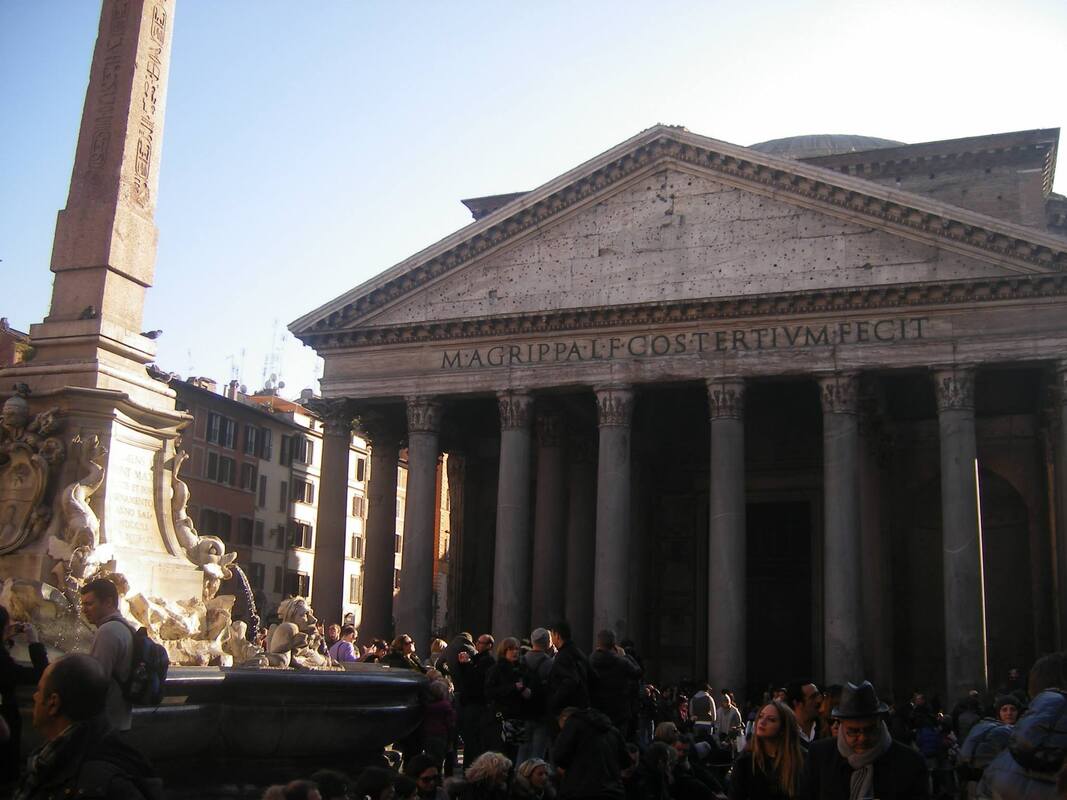
Completed around 125 AD under Emperor Hadrian, it is widely called one of the best-preserved temples of the ancient Roman world. While the name Pantheon suggests that it was a temple to “all the gods”, the building’s actual function is surprisingly uncertain.
The most awe-inspiring aspect of the Pantheon is its hemispherical, coffered dome. A large oculus at the centre of the ceiling brings natural light inside the entire structure and almost every visitor was craning their heads up to marvel at the dominating roof. To this day, the Pantheon’s dome remains the largest unreinforced concrete dome on the planet.
I rested for a while on the cool stony banks of Tiber Island, watching the river turn dark with the late afternoon. As recounted by Mary Beard in SPQR, the island has a somewhat quirky origin story — it was formed at the start of the Republican era when Roman citizens dumped all the crops growing on the private land of the hated tyrant Tarquinius Superbus into the river. As she puts it, it was as if “the shape of the city was born only with the removal of the monarchy”.
The island also has a long history as a place of healing. In Roman times, it supposedly housed a temple to Aesculapius, the Greek god of medicine, and in the 17th century, the island was used as a leper hospital. There is still a fully functioning hospital on the island called Fatebenefratelli Hospital — most famous for sheltering Jews during the Nazi occupation of Italy. Doctors in the hospital saved Jews by diagnosing them was a fatal, highly contagious, and entirely fictitious disease dubbed “Syndrome K”, thus deterring Nazis from raiding the hospital
A view of the Pons Aemilius from Tiber Island:
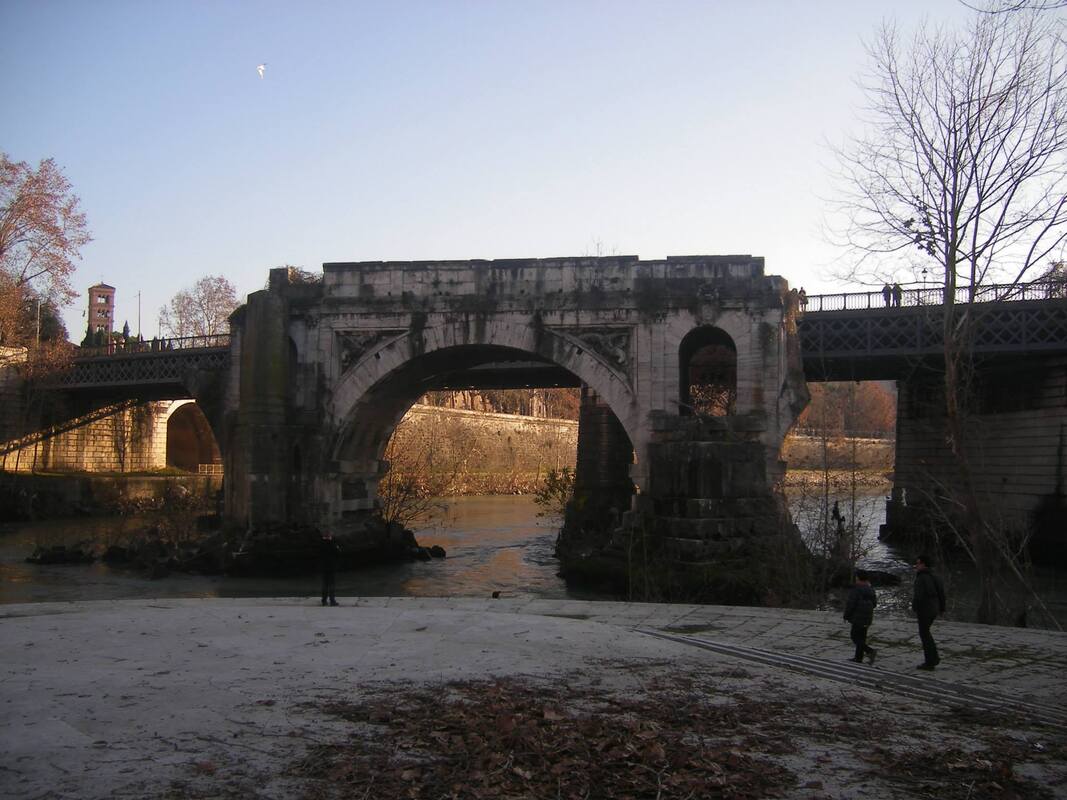
This is the oldest Roman stone bridge (or more accurately, the oldest crumbling remains of a bridge) in the city. Unsurprisingly, it is also known as Ponte Rotto or the “Broken Bridge”. Broken. Enduring. Pearls of antiquity disintegrated into a cold, Italian river.
The Circus Maximus at sunset, with Palantine Hill in the background:
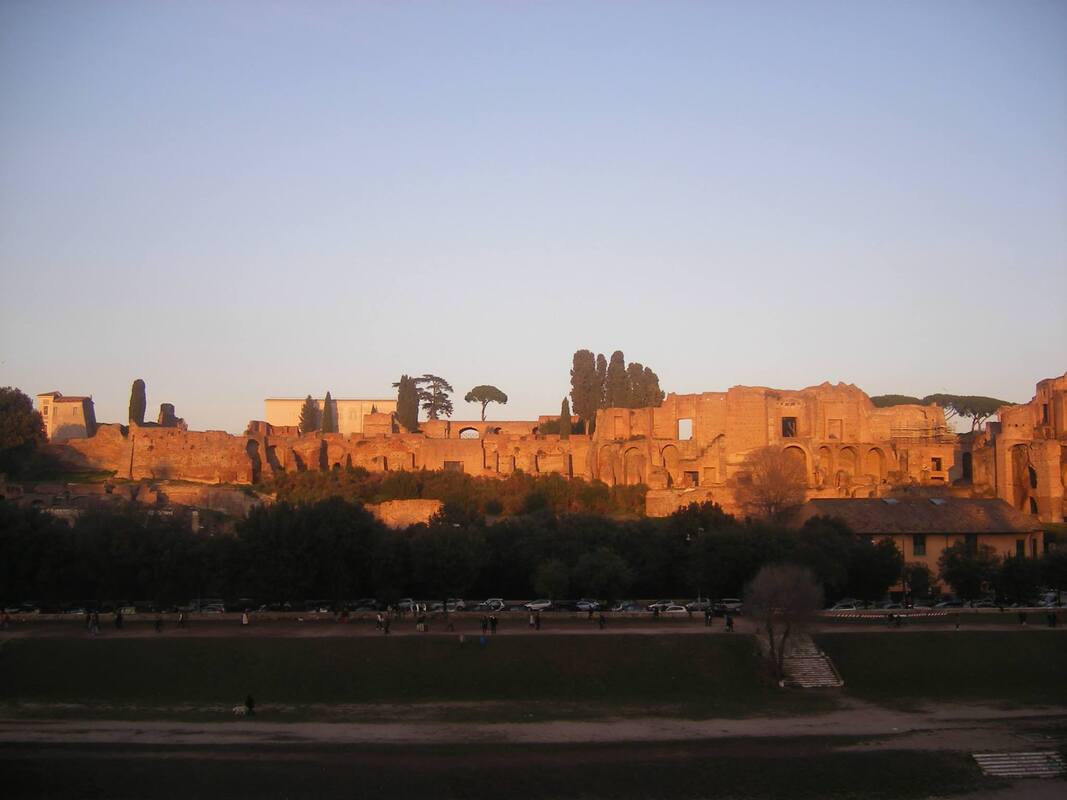
It’s hard to imagine what it must have been like all those centuries ago, with the roar of the crowd during the frenetic and often deadly chariot races. Today it is merely a sunken public park with a sandy oval. Sights like this remind me of the fascination that artists around the 18th century had with ruins, culminating in the fashionable “Capriccio” painting style which often placed small, quotidian human figures in utterly fantastical landscapes filled with immense, ancient ruins.
I found this photo on my camera and could not place its location:
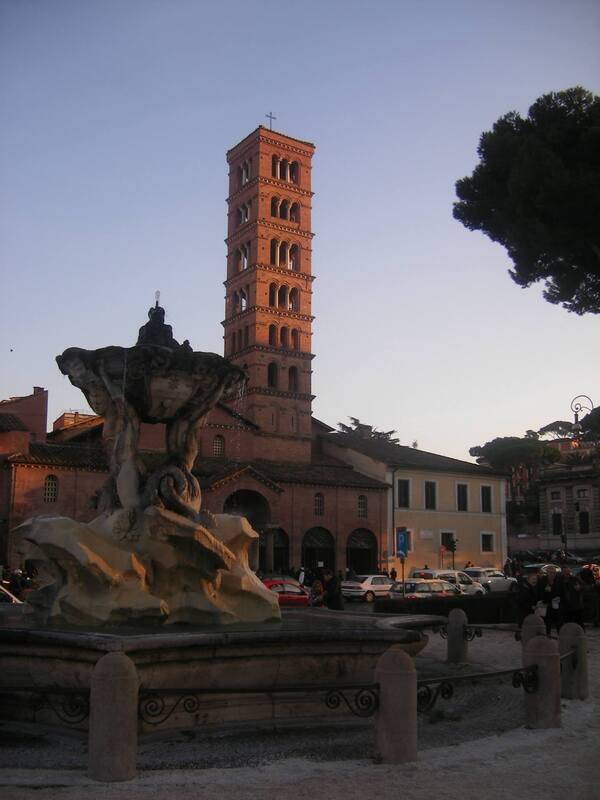
After some heavy googling, I managed to solve the mystery. Now I know that it’s an image I took of the Fountain of the Tritons outside the Basilica of Saint Mary in Cosmedin. But think about how often travellers take a photo, thinking they’ll recall the landmark later, but then completely forget. Think of all the pixels we carry with us that have lost their labels in time and space.
And thus ended my time in Rome. Perhaps my time here was too short. But then again, one could keep learning about this city for a lifetime. Perhaps that was Jung’s fear: to fall into an ocean of stories that you can never stop swimming through when there are other destinations calling.
So farewell, Roma. A fond goodbye to dead stone and bottomless culture, to Italian traffic and aspiring pickpockets, to my own memories of a place that is fading into trivia and unlabelled photos with every turn of the earth. Ave atque vale. All roads lead somewhere. Or maybe they lead nowhere. But at least I’m glad I could make a brief detour for Rome.
Venice (2014)
Posted 2 August 2020
An oath, an oath, I have an oath in heaven. Shall I lay perjury upon my soul? No, not for Venice.
– William Shakespeare, The Merchant of Venice
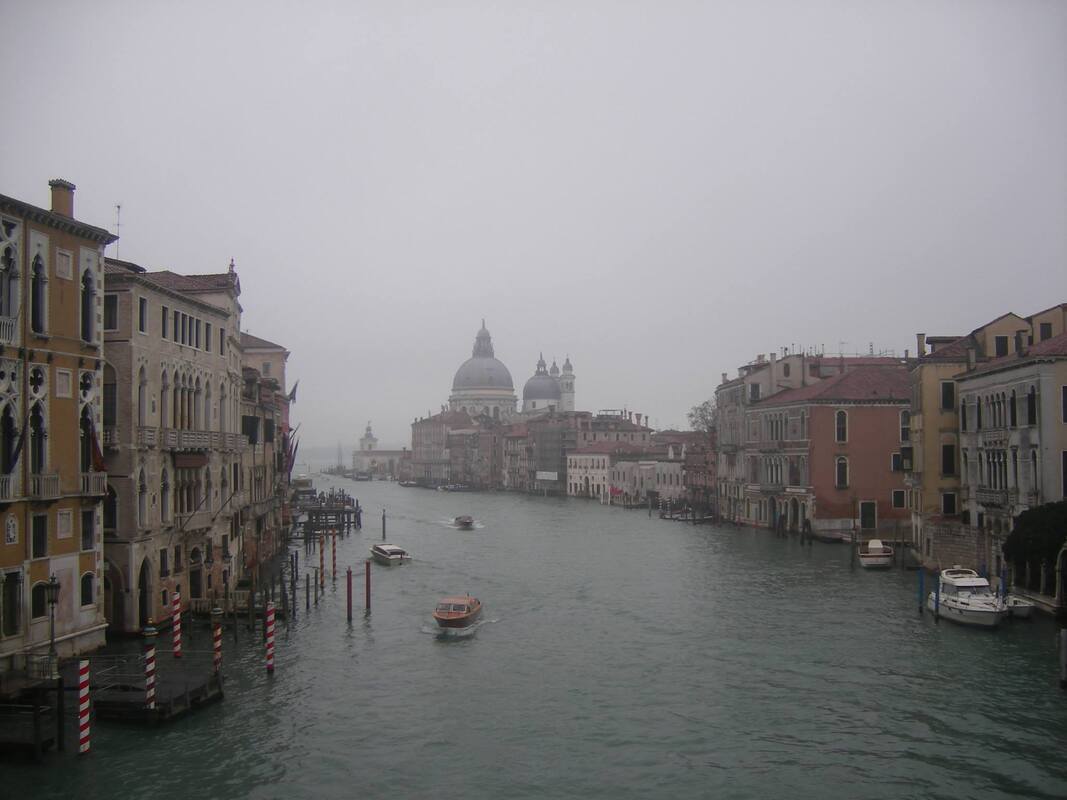
There I was. Three days in Venice with little money and terrible weather. But even with the sombre dead skies and cold puddling ground, La Serenissima was beautiful.
Stepping out of Venezia Santa Lucia railway station was a displacement into the fanciful. Can there possibly be a more dramatic entrance into a new city? The Grand Canal right before you. Movements on the water. The puttering vaporettos. San Simeone Piccolo’s striking green dome.
All these visual delights interlinking and separating, swimming in unison, flowing without fanfare.
City of Bridges. City of Canals. City of Too Many Visitors. City of Bucket Lists and Travel Brochures. City of Floating Clichés and Tourist Traps.
I completely understood what that meant and yet my time in Venice also revealed so much more.
Even now, seven years after the visit, I remember riding the water buses and being checked by the ticket inspectors. I can recall the chilly excitement and the hunger in my belly as I made my way to a pricey little hostel bed on the island of Guidecca. I still remember the itinerant romance of the city.
Venice wholeheartedly deserves its indomitable status in the mind’s eye. It was a commercial and cultural powerhouse throughout the Middle Ages and the Renaissance. It was the little city-state that transformed itself over the centuries, from a marshy saltwater town to the crown jewel of the Adriatic Sea.
According to legend, Venice was founded by Roman refugees, who sought refuge in a swampy lagoon from Germanic and Hunnic invaders. Was Venice really founded as a sanctuary city amidst the crumbling of the Roman Empire? Regardless of the truths in legend, what began as scattered communities of peoples across 118 islands slowly coalesced into a fledgling republic under a Doge, a supreme authority elected for life by the city’s aristocratic families.
Venice’s success was driven by globalisation in a time before globalisation as we know it. Its advantageous location in the region allowed it to ply a lucrative trade with both the Byzantine Empire and the Islamic world. Venice served as Europe’s gateway to Asia via the Silk Road and by the late 14th century was the most prosperous city in all of Europe.
Venice, of course, backed its magnificent wealth with military might, expanding its economic influence into an empire across the Italian mainland, the Balkan Peninsula, and beyond. Only by the 15th century, with the rise of powers like Portugal and the Ottoman Turks, did Venice’s status begin to fade.
But let us (briefly) pause on the history lesson. What does mighty Venice offer the visitor of today?
Well, for one thing, Venice’s network of canals is genuinely heaven for photographers. Its imagery — even if you have seen it so many times in pictures — is preeminently surreal in person. The thin floating houses. The balconies above the water. The Ponte dei Sospiri or Bridge of Sighs. The colourful pali da casada mooring poles.
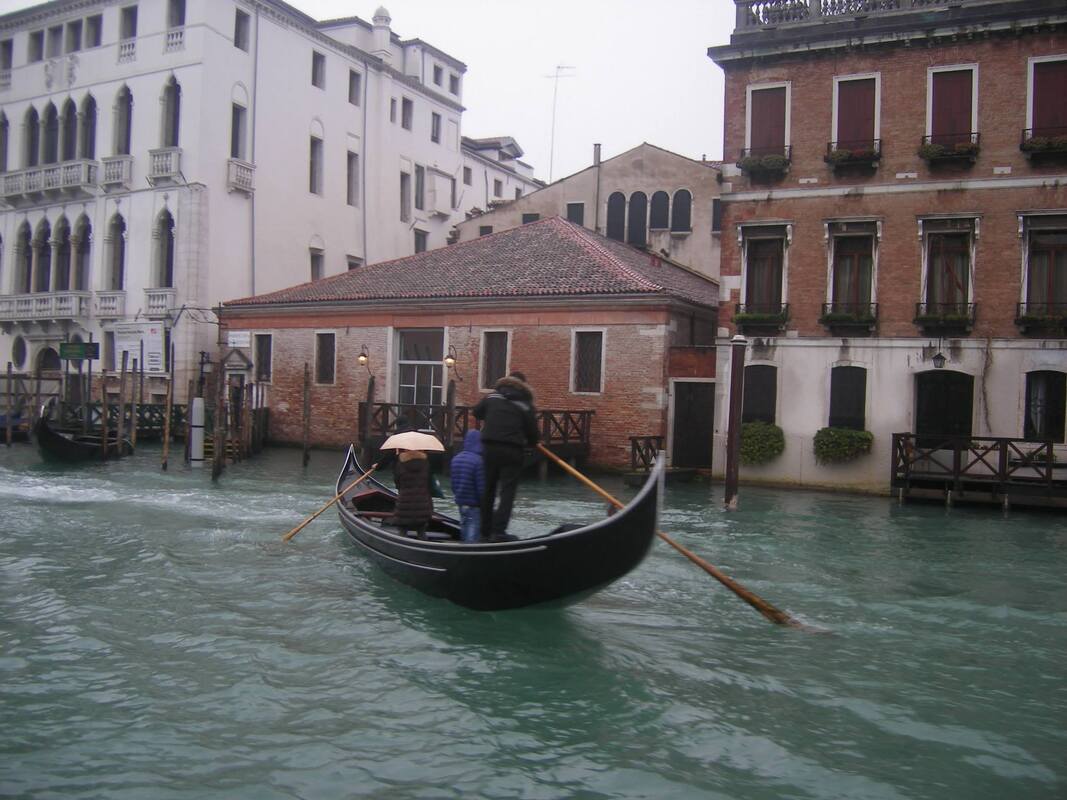
And no visage of the canals is complete without its traditional, flat-bottomed gondolas. Once a common means of transportation in Venice, with thousands of these little crafts swarming the waterscape, these days they operate solely as an elegant (albeit, pricey) experience for tourists. There are currently around 400 licensed gondoliers in Venice and, alas, none of them charged a fixed rate that a broke backpacking student could afford.
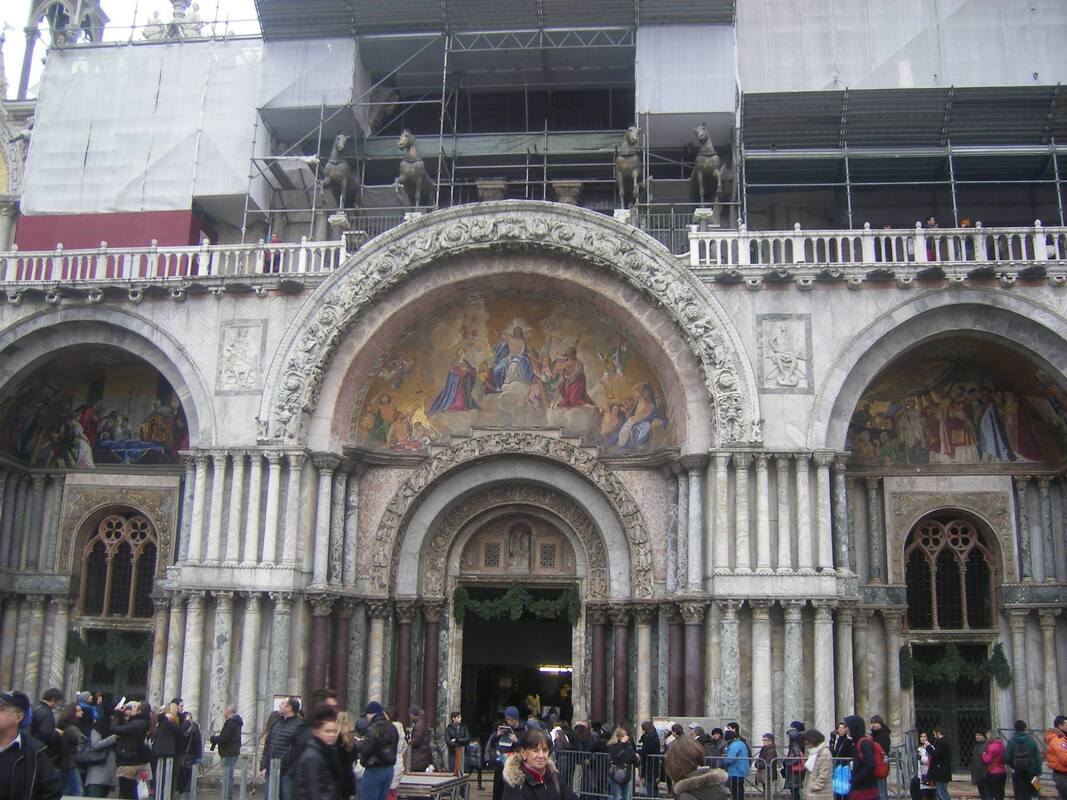
The centrepiece of Venice is without a doubt the Piazza San Marco, a vast public space bedecked the exotic facade of St Mark’s Basilica, the immensity of St Mark’s Campanile, the intricacies of the famous Clock Tower, and the rich colonnade of the Doge’s Palace. And yes, even in the mist and the rain, with half the basilica hidden by scaffolding, this was a place worth attending to.
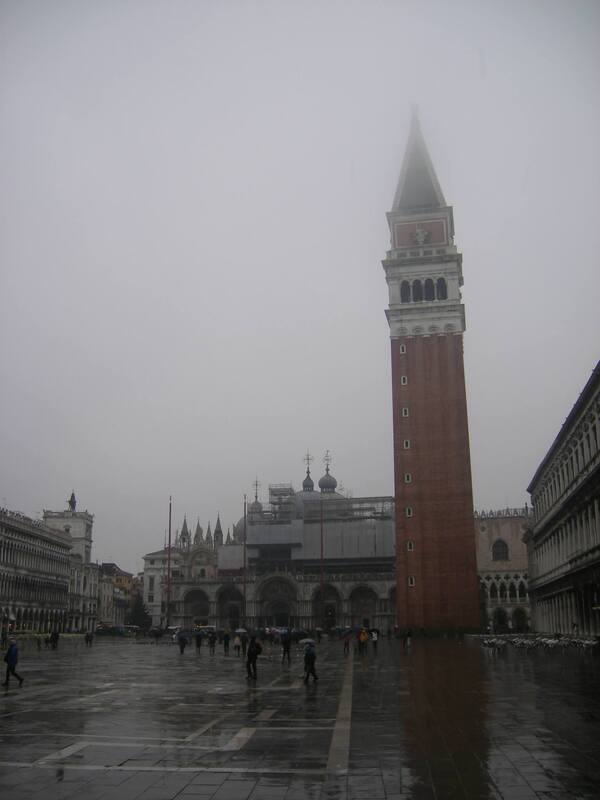
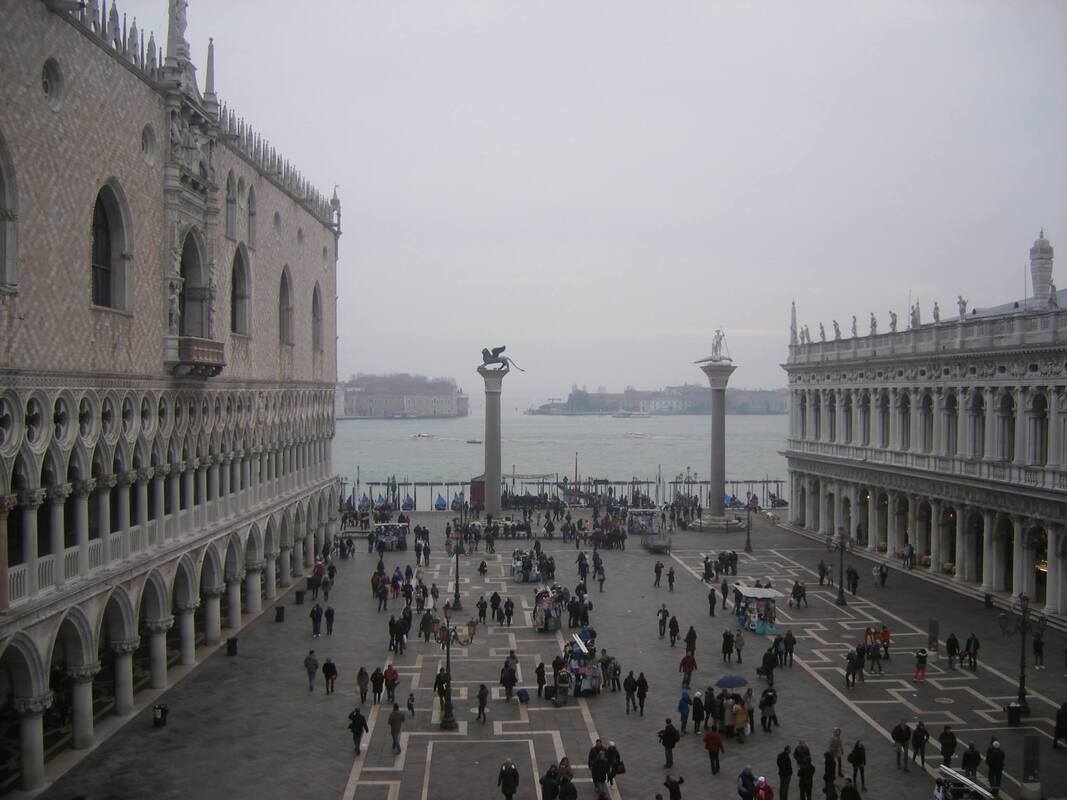
A view of the Grand Canal from Piazza San Marco with its two famous granite columns, one mounted with the winged Lion of Venice and the other with San Teodoro (Saint Theodore) in the act of spearing a dragon.
The Patriarchal Cathedral Basilica of Saint Mark. Basilica di San Marco. The word that comes to mind when gazing at its structure is “fusion”. With its blending of Islamic, Byzantine, and Italian artistic elements, the church represents the melting pot that Venice became through its maritime command.
Nicknamed Chiesa d’Oro or Church of Gold, the basilica is also a temple of material splendour with its opulent, golden mosaics. The original church was built to house the relics of Saint Mark after it was reputedly stolen by two Venetian merchants and smuggled out of Alexandria by boat. As the story goes, the body was concealed by pork products to dissuade Alexandria’s Muslim custom officers from investigating the cargo too closely.
The original Triumphal Quadriga, a set of four bronze horses that were once mounted on the roofed open gallery of St Mark’s Basilica, overlooking the piazza:
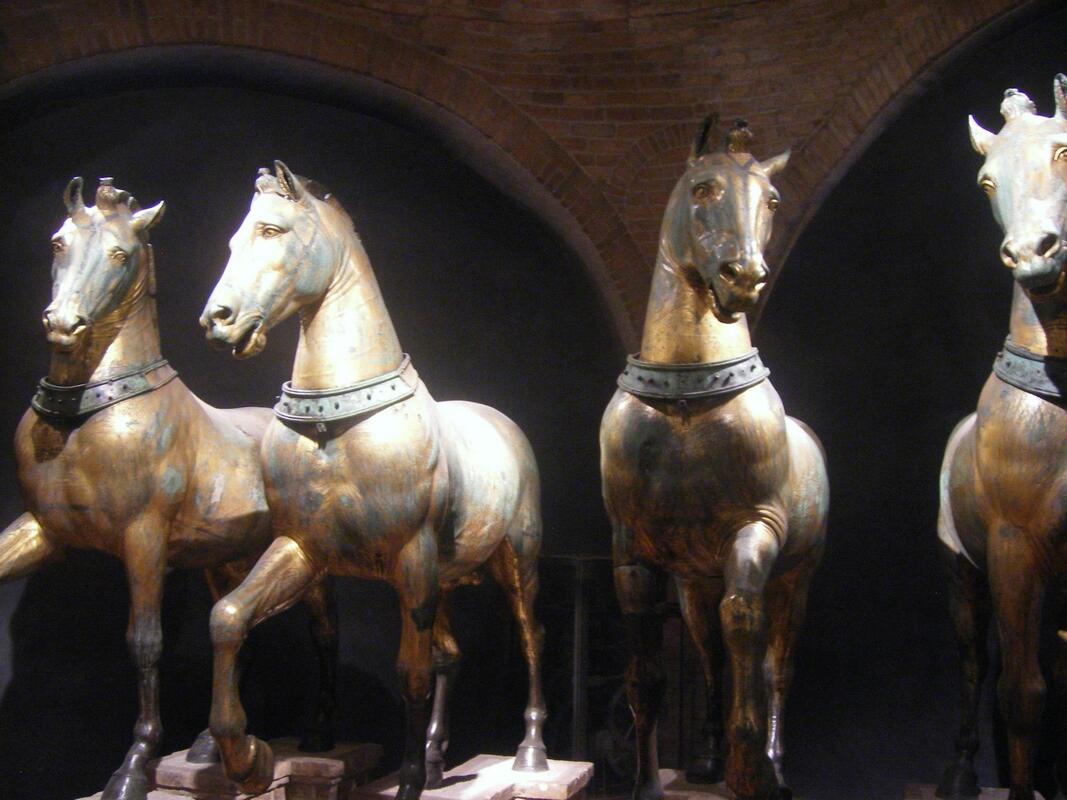
For restoration purposes, replica statues currently stand in its original place. Of ancient Roman origin, the horses were famously stolen by Napoleon Bonaparte in 1797, before being returned to Venice eighteen years later.
The Porta della Carta, the gothic ceremonial doorway into the Doge’s Palace:
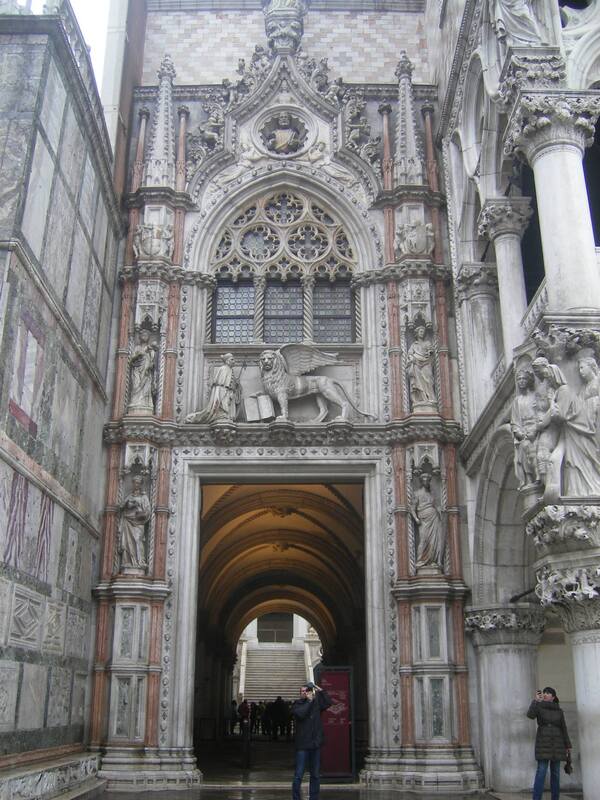
Above the main entrance, Doge Francesco Foscari, the 65th Doge of the Venetian Republic, is depicted kneeling before the winged lion of St. Mark.
Lavish and stately, the Doge’s Palace, or Palazzo Ducale, was once the heart of Venetian government and the official residence of the Doge himself. Every little niche and turret tells a story of architecture, history, and culture. Imagine them back in the day, striding across the palace’s large central courtyard. Ascending the the Golden Staircase, the Scala d’Oro. Descending the the Giants’ Staircase, with its two statues of the Roman gods Mars and Neptune at the top, representing Venice’s might on land as well as at sea, bearing down on the visitors. Waiting in the Chamber of the Great Council which was, without a doubt, the grandest room in the entire palace and was also at the time of construction, the largest meeting hall in all of Europe.
Torre dell’Orologio. The Clock Tower of St Mark’s Square:
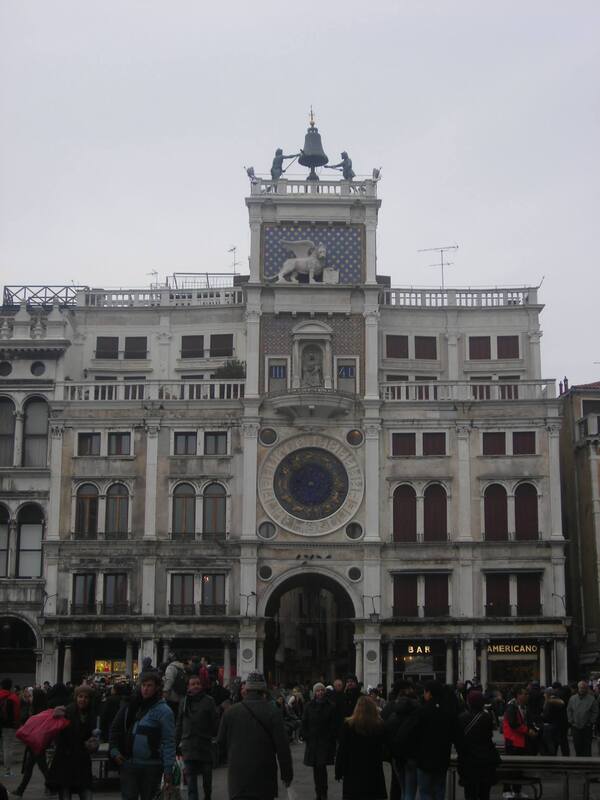
The timekeeper that has been a part of the city for over 500 years, announcing the passing of hours and days for the entire Republic. From top to bottom of the tower: The bronze bell strikers, the ubiquitous winged Venetian lion, a statue of Madonna and Child on the balcony, and the exquisite blue timepiece itself, with its golden clock hand, zodiac signs, and starry backdrop.
The Rialto Bridge lit-up at night:
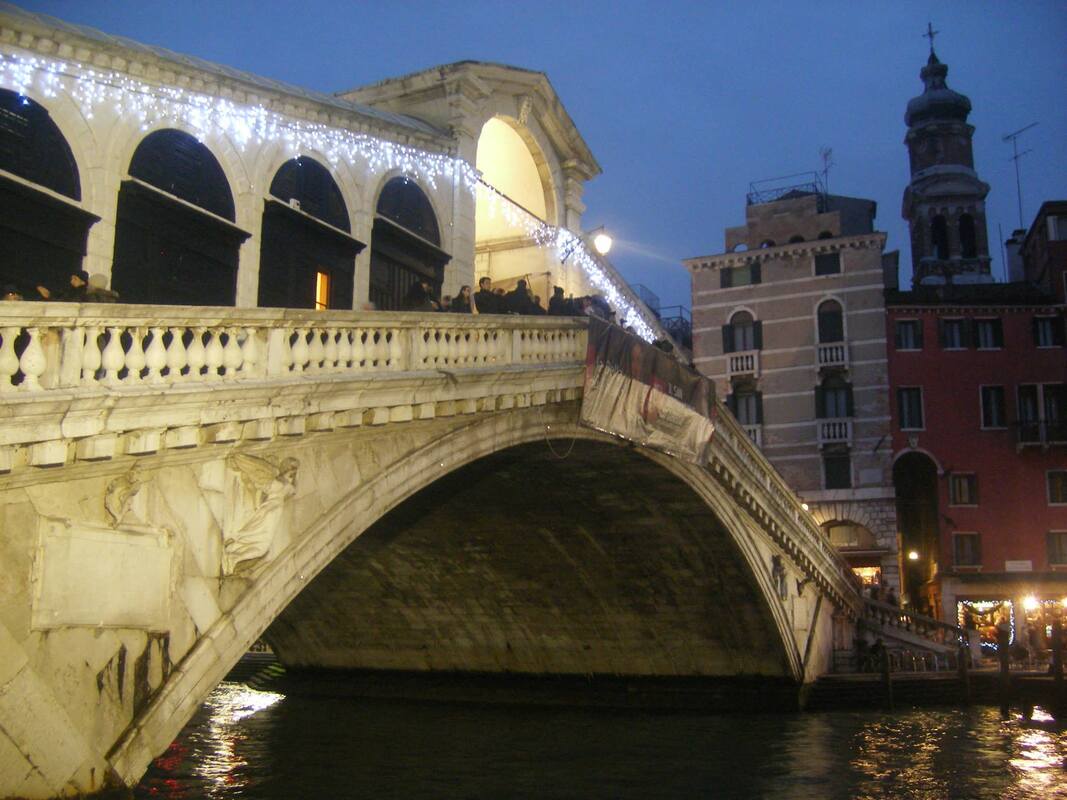
This beautiful marble bridge dates back to the Renaissance and is the oldest — and most iconic — of four bridges across Venice’s Grand Canal.
The entrance to the Venetian Arsenal:
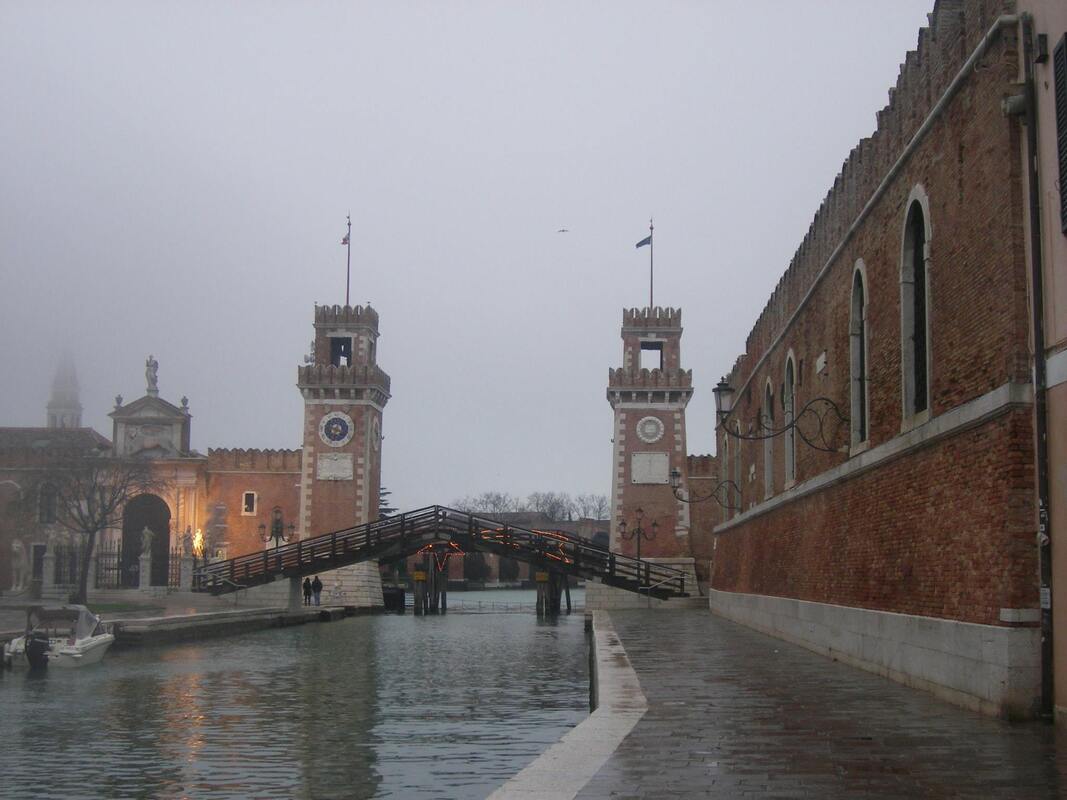
The history of this unassuming place is epic. Back in the 12th century, it was the largest industrial site in all of Europe, capable of mass producing (centuries before the start of industrial mass production) an entire warship in a single day — an astonishing feat for the time period. The great Italian scientist Galileo Galilei, the oft-called “father of modern science”, was a frequent visitor to the Arsenal and even served as an engineering advisor there.
And now to leave Venice proper for some short vaporetto rides to nearby islands…
- Isola di San Michele. An orange bricked necropolis. Almost the entire island is a walled-off cemetery and its grounds are very peaceful to visit (if you are so inclined). Just don’t do what I did and slip on the wet boards propped against the stone steps. Thankfully, there was no one there to judge me but the tombstones.
- Murano: a popular island town near Venice that is world famous for its glass products. Although the traditional glassmaking profession is dwindling on the island, Murano’s beautiful, artisanal glass is definitely still worth seeing. Make sure not to accidentally break anything in the shops.
- Likewise, Burano: a quaint, rainbow village that is also on its own little island in the lagoon. Admittedly rather damp and largely absent of visitors when I visited. The amusing, apocryphal story behind why the houses are so brightly painted is that it apparently helped fishermen returning from the sea to identify their own house in the fog.
These days, given the iconic status of the island, Burano’s residents need government permission to paint their house a different colour.
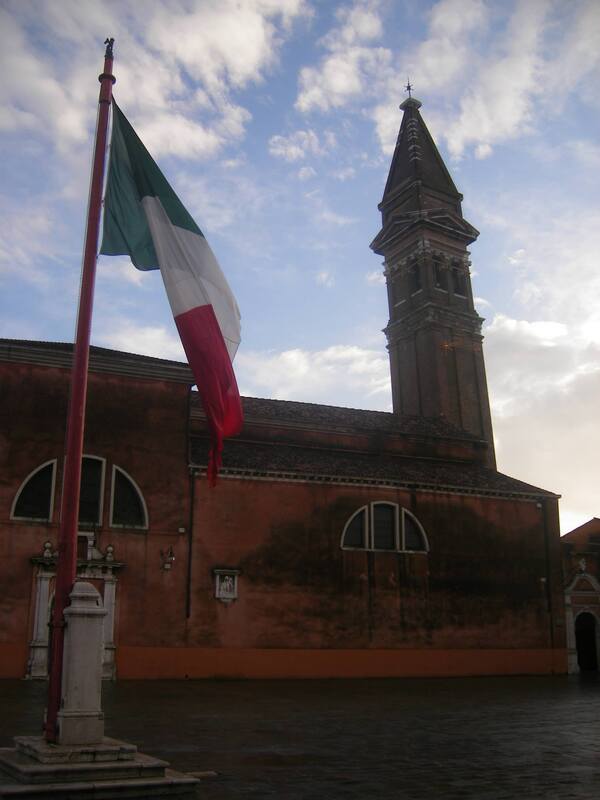
Move aside Pisa — the Leaning Bell Tower of Burano is here. I briefly thought I had a problem with my eyes when I first noticed this teetering, unstable-looking campanile! Attached to the Church of San Martino, its extreme tilt is due to land subsidence.
Speaking of unstable situations… It is hard to talk about Venice these days and not mention the challenges the city is facing from issues such as over-tourism, cruise ships sailing dangerously close, pollution, and much more. The city is also at risk of literally sinking into the lagoon as a result of rising sea levels and excessive groundwater extraction degrading the land.
Visitor quotas. Special taxes. Flood barriers. Bans on cruise ships. Sustainable tourism. So many solutions have been suggested or implemented to address Venice’s challenges. I can’t claim any form of expertise on what should be done. All I can do is sadly acknowledge that I might never know this city ever again — or rather, more to the point, this city of experiences that I and so many others have explored might dissolve away for good.
On my last night in Venice, I escaped sideways into the depths of this city. Weaving through the empty water warrens of Cannaregio and Castello, I became one with the darkling walkways and dead-end bridges. I became one with the creaking boats and lapping stone steps I found myself in an unremarkable little square. They had not yet taken down the Christmas decorations. The street lamps gave the square a mulled, orange haze and I remember a football being kicked around by children.
Had I finally found the real Venice? Or was this just another trick of the light?
Prague (2014)
Posted 11 June 2023
Midnight on the Charles Bridge. The hawkers, pickpockets, and beggars of Prague have all retired for the night. Only lovers and street cleaners remain. All of us caught under the dead gaze of a menagerie of saints. A soft presence of snowfall is caught in the columns of street lights. The Turkish gentleman at the pizzeria on Karlova Street told me it snowed last winter for only thirty minutes. “It was boring”, he said.
I stand around on the bridge for a few more minutes, readying myself for something to happen. But nothing does.
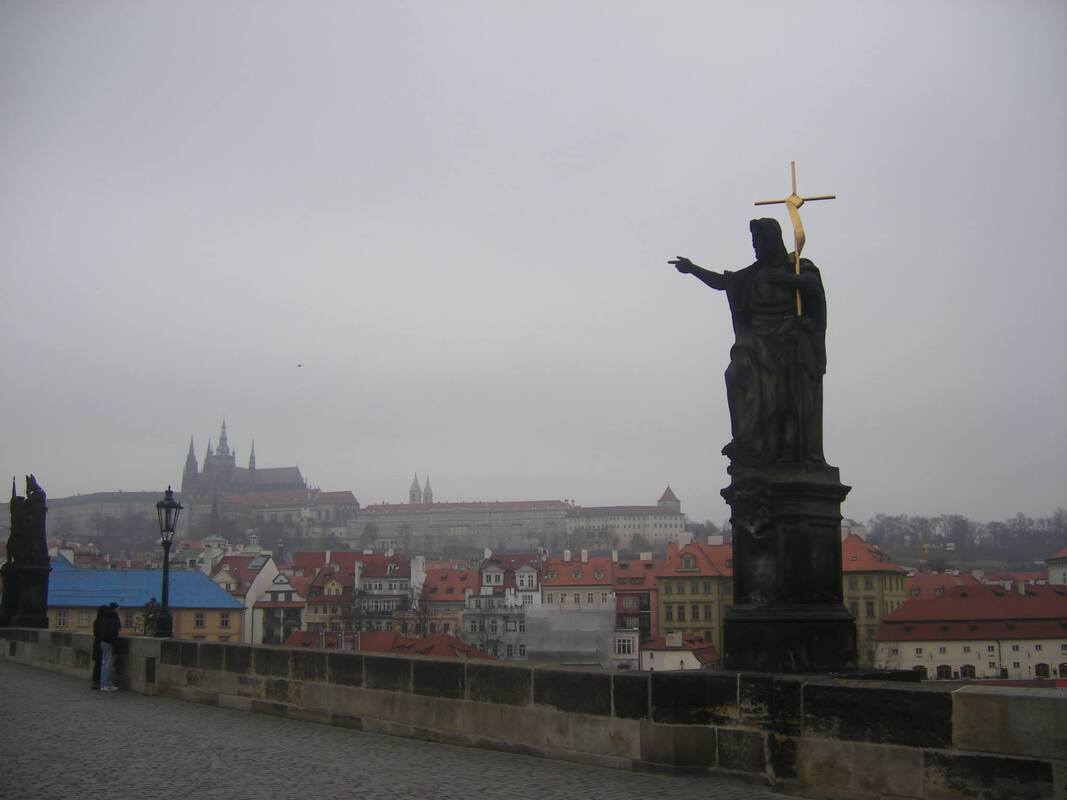
“Because I had to fast. I can’t do anything else,” said the hunger artist. “Just look at you,” said the supervisor, “why can’t you do anything else?” “Because,” said the hunger artist, lifting his head a little and, with his lips pursed as if for a kiss, speaking right into the supervisor’s ear so that he wouldn’t miss anything, “because I couldn’t find a food which I enjoyed. If had found that, believe me, I would not have made a spectacle of myself and would have eaten to my heart’s content, like you and everyone else.”
– A Hunger Artist
I once posted a review of Milan Kundera’s “The Unbearable Lightness of Being” on social media that pissed off a few people. The review simply said this: “As far as I can tell, the whole point of the novel is that the Soviet invasion of Czechoslovakia was great since it gave the intelligentsia of Prague lots of time to have sex with each other.” I think I still stand by that review.
“Everyone strives after the law,” says the man, “so how is it that in these many years no one except me has requested entry?” The gatekeeper sees that the man is already dying and, in order to reach his diminishing sense of hearing, he shouts at him, “Here no one else can gain entry, since this entrance was assigned only to you. I’m going now to close it.”
— Before the Law
Shown here (allegedly): the infamous window where the defenestration of Prague occurred. It was here in 1618 that two Catholic Imperial governors were tossed out a window by Bohemian Protestants (supposedly landing in a pile of horse manure, which broke their fall), triggering the start of the Thirty Year War, a brutal European conflict that led to the death of a third of the population of the Holy Roman Empire.
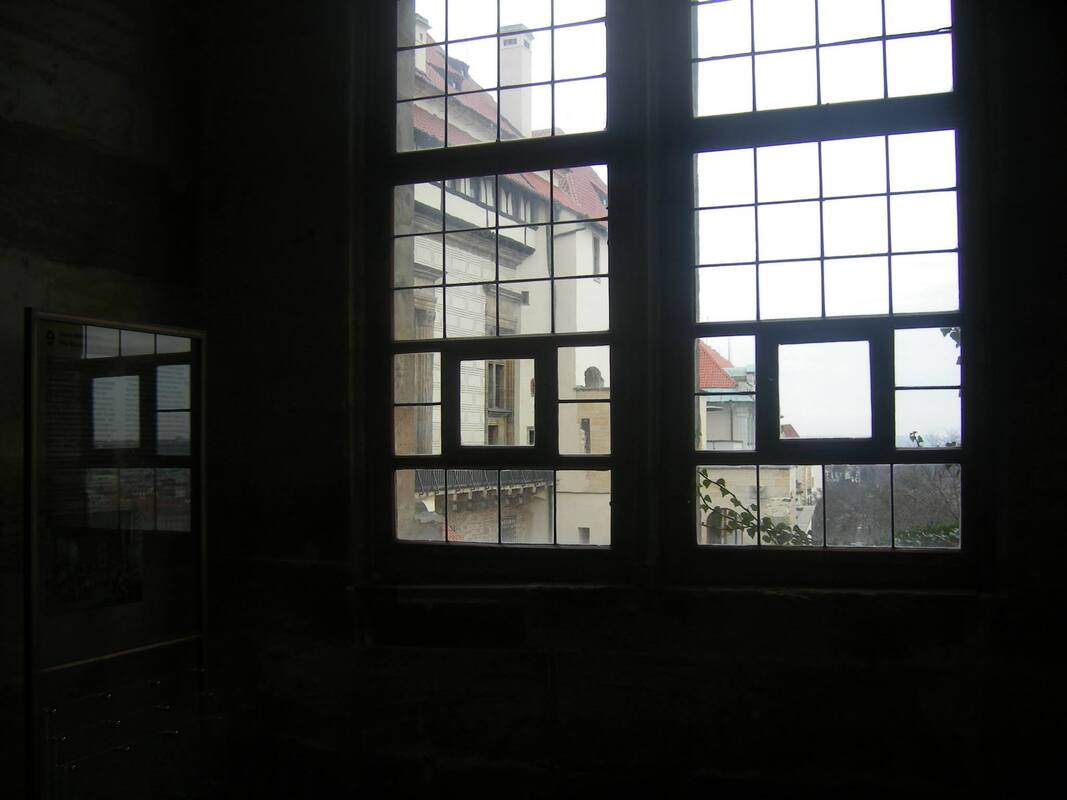
While they amused themselves in this way, it struck Mr. and Mrs. Samsa almost at the same moment how their daughter, who was getting more animated all the time, had blossomed recently, in spite of all the troubles which had made her cheeks pale, into a beautiful and voluptuous young woman. Growing more silent and almost unconsciously understanding each other in their glances, they thought that the time was now at hand to seek out a good honest man for her.
– The Metamorphosis
But how? But how what? But how what why? But how what why who? But how what why who when? But how what why who when where?
It was the waiter at Charles Bridge with a digital camera at 2 o’clock because there was a turgid, nippy love triangle under a nearby lamppost.
Turgid (adj.): 1610s, from Latin turgidus meaning “swollen, inflated, distended”, and from turgere “meaning to swell”, of forgotten origin. Earliest use in prose appears to date back to 1725.
“Giddy up,” he says and claps his hands. The carriage is torn away, like a piece of wood in a current. I still hear how the door of my house is breaking down and splitting apart under the groom’s onslaught, and then my eyes and ears are filled with a roaring sound which overwhelms all my senses at once. But only for a moment.
– A Country Doctor
“Oi Prague, Czech it out!” said the tired old lark.
What all the others had found in the machine, the Officer had not. His lips were pressed firmly together, his eyes were open and looked as they had when he was alive, his gaze was calm and convinced. The tip of a large iron needle had gone through his forehead.
— In the Penal Colony
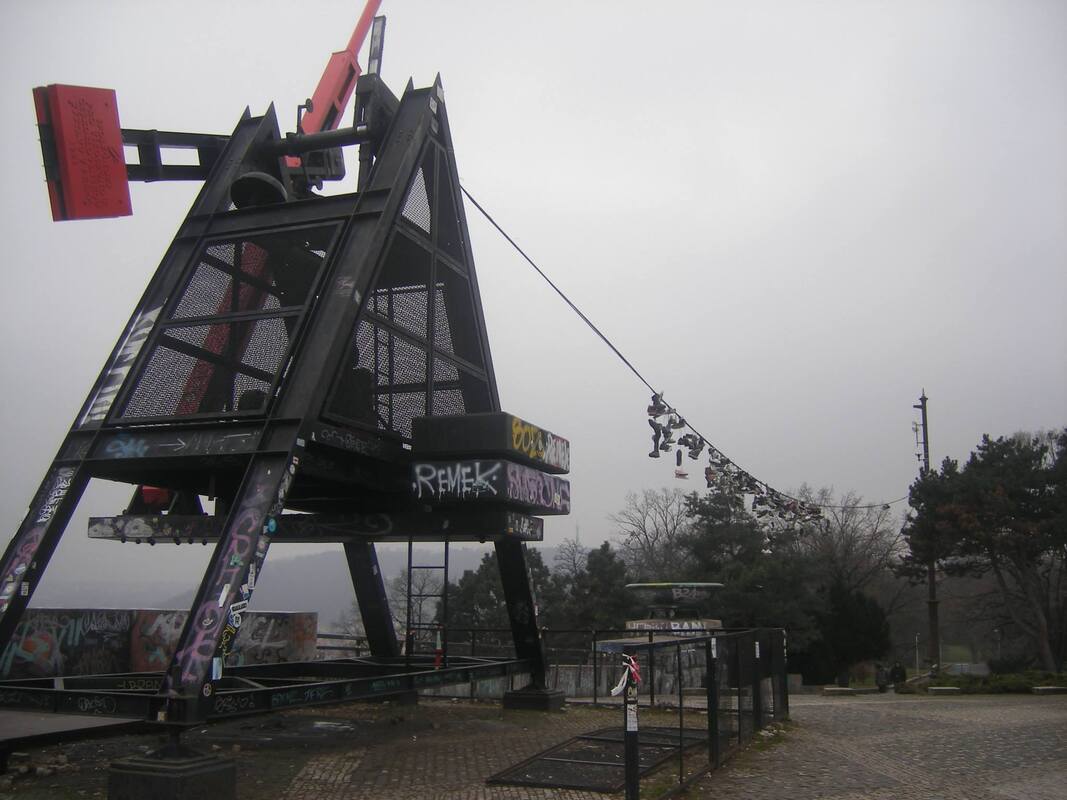
Oh dear, and here creaks the Prague Metronome, overlooking the Vltava River and the city herself. This grand pendulum, an artistic piece about the temporality of all things, has very aptly seen better days…
And if he finally burst through the outermost door—but that can never, never happen—the royal capital city, the centre of the world, is still there in front of him, piled high and full of sediment. No one pushes his way through here, certainly not someone with a message from a dead man. But you sit at your window and dream of that message when evening comes.
— An Imperial Message
( Strč prst skrz krk.)
But the hands of one of the gentleman were laid on K.’s throat, while the other pushed the knife deep into his heart and twisted it there, twice. As his eyesight failed, K. saw the two gentlemen cheek by cheek, close in front of his face, watching the result. “Like a dog!” he said, it was as if the shame of it should outlive him.
– The Trial
“Holy sight-See-ing” (2013)
Posted 2 September 2020
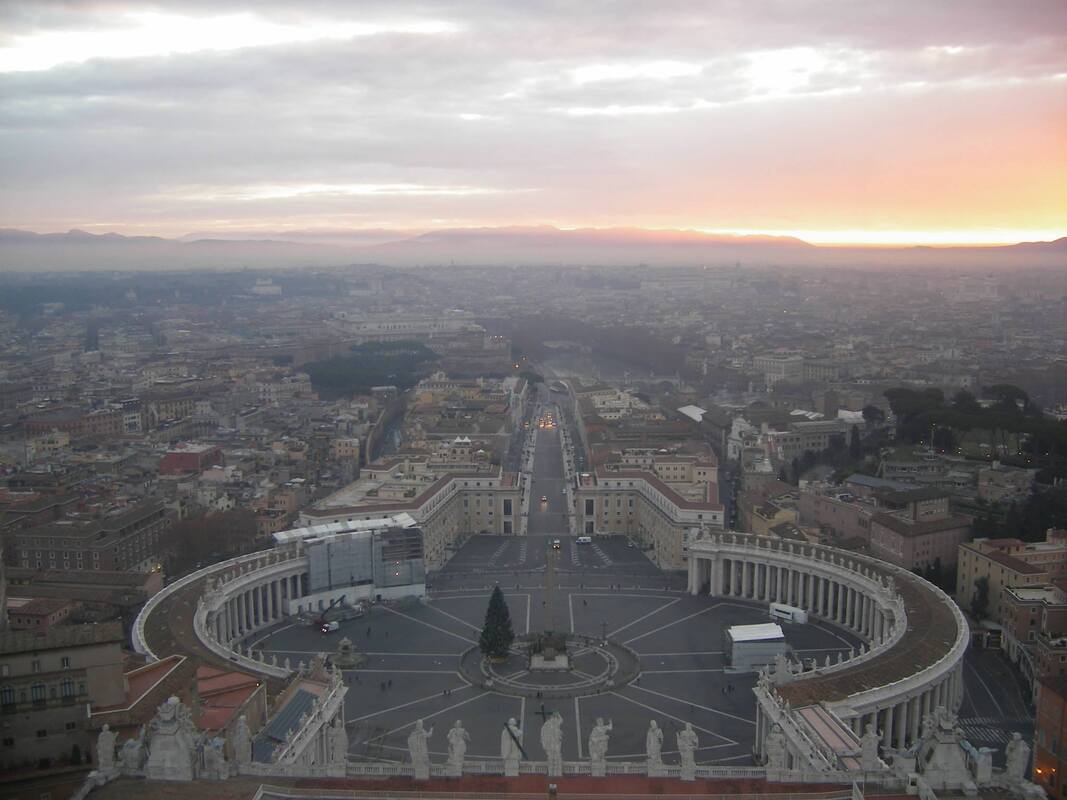 St. Peter’s Square at sunrise
Vatican City
When one is in Rome, it would be remiss of them not to stop by the Vatican City, the smallest sovereign state on the planet. The moment one steps inside St. Peter’s Square, they are transported outside of Italy and into the realm of an absolute theocratic monarchy, heading a religion with 1.3 billion members worldwide One of my most memorable experiences in Europe was climbing the dome of St. Peter’s Basilica and being the first person on the roof that morning. Just myself and the apostles overlooking Rome at sunrise. The bells suddenly thundered and I watched pigeons explode into the air. Extraordinary.
The basilica is, without a doubt, one of the most breathtaking human creations I have ever entered. What a strange word. Can Breathtaking. such vaulted scale and religious beauty literally interrupt a person’s breathing? Can such a centrepiece of world culture still strike awe into someone, like me, who holds no faith? I certainly believe so.
I remember being fixated on the dark sculpted canopy that loomed over the high altar. St. Peter’s Baldachin. Its twisting columns were like the legs of some titanic creature, but not of this world.
I was also entranced by the statues that populated the cavernous space of the basilica. Michelangelo’s Pietà was a powerful Renaissance marvel. Likewise, the other statues were works of gorgeous craftsmanship which captured the elegant motions and intense expressions of saintly and papal figures. It seemed as though if one were to merely prod them, they would stir into life.
A visit to Vatican City is really an immersion in two parts. The first, of course, is done by entering the great world church of St. Peter’s Basilica. The second is undertaken by exploring the Vatican Museums, where the full force of the Roman Catholic Church’s wealth and influence across time and space is on display. Priceless frescoes, statues, and paintings — all of it hoarded, or created, within the Vatican’s ecclesiastical dominion.
Some of my personal highlights from the Vatican Museum:
- Laocoön and His Sons, one of the most famous ancient sculptures excavated in Rome.
- A statue of Artemis of Ephesus, a goddess of fertility, that is decorated with bull testicles.
- An enormous porphyry basin from imperial Rome, flanked by gilded bronze statue of Hercules.
- The porphyry sarcophagi of Helena and Constantina, the mother and daughter of Emperor Constantine the Great.
- The Maps Gallery, surely one of the most astonishingly beautiful hallways ever created.
- The School of Athens by Raphael, a painting which depicts some of the greatest thinkers of classical antiquity.
A journey into the Vatican Museums is also a journey into the Sistine Chapel, which is celebrated for containing perhaps the most celebrated artistic achievement in all of human history. The effect of the Sistine Chapel, however, is mildly dampened by the frequent snap of the guards: “No photo! No camera!”
It is a space where the demand for hushed contemplation and the burning desire of tourists to capture everything they see is pressed into an unresolvable, endless tension.
I felt too sheepish and too discouraged to take any photos within the chapel, illegal or otherwise. Regardless, I doubt any device of mine could’ve captured Michelangelo’s heavenly ceiling, so far above us. Better to crane one’s head and try to take in as much as possible, for however brief a time.
Instead, I satisfied myself by absorbing the masterful paintings which, like ceremonial heralds, guided the crowd towards the chapel.
A day trip to Versailles (2013)
Posted 22 July 2020
A portal to the Ancien Régime
What draws people to the Palace of Versailles like bugs to a golden light? Is it admiration for French royal history and 17th-century French art? Is it to satisfy a daydream of living in fantastical and exalted opulence? Or is there a darker, sardonic element to it? A macabre recognition that all these fineries could not save the king and queen from the blade during the French Revolution? I must admit, I felt a weird mix of all three when I entered the former residence of the House of Bourbon.
I visited the Château de Versailles on a crisp winter’s day. Getting there from Paris was almost too easy. The city of Versailles is located less than twenty kilometres south-west from Paris by RER and the palace is only a short walk from the train station. Given its close proximity to the capital and global fame, the Palace of Versailles is obviously wildly popular all year around. As such, the First Rule of Popular Day Trips applies in full force: Drag yourself out of bed and get there as early to beat the crowds.
A quick history rundown: The Palace of Versailles can be condensed into the story of three monarchs with the name Louis. Sort of.
Originally, the royal palace was merely a hunting lodge for King Louis XIII in the early 17th-century. His son, King Louis XIV (also famously known as the Sun King) took a great liking to the site and began to significantly expand it, eventually making it his Court in 1683. It then remained this way up until the doomed reign of King Louis XVI—the last monarch to live in Versailles and the last King of France prior to the French Revolution of 1789-99.
Inside the royal residence
The palace, simply put, is astonishing. There are 2,300 rooms spread over 63,000 square metres, and almost every single room that is accessible to the visitors is a testament to the luxuries of the time. This is perhaps best exemplified in the gilded elegance of the King’s Apartment and Marie Antoinette’s Private Chambers.
It’s worth noting that the palace continued to be developed, even after the wane of the Bourbon dynasty. For instance, there’s the Coronation Room with its immense painting depicting the consecration of Napoleon Bonaparte and the coronation of his wife, Empress Josephine. There’s also the 1792 Room, another post-French Revolution room, filled with paintings highlighting key battles and figures from the French Revolutionary Wars.
But the highlight of Versailles is, without a glint of doubt, the dazzling Hall of Mirrors. The gallery showcases French economic, political and cultural prowess from that time period, and is named after its large mirror-panelled arches (mirrors were a highly expensive rarity in the 1600s).
The Hall of Mirrors also played a role in 20th-century history as well. The Treaty of Versailles was signed here in June of 1919, concluding the First World War. It also arguably, with its brutal treatment of Germany, helped lay the foundations for the rise of Nazism and the lead up to the Second World War.
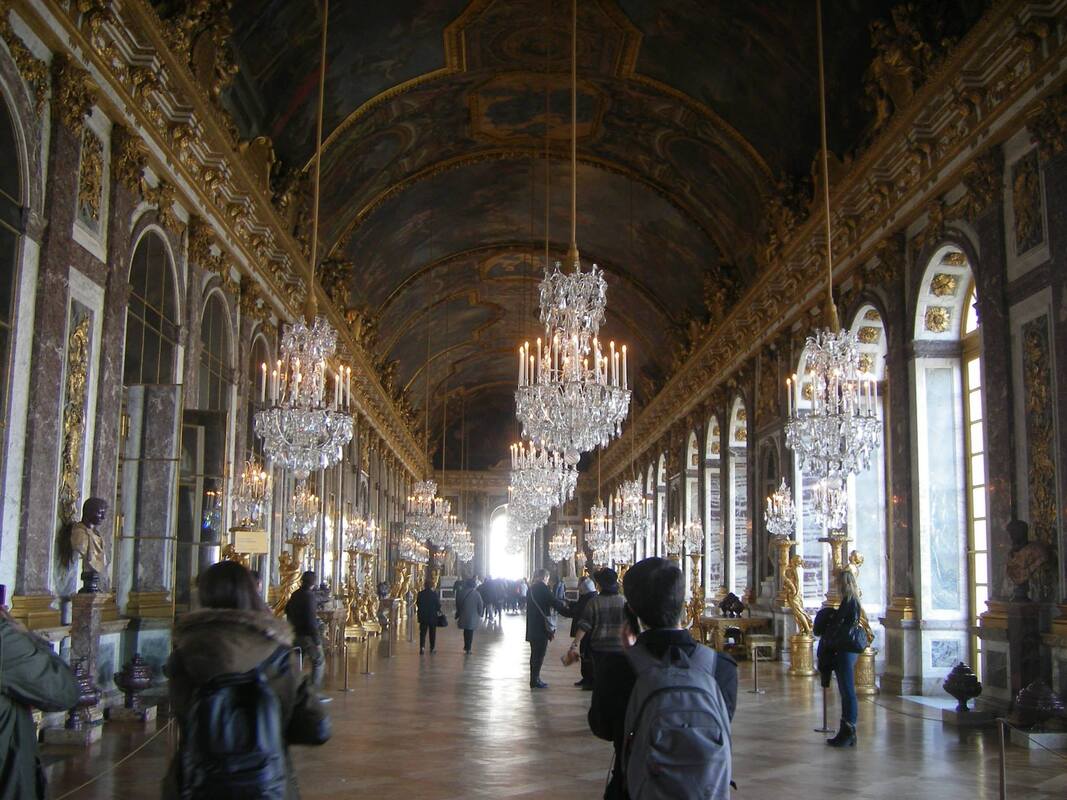
Connected to the Hall of Mirrors are the War Room and the Peace Room. The War Room commemorates the military victories of France with its marble panels, trophies and gilded weapons. In contrast, the decor in the Peace Room praises the benefits of peace brought upon the continent of Europe by France.
The State Apartments are another impressive part of the palace. They have lofty names such as the “Venus Salon”, the “Mercury Salon”, and the “Mars Salon” and were used to hold official acts of the state.
For what my words are worth, I believe the most arresting of these rooms is the Hercules Salon. The French artist François Lemoyne painted its entire ceiling, which depicts a gathering of Greek gods and goddesses. The ceiling took Lemoyne four years to complete and, according to rumours, the project was so exhausting it drove him mad and he committed suicide in 1737 by stabbing himself repeatedly with a sword. Yikes.
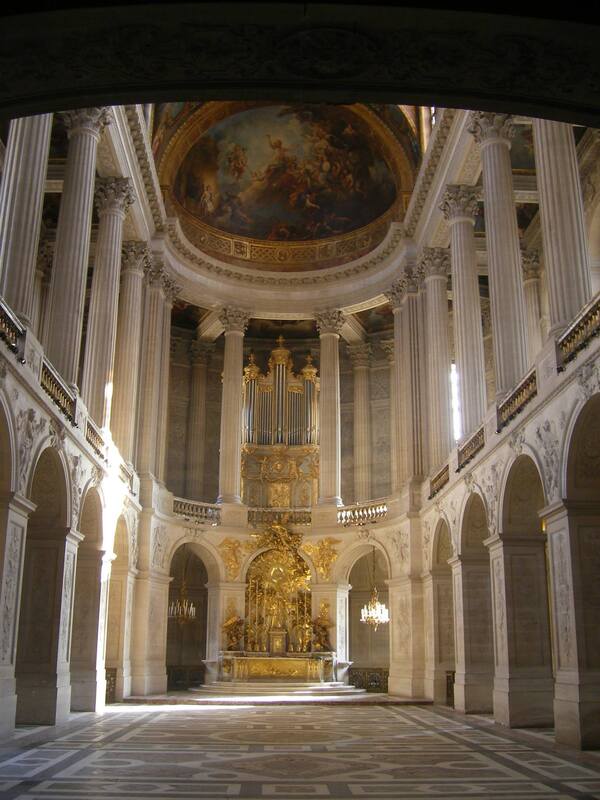
The Royal Chapel is yet another splendour of Versailles, with its airy Gothic-inspired architecture. It was in this chapel, in 1770, that Marie Antoinette, at age fourteen, married Louis XVI.
The Palace Gardens
Once you’re done with the inside of the palace, there are still the immense palace gardens to explore. Work on the gardens began around the same time as the development of the palace itself and took approximately four decades to complete. They’re hard to cover all at once, particularly in wintertime with the icy air nuzzling down your neck…
There are buildings that are definitely worth exploring as well — and best of all, they have fewer crowds to navigate through. There’s the Grand Trianon with its pink marble colonnade, state apartments, and private chambers. The Petit Trianon is the Grand Trianon’s smaller counterpart, but no less charming with its elegant rooms.
Lastly, tucked away in a corner of the giant royal estate is the Hameau de la Reine or Queen’s Hamlet. This was Marie Antoinette’s private leisure retreat. It resembles an idyllic fantasy version of a French peasant farm and enabled her to live out a rustic peasant lifestyle, milking cows and what not.
As charming the hamlet is, it’s important to remember what it represented to the angry and impoverished French peasantry: Further proof that the royal family was decadent, contemptuous, and out-of-touch with the common people.
The king is dead. Long live the king.
It all fell apart in the end for the monarchy. In October of 1789, a crowd of thousands of Parisians, enraged with chronic food shortages, managed to besiege the palace. They ultimately forced the royal family out of Versailles and back to Paris with them. I’m sure you know what occurred next. The French Revolution consumed the nation. The guillotine reigned supreme. And King Louis XVI and Marie Antoinette lost their heads.
Once I weigh the palace’s beautiful sights against the force of history, I become ambivalent about what to make of Versailles’ overflowing sumptuousness. What should we feel when we gawk down its aureate halls? The extravagance that draws countless visitors to the palace each year is the same extravagance that enraged a nation and condemned its occupants to death.
In mulling over these thoughts, I’m reminded of a poem by the American poet Marianne Moore:
No Swan so Fine
“No water so still as the
dead fountains of Versailles.” No swan,
with swart blind looks askance
and ambidextrous legs, so fine
as the chintz china one with fawn-
brown eyes and tooth gold
collar on to show whose bird it was.Lodged in the Louis Fifteenth
candelabrum-tree of cockscomb-
tinted buttons, dahlias,
sea-urchins and everlastings,
it perches on the branching foam
of polished sculptured
flowers—at ease and tall. The king is dead.
The king is dead. The foundations are dead. Everything in the Palace of Versailles is beautiful and exquisitely ornate, yes, but it is also ossified. Suspended and lifeless. Locked in a fanciful cage of impotence.
If this idea bothers you, then I recommend that on your visit to Versailles, you also make a brief trip to the Royal Tennis Court, only a few blocks away from the palace, to see a different side of this time period.
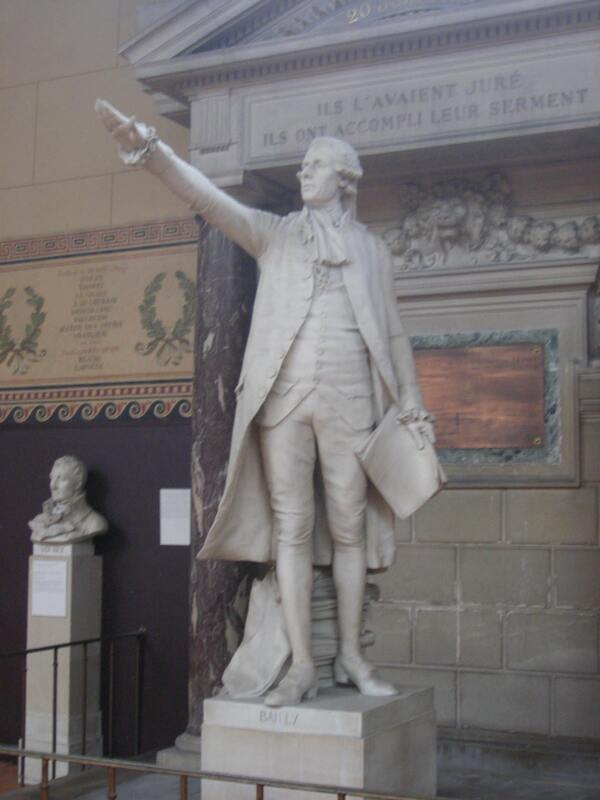
It was here, in the middle of 1789, that the non-privileged members of the National Assembly committed an act of defiance against the monarch. Fearing the king was forcing them to dissolve, they gathered inside a tennis court and took an oath to remain unified until France had a written constitution. This Tennis Court Oath was one of the first great sparks of opposition that ultimately culminated in the French Revolution itself.
A statue of Jean Sylvain Bailly in the Royal Tennis Court, an early leader of the French Revolution:
It is true that the French Revolution was an upheaval of unprecedented proportions. The revolution led to wild radicalism and the infamous Reign of Terror. It opened the gates to all manner of political chaos and instability in France. Simply put, history can be a fickle and merciless journey.
But the revolution also seeded noble ideas: Ideas of liberty and democracy, ideas of secularism and civil rights, ideas of emancipation and equality. Versailles’ fall from power ultimately meant that something truly epic, truly transformative could burst forth and change the rest of the world forever.
At the very least, it now means that simple, ignoble commoners like you and I can stroll around the palace unhindered. Everyone can now peer at all its wonders that were once only meant for a single man, the king.
Berlin, 2013
Posted 15 May 2023
1.
Standing behind the yellow line at Alexanderplatz, I wait for the next scheduled arrival of German efficiency. A drunkard in a khaki jacket staggers around on the platform, holding a plastic bag full of empty beer bottles.
A couple of the bottles roll onto the tracks. He jumps down onto the tracks and starts casually picking them up. There are shouts and screams and two people rush to pull him out of there just as the next train pulls into the station. I swear the S-Bahn almost hits him. He curses at them and then strolls away, laughing.
‘Jesus Christ’, I say. The man standing next to me agrees. ‘Crazy’, he says.
2.
Lachlan joined us at the hostel with a grizzled Cat Stevens beard, looking broken, out-of-sorts, a dark lank sulk. From the moment I re-laid eyes on him, I knew that agreeing to accompany him was an error. Before long we were bickering like an old married couple as we walked the East Berlin streets. We snapped at each other at the Christmas markets and had unproductive exchanges at Checkpoint Charlie. He berated me in my cups at a bar and I avoided him like a bad cough when we trudged around Potsdam.
Nothing seemed to be able to make him happy and all he could talk about was his miserable Canberra gossip, his miserable ANU politics, his overwhelming retentive misery. Did I mention I regretted being in Berlin with him? The glummiest grumpster holidaying Germany in December of 2013…
3.
It became night so quickly at that time of year. And even though I expected it and tried my best to prepare for it, I was still stunned by how sun-robbed and day-poverished my hours were. It was an effort to push and enjoy what I could of this grimy, captivating capital in the little natural light that there was. No amount of glühwein or bratwurst or cheap suspect kebab meat could nourish my body’s hunger for more sunlight.
The priceless art and archaeology of Museum Island felt diminished in the stale, cement-like air while that strip of energetic street art on the remnants of the Berlin Wall seemed a doleful afterthought. The Brandenburg Gate was a weakness of stalks. A dark wetness sucked at every surface. The only thing that became unlost was the Holocaust Memorial: its normally baffling, oft-critiqued blocks finally rendered appropriately brutal.
4.
The Christmas dinner came from a dumpster, according to my friend from Oxford. He was living in a share house (a commune?) with a large group of international students, some of whom evidently had a passion for zero supply chain waste. A plate of meatballs, some bread and potatoes, and a drop of wine. Not bad at all. Though the salad didn’t look that good and had to be re-discarded.
It was good to be in his company again, after studying with him many, many months ago in Tokyo. I didn’t take him for the lefty sort, but I guess that’s what happens to you when you’re trying to save money doing a museum internship in Berlin that you’re not enjoying (or being paid much for).
The next evening, I had a hearty plate of Bavarian food at a restaurant for dinner.
5.
… Mr Liu, these impressions of Berlin are a decade old! Why write these at all?
… You’re right, terribly right. Blinking at these photos it’s almost like the pixels have faded, degraded as if on print. Trying to come up with these anecdotes, it’s like remembering a past life. Maybe the Hindus and the Buddhists are right after all.
… Why not just go back? Replace the sad and cold with the warm and sparkly, do a reboot, a redux, etcetera, etcetera, that sort of stuff?
… Ah, here’s the rub: I don’t think I will go back, and even if I did, this version of myself and the city no longer exists. Delicious and broody. Sweet and resentful. It’s all a former incarnation, now untouchable, now impossible to interrogate.
… Agreed, Mr Liu. But then I must ask, why go off at all?
… Verily, I could not tell you.
The Louvre… in rhyming couplets (2013)
Posted 18 July 2020
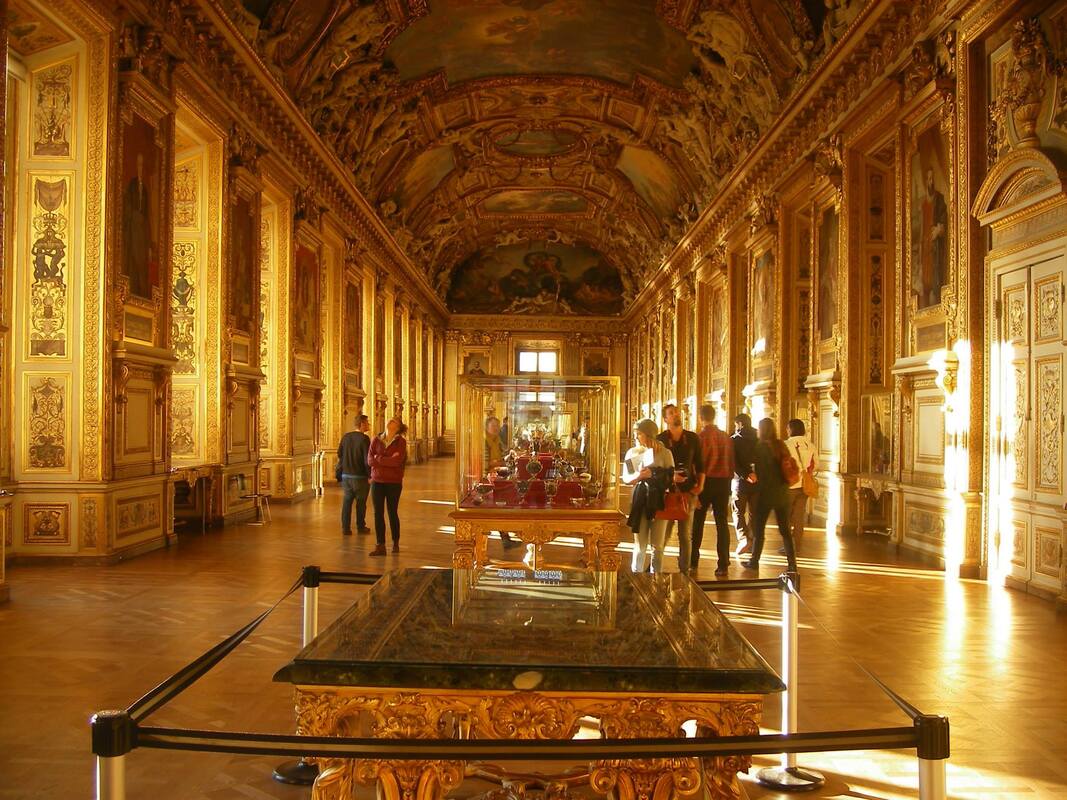 The Galerie d’Apollon
Musée du Louvre, a poem
Beyond the glass pyramids in the navel of Paris
Was a collection so colossal it truly did scare us.
The Louvre: the biggest art museum on the planet!
You couldn’t see it all in one day, even if you ran it.
Originally, it was the palace of a lavish dynasty
Till it was opened up by revolutionaries in 1793.
A vault of masterpieces unlocked for crowds;
To this very day, its prestige is up in the clouds.
But I’ll say it right now – Mona Lisa’s overrated.
Tourists rabble around her, crassly captivated,
Ignoring the stunning art that shares her wing,
Other grand works that also merit worshipping.
I loved Jacques-Louis David’s dramatic stances,
Delacroix’s motions, and Ingres’s erotic glances;
I loved the sculpture garden, bathed in whiteness,
And the Apollo Gallery in all its stupid glitziness.
But after a while, the images seem to roll on repeat,
Like ugly Christ Childs suckling Holy Mother’s teat,
Medieval altarpieces displaying brutalised saints,
Or creepy Flemish reptile people in oily paints.
More military portraits. More tortured passions.
Kitchen sink still lifes in all its Dutch fashions.
Long halls of Biblical and historical extracts…
Long as the list of Louvre’s ill-gotten artefacts.
By the fifth hour, and with very little to eat,
We began to feel art’s burden on our tiny feet.
My friend turned and gave his main takeaway:
“I’ve heard it’s much better at Musee d’Orsay.”
The Greeks got a glance. The Etruscans, a blur.
I swear all these church icons are just to deter…
We raced past old statues and so, so much more,
Said hi to Venus de Milo, then bolted out the door.
It was too much Louvre and just too much art;
It wafted past my head like an odourless fart.
Thus, I resign myself to a lack of sophistication
If only so my feet can regain some sensation.
The Red Centre, Australia (2013)
Posted 3 October 2020
Into the Heart of Redness
I made a journey into the Red Centre of Australia back in the middle of 2013, during my third year of university. It was a long flight from the eastern seaboard into Alice Springs, a Northern Territory town that is located roughly at the centre of this vast, sunburnt continent. Wandering around this town, with its paltry population of around 26,000 people, gave me a heavy sense of isolation from the rest of civilisation. Suppose you were in Alice Springs and, all of a sudden, the roads, rail routes, and airports were knocked out. What then? Surely there was no way a single human being could ever reach a major metropolitan city ever again.
There was also a personal reason to go this far into the country. I had just broken up with my college girlfriend and was feeling aimless. I had been in Australia for a couple of years and yet I felt I hadn’t properly experienced the true diversity of the landscape. This was a chance to change that. To shake things up a bit.
The Outback and Uluru
Ah, the remote interior of the wild bushlands. The Outback. Red dirt and parched vegetation as far as the eye could see. A world of unyielding, harsh flatness. Not a single cloud in the sky.
I went with a tour group to explore Uluṟu-Kata Tjuṯa National Park and see Uluru/Ayer Rock, perhaps one of the most iconic international images of Australia. That and, of course, the Sydney Opera House. It was a long, dusty road trip.
Uluru is an epic sandstone rock formation that rises nearly 350m into the air. It is geologically known as an ‘inselberg’ or ‘monadnock’, which means it is a hill or small mountain that stands alone on a flat plain.
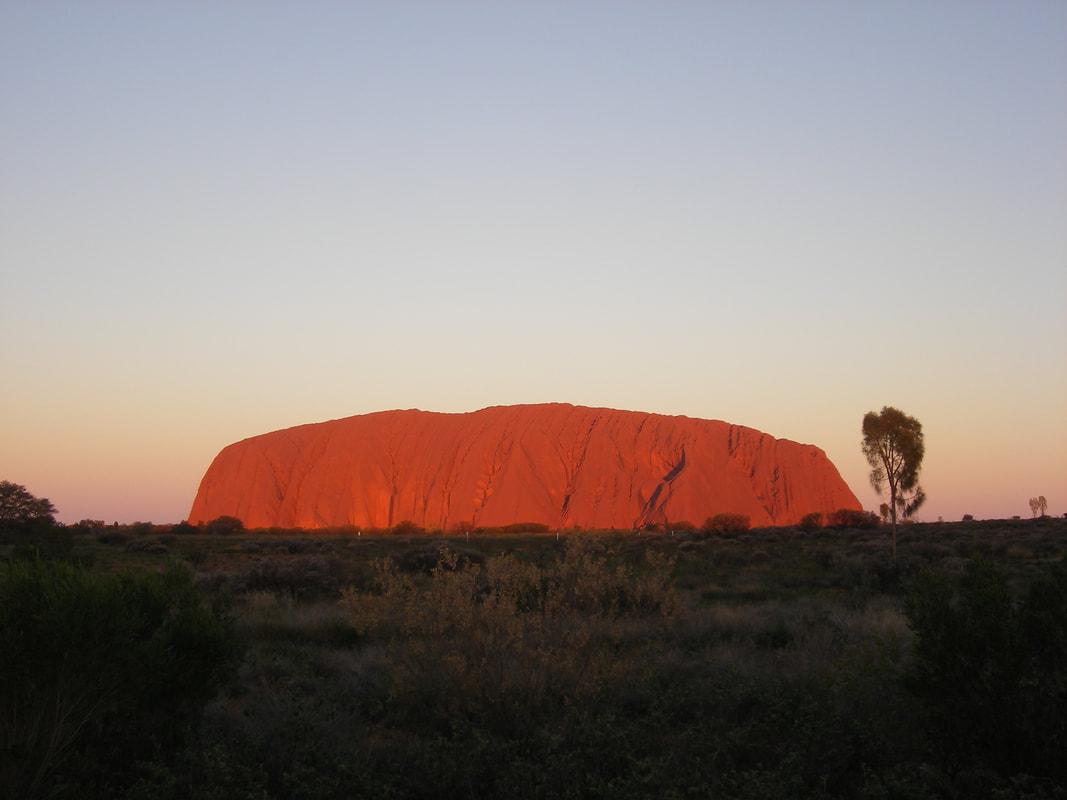
Uluru is also a sacred site to the Aboriginal people of the Central Australian desert in the area. This weathered, 600 million-year-old formation hosts a number of waterholes, springs, caves, and ancient rock paintings.
As many of you may know, this place has also courted controversy. Before late October 2019, tourists were allowed to climb Uluru even though this is deeply disrespectful to the traditional Indigenous custodians of the land. It’s a sacred site and not a lump of rock to be conquered by daft foreigners! Not only is it quite a culturally insulting thing to do, but it can also be rather unsafe. At least 37 visitors have died in incidents related to climbing Uluru since record-keeping began. Of my tour group of around twenty people, I was one of the only individuals that chose not to climb Uluru despite being repeatedly told that we really shouldn’t. Very disappointing. I, for one, am sincerely glad that recreational climbing is finally prohibited.
On a lighter note, I had the privilege of being able to see the colours change across the surface of Uluru at sunset. We spent the night in camping swags (which is Australian slang for portable open-air camping bedrolls) and fell asleep under a dazzling starry desert sky. And in the early hours of the morning, I was also able to witness Uluru’s unmistakable silhouette at sunrise. It was an utter pleasure.
Kata Tjuṯa and Kings Canyon
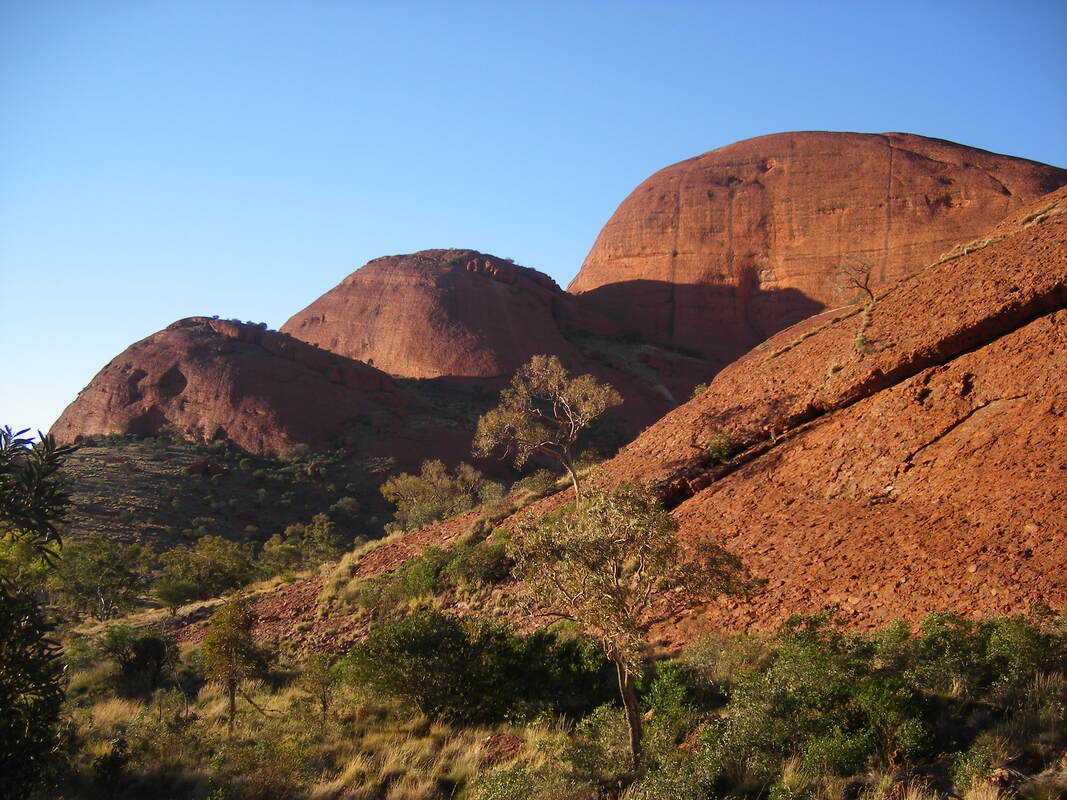
In many ways, it is just as magnificent as Uluru. Jutting out of the scraggly, flat landscape, Kata Tjuṯa is a group of 36 large rock domes that are mainly composed of granite, basalt and sandstone. Meaning ‘many heads’, these soaring ochre rock formations are also a sacred site for the local Indigenous people.
The final stop on my tour was Kings Canyon in Watarrka National Park, around 320 kilometres southwest of Alice Springs. It is a steep and scenic canyon with a lush and permanent waterhole at the heart of it dubbed the Garden of Eden – a glorious oasis compared to the rugged environment surrounding it. That said, due to an unfortunate flurry of wet weather during our canyon hike, I had a little trouble seeing it as such!
And after this, it was back to Alice Springs. Here, I spent a few more days in the depths of the continent before boarding a flight to another , this corner of this “opal-hearted country” “wilful, lavish land”.
Zürich (2013)
Posted 6 October 2020
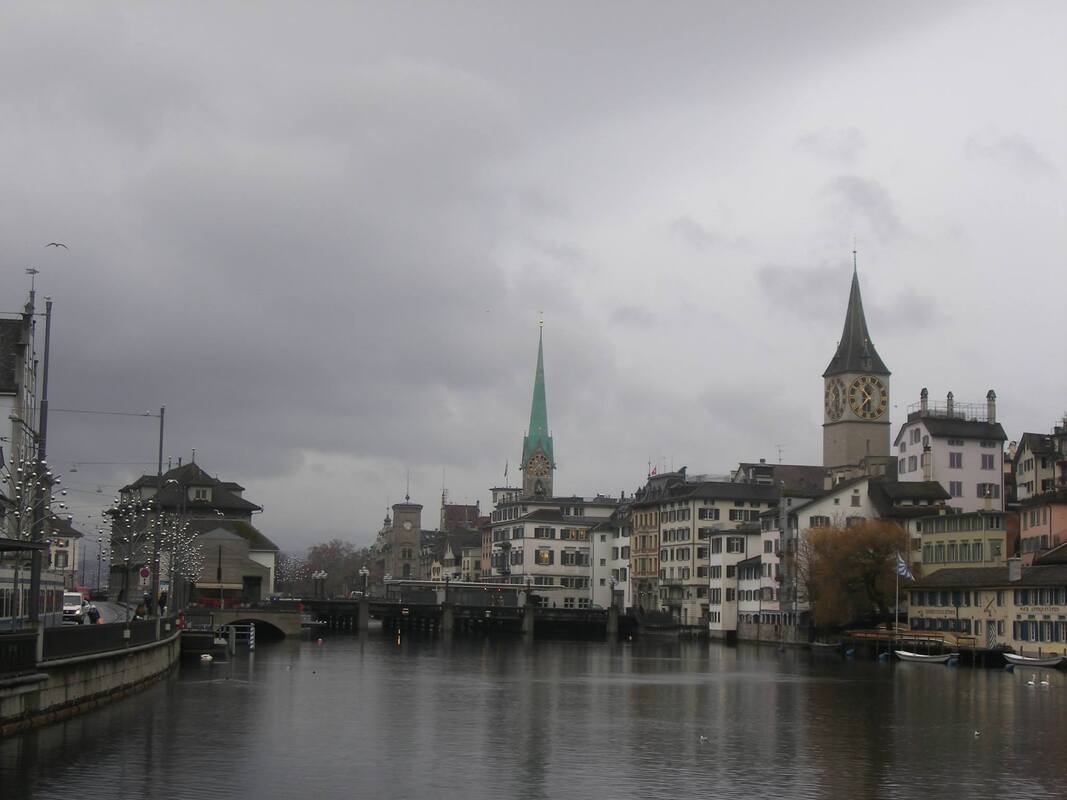 A view of Zurich and the river Limmat
A pitstop in Switzerland on the journey between Berlin to Turin…
A train ride through the alps…
A pause at Grossmünster, Fraumünster, and Church of St. Peter…
Time enough to admire the art collection of the Kunsthaus…
To gaze at Grossmünster in the background with its lovely red spire…
To hike up Üetliberg, a hill which overlooks Zürich…
A glimpse of the city, Lake Zürich, and the Swiss Alps…
Grand mountains, a blue and feathered sky, the vast winter air…
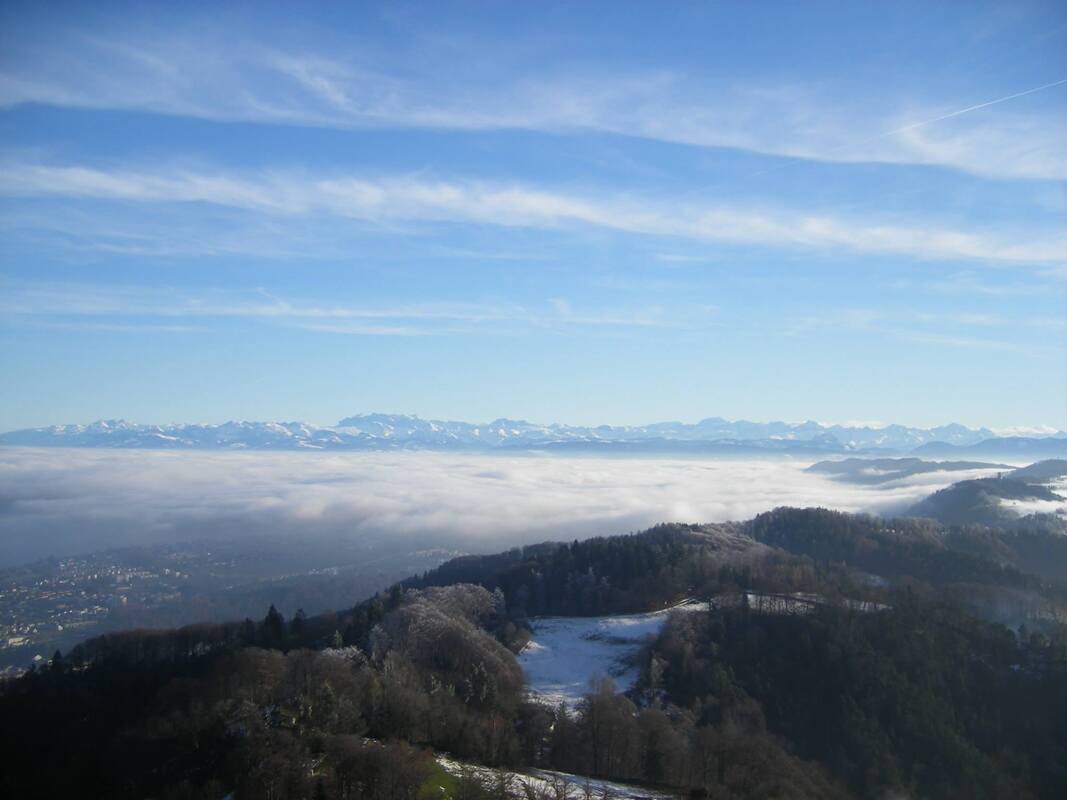
A winter in Beijing
Posted 2 July 2023
I lived for over a month in Beijing after my second year of uni. Nominally, I was here to do an “internship”, to get some “work experience” with a consulting firm. A joke, truly, given my limited grasp of Chinese. In reality, I wanted to escape my little summer pocket of New Zealand, and I leapt at the chance to spend a wintry, smoggy season in the capital of the People’s Republic.
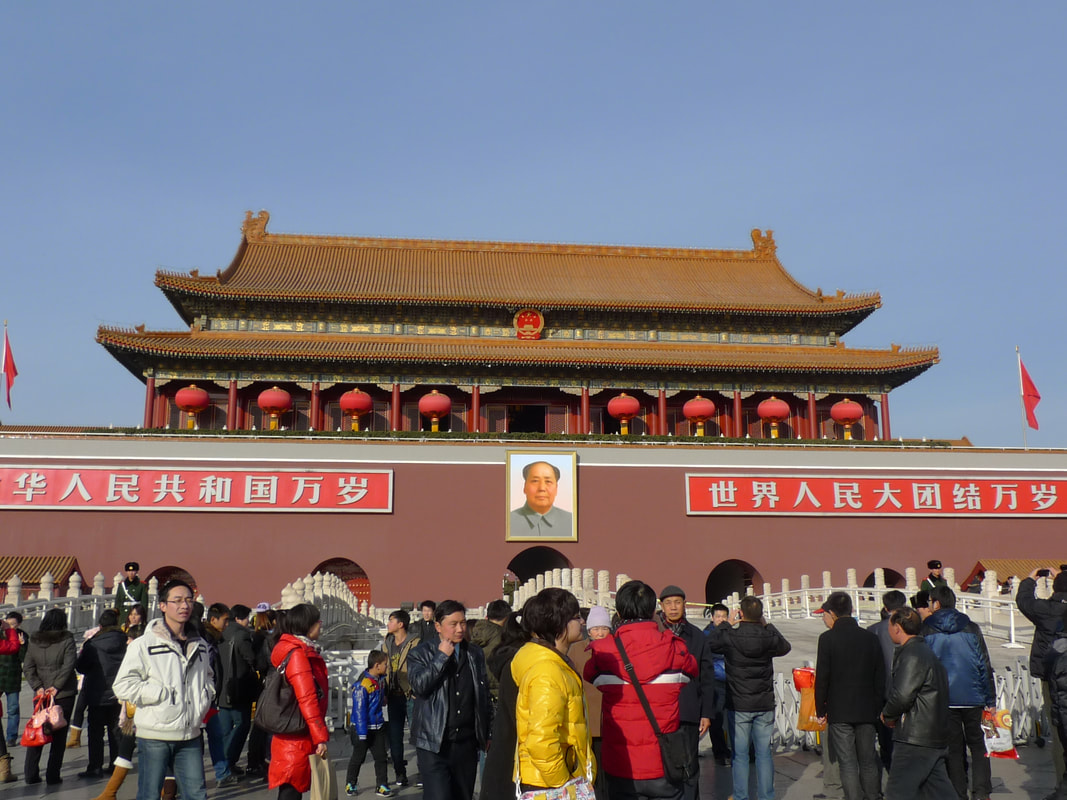
The Forbidden City
After the fall of the final Qing dynasty, this restricted and walled palace complex, the largest of its kind in the world, opened its doors to the general public after five centuries. Gone were the eunuchs, the concubines, the courtly intrigue, the rites and rituals, and the illustrious strength of dragon rulers. After the ousting of Puyi and its conversion into a museum in 1925, this “city” became a frozen timepiece for the mighty tourist throngs, both Chinese and foreign, to march through.
In the slideshow below: ceramics from across the expansive, nearly unfathomable, current of Chinese history. All those differing hues, dimensions, profiles. Such fantastically masterful pieces. I hungrily snap up photographs as I tour the museum wings of the Forbidden Palace. I glance at some other artefacts too, jewellery pieces, delicate goldwork, ornate sculptures, but no – it’s the ceramics that I fall in love with.
For me, the Forbidden City did not merely draw my attention to its intricate architectural layout, it seemed to command it with a booming announcement. Its yellow decorated roofs and marble bridges. Its glazed dragon tiles and red-walled pathways. This was a microcosm built by a civilisation that believed they were at the absolute centre of the universe. And it almost certainly was. For a time.
Jingshan Park
Jingshan Park spreads its ancient trees over 23 hectares in the imperial heart. Sitting directly north of the Forbidden Palace, it is a venerable redoubt of huddled pines and raw-boned cypress. At that time of year, its flower beds were comatose, its fruit trees naked. The green of the branches was a murmur, an echo of woodlands on brighter days.
I climbed to the top of one of its peaks and felt the dry, muted chill of the Beijing winter. From somewhere near the foot of the hill, I heard the ghostly rise of old men singing. I had no idea what they singing about. I have never known what old men speak about in Chinese.
Beijing Zoo
I visited what I thought was the most depressing zoo in the world. I peered upon far-flung animals in their small and barren pens, their faces pressed against the dirty bars, biding their time in their chilly and unstimulating concrete worlds. What do they think they are waiting for? What could goodness could they possibly feel in this morose menagerie?
But this was many years ago, back when the country was not nearly as sophisticated and wealthy as it is now. And change happens so fast in China. But has change come to these denizens? Are their existences better now? I hope so, I can hope so.
The Summer Palace
Yí hé yuán, a royal retinue of halls, pavilions, lakes and gardens. We stood on the glassy face of Kunming Lake. Icy vapours rose over Longevity Hill. The Marble Boat was shackled to the frozen waters. The 17-Arch Bridge was made of pale, frosted moonstone.
Like the palaces around it and the fallen social order that built it, the lake was but a memory of living water. Its flow and form were held captive, imprisoned by the endling months.
My little cousin pattered on the ice next to me, cocooned in her pink puffer jacket. The lake ice groaned, like a persistent toothache. Blue lightning streaks revealed tension points. Another groan. A crunching sound beneath our feet.
We were spooked and the two of us scampered for the safety of solid earth. In my mind, I was already jetting back to warmer climes.
Beijing’s museums
Posted 9 March 2022
Many, many years back I spent a cold and drab winter in the capital city of Beijing. In between dealing with the chilly weather, unbearable air pollution, and some mild culture shock, I was able to squeeze in some of my classic museum visits.
- The National Museum of China: Located to the east of Tiananmen Square, the National Museum of China is a major repository for artistic and cultural artefacts from across the epic span of Chinese history, with a specific focus on its more recent communist history. If you like jade burial suits, ancient bronze vessels, shining porcelain, socialist propaganda, and stirring paintings of Chairman Mao, this is the place for you.
- The Capital Museum: This is a spacious and classy art museum with a carefully curated collection of Chinese ceramics, bronzeware, calligraphy scrolls, landscape paintings, carved jade, coins and banknotes, sculptures, among other artefacts. Certainly worth your time if you want even more than what the National Museum of China offers.
- The People’s Revolution Military Museum: This museum is dedicated to the staggering amounts of military equipment from the history of the People’s Liberation Army. If you like guns, tanks, and anything that makes stuff violently explode, this place is worth pencilling into your Beijing itinerary.
- The China Science and Technology Museum: As the name suggests, this museum administers an accessible collection of cultural and scientific exhibits for the general public. It is alright, but definitely not one of the most impressive science-focused museums I’ve been to. Give it a skip if you ask me.
The Great Wall of China
Posted 14 March 2022
To get to the Great Wall, I took the train from Beijing across a bleak landscape of both crumbling industrial decay and energetic construction sites. It’s hard not to notice the nation’s prodigious demand for iron and steel. I see half-built towers, their steel beam skeletons rising off the sullen countryside. I see forests of scaffolding, a canopy of cranes.
Finally, I arrive at the ancient fortifications. It staggers belief that this stone scar is still standing. For hundreds of years, the Great Wall has slithered through hills, deserts, valleys, rivers. Its empty watchtowers have demarcated the spine of the world herself. A ten-thousand-mile long serpent.
The ramparts of the old dynasties: stone, brick, rammed earth stretching as far as the eye can see. Built by the indomitable will of the emperor and the innumerable bones of his labourers. It’s hard to imagine what the land must have been like back when the nomadic raiders of the Eurasian Steppes bashed against its great bulwark and crumbled into dust. It’s even harder to imagine what it must have been like when, time and time again, the horsemen breached the wall.
I race up the battlements to a vacant watchtower, then hike over to another, and then another. Tourists are dotted all along the wall, scattered like pebbles across its winding back. There are many visitors, but they are diffuse. There’s no natural congregation point along the Great Wall – you can walk as much or as little of it as you want. The wall doesn’t care. It knows it cannot be conquered on foot. It simply never ends.
Hakone: Narrow road to the deep north (2012)
Posted 16 September 2020
“Days and months are travellers of eternity. So are the years that pass by. Those who steer a boat across the sea, or drive a horse over the earth till they succumb to the weight of years, spend every minute of their lives travelling. There are a great number of ancients, too, who died on the road. I myself have been tempted for a long time by the cloud-moving wind — filled with a strong desire to wander.”
– Matsuo Bashō
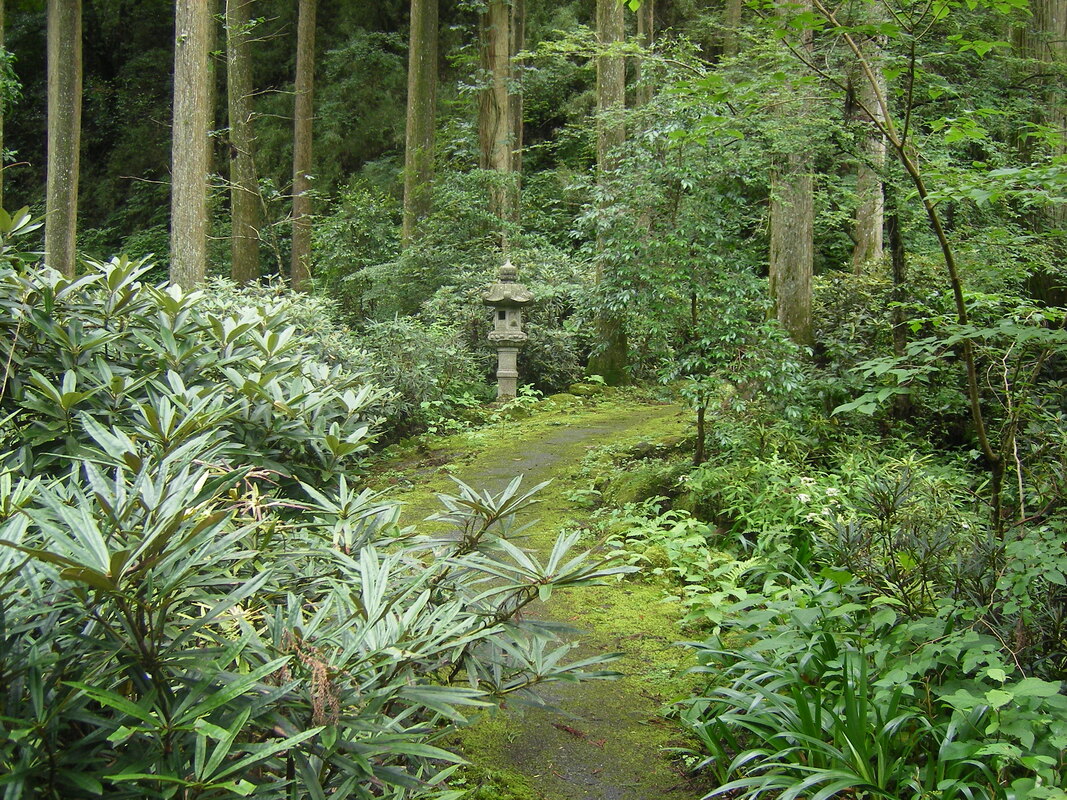
Hakone and its surrounds (technically, south-west of Tokyo)
For my last weekend in Japan, after spending an extraordinary month in Tokyo on a summer university exchange program, I took the train out to Hakone - a mountainous area less than one hundred kilometres from the capital. The economy of Hakone is strongly centred around tourism, with both Japanese and international visitors drawn in by its natural beauty and onsens. I’ve heard that it’s meant to be stunning on a clear summer day, but my trip was dominated by wet and overcast weather. And I loved it nonetheless! The brooding, melancholic elements made my journey equally memorable.
Without a doubt, the easiest way to reach there from Tokyo and then get around is with the Hakone Freepass, a super convenient and money-saving pass that allows unlimited rides within the designated area, including on the very popular lake cruise and gondola ropeway.
My adventure kicked off with the train ride from Tokyo, which took me along the Hakone Tozan Railway, Japan’s oldest mountain railway. It is a beautiful ride, regardless of the weather, with hydrangeas blooming along the narrow track at certain times of the year.
The first stop for me in Hakone was Gora Park, a French-style landscape park that opened in 1914 and boasts a large fountain and rose garden. Plus, it’s close to Gora Station where the train terminates. Interestingly, Gora Park also hosts a collection of beetles, including stag beetles and rhinoceros beetles. You could even buy one in a little plastic container! While I wasn’t in the market for a new pet, I was able to pick up and admire one of the crawly specimens on display.
The next leg of the journey for me was a ride on the Hakone-Tozan Cable Car up the mountainside from Gora to Sounzan via an old-school funicular railway. Not terribly spectacular, but it was a functional and sturdy enough method of crawling up the slope.
This cable car led me to a proper Hakone attraction: the Hakone Ropeway, an aerial lift that takes passengers from Sounzan down towards the lake, with an optional stop along the voyage to the boiling sulphur pits of Owakudani. You’re able to see Mount Fuji on a good day, but I was not so lucky.
With plenty of time to spare, I stopped off at Owakudani, also known as the Great Boiling Valley. This is an active volcanic zone with hot springs and sizzling, milky rivers that are perpetually shrouded in sulphurous fumes. It was delightfully spooky, especially with the signs warning visitors that the local walking tracks can be dangerous due to the volcanic gases.
At Owakudani, you can purchase some novelty ‘black eggs’ which have been cooked in the hot, natural water. Their shells are pitch-black from the sulphur and eating one is said to prolong the person’s lifespan by seven years. Well, good news, because I ate a pack of five for lunch (yes, really) and will now live an extra 35 years. Success.
After my very eggy lunch, I went for a bit of a wander up a nearby hiking trail. I was by myself and it was an unsettling experience. Didn’t see or hear a single soul. And after half an hour of this, due to a combination of deteriorating weather, the foul stench, and a growing fear of what could potentially happen to someone alone on an eerie volcanic mountain trail, I wisely decided to head back and boarded the ropeway again to reach the bottom of the mountain.
The Hakone Ropeway terminates at Togendai on the banks of Lake Ashi. Lake Ashi (or Ashinoko in Japanese) was formed in the caldera of Mount Hakone after the volcano’s last eruption around three thousand years ago. Must’ve been a cataclysmic eruption because Lake Ashi is huge. Here, I boarded my next transportation option: a ridiculous, pirate-theme Hakone Sightseeing Ship to glide across the lake in style. Pirates? Comical boats? I mean, this is Japan after all!
After the goofy boat ride, I visited a couple of other local attractions:
- A reconstruction of the feudal Hakone Checkpoint, an important highway checkpoint that controlled the traffic between Tokyo and Kyoto during Japan’s Edo period under the Tokugawa shogunate.
- A short but handsome Cedar Avenue between Moto-Hakone and Hakone-machi, lined with supposedly 400-year-old trees, that runs parallel to the road.
- The Hakone Detached Palace that used to serve as a summer palace for the Imperial Family. While it is an unremarkable and simple building these days, it provides pleasant views of the lake.
The next portion of my trip (and one of my favourite spots in Hakone) was Hakone Shrine, a serenely attractive Shinto shrine on the shores of Lake Ashi. Tranquil, mossy, magical. Like every Shinto shrine I’ve visited in Japan so far, I was linger around here for a few precious moments and rest my heart. I was able to beside its lakeside torii and relax in nature.
Afterwards, I took the bus to Hakone Yumoto where I made one final stop: a soak in the hot springs at a public bathhouse. Public bathing in Japan is undoubtedly a compelling ordeal for the uninitiated. It’s gender-segregated, you have to carefully wash your body before dipping in the pool, and you must bathe naked like everyone else. While it was initially a bit of a culture shock, it wasn’t a bad encounter with the unfamiliar.
A mountain track, a funicular, a ropeway, a sulphurous hike, and a lake cruise. Incredibly, I was able to complete this jaunt around Hakone in a single day. One wild, whirlwind day.
I was able to dip in some geothermal water, bask in the natural environment, revel in the sacred, and bumble around the modern and the touristy, all in one place. Hakone is truly a special corner of an incredible country.
An old pond, A frog jumps in. Plop!
Hiroshima and Miyajima (2012)
Posted 2 October 2021
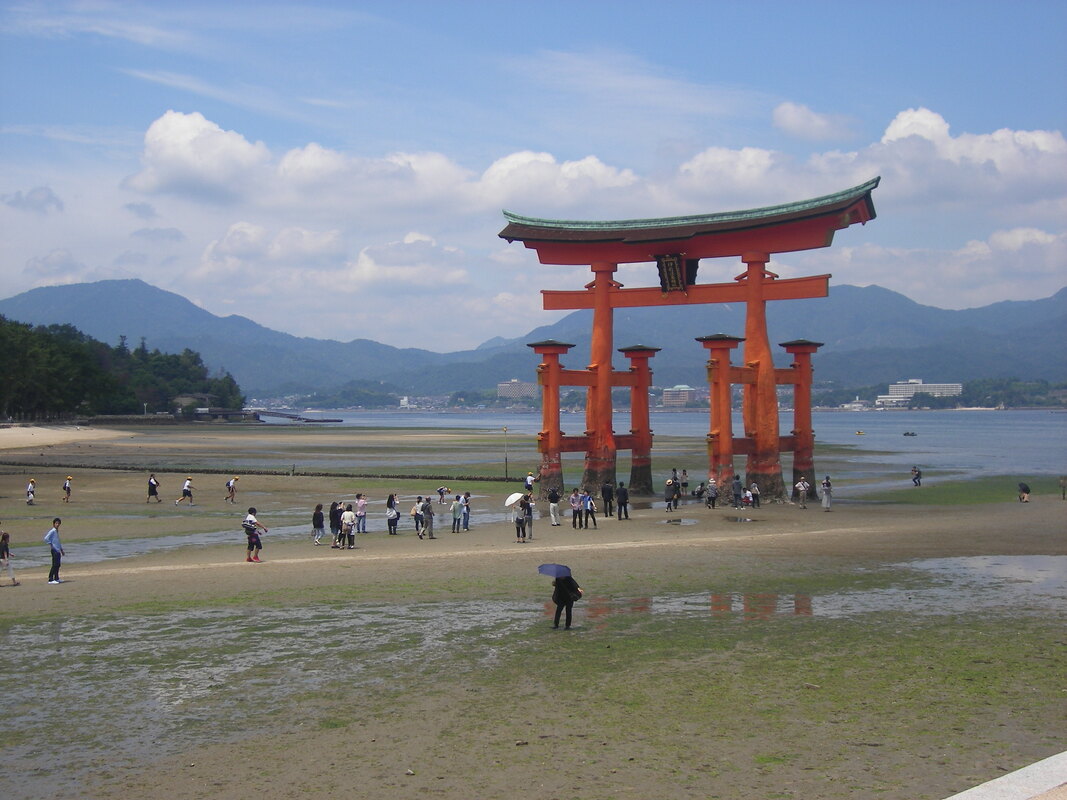 Miyajima’s famous “floating” torii gate at low-tide
Hiroshima - the name alone of this city speaks for itself. And I believe it to be a profoundly important place to visit should you ever find yourself in Japan. Here are some notes on the Hiroshima Peace Memorial Park, Hiroshima Castle, the small local island of Miyajima, and more.
The Hiroshima Peace Memorial Park
Hiroshima Day I believe there must be bones Under the paved street.
– Shigemoto Yasuhiko
The A-Bomb Dome, perhaps the most prominent site in the entire memorial park.
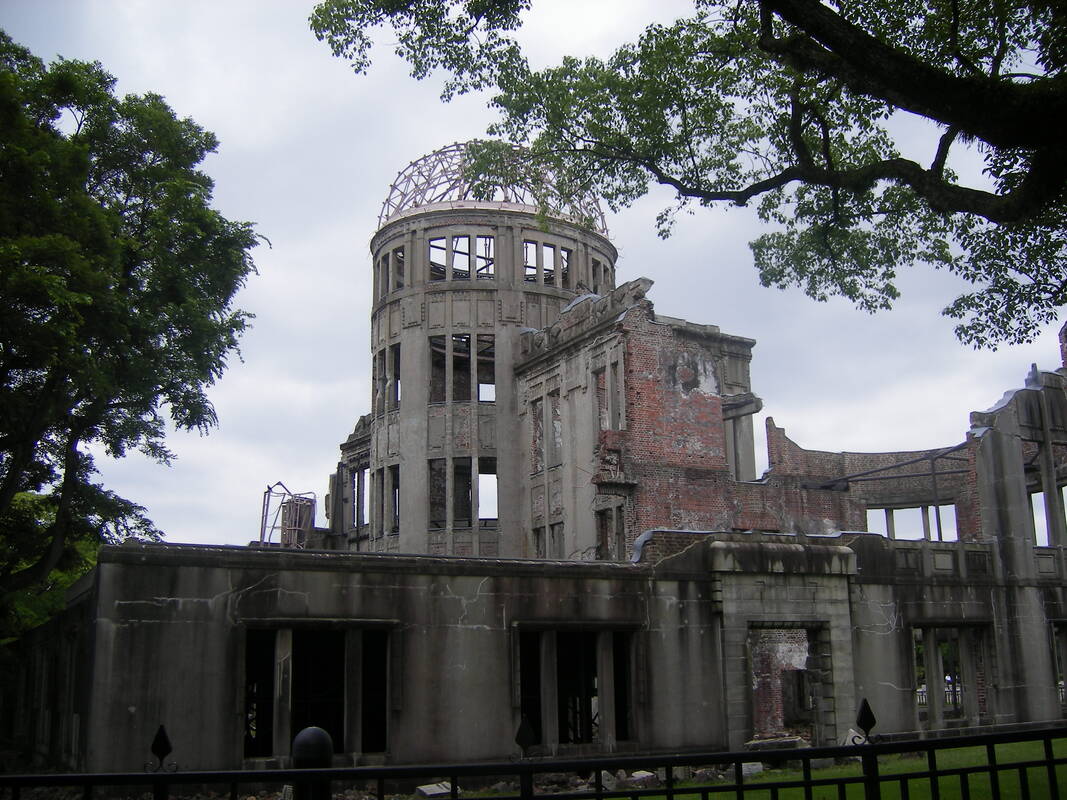
What a sombre yet beautiful site. It was almost surreal how pleasant the summer day was, as I carefully explored the entire park, taking in everything it had to offer in terms of commemorating one of the most tragic and devastating man-made events of the 20th century.
Things to see in and around the park include:
- A Jizo statue with burn marks near the heart of the atomic detonation. According to Japanese Buddhist beliefs, Jizo is a bodhisattva, a compassionate and enlightened being, who has the power to descend into Hell to rescue souls.
- The Monument in Memory of the Korean Victims of the A-bomb. Tens of thousands of Korean labourers, many forcibly conscripted by the Japanese Empire, were victims of the evils of Japanese colonialism and suffered greatly from the atomic bombing as well.
- The Hypocentre. This is close to the memorial park in an easily missed street. A small plaque marks the spot directly below the mid-air detonation of the ‘Little Boy’ bomb in 1945.
- The Memorial Cenotaph. Its arched shape is meant to represent a shelter for the souls of the victims.
- The Peace Flame. This has burned continuously since it was lit and the intention is that it will remain lit until all nuclear weapons on Earth are destroyed and humanity is freed from the threat of nuclear annihilation.
- The Memorial Tower to the Mobilized Students. The tower was built to console the souls of over 10,000 students who died in bombings during the Pacific War, not just victims of the atomic bombings in Hiroshima and Nagasaki.
- The Hiroshima Peace Clock. It is a tower made of three twisted iron pillars with a spherical clock that rings every day at 8:15 am, the time when the world entered into the age of nuclear warfare.
- The Children’s Peace Monument. This monument commemorates Sadako Sasaki, one of the most famous child victims of the bombing of Hiroshima, as well as the thousands of other child victims of the attack. When I was visiting the park, a group of Japanese schoolchildren were solemnly gathered around the monument, making for a touching scene.
- The Atomic Bomb Memorial Mound. It is a small grassy hill that contains the cremated ashes of 70,000 unidentified victims of the bombing.
- The Peace Bell. Visitors are encouraged to ring the bell for world peace. I certainly did so.
- The A-Bomb Dome. This was once the former Hiroshima Prefectural Industrial Promotion Hall and was the closest surviving structure to the hypocentre of the ‘Little Boy’ detonation.
Hiroshima Castle
This was one of two feudal Japanese castles I visited while in the country (with the other being Osaka Castle). Alas, as with Osaka Castle, Hiroshima Castle is a reconstruction. The original fortress, constructed in the 1590s and once the home of the local daimyo, was a wooden structure that was destroyed in the atomic bombing. The current castle, primarily made of reinforced concrete, was rebuilt in the late 1950s and serves mainly as a historical museum.
Such is history. While I’m a stickler for the authentic (whatever that means), I did enjoy checking this place out. Patrons could even try on a samurai outfit. And you bet your ass I did that.
Hiroshima, more generally
Hiroshima is now a charming and thriving city of 1.2 million people. It could not be wiped off the face of human resilience. And by the way, if you get the chance, definitely try Hiroshima-style Okonomiyaki. This savoury pancake was probably the best thing I ate while visiting Japan.
Miyajima
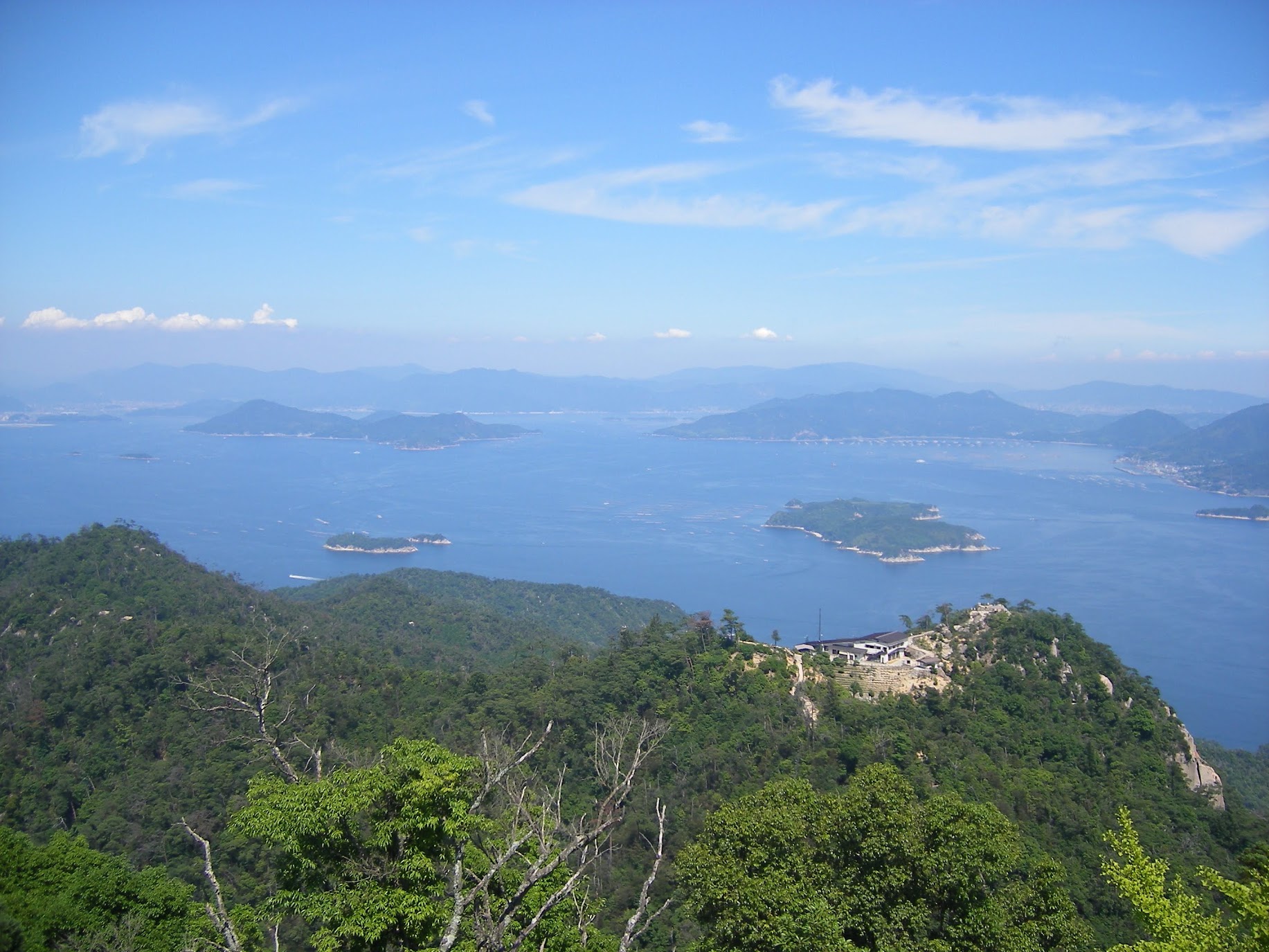
Officially called Itsukushima, Miyajima (which is Japanese for ‘shrine island’) is a small picturesque island an hour’s boat ride out of the city. It is a sacred place that, for the longest time, forbid ordinary visitors. While things are much laxer in these modern times, it is said that to this day no births and deaths are allowed on the island.
Located on Miyajima is the Itsukushima shrine: a delicately stunning Shinto compound, with its epic torii gate and its five-tiered pagoda. Also located on Miyajima: the world’s largest wooden rice scoop, weighing 2.5 tonnes and nearly 8 metres long. Cool.
Also with Miyajima, think mountainous terrain, forests, as well as peaceful and overly-friendly deer (that like to come up and nibble at any snacks in your hands).
Close to Itsukushima shrine is the historic Buddhist temple complex of Daishō-in, which I found even more spell-binding. I loved the charming little Buddhist statues and iconography everywhere, and the temple steps with the row of spinning wheels inscribed with sutras.
From Daishō-in, I took a hiking trail up to the summit of Mount Misen. It was hot and exhausting, but I was swallowed by the natural landscape and the view from the top was completely worth it.
Where else in the world can you experience such a heady mix of contrasts in two short days? Beauty and horror. Sombreness and celebration. Commemoration and survival. The power of men and the power of gods and the natural order. Hiroshima and Miyajima.
Osaka Castle (2012)
Posted 21 October 2020
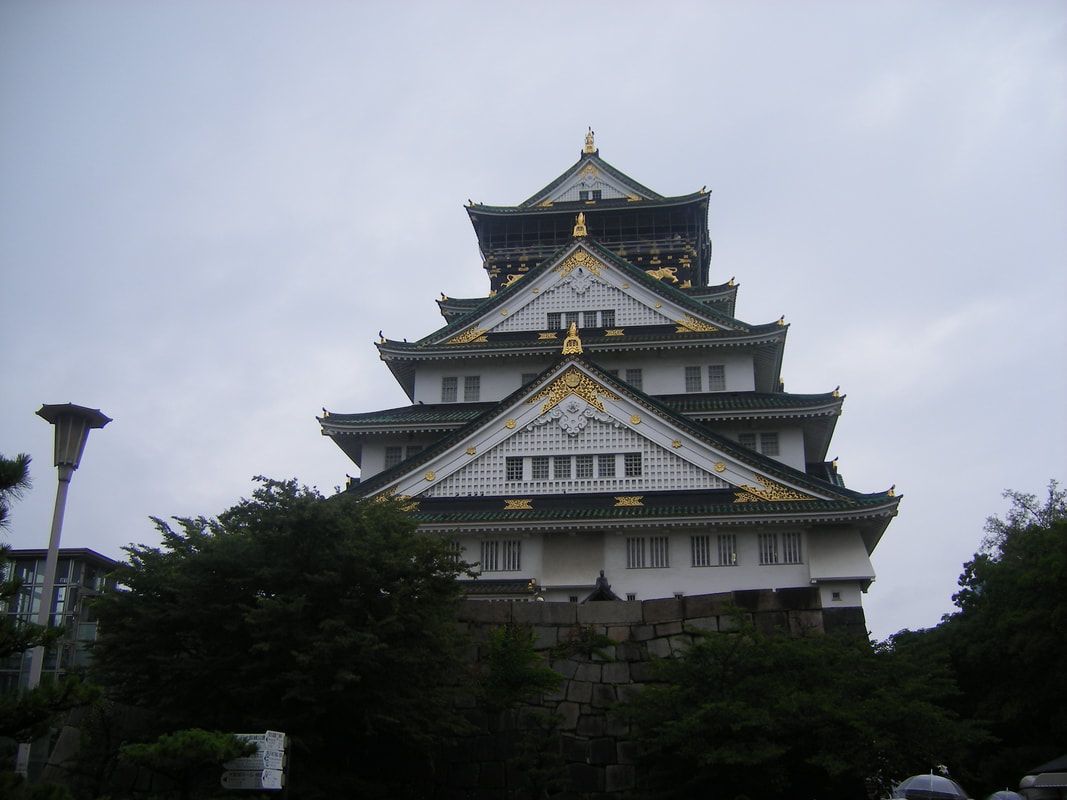
Built originally in 1583, it was destroyed by American bombing raids during World War II. Luckily, it was restored into the surface image of its original splendour in the late 1990s – albeit as a concrete reproduction with an elevator and modern museum within it. Definitely a must-see if you are ever visiting the city of Osaka!