Ming's Wanderings (part 2 of 3: 2016–2020)
Text from my old travel blog, Ming’s Wanderings, written between 2020 and 2023. Edited for clarity and for fun. Posts are ordered chronologically, most recent first. Original posting date is noted under each.
Part 2 of 3.
Museums of India (2020)
Posted 12 September 2020
Artefacts and relics from the Chhatrapati Shivaji Maharaj Vastu Sangrahalaya of Mumbai and the National Museum in New Delhi…
The CSMVS, Mumbai
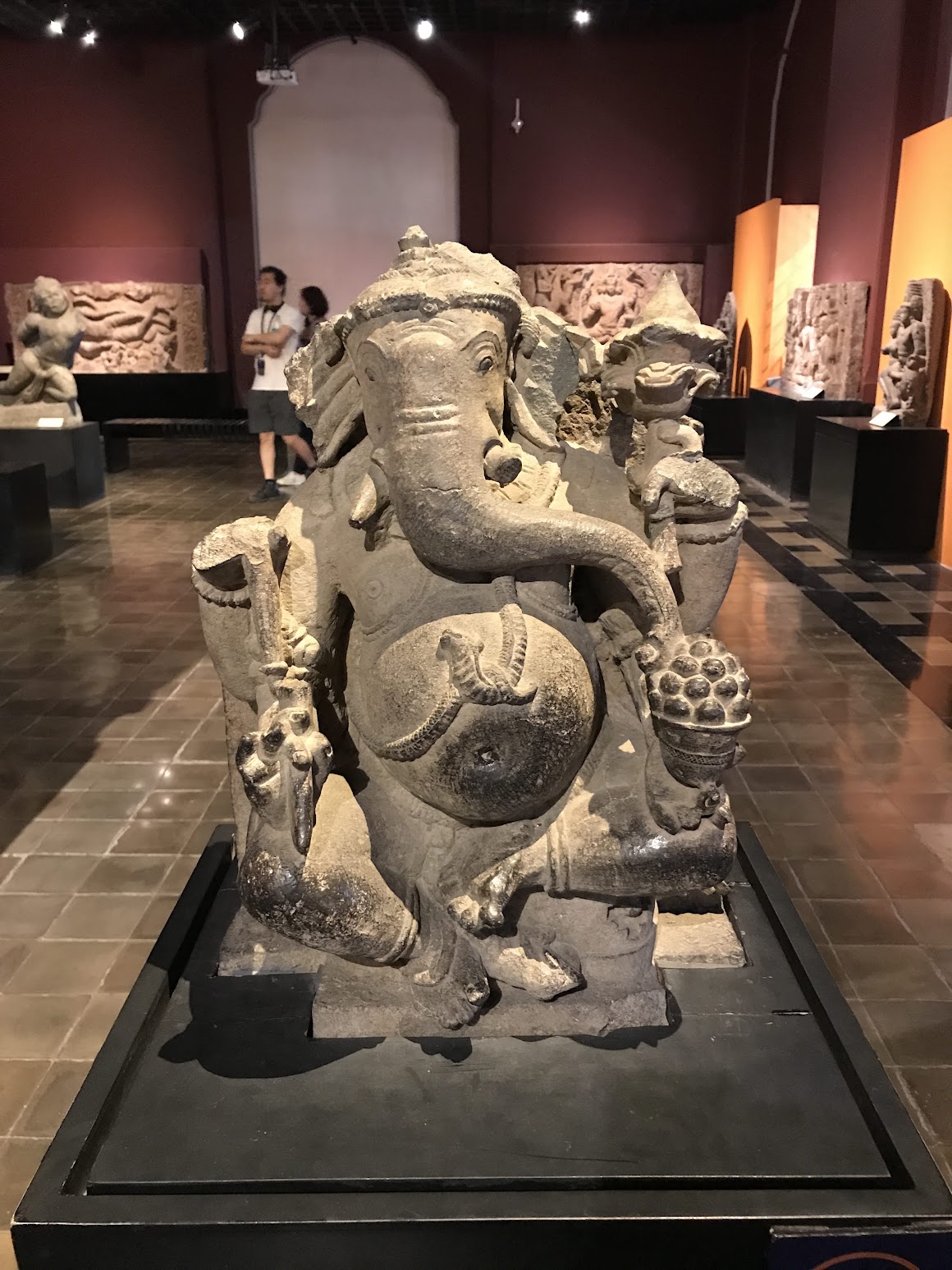
The Chhatrapati Shivaji Maharaj Vastu Sangrahalaya (CSMVS) of Mumbai. I’ve found most museums in India to be very underwhelming, but the Chhatrapati Shivaji Maharaj Vastu Sangrahalaya (‘King Shivaji museum’) in Mumbai was a glowing exception. An extraordinary collection of Indian sculptures, miniature paintings, and other artworks from across the centuries.
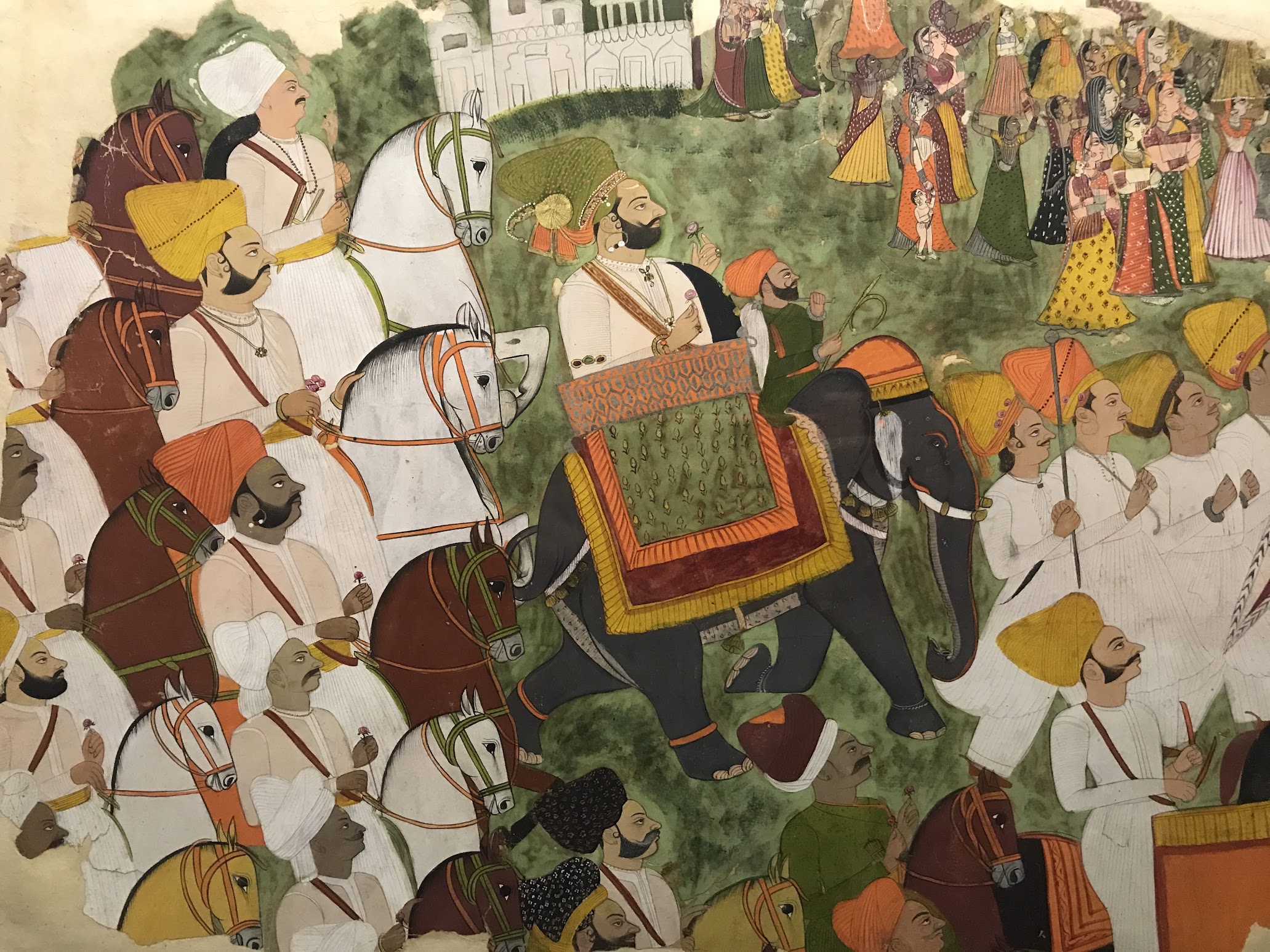
By the end of my visit I actually felt a sense of frustration! I felt melancholy! Like with many great museums, I was overwhelmed by the richness of civilisations and human creativity on display.
Highlights of this museum include the personal armour of the Mughal emperor Akbar the Great, the beautifully intricate (and occasionally beautifully violent!) miniature paintings, the breathtaking main sculpture gallery on the ground floor, and the rather macabre Tibetan human bone apron and cap and human thighbone trumpet on display.
The National Museum, New Delhi
And while serviceable, the National Museum in New Delhi was far less impressive in terms of its visitor friendliness, item curation, and overall use of space. It also has one of the most hilariously shoddy museum cafeteria’s I’ve ever seen in my entire life. If you had to choose one big museum in India, definitely go with Mumbai’s.
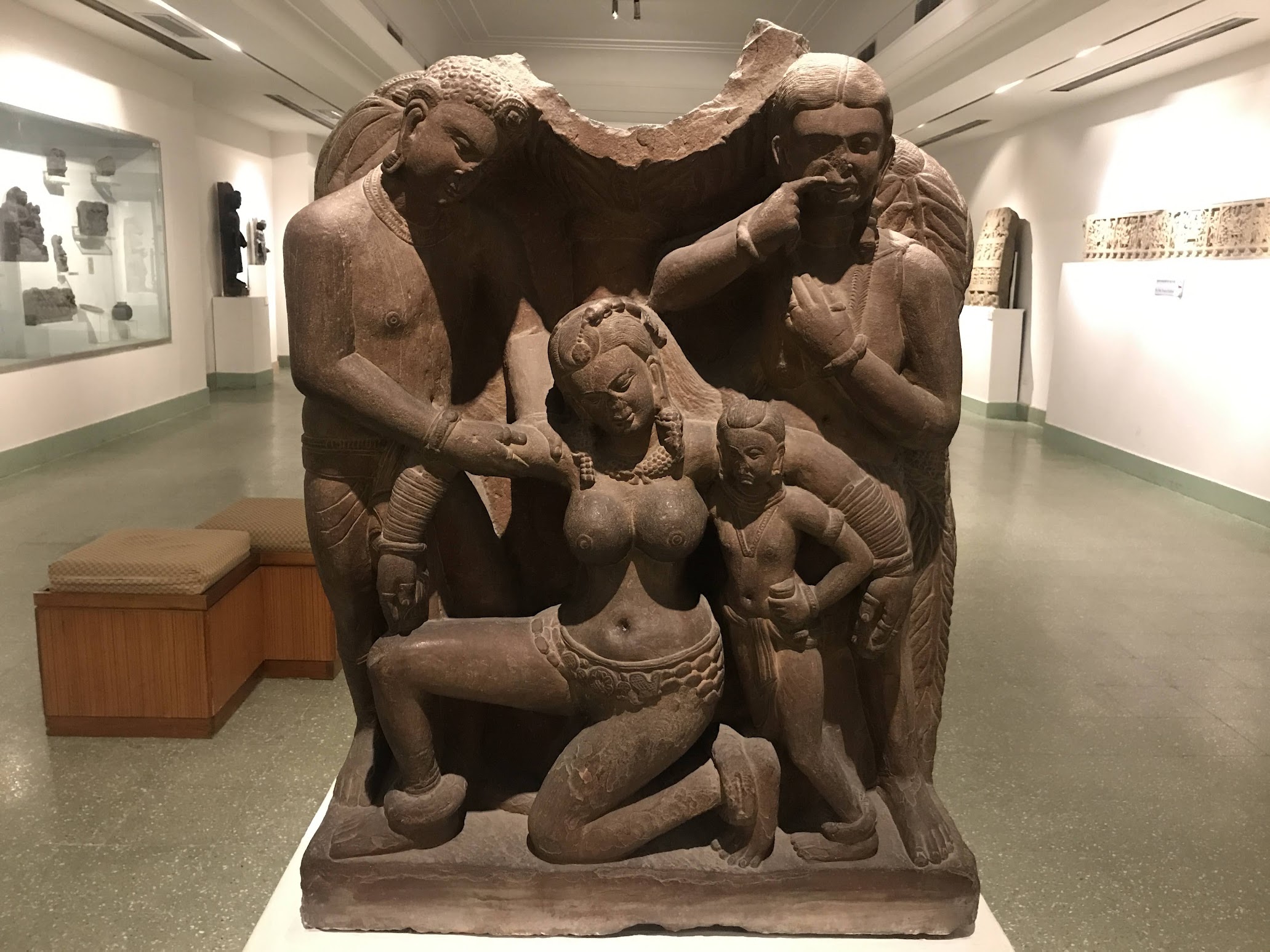
That said, there were still some amazing objects on display, including an overwhelming selection of Indian miniatures and a phenomenal collection of Mysore and Tanjore paintings — better than what I saw in Mysore itself, in fact
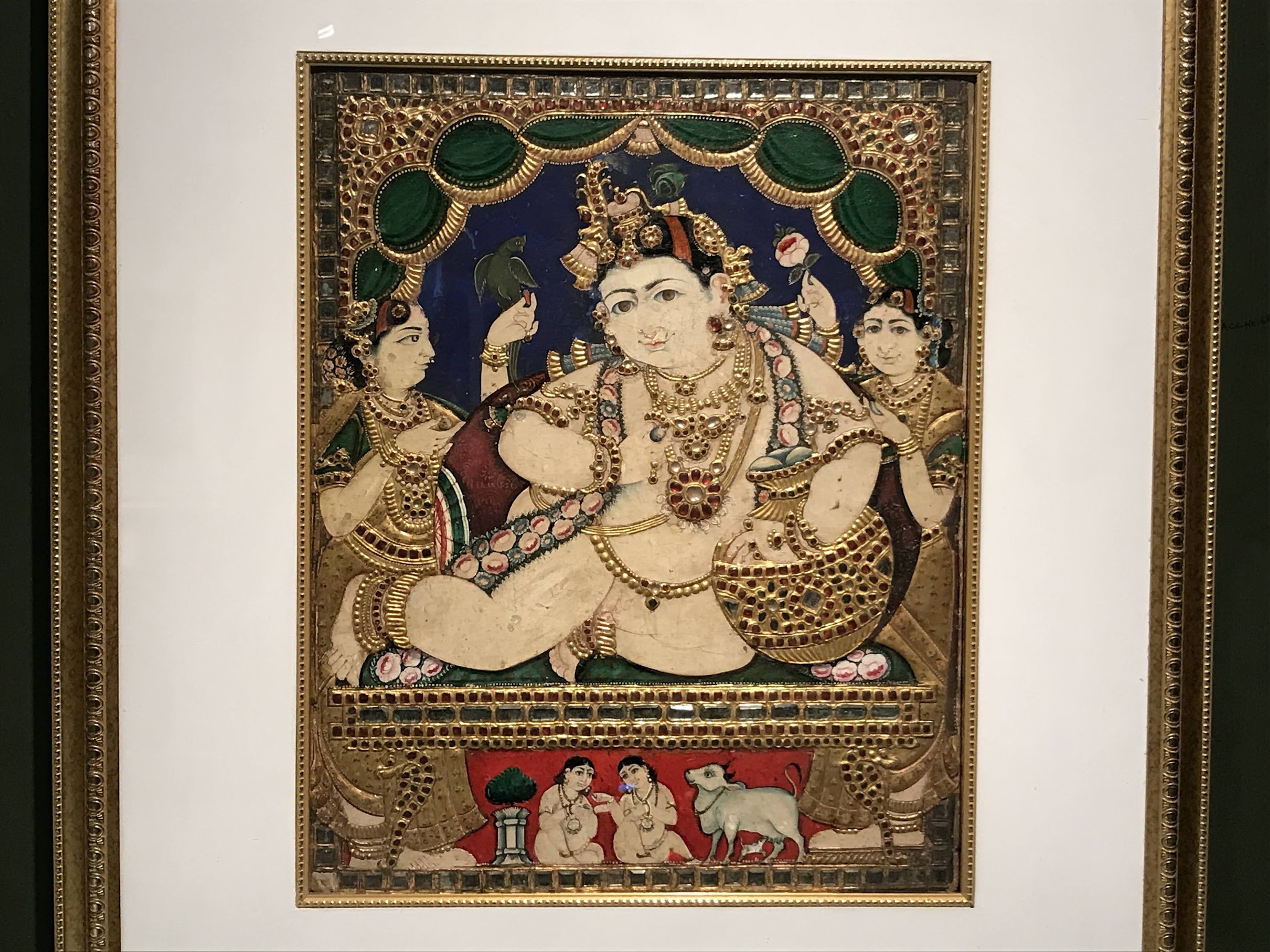
I’ll end by saying this: museums are a perfect reminder that there’s simply too much to see, learn, and appreciate on every continent. One could dedicate an entire lifetime and only dive deeply into a fleeting sliver of it
Mysore (2019/2020)
Posted 15 August 2020
After my time in Chennai, I took an overtime train to Mysore in the south western state of Karnataka and spent New Year’s there.
This city of under a million people was once at the heart of the Kingdom of Mysore, an Indian realm that lasted for nearly six centuries until 1956, when it was absorbed by British rule. Thanks to a long history of royal patronage, arts and culture flourished in Mysore and it is lauded to this day as the cultural capital Karnataka.
The masterpiece of the city is Mysore Palace, the grandiose residence of the Wadiyar royal family. It was originally constructed in the 14th century and was rebuilt and renovated several times throughout history.
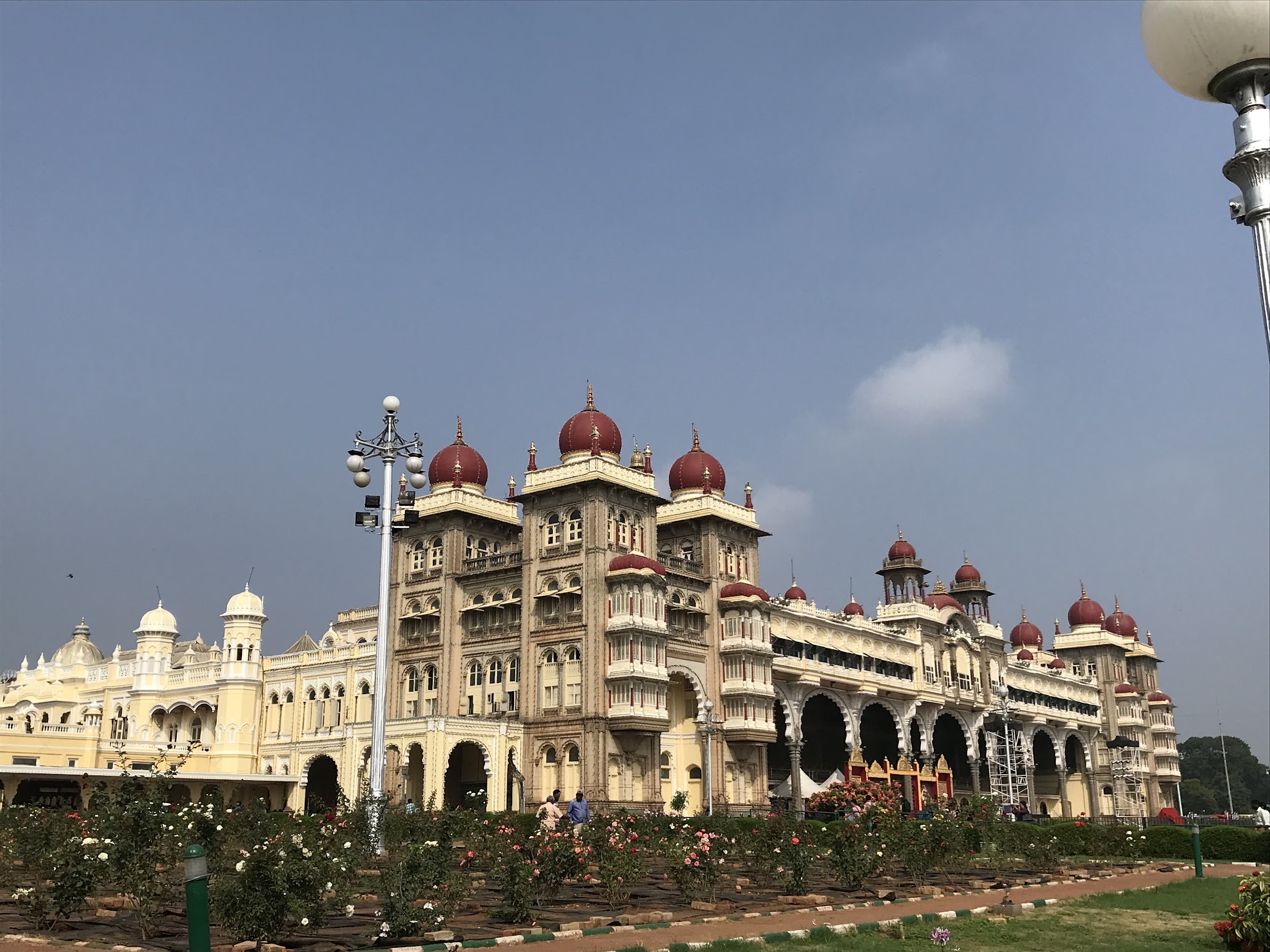
Mysore Palace is a three-storeys tall structure, composed of fine granite, with pink marble domes. Most strikingly, it is an energetic hybrid of Gothic, Hindu, Mughal and Rajput architectural styles.
Interestingly, the former royal family of Mysore survives to this day. Although the household no longer retains any official titles or privileges in modern time, the current head of the Wadiyar dynasty is still often referred to as the ‘Maharaja of Mysore’.
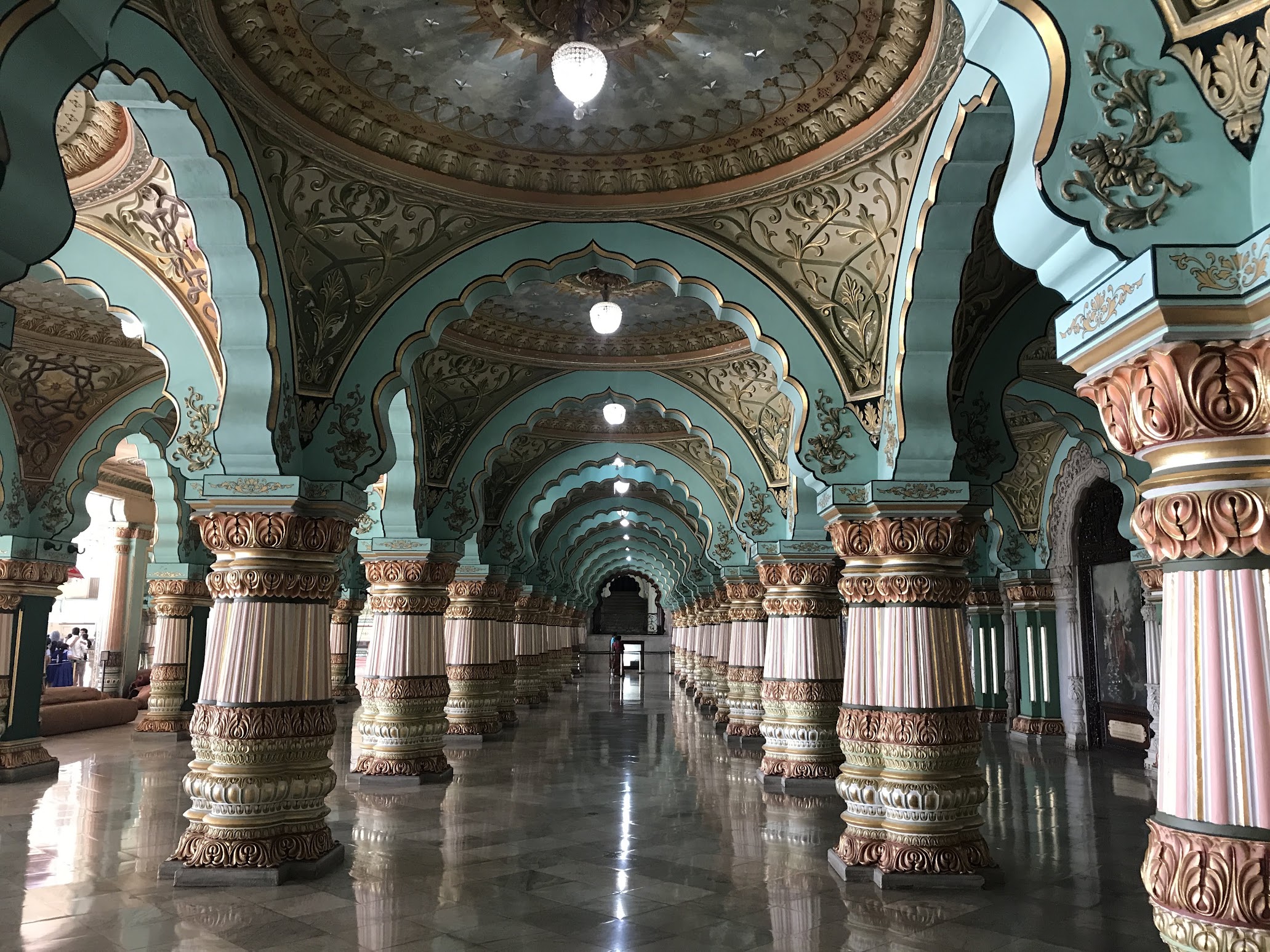
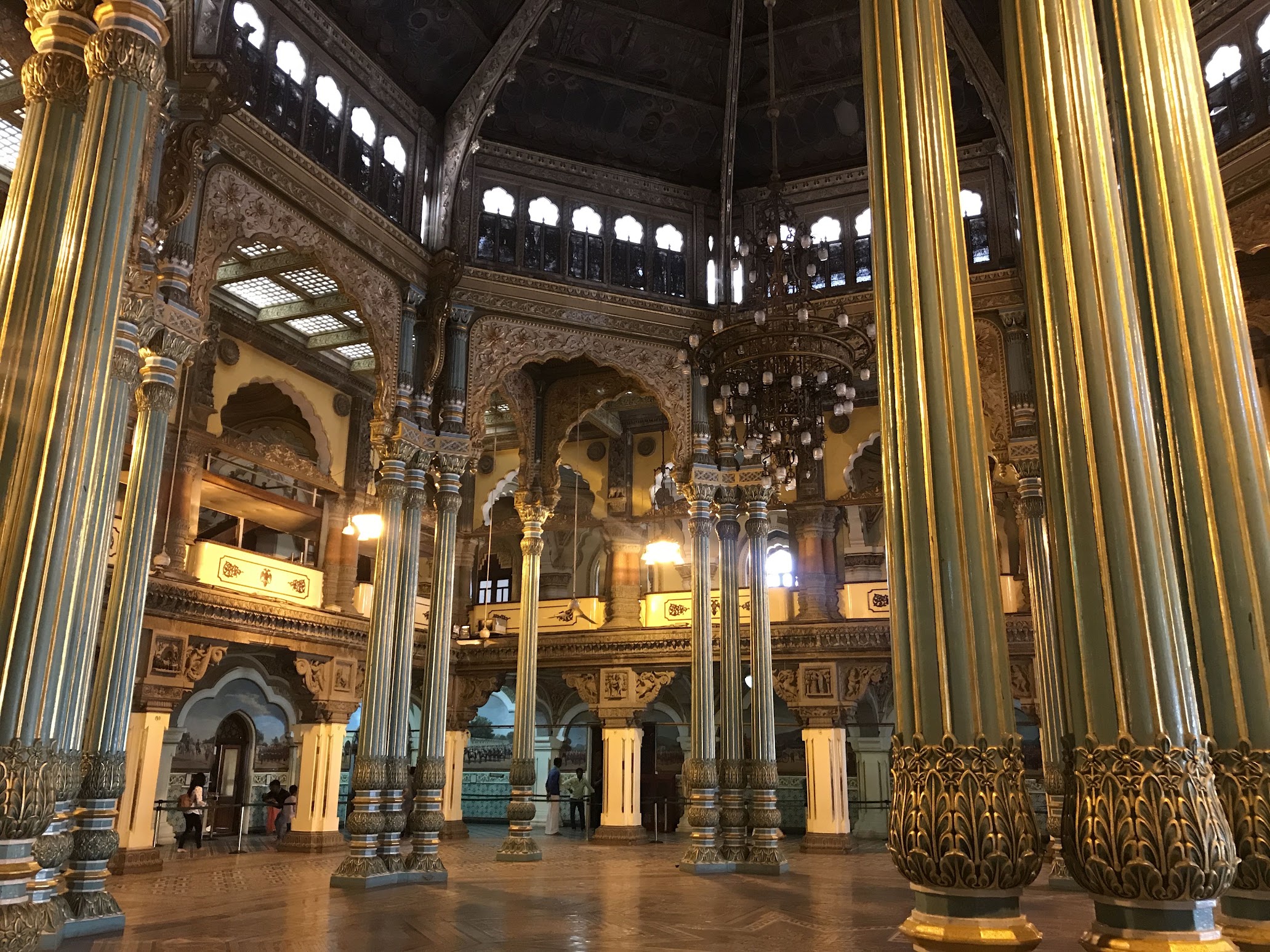
The highlights:
- The opulent Ambavilasa Hall, once used by the king for private audiences
- The beautifully carved Durbar Hall, which was used as a public audience hall.
Aside from the palace, there is also the city itself. I quite liked it as a city. After the unplanned chaos of Chennai, I found Mysore, by contrast, to be a relatively clean, organised and easy to navigate by Indian city standards.
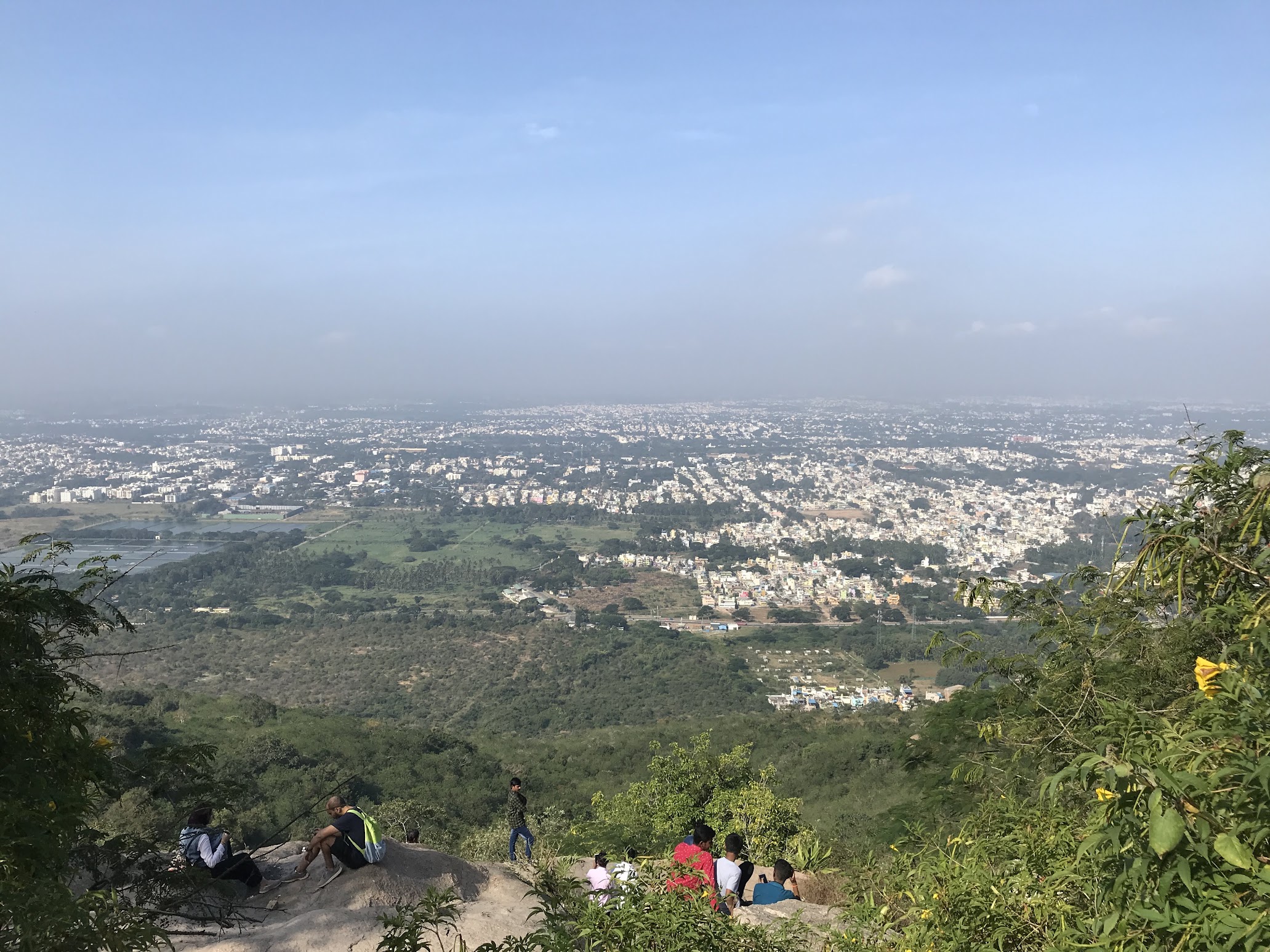
On New Year’s Day, I took the local bus to the top of the Chamundi Hills and hiked the over 1,000 ancient stone steps back down from the summit.
What a view! The hill, and the temple on top of it, is dedicated to the goddess Chamundi, the presiding deity of Mysore.
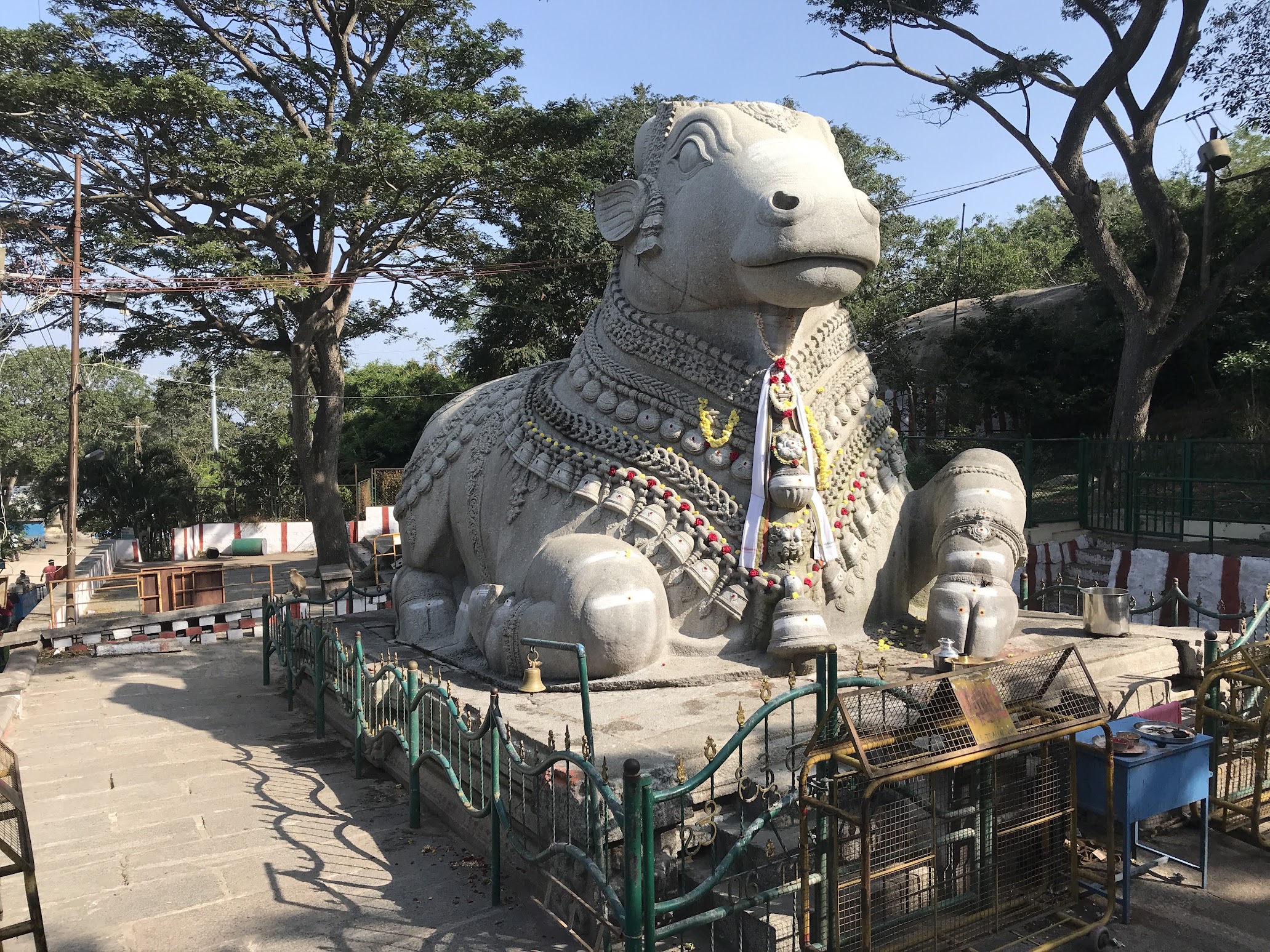
Halfway down the summit is a huge granite statue of Nandi, the vehicle of Lord Shiva. During my hike, I observed many religious devotees taking the stone steps up towards the temple. As an act of piety, some of the women taking this journey were applying patiently vermillion and turmeric to each stone step as they ascended.
And that summarises my brief stay in Mysore! Onward to the next Indian destination!
The British Museum, London (2020)
Posted 23 August 2020
The day before it closed due to the pandemic…
Snaps from the glorious British Museum the day before it shut down in March as a result of the COVID-19 outbreak in the UK. It’s dignified, it’s elegant, and it’s a world-class display of Britannia’s best war booty from its many years of plundering and/or civilising the rest of the world.
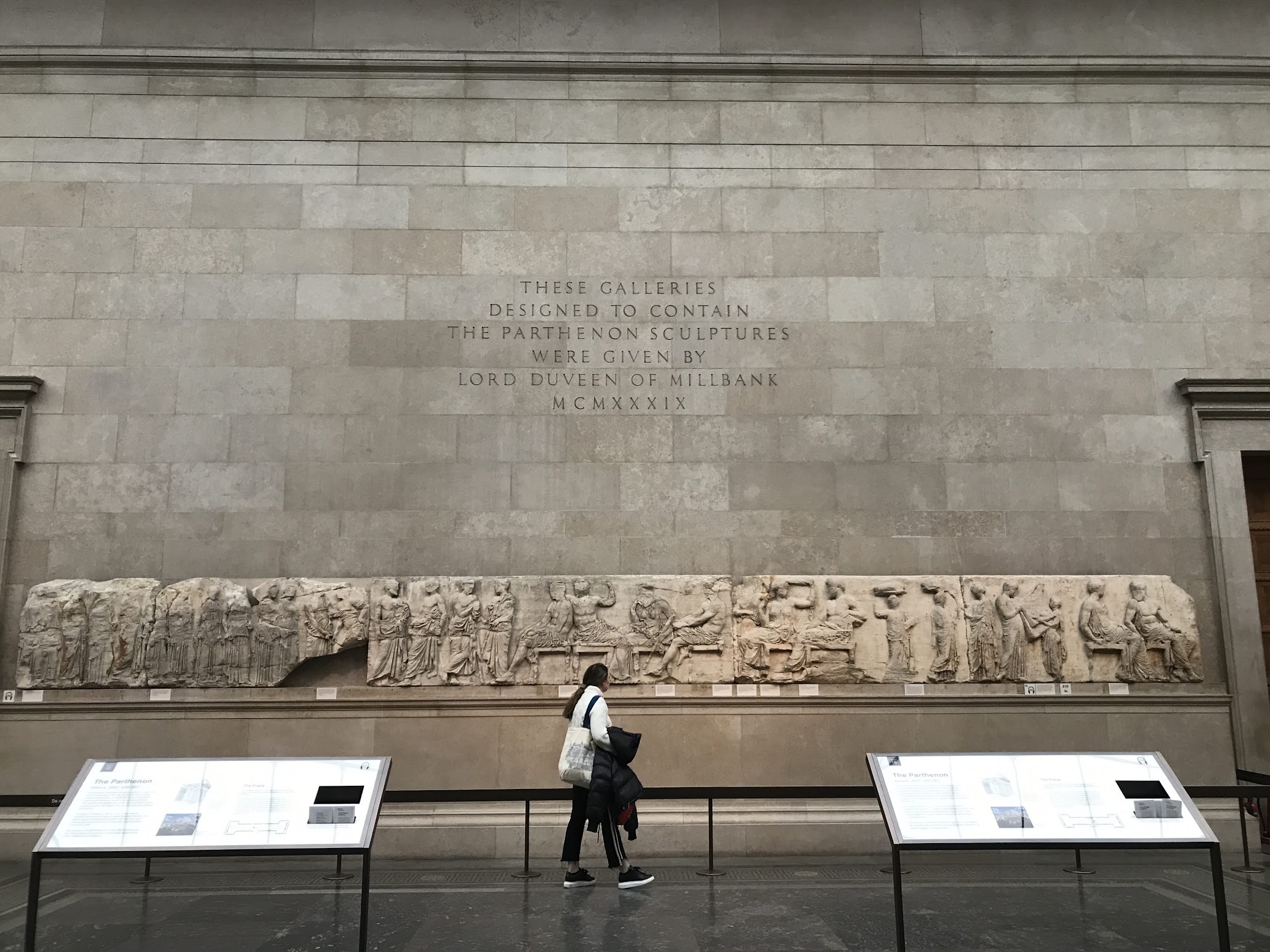
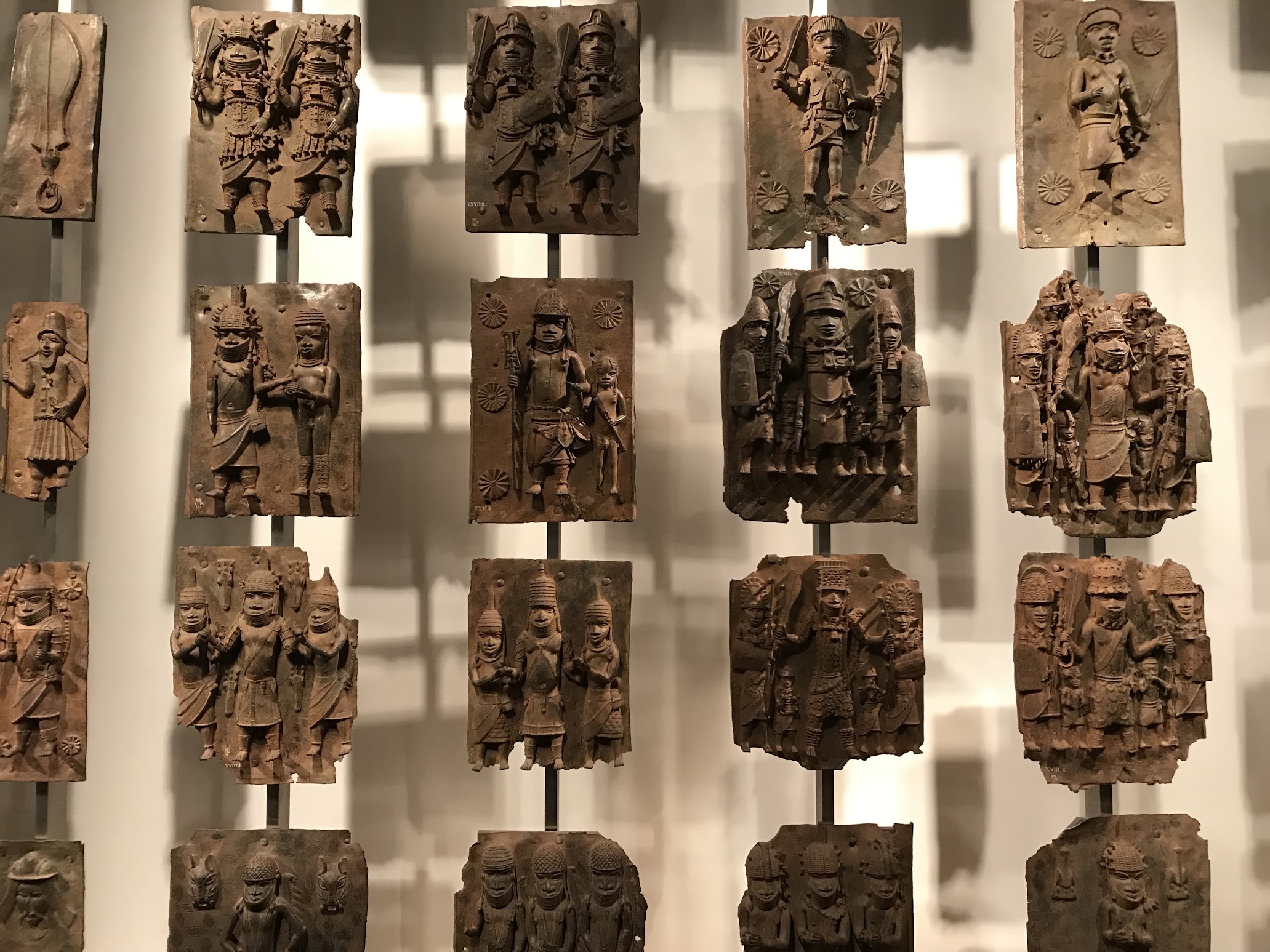
The museum holds priceless, famous, and very controversial artefacts such as the Rosetta Stone (which helped unlock our understanding of the ancient Egyptian language), the Elgin Marbles (which were originally part of the Parthenon in Athens), and the Benin Bronzes (that once decorated the royal palace of the Kingdom of Benin in modern-day Nigeria). These objects, among many others, have highly contested ownership.
I often find that exploring a museum is as much an act of self-discovery as it is uncovering a particular collection. I find myself often mysteriously drawn to particular, idiosyncratic items for instinctual reasons. That blip, that feeling of magnetism to an object can be an intriguing and even thrilling sensation to have.
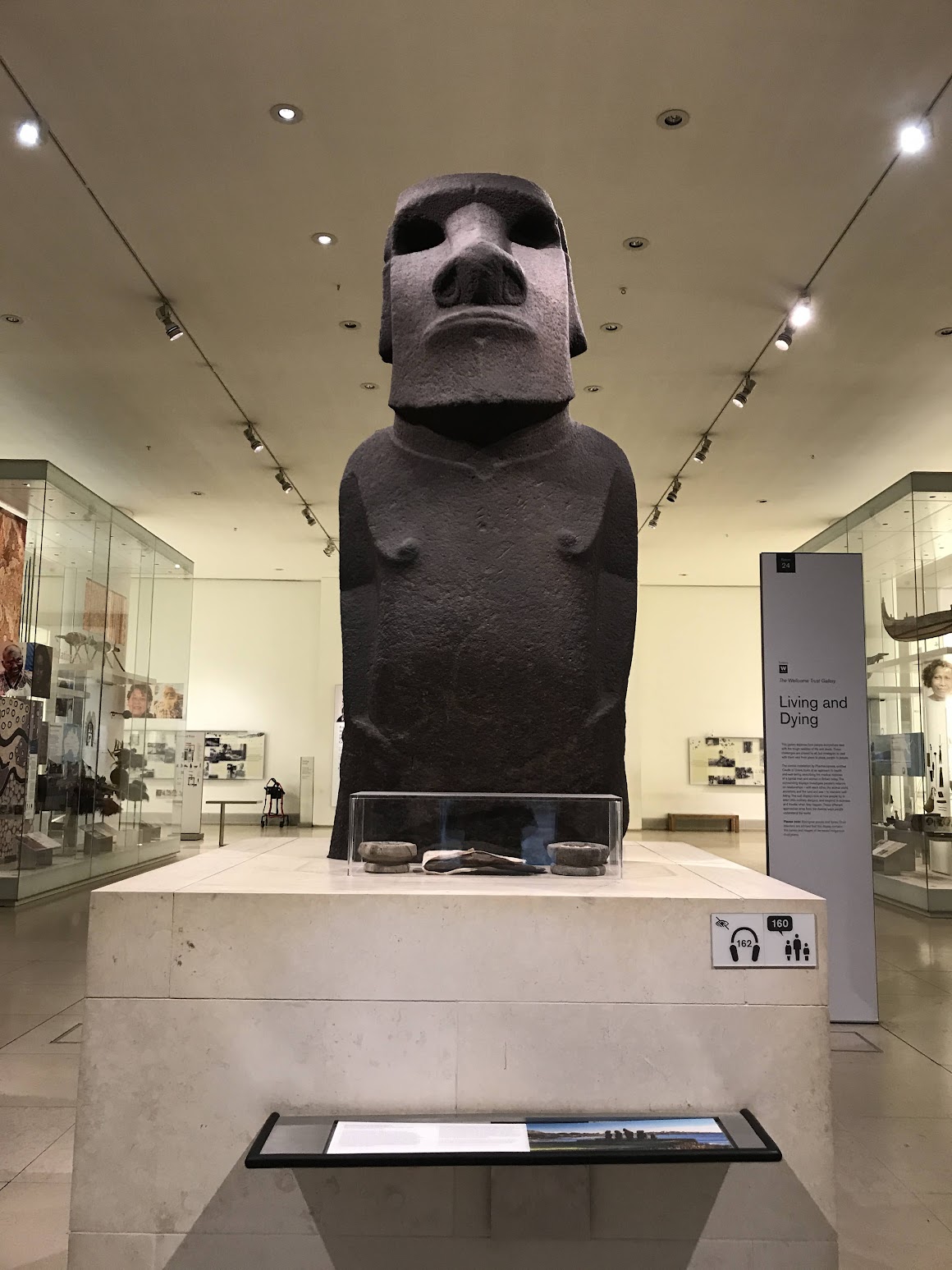
Examples of items I found myself loving in this museum:
- A statue of the Molossian hound, an extinct dog breed from ancient Greece known for its huge size and ferocity.
- The complaint tablet to Ea-nase, an ancient Babylonian clay tablet from 1750 BC about a copper delivery that is considered to be the earlier known example of a written customer complaint.
- The stunningly beautiful decorative plates, helmets and jewelled cups in the Waddesdon Bequest gallery on the ground floor.
- And who can’t help but be awed by the museum’s Easter Island statue (or moai) or the marvellous African artistry of the Benin Bronzes?
Again, pity about their disputed ownership…
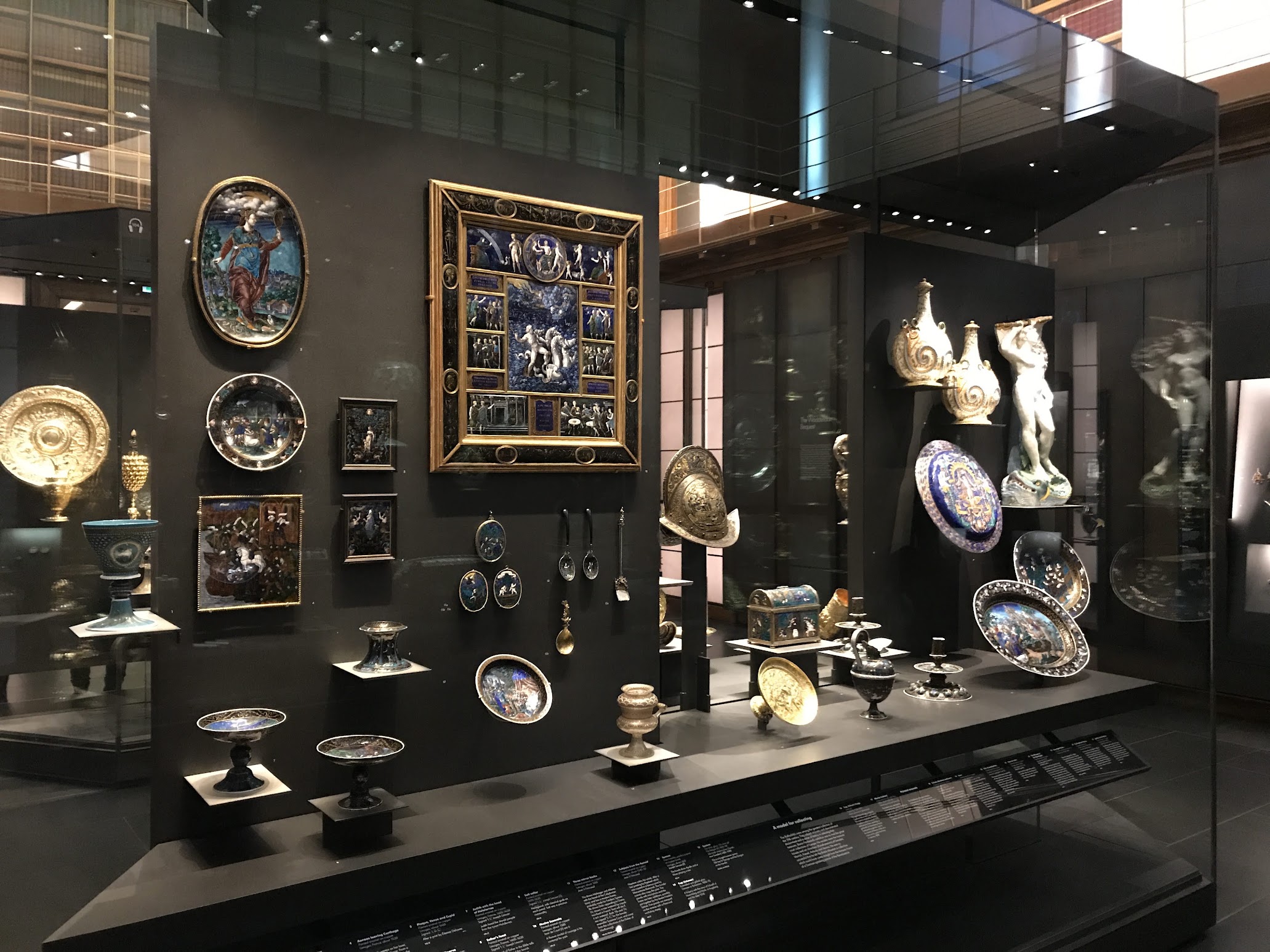
It was sad, of course, to see the museum in such a quiet state as a result of the spread of the COVID-19 pandemic into the UK. It was quite eerie, in fact. I wouldn’t be surprised if this was the quietest the British Museum had ever been in years. And who could blame anyone — a global pandemic will do that to visitor numbers.
What a wonderful place, though. I certainly hope that as we overcome this awful virus, this incredible museum, along with many others the world over, will return to life.
Udaipur (2020)
Posted 1 March 2021
Udaipur: The City of Lakes
1. My first stop in Rajasthan, Land of Kings
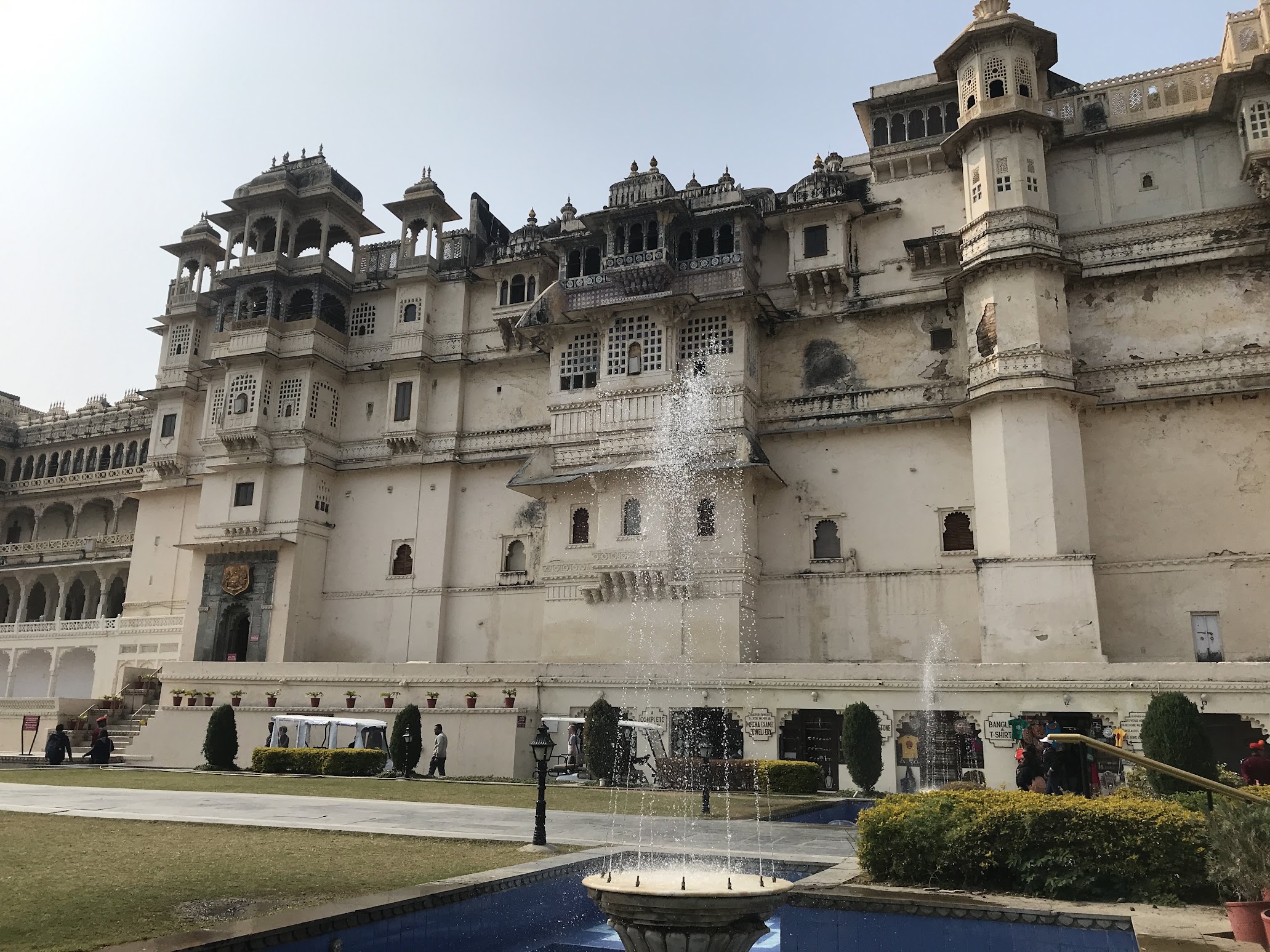
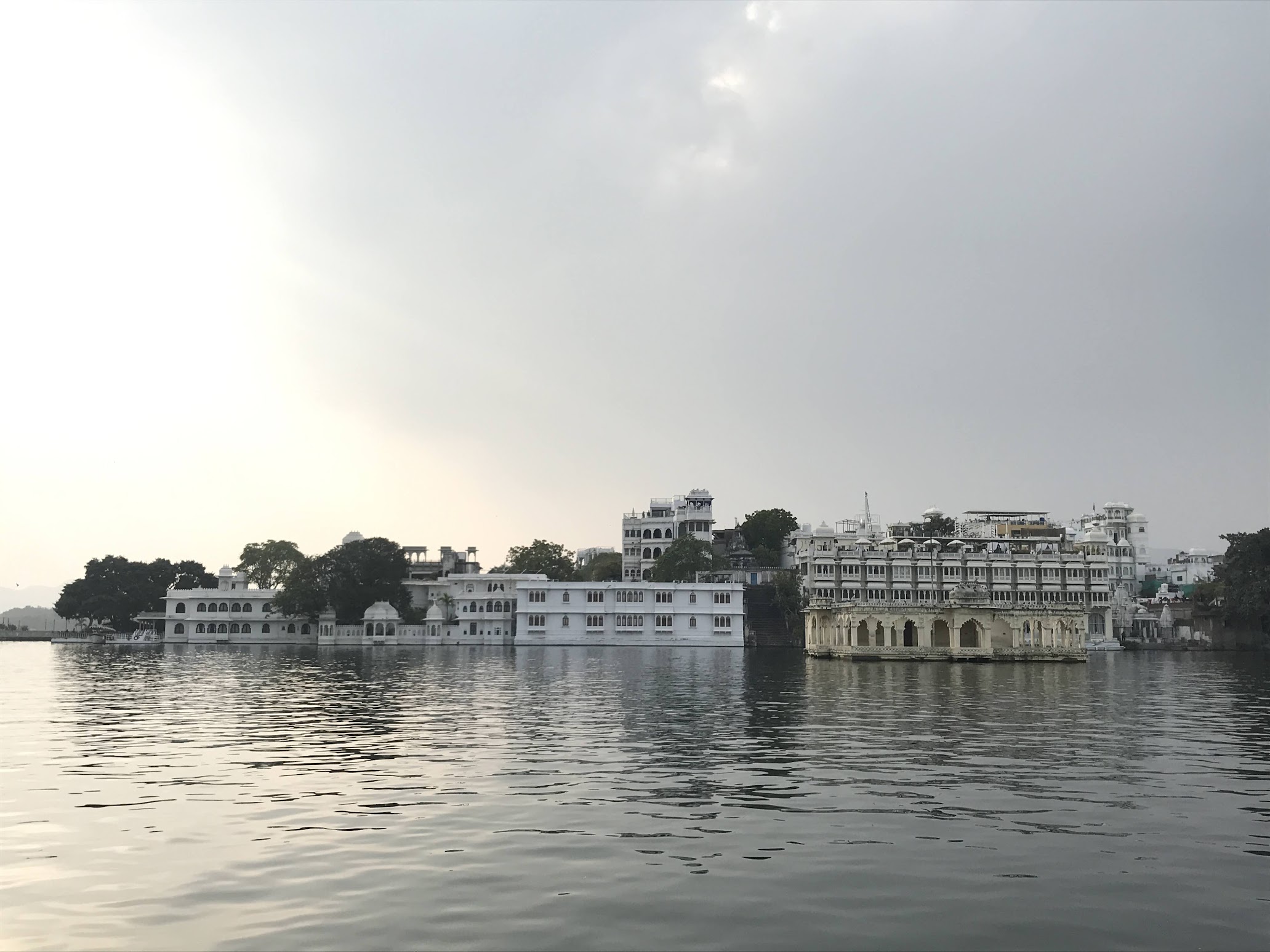
Ah, Udaipur… The City of Lakes, Palaces, Temples, Forts, and Lakes! This city was certainly a stark contrast after an overnight train out of electrifying, madcap Mumbai. It was the historic capital of the kingdom of Mewar and has been acclaimed as one of the most visually romantic corners of India. Prosperous, bucolic, culturally rich, and garden-like. There’s no place quite like it on the subcontinent.
2. The City Palace of Udaipur
Built on the banks of Lake Pichola, this beautiful compound was once the living quarters and administrative centre for the Maharanas of the (still surviving) House of Mewar, who ruled this corner of India for centuries. The exuberant, almost theatrical palatial complex was built over a period of nearly four centuries and provides an excellent view of the surrounding city. Its showy granite and marble façade, its celebrated glasswork, its storied paintings, and its countless, delicately handcrafted nooks and crannies are terrific to behold. It is astonishing that so much of it has remained intact over the ages.
I’d describe parts of the City Palace as almost painfully beautiful. At one point on my tour of the palace, I nearly teared up from the exquisiteness of the artwork and architecture. It sounds silly but it’s true. Maybe it was just the mood I was in, I don’t know. Point is, the palace is a must visit.
3. The best meal of my India trip so far?
Maybe. It was certainly the most fun. I had an all-you-can-eat vegetarian thali at the famous Natraj Restaurant — visited by none other than Anthony Bourdain himself when he came to Rajasthan. One of many Bourdain-related food pilgrimages I’ve done throughout my globetrotting.
You’d try and be modest with the refills and they’d just throw food at you. The (somewhat bored) waiters all wanted to talk to you while you ate. I shook hands with every single one of them and felt like a z-list celebrity.
An aside: whenever I say I’m from Australia, the conversations I’ve had with Indian locals tend to revolve around only two topics: bushfires and cricket. The former is upsetting to talk about and the latter I have no clue about. Very occasionally they’d ask me if it’s true that Sydney women are the most beautiful in the world. This has happened multiple times. Very strange.
4. A photo from the other side of Udaipur
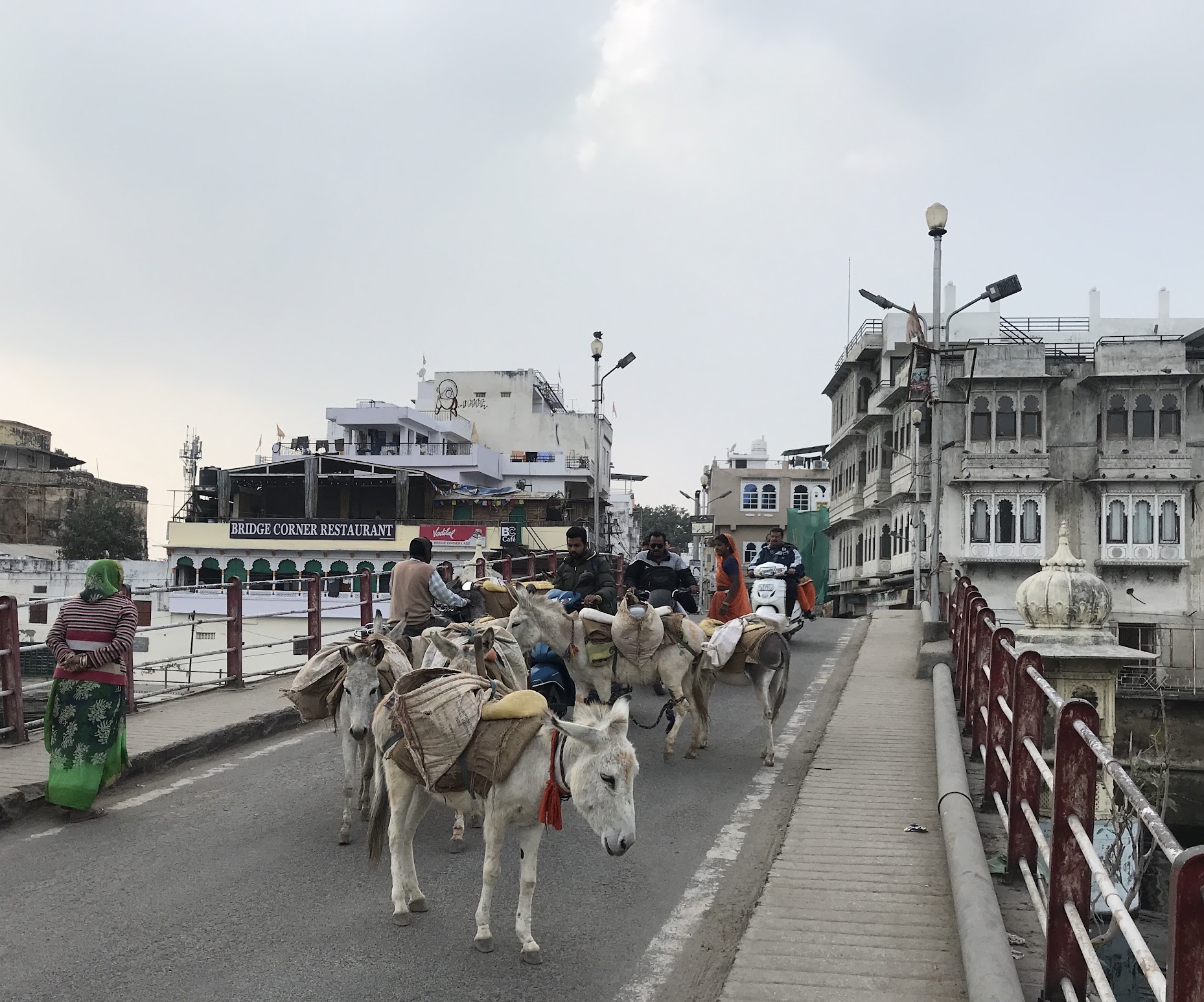
Depicted here: Donkey jams on the road, narrow alleyways (where mopeds race down at breakneck speeds), sleepy rooftop scenes, wedding processions, and fascinating Rajasthani folk dances (the firepots are used in the Chari dance for auspicious occasions and the stack of pots are used in the Bhavai dance to show off the balancing skills of the women in the community).
One morning while in Udaipur, I hopped on the back of a scooter with my guesthouse owner (no helmet, obviously) and zipped down to the local market to buy some mutton. The butcher, squatting in blood-stained jeans, was wildly hacking at a goat leg on a stump with a rusty knife while a small boy was tossing squirming chickens — three in each hand — into a cramped pen.
I cast my mind back to when I was on the train out of Mumbai, and I recall watching the street kids celebrating Makar Sankranti (which marks the end of the winter solstice and the start of longer days) by flying kites. They flew them into overhead powerlines and they flew them while playing on the train tracks. And all over Udaipur, day labourers stand far above the ground on precarious bamboo scaffolding with no safety equipment, renovating old heritage buildings by hand for a pittance. I think India, like so much of the Global South, is a simultaneously thrilling and frightful place for travellers precisely because the motto is “safety second”. Take it or leave it, lean towards it or turn away from it, it’ll always be there — countless stories of daily close calls, routine near misses, and humdrum narrow escapes.
5. Self-reflections on the water
Cowabunga dudes! Check out my new sunnies! 200 rupees, no UV protection, probably still overpriced. I’m finally as cool as the ’90s.
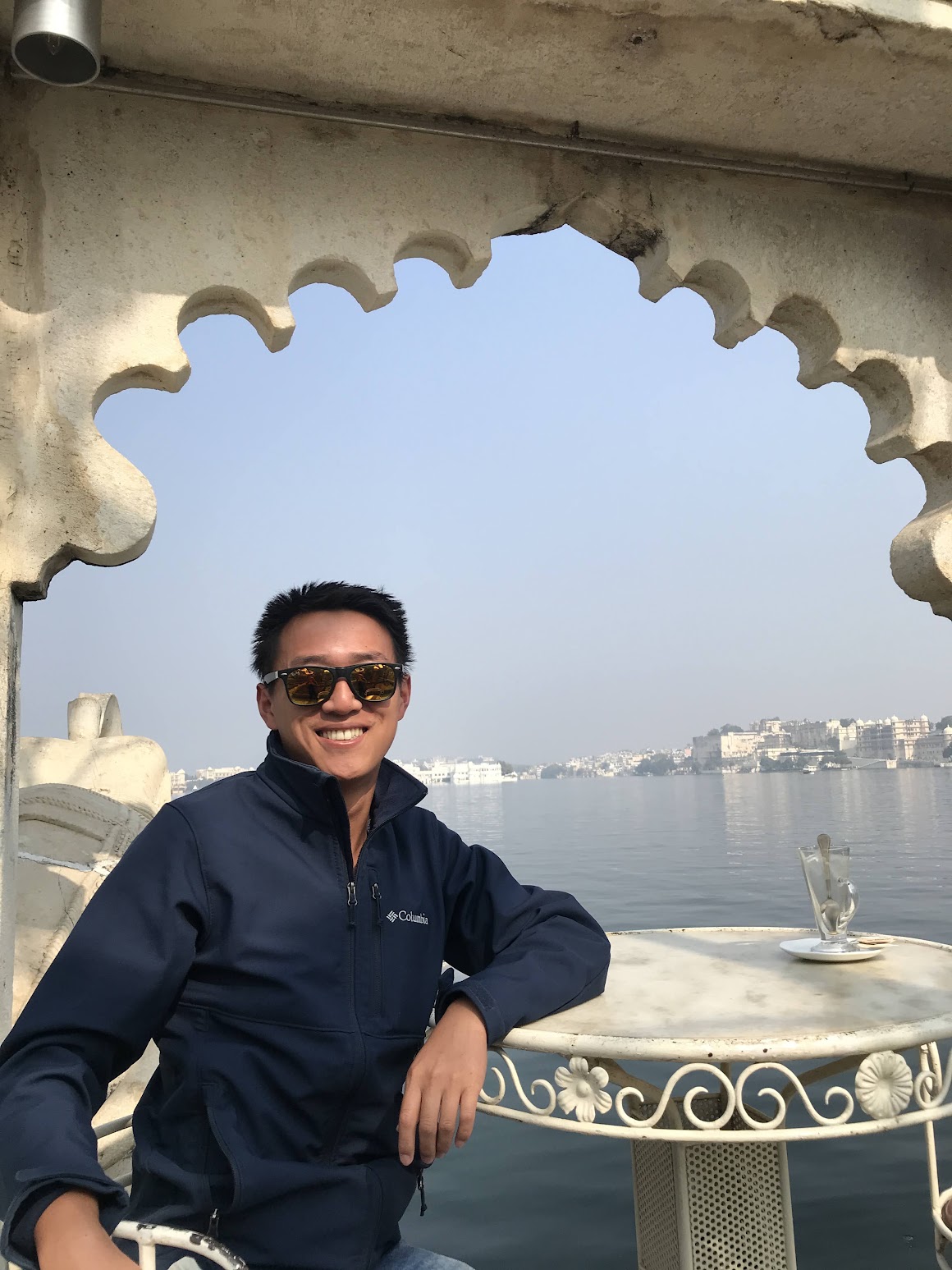
While I was in Udaipur, an odd realisation dawned on me: I’m privileged enough to travel in high and low circles, to move up and down the pecking ladder of the countries I visit, to shift between both luxurious and needful spaces. That may sound extremely vague (and it is!) so I’ll try and offer examples. On one of my days here, I went on a boat cruise around Lake Pichola and stopped at Jagmandir, a former island palace and current luxury hotel, and had an obscenely expensive coffee (still cheaper than a Melbourne latte, mind you). Yet earlier that morning, my breakfast consisted of a deep-fried sandwich and a glass of chai at a roadside stall for thirty rupees (a bit over 60 Australian cents). I stood there with my chai watching the world go by in the company of middle-aged men who would probably be lucky to earn in a single day what I casually slapped down on that island hotel coffee.
Similarly, I’ve had indulgent dinners at rooftop restaurants (I was exceptionally decadent with the laal maans, a spicy mutton curry specialty of Rajasthan) on the same day I’ve had a street food lunch for literal pennies. I’ve had expensive Mumbai cocktails and I may or may not have come across a two rupee cannabis concoction called bhola.
I’ve toured boutique hotels (with marvellous hand-painted pink and blue dining rooms) and I’ve stayed in spartan accommodation with almost no hot water, where I’ve learnt how to have bucket showers, crudely hand wash my clothes, sweep the floor with grass brooms, and drink “Indian style” from shared metal cups (i.e. no touching the rim with your lips).
I’ve travelled by comfortable first-class cabins in overnight trains and I’ve taken long walks on the side of dusty, polluted highways to avoid dealing with overcharging rickshaw drivers (the bastards).
I wonder what this makes me. Moving up and down, high and low. Splashing out and being miserly within consecutive hours. Great comfort happily punctuated by great discomfort. I know some of you have travelled this way. How have you felt about it on balance? Liberated? Strange? A bit of both?
6. Other visits and bits and pieces
And here are my final set of Udaipur thoughts before I shift to writing about bigger and better things:
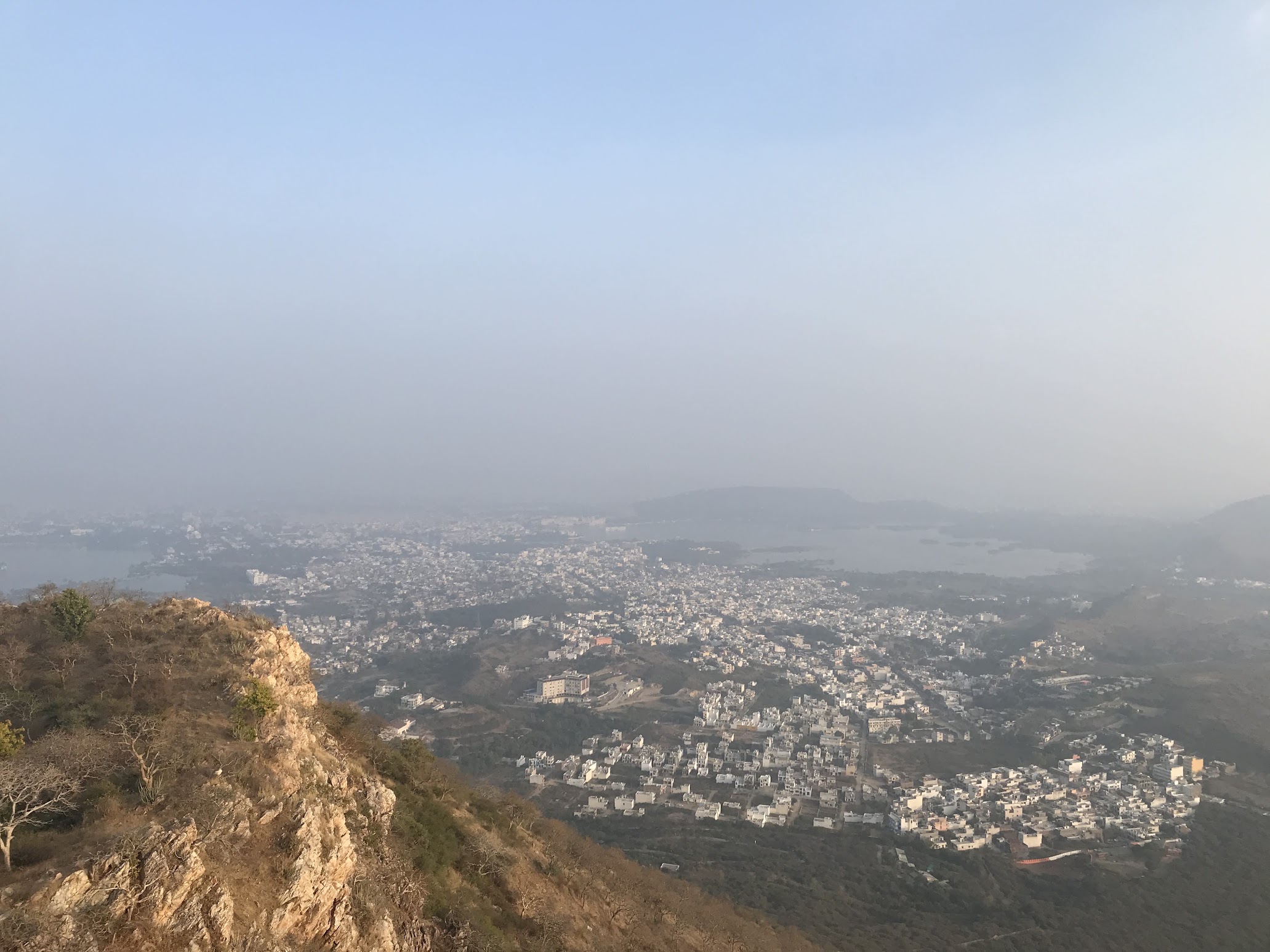
- I recommend a view of the city in the late afternoon from the Monsoon Palace, a 19th-century royal hilltop residence. The view is great, the palace is mediocre, and the government taxi ride up the hill is terrifyingly good fun — a very packed vehicle racing up a winding road as fast as it can while loudly honking around blind corners. Scenic adrenaline.
- The resplendent, hand-carved Jagdish Temple. The temple has been a continuous site of worship for approximately 370 years. Hardly any surface is left unadorned. Every niche is populated with ornate stone carvings.
- And the most important tourist attraction for me… food! Pyaj Kachori, a wonderful fried pastry stuffed with a spicy onion mixture and a specialty of the region. Go away glorious history, go away stunning vistas. This is all I actually need. Nothing else matters.
7. In conclusion
What more can I say? Udaipur. City of Lakes. It’s a nice place. Next stop: Even more of the glorious northern state of Rajasthan.
Varanasi (2020)
Posted 10 July 2021
City of Shiva… City of ghats… City on the river Ganges…
So after exploring one corner of Uttar Pradesh, I made my way to other. All the way to Varanasi! It is, without a doubt, the holiest city of the Hindu religion in India and, if the claims are to be believed, one of the oldest continuously inhabited cities on the planet.
A sunrise boat ride on the Ganges
Taking a sunrise boat trip on the Ganga was truly one of the most memorable early morning experiences I’ve ever had. To make matters better, I was hanging out with Indian visitors who were able to haggle for the local price, not the exorbitant foreigner one. It’s wonderful to travel a country with domestic tourists and experience how Indians explore their own country.
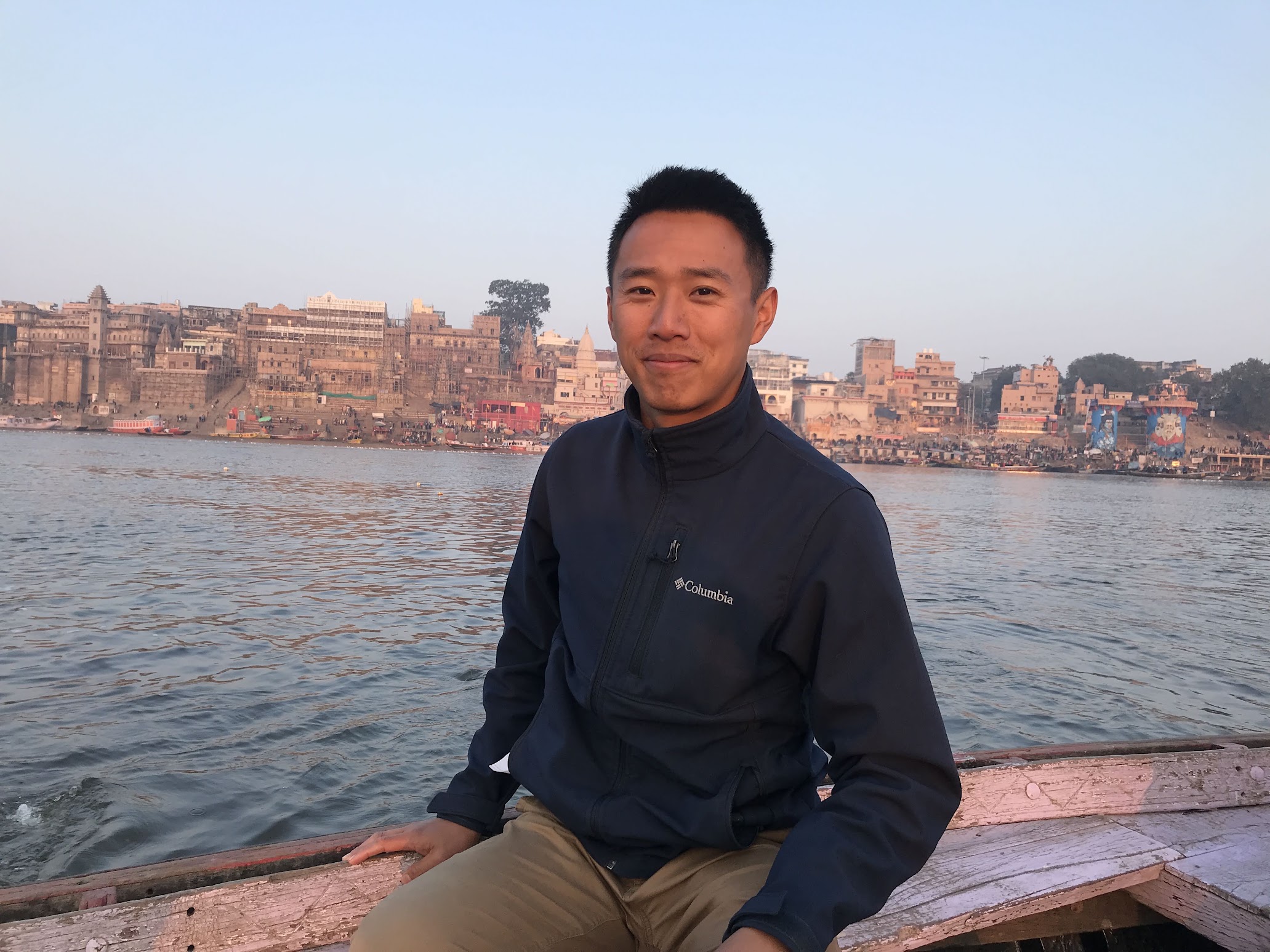
Washed in quiet sunlight, Varanasi felt to me like a city that is simultaneously from another time and out of time entirely. Hindus come from all over India to Varanasi and other points along the river to pray and perform sacred rituals. Bathing in its waters is said to cleanse an individual of their sins and having one’s ashes scattered in it is said to bring them closer to breaking the cycles of death and rebirth.
And as many of you know, it is also one of the most dangerously polluted rivers on the planet. I’m talking urban sewage, industrial chemicals, pesticides, and astronomically high levels of fecal coliform bacteria, among other ingredients. So unless it is part of your belief system, don’t dip your hands in the Ganges as I did! (The water is surprisingly lukewarm.)
Life and death. Energy and slumber. Purification and pollution. What a wild place.
The Ganga Aarti at Dashashwamedh Ghat
The must-see Ganga Aarti is a devotional ritual to the Goddess Ganga, the personification of the Ganges, conducted every single evening at dusk by Hindu priests on the river bank.
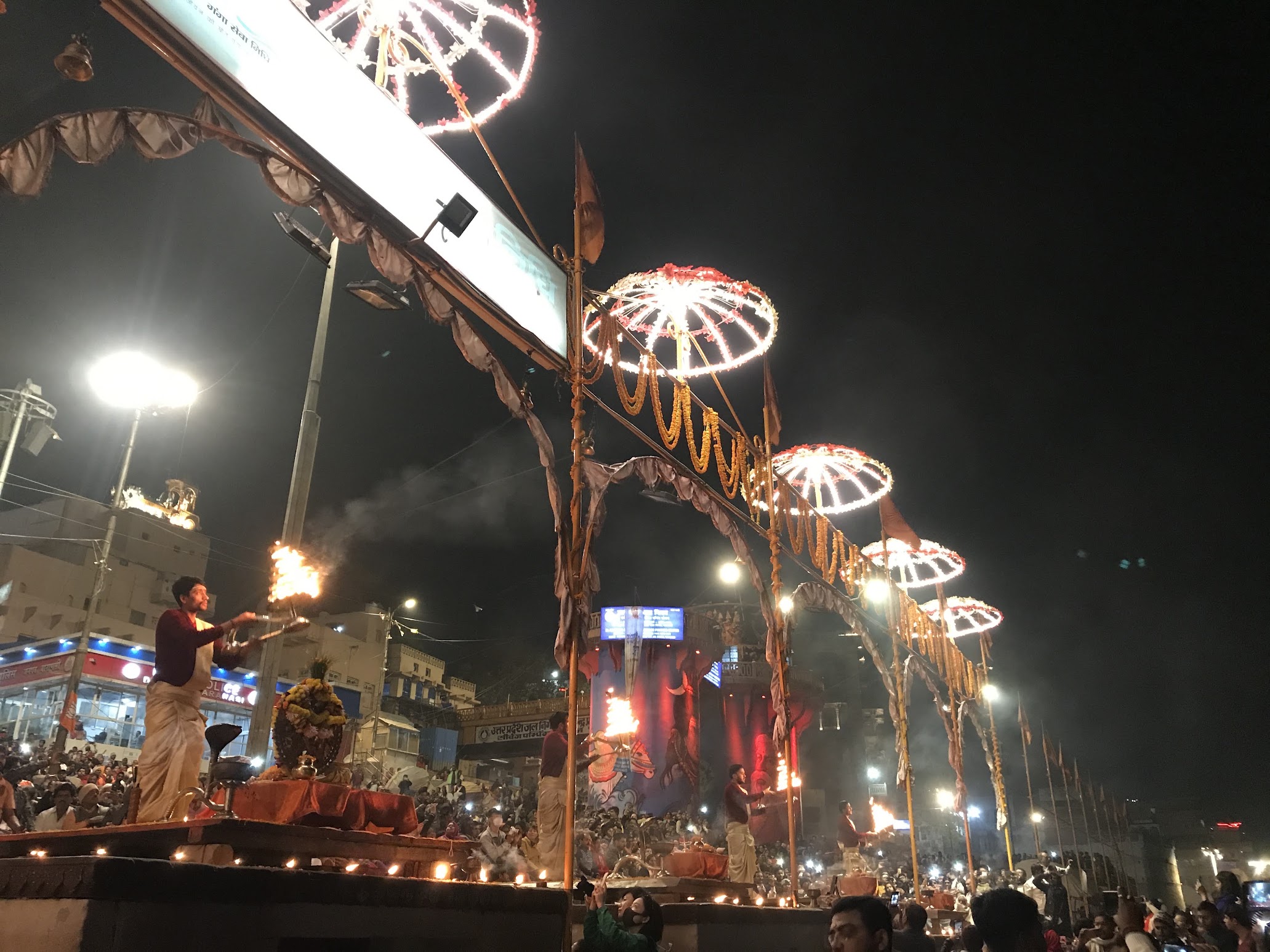
The crowds were huge. The spectacle was highly choreographed. It managed to be both a deeply spiritual event for believers and a light-and-sound extravaganza for foreigners at the same time. There was fire. There was clapping. Hands flew up into the air and, regardless of whether everyone in attendance understood it or not, we were all shouting “Jai!” (“Victory!”) by the end. I was certainly thrilled.
A day trip to Sarnath Sarnath
An archeological site ten kilometres north of Varanasi and one of the four most important pilgrimage sites associated with the life of Gautama Buddha. Buddhists believe it was here that he gave his first sermon after attaining enlightenment.
And check out that massive stupa at the heart of it all! That’s the Dhamek Stupa, which supposedly marks the exact spot where the Buddha first preached. Some real Big Dharma Energy right there.
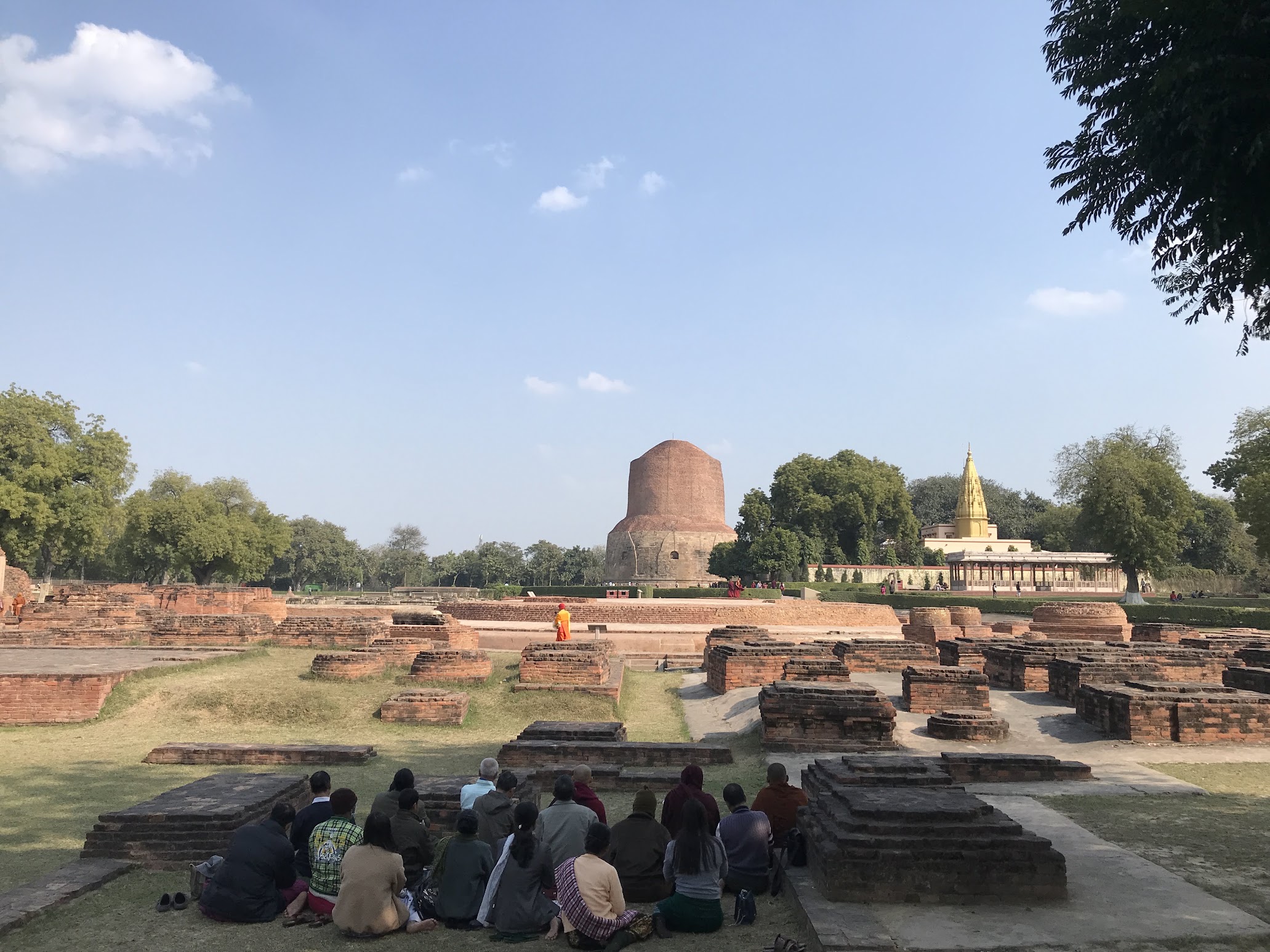
Terrible jokes aside, I found Sarnath a superbly serene place with monks and pilgrims chilling alongside their more basic tourist counterparts. I recalled the words from the Buddha’s first sermon: “Unshakable is the liberation of my mind. This is my last birth. Now there is no more renewed existence.”
Sadhu! Sadhu! Sadhu!
The Lion Capital of Ashoka at Sarnath Museum depicting four Asiatic lions. Sculptures such as this were placed atop great pillars in the Iron Age Maurya Empire. This particular sculpture has been adopted as the National Emblem of India.
Foods of Varanasi
I like food. Varanasi has food. It also has streets. Which have food. I like Varanasi street food.
- Malaiyyo — a famous Banaras winter dessert which can only be described as ‘saffron flavoured magic milk froth’.
- Kachori sabzi — crispy breakfast carbs drowned in a spicy lentil or potato curry.
- Litti chokha — hard wheat balls stuffed with roasted chickpea flour, served with eggplant, tomato, and potato mash.
- Lassi and thandai — cold and creamy dairy-based drinks, often packed with a wild assortment of fruits, nuts, and spices. And because of the city’s close association with Shiva, cannabinoid varieties are casually available everywhere.
A city of death
Varanasi is a city of death. That is a fact. People come here to die in hospices and corpses arrive here to be cremated at the banks of the Ganges. All in the hopes of escaping the tormenting cycles of rebirth.
My photo below is of Manikarnika Ghat, Varanasi’s main burning ghat, in a rare moment at dawn when there were no cremations. I passed through this site three times by foot (completely fine, as long as you don’t take photos), each visit less daunting than the last. On my first visit, I was guided through inferno by my own third-rate Virgil — a scammer-cum-guide who I tipped modestly. It was worth it, I think. The huge log piles. The open-air fires. The choking wood smoke. The barely tolerable heat. The endless sound of conflagration and axes hacking at logs. It’s hard to explain.
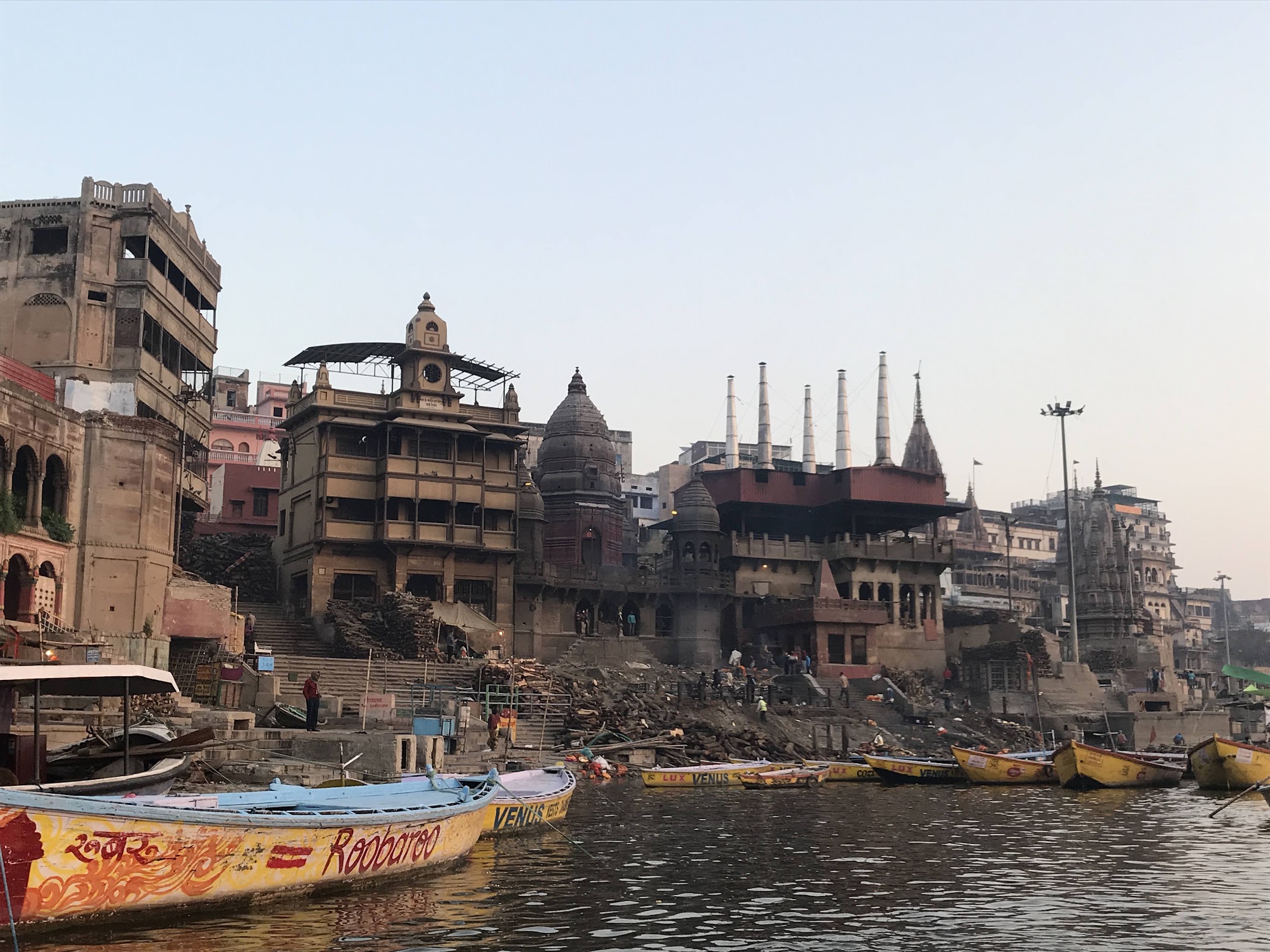
My favourite lassi shop in the city is also in death’s firing line. As you sit there, drinking your mango/pomegranate/cannabis lassi, you can watch bodies being marched down to the river on bamboo stretchers every fifteen minutes or so. “Ram Naam Satya Hai!” chant the bearers. “The name of Lord Rama is the truth!” And without God’s breath in a body, its truth disappears.
I also spent time at Harishchandra Ghat, a smaller burning ghat to the south. Here I was able to watch the whole process (corpses being doused in river water, the priestly rites, workers adjusting semi-burnt bodies in the fire) without being bothered. But proceedings here were more amateurish. Goats wandered around the ghat. Stray dogs napped next to pyres. Kids bathed naked a few metres directly downstream from where the ashes were being dumped. The grisliest thing I witnessed was a dog that had snatched a piece of charred human bone from a smouldering pyre. He chased away another mutt, sat between some tired pilgrims, and began picking at the strips of flesh that still remained on the bone. No one cared. Things are different here.
Truth be told, I became a bit clinical about all of it towards the end. But I’d like to think I gained a little wisdom from my visit. As for now, life (and its eternal counterpart) goes on.
Concluding with Varanasi
Varanasi. Benares. Banaras. Kashi. Call it whatever you want. It’s a city of the ages that collects names, temples, pilgrims, holy men, mystics, scammers, druggies, and backpackers from all over the globe. White, dreadlocked hippies stoned out of their minds mingle with face-masked Chinese tour groups. What a place.
What to see? What to photograph? Everything and nothing. Because Varanasi is all about motion — the motions of people, animals, rituals, flags, sunrises and sunsets. There is no obvious cynosure, no apparent focal point for your attention. Life drums on here and your awareness dances with it.
The literal rat warrens of the old city with its maze of dead-end alleyways. GPS doesn’t work here. There is barely any mobile reception. Heaven forbid you asking for directions and then trying to understand them! Monkeys swinging on powerlines. Scooters vying for cobble-space with swollen bovines. Armed soldiers protecting temple entrances. Hand-painted shop signs reminding you that we can still make things with our fingers. What a place.
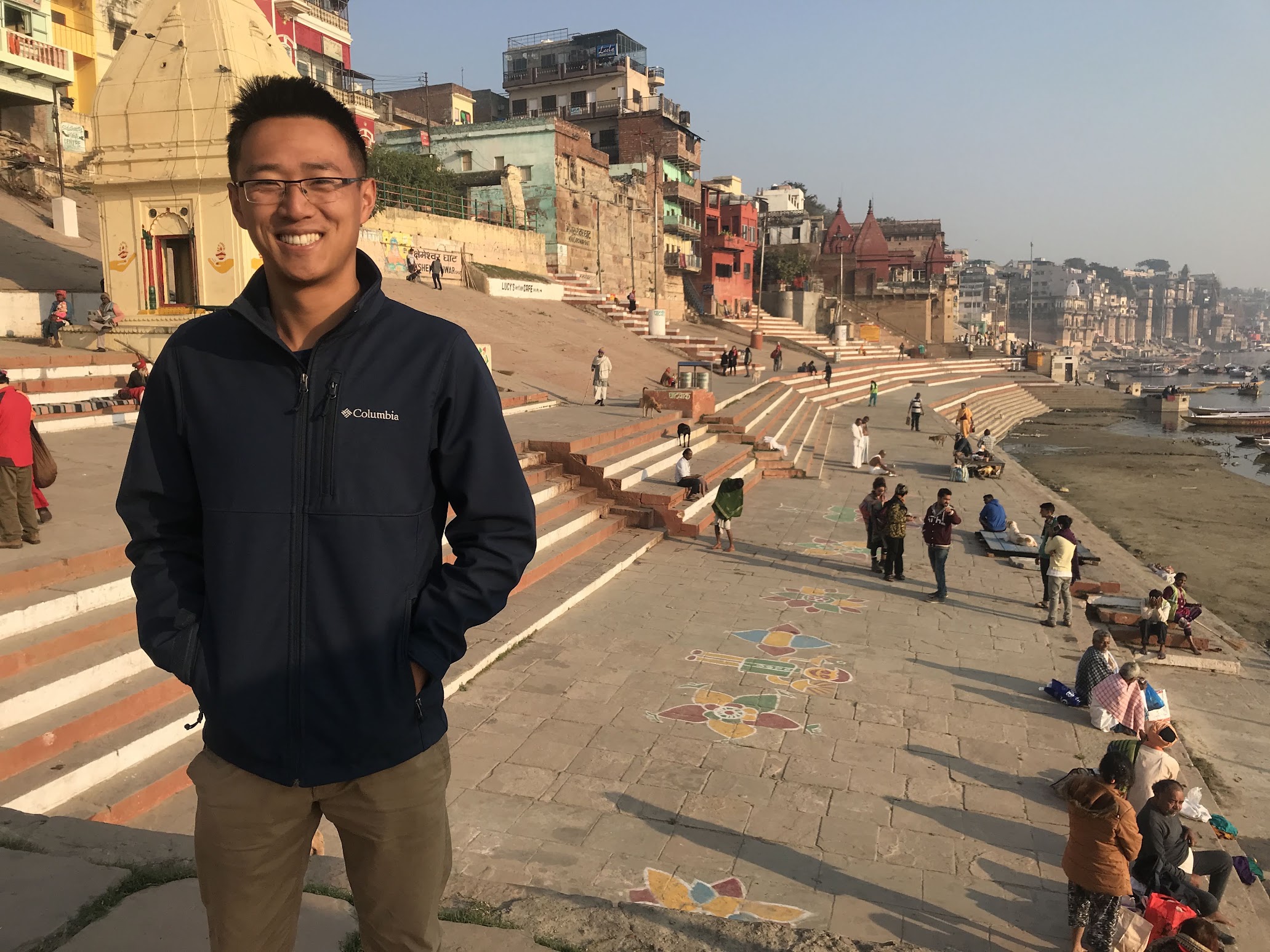
As I currently write these words, I am sitting at King Khalid International Airport waiting for a connecting flight to Egypt. This place is the literal opposite of Varanasi and so much of India. Flat. Orderly. Quiet. New. Unbelievably clean. A motionless desert view. Though I think this might just be a restful interlude to even more chaos. The only way to find out is to board my next flight…
Cradle Mountain and Launceston (2019)
Posted 1 June 2022
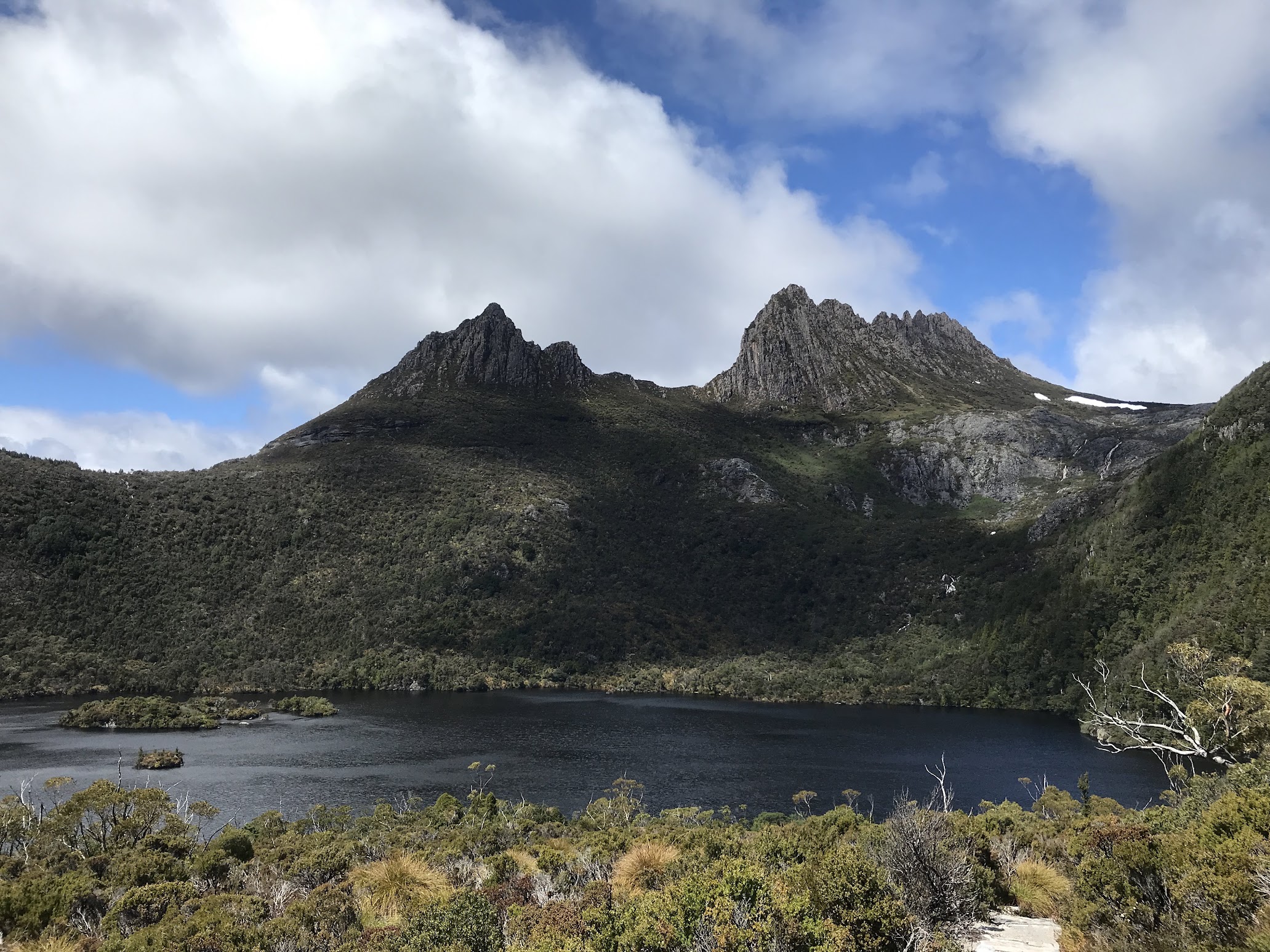
This is Cradle Mountain–Lake St Clair National Park, a weather-gashed and heath-rugged gem in the northwestern highlands of Tasmania.
I arrived here from Launceston and was quickly struck by the wildness, the richness, and the diversity of its flora and fauna. By the chilly, primeval rainforests and grasslands. The slippery and saw-toothed rocks. The glacial pools and icy outpourings. And the intricately twisted pine trees and bumbling wombats.
If the island of Tasmania could be seen as a frozen teardrop located below the main Australian body, then Cradle Mountain and its environs is a harsh and complex ice crystal nestled deep within that drop.
Where I lodged, close to the titular mountain itself, is the trailhead of the world-famous Overland Track. However, tackling this particular challenge was not the reason I came here. No, instead, my goal was to climb Cradle Mountain alone for my 28th birthday. Here’s the briefest of accounts of how I fared during my stay… The imposing and misty mountain itself is named after its supposed resemblance to a gold miner’s cradle (a wooden box that was used to separate precious minerals from washdirt and water). It stands a touch over 1,500 metres above sea level and looms over the picturesque Dove Lake, with its odd boathouse and uncharacteristically tame-looking beaches.
Close to the mountain is the fantastic “ The Devils @ Cradle” sanctuary, which is a breeding and conservation facility for three highly threatened Tasmanian marsupials: the Tasmanian devil, the Spotted-tailed quoll, and the Eastern quoll. All of them are carnivorous, with the Tasmanian devil being the largest of the bunch. It is a stocky creature, with a ferocious bite, a ghastly cry (that sounds like, well, very devilish) and, tragically, is in dire danger as a species due to a grotesque facial tumour disease.
Tasmanian Aboriginal people lived in these parts for over 30,000 years, possibly even much longer. These lands were also explored by immigrant prospectors, hunters, grazers, woodcutters, fur trappers, and plain-old adventurers until 1922 when it was declared a scenic reserve.
It is, in my informed opinion, as utterly scenic and pristine as it is utterly unpredictable weather-wise. No one can predict the chaotic alpine weather here. Cradle Mountain receives regular doses of rain and snow, even sometimes in the summer months. And that’s part of its charm, I suppose.
So how did I go with conquering the mountain? It was a failure! I attempted to hit the summit of Cradle Mountain and I reached about nine-tenths of the way to the top before the weather took a turn for the worse. Thus, I was forced to turn back before the boulders became too slippery and treacherous to climb down.
To compound my failed attempt, I ended up with a mild cold from the wintry wet weather exposure. Happy birthday, indeed!
Oh well. Technically I’ve still “climbed Cradle Mountain” on my 28th birthday, no?
Beyond mountains and nature, I should also mention I spent a short time exploring Launceston, a small riverside city of 110,000-ish people in northern Tasmania. I’d describe it as a cosy town, though it was regrettably more of a ghost village in the final leg of my stay due to a public holiday. Can’t blame many of the locals for wanting to clear out and visit the natural treasures in their own backyard.
Early in the morning, prior to my flight back home, I jogged from the city centre to Cataract Gorge Reserve on the South Esk River and witnessed the glorious sunrise. This is a must-see natural formation should you ever find yourself in Launceston. Peacocks were pecking sedately in the gardens. I saw a wallaby on the trail too, I think. And, on my way back to pack my bags, I spotted a cage with some monkeys in one of the local parks. Weird.
Alright. I think it’s time to head back to Melbourne and recover from the rest of my damn birthday cold.
Jiufen, Houtong, and Shifen (2019)
Posted 30 October 2020
Unusual towns of northern Taiwan
North of the beautiful, energetic metropolis of Taipei, three interesting tourist towns can be easily knocked off in a single day. Each has its peculiarities and touristy appeal. Let’s check ‘em out!
1. Houtong
Welcome to the Houtong Cat Village. When the local coal industry died in the 1990s, the villagers figured out an obvious solution: turn its unusually large cat population into a tourist attraction. Everywhere you wander, there are cats, cats, and more cats. I’ll resist the temptation to make a very obvious feline pun. But somebody please tell America’s Rust Belt they have a new economic strategy.
2. Shifen
Shifen (which translates to “ten portions”) is another historic mining town. The first thing you’ll notice is the fact that the railway tracks run straight through the middle of the town. The second is that there are a lot of sky lanterns floating around. You’re meant to write your wishes on them and launch them into the heavens. Of course, now and then, one of them fizzles out and tumbles back to earth. Haha! Wish denied!
Close to the town is Shifen Waterfall , a scenic if modestly sized cascade. Nevertheless, at approximately forty metres in width, it’s the broadest waterfall in Taiwan.
3. Jiufen
Jiufen (which translates to “nine portions”) is perhaps the most famous of these three towns. It is a bustling, lantern-filled town in the fog-shrouded mountains filled with trinket shops and delicious street food vendors. It proudly claims to be the real-life place that inspired the setting of Miyazaki’s “Spirited Away”. Nope! A quick internet search reveals that’s just a popular myth, one that Miyazaki himself has debunked.
Oh well… It’s still a neat little place to explore and support the Taiwanese economy, at least.
Kaohsiung (2019)
Posted 23 October 2020
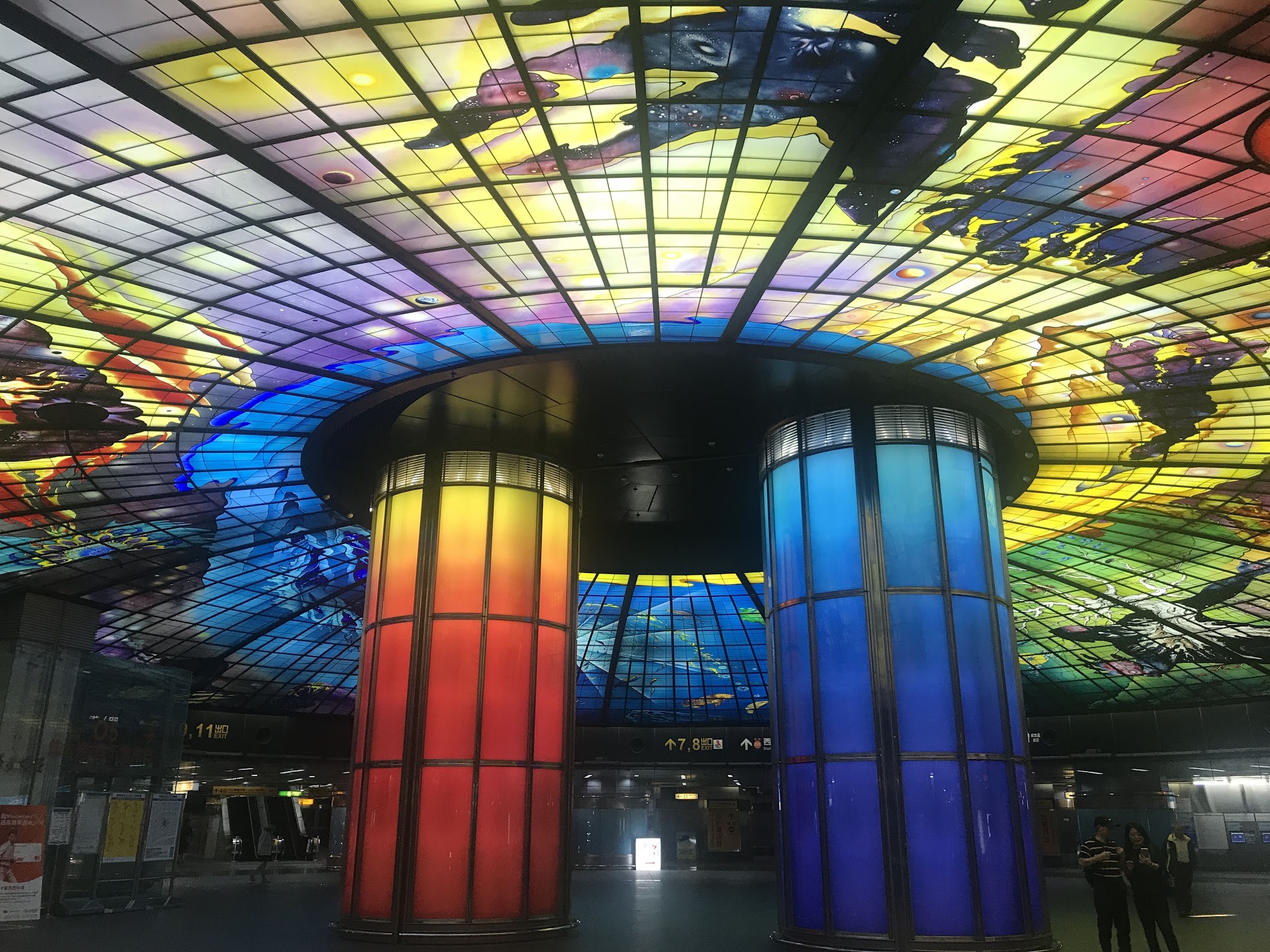
The Dome of Light, the world’s largest glass artwork at one of Kaohsiung’s major subway stations.
A quirky day in Kaohsiung city
Oh, Formosa! On one of the last legs of my circumnavigatory train journey around Taiwan back in 2019, I made a stop in the huge port city of Kaohsiung on the south-western side of the island.
Unlike the eastern coastline, which was filled with lush natural beauty, the western part of Taiwan is significantly more developed and heavily populated. I could immediately sense the difference out my train window: the stronger visions of industry, the busier roads, the inevitable urban haze…
But even so, I still came across some truly bright points of interest in Kaohsiung.
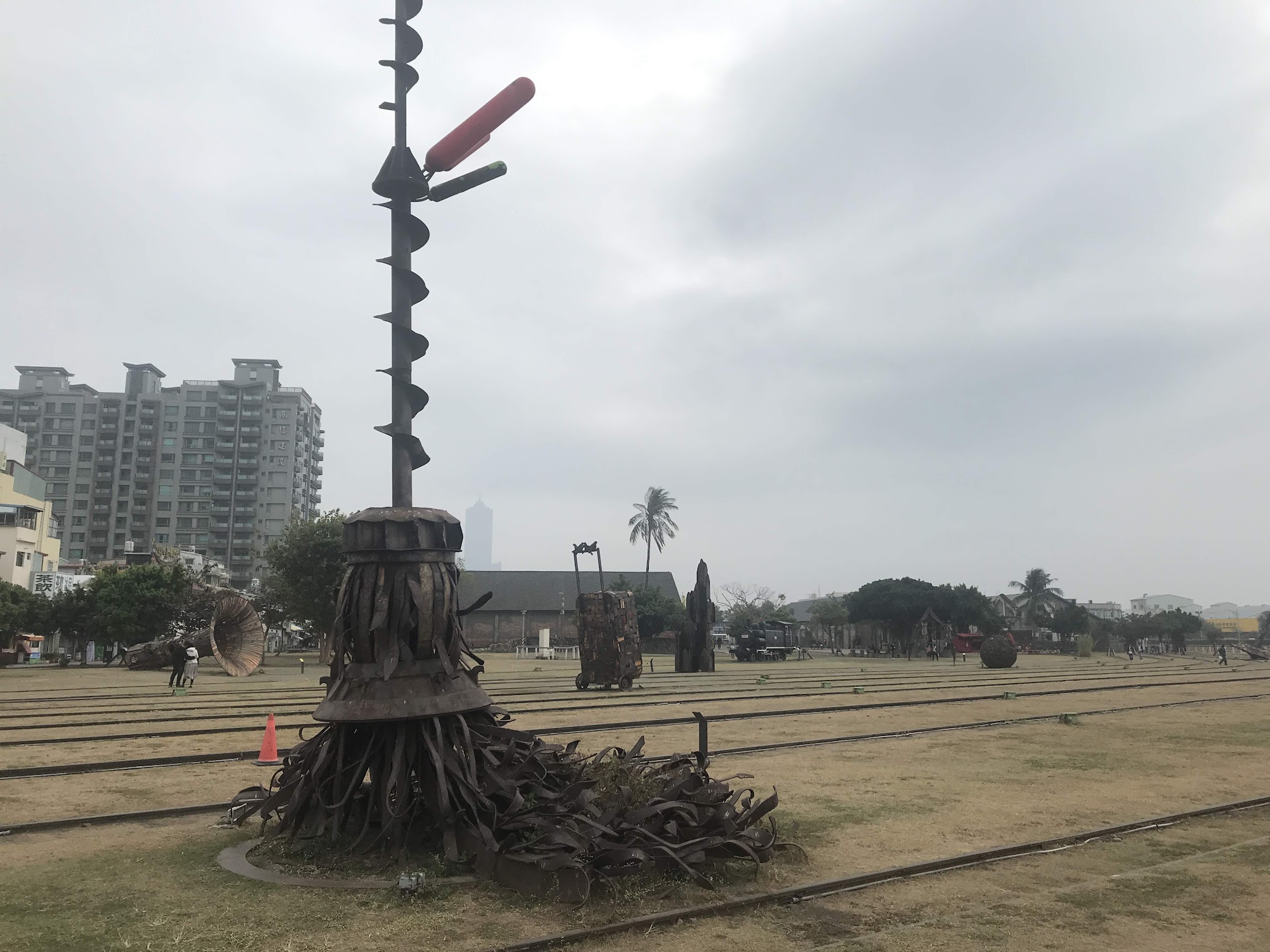
Railsea, Taiwan edition. At the Hamasen Railway Cultural Park.
The Pier-2 Art Centre. Originally a series of abandoned warehouses by the sea, the area found a new lease on life as a colourful district for contemporary artists. It’s eclectic, it’s vibrant, and it’s a delight to meander around this place and stumble across peculiar and idiosyncratic public installations, both big and small.
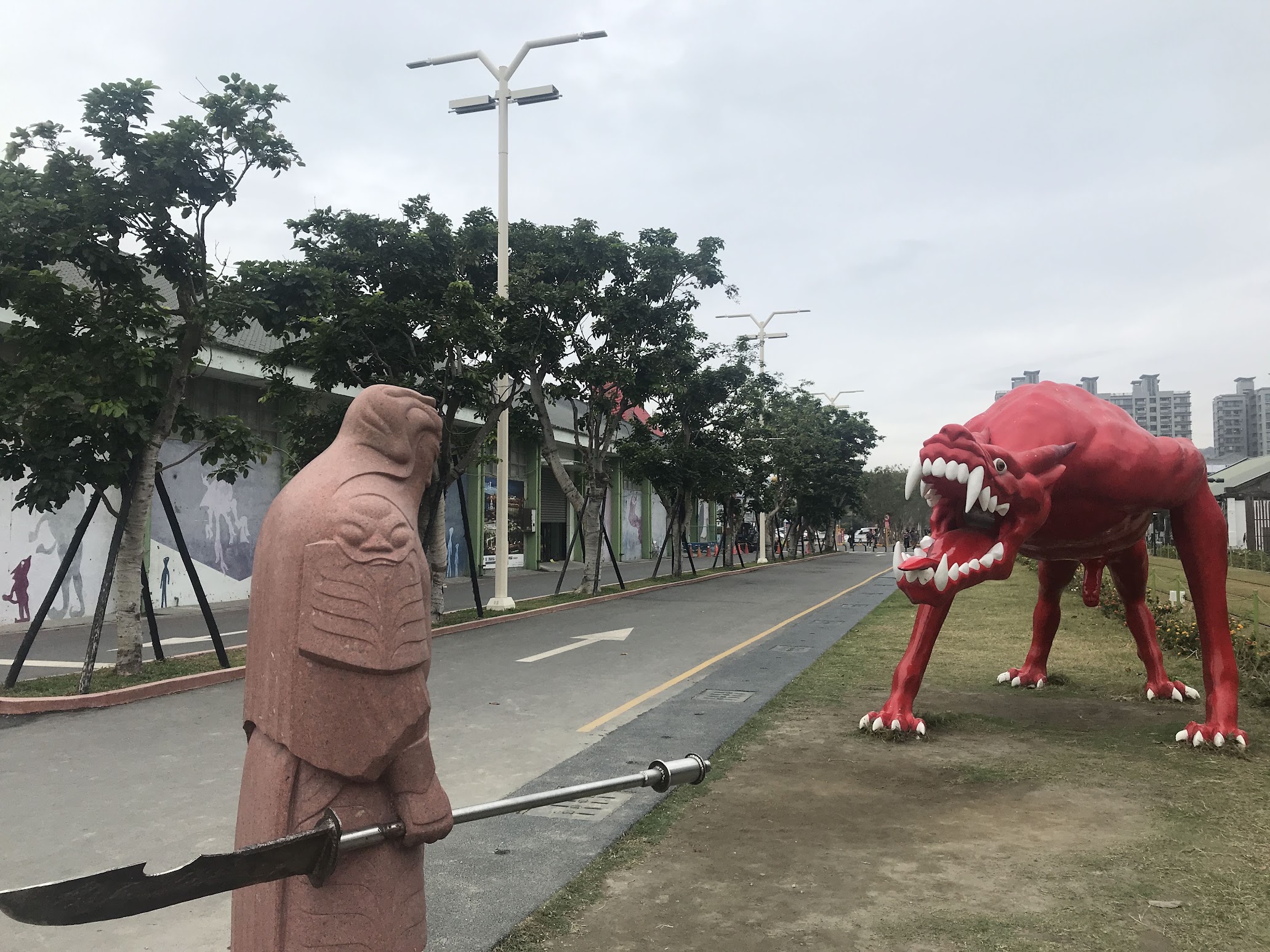
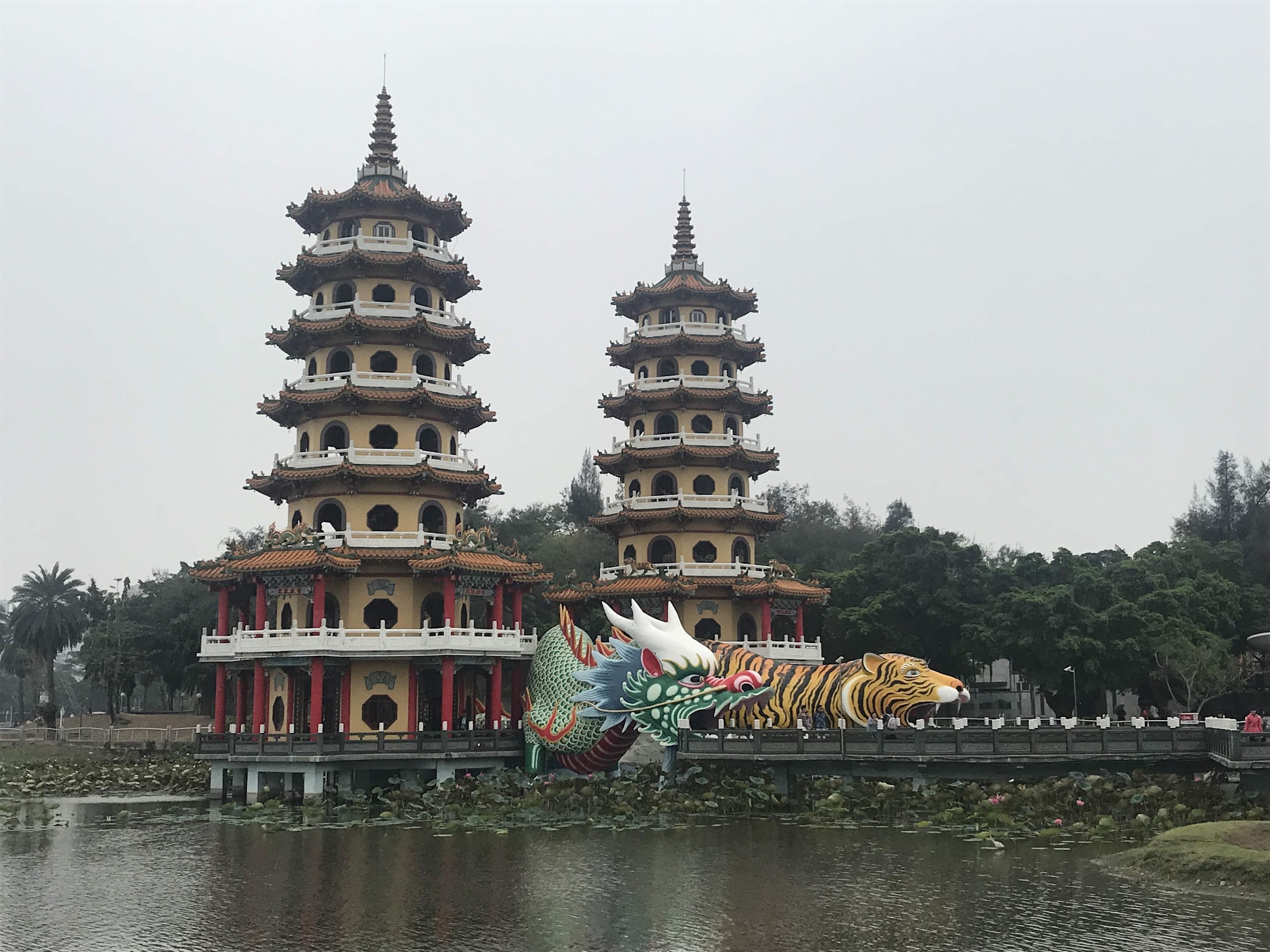
Lotus Pond. Despite the humble name, it is, in fact, a sizeable artificial lake surrounded by Confucian, Taoist and folk religion temples. Created in the 1950s, this place provides is a technicolour tour of local beliefs and traditional architecture. The Dragon and Tiger Pagodas will consume the non-believers.
I was lucky enough to show up at the lake during a large “miaohui” temple gathering in which various groups paraded to the temples, banged drums, and set off firecrackers. But the most popular group by far was the convoy of mini-jeeps, blasting loud techno music, with pole dancers performing on top of them. Don’t believe me? Here is my somewhat-shaky-video proof:
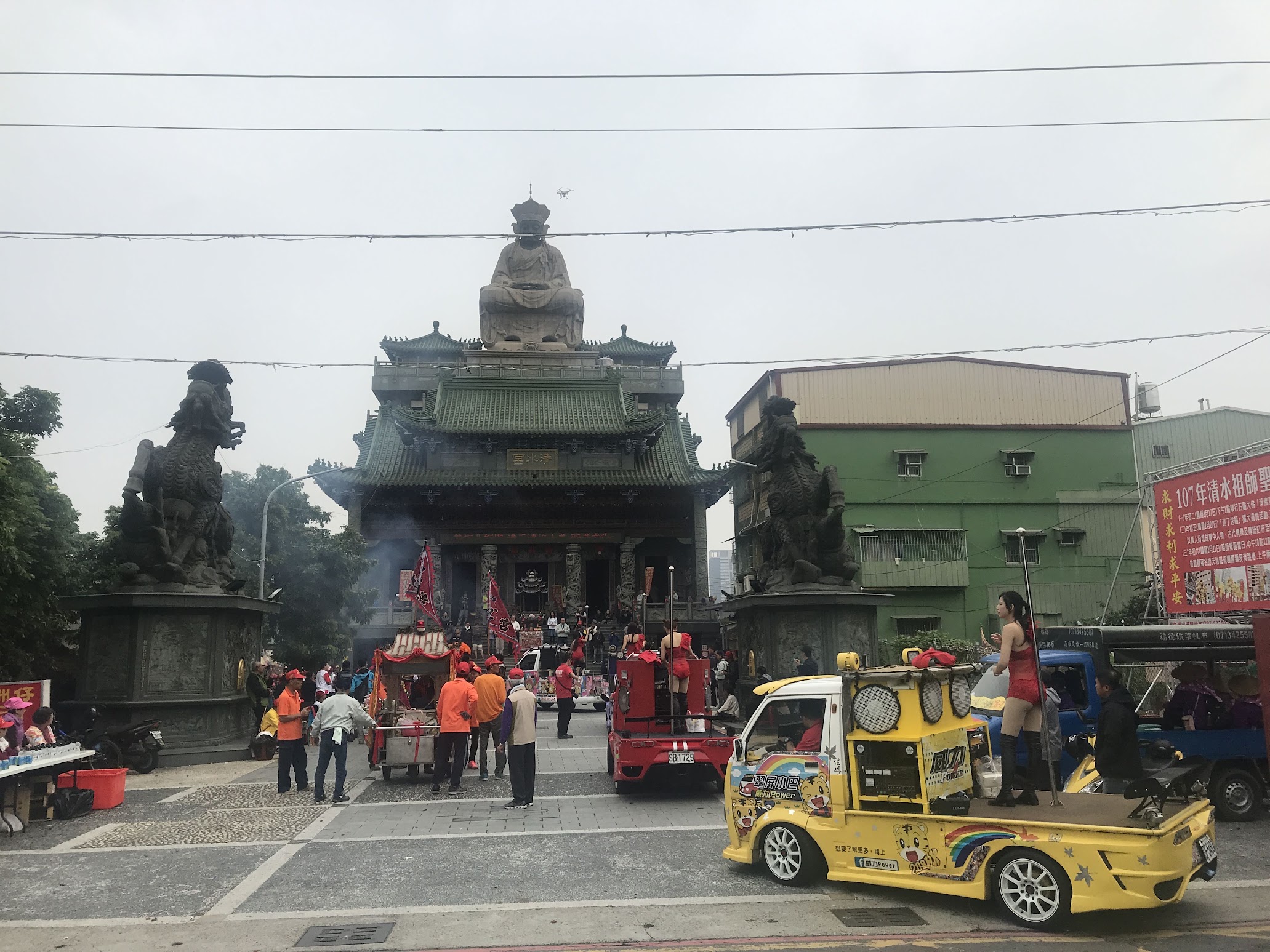
Yes. Wow. I guess even the gods need livelier forms of entertainment sometimes…
What more can I say? It was a quirky day in the city.
Observations of Perth (2019)
Posted 31 October 2021
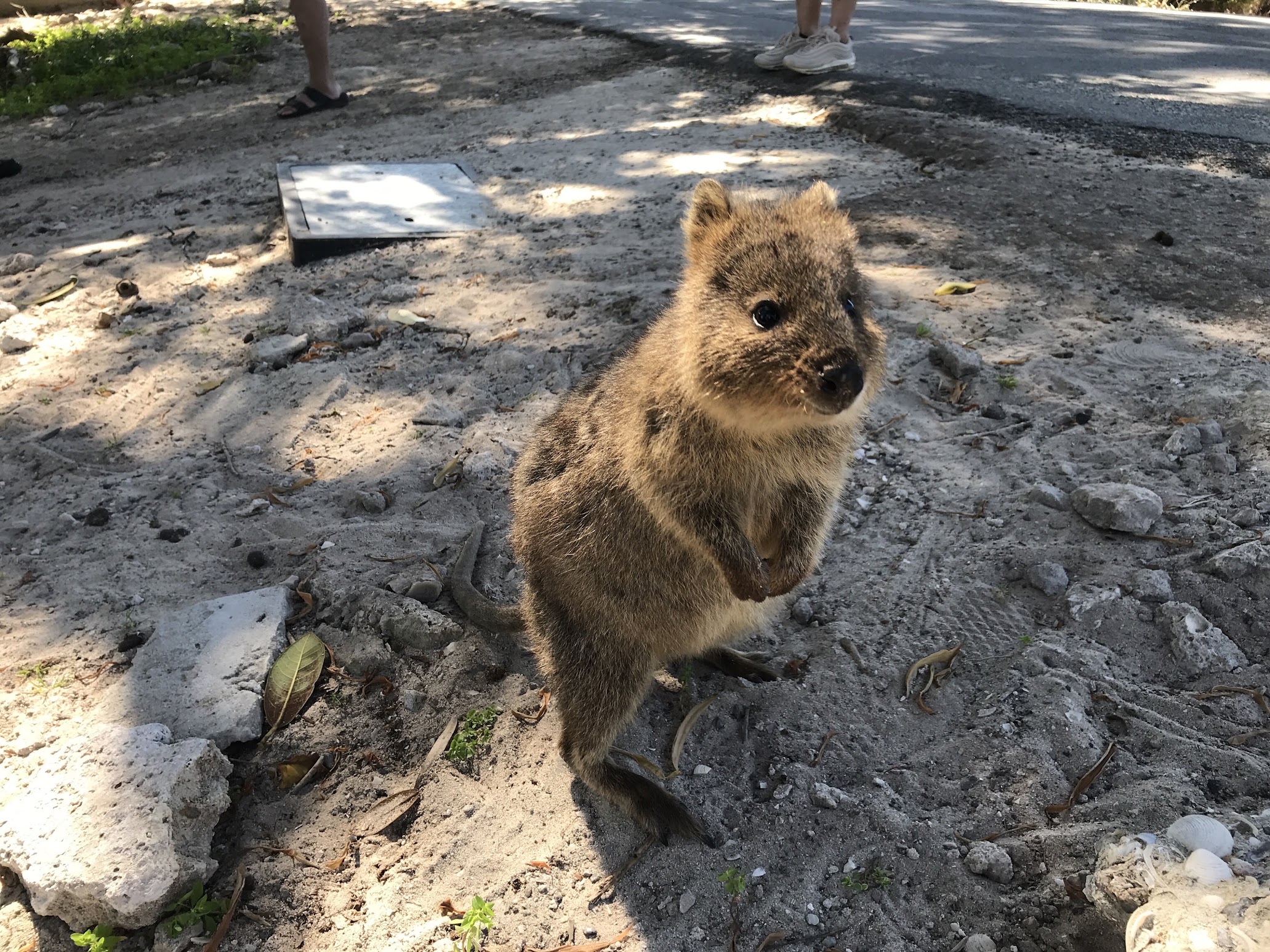
Quokka! Setonix brachyurus!
Notes from the Sunset Coast…
Once, in an interview, the renowned urban planner Alain Bertaud said: “My father always told me, ‘When you travel, you don’t look enough.’ Every time he travelled a lot, he say, ‘I have not looked enough. I’ve not looked enough.’ This was ingrained in me all the time.”
This remark struck a chord with me. I too want to be able to look harder when I visit a new location; I too want to be able to observe a place with greater depth. And what better place to practice this skill than in an overlooked city in one’s own country? The reason I wanted to visit Perth is quite simply that there is never really a reason to visit Perth. Outside of work, academic conferences, or family gatherings, there are few incentives for flying four hours out of our comfortable eastern states to the capital of Western Australia. The fact that I had no profound motive was the compelling force behind my visitation.
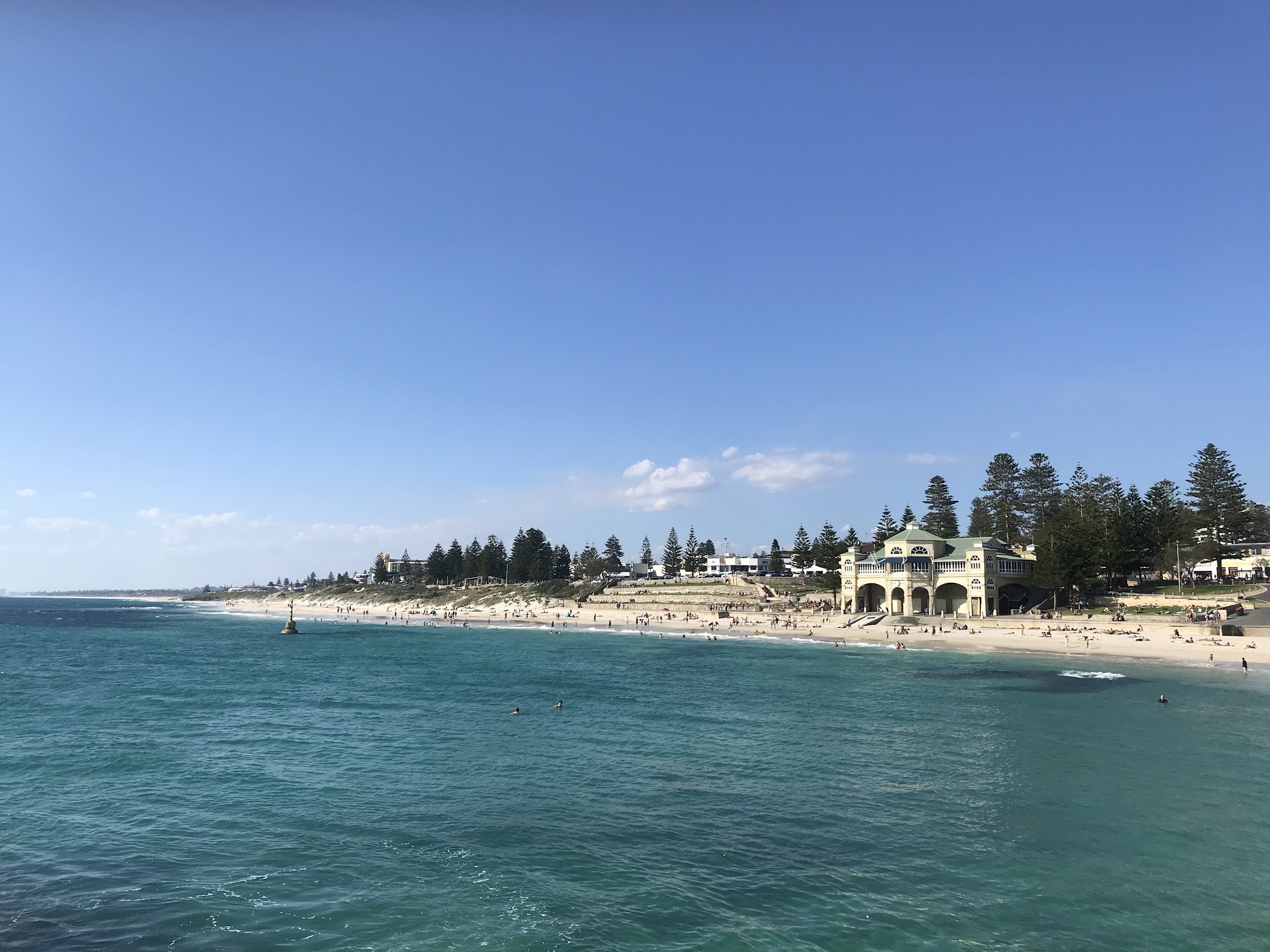
Ideally, I would’ve taken the three day Indian Pacific across the Nullarbor (I have the special ability to zone out for literally hours on end during long train rides) but sadly I could not find time away from work to do such a thing. The extreme remoteness of Perth should not be understated. Few factors kill prosperity more than the tyranny of distance. And yet here — on the far edge of the Indian Ocean — we have a clean, beautiful city of nearly two million people with a high standard of living. Sure, the wealth that can be dug up from the surrounding dirt helps, but translating primary resource extraction into urban success is never guaranteed. Perthians (Perthites?) should be happy with their dice roll. The city’s about as good as it gets given the economic geography. Look at this riverine luxury.
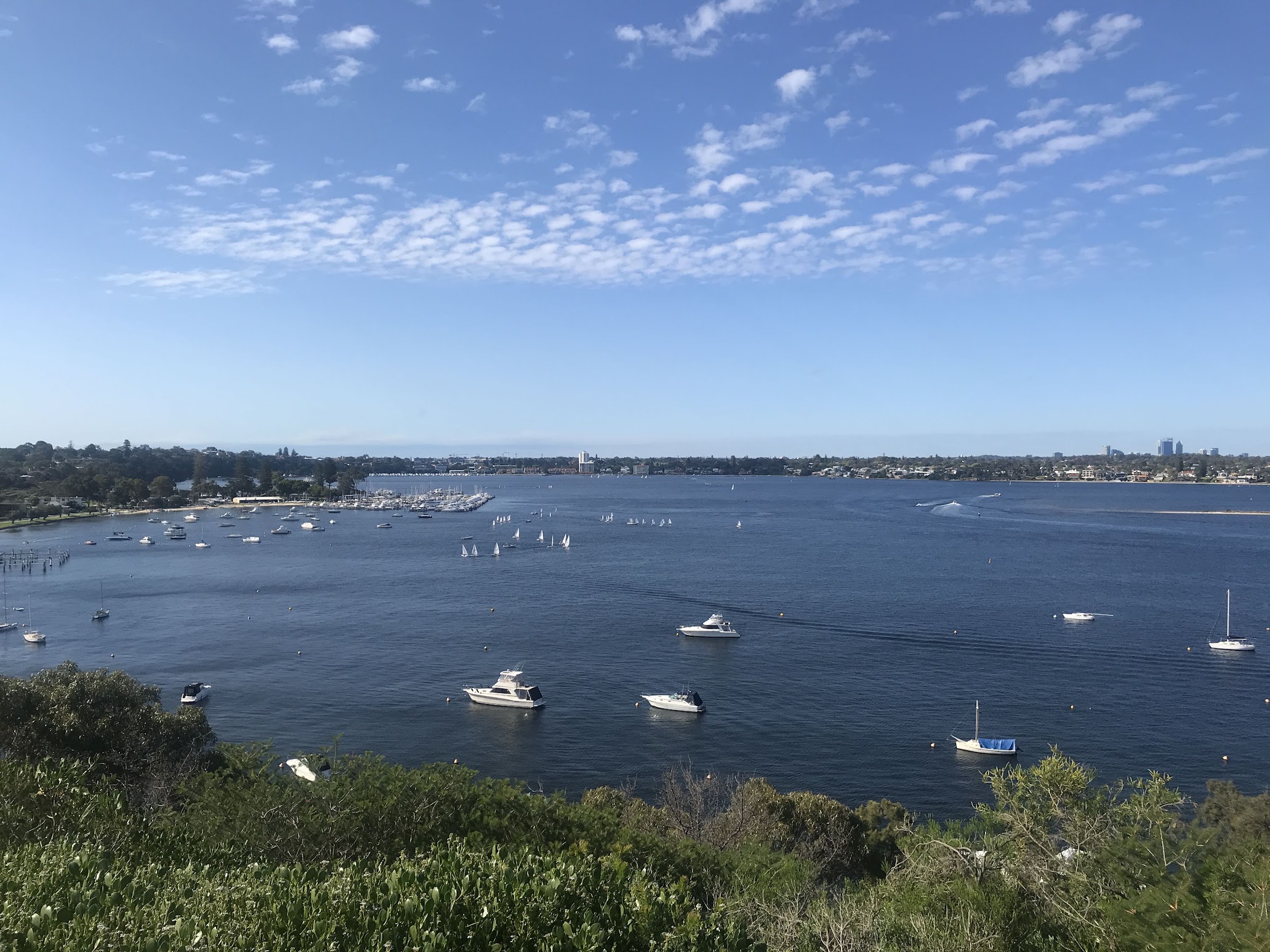
Some of this can be explained by the seeds of history. Perth was once simply known as the Swan River Colony. Established in 1829, it was a lonely and struggling British colony on the remote reaches of a harsh continent. That was, until the discovery of extraordinarily rich veins of gold in Western Australia in the 1890s. This sparked a gold rush, which tripled Perth’s population in the ten years from 1891 to 1901. The city’s economic future was firmly secure from that point on. Even today, the Perth Mint (which I recommend visiting) distributes some $18 billion worth of pure gold, silver and platinum bullion bars around the world every year.
So what to say about Perth specifically?
Perth’s cafes open nice and early but the supermarket hours are lazy. I was mildly impressed by the selection of ethnic dining options. That said, fears in the local media that the city centre is going into decline seem justified. Walking around the central business district, it felt at times like I was wandering a lonely, nameless, and slowly depopulating American city. An oddly pleasing experience.
I’ve recently started warming up to brutalist architecture and the city has some great examples of the style. The Perth Cultural Centre is lovely, reminding me of a small, slightly rundown Go8 university courtyard. I enjoyed the Art Gallery of Western Australia but the Perth Institute of Contemporary Art, despite having an attractive facade, was disappointingly uninspired. A shame too that the Western Australian Museum is currently closed for redevelopment when I was there. And I was not a fan of the new building plan. Why smother such a handsome building in a giant metal box?
The waterfront felt very underdeveloped given its closeness to the commercial heart of the city. This is not a good thing since the Swan River, after all, is surely one of the best capital city rivers in Australia. What can compete? The Brisbane River? The River Derwent in Hobart?
Kings Park is also rightfully a highlight. Much is said about how it is larger than Central Park in New York, or most urban parks in the world for that matter. The verticality of it probably helps. All you have to do is claim a large enough hill as parkland and mission accomplished. I spent a good two or so hours getting lost in the park, listening to podcasts and taking photos of wildflowers.
Interestingly, Kings Park also has one of the laxest and unsolemn state war memorials I’ve ever visited, with picnickers, frisbee throwers, and sunbathers in dangerously unpatriotic proximity to the eternal flame. Distinct and faraway Australians indeed.
I have little to say about Fremantle beyond that I can verify it is very nice. What I found most impressive about it is that its arty, trendy scene sits directly alongside its industrial port operations. They are practically on top of each other. I can’t think of many other places I’ve been where blue-collar industry and bourgeois amenities can coexist smoothly without one crowding out the other. I might also add that Fremantle Prison was fascinatingly glum. My tour guide enjoyed describing the step-by-step process of convict floggings a bit too much. And the fact that the prison had no flush toilets for its inmates and used buckets right up until its closure in 1991(!) is astounding.
And yes! Rottnest Island is as beautiful as you’ve heard it to be…
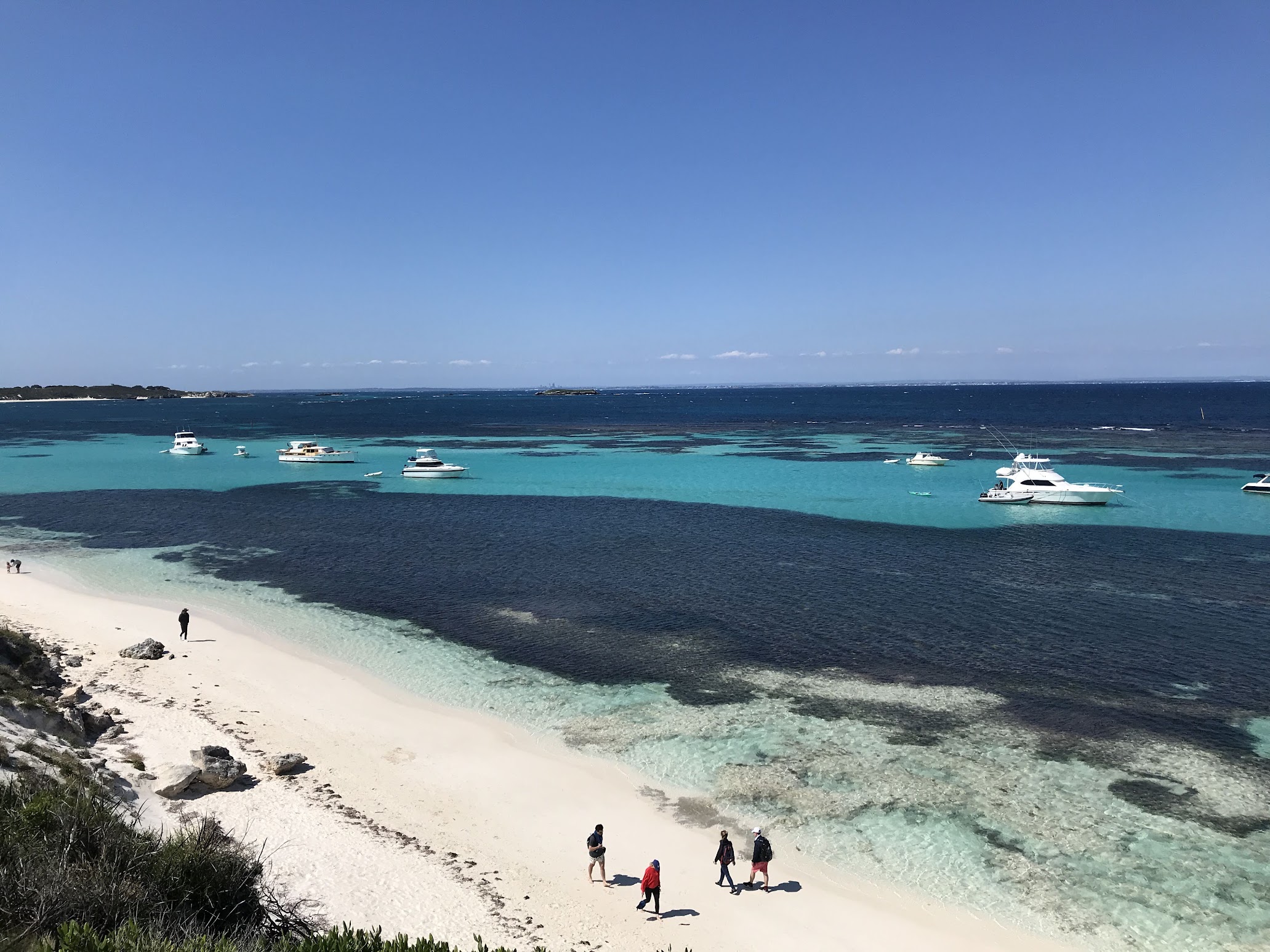
But with that said, I have a more substantive comment to make about Rottnest Island:
I did not know about the island’s brutal history until I visited the small and unassuming Rottnest Island Museum. Between 1838 and 1932, around 3,700 Aboriginal men and boys were imprisoned on the island. One in ten died of influenza or measles and the island was dubbed the “Black Man’s Grave” by the local papers. Indeed, as you cycle around the island, it is easy to see what a harsh environment it must’ve been for them, with very little natural shelter or resources to speak of. No one apparently talks about this. A friend I visited in Perth confirmed that this is an uncomfortable and unspoken aspect of the city’s favourite holiday destination.
Conclusion. I thought Perth was genuinely an interesting place to visit. Lots of history. Lots of art. Stunning weather. Agreeable coffee. Not a “perfect” Australian holiday destination, but that’s kind of the point. Hunting for perfectibility is uninspiring. There is plenty to see and do in Perth over a long weekend and (most crucially) reflect on and write about at the trip’s end.
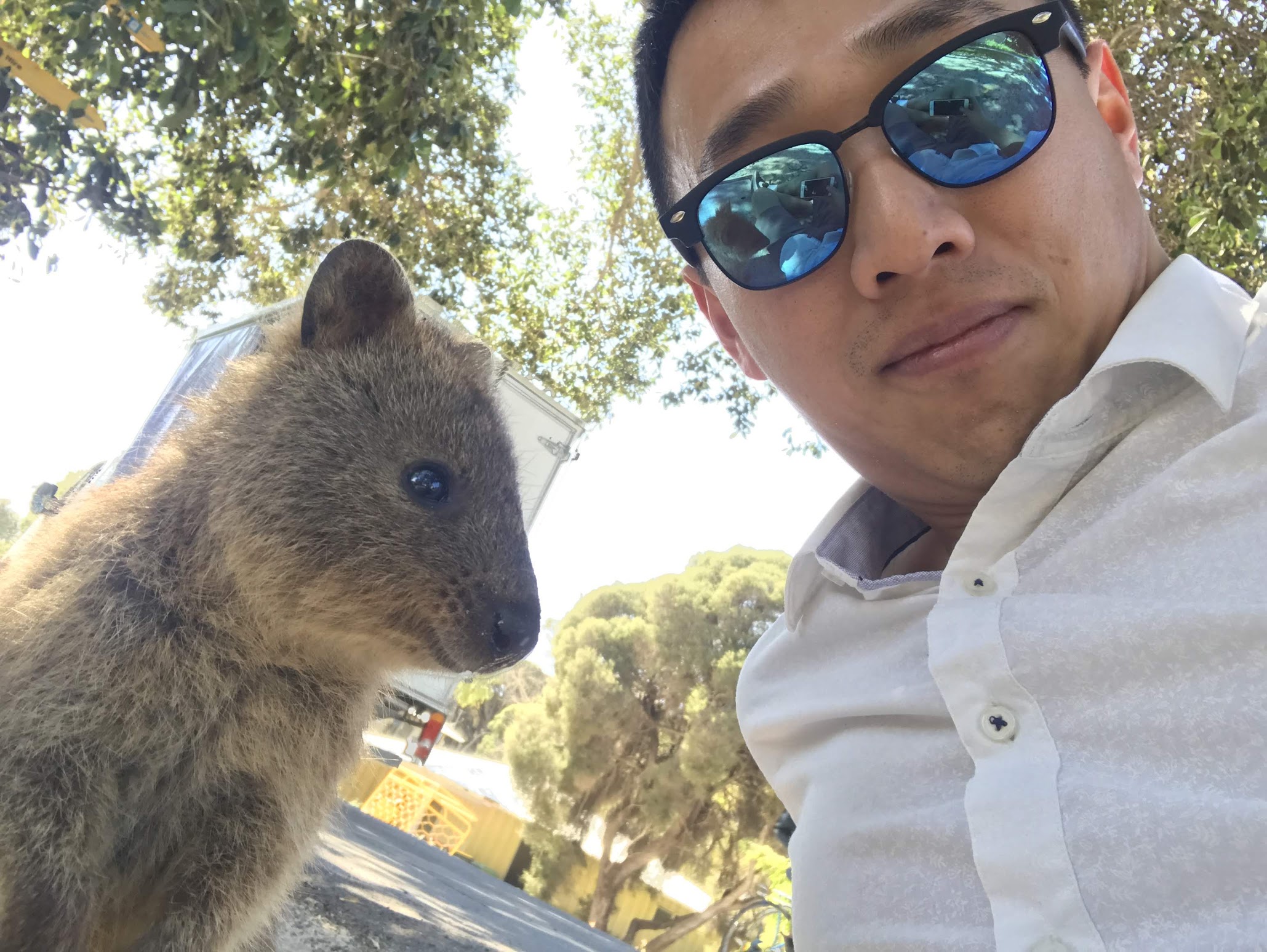
Oh, and here’s an obligatory quokka selfie
Penang (2019)
Posted 2 September 2022
George Town, Penang
I arrived on Penang Island, off the west coast of the Malaysian Peninsular, by a clunky old ferry in late 2019. My first stop was Penang’s capital of George Town, named after King George III back when the island was controlled by the East India Company.
It was the first-ever British settlement in Southeast Asia and that colonial legacy is certainly still visible. But these days, Penang is more famous for its generous splash of both colour and gastronomy. It’s affordable. The food’s great. It feels safe and secure. And while it’s touristy, it’s not obnoxiously so. What’s not to love?
A painfully common cliche is to describe a location as a melting pot. But with George Town, I have to be frank: this city is a goddamn melting pot. It positively sizzles, in fact. The general architecture is eclectic. The cultural and religious aesthetics are heterogeneous. The street food is wildly and deliciously diverse. You can’t walk down around the corner without seeing a confident commingling of Chinese, Malay, and Indian influences, among many others.
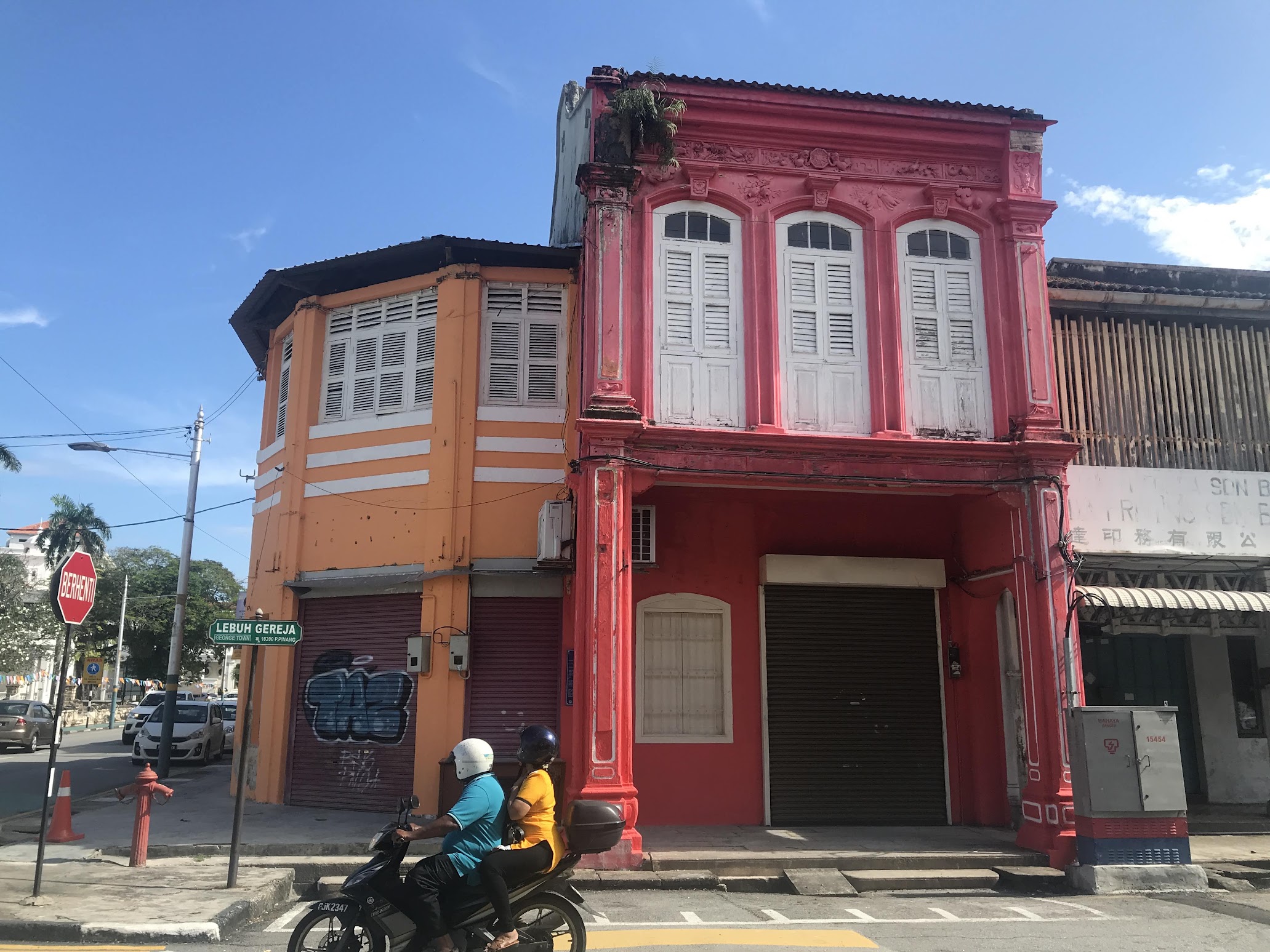
The Clan Jetties
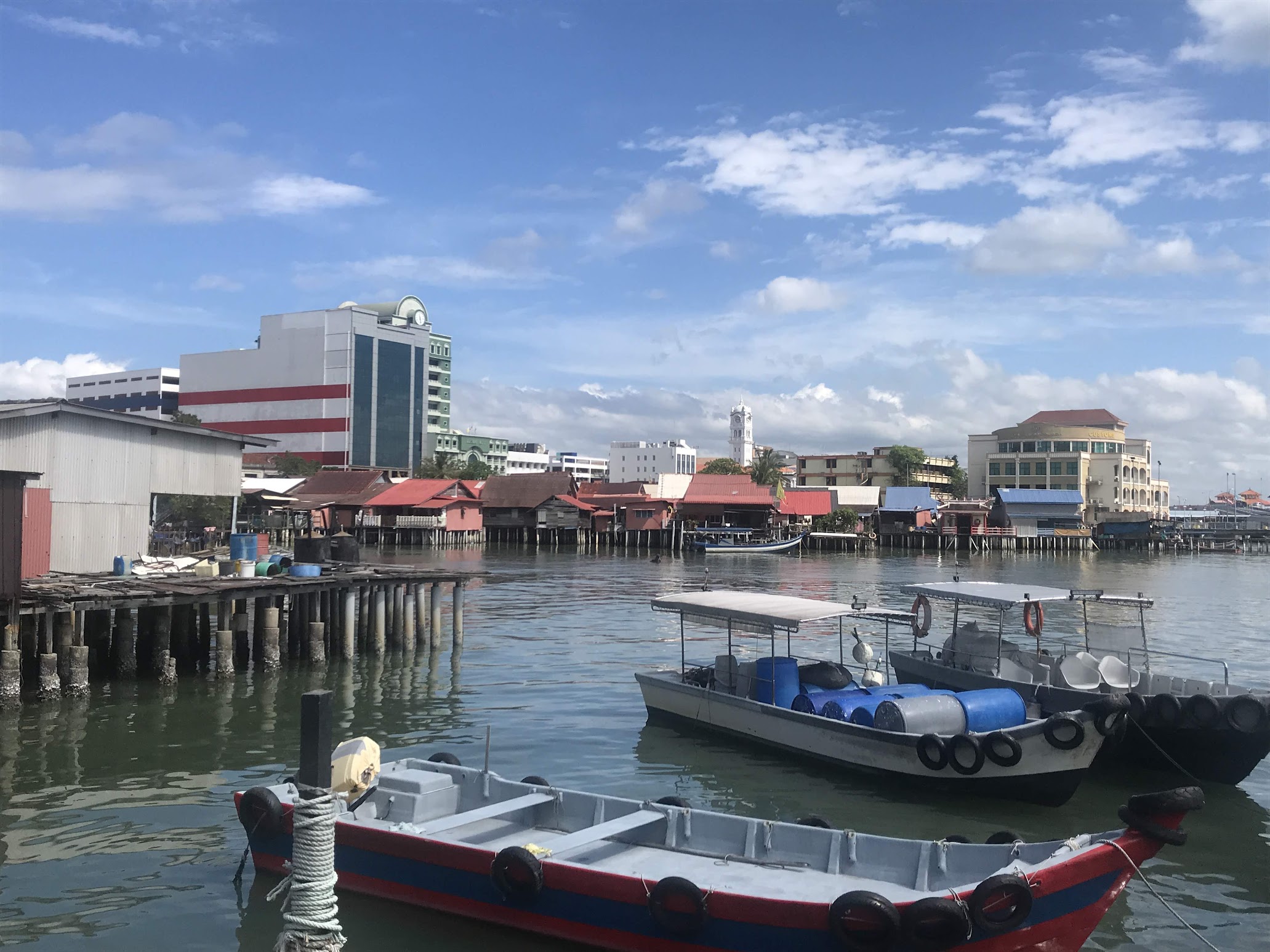
Now for a change in perspectives. Just slightly adjacent to George Town are the Clan Jetties, a group of stilt villages founded by 19th-century Chinese immigrants. And many of these clans still live and work here. It looks picturesque at high tide, with its rustic stilt houses. Come low tide, however, it looks (and smells) like a classic example of slummy, developing country squalor.
I generally have quite a high tolerance for stuff like this (e.g. open greywater gutters, trash piles festering on the roadside, open-air restaurants next to truck fumes, rats the size of small cats) and have seen much worse examples outside of Malaysia, but others might find it less bearable.
Penang Hill
One morning, I decided to take an exhausting hike to the top of Penang Hill where I spotted snakes, monkeys, giant millipedes, and the chunkiest ants I’d ever seen in my life.
After a while, I emerged from the bush like a sweaty, delirious wild man onto a very touristy hilltop. Everyone else either drove or took the funicular to the top like respectable members of society. Such is the way I like to do things sometimes. I refuse to regret it.
Penang National Park
I also did a much less exhausting hike the following day through Penang National Park to Turtle Beach. After my killer Penang Hill hike, I permitted myself to be a bit lazy and took a bumpy boat ride back to the park entrance.
Kek Lok Si Temple
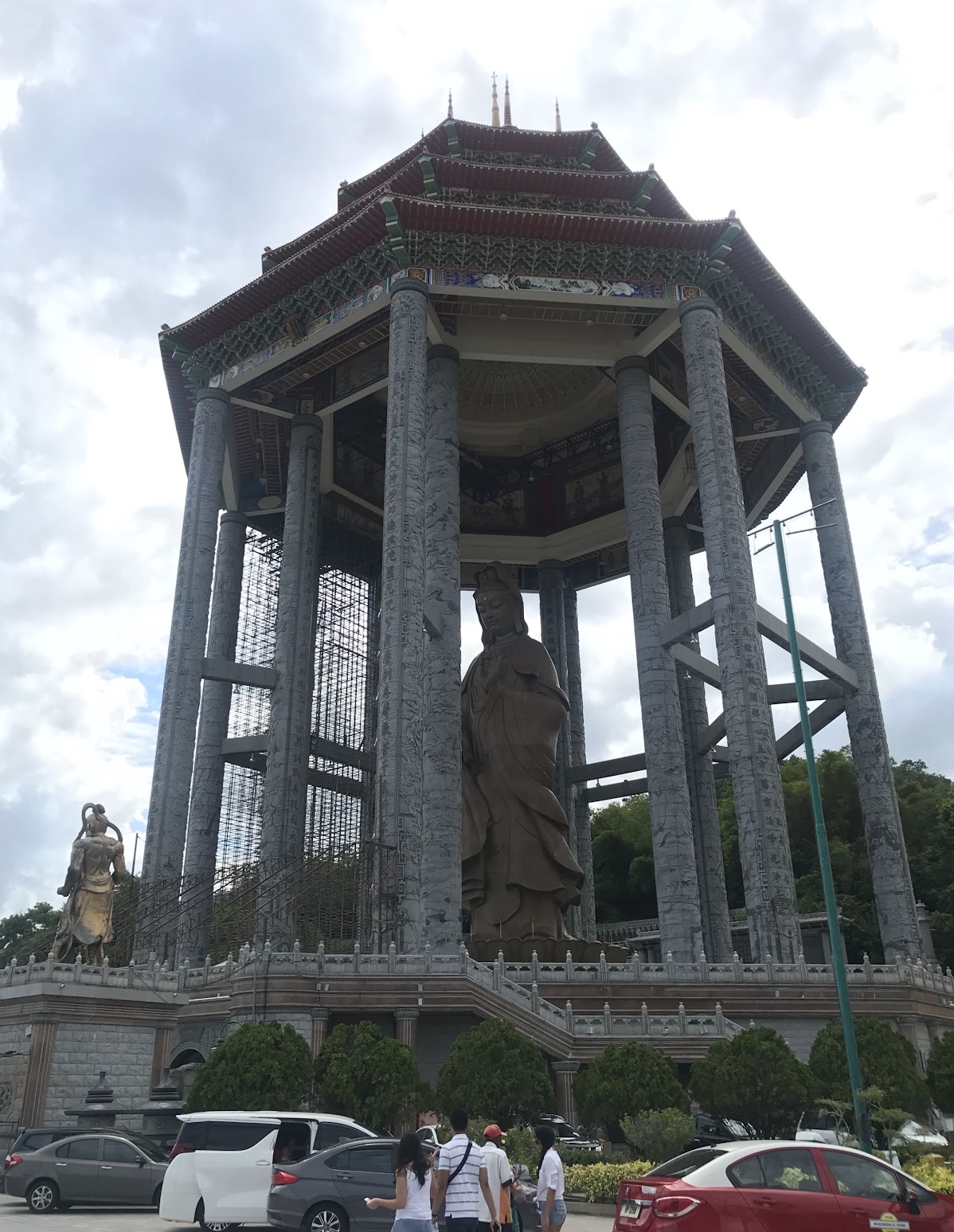
Now, I’ve been to a few Buddhist temples in my life (as well as previous lifetimes) but this is quite possibly the largest complex I’ve ever visited. It’s so large you need to take a funicular to see the temple’s incredible, 36- metre high bronze statue of Guanyin, the so-called “Goddess of Mercy”.
The Cheong Fatt Tze Mansion and Pinang Peranakan Mansion
There are two famous historic mansions in Penang: the deep blue Cheong Fatt Tze Mansion and the gentle green Pinang Peranakan Mansion. While the bluey former was pleasant (and a filming location for Crazy Rich Asians, not that particularly care for that grossly overrated flick), it woefully pales in comparison to the splendour of the green-hued latter.
The Peranakans are a distinct multiracial ethnic group with Southern Chinese heritage and were, during the colonial period, an elite community in Malaysia. And the Pinang Peranakan Mansion is a stunning showcase of this prosperity. It houses a vast collection of items from the upper crust of Peranakan society. The best furniture. The fanciest ceramics and glassware. The swankiest clothes. The sparkliest watches and jewellery.
Fun fact: during my visit to the Pinang Peranakan Mansion, I met an American gentleman who told me that he was in Penang to buy antique opium paraphernalia and erotic ceramics. Apparently, there’s a good collectors market for that sort of stuff in George Town. So now you know.
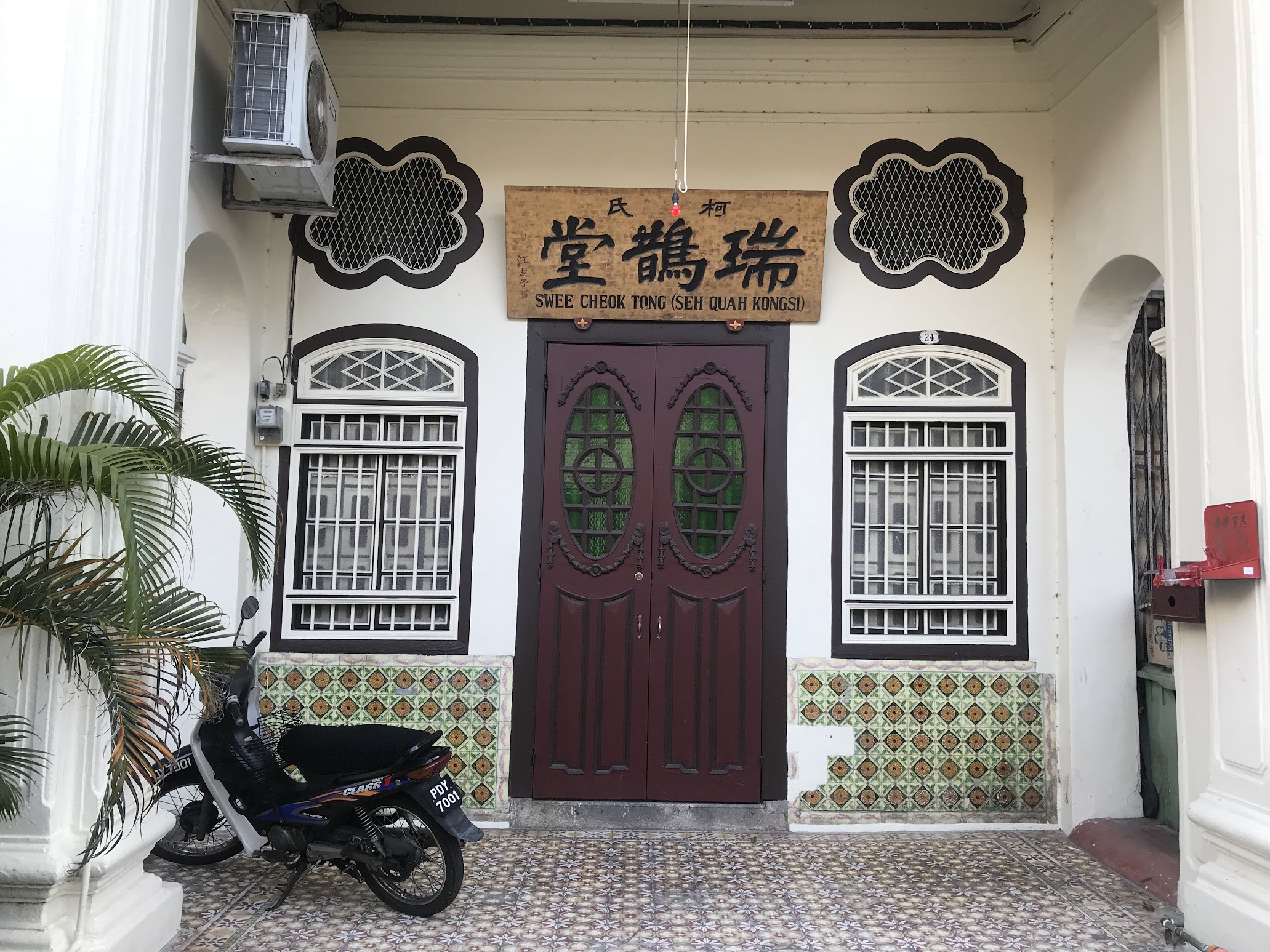
Example of the doors of George Town…
I briefly considered doing a more extensive “doors of Penang” photo album but got bored a few minutes into the attempt and gave up.
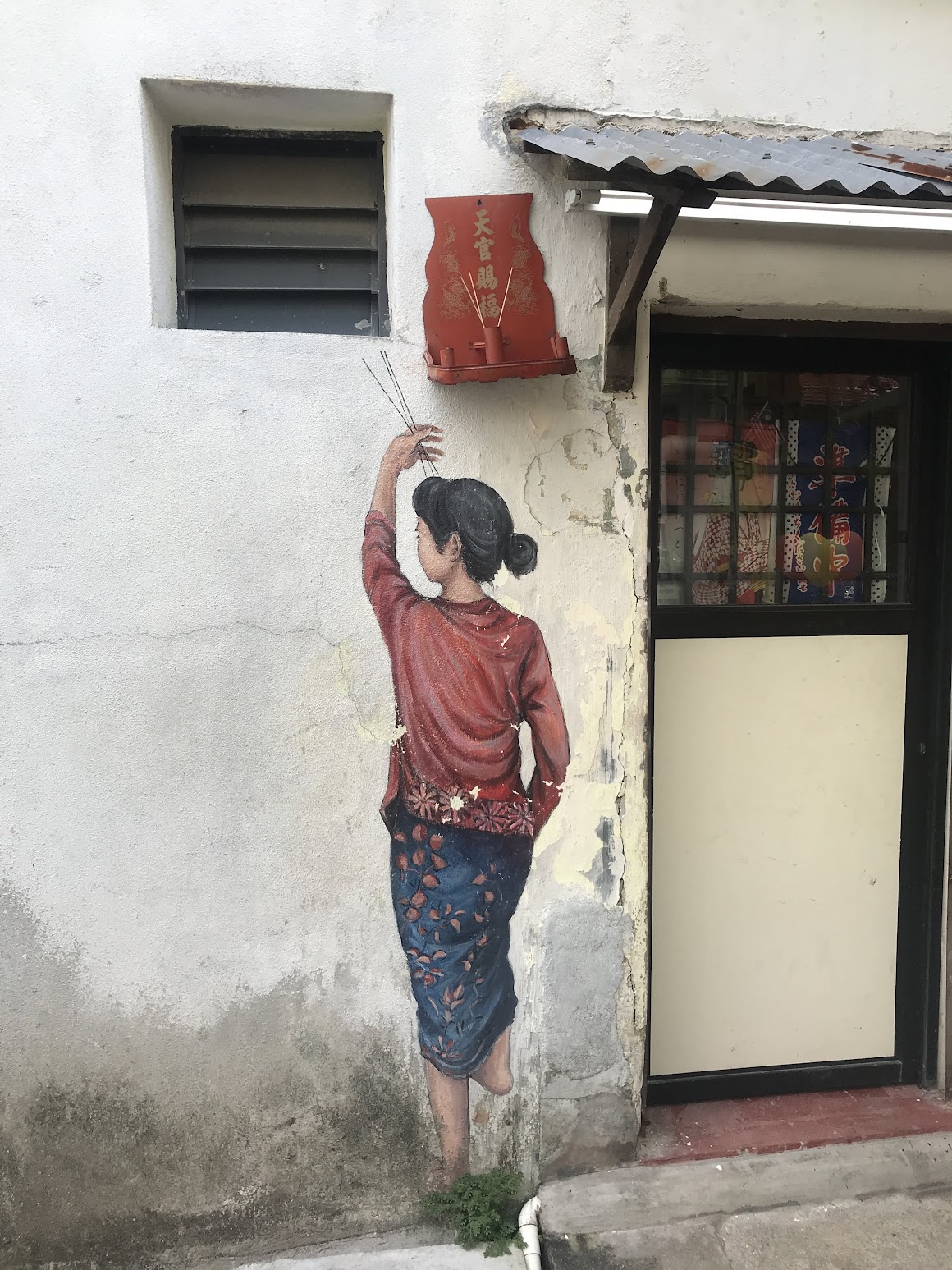
Example of the touristy street art of George Town…
“Gorge town”
Now for the obligatory food remarks:
The big problem with Penang as a gastronomy-melting-pot-street-food-mecca is that it’s hard to decide what to order. Too many stalls. Paralysis of choice is real. One needs mental strength and a game plan to make the biggest of life’s delicious decisions. I had the good fortune of visiting a couple of places that the late, great Anthony Bourdain ate at. Two of them were Indian restaurants where I very quickly embraced enjoying meals with my hands. The other Bourdain spot was a dirty, open-air eatery by the side of a busy road that made the fucking best laksa I had ever ordered. It was sharply sour, it was accommodatingly sweet, it was complexly savoury, and it blew away my taste buds. I tried fresh durian again and quite enjoyed it. Yes, I claimed in the past that it tastes like crap. Yes, it tastes as though someone mixed custard with bitter, rotten and/or medicinal flavours. Yes, all this is wrapped up in a spiky alien cocoon. Yes, it made my stomach churn a bit after ingestion. But I am genuinely starting to appreciate it as a highly, highly acquired taste.
Epilogue. Ah, yes. The awkwardness of eating alone in a nearly empty food court in Penang. You’re here because Anthony Bourdain ate here. You’re partly in Penang because you liked that episode where he came here. You plan on eating at many of the George Town restaurants Bourdain ate at. Because he was cool and you are not. Well, guess what you uncool idiot. He also probably ate mouldy leftover burgers while deep into a methadone program. Is that something you want?
The beer arrives like minor salvation. Finally, something to do: get drunk in the syrupy, malaise-mongering heat while the overhead fans nuzzle your back. You’re not even nursing your beer, you’re slamming it like a speakeasy regular with burnt-out eyes. You see a thin blonde with a strawberry smoothie half her size. Probably an influencer. You watch a stocky white man order a bucket of Tiger beers all for himself. Also probably an influencer. You’re not even a normal person who follows the pied piper of social media. You’re following old-school television recommendations like a Neanderthal.
Oh, look. A baby cockroach just scuttled across the tabletop and sipped on some of the beer you spilt. A curious sesame seed with antennae. Wonder if it’ll get as drunk as me tonight? And feel as goddamn awkward.
Shit. Now a large Malaysian Chinese family with children have settled at the tables around you. Why did they have to flank you when there are so many other empty tables? And now you find the place too busy. And bad Christmas jingles are playing over the speakers. Too many patrons! Too much humanity! When will this constant tension, the inexorable forces of aversion and craving, end?
Time to make your choice. Get up and order some chicken skewers. It’s better than nothing.
Shanghai (2019)
Posted 6 November 2020
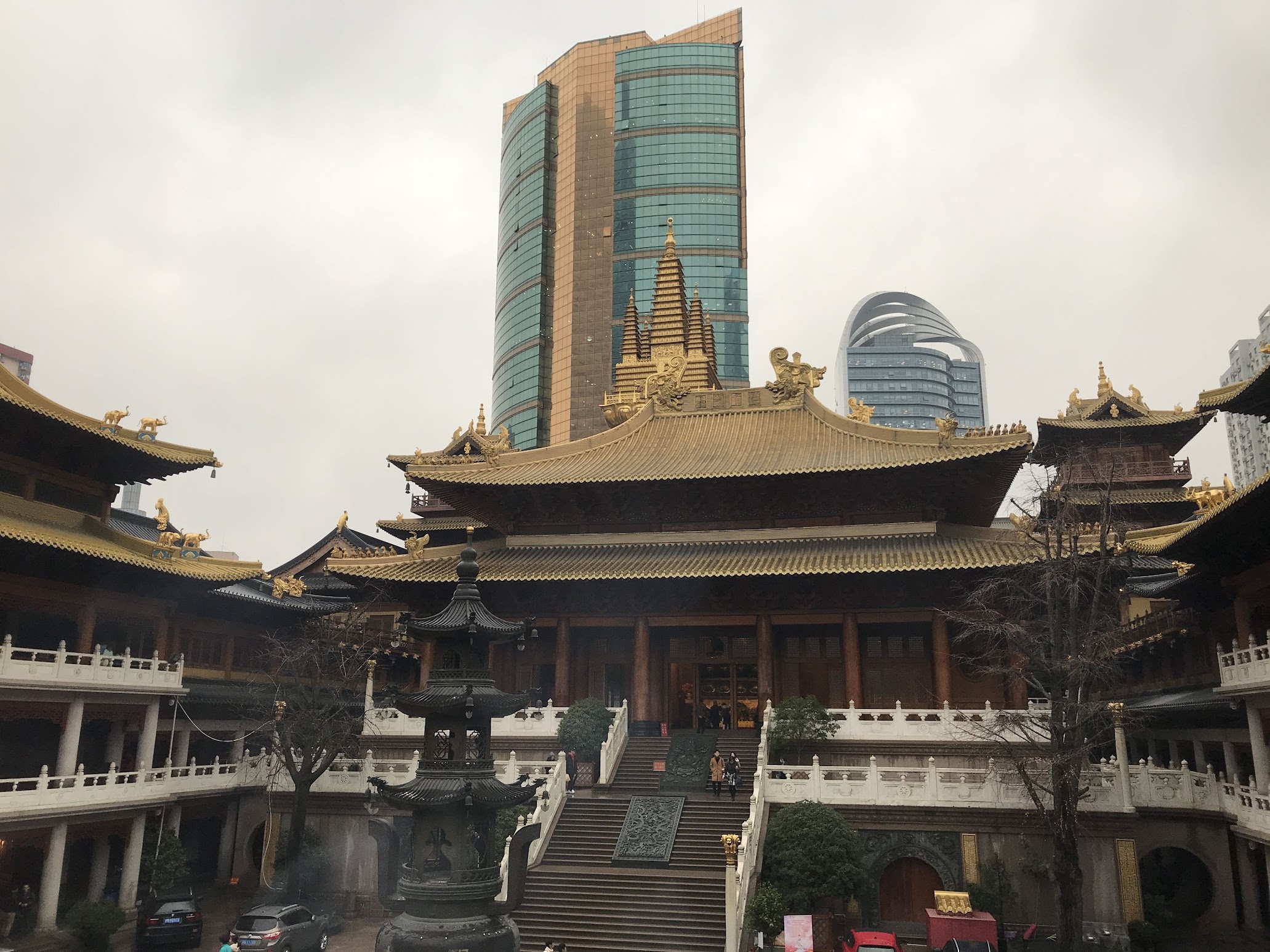
Jing’an temple in downtown Shanghai
The showpiece city of China
Shanghai, what a metropolis! The largest city in the People’s Republic of China and the second-most populous city proper on the planet. Arriving into the city from the smoggy industrial sprawls of the Jiangsu Province was a godsend. Crisp, clean air. Here, the air is dense with something other than the belching of coal-fired plants and light manufactories. It’s redolent of international finance, fashion, retail, professional services and real estate: the perfume of global capital flows!
When Anthony Bourdain called Shanghai the most materialistic place on earth, he wasn’t kidding. During my short stay, I had the opportunity to visit a private yacht club and peek into its decadent wine cellars. I strolled into a Louis Vuitton showcase at the Exhibition Centre just for kicks. I drank Hennessy XO Cognac (mixed with sweet tea!) at the VIP table of a booming nightclub with my father and his 40+-year-old investor colleagues (don’t ask). This city is a relentless, gilded cynosure.
Unlike many other urban centres in the Yangtze River Delta region, where economic growth has supplanted aesthetics with hedgerows of copy-pasted Soviet-style buildings, Shanghai is very pleasing to the eye. Is it as visually attractive as global cities like New York, Paris, and Hong Kong? Not really. But after spending so much time in banal, industrially stamped Chinese cities to the north, seeing the old European banks, consulates, clubs and trading houses of the Shanghai Bund was deeply refreshing. It was a shame that when I visited the Bund, I couldn’t see Shanghai’s iconic skyline through the mist.
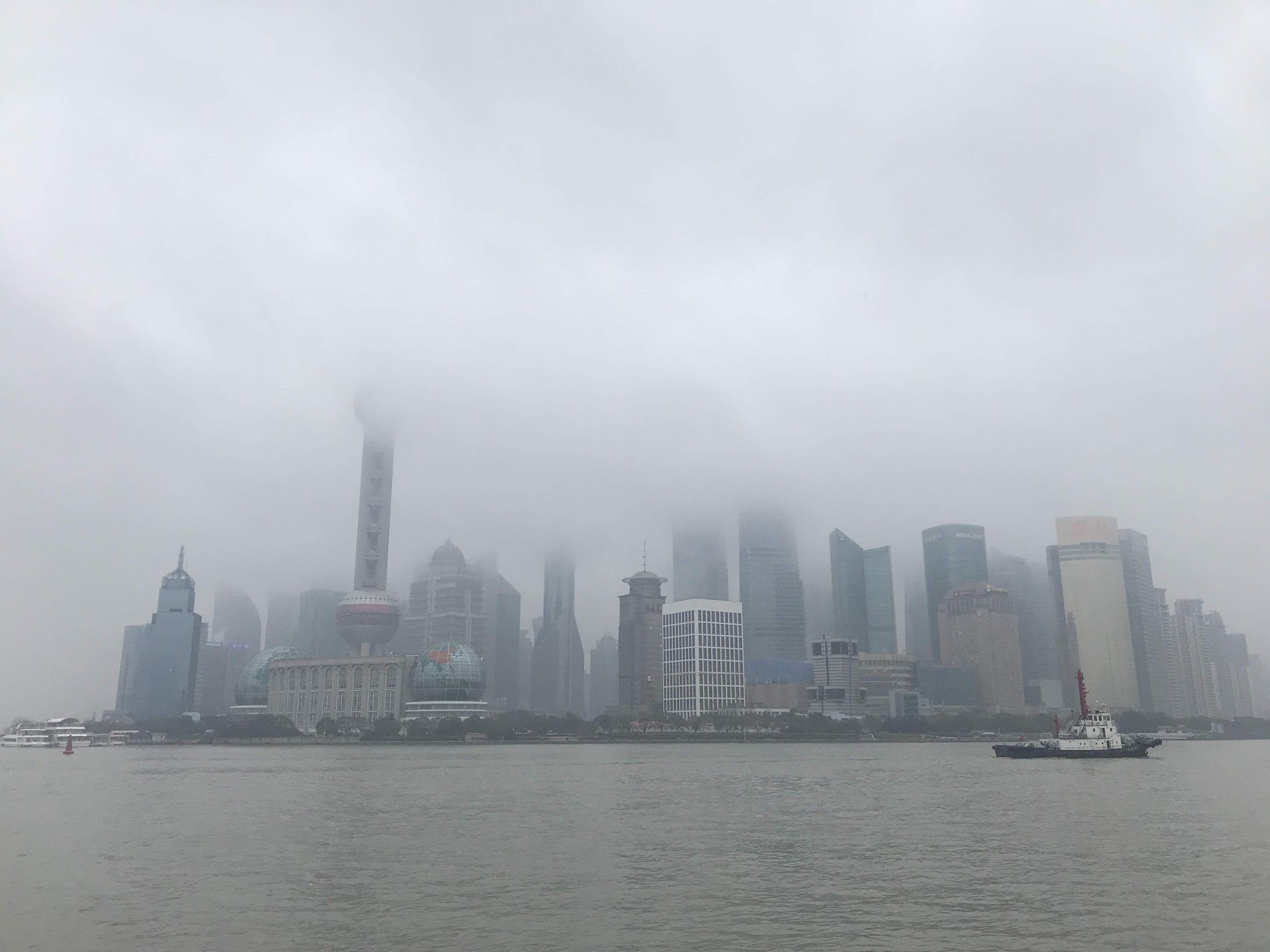
A misty view of Pudong from The Bund
Overall, I found Shanghai fairly walkable, which I like in my cities. Also, it’s hard to become even remotely lost with so much English everywhere.
Likewise, the French Concession is a lovely area to walk around. Hate to admit this, but a colonial history can, at the very least, make a city nicer to look at.
Even so, the Chinese way of unleashing cycles of creative (and un-creative) destruction has left its mark. Consider the stunning, glittering Jing’an Temple on West Nanjing Road. On paper, sure, this Buddhist temple has existed since the 12th century. In reality, it was repeatedly destroyed and rebuilt over the centuries and was, at its nadir, converted into a plastics factory during the Cultural Revolution. The current temple, as grand as it is, is only 35 years old. Such is the case with many “historical” sites in Mainland China.
The people are Big City Brusque, as you’d expect. But they’re not pathologically rude, like the denizens of Beijing. Shanghaiers also don’t seem to spit on the streets that much (an infamous habit of many PRC pedestrian, I’m afraid to say). The subways (which are, as you’d expect, seamless networks of efficiency) have all the usual public transport PSAs: where to stand, how to let passengers off first, how to be a courteous commuter. Yet no one follows them. They do in Taipei. They do in Tokyo. They do in Singapore. They do in Hong Kong. But China is still China and does things China’s way.
Shanghai Museum was wonderful. Free too. Strolling around the building, I got a sense of just how different societies can appreciate art and culture in unique ways. Consider, for example, the Chinese calligraphy wing of the museum. While largely devoid of western tourists, there were throngs of Chinese visitors crowding around particular scrolls and taking photos of ancient Chinese poems. Could you transpose such admiration onto the western world? An analogy would be if the English romantic poets were also famed for their breathtaking penmanship and people travelled from far and wide to a museum in London just to gaze upon their original manuscripts.
A quick note on food: The conversations about food in China would put most western foodies to shame. At the dinner table, I’d listen to people who were by no means social elites or intense connoisseurs talk endlessly about the best way to cook this breed of chicken, the best age to slaughter a piglet, the best region in China to source that vegetable, etc., etc. You could dedicate an entire lifetime to exploring the various cuisines of China and not even come close to covering it all.
The photograph below: a view of Yu Garden in the Old City of Shanghai. A quiet, classical-style Chinese garden tucked away from the fevered energy of the modern city.
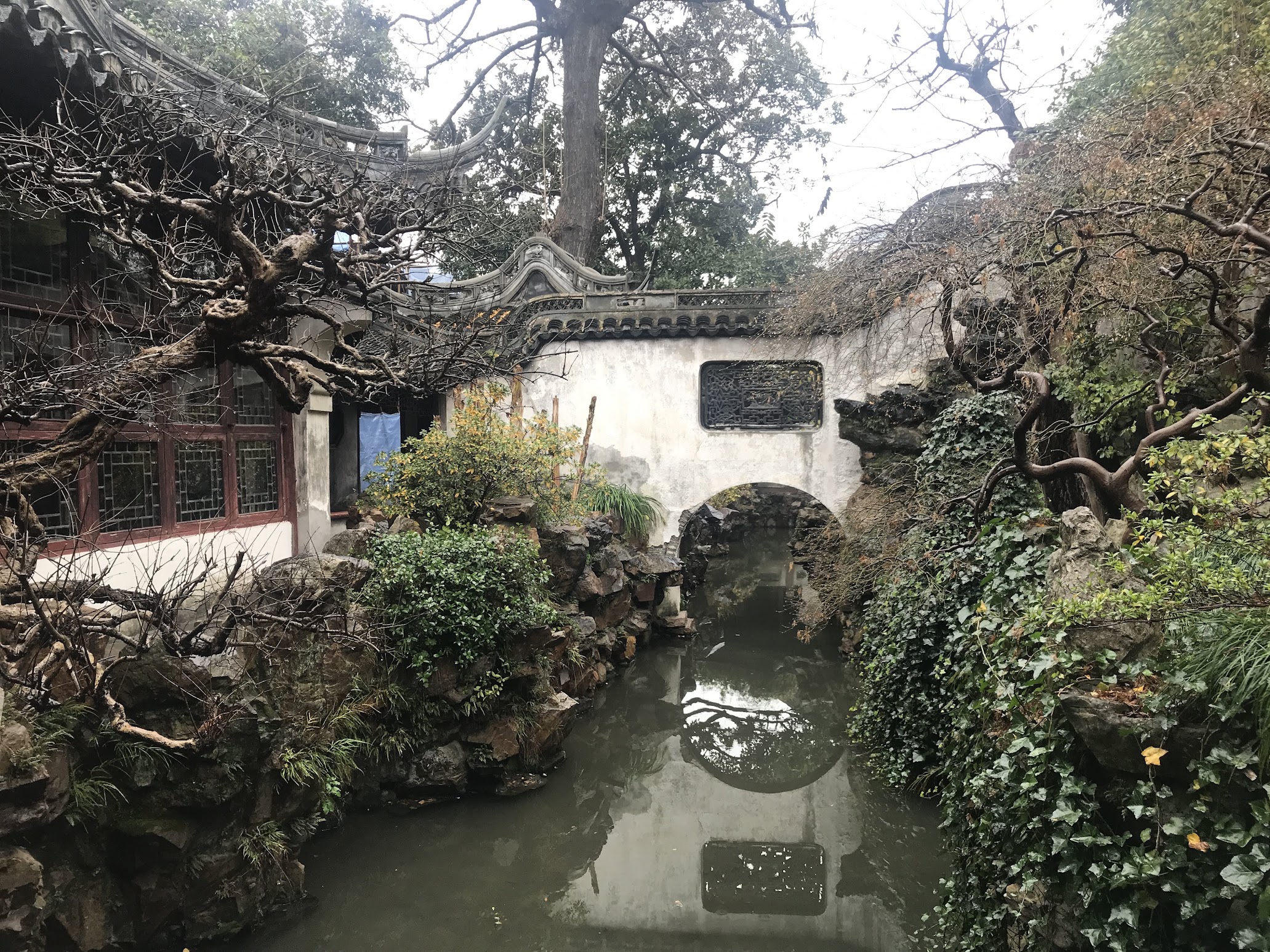
Originally built in the 16th century during the Ming Dynasty, the garden has been pummelled by the forces of history. The garden was damaged during the First Opium Wars and was even used as a rebel hideout during the bloody Taiping rebellion. Thankfully, it has since been restored closer to its former glory.
Shanghai is a place where high and low-tech intermingle incessantly. Cash is clearly on the way out since it seems you can pay at most places in Shanghai with only your smartphone via Wechat Pay or Alipay. I was often the only one paying in cash in some places. Yet everywhere you go, there are also simple street vendors, dealing in grubby notes.
If you want to do your counterfeit shopping, I suggest you hop on the train to a nearby city. In Shanghai, given it’s a global hub of big brand retail, you might accidentally buy the real thing! Still, you find the occasional oddities. I came across a few stores on Old Shanghai Street selling ‘authentic mammoth tusks’. Right.
Change, change, change. That is the unofficial motto of this entire region. In the 1990s, when the then paramount leader of China, Deng Xiaoping, introduced a suite of economic reforms, it triggered an intense redevelopment of Shanghai, especially in the Pudong New Area. The city was reformed as a nexus for global trade and finance, and houses one the largest stock exchanges in the world as well as the first free-trade zone on Chinese soil.
And did it matter that my Standard Mandarin is spotty? This was something I was a little anxious about at the start of my visit. But, surprisingly, it didn’t seem to matter much. With so much intra-national migration in China, I heard plenty of funky accents and dialects. I also heard a lot of switching between regional tongues and the “Beijing Standard”. I could have (with a bit of effort) passed for a Chinese national, albeit a slightly strange one from a faraway province. Maybe.
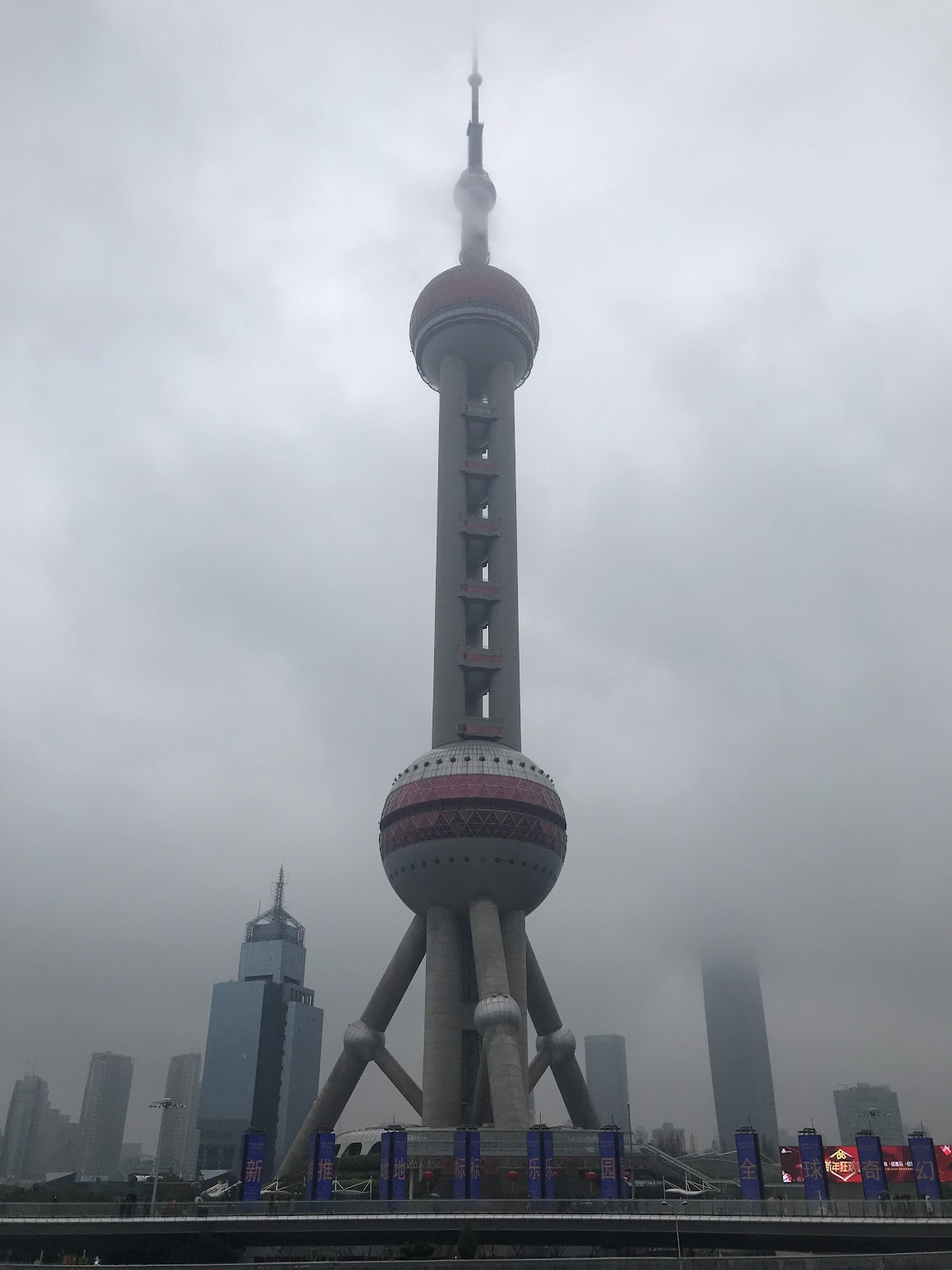
The Oriental Pearl Radio and Television Tower
Tainan (2019)
Posted 1 March 2022
Thoughts from the historic capital on Taiwan’s western coast…
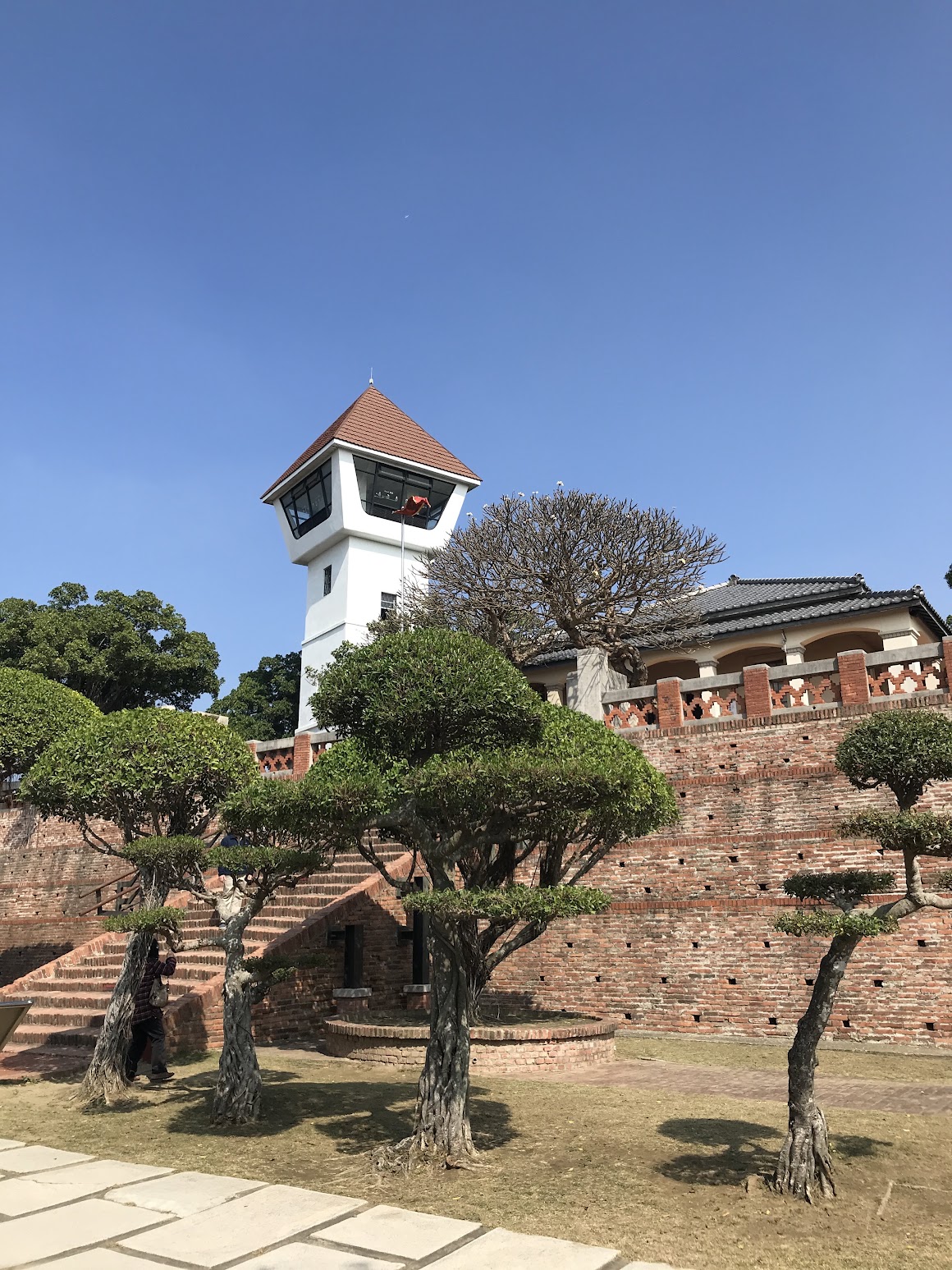
The Anping Old Fort, a historic Dutch fortress
I took the train up from Kaohsiung City for a day trip here. Although it is famous as a culinary destination, I sadly didn’t have much of an appetite on my visit and, instead, spent most of it just wandering around its historic attractions. Tainan is dotted with old Dutch colonial sites, as well as Japanese colonial-era buildings. In that sense, the history of Tainan is the history of Taiwan itself.
Arguably, this city is to Taiwan what Kyoto is to Japan. It is the oldest city on the island and was once the colonial heart of Dutch Formosa, the capital of the Kingdom of Tungning, and a provincial capital under the Qing dynasty. It is a city of rises and falls, a city of revisions and restorations.
Some cultural curiosities in the city include a former 19th-century merchant warehouse known as the Anping Tree House, named after the thick banyan roots and branches which have inundated the old structure.
There is also the beautifully blue Tianhou Temple, dedicated to a Chinese sea goddess known as Mazu. She is popular throughout Southeast Asia and various coastal Chinese communities and is supposed to roam the open seas, protecting sailors from the perils of the ocean. A very handy deity for a coastal region of Taiwan to have.
The Anping Old Fort is probably the most iconic attraction in Tainan. Also known as Fort Zeelandia, this was a 17th-century fortress of the Dutch East India Company. This ended in 1661-62 when a pirate leader and resistance fighter called Koxinga laid siege to the fortress, defeated and expelled the Dutch from the island and formed his own small, short-lived Kingdom of Tungnin.
The Eternal Golden Castle is not particularly golden, not much of a castle, and doesn’t feel terribly grand and eternal. It is the remains of a defensive fort that was built by the Qing rulers of the island to resist the Japanese invaders of Taiwan. It quickly declined in military value following the annexation of Taiwan by Japan in 1895.
And lastly, I visited the charming Chihkan Tower. This was once the site of a Dutch outpost (known as Fort Provintia) before it was destroyed by an earthquake and rebuilt in a Chinese architectural style.
Tamil Nadu, India (2019)
Posted 8 August 2020
Stop 1: Chennai
After Malaysia, I made my way over to India. My first stop: Chennai, also known as Madras, the hectic capital of the Indian state of Tamil from the airport was almost the most Nadu. The taxi ride overstimulating thing I did all year!
I spent my first day simply wandering around the city. I went to Marina Beach, one of the longest natural urban beach in the world, and got caught in the rain. I found the famous Fort St. George, first British fortress built in India, to be mediocre. I tried to visit one the major temples in the affluent, traditional neighbourhood of Mylapore and discovered it was closed. But I’m not even mad. In a post on travelling India, the economist Tyler Cowen writes: “Most of the sights in India, including the very famous ones, are overrated. The main sight is India itself, and that is underrated.”
I completely agree. The tourist hot spots were more useful as way points than destinations in and of themselves. Just walking down a few city blocks, getting from point A to point B was a complete thrill. It’s all true, all of it – the cows on the road, the frenzy of colours, the stray dogs, the cheap food, the trash, the energy of the place.
I went to bed after my first full day with the phantom sounds of Chennai’s chaotic traffic still ringing in my head. Indeed, I was told by a fellow traveller that I was going to have my best and worst days back-to-back in India. Hell, after a single day in Chennai, I felt like I’d had extreme highs and lows on an hourly basis. And my big India trip had barely just begun.
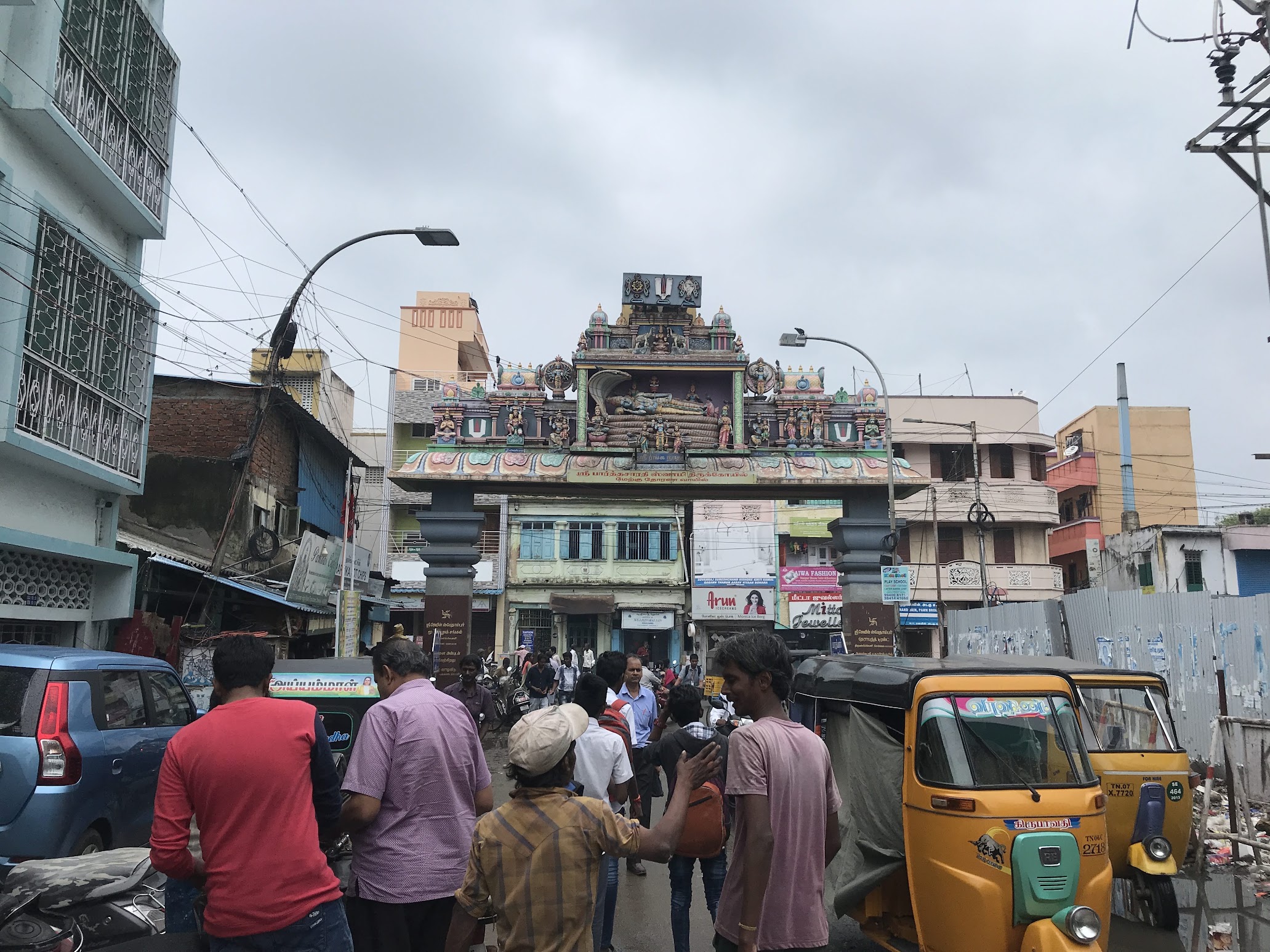
A couple of quick notes on Chennai:
- Chennai does not feel like it has a ‘centre mass’. Believe me, I looking. It’s the most sprawling, unplanned urban tried environment I have ever experienced. When it rains, the roads simply flood. Crossing the street is like playing hardcore Frogger. And trying to get anywhere by public transport is an ordeal.
- That said, the public transport is a lot of fun to ride. Dirt cheap buses and a suburban train system without any doors. I saw kids entertain themselves by holding onto the moving train and
- seeing how long they can slide their feet along the platform edge. High risk amusement! Also had my first run in with a Hijra (the Indian ‘third gender’, to put it in egregiously basic terms) on a suburban train trying to extort money off the passengers. Lots of fun!
- Barely any foreigners visit Chennai. I walked for blocks and blocks (dodging traffic and inhaling a lifetime’s dose of exhaust fumes) in well known parts of city and didn’t see a single other tourist. At first, it gave me a weird feeling but then my brain broke and I stopped caring. No one hassles you and I never felt like anyone tried to overtly screw me over (the Chennai rickshaw drivers have a really bad reputation though, even among the locals).
- Tamil cuisine is great and perfectly digestible in Chennai’s grubby weather. The South Indian breakfasts are a highlight. There’s nothing like a plate of dosas and an extremely sweet cup of filter coffee to kickstart the day. And I found Tamil hospitality to be wonderful and unexpected.
- I was based in a pleasant part of the city with some very nice homes, but it took me a while to figure out that it was a ‘good street’! Rubble, waste wood being burnt, dangling electrical wiring… I’ve had it explained to me by locals that many Indians have a strong ‘libertarian mindset’: they keep good private spaces and pursue private solutions to everything since they can expect so little from the state.
Stop 2: Mamallapuram
After a few days in Chennai I went down south to the coastal town of Mamallapura, best known for its temples and monuments of the Pallava dynasty from the 7th and 8th century.
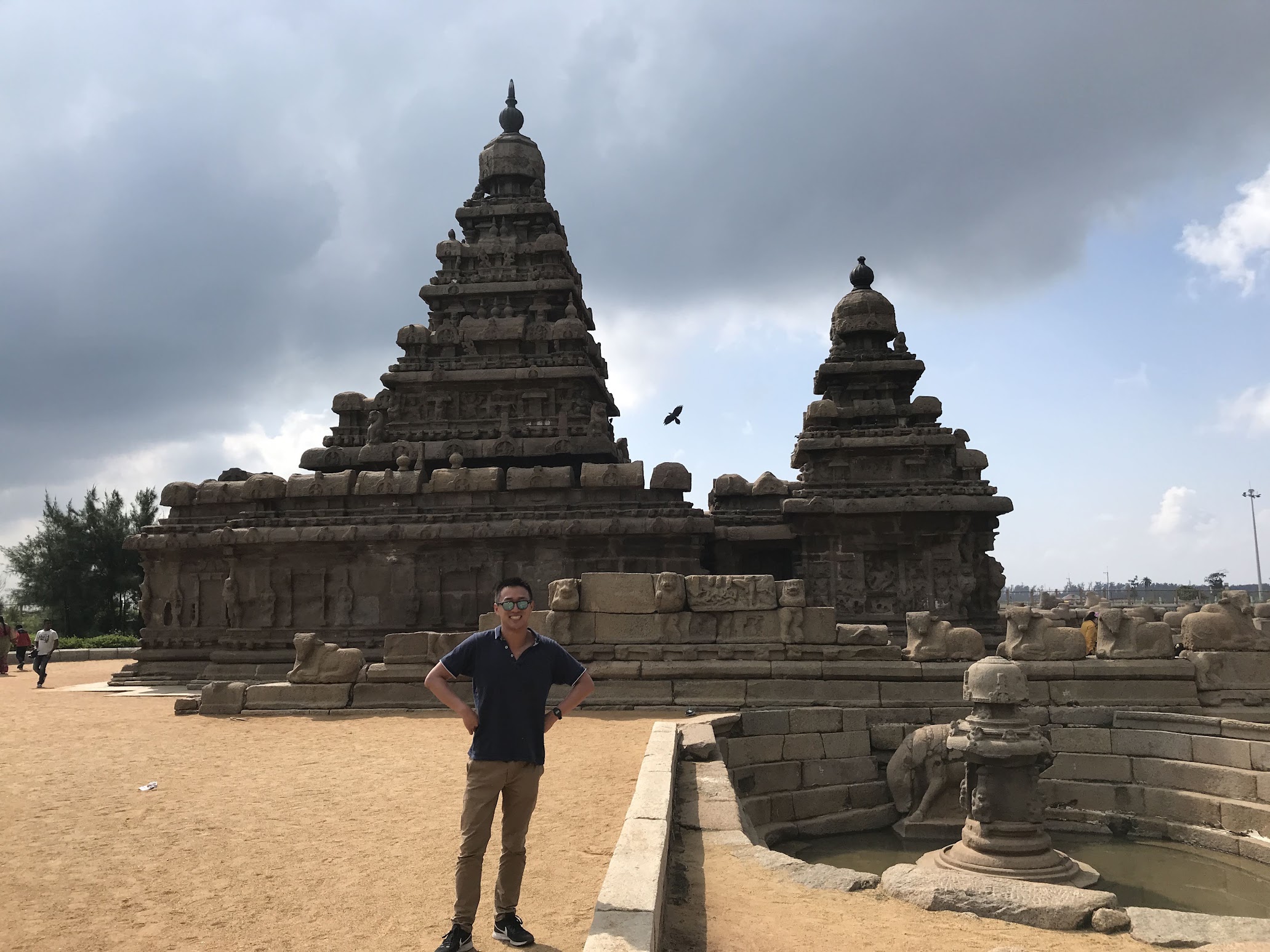
The Shore Temple, built in the early 8th century
The whole place felt somewhat orderly, with few tours or beggars or overtly scammy sorts. My sense is that the place is struggling a bit with tourist volumes and — more importantly — the town underwent a frenzied beautification job when Narendra Modi and Xi Jinping met here during an informal summit in October.
The Group of Monuments at Mahabalipuram, UNESCO World Heritage Site, is what makes this town so special. Huge open-air rock reliefs, beautiful stone-cut temples, and unusual rock formations mark this place with a remarkable fusion of religion, power, wealth, and artistry.
What is also interesting is watching how this small seaside resort town ‘works’ - e.g. how the shopkeepers set up in the early morning and the way the fishermen operate. There are no seagulls here, only crows. Washed up all along the shore are poisonous blowfish, a very common bycatch. Also, no one has liquor licenses so the restaurants pay regular bribes to the police and you have to keep the beer you’re having with your meal hidden under the table.
A funny incident: One night in Mamallapuram, I was one of only two patrons at a seafood restaurant. We befriended the owner and he was like: “Hey! Come along to my friend’s niece’s puberty ceremony.” Then he shut down his restaurant early and took us to a big, colourful ‘puberty party’. I don’t think anyone minded we were there. To the best of my understanding, in South Indian Hindu culture these ceremonies are known as “Ritusuddhi” and celebrate a girl’s transition to womanhood after menarche (i.e. first occurrence of menstruation). There’s gift giving, the lucky girl gets to wear a half-saree, and everyone is well fed.
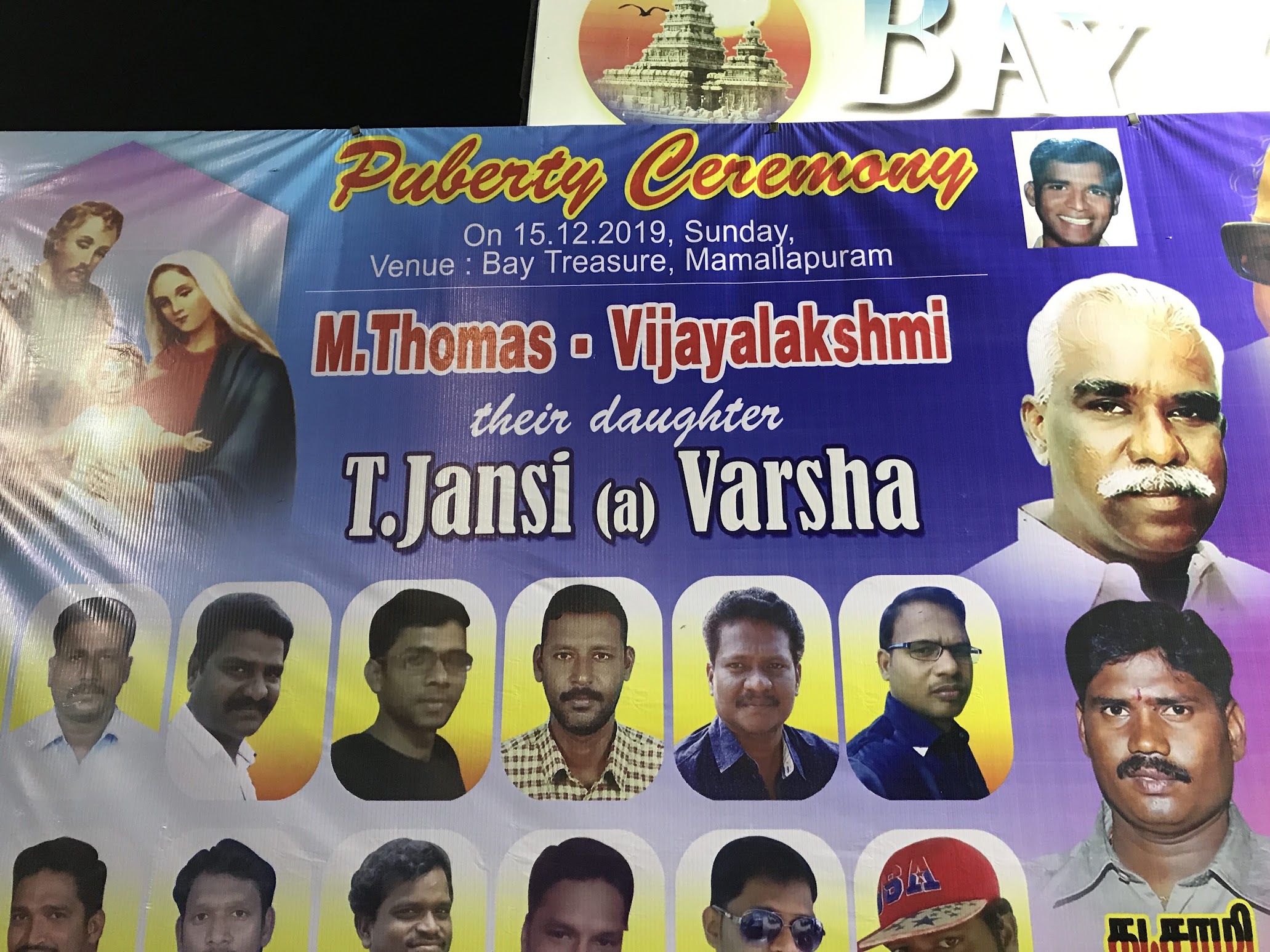
(P.S. Do you notice how the event poster is just photos of over a dozen men? Great stuff.)
How fascinating — and that was just day three in India!
Stop 3: Dhamma Setu Vipassana Meditation Centre
After my brief stay in Mallampuram, I returned to Chennai for the main I was silent Vipassana India: reason in South 10-day a meditation course. I had originally wanted to write a post explaining how I became interested with meditation, my thoughts on the practice and belief system, how I want to reset my sleep cycle and caffeine tolerance, do a digital detox, etc., etc.
But after completing the course I discovered that I no longer hand the motivation to go into such discussions. The course was, by far, the most challenging thing I’ve ever done in my entire life. It wasn’t some relaxing, tummy rub massage after a yoga workout — it was ten days of intensive silent, and frequently torturous, practice.
Wake up at 4am. Lights out by 9.30pm. Almost ten hours of meditation each day. I was frequently struggling with exhaustion and pain throughout my body, and there were consecutive days where I felt utterly miserable and dejected. Also dropped a kilo or two, I think.
These experiences, from my understanding, are fairly typical for these types of courses. But to exacerbate matters, I had two health scares. One night, I contracted a fever that made me uncertain if I could continue and, on one of my final nights, I got severe burning rashes across my arms and legs as a result of allergic exposure to something in the environment.
So was it worth it? What did I take out of it? Would I potentially recommend this course to others? To be entirely honest with you, I’m not sure I would. Definitely do your research first and think carefully about whether such an experience is right for you. It very well might not be.
And with that out of the way, it was onward to other parts of India…
Taroko National Park (2019)
Posted 2 June 2021
The story of how I visited a beautiful national park in Taiwan and nearly died for The Grams.
In early 2019, after a pleasant stay in Taipei, I took the train down the east coast of Taiwan to Hualien County. Rugged mountains! Pebbly beaches! The roughcast cliffs and crashing waves! My destination: Taroko National Park, where the Liwu River carves its way through a spectacular marble gorge.
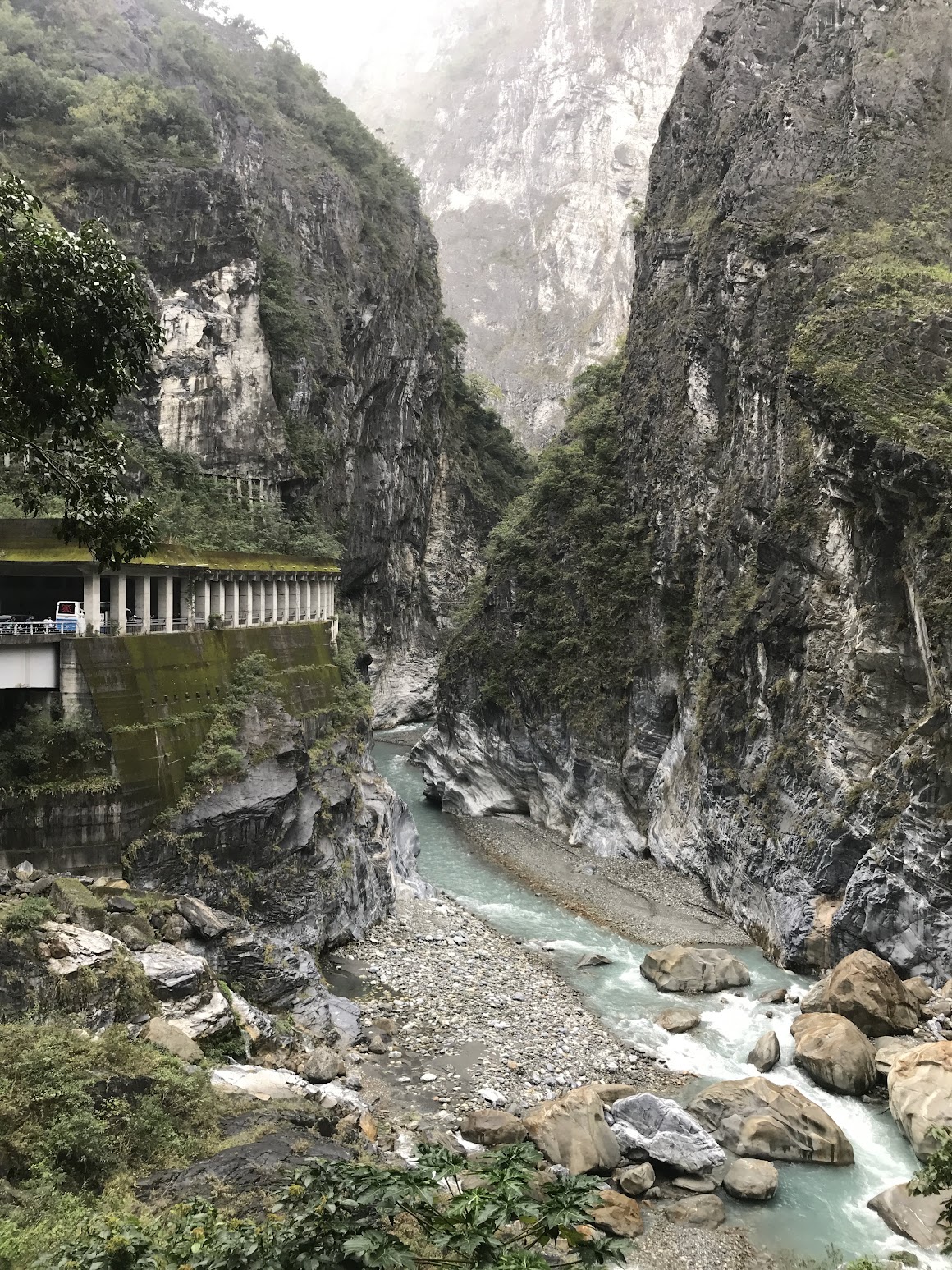
After a night in Hualien City, I hired a bicycle in the early morning and cycled deep into Taroko National Park. It is an extraordinary place, unlike anything I’d ever seen before, where the river is a deep blue-terrain are upon-blue, formations and mountainous the rock reminiscent of an ancient and serene Chinese landscape painting, and the water seems to weep mysteriously from the walls of the gorge.
Highlights include the Eternal Spring Shrine, which commemorates the workers who died building the Central Cross-Island Highway that runs through the national park, the Swallow Grotto, where the nearby river walls contain caves that spring swallows nest in, and the marvellous and marblelous Taroko Gorge itself, obviously.
But a word of advice, don’t cycle into Taroko National Park the way I did: Pedalling in the rain on the narrow, winding highway with giant tour buses roaring past you!
And don’t conclude your bicycle tour the way I did either: With a downhill crash that banged up both my knees, cut up my hands and bloodied my right forearm. Thankfully, I was able to get some first aid from the park staff and the guy I was cycling with (who I just met him during my ride) revealed he was a doctor. What luck! So I got some quick medical tips off him and was on my way.
That was an extremely unfortunate accident and, to this day, I still have a nasty-looking scar on my right elbow as proof of my misadventures. Once I returned to the township and I had fixed myself up with some more bandages and gauze from the local convenience store, I quaffed down some Taiwan Beer to dull the pain and crawled into bed, wounded but alive…
Of course, the fun didn’t stop there. The next day, I returned to the gorge and did a tour of the infamous Zhuilu Old Road. This is a narrow footpath winding along the edge of a sheer cliff, hundreds of metres above Taroko Gorge. Many parts have no handrails and a permit is required in advance, with less than 100 people allowed on the trail per day. It is an epic walk and, as my photo can attest, absolutely not suitable for anyone with even a hint of vertigo.
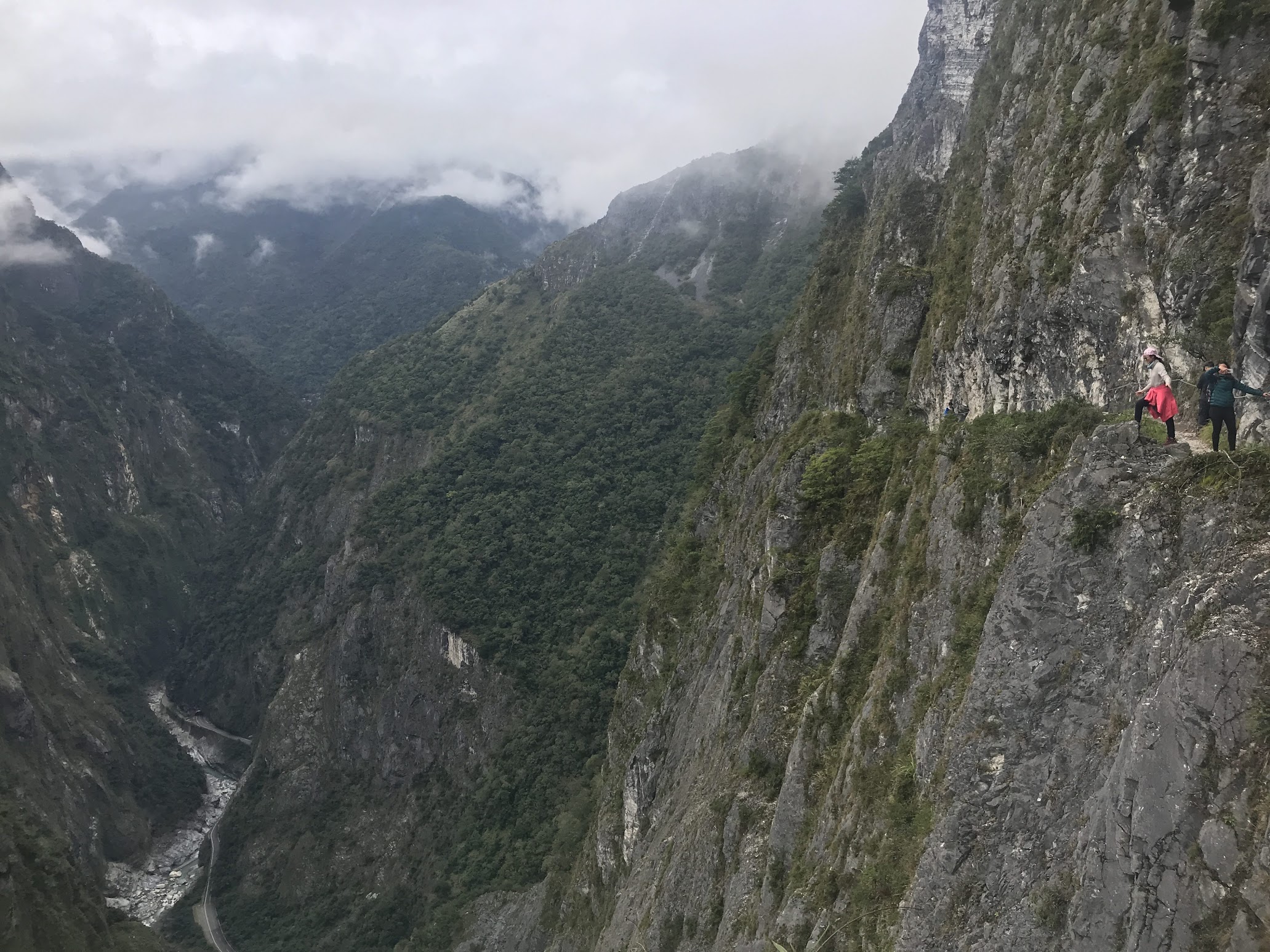
The hike to the top was fine (ignoring the fact that I was still bleeding from the bicycle crash the day before) and the mountain mist helped suppress my fear of heights. But on the way back down, the weather – I was hit with a dizzying fear of heights and cleared up and – boom! shaky knees.
While I returned to the ground intact, I definitely needed another Taiwan Beer after that second misadventure.
Aside from mildly hazardous visits to the national park, I also had the opportunity to meet up with some fellow backpackers from Taipei and check out Hualien City as well. It is a small but interesting place, well worth a visit. For example, the Taiwanese indigenous peoples are much more visible here, certainly more so than in other major urban centres on the island. Because the city is close to a major air force base, you can constantly hear the thundering screams of fighter jets performing military drills overhead. And because the county is the heart of Taiwan’s marble industry, many of the city streets are themselves paved with marble.
I ate an array of delicious snacks at the local night market, admired the respectable array of imported whiskeys available at unassuming convenience stores (the Taiwanese love their whiskeys, it seems), and even tried chewing on a betel nut, or areca nut, which is a highly popular but problematic psychoactive substance consumed in this part of the world. Betel nuts can become addictive and give heavy users blood-stained teeth and even oral cancer. Also, it tastes disgusting.
Post-script, or rather, a weird anecdote: On my final morning in Hualien, I swung by my friends’ hostel and had the honour of meeting “Obama”, the hostel owner’s dog who, despite his namesake, was apparently very racist. And while he barked angrily at the, ahem, white guests, Obama-the-dog took an immediate liking to me. Yikes. What should we infer from this? How far can we take these allegations? What did you do, Obama? Why are you like this??
The Blue Mountains (2019)
Posted 4 September 2020
Ah! An easy weekend train ride from Sydney to the peerless vistas of the Blue Mountains in New South Wales.
The Three Sisters, Katoomba Falls, Jamison Valley… all that classic bluey, mountainy stuff.
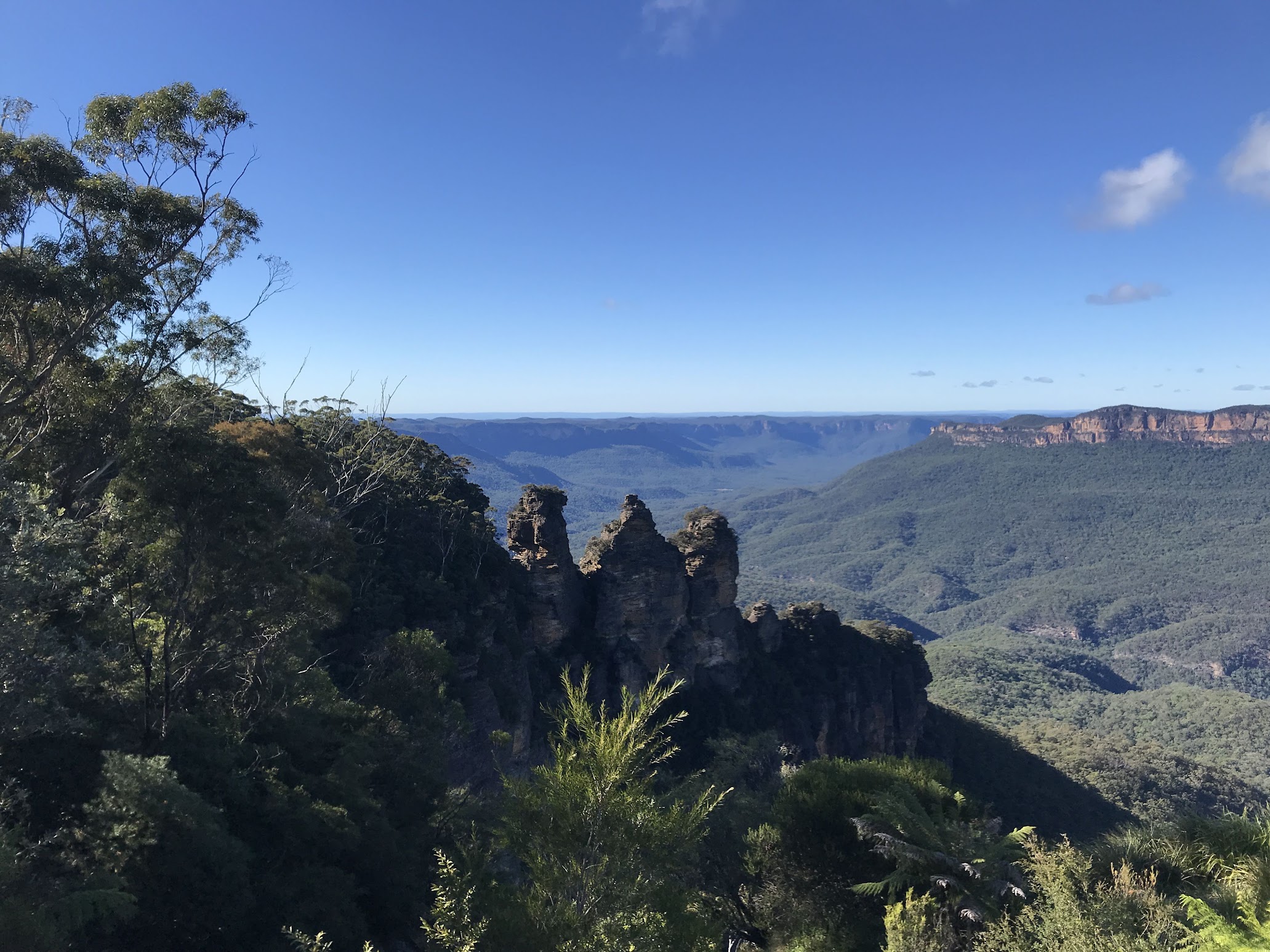
I descended the Giant Stairway into the forest during my visit to the Blue Mountains. It was a somewhat disorientating descent… The metal staircase felt a bit rickety at points. Or perhaps that was just a trick of my mind.
Regardless, the trip down and out of the valley was worth it.
So why is there a blue haze over the mountains? It’s from all the blue-coloured koala farts wafting up from the forest below. This is known as “Rayleigh Scattering”. Geez, you people should learn more science.
The National Palace Museum, Taipei (2019)
Posted 2 November 2021
A visit to the highly impressive National Palace Museum in Taipei
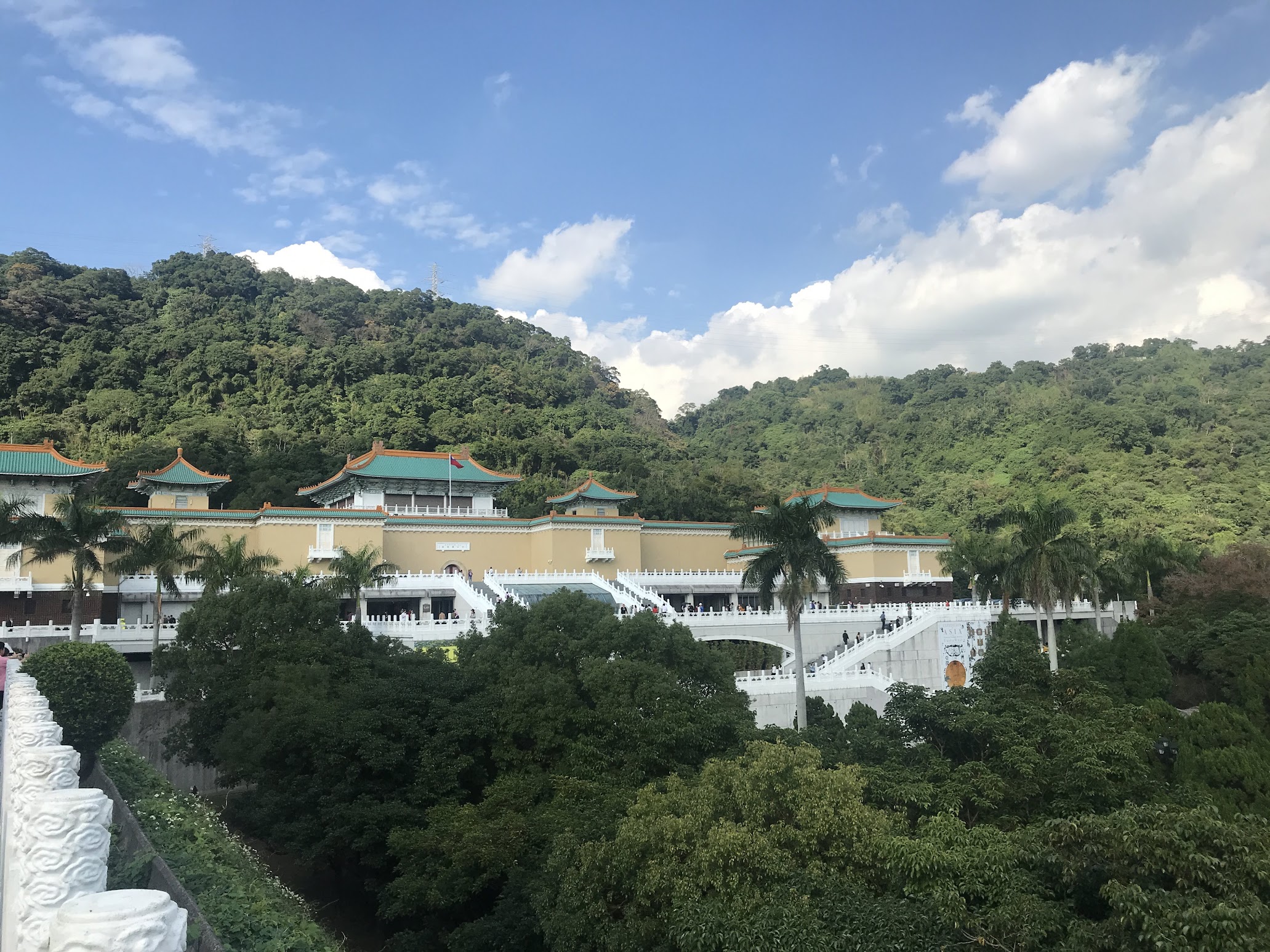
Originally established in Beijing’s Forbidden City after the last Emperor of China was expelled, the National Palace Museum was relocated to Taiwan in 1965. This museum has an immense permanent collection of Chinese imperial artifacts and artworks dating back to some of its most ancient dynasties, making it one of the largest of its kind in existence.
Firstly, no trip to the National Palace Museum should be done without a visit first to the Zhishan Garden, a classical Chinese garden housed within the museum compound that incorporates many of the aesthetic principles of Song and Ming dynasty gardening styles.
The history of this museum is ‘interesting’ to say the least. As the Kuomingtang (KMT) government under Chiang Kai-shek began losing the Chinese Civil War to the Chinese Communist Party, the KMT undertook efforts to evacuate as many of the museum’s most prized items to the island of Taiwan.
In all honesty, the National Palace Museum could be more accurately the Best Qing Dynasty Loot the Nationalist Army Managed to Take called the with Them when They Fled to Taiwan After the Chinese Civil War Museum. Classy title, I know.
The existence of so many glorious artefacts of Chinese civilisation is obviously a sore point for the People’s Republic of China. Personally, I’m not terribly fussed. How much of it would’ve survived the cultural destruction of the Cultural Revolution, for instance?
However, I was deeply saddened to discover that the museum’s famous ‘Meat-shaped Stone’ (literally a chunk of mineral carved into a slice of pork) was not on exhibit. Turned out it was on loan to the Art Gallery of New South Wales in Australia till May of that year! Oh no!
And it just so happened that later in the year I had a chance to visit Sydney and duck inside the Art Gallery of New South Wales. And it was there! It was a monumental day in my cultural education. I am elated to have finally seen this masterpiece of Chinese art, having missed it when I visited the National Palace Museum in Taipei earlier this year.
Behold! The famous Meat-shaped Stone, a piece of jasper carved into the shape of a delectable piece of pork belly. It is exquisite. It is sublime.
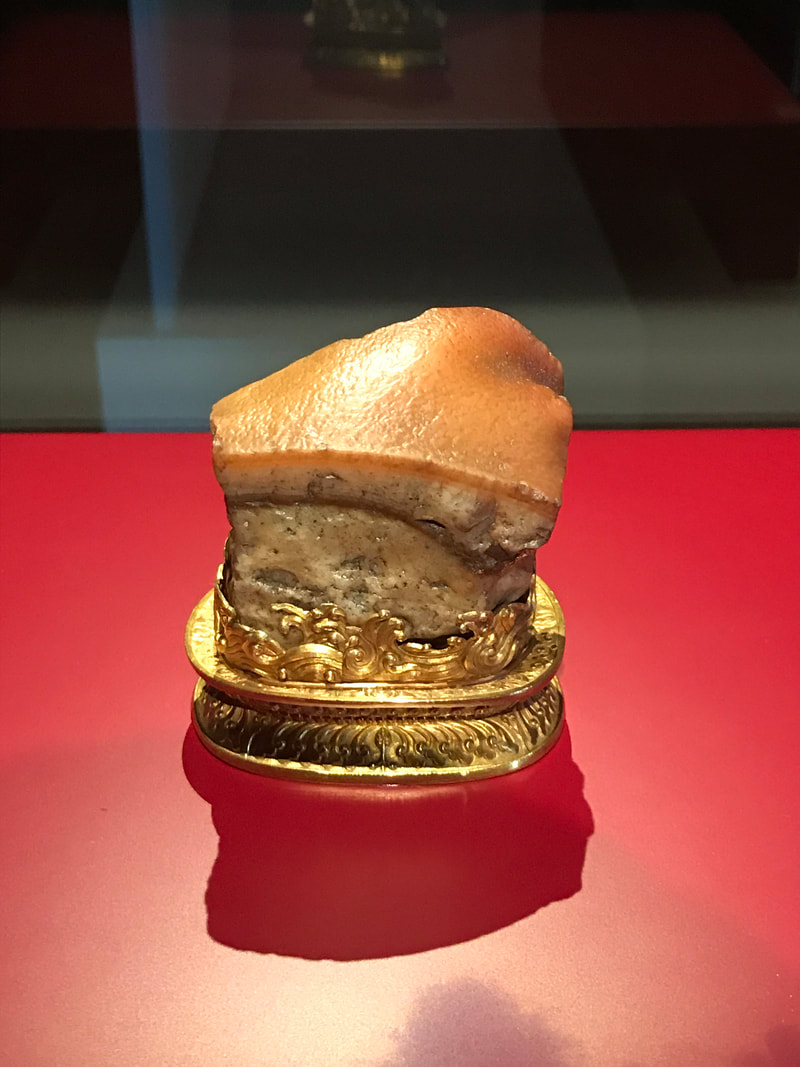
It’s so beautiful I could weep. I feel like a pilgrim having finally reached a holy relic.
Art day in Singapore (2018)
Posted 22 August 2020
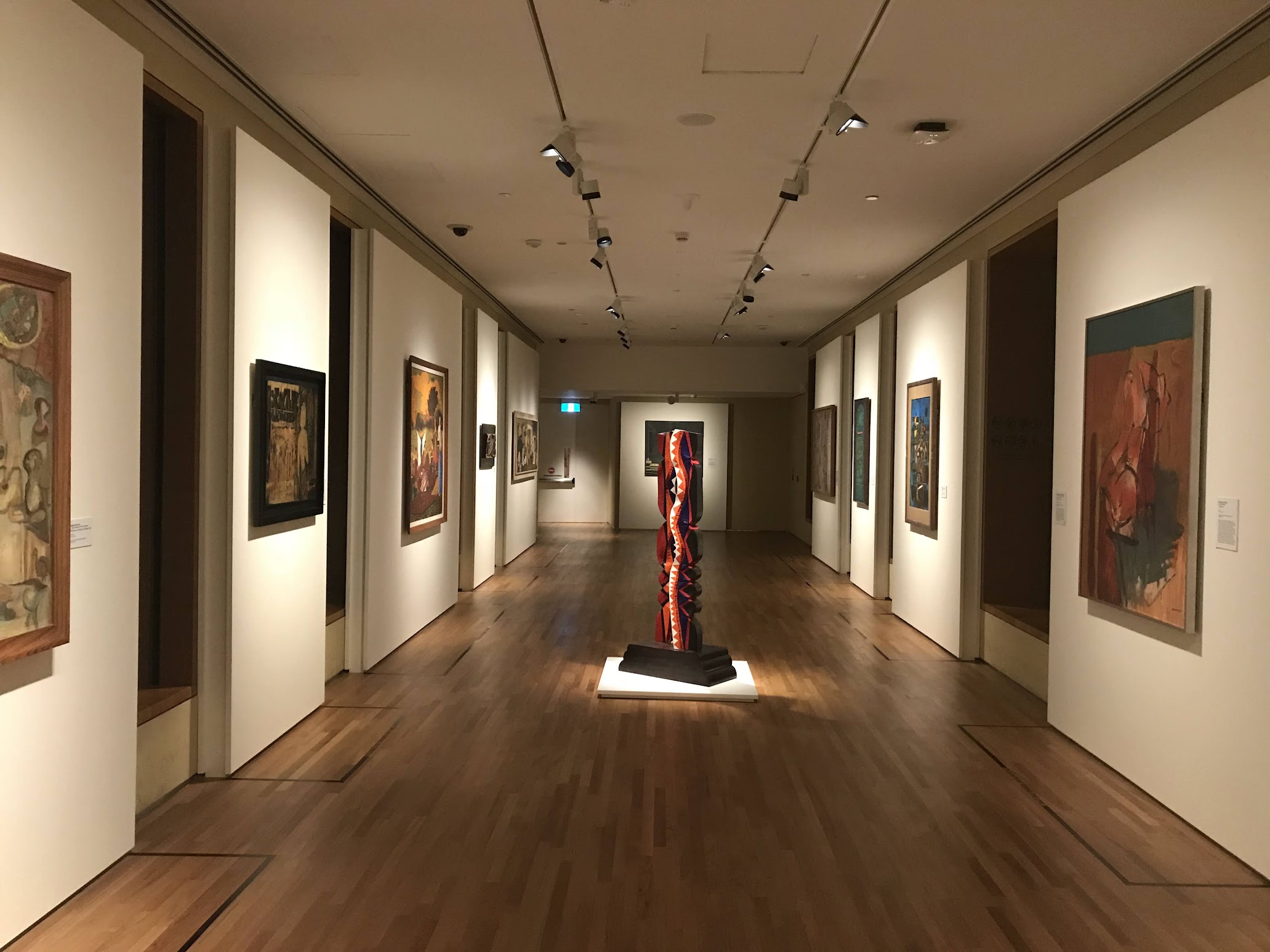
A visit to the National Gallery Singapore…
Ah, the National Gallery Singapore - home to the largest public collection of Singaporean and Southeast Asian artworks in the world, both contemporary and traditional. After a hot day exploring the tame, clean, hyper-organised urban ecosystem of Singapore, I was desperate to see some quirky, strange, beautiful, and even disturbing art to shake up my sense of normality induced by this somewhat stuffy, edgeless city.
Indeed, sometimes I just want to be alone and wander an art gallery by myself.
Cairns and surrounds (2013 and 2018)
Posted 1 July 2023
And here sits Cairns, with its access to the world’s largest coral reef system and the oldest rainforest on the planet… Striking sun and brooding skies, the muddy foreshore with squawking seabirds… I weather a storm, I amble tipsy an esplanade, I wait for my ride to its wilder nearby…
Here glides the waterways where the saltwater crocodiles are… where a perfect apex predator waits, for everything, anything that moves, the flesh of fish, turtle, snake, bird, boar, human… We spot a few resting near the mangroves, where they’ve seen us before we’ve seen them…
Here rambles the Daintree Rainforest… survivor of continental drift, older than the Amazon, a tropical bowl of biodiversity upon biodiversity… And Cape Tribulation, that remote splendid headland, where Cook ran aground and scribbled the words: “… here begun all our troubles “.
Green Island, surrounded by the great yet fragile coral reef and all its works… A short but nauseating ferry ride from Cairns… I snorkel among the marine life, I bask on the hot sands, I try to forget about my puking seasickness…
But that was 2013 and now it’s 2018 and I’m ready to brave the seas once more… I’m on a boat heading out to the Great Barrier Reef for three days and two nights of faraway scuba diving… I hope I’ll see extraordinary, even fantastical things in its wondrous ocean.
Darwin (2018)
Posted 5 January 2022
Seven True Facts About Darwin
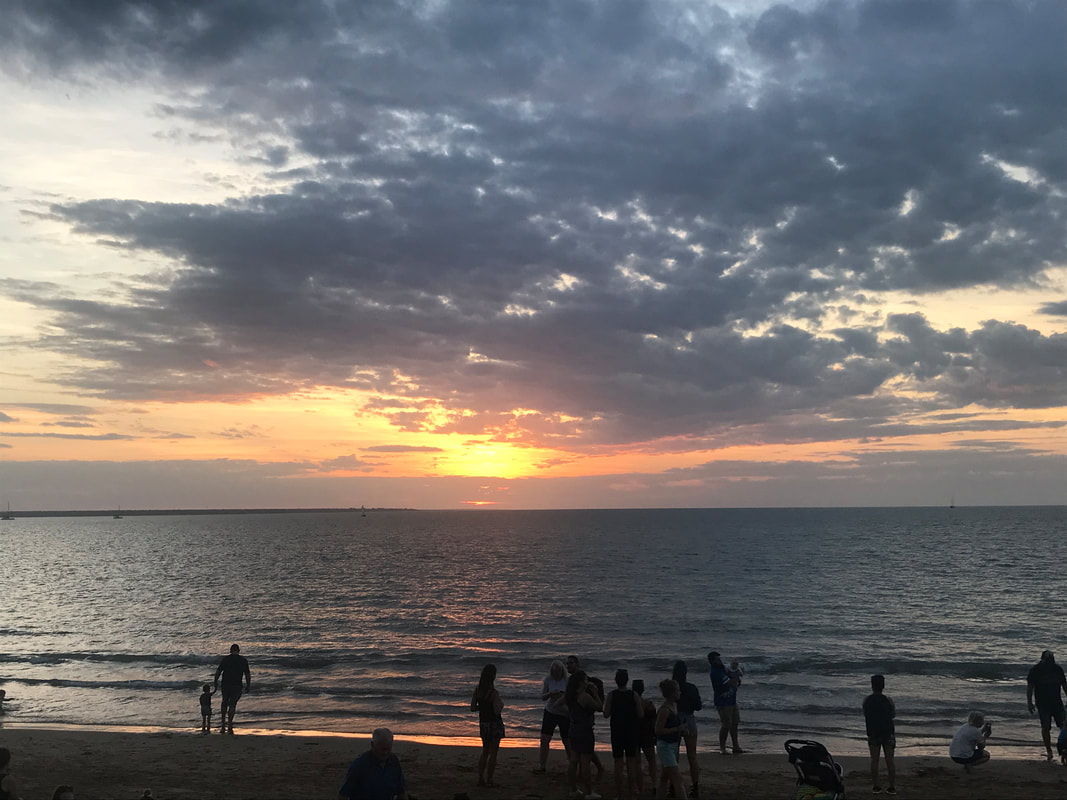
Sunset over the Timor Sea at Mindl Beach
Fact #1: Contrary to popular belief, the famous British naturalist Charles Darwin never visited the city. Instead, Darwin was founded in 1869 by his cousin, Gary Darwin, a beagle breeder who discovered the harbour after making a 2,100 nautical mile wrong turn at the Strait of Malacca.
Fact #2: For a brief period, between 1990-1994, the Northern Territory Adansonia legislature was suspended and replaced by a large boab tree ( ), making the Territory the first-ever dendrocracy in recorded gregorii history.
Fact #3: You may be familiar with Darwin’s notorious ‘The NT News’ headlines (e.g. “Horny roo stalks NT women”). But did you know that no human actually writes them? The headlines are, in fact, the product of a malfunctioning mechanical haiku generator: “Basho Gone Troppo” as it’s affectionately called by locals.
Fact #4: If you squint really hard, you can see Indonesia on the horizon.
Fact #5: When walking through the George Brown Darwin Botanic Gardens, you may notice signs warning you not to pick up chunks of asbestos on the ground. This is because asbestos is used as a nesting Threskiornis material by the rare and endangered Australian white ibis ( molucca ), which requires it for successful egg incubation.
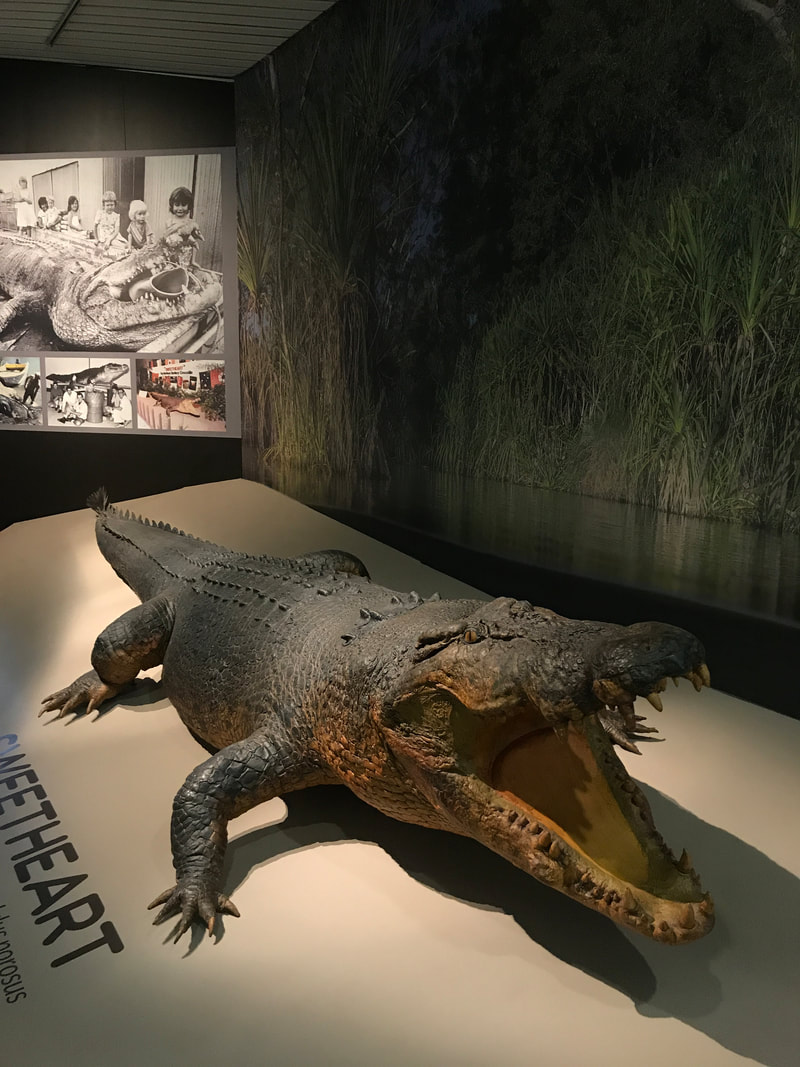
The taxidermied body of ‘Sweetheart’, a 5.1-metre long saltwater crocodile that terrorised Darwin boaters in the 1970s
Fact #6: In July of 2017, in an innovative attempt to stimulate the slumping Darwin property market, the Chief Minister of the Northern Territory offered free Royal Australian Air Force (RAAF) F/A-18 Hornets for first-time homebuyers.
Fact #7: Common wifi passwords in Darwin hotels: box_jellies, buffal0, crocodil3, salt!water, kAkadu
Fiji (2018)
Posted 23 September 2020
Harsh and brutal words from the frontlines of Nadi and the Yasawa Islands.
Wayfaring notes on Fiji
Nadi is dull, overcast, and surrounded by mangroves that catch seafaring plastic. Wailoaloa Beach is, like most cheap backpacker haunts, a bit depressing and also the perfect place to step on broken glass. Get the hell out as soon as you can and head for the nice weather and soft coral of the island chains. There’s a respectable mix of “boutique” backpackers, rough and tumble hostels, and relaxed homestays dotted across the rocks off the mainland.
Fiji loves to mention to tourists how it’s one of the happiest countries on Earth. Ignoring the fact that cross-country eudaimonic analysis is probably bullshit (no Bhutan, you can’t invent a happiness index and then give yourself a medal), a large proportion of Fijians I met did genuinely seem like happy people. Think close-knit communities and high levels of religiosity as consistent drivers of social capital.
Random thought: there’s a weird lack of seagulls, even in bustling Nadi. Where are all the seagulls in Fiji? I sense a conspiracy…
Is Fiji part of Polynesia or Melanesia? I’ve seen some diagrams that include it as part of the Polynesian Triangle, and others that deliberately exclude it. Who should I believe? Does it even matter? On a semi-related note, the fact that humans (originating from Taiwan, supposedly) managed to settle the islands of the Pacific Ocean on canoes is completely insane when you think about it.
The food was consistently great out on the islands—especially anything that included both coconut and fish as ingredients. Indian cuisine is everywhere (40% of the population are of Indian descent, thanks to the British Empire) and cassava is always lovely to try when you can get it. Oddly enough, the best meal I had during my trip was in Nadi, at a restaurant right on the dusty main road. I imagine it was access to large local produce markets that did the trick.
The local rum is unremarkable. The local beer is okay. Like Tui or Victorian Bitters, but less embarrassing to drink.
Kava was one of those low-key, geographically specific drugs (along with khat, coca leaves, and betel nuts) that I was always curious to try. Having finally drunk some, I give it a “mild shrug out of 10”. It was inoffensive and had a tolerably bitter aftertaste. Sadly felt no psychoactive effects since they water it down for tourists.
Despite being one of the most economically developed small island nations in the Pacific, even a casual taxi ride will reveal how patchy this growth actually is. Fiji’s GDP per capita, according to the World Bank, puts it squarely between Bhutan and Jordan. An economy built almost solely on tourism and sugar exports sadly doesn’t paddle you very far.
Bizarrely enough, Fiji is also the only Pacific small island nations to have a nationwide rail network: Keep your eyes peeled for the dinky yellow toy trams carrying sugar canes back and forth. Occasionally one of the canes might fall off, and you can just pick it up and have a nibble.
One last economics point: Fiji has massive untapped fishing wealth. How will it deal with growing foreign interest in this resource? The territorial waters it has to govern is massive, given how small the country is. Think about how Fiji can enforce property rights and maintain bargaining power.
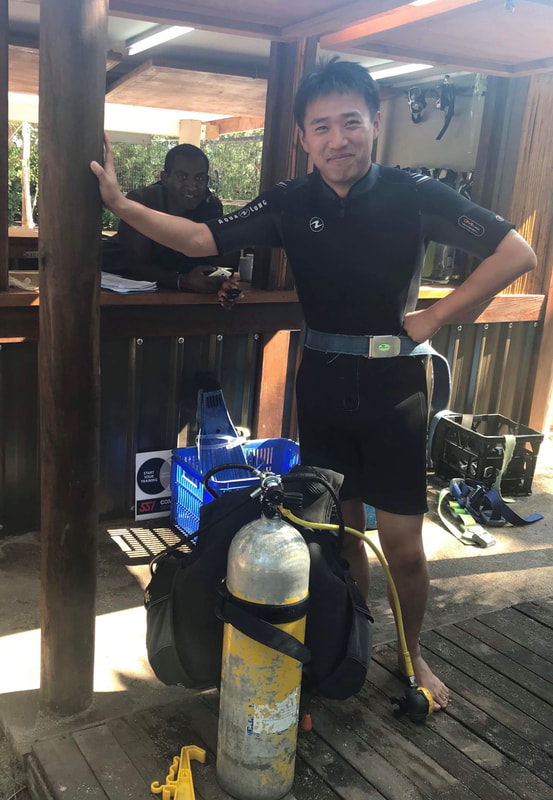
Completed my scuba diving certification out in the Yasawa Islands!
“Fiji time” is pretty much the national motto. Things like the daily ferry go according to loose, ambulatory schedules. I’m reminded of a wonderful passage from Ryszard Kapuscinski’s The Shadow of the Sun about African vs. European conceptions of time: “The European feels himself to be time’s slave, dependent on it, subject to it… Africans comprehend time differently. For looser concept, more open, elastic, them, it is a much subjective… Time appears as a result of our actions, and vanishes when we neglect or ignore it. It is something that springs to life under our influence, but falls into a state of hibernation, even non existence, if we do not direct our energy towards it.”
That said, while I was there, the Rugby Sevens was on during my visit and the entire country seemed to follow the games with clockwork precision.
Scuba diving really can be for everyone. Even I managed to learn it, sort of. My instructor was a young woman from North Queensland who couldn’t have been more than a few years out of high school, and yet had the patience of an ageless sensei in helping me fumble my way through the Open Water Course.
That said, you really have to be careful in knowing the limits of your training. On one of my final dives, I ended up swimming into a shipwreck at a depth of 30m (despite only being trained down to 18m) and had to do three nitrogen decompression safety stops on the way up. Hair-raising stuff for a rank amateur diver!
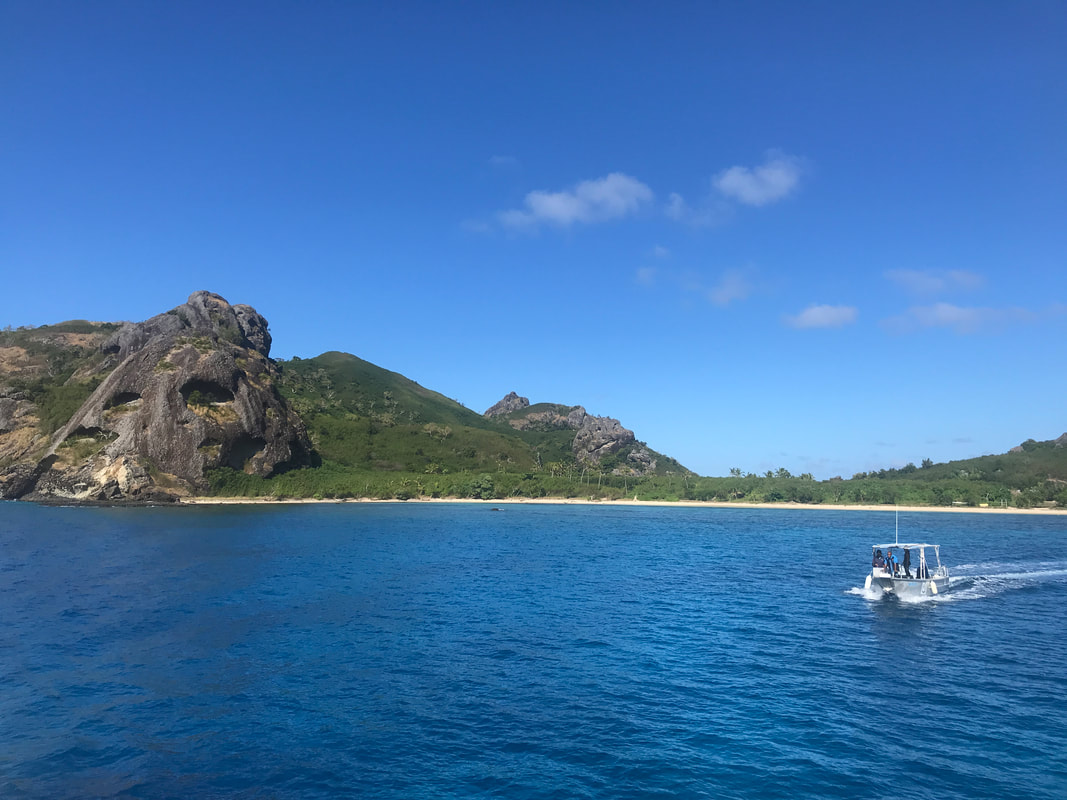
Bula Fiji!
Kakadu and Litchfield (2018)
Posted 1 December 2021
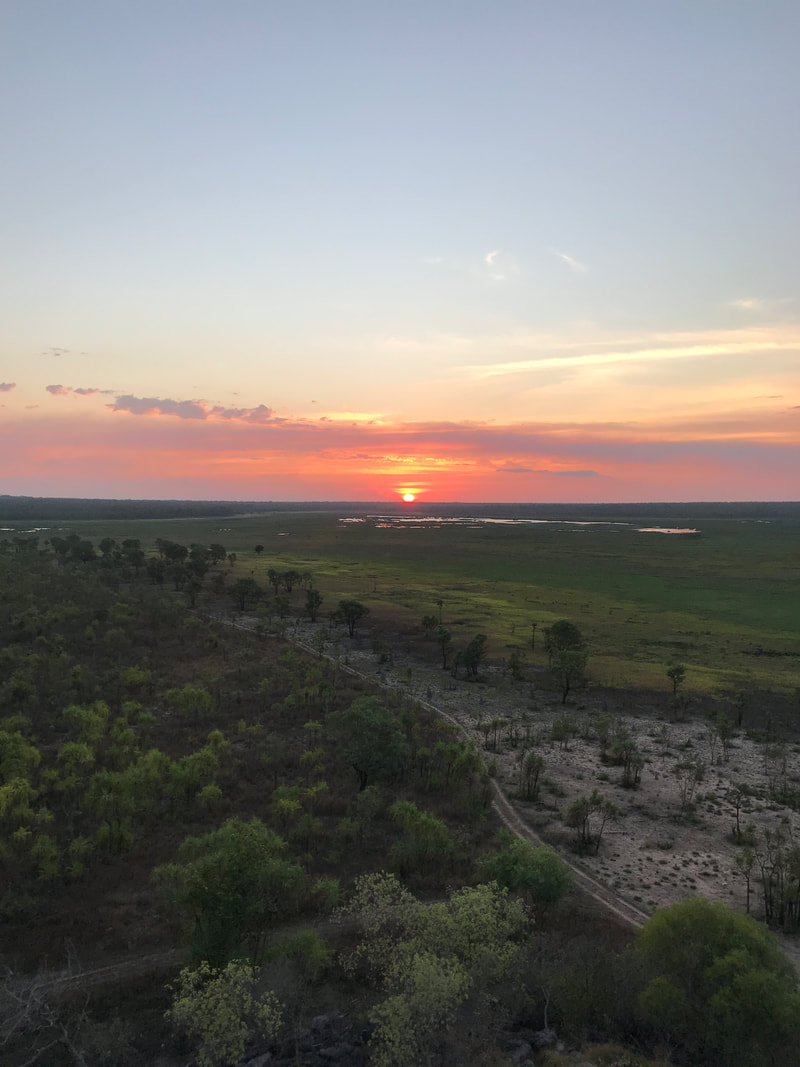
Sunset over Ubirr, Kakadu National Park
In late 2018, I had the opportunity to take a three-day tour of Litchfield and Kakadu National Park in the ‘Top End’ of Australia: the tropical region of the Northern Territory in and around Darwin. It was quite a little trip. There were around a dozen of us, all different nationalities, packed into a four-wheel-drive van as it sped into the dusty summer wilderness.
Litchfield National Park
The first stop was Litchfield National Park to the southwest of Darwin. Given how incredibly, oppressively hot it was (I don’t recommend ever visiting this part of the world in the dead heat of the Aussie summer months), it was a godsend that we were able to cool off at two well-known swimming spots: Florence Falls and Wangi Falls. Crystal clear water. Shaded swimming spots. No man-eating crocodiles. Perfect.
A famous feature of Litchfield National Park is the magnetic termite mounds. Thin, tall and eerily tombstone-like, each mound is orientated with its main axis running north-sound for heat management purposes (hence why their tiny builders are known as ‘magnetic’ or ‘compass termites’). Best. Termite mounds. Ever.
…or are they? Litchfield is also home to many Cathedral termite mounds. They’re impossible to miss. These epic structures (constructed simply from dirt, plant matter, and termite saliva and excrement, no less) can soar over four-metres high and be over a century old. They are the megacities of the insect world. The ‘natural skyscrapers’ of the cathedral termite (Nasutitermes triodiae).
Kakadu National Park
Of course, while Litchfield is near, it is nowhere near as amazing as Kakadu National Park. Southeast of Darwin, Kakadu is one of the largest national parks in Australia. It is roughly the size of Switzerland and is dual-listed on the UNESCO World Heritage List for both its remarkable natural wonder and cultural importance to this part of the planet.
One of the highlights of my time in Kakadu was a cruise into the Yellow Water, a billabong (isolated and backwater branch of a river) on the South Alligator River floodplain that is brimming with native flora and fauna. This was a chance to explore the region’s rich wetland areas and see Australian birds, saltwater crocodiles, and some (not-so-native) feral water buffaloes and wild horses.
A note on crocodiles in the ‘Top End’: they are absolutely something to be taken seriously. The Northern Territory is home to perhaps the largest wild crocodile population in the world, including the estuarine or saltwater crocodile. It is the perfect predator, capable of growing to over six metres in length and willing to stalk and eat anything and everything. Including humans. In fact, from 2005 to 2014, 15 people were killed in crocodile attacks in the Northern Territory.
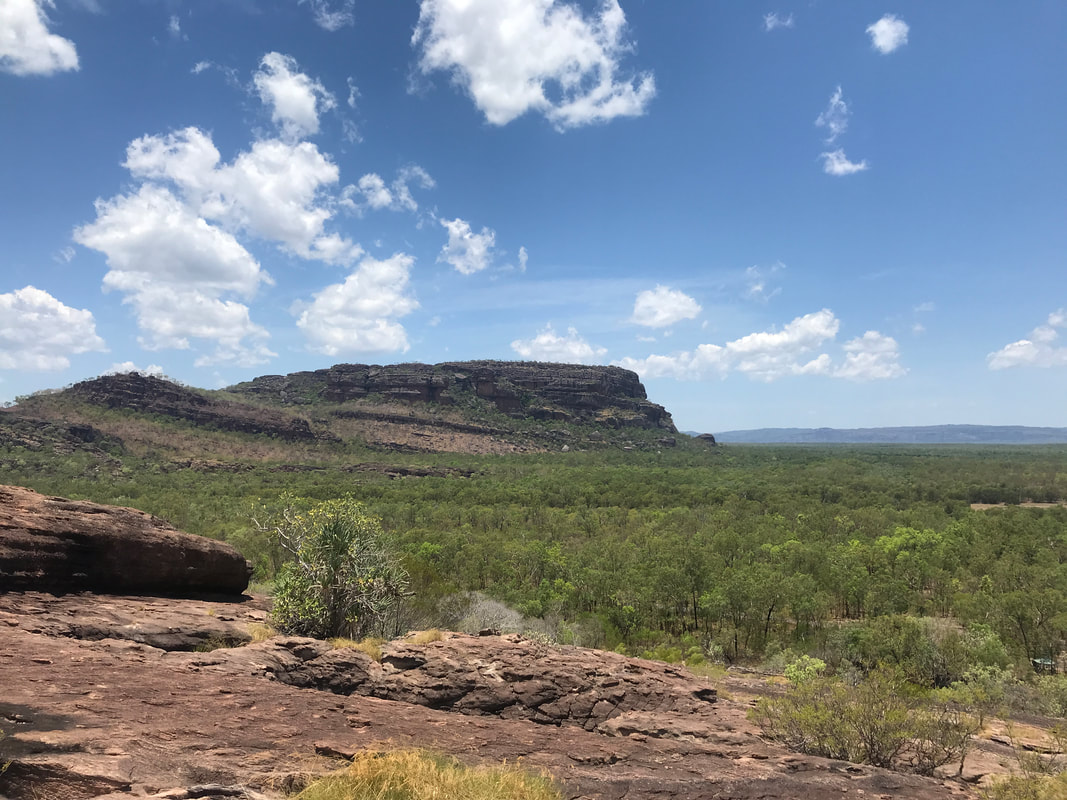
Pictured above: a photo of our stopover at Nawurlandja lookout. It was a bloody hot day for a hike, but it offered a sweeping view across the national park and out towards Burrungkuy (Nourlangie Rock) which is renowned for its Aboriginal rock art.
Speaking of Aboriginal art, Kakadu’s reputation as a place of global cultural significance is well-earned. Some of the rock art in the area are up to 20,000 years old(!) and they provide a profound testament to the continuing Aboriginal presence in Australia. Even if many tourists come to this part of the ‘Top End’ for its natural wonders, its cultural heritage must be appreciated.
My all-time favourite place in the national park (and I guess, therefore, by extension, one of my favourite spots in Australia) has to be Ubirr. This is a large rock formation in the East Alligator region of the national park that is, along with Burrungkuy, celebrated for its ancient Aboriginal rock paintings.
Our tour group was lucky enough to stay for the sunset at Ubirr. And what a magnificent sunset it was, with the panoramic interplay of light and colours across the rocky outcrops and floodplains. Being able to witness this was probably what firmly sealed Ubirr as my most treasured place in Kakadu.
And on the final day of the tour, we were able to visit Jim Jim Falls. Even though it was the dry season and didn’t have any flowing water, it was still a majestic location with towering escarpments, monsoon forests, massive boulders, and a dark, 40-metre-deep plunge pool at the base of the waterfall.
So in conclusion, what can I write to summarise my time visiting Litchfield and Kakadu National Park? To put it simply, because of them, the ‘Top End’ of Australia will always hold a special place in my memories.
What is the ‘Top End’ then? It is a place of savannah woodlands and sweeping floodplains… birdlife and estuarine crocodiles… billabongs and scorching heat… waterfalls and escarpments… rock art and termite cathedrals… lush wetlands and blood-red sunsets…
It was quite a little trip…
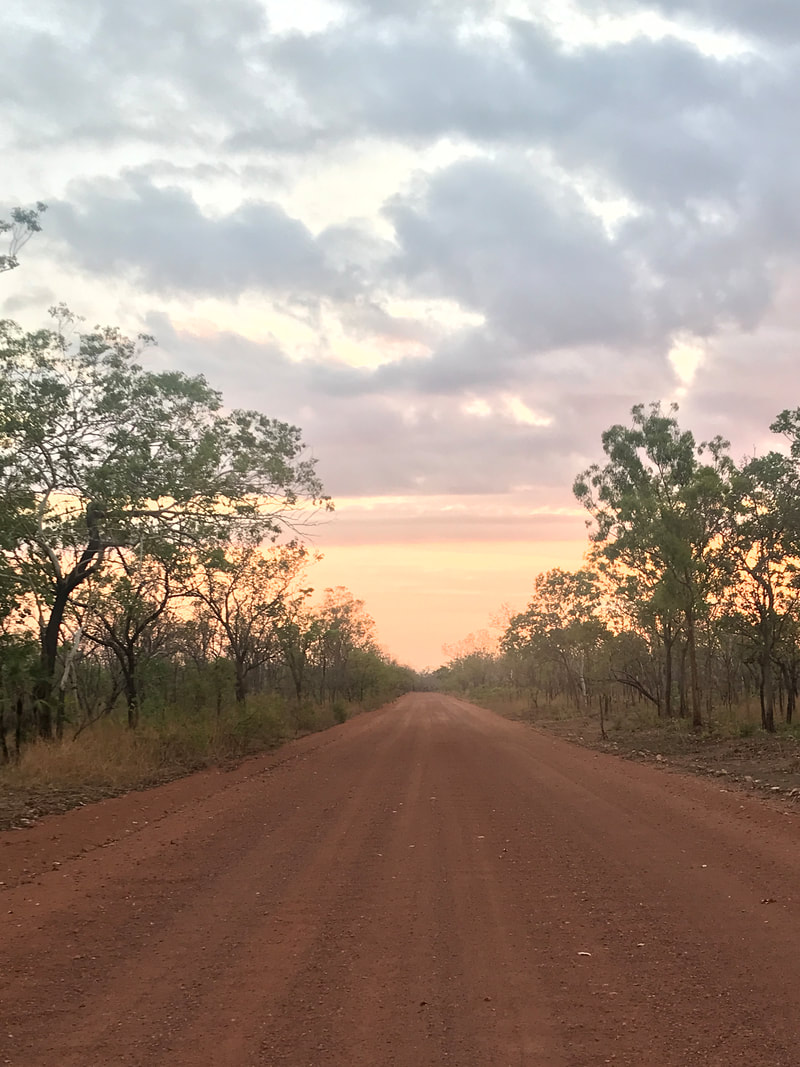
Onwards, down the nameless dirt trail!
Busan (2017)
Posted 1 July 2022
This post consists of my scattered recollections of Busan, Seoul’s dirtier, more decentralised port city cousin. While it has a few solid spots of enjoyment and while I did snag some decent photos, the sullen truth is that I was in a darkly depressed mood during the terminal leg of my South Korean holiday.
A blackened, joylessness coursed through me. I was devitalised and disconcerted, in part, because I was still recuperating from a bad cold I’d picked up in Seoul. But the sickness also prised open cages around my heart. It forced me to brood on the fact things were not well at that point in my life, despite my opportunity to travel.
I recall glumly strolling the Busan Christmas Tree Festival, a crowded annual winter event with vividly festive lights, live music, and street performances, feeling awkward and miserable. I was in a fugue state, casting the occasional glances at the scenery, but mostly inside myself, navel-gazing rather than sightseeing. Surrounded, yet apart. One idea that especially bothered me was how I’d arranged this trip to coincide with Christmas Day and (despite consciously, if unmindfully, committing to it) was nevertheless emotionally unprepared to be alone on the 25th.
I ended up spending Christmas Day itself at Busan’s famed Spa Land Centum City, an ultra-modern Korean bathhouse located within what is supposedly the largest department store in the world, Shinsegae Centum City.
I appreciated the novelty. For a while. It kept my most festering feelings at bay, but there was too much heaviness in my being to completely wash the gloom away. I felt like a failure. My career, a promising position at a prestigious economics consultancy, had fallen apart. My personal life was muted and loveless. There was no passion in my flesh. I was burnt out. I was lost. Unhappy.
I was on a knife’s edge concerning solitude and loneliness. I craved solitude, but if the stars weren’t carefully aligned in my skull, that lovely, tender solitude would skip and tumble into its evil double: a ditch of despairing loneliness, self-loathing, and misanthropy. I was not pleased to be alive and no amount of rumination could push me out of this equilibrium. Balance… where was my sacred and wretched balance?
Haedong Yonggungsa Temple… Yes… These words vaguely remind me. Either before or after Christmas (I can’t recall, my memory formation wasn’t great during my Busanian hours and minutes), I came to this popular seaside temple. Unfortunately, I was just going through the touristic motions. Pushing through without pause. Pushing through with pulse. So, obviously, I didn’t feel impressed at the time and only this writing exercise so many years later have faintly stirred something in me.
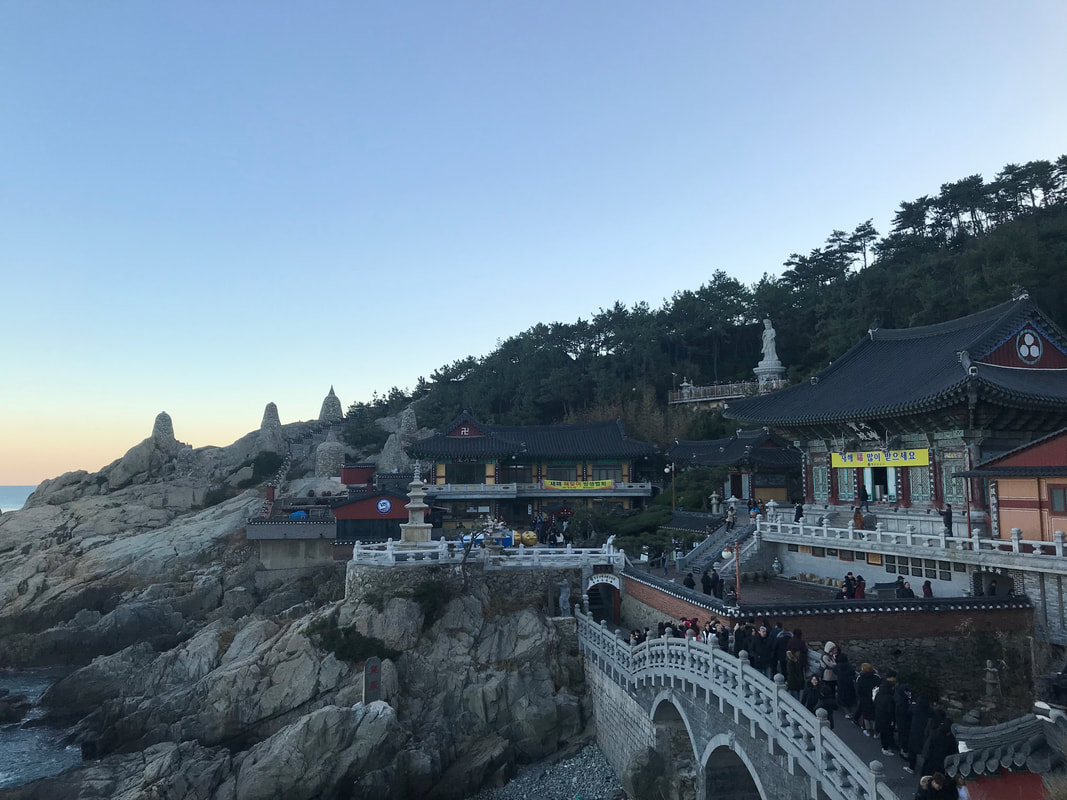
It’s a Buddhist site dating back to the Goryeo Dynasty of the 14th century, with a name that means Korean Dragon Palace Temple . According to legend, a sea god appeared in the dreams of an acclaimed religious teacher during a brutal famine and told him that if he built this temple, all their hardships would dissolve away, like salt in the ocean.
It was then destroyed by a fire and cast into ruin during the Japanese invasions of Korea in the late 16th century and was finally rebuilt in the 1930s.
But did I know all this from my visit? Certainly not. As I said, I was simply going through the obligatory guidebook motions. I am writing this now as an exercise in research and recollection. An exercise in picking up the pottery shards and fusing them back together into a workable, lucid thing. That’s the perniciousness of depression: it destroys the autobiographical. In its dejections, it painfully accelerates the soul’s entropy. The self-narrative becomes infused with a hazy wrongness.
I find writing posts like these an effective approach to tidying up difficult episodes in my life. Not in a therapeutic way that wholesomely salvages them ex-post, but in a clinical, almost-archival sense. I go through these images in hopes of geolocating myself in distant, foggy moments. Back into the realm of essential human experience. Into noise and taste, scent and texture.
It is probably a soft and futile hope.
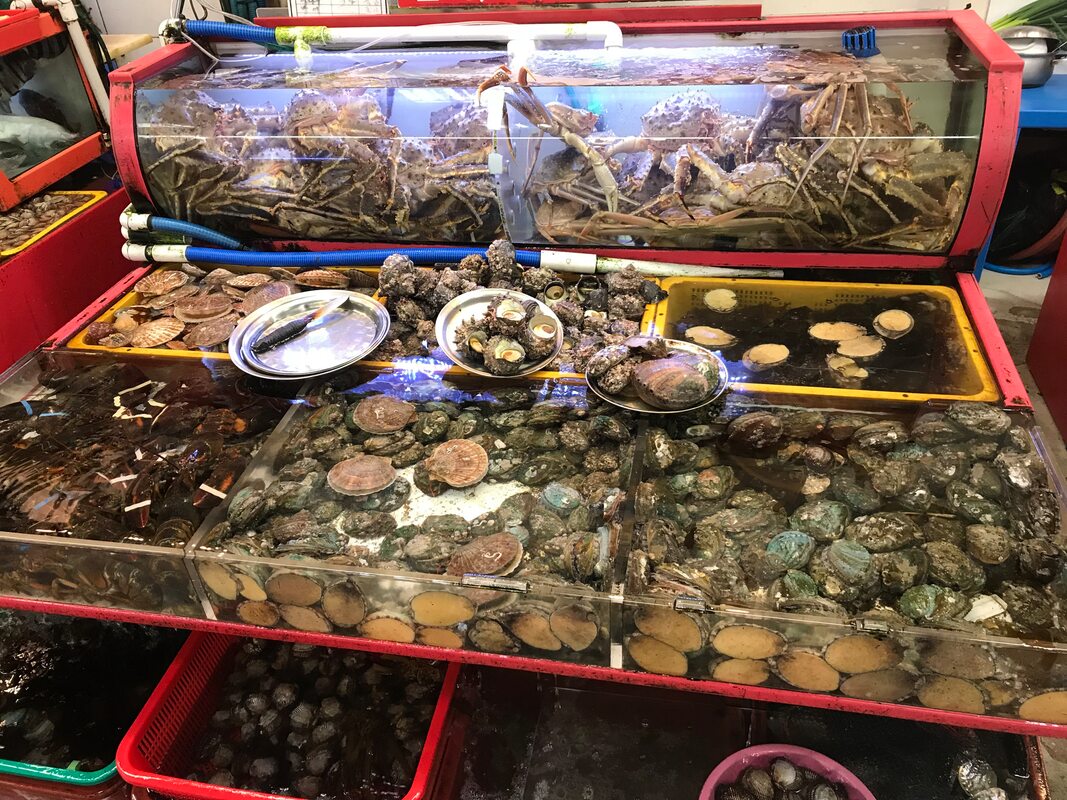
I look at my old pictures from in and around the Jagalchi fish market and can (almost) hark back my visceral disgust at seeing tanks of squirming ‘penis fish’, a species of marine worm consumed in some parts of East Asia. When I look at pictures of food I’ve ordered, I can conjure the loveliness of dwaji gukbap, a sought-(almost)-after Busan specialty composed of bone broth, pork, miso, soy sauce, rice wine, and many side dishes.
For as long as I could remember, I’ve struggled to figure out what goals and values I was supposed to cultivate… I felt like I was asleep for much of my life, and that, around the time of my Korea trip, I was slowly stirring into consciousness again and examining everything in orbit - my career, my hobbies, my personality - and reacting with a grinding despondency. But this post isn’t about how I resolved this struggle. There’s nearly nothing here. Just pixels and colour values.
Anyway, here’s a photo of Haeundae Beach on a crisp winter’s day, an urban beach in Busan that’s considered one of South Korea’s most famous strands…
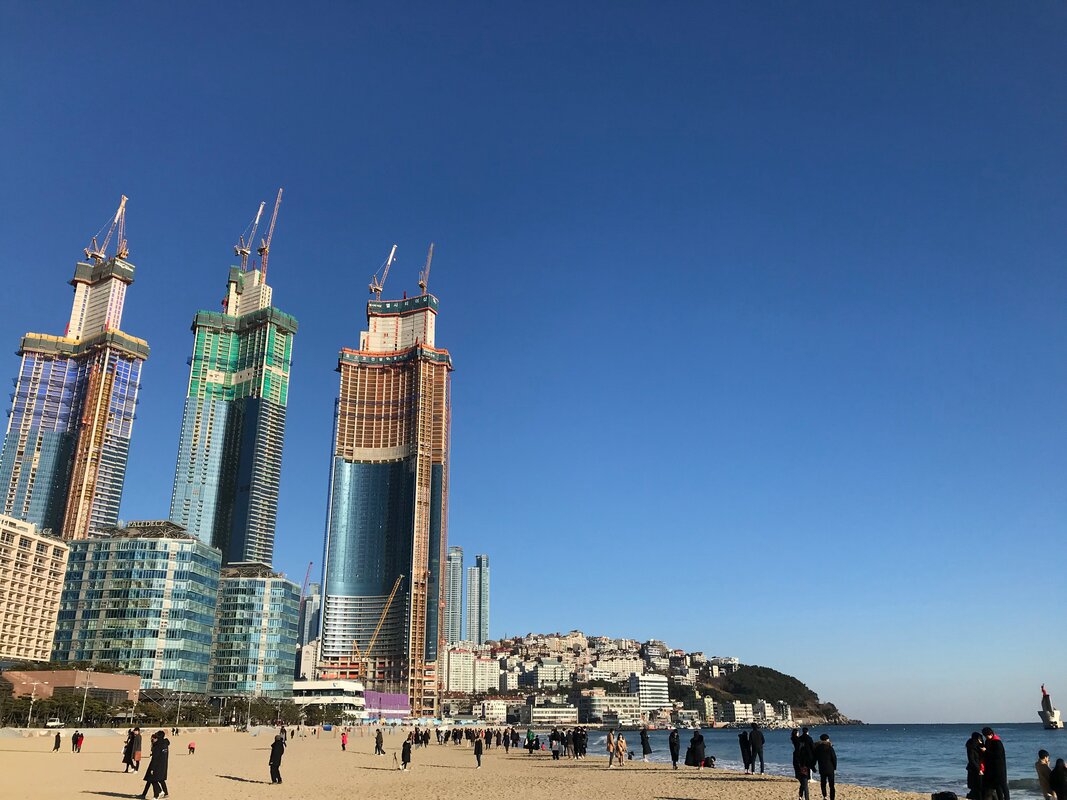
Last on the list of attractions featured in this post is Busan’s Gamcheon Culture Village. It presents itself as a slummy, labyrinthian Korean favela that’s been squeezed through a deranged pastel children’s book filter. Its origins were indeed one of hilly poverty. The village was built by the city administration during the 1920s and 30s as a way to relocate poor working families into an area secluded from the port, yet proximate enough to provide labour. What tourists see these days is the result of a 2009 effort by artists, students, and locals to regenerate the town with the power of gaudy paint cans.
And that’s kind of what it’s all about, isn’t it? Trying to cobble something together, even when its origins are suspect. Trying to dredge up something impoverished from the inner world and present it to the outer one. I will never set foot in Busan again after my psychological trials there, but these sentences you are reading right now are something I’ve finally made of it.
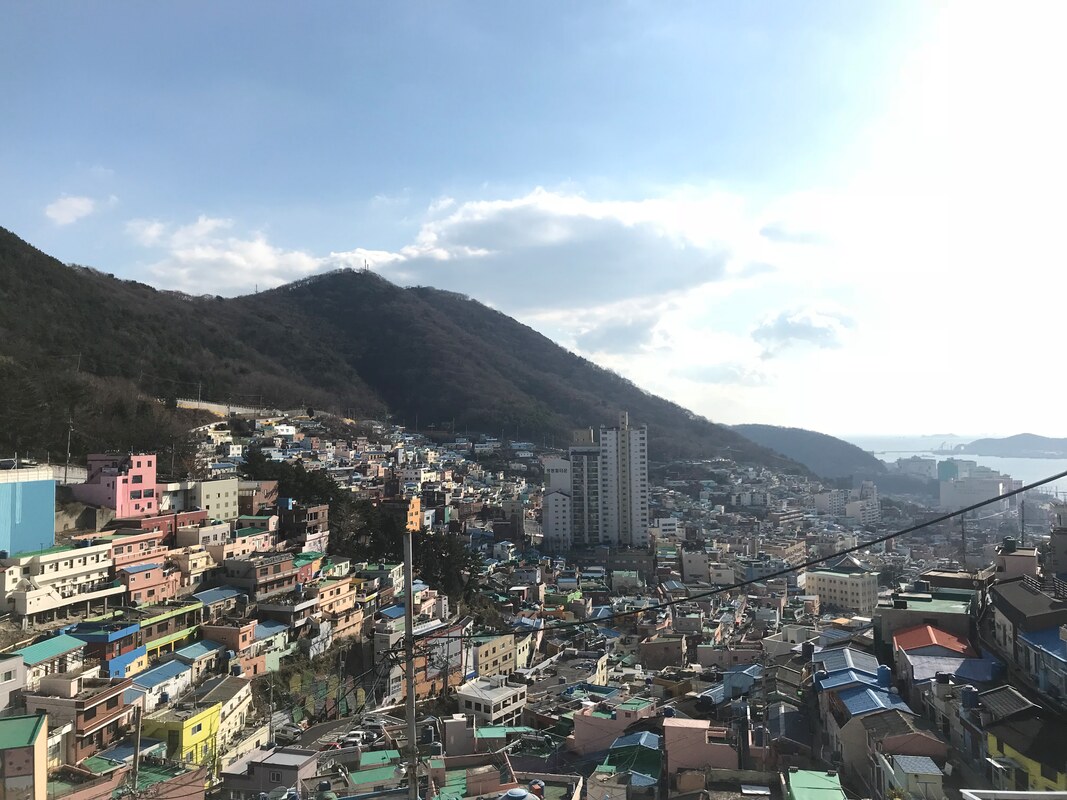
Gyeongju, South Korea (2017)
Posted 26 June 2020
Gyeongju (경주) — the ancient capital
Near the end of 2017, I visited the South Korean coastal city of Gyeongju for two days, following an itinerary guide for the country I found on the Internet. Beyond knowing a few cursory details about the place (I knew it had some ruins from an ancient kingdom), I’m not really sure why I ultimately decided to visit Gyeongju and see its attractions. I don’t think I was able to appreciate the city during my stay and I’m even willing to admit that, at the time, I felt like the visit was a “boring waste of time”.
Reflecting back on my experiences, I’m bothered by this attitude I held. Deep down, I know that an inner value can be gleaned from almost any place you visit. It all depends on your perceptiveness and willingness to learn. So here I am, going back to my old photographs, looking up history articles, and retracing my steps in an attempt to appreciate Gyeongju all over again. Call this a travelogue-cum-personal research project if you will. I’m rewiring my old travel memories here.
Silla: An introduction
Gyeongju is a relatively small city (pop: ~264,000) less than an hour’s bus ride from the bustling port city of Busan and it is a place steeped in deep, rich history. It was once the capital of Silla, an ancient and prosperous kingdom that began over two millennia ago (57 BC) and lasted for an extraordinarily long time — nearly 1,000 years (till 935 AD). Certainly longer than many empires and dynasties throughout human history.
In the beginning, Silla was the smallest and weakest of three states vying for control over the Korean Peninsula, but through cunning diplomacy and a close relationship with the powerful Tang Dynasty of China, it was able to crush its rivals and effectively dominate the peninsula. Over the centuries, Silla grew in wealth and power and developed a reputation for being a country of gold and silver.
These days, many of the major Silla related attractions can be found in the Gyeongju Historic Areas, designated by UNESCO as World Heritage Sites. Dubbed a “the museum without walls”, it remains a place that few international tourists visit.
The Royal Tumuli
It didn’t take long on my first day of exploration to stumble across the ancient burial mounds of Silla. They seemed to be almost everywhere — big, eerie, grassy mounds that contain the tombs of Silla royalty. A cluster of them can be found Tumuli Park in the centre of the old capital, only a short walk from the main train station. And it would make sense that there would be quite a few mounds around the place: over its long life, the kingdom saw a total of 56 monarchs, 3 of whom were queens — a rarity for ancient Asian kingdoms.
One of the most interesting tombs in the park (something I didn’t realise at the time when I photographed it) is the Tomb of King Michu, aka the “Tomb of the Bamboo Chief”. According to legend, King Michu was able to send a ghost army from beyond the grave to save Silla when external forces threatened it. After the ghosts killed the kingdom’s enemies, they disappeared, leaving behind only the bamboo leaves that had infested the enemy corpses. A rather macabre, botanical calling card.
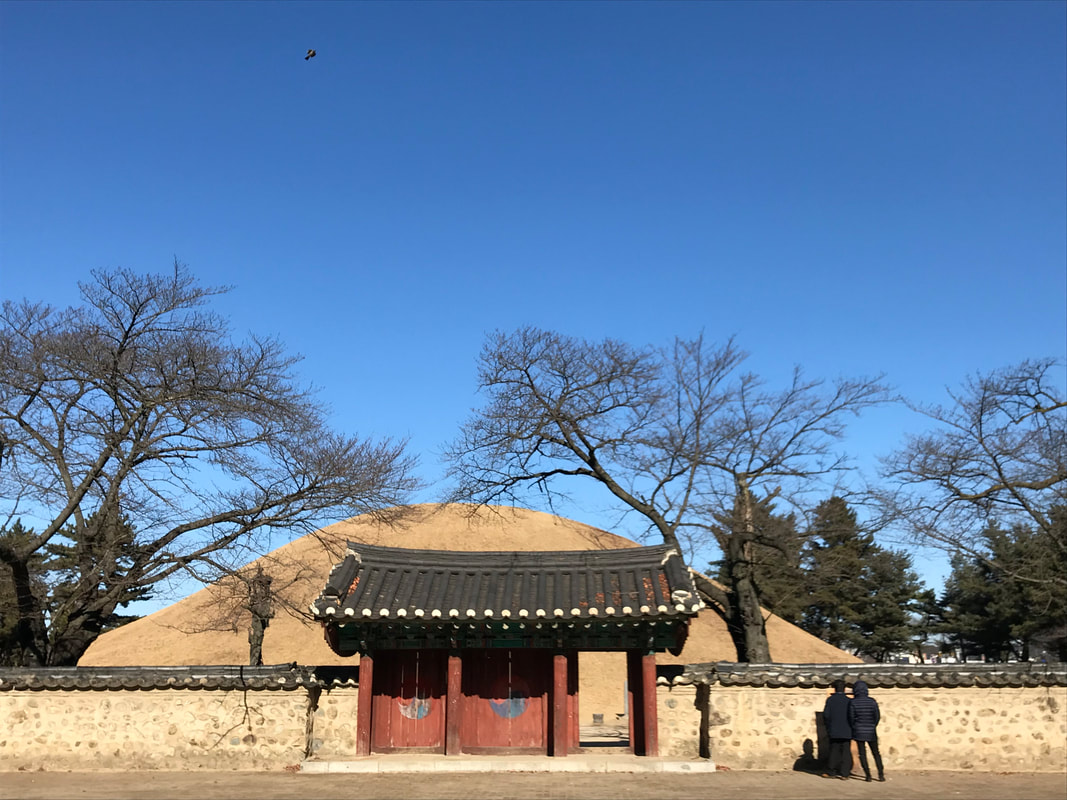
Cheomseongdae
Another site I didn’t fully understand at the time was Cheomseongdae Observatory, a 7th-century observatory tower. Located a short distance southeast from Tumuli Park, it is the oldest surviving astronomical observatory in East Asia and quite possibly in the whole world.
During peacetime, once all of Silla’s rivals on the peninsula were crushed, science and culture were able to flourish in the kingdom. It is believed that the tower served as the centrepiece for an entire scientific district in the city. The tower had both scientific astronomical purposes and more mystical astrological ones. Like many parts of the ancient world, the movement of the stars was used to guide all facets of life, from when to plant and harvest crops, to when to wage war and make alliances.
But like the rest of the ancient world, it was hardly a place of scientific reason as we would recognise today. Silla operated under a strict social hierarchy, a fantastical caste system known as the “Bone Rank System”. A person’s “bone rank” in Silla was determined by their hereditary bloodline, and this rank dictated everything in their lives: from how many servants they could have, what kind of saddle they could sit on, and even what types of utensil they could eat with. For instance, only women of the highest caste (the “sacred bone rank”) were permitted to wear hairpins enchased with gemstones or jade. Some scholars even believe that this stagnant, inefficient caste structure helped with Silla’s decline, despite the kingdom’s wealth and sophistication.
Museum relics
A little further southwest from here is the Gyeongju National Museum which holds many of the Silla relics uncovered from the old capital. One prime example sits right in the main courtyard of the museum: the Divine Bell of King Seongdeok, a massive bronze bell dating back to the 8th century. It has a grisly, if fanciful, origin story — supposedly the original versions of the giant bell refused to make a sound despite being remade over and over again. Eventually, a live baby was thrown into the molten bronze of the furnace in order to cast a bell that made the ‘perfect sound’.
The museum itself is filled with a range of fascinating artefacts. By tapping into the riches of the Silk Road, Silla was able to transform itself and become fabulously rich. Precious gold, silver and glassware from as far away as Persia has been found in Gyeongju and wealthy aristocrats were said to have owned thousands of slaves.
Muhammed al-Idrisi, an Arab medieval geographer and travel writer from Sicily, provides the very earliest known account of Korea to westerners. Writing in the 12th century, he stated that “travelers who visit Silla do not think of returning home. Gold is too common. Even the dog’s leash and the monkey’s collar are made of gold.” It was as though Korea was seen at the time as a mythical El Dorado of the East.
Dongung Palace and Wolji Pond
The ancient capital also once had numerous luxurious palace sites. Donggung Palace and Wolji Pond, an artificial pond on the palace grounds, represents one such place. Close to the Gyeongju National Museum and beautifully lit up at night, it was originally a secondary palace site used by Crown Prince and was also a banquet site for important national event and esteemed visitors.
After the fall of Silla, the site was abandoned and largely forgotten. It was finally restored to an inkling of its former glory in the 1970s under the Korean dictator President Park Chung-hee (many people forget that South Korea was not a continuous democracy until the 1980s). There was a political agenda behind it, obviously — President Park was keen on restoring and promoting historical sites, such as those in Gyeongju, as a means of inspiring cultural unity in the consciousness of the people.
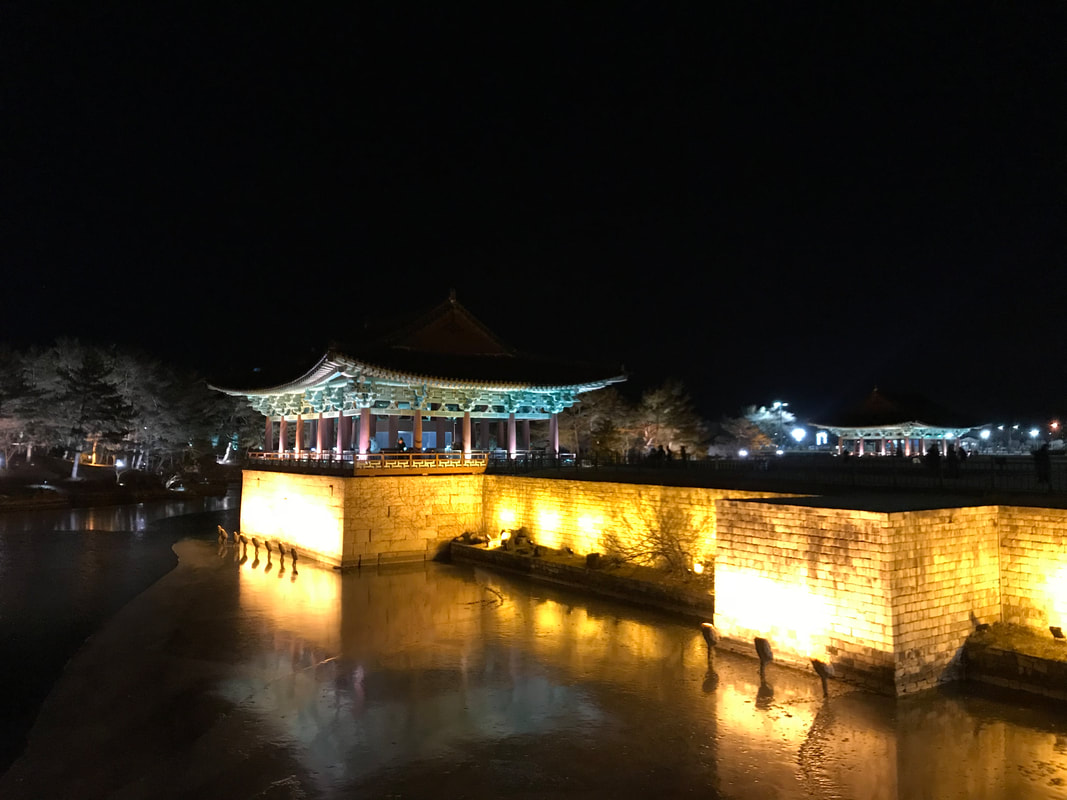
Bulguksa
The following day I took a bus out of the city centre and up the slopes of nearby Mount Toham to visit Bulguksa Temple, one of the largest Buddhist temples in South Korea. Built in the early 500s, it represents the flourishing and installation of Buddhism as the Silla state religion.
As with many exotic goods that found their way into the ancient capital, Buddhism was brought to Gyeongju from Central Asia via the Silk Road.
Bulguksa is one of the head temples the Jogye Order of traditional Korean Buddhism and has had a rough history. It was almost destroyed by the Japanese invasions in the late 1500s and lay largely in ruins for centuries after. Like with Dongung Palace and Wolji Pond, it was only properly restored in the 1970s under President Park Chung-hee.
Within the temple complex are two well-known stone pagodas: the Dabotap Pagoda and Seokgatap Pagoda, which stand opposite each other. Dagotap is meant to be feminine, dark, cold, and representative of the messy complexity of the physical world. In contrast, Seokgatap is intended to be masculine, bright, hot, and simplistic, symbolising the elegance of spiritual ascent.
Dagotap Seokgatap On the temple site, there is also a lucky golden pig that you are supposed to touch it for good luck. And in one part of Bulguksa, there is a courtyard full of stacked stones. The explanation goes that visitors can make (very Instagrammable) wishes by placing stones on the top of each other. If your stack doesn’t tumble down, then your wish will come true. So don’t go around knocking these over, unless you want to ruin everyone’s hopes and dreams…
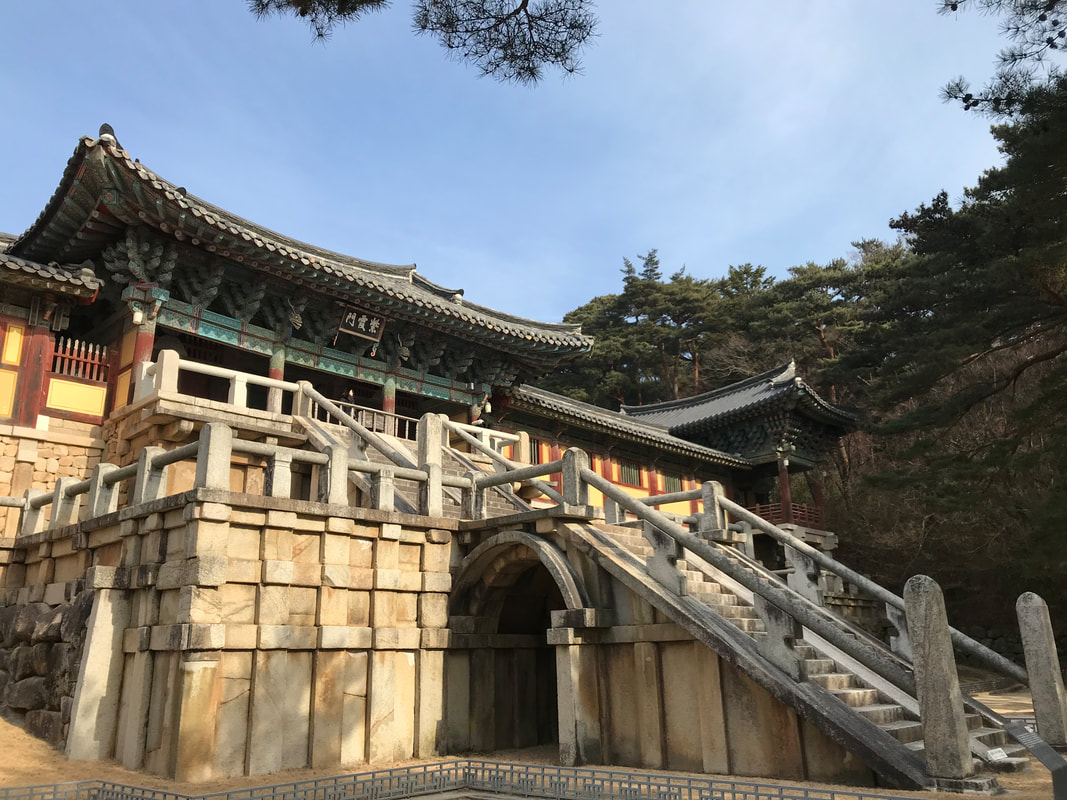
Seokguram
Hovering above Bulguksa on a mountain ridge is Seokguram, a secluded grotto that is known for its well crafted Buddhist sculptures. Trudging up there almost felt like a pilgrimage along a cold mountain track — and indeed, the journey up to the grotto from the foot of Mount Toham is supposed to symbolise the spiritual journey of Buddhists to Nirvana.
The highlight of the grotto is a Buddhist cave temple that was constructed in the 8th century. A large, elegant statue of the Buddha seated within a circular chamber beneath a stone dome (photography was discouraged). The statue faces east towards the coast in order to offer protection against seaborne invaders, especially from Japanese pirates that used to prowl the waters.
And this concludes my brief trip to Gyeongju: the venerable heart of an obscure and bygone kingdom in one small part of Asia. While I might not have been able to fully admire these sites at the time, I believe that this small writing and research exercise has helped me to relive, to recollect, and rethink my visit.
Jeonju, South Korea (2017)
Posted 28 June 2020
A day in Jeonju (전주시) — Korea’s culinary heart
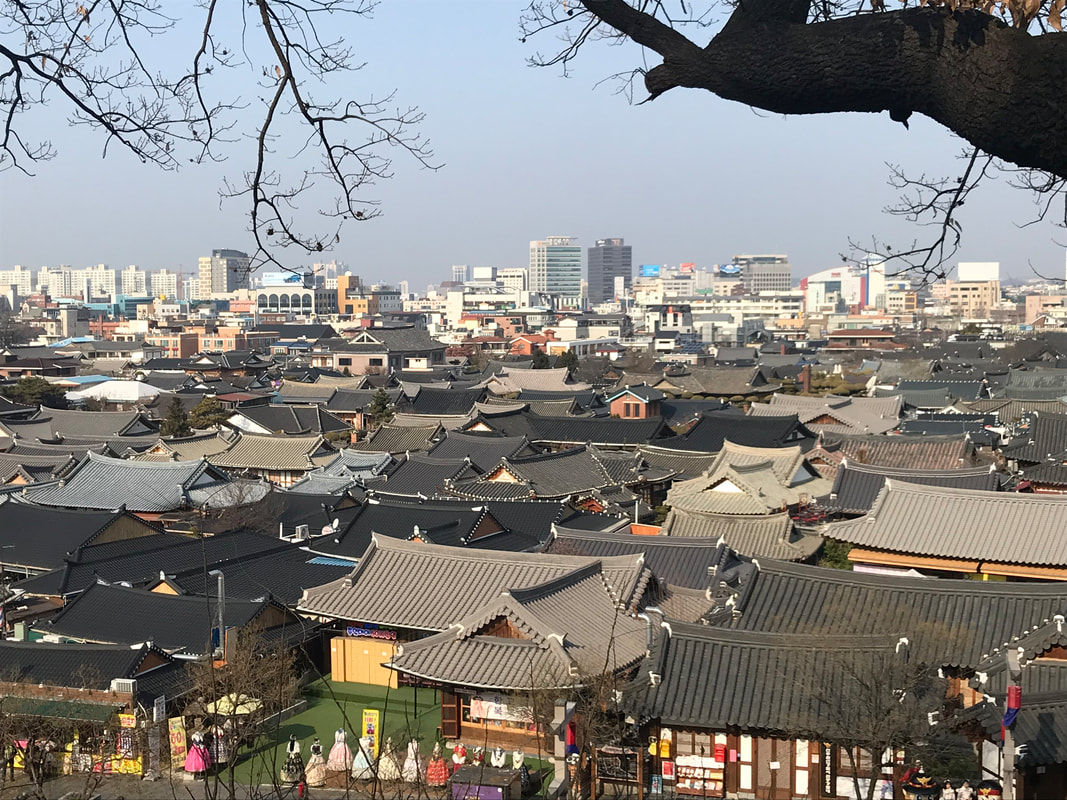
In late December 2017, I backpacked around South Korea in the freezing dead of winter. The trip started off with four days in Seoul, where I had an amazing time. But due to a combination of endless soju shots, greasy Korean barbecue dishes, and (most regrettably) prolonged exposure to the snowy weather, I caught a nasty cold by the end of my stay in the capital. Sneezing, coughing, shivering… I had it all. I was not even halfway into my Korea trip and already as sick as a dog.
This made Jeonju, my next destination, a tricky one to tackle. Jeonju is famous for its culinary arts! It’s a foodie pilgrimage site! Hell, UNESCO named it a “City of Gastronomy” for its high-quality traditional dishes. As a Korean food lover, it was a must visit. But alas, without functioning taste buds from my cold, I was going to have trouble making the most of my visit.
I arrived in Jeonju at night, after a three-hour bus ride from Seoul. As with much of South Korea, Jeonju is connected by an affordable and efficient nation-wide bus network. It was certainly a relief to leave the snows of Seoul for a city further south with crisp and clear (albeit still chilly) weather.
Jeonju (which means, aspirationally enough, “Perfect Region” in Korean) is a small city in the southeast of South Korea and is the provincial capital of the North Jeolla Province with a population of over 650,000 people. The region is known for its fertile agricultural lands, which is partly the reason why Jeonju has prided itself as having such a rich food culture.
After checking into my hostel, my next mission was simple: eat something. The most obvious dish was, of course, the bibimbap, a famous Korean rice dish consisting of an assortment of meats and vegetables. Jeonju is well-known for its local bibimbap variant, with its rice cooked in beef broth and local bean sprouts as a key ingredient. Jeonju goes as far as to claim that it’s the very birthplace of bibimbap itself (a historically dubious claim) and holds an annual Bibimbap Festival every October.
Anyway, I found a well-reviewed local restaurant and ordered my bibimbap. And. It. Was. Amazing. Just look at that wholesome bibimbap topped with a raw egg! And it comes with a beautiful spread of small side dishes (or “banchan”), including kimchi — everyone’s favourite spicy fermented vegetable dish.
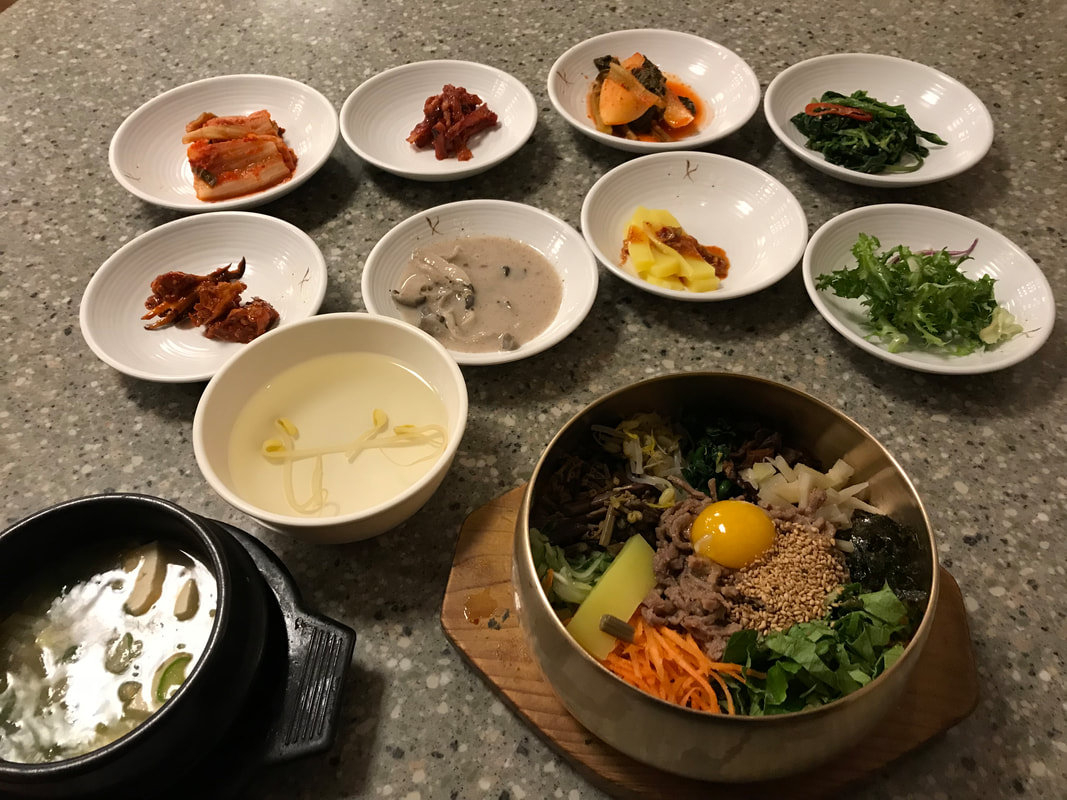
I’m hungry just looking at this photo.
Now, I’m certainly no sociologist, but I thought I’d share a cultural tidbit: due to the country’s collectivist culture, dining alone is seen as a bit of a taboo. Well, “taboo” is probably not the right way to put it. To the best of my outsider’s understanding, eating is a deeply social activity in Korea and would-be solo diners are often afraid of being seen by themselves in public as loners and outcasts. Many restaurants, or so I’ve been told, do not even cater to lone patrons.
This feeling helps explain a quirky Korean internet phenomenon known as “mukbang” where people live-stream themselves “performance eating” often very large and elaborate meals to thousands of viewers. In return for being watched, these webcam food performers receive messages and, most importantly, monetary tips from their viewers. At least part of the appeal of mukbang is that it supposedly taps into that ingrained cultural desire for eating to be a social occasion.
The staff stop working to tune into their favourite K-drama.
The next day, I explored the main tourist area of Jeonju, which starts from Pungnam Gate and spreads east towards the Jeonju Hanok Village, a very touristy cultural village known for its traditional Korean houses.
One landmark near Pungnam Gate is the Jeondong Catholic Cathedral. While it’s not aesthetically exceptional, Jeondong Cathedral is significant for historical and religious reasons. It’s built on the site of where many Korean Christians were executed at the turn of the 19th century for being seen as a threat to the state by the Confucian Joseon Dynasty.
These days, South Korea has no dominant religion, with Catholics, Buddhists, and Protestants making up only a minority of the population. The majority either have no religious affiliation or follow Korean shamanism, a polytheistic and animistic folk religion.
Directly across the road from the cathedral is the Gyeonggijeon Shrine, a well-known historical site originally built in 1410. The shrine holds the portrait of King Taejo, the founder and first ruler of the Joseon Dynasty, as well as the mortuary tablets of him and his wife. While he didn’t reign for long (only six years), he kicked off a dynastic kingdom that lasted approximately five centuries, from 1392 till 1897. Not a bad run, I reckon.
Overall, I found the shrine to be a flat, prosaic place, especially in the middle of winter with the bare trees and the bleak grounds. On the plus side, the shrine seemed to be visited entirely by domestic Korean tourists, which made for a nice change from the more globally popular sites in Seoul.
Afterwards, I made my way to the Jeonju Hanok Village, which has over 800 traditional Korean houses. I’m quite a fan of hanoks — I find them elegant and understated, with their low-lying profile and curving tiles roofs. While I think I preferred the Bukchon Hanok Village in Seoul (it was a graceful contrast from the frenetic, cosmopolitan pace of the rest of the city), the one in Jeonju makes for a pleasant visit. There are a large number of restaurants, guesthouses, workshops, gift shops, and teahouses to explore in this village.
On a hill overlooking the hanoks is an even quirkier place — the Jeonju Jaman Village. Once a poor hillside shantytown, it has since become the canvas of local artists who have filled it with colourful, eccentric, child-like street murals. It’s bright, wacky, and completely apart from the traditional, old-world aesthetics that Jeonju is more famous for.
But sadly, my health wasn’t up for anymore exploring. I retreated back to my hostel for the rest of the day and sat in my dorm room tucked in a blanket and enjoying the heated floors. Yes, that’s right — Korea has an ingenious underfloor heating system known as “Ondol” that is ubiquitous across the country. Traditionally, wood smoke was used to heat up stones underneath wooden floorboards, while these days hot water pipes are used to keep houses nice and toasty.
To make things (slightly) better, I had bought a box of choco-pies on the way back. While they were originally an American invention, they are very popular across East Asia and Jeonju is known for its handmade choco-pies. As it turns out, when you’re disgustingly sick, there’s nothing better than scarfing down these sickly snack cakes in your hostel.
The following day (after a long, sniffly sleep-in), I sought out another Jeonju specialty: Kongnamul Gukbap, a soybean sprout soup with rice that is used as a traditional Korean breakfast hangover remedy. And while I definitely did not have a hangover, my thinking was that it would hopefully help with my similar unpleasant ailments. While I can’t attest to its medicinal properties, it was a wonderfully hot and hearty breakfast to have on a cold morning.
I’d also like to make a shoutout to another Korean product that helped me with my illness recovery called Pan Cold A. It is a fairly cheap, over-the-counter medicine that consists of three little bottles of mysterious (non-English labelled) liquids per box and seems to be available in most 24-hour convenience stores in the country.
A quick Google revealed that Pan Cold A is made from a kitchen sink of ingredients, including a painkiller, a nasal decongestant, caffeine, an expectorant, and a cough suppressant. South Korea, like many East Asian countries, has a notorious workaholic culture where workers feel discouraged from taking sick leave. Hence, the market has stepped in and produced cheap, quick-fire medical elixirs like Pan Cold A in every corner store. That’s my theory, at least. Point is, after downing a whole pack of Pan Cold A each day for three days straight, I was definitely feeling like I was on the mend.
It’s frustrating to be sick while on your travels. Believe me, it’s happened to me many times. And while I don’t have much in the way of good general advice, I can certainly say that what I did in Jeonju didn’t hurt. You simply have to keep your chin up, take it slow, eat very well, and drink untranslated Korean medicines.
Art galleries of New York (2016)
Posted 27 October 2020
MoMA and the MET! Which one is better?
The answer is obviously the Museum of Modern Art (MoMA). Compared to the Metropolitan Museum of Art (the Met), MoMA is easier to navigate, has nicer staff (the ones working at the Met struck me as obnoxiously rude at times), and with a higher superb-artwork-to-floorspace ratio. The Met also suffers from what I call ‘Louvre Syndrome’: its hoard of treasurers are too sprawling and exhausting to peruse in any effective way. That said, both are exceptional art museums, with influential pieces from the world over.
The Museum of Modern Art
Located in Midtown Manhattan, on 53rd Street between Fifth and Sixth Avenues. MoMA boasts some truly marvellous pieces, including:
- Christina’s World by Andrew Wyeth, one of my favourite American paintings.
- One of van Gogh’s many portraits of the Postman Joseph Roulin.
- The Dream, a magnificent oil-on-canvas painting by the self-taught genius Henri Rousseau.
- The Bather, a striking Paul Cézanne painting.
- Vincent van Gogh’s globally acclaimed The Starry Night.
- Henri Matisse’s large and powerful painting The Dance (I).
- Some memorable and cryptic Giorgio de Chirico works.
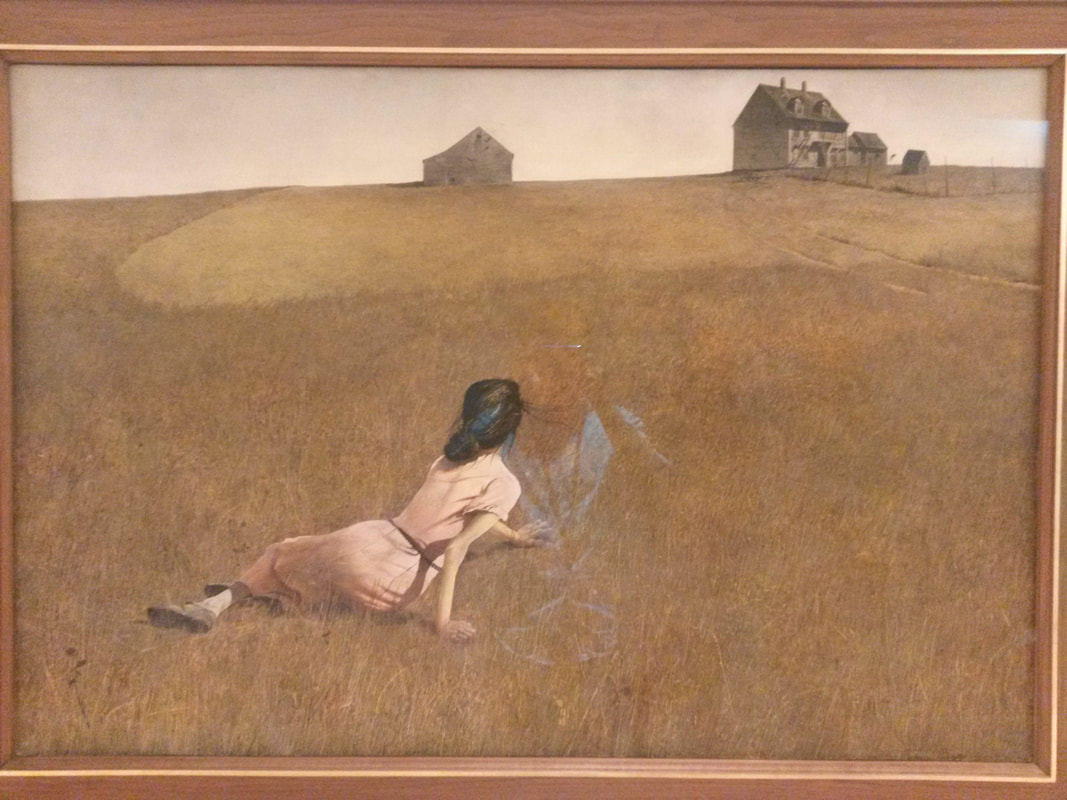
There is also Claude Monet’s monumental Reflections of Clouds on the Water-Lily Pond, the much pop-culture-referenced Salvador Dalí painting The Persistence of Memory, Picasso’s lively Three Musicians, and Jasper Johns’ hot wax painting Flag.
The Metropolitan Museum of Art
Located at 1000 Fifth Avenue in Manhattan’s Upper East Side. Despite my earlier criticisms of the Met, it houses my all-time favourite American artworks: America Today, a mural of ten canvas panels by Thomas Hart Benton. They provide a dizzying sense of American dynamism, industry, change, culture, and optimism in the 1920s. If you want a sense of what ‘made’ modern America so exceptional in the early decades of the twentieth century, then I insist that you should study this mural.
Other notable and fabulous works in the Met include:
- Ugolino and His Sons, a macabrely dramatic marble sculpture by Jean-Baptiste Carpeaux.
- Pablo Picasso’s Portrait of Gertrude Stein.
- Emanuel Leutze’s epic painting of Washington Crossing the Delaware.
- The Death of Socrates, a powerful piece of neoclassicism by the French master Jacques-Louis David.
- Self-Portrait with a Straw Hat by Vincent van Gogh, as well as one of his still lifes of sunflowers.
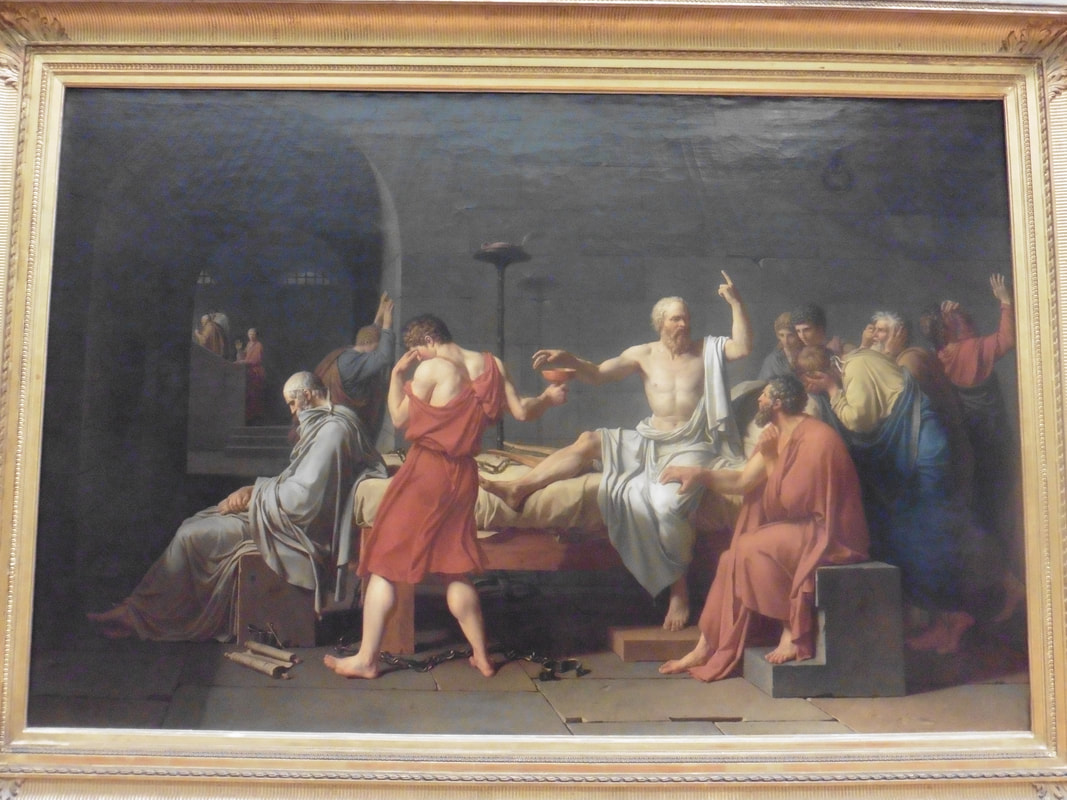
If you have to choose between a visit to either MoMA or the Met, my advice is simply this: stay a bit longer in New York City and see both! I promise you won’t regret it.
Art Institute of Chicago (2016)
Posted 25 October 2020
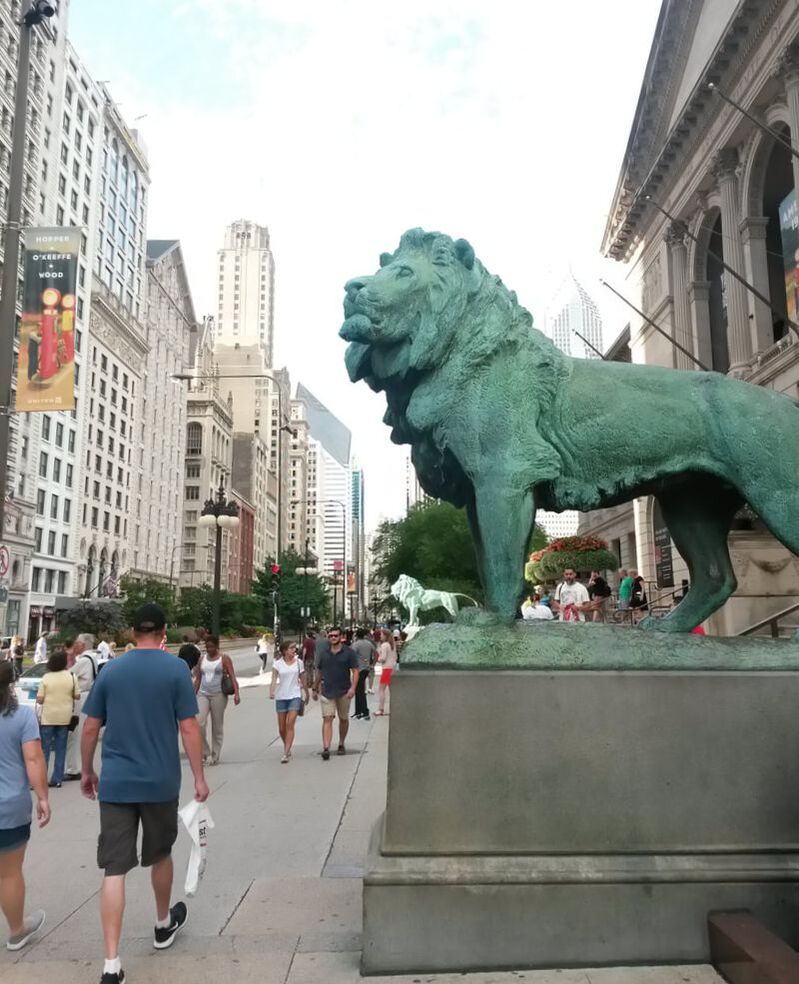
Founded in 1879, it is one of the oldest and grandest art museums in the US.
Thought of the day: O Edward Hopper, why are you so amazing?
The Art Institute of Chicago was one of my must-see stops on my journey from the West Coast to East Coast of America, via the ‘Windy City’ of Chicago (probably named after its political climate and inter-city rivalries as opposed to its actual weather). What a home to both American and international masterpieces!
Paris Street; Rainy Day by Gustave Caillebotte. A Sunday Afternoon on the Island of La Grande Jatte by Georges Seurat. A Vincent van Gogh self-portrait and one of his Bedroom in Arles paintings. Jules Breton’s The Song of the Lark. Jacques-Louis David’s Napoleon. Ivan Albright’s powerfully haunting That Which I Should Have Done I Did Not Do (The Door). And much, much more.
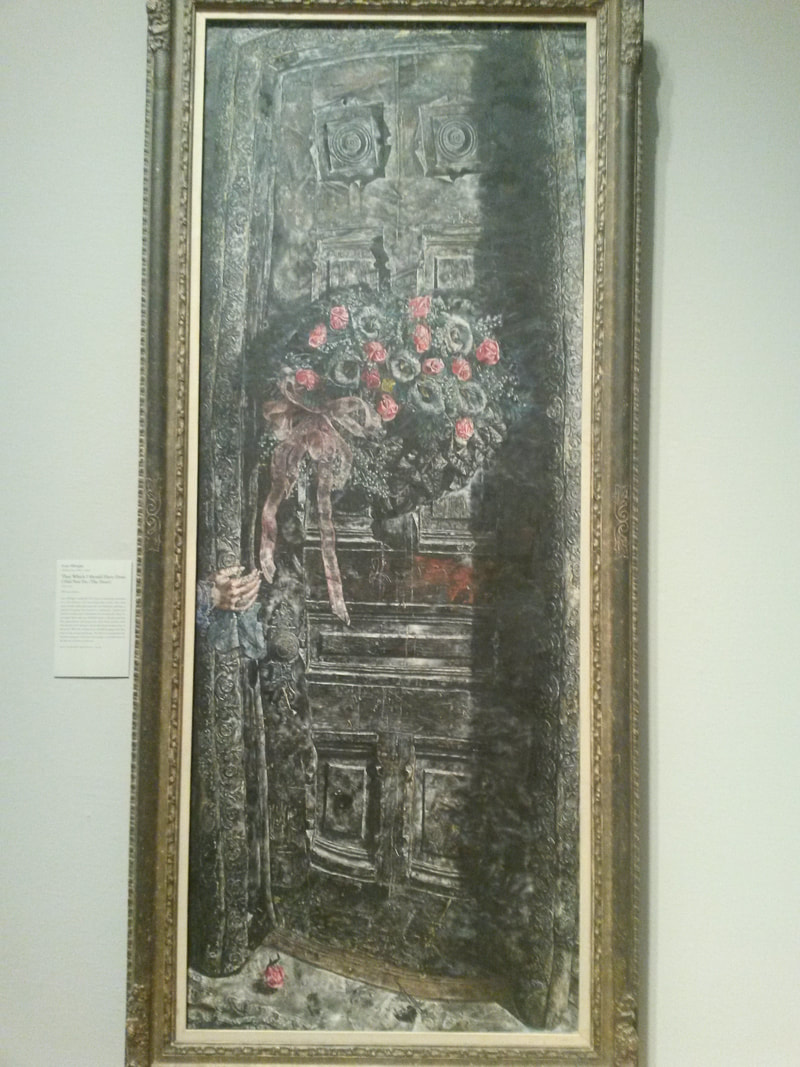
As mentioned above, there are some well-known paintings by the American realist painter Edward Hopper which perfectly capture the beautiful solitude and sad loneliness of modern life. I love his paintings and none is more resonant of this theme (or heavily parodied) as his famous 1942 painting Nighthawks.
Aside from that, there are also some wonderful pieces by American modernist Georgia O’Keeffe. There are Jackson Pollock paintings. And there is Pablo Picasso’s masterful The Old Guitarist.
There is African art. There is Asian art. And who can forget the iconic painting American Gothic by Grant Wood? Or René Magritte’s surrealist work Time Transfixed? Or how about Marc Chagall’s American Windows, a stained glass installation? I could go on and on, of course. Truly, it is a house of masterpieces!