Ming's Wanderings (part 1 of 3: 2020–2023)
Text from my old travel blog, Ming’s Wanderings, written between 2020 and 2023. Edited for clarity and for fun. Posts are ordered chronologically, most recent first. Original posting date is noted under each.
This is part 1 of 3.
Glasgow (August 2023)
Posted 30 September 2023
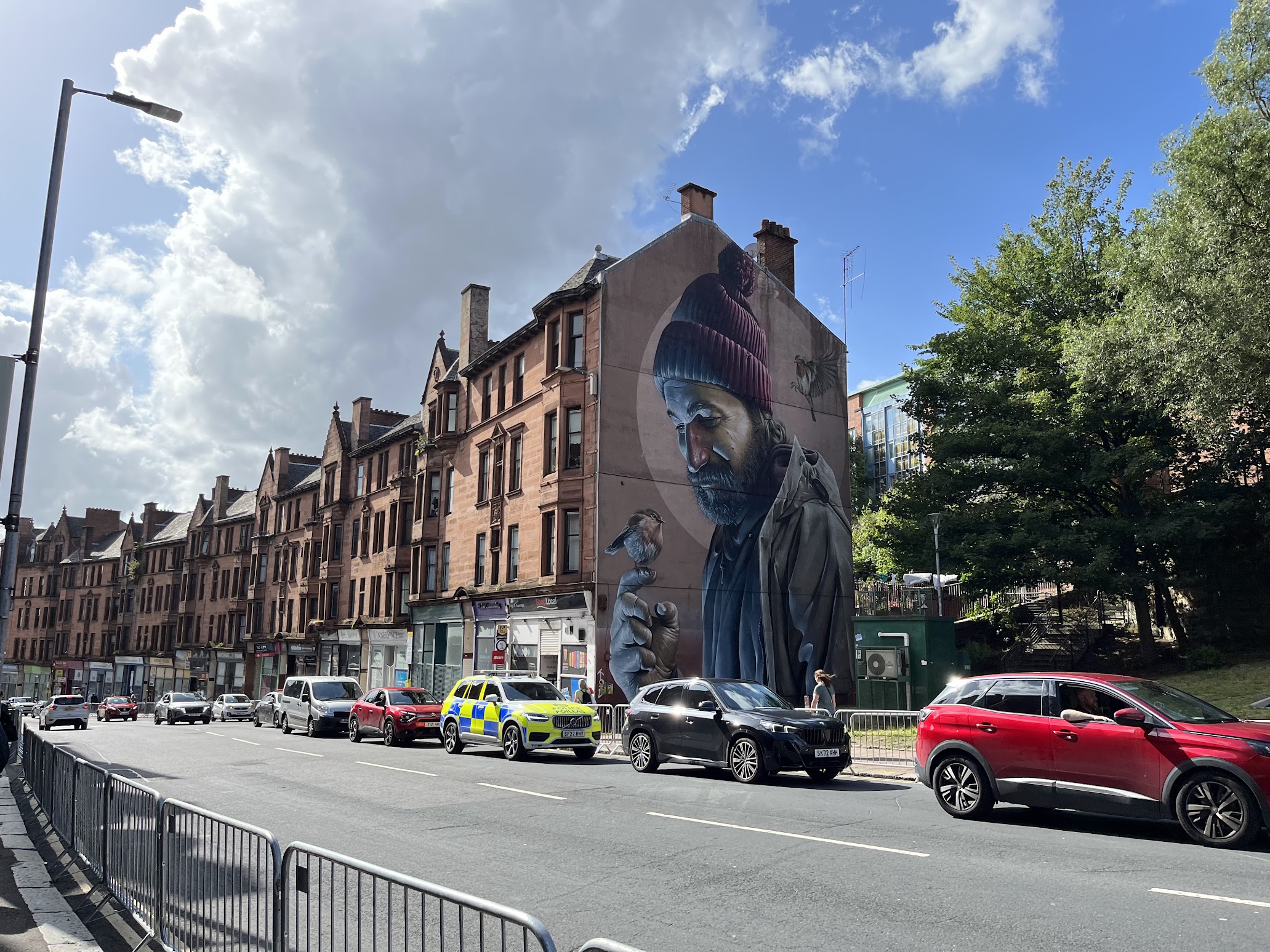
What the heck am I doing in Glasgow? I ate a spot of haggis, I rested in a cemetery, I got drunk at a Wetherspoons.
Pokhara (April, 2023)
Posted 10 June 2023
Resting up for a few days in the lakeside city of Pokhara after my tiring trek around the Annapurna Circuit. I ate pastries and drank hippie fruit juices, I stomped up to see the Peace Pagoda, I went to a short yoga retreat, and I thought and thought and thought about my life. And that’s all folks!
“I didn’t expect it to be so touristy… and strange,” admitted a person I was travelling with at the time. “It reminds me of Wanaka”, she said, having lived there in New Zealand for a while. I had to calmly agree.
Yucatán Peninsula (November 2022)
Posted 7 March 2023
You start in Playa del Carmen on the Caribbean coast in the wonderfully named state of Quintana Roo (because, of course, you are determined to avoid Cancún at all costs). Like so much around here, it was once a small fishing village that quickly became another satellite town of the American tourism empire. The air is hot, the sun is fading. You walk down La Quinta Avenida for cheap “tequila”, pharmacies advertising viagra and oral steroids, fast food restaurants, and touts galore.
You try the cochinita pibil, or Yucatan-style pulled pork, and decide that it’s the only ingestible product this particular part of Mexico specialises in. And what a shame! Many cuisines do pulled pork much better, you muse.
You take a tour of the Tulum Archaeological Zone. It’s picturesque, what with the morose iguanas and the pristine ocean backdrop. But it’s sizzling at midday. You listen to your tour guide drone on about the intricately carved ruins but sadly don’t catch much. It’s so sweltering. The Mayans were the best thing to ever rock up to the Yucatan Peninsula. Until they weren’t. That’s all you manage to pick up. It’s very, very warm and you need to lie down.
But hurrah, salvation is indeed at hand. Your tour visits some private cenotes, natural sinkholes that are formed from collapsed limestone. You dip into the cold crystal-clear water and your mind goes momentarily blank. A bat flies overhead and you think about how the coronavirus pandemic, which ruined all travel plans of yesteryears, was like a bad dream, one that happened a lifetime ago.
Another day passes and you visit another Mesoamerican marvel. Chichén Itzá ! Once the greatest city in the Mayan world, it was abandoned to the savage overgrowths of time until it was rediscovered by Spanish explorers stomping through the rainforest in the 16th century.
You stare at the iconic Temple of Kukulcán, so iconic that you thought it would be overrated. Overrated in that way that any over-embarked, over-photographed place would be. The Eiffel Tower… The Colosseum… Those other pyramids in Egypt…
But no, it is genuinely impressive. A Yucatec castle of fierce grandeur. You enjoy strolling around the site, daydreaming about the majestic and sophisticated brutality of such a civilisation that build these stone structures and spilt so much blood atop them. A civilisation not that unlike your own, only less depressing.
You stare into the vividly green maw of the Sacred Cenote at Chichén Itzá . That’s what the name of this place is: “at the mouth of the well of the Itza”. And it was in this well that these god-fearing people threw in warriors, maidens, and children; dropped in ceramics, jade, and gold. Such a hungry, infernal mouth.
As with your Tulum tour, this tour ends with a visit to a cenote. This one is more touristy, more resorty, and yet somehow more impressive. The water is cool and as you float with your head gazing up out of the limestone window, with its jungle drapes, into the sky, you think everything is going to be alright.
You end your days in the Yucatán Peninsula on the island of Cozumel. You drink cocktails, you scuba dive the coral reefs, and you bicycle up and down its lazy streets. Such pleasure. You think you are happy. You think your life is like a balloon, that your heart, your mind, your soul are like spheres of helium, sealed and secure and ascendant after such a successful journey to Mexico.
But you don’t realise that you are utterly mistaken. You don’t realise that when you return to Australia your life is going to change forever. That you’re going to break something both within and without. That things are never going to be the same again.
Guanajuato (October 2022)
Posted 5 February 2023
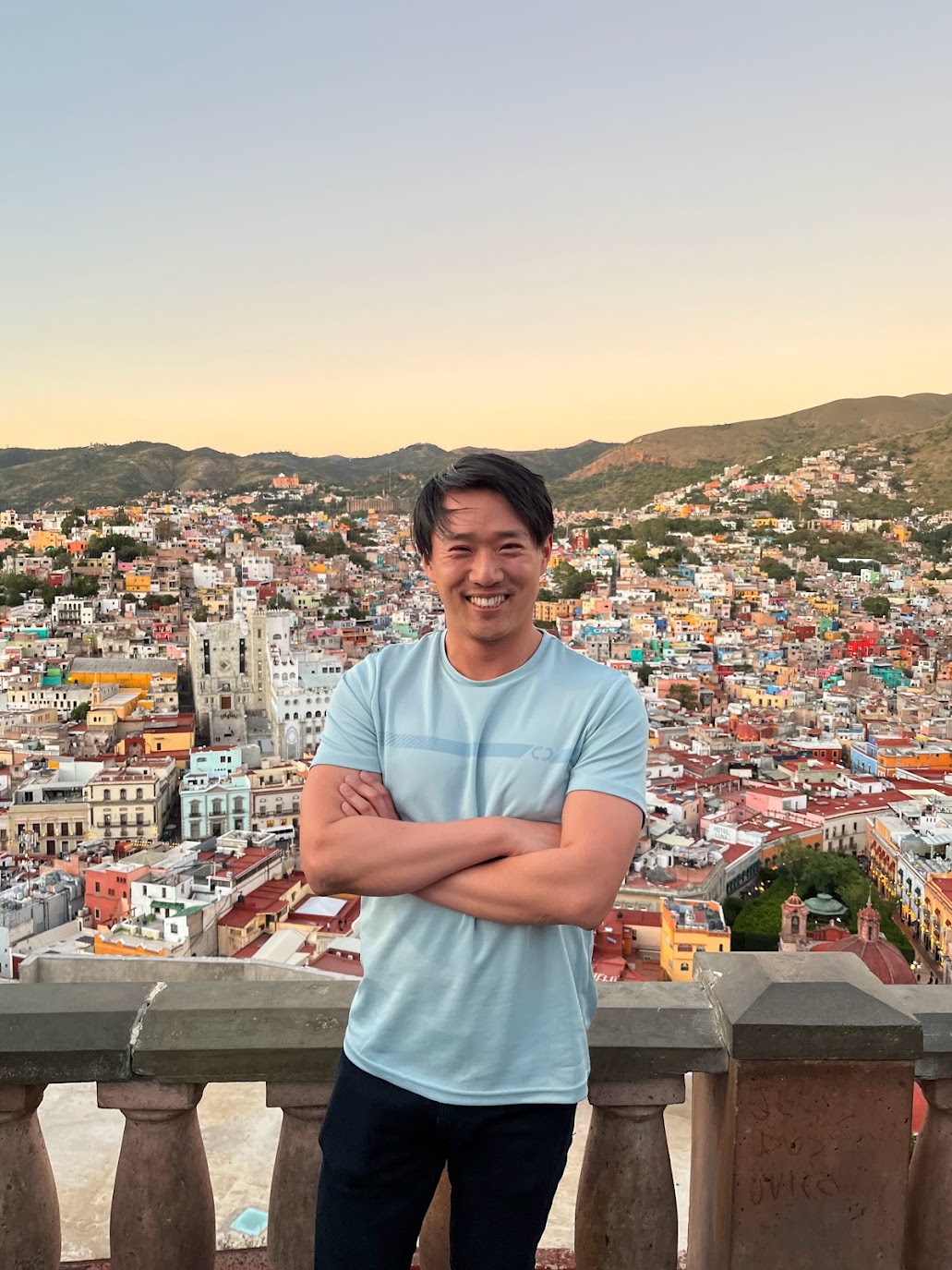
Welcome to the pleasant southern European city of… Guanajuato, Central Mexico. A mining town turned university city and cultural precinct. Although I did not perform my own survey, the Internet tells me that Mexicans consider it one of the most beautiful in the country. I believe it.
I mean… just look at this town! It’s genuinely a gorgeous place and vastly superior to neighbouring San Miguel de Allende, a popular and comfortable destination for westerners that I was a bit underwhelmed by. Oddly enough, it reminded me of the Gamcheon Culture Village in Busan (colourful, hilly, working-class roots), only it’s not a soulless tourist trap.
I didn’t know until I arrived, but the town was hosting a festival dedicated to Cervantes (the ‘Don Quixote’ guy). There were musicians everywhere and at night the local university students dressed up in traditional outfits and stomped around the back alleys playing regional folk songs as part of a walking tour. It was dreamy.
Obligatory food notes!
- Enchiladas mineras. Guanajuato’s answer to enchiladas. Hearty, protein-packed and carb-rich fuel for real men after a hard day down in the mines (which is its actual traditional origins). Verdict: I dig it. No pun intended.
- Gordita. Masa stuffed with anything you want, really. Mexican street food at its most primal. Verdict: it means “chubby” in Spanish. Heh.
- Tacos al vapor. Oily, steamed tacos. Verdict: worth a try, but I prefer regular tacos and regular food poisoning risks.
- Chilaquiles. Scraps of fried corn tortillas in sloppy sauce. Verdict: good for hangovers, jet lag, and general late morning hunger pangs. At least, that’s what a friend told me.
- Guacamaya. An epic torta from Léon composed of pork rinds, avocado, and very spicy salsa. Verdict: loved it, hurt my mouth to eat it, loved it.
- I also, on a whim, strolled into a hole-in-the-wall cantina that exclusively served the local hombres. I drank beer, some sort of tequila-like liquid out of a plastic jug, spoke bad Spanish, and witnessed a man peeing into a urinal that was in the corner. It was a wild experience.
Momento mori
One of the highlights of Guanajuato is the mummy museum. It contains corpses that were removed from the local cemetery because their families couldn’t keep up with the graveyard rent. And since the local climate preserved their bodies so well, their final resting place ended up being a glass cabinet for morbid visitors like yours truly. They even had a mummified foetus and a woman who had been accidentally buried alive. Grisly stuff.
I also took a stroll around the nearby cemetery, which had a pleasant view of the surrounding city. There’s something to be said about the cultural understandings that can be gleaned from visiting foreign graveyards and necropolises.
The takeaway? Momento mori, I guess. Recall that even Caesar, during his triumphs through Rome, had a slave behind him on his chariot whispering “remember you will die”.
There was one thing I didn’t like about Guanajuato, mind you. Bloody church bells booming away at seven in the morning. Many communities in Latin America are turning away from their Catholic roots towards evangelical Christianity and this will likely result in all shades of societal and economic disruptions. But all I care about is the following — will this demographic trend stop the damn bells?
But O! Guanajuato, I do jest, how can I dislike you? It’s the photographer’s, the roamer’s, el explorador’s dream…
Hobart, Tasmania
Posted 13 August 2022
Van Diemen’s Land. Battery point.
Rising up on the same mattress in different years;
cool and brisk and subdued
as the haft-end of the earth ought to be.
Here be gull, that be sea-star,
this be fish conjoined to chip.
Sun’s been stretched, as is the blue,
thin — thin dashed — like fading boat trails in the upper atmosphere.
A market. A Saturday Salamanca in the heady, overpriced overcast.
Clatter, oyster shell. Tremble, tarpaulin.
A perfect landing;
cleaner than beach stone.
Cleaner than every footnote this land ever uttered,
ever rasped or guttered.
Look forward, land,
march and march from colonies of blood. (forget, forget)
Mount Wellington. A day hike,
an aural hike of scramble and scritch and swish and snap,
up kunanyi, struggle and up:
scrunch hunch and crunch! Crunch!
to end in sublime laziness, or decadence,
with cheese atop the dolerite pipes,
nipaluna — with Hobart at my feet —
crisp and wide and longing like the spade-end of the world.
MONA – The Museum of Old and New Art
Posted 1 August 2022
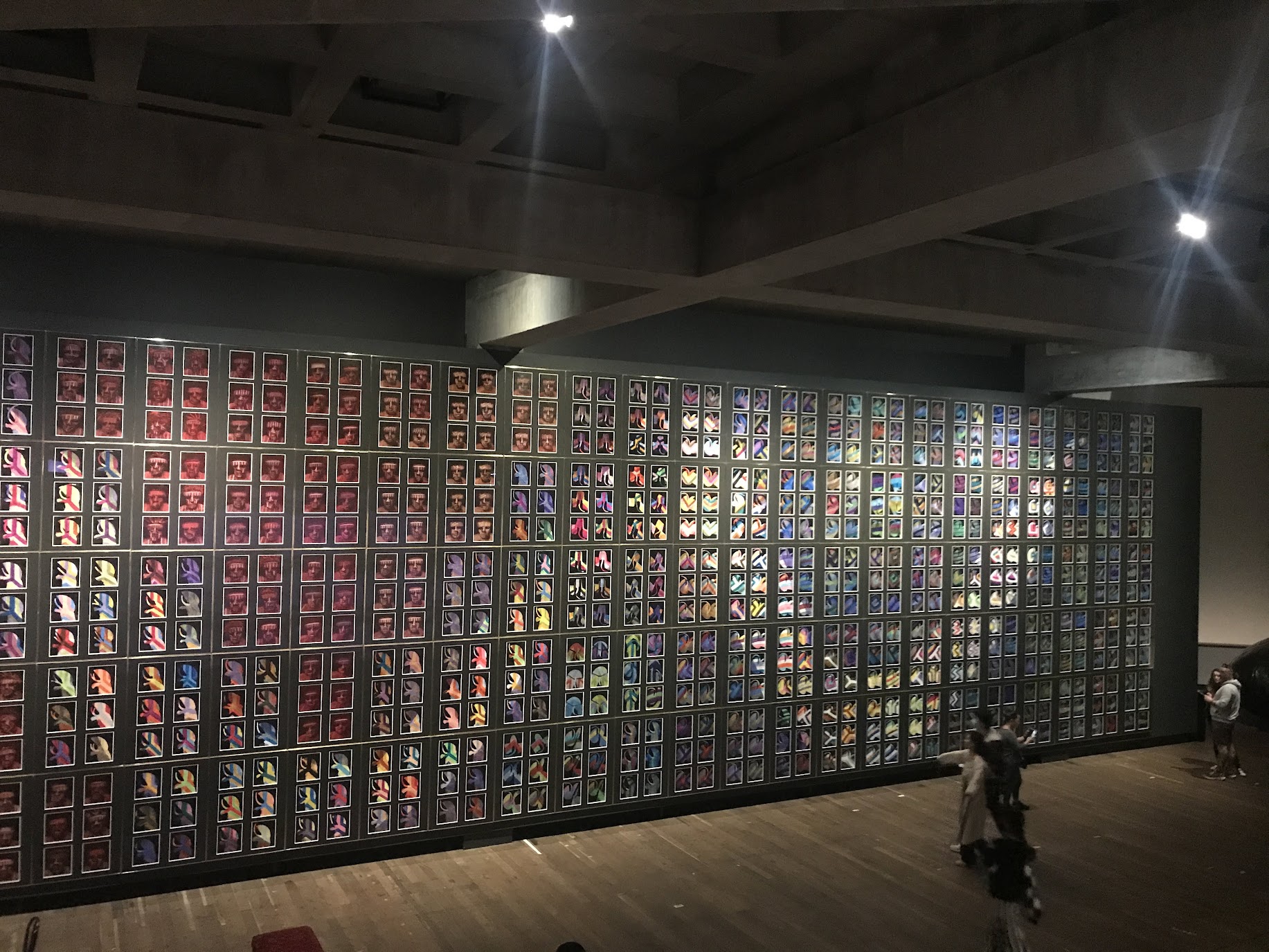
‘Snake’ by Sidney Nolan
I like art. I like weird art. MONA has weird art. I like MONA.
MONA is in Hobart. Hobart is in Tasmania. Tasmania is in Australia. They have gambling in Australia. Some people made lots of money by gambling. David Walsh made lots of money by gambling. David Walsh is from Hobart in Tasmania. David Walsh used his money to make MONA in Hobart in Tasmania.
You can take a ferry to get to MONA. You can sit on sheep on the ferry. Sheep are called Ovis aries. There are lots of pretty views on the way there. You can have a wine on the ferry. I had an overpriced glass of wine. Wine comes from the flowering plant genus Vitis.
I saw a travelling exhibition on my first visit. The travelling exhibit showcased outsider art. Outsider art is sometimes called It is made by outsider artists. Outsider artists are self-taught. They are outside the art brut. conventional art world. They just want to make art. Outsider art can sometimes be fantastic.
There was aeroplane art. There was firearm art. There was taxidermy art. There was mystical art. There was undefinable art. There was everything art.
They even had art by Henry Darger. Henry Darger was a hospital janitor. But Henry Darger was also an artist. Henry Darger wrote a 15,000+ page fantasy book with hundreds of drawings. Henry Darger’s drawings are childish and violent and outlandish. Henry Darger’s art was only discovered by his landlords after his death.
Seriously. Look up Henry Darger.
MONA proper has strong themes. MONA proper is all about sex and death. Sex is all about carnal knowledge. Death is all about the end of knowledge.
I saw a machine make poop. That was funny.
I also saw a man with a tattoo on his back. The man with a tattoo on his back is Tim Steiner. Tim Steiner is a human artwork. Tim Steiner spends his life sitting in galleries displaying the tattoo on his back. When Tim Steiner dies his skin will be framed.
It was a privilege to have seen him while he is alive.
I saw phallic stuff. And I saw yonic stuff. I saw metallic stuff. And I saw bread stuff. I saw Asian stuff. And I saw occidental stuff. I saw architectural stuff. And I saw dynamic stuff. There was loud stuff. And there was immature stuff. There was confronting stuff. And there was political stuff.
Stuff is from the Old French . Estoffe means quilted material, provisions, stock. Estoffe is from the estoffe word Estoffer means to equip, to stock. Estoffer is from the Old German . Stopfon means to estoffer. stopfon plug, to stuff.
Sometimes I feel sad. Sometimes I feel bored. Sometimes I feel tired. Sometimes when I feel sad and bored and tired I will also look at art. Sometimes this makes me feel better. Sometimes this happens even when the art is bizarre or sexual or disturbing or immature. Sometimes this makes me feel more alive.
You should like art. You should like weird art. MONA has weird art. You should like MONA.
Museo Nacional de Antropología (2022)
Posted 9 December 2022
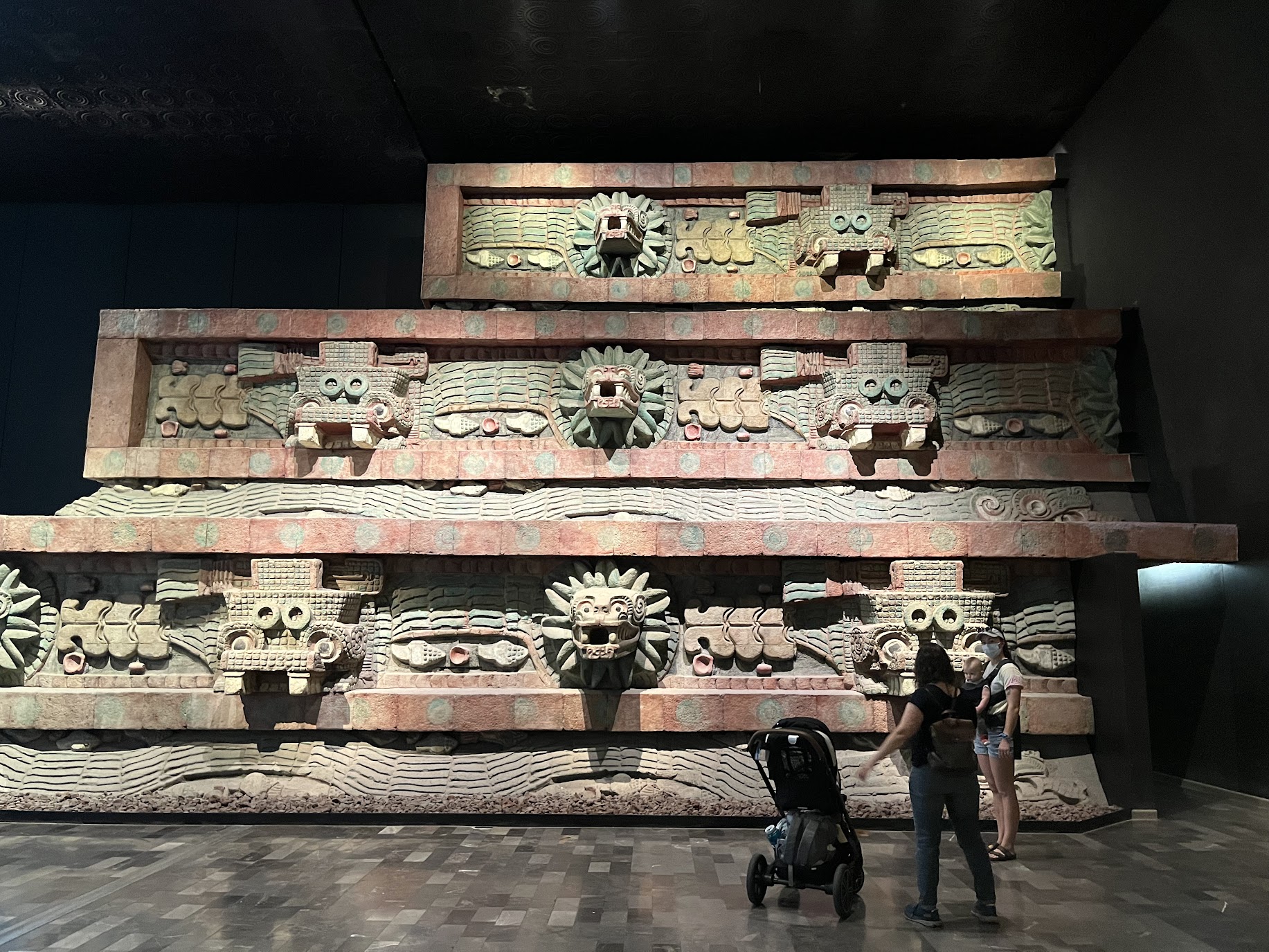
Anthropology is cancelled! I hate it! I’m done. The Museo Nacional De Antropología was simply too huge to explore in a single day. Want to casually learn about the Aztecs, Mayans, and Olmecs (not to mention numerous other Mesoamerican civilisations) in a couple of hours?
Forget it. Either your brain or your feet will break first. I was even openly relieved that half of the (very lovely) ethnography galleries dedicated to modern-day Mexican Indigenous groups were closed for renovation. Terrible, I know.
But in all seriousness, this is one impressive museo. Truth be told, I don’t even think I go to museums for specific content half the time. I enjoy the layout, aesthetics, and curation-as-artform of a good museum above all.
And I’m intrigued by how museums can serve as vehicles for the mindset of a society’s intellectual and cultural elite. This one certainly ticked all the boxes.
Things I learnt about the cruelly civilised Mesoamerican universe from this museum:
I learnt that we are all skeletons with skulls. I learnt that we are all ordered yet twisted material. I learnt that we are fundamentally carnal, diseased, sensual animals. I learnt that even through spirituality, even through centuries of introspection and the hammering of priests, that is all it still comes to.
I learnt that we’re nerves, connected to blood vessels, connected to sinew, connected to genitals eyeballs intestines teeth brains fingernails hearts livers lungs semen lips kidneys eardrums I learnt that our genteel ways have nothing on the brutality of nature and the needs of the insatiable Gods I learnt that all this needs to go under the knife, the glorious beautiful sacred sacrificial knife and that our holy repugnant stunning transient bodies need to be SHATTERED and BUTCHERED and SAVAGED OPEN so that they, so that you, so that I, so that we can all be reassembled anew anew ANEW for the PROPER ORDER OF THE BLEEDING COSMOS (Also, I also learnt that the big Olmec heads, Aztec sun stone, and spooky statues are pretty rad to look at.)
Puebla and Cholula (2022)
Posted 7 January 2023
Cruising through Puebla around Día de Muertos. A strange feeling trembles.
I arrived in Puebla by bus from Mexico City on the 1st of November. It was sultry, it was thronging, and it was appropriately festive in that vibrant Mexican way that captures the soul. Traditionally, November 1st honours children who have died while November 2nd is Day of the Dead “proper” and honours everyone else who has passed on.
However, as I strolled around beautiful Puebla, I noticed tension in people’s faces. I mean it. There was a tightness on its streets. It didn’t feel good. What was causing this quivering mood? The general weariness of holidaymakers? Are the crowds getting irritated by the crowds? Or was the thinning between the borders of this life and the beyond, despite the celebratory attitudes that surround Día de Muertos, affecting everyone?
Stop it. Turn to something else. Here is a churchy snap from Puebla.
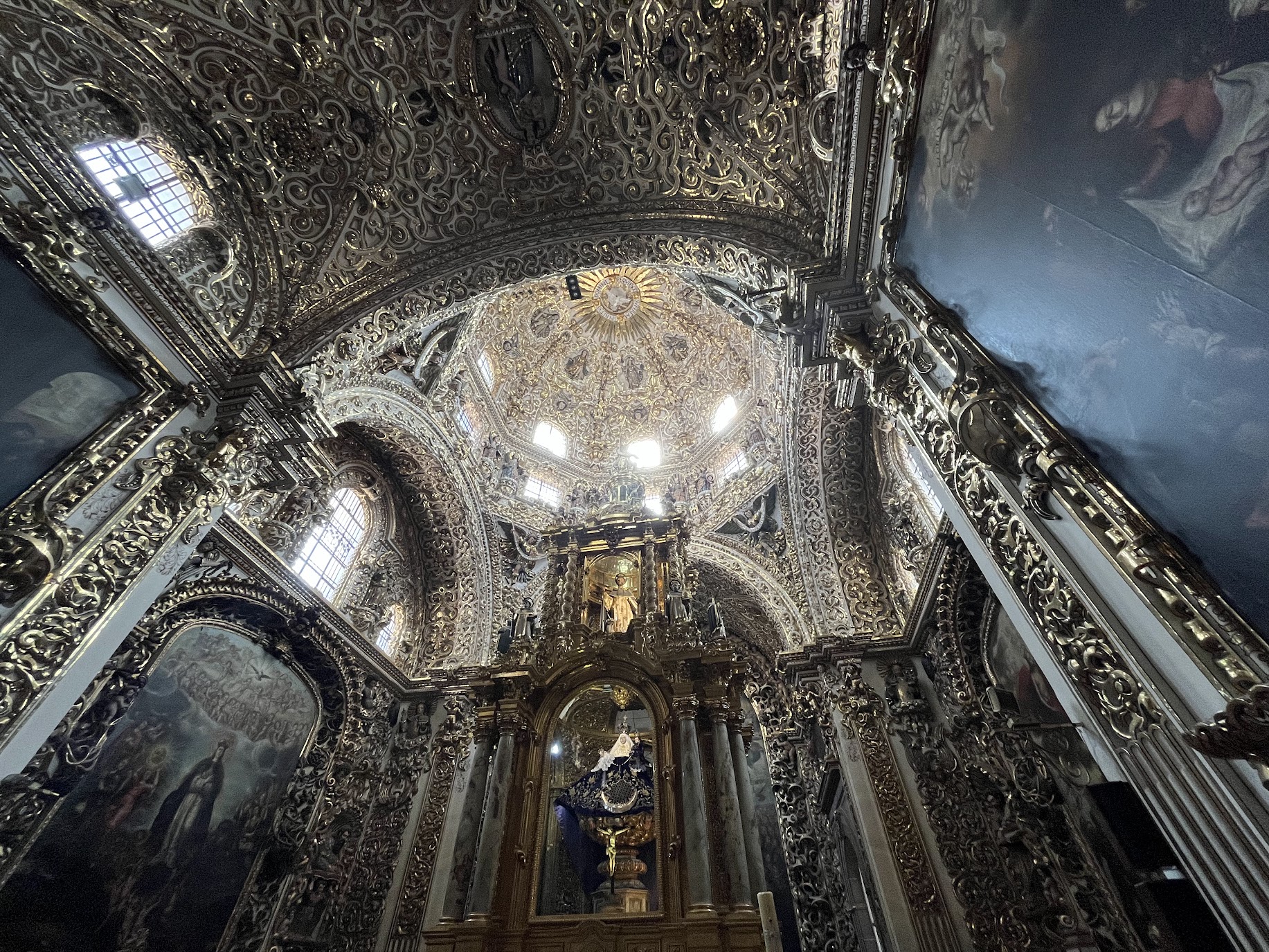
Enough of sniffing out omens. I came to Puebla for its beautiful architecture, delectable cuisine, and inspired religious sights. In fact, I’m confident that no atheist under the holy light of the heavens enjoys visiting churches as much as I do!
And the highlight of highlights of my ecclesiastical efforts was visiting the extraordinarily baroque and intricately gold-leafed Chapel of the Virgen del Rosario.
But not even this decadence beyond decadence could hide it. Not even blemishless gold could gild over the fact that something felt off, however imperceptible. Something was disturbed.
Hush now. Show a photo of Cholula.
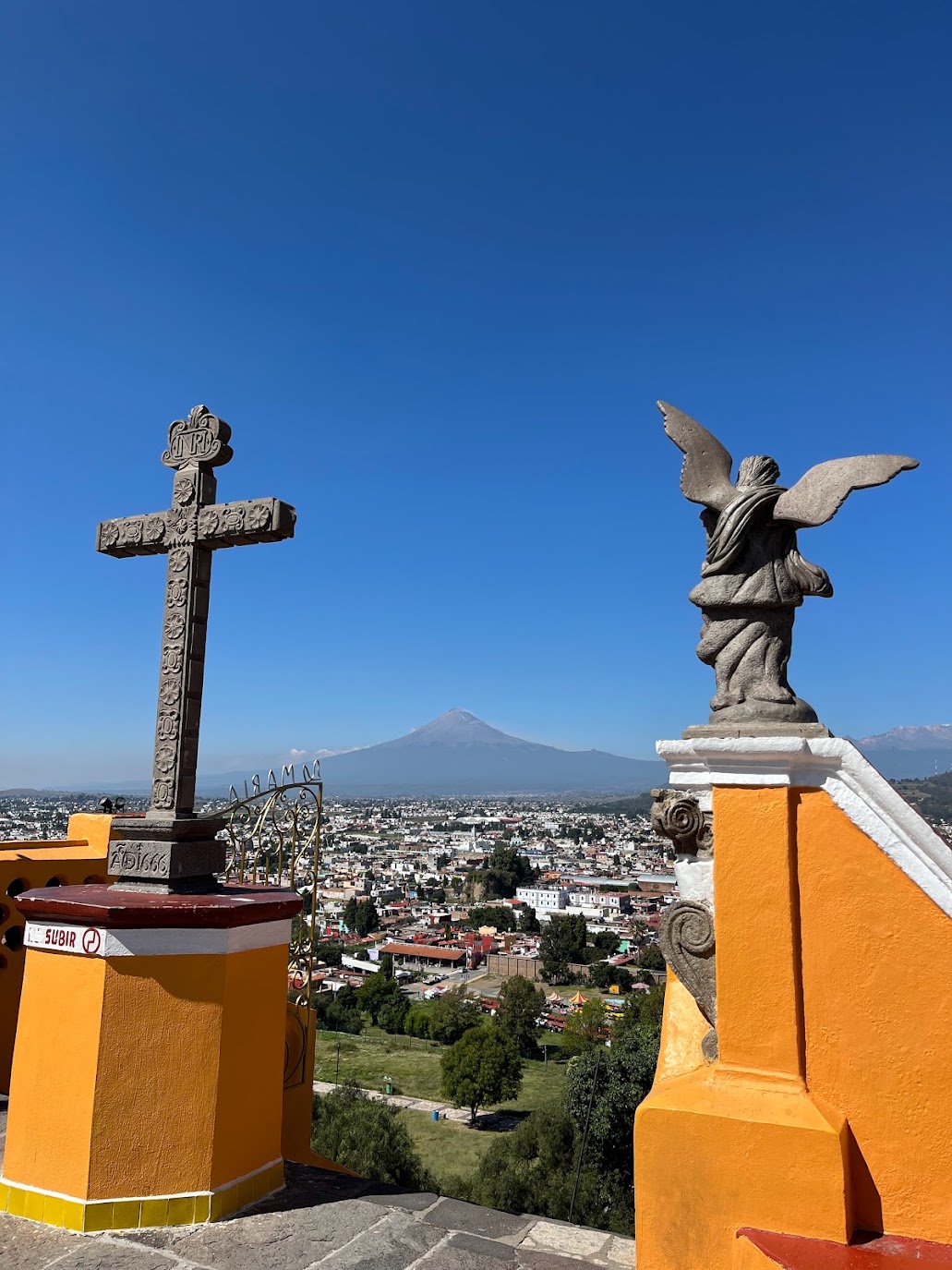
Next to the city of Puebla (and, arguably, one could think of it as effectively part of Puebla) is the city of Cholula. It is best known for “Tlachihualtepetl”, the Great Pyramid of Cholula, which — though largely hidden by the hilltop — is technically the largest pyramid by volume that exists on the planet. All this dead stone from a dead civilisation dedicated to a dead god. It certainly left a heaviness despite the loveliness of the weather. It left a shadow on the earth. Darkening and growing.
No. Ignore the portent. Write some obligatory food notes:
- Pan de Muertos: A sweet bread made specifically for Day of the Dead. You’ve seen the damn Pixar movie. Verdict: Great for those on the Other Side. And for those with a crippling sweet tooth on This Side.
- Mole poblano: A thick, spicy, and only mildly sweet chile and chocolate sauce. A Puebla specialty. Verdict: The greatest. I’ll never see chocolate on savoury the same way ever again.
- Pasita: Another Puebla specialty. A raisin liqueur shot with a bit of cheese dunked in it (yes, cheese). Verdict: Touristy as fuck. Nevertheless, the liqueur is quality medicine.
- Various Puebla sweets: Made from sweet potato, condensed milk, and various dentist-unfriendly ingredients. Verdict: Above average. In my mind, Indian confectionery remains king! But don’t trust me. I’m a degenerate. I’ll chew sugar cubes if nobody’s watching.
- Chapulines: Spiced and roasted grasshoppers! Verdict: While I wholeheartedly endorse entomophagy, these didn’t taste of much.
And lastly. A cold vision on my personal Day of the Dead.
Here it is… on the dusty trail to a clearly signposted hell… Like the alcoholic British consul in Malcolm Lowry’s novel ‘Under the Volcano’, I too can sense the weight of Popocatépetl. I stand at the Iglesia de Nuestra Señora de los Remedios parish church in Cholula on the morning of November 2nd. There is a touch of sadness on my forehead. An unidentifiable grief shivers through me. Am I standing on the edge of something terrible? But unlike Lowry’s protagonist, no one is willing to save me. And even if someone did come, I would refuse it.
“Quiere usted la salvación de Méjico?” suddenly asked a radio from somewhere behind the bar. “Quiere usted que Cristo sea nuestro Rey?” “No.”
San Miguel de Allende (2022)
Posted 1 January 2023
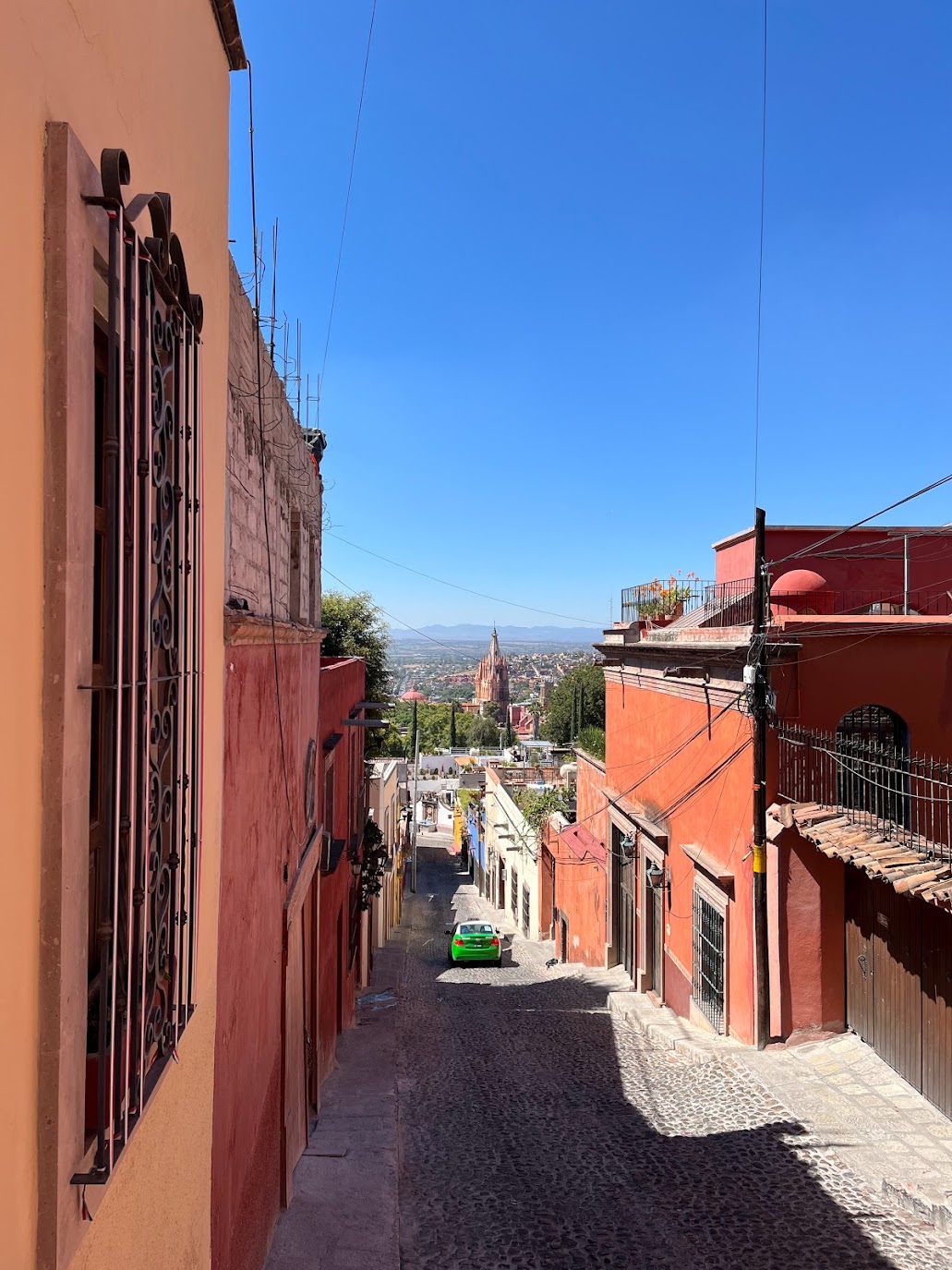
Trudging along the relaxed, sunny, red-ochre-and-burnt-yellow American retirement village of San Miguel de Allende… Lazily bouncing from church to cafe to art gallery to church to cafe to art gallery… Here’s a photo of my lovely, hot, and dusty one day visit.
Obligatory food note. While in the city, I enjoyed a very hearty chile relleno - that is, roast pepper stuffed with cheese. My verdict: Can’t go wrong with this, I reckon. Even better, I had it slopped on my plate at a local fonda (i.e., a tiny, family-run restaurant).
Anyway, that’s literally all I have on San Miguel de Allende! Nice to visit but glad I only stayed for a day.
The journey begins.
Posted 16 June 2020
Why was I travelling? To look, to walk around, to ask, to listen, to sniff, to think, to write.
— Ryszard Kapuscinsk
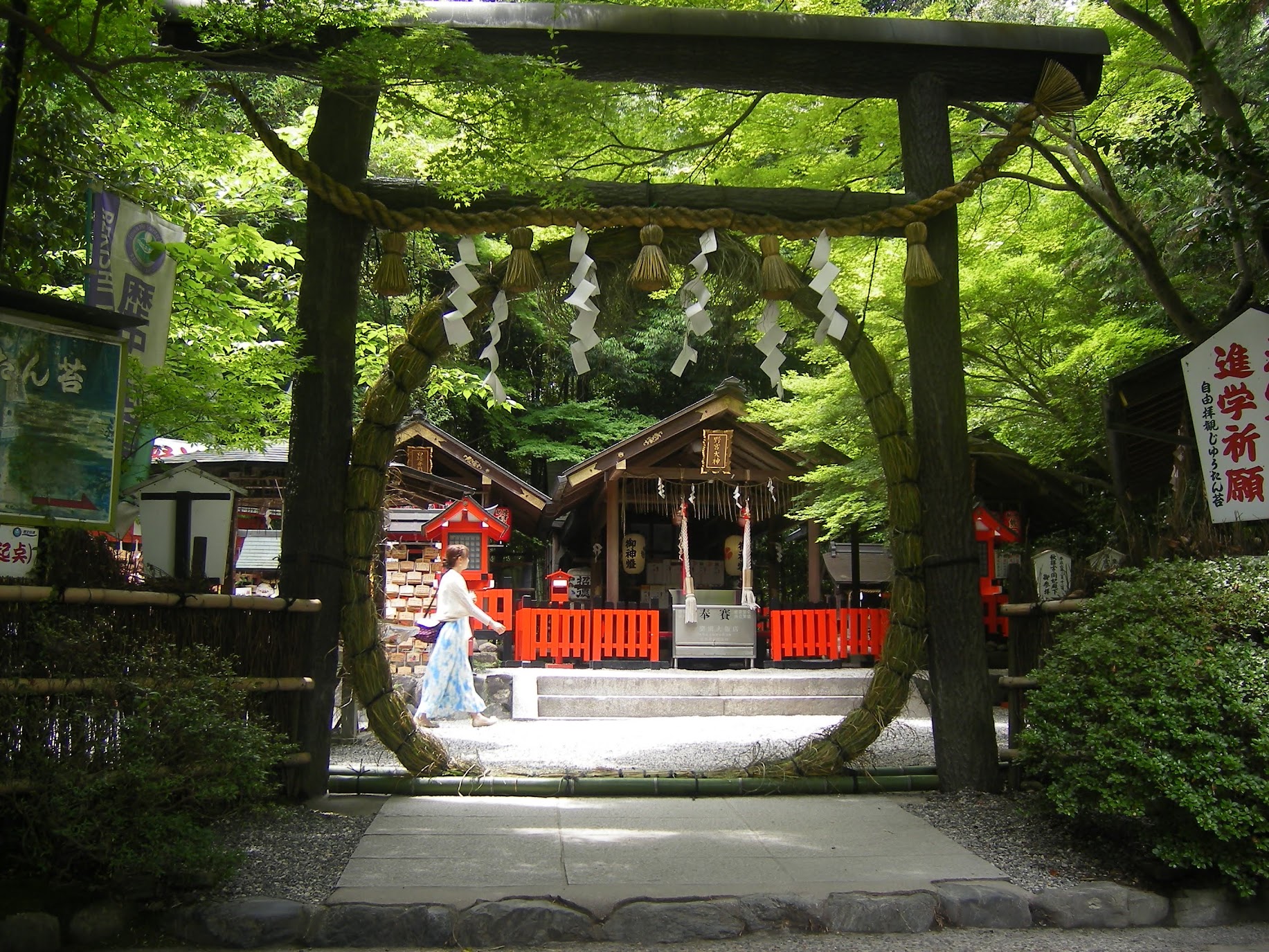
Kyoto, Japan
joining the throng of sparrows
a little wren— Kobayashi Issa
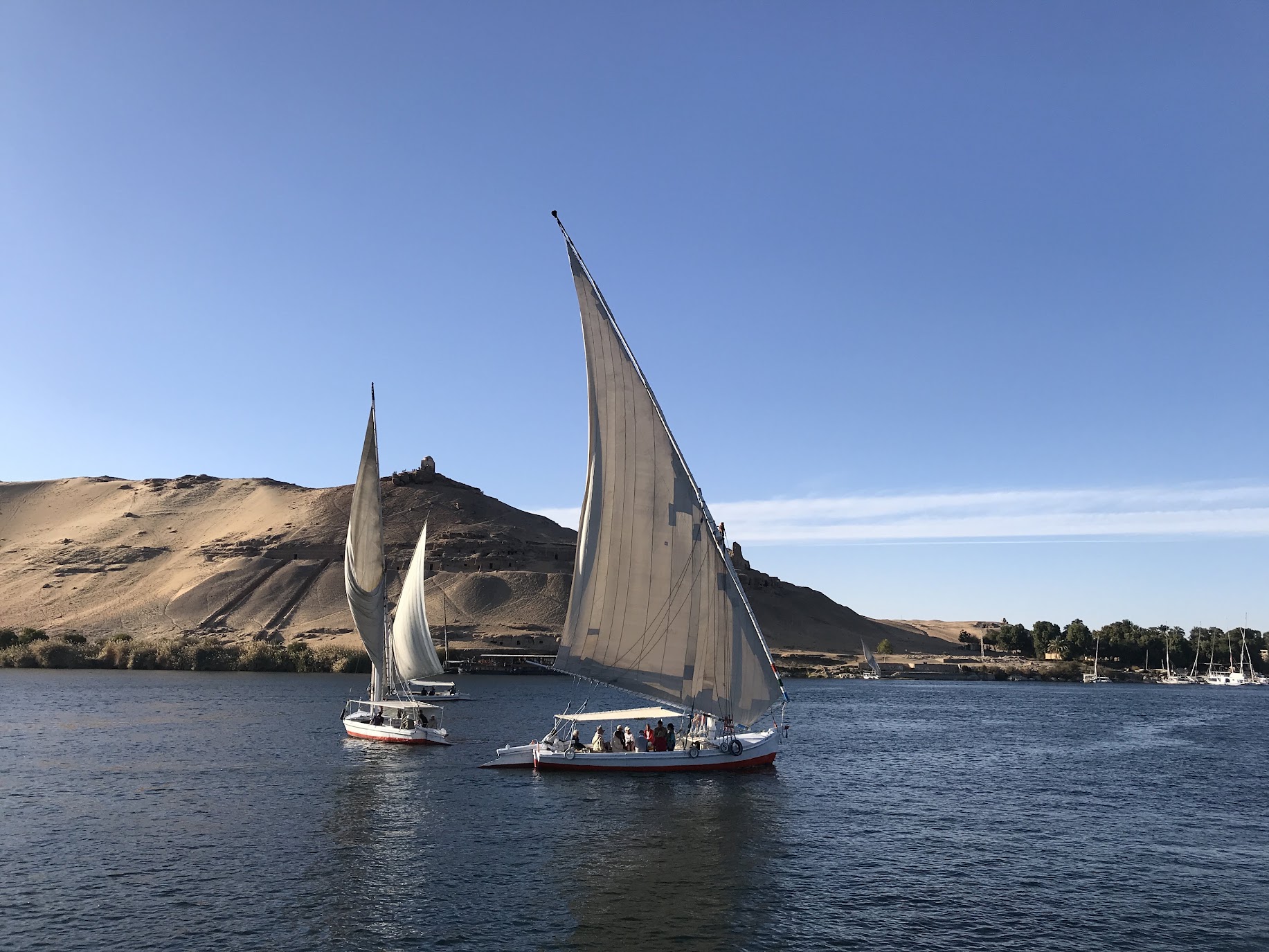
Aswan, Egypt
My father held tight to my hand as if he were afraid that I would slip away. In fact I had the wish to leave him, run, move, cross the street, be struck by the brilliant scales of the sea. At that tremendous moment, full of light and sound, I pretended I was alone in the newness of the city, new myself with all life ahead, exposed to the mutable fury of things but surely triumphant…
— Elena Ferrante
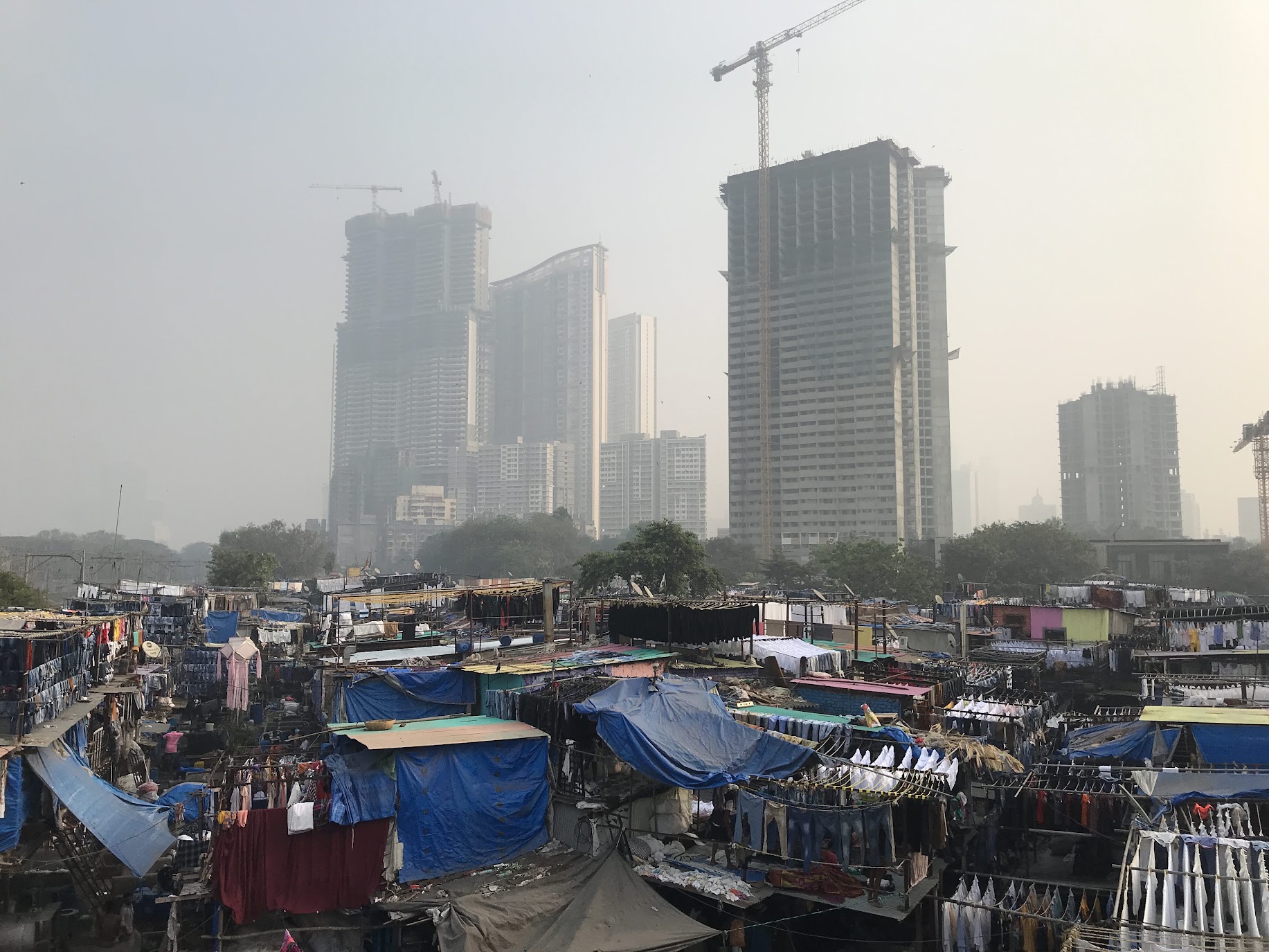
Mumbai, India
There open up, deep inside a city, reflected streets, streets which are doubles, make believe streets. One’s imagination, bewitched and misled, create illusory maps of the apparently familiar districts, maps in which streets have their proper places and usual names but are provided with new and fictitious configurations by the inexhaustible inventiveness of the night.
— Bruno Schultz
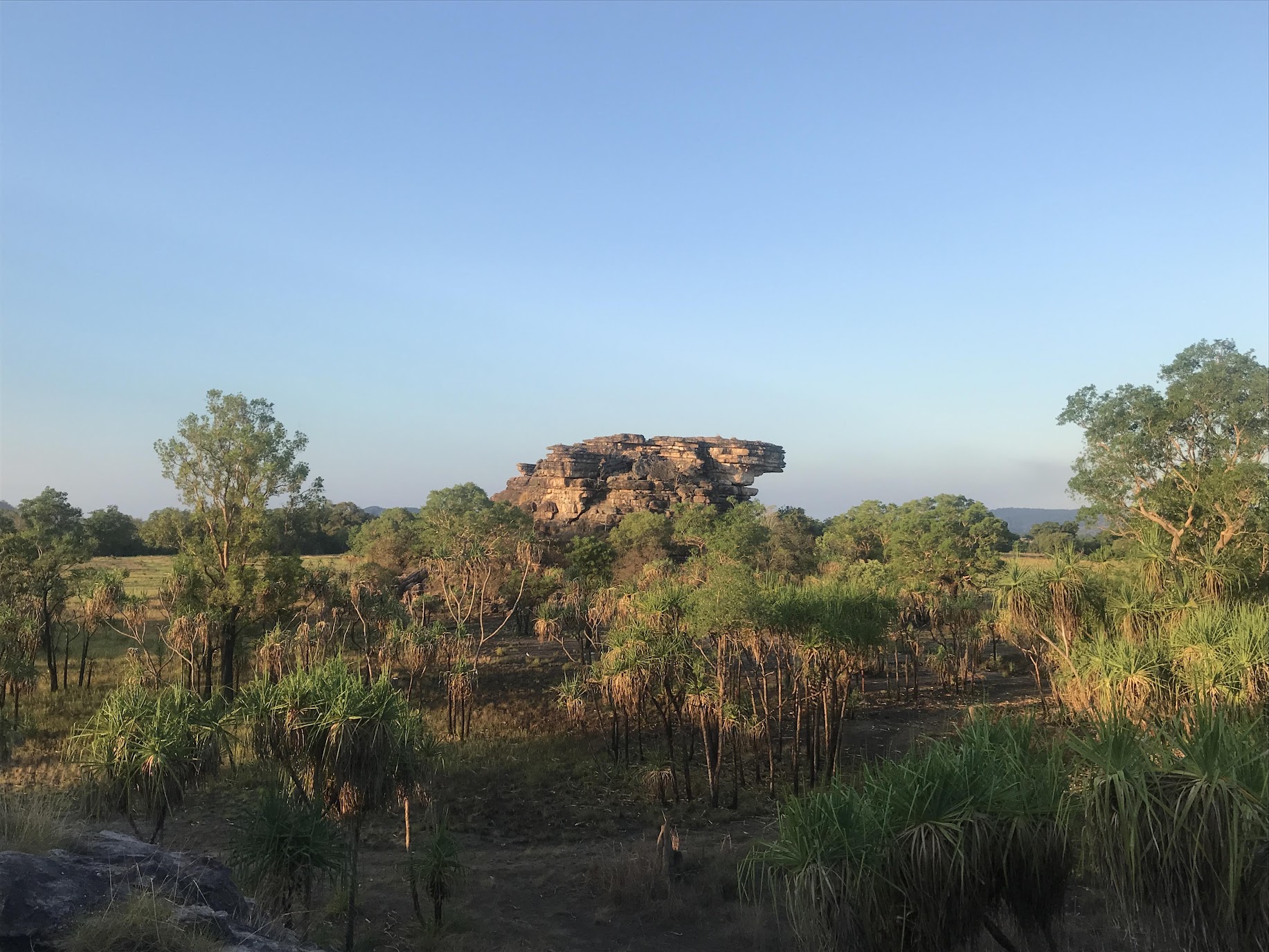
Darwin, Australia
When they make the circle wide, it’s time to swim
out on your own and fill the element
with signatures on your own frequency,
echo soundings, searches, probes, allurements,
elver-gleams in the dark of the whole sea.— Seamus Heaney
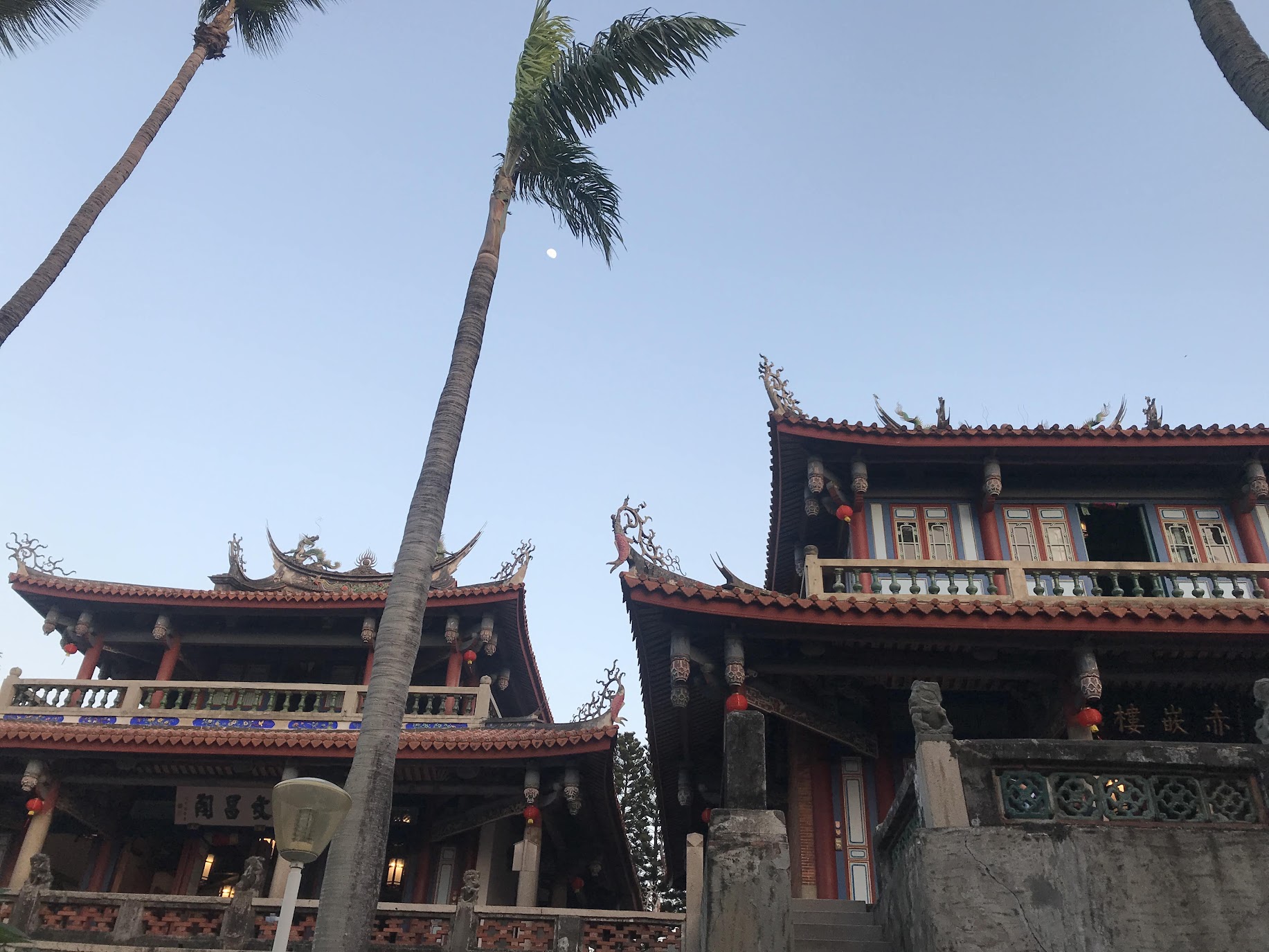
Tainan City, Taiwan
I went to China,
I went to Prague;
I died, and was born in the spring;
I found you, and loved you, again.
Later the darkness fell
and the solid moon
like a white pond rose.
But I wasn’t in any hurry.
Likely I visited all the shimmering, heart-stabbing
questions without answers
before I climbed down.— Mary Oliver
Agra (2020)
Posted 8 November 2020
The Taj Mahal and so much more
Welcome to Agra, a city of exemplary and globally recognisable Mughal-era buildings on banks of the Yamuna river, in the Indian state of Uttar Pradesh.
Push through that, however, and you will be rewarded with amazing discoveries.
Practically every travel guide recommends that you don’t stay in Agra for too long. Heed their advice! It is a grubby, rundown city with potentially the worst air pollution in the whole of India. A stroll around the block can cover your clothes in a thin layer of dust and god-knows-what else.
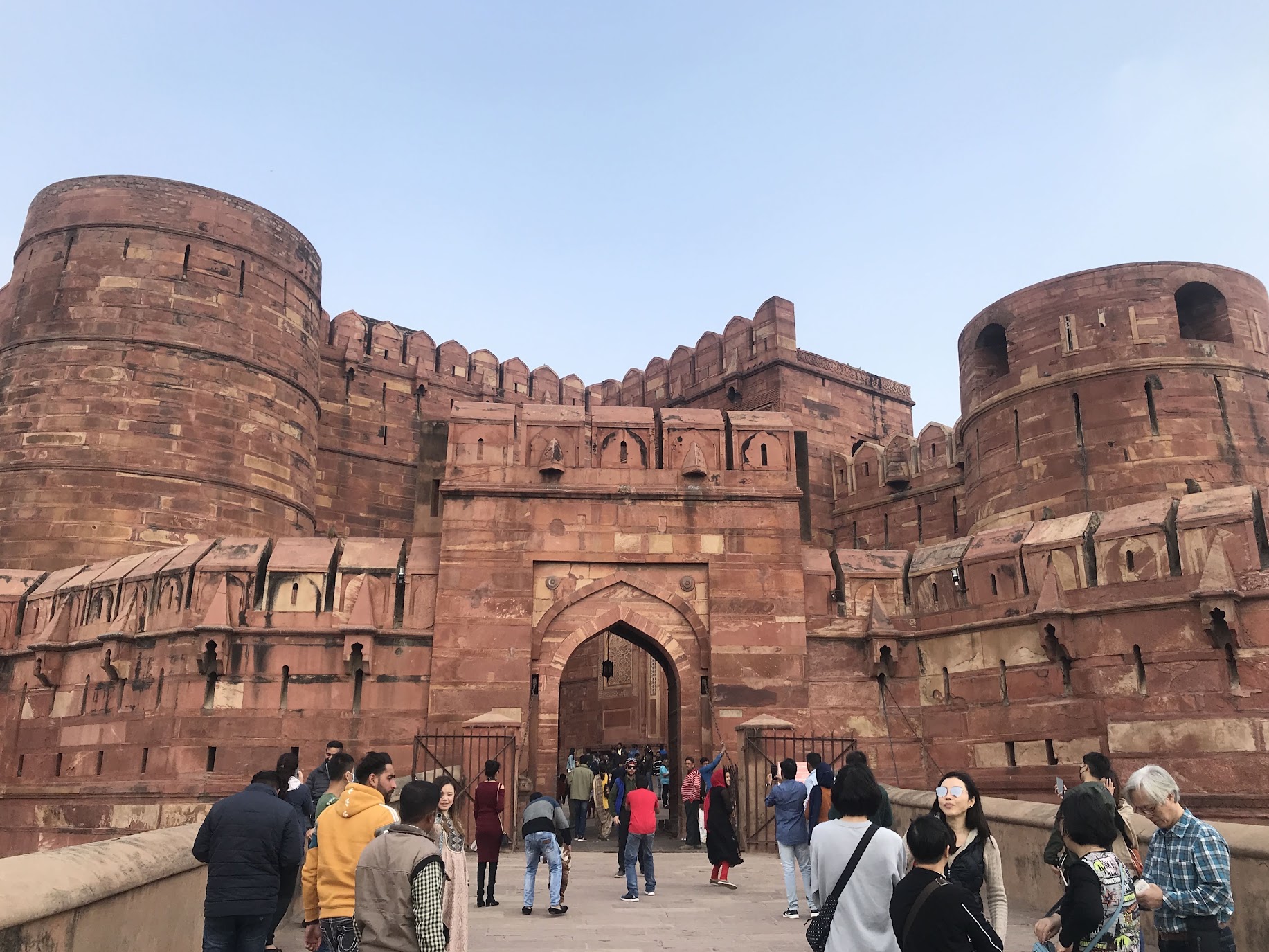
Agra Fort
I never thought I’d say this… but thank you Uzbekistan. If you had not created the warrior chieftain who ravaged his way across the Indian subcontinent in the 1500s and founded the Mughal Dynasty, where else would we get cool things like Agra Fort?
It is a mighty walled compound built from red sandstone over earlier forts by none other than Akbar the Great. “It’s a trap!” his enemies may or may not have said when Akbar’s forces ambushed them. Anyway, the fort was a pleasure to explore, both at a macro and micro level. Huge stonking walls. Intricate Indo-Persian floral designs.
Significant parts of it are unfortunately inaccessible or in ruins. But you can’t blame just the British for its desolation (although they did their fair share). Other powers like the Marathas also had a good crack. And the Mughals themselves did some destructive renovation. Akbar’s grandson, Shah Jahan (of Taj Mahal fame), replaced many of his grandfather’s opulent buildings with his own marble creations. Other than his late wife, the emperor’s greatest love was marble. He probably would’ve paved the whole world with it if given the chance.
Looking out across the bend of the Yamuna River from atop Agra Fort, you realise just how insanely huge the Taj Mahal is. It appears otherworldly in a way photos can’t quite capture. A spectral wonder looming over smoggy gardens and pastoral land. And I’m not kidding about the last part — you can see small herds of cows grazing away on the riverbank directly opposite the Taj. It’s certainly a contrast.
P.S. All the punks who graffitied this city’s historical monuments deserve to be thrown off Agra Fort’s bastions into its (empty, waterless) moat below. Disgraceful!
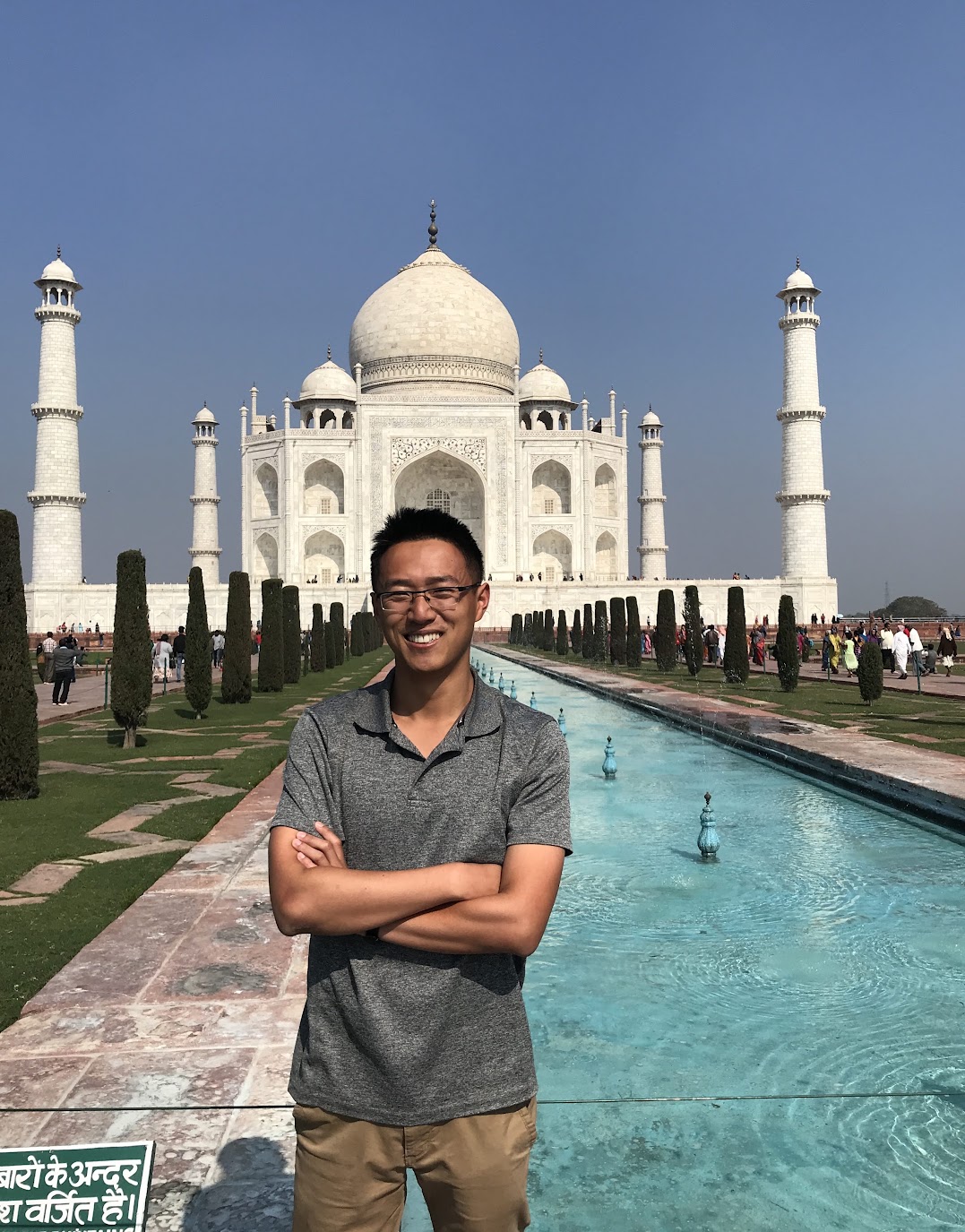
Taj Mahal
It is genuinely spectacular. Of course I gasped! Of course I sighed! It is a world wonder that Indians have every right to be proud of. On the advice of a friend, I went at midday after the fog had lifted and found the crowds surprisingly manageable.
The Taj is an architectural titan that dwarfs everything before it. Dear I say it, perhaps it’s too frighteningly huge to be a tasteful display of the Padishah’s eternal love for his deceased wife? “No one can compete with the magnificence of my feelings!” the Taj Mahal proclaims. I think it stumbles into the same problem as Michelangelo’s David — it turns vulnerable human experiences that should humble and unite us into Goliath-on-a-pedestal.
And now quickly moving away from rank amateur art criticism to amateur tourist criticism… While in the inner mausoleum, I couldn’t help but notice that some visitors were placing money in front of the tombs of Shah Jahan and Mumtaz Mahal. A bit weird due to the whole ‘no idolatry’ in Islam thing, as well as the fact that what tourists get to see is only their false tombs.
Lastly, I’d like to share my favourite Taj-related story. As is to be expected, people project whatever they want onto the Taj Mahal. In 1994, Chanel landed in hot water with the Muslim community after one of their fashion designers created a low-cut dress with Arabic written on it. Turns out what he thought were lines from a love poem inspired by the Taj Mahal were, in fact, Koranic verses. Whoops. Apologies were made, the press dubbed the incident the “Satanic Breasts”, and the dresses were subsequently burnt.
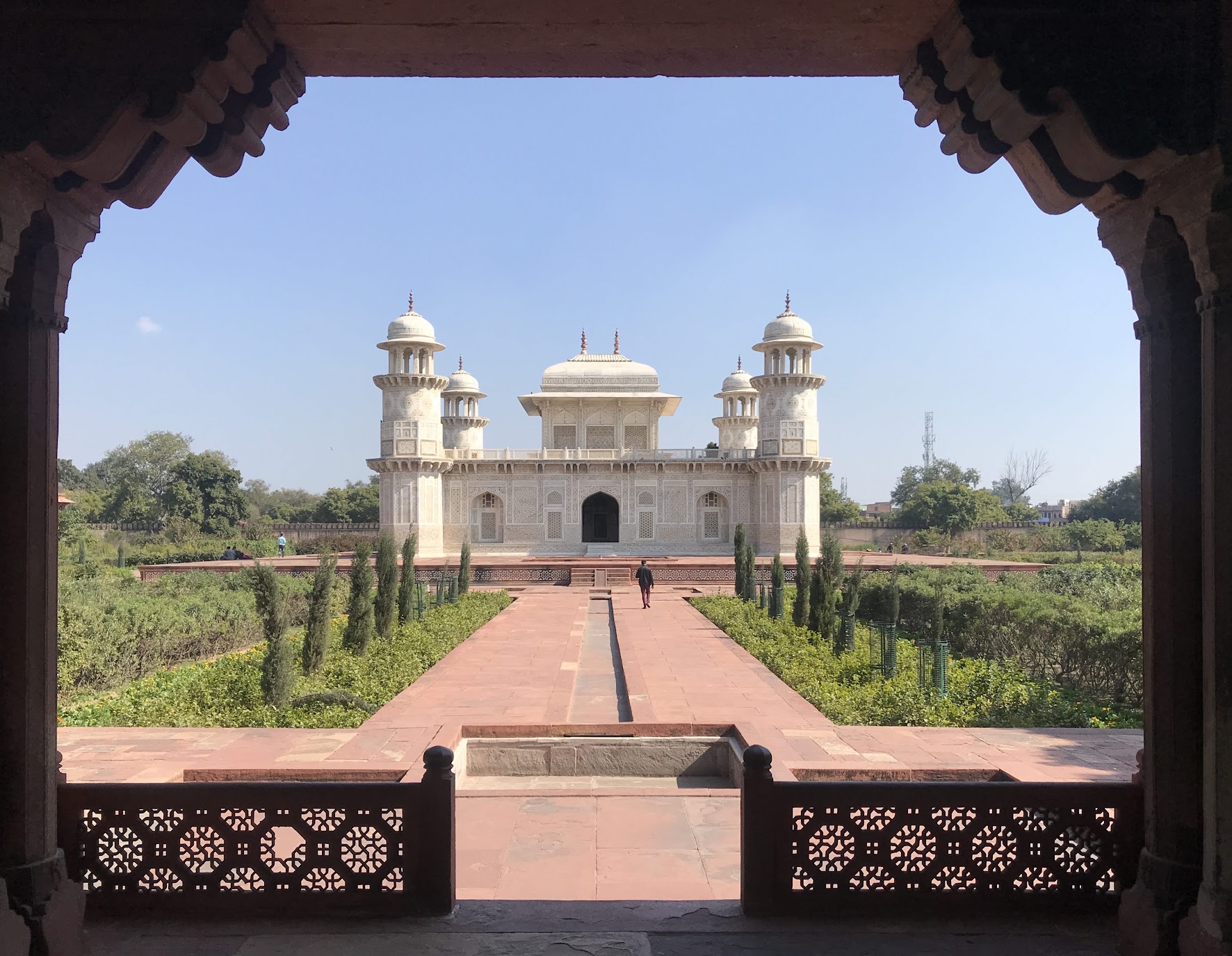
Itimad-ud-daulah
And if Agra Fort is the appetiser and the Taj Mahal is the main course, might I suggest Itimad-ud-daulah as dessert?
It’s a gorgeous and relatively small structure from the 1600s, housing the tomb of an important Persian official to the Mughal Empire. Walled with white marble and encrusted with semi-precious stones, it’s often considered a prototype for the Taj. To quote a better writer than me: “The Mughals began like titans and finished like jewellers.”
Now, you may be wondering why the Mughals built so many nice tombs. Luckily, I have an answer for you: It’s all to do with economics!
Alex Tabarrok, economist and co-author of the Marginal Revolution “…the Mughal Emperor didn’t blog, wrote a wonderful piece on this topic: give perpetual grants of land. On death, all land that had been granted to the noble reverted back to the Emperor, effectively a 100% estate tax… Since land could not be handed down to the next generation, there was very little incentive for the Mughal nobility to build palaces or the kind of ancestral homes that are common in Europe. The one exception to the rule, however, was for tombs. Tombs would not revert back to the Emperor. Hence the many Mughal tombs” .
So there you go. Tax economics. Hope you’re satisfied.
Some final observations
PETHA: A kind of semi-translucent soft candy made from sugar, sugar, and even more sugar. Agra’s signature dessert. I’m sorry to report that I didn’t enjoy it. It’s the only Indian sweet I’ve had so far where this has been the case. Like eating the offspring of a moist sugar cube and a lump of gelatin.
JAMA MASJID: Battled my way through a very crowded, very dirty, very impoverished market to reach one of the largest and most visually striking mosques in India. At the masjid, a random kid ran up to me and demanded twenty rupees for ‘looking after’ my shoes. But he did help me with my pronunciation of “as-salamu alaykum” so maybe it was a fair exchange…?
SHEROES HANGOUT: Visited Sheroes Hangout, a famous cafe in Agra staffed by female survivors of acid attacks. Just don’t do what I did and get all flustered at the counter upon realising that it runs on a pay-what-you-want system. I’m still grappling with the anxiety that I might’ve paid below the shadow price. Please, if you’re ever in Agra, do visit them and be confident in your donation!
DOG ATTACK: That’s right. I got chased by a fucking dog when I walked down the wrong alleyway towards a historical monument. I’m told this is a quintessential Indian experience. Can’t recommend it though. I swore like a lunatic and bolted into the middle of a busy road. If the dog had bitten me, that would have almost certainly ended my trip. Rabies injections over multiple days don’t sound like my idea of fun. And this was on the same day I went to the Taj Mahal! This goddamn country, man. Extreme highs followed by extreme lows, hour by hour.
Amritsar, Punjab (2020)
Posted 2 May 2021
At last, after two months of travelling across India, I arrived with great anticipation in the city of Amritsar, in the northern state of Punjab. I was very, very excited to be here for a number of reasons, as you’ll soon see why.
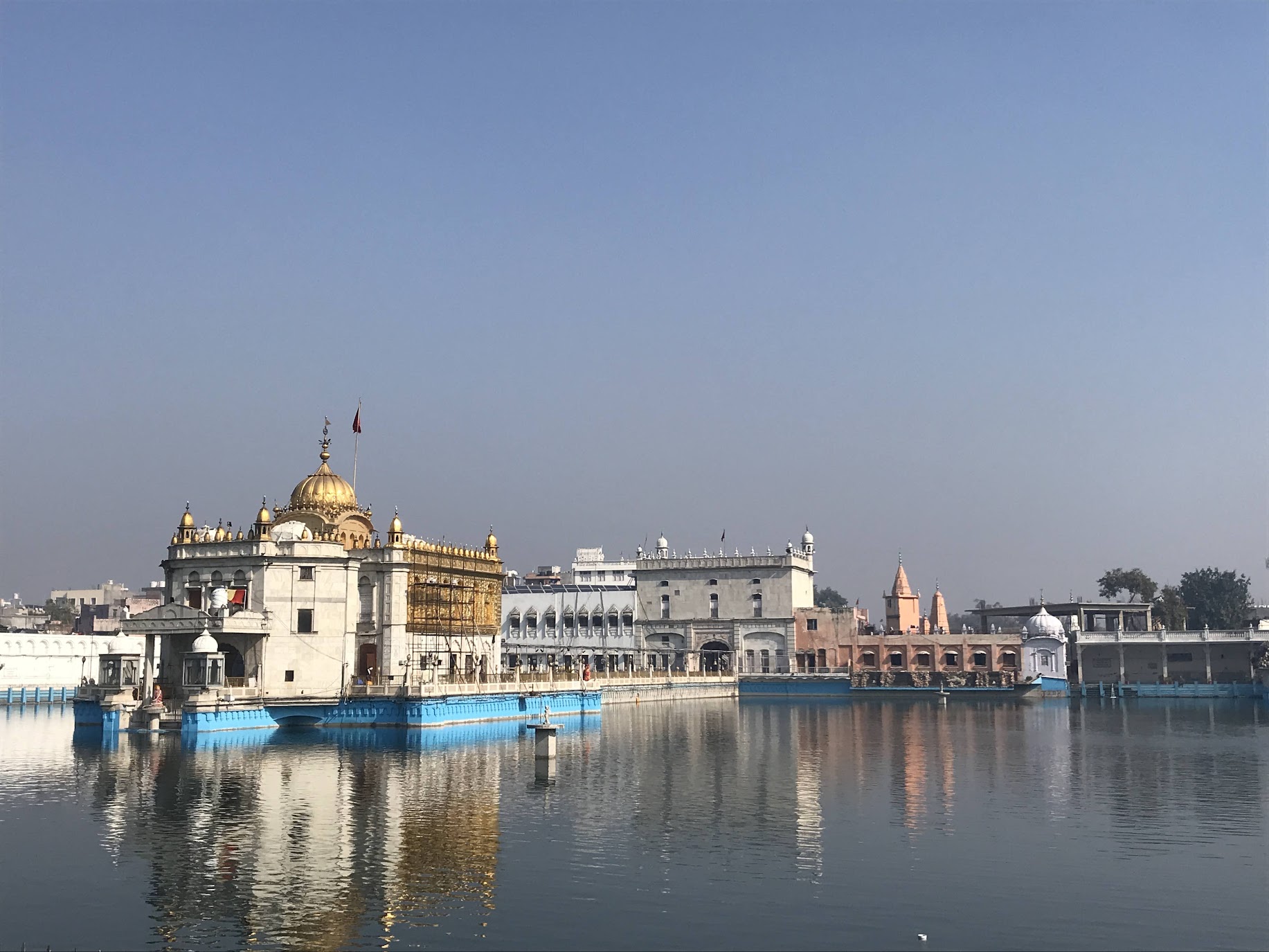
The Golden Temple, the holiest place in all of Sikhism…
The main drawcard of Amritsar is undoubtedly the Golden Temple, the most spiritually significant temple (or gurdwara) in the Sikh religion. It is significant because it once housed the Adi Granth, the central religious scripture of Sikhism, when it was completed in the 17th century. The temple dazzling marble and gold foil structure surrounded by a man-made pool (called a sarovar), and completely open to all visitors day and night, irrespective of their background.
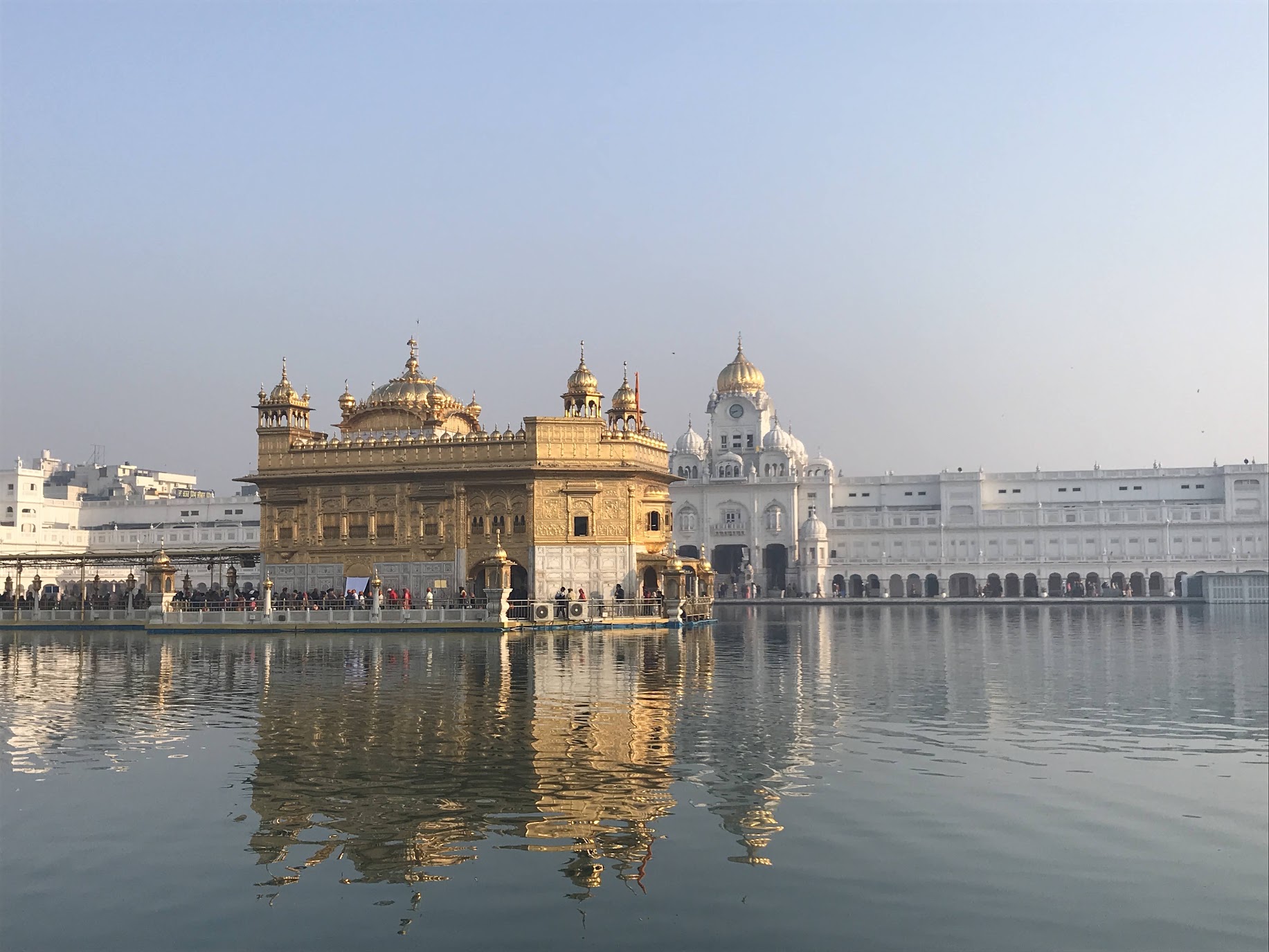
To visit, all you need to do is wear a head covering and remove your socks and shoes. Mind you, the latter can be difficult on a North Indian winter morning. Naked feet, freezing marble, and a mandatory foot wash upon entering do not create the most pleasant of combinations! But shivering through it all, I remained a delighted pilgrim.
Despite having been continuously rebuilt over the centuries due to religious persecution and violence, the Golden Temple endures as one of the most welcoming places in all of India. I certainly felt it.
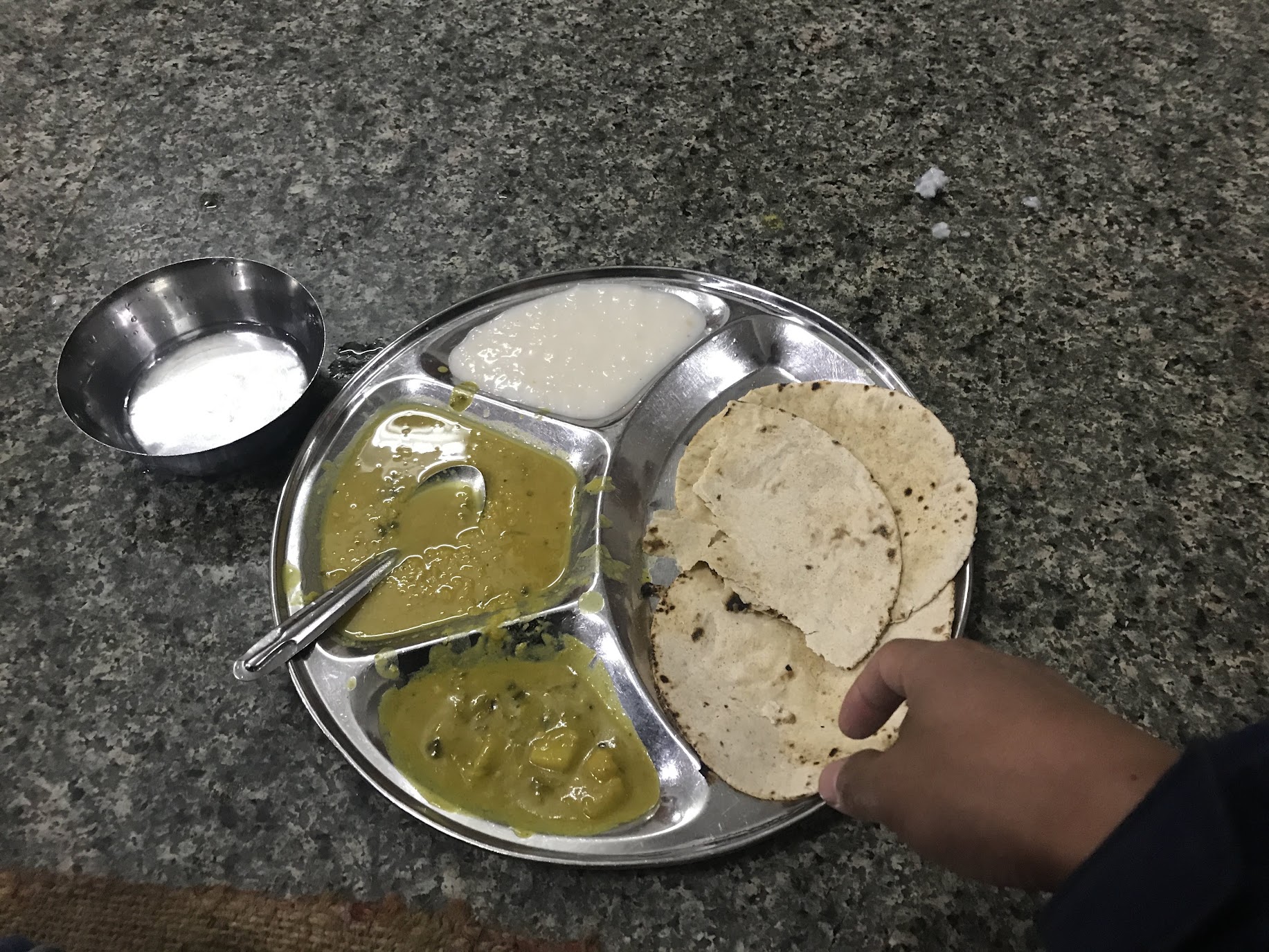
And a meal at the largest soup kitchen in the world…
It may not look like much — a simple, hot vegetarian meal consisting of some rotis, daal, a vegetable dish, and a rice pudding called kheer — but this is a meal I have wanted to experience for a long time…
Within the Golden Temple complex is a langar: a community kitchen in a Sikh temple where any visitor, regardless of race, gender, creed, or socio-economic background, can receive a free vegetarian meal. The principle of equality is also strongly upheld here. Everyone, rich or poor, high caste or low, must sit and eat together on the floor.
This langar is run entirely by volunteers, open 24/7, and serves tens of thousands of people per day, making it effectively the world’s largest soup kitchen. It’s truly incredible.
Is it the best meal I’ve had in India? Probably not. But it is certainly one of the most powerful meals I’ve ever received.
A weird border ceremony…
Amritsar is also close to the India-Pakistan border where it is possible to witness something truly bizarre: the Wagah-Attari border ceremony. If there was one good thing that came out of the 1947 Partition of India (hint: there wasn’t) then it’s this.
What should be a straightforward daily flag-lowering ceremony conducted by the border security forces of India and Pakistan, performed to mark the evening closure of one of the few land border crossings between the two rival nations, is instead transformed into a sublimely surreal, hyper-choreographed dance contest. Both sides pick their tallest (and most immaculately facial haired) soldiers, make them don peacock tail-like hats, and have them stomp as hard and kick as high as they can against each other.
Wacky. Colourful. Militaristic. Campy. While the Pakistan side had a more mellowed out audience, the Indian side had a raucous and crowded stadium, blasted Bollywood music, and a hype master who helped everyone cry “Hindustan Zindabad!” (“Long live India!”) in unison.
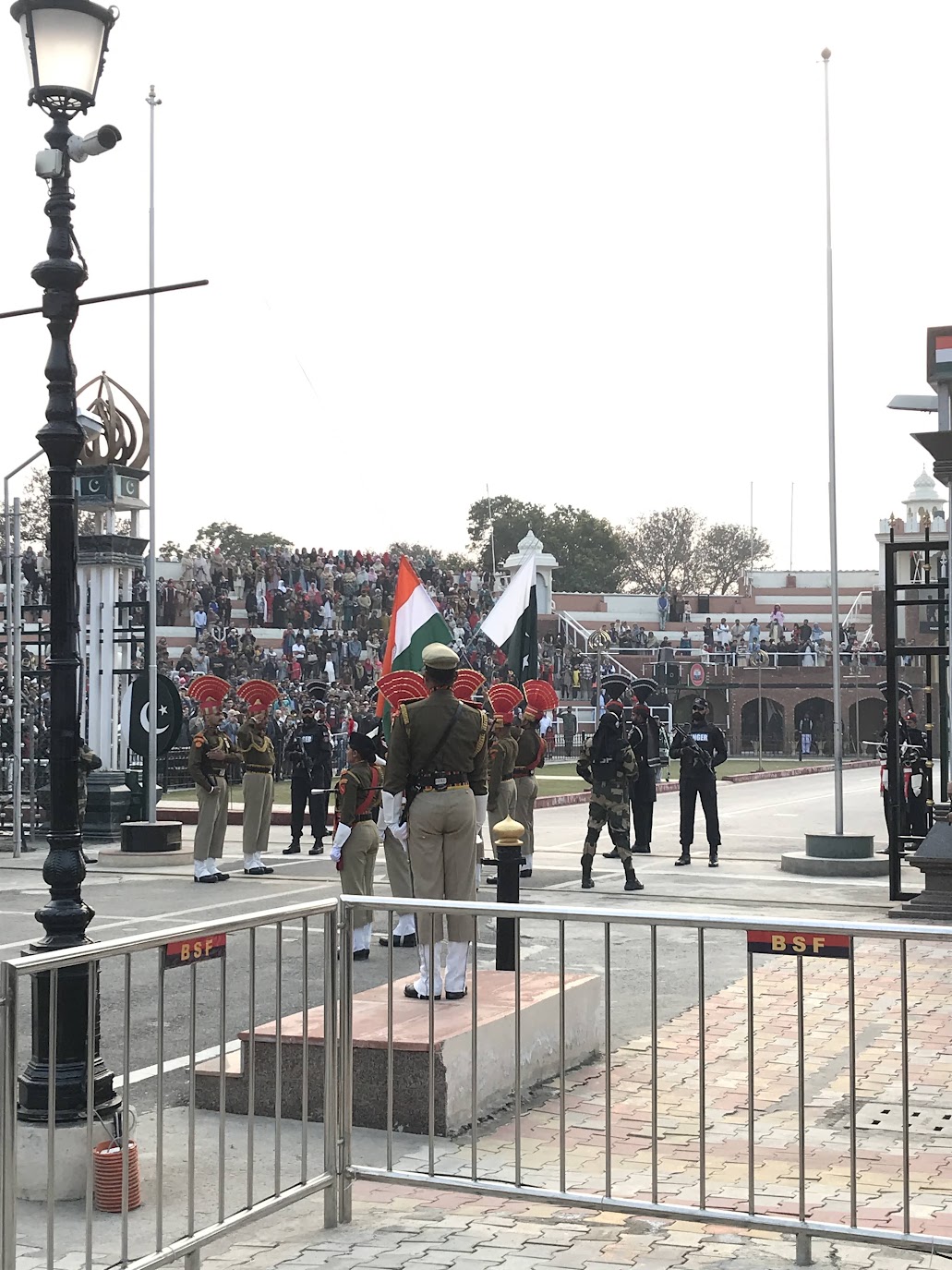
The fact of the matter is that you will not learn anything about the often tense and deadly relationship between these two countries from watching this ceremony. I’m not sure you will learn anything at all. Just sit back and accept that humanity is capable of some very puzzlingly things.
Some more of Amritsar…
The most shocking thing about it is that the city centre around the Golden Temple is a modern pedestrian mall. As in a clean pedestrian zone with storefronts and everything. In India. No mopeds or rogue trucks or half-dug up streets or cows chewing out of rubbish piles. I couldn’t believe it!
The other photo is of the very lovely Durgiana Temple, a Hindu temple dedicated to the warrior form of the goddess Parvati, which was deliberately built in the style of the Sikh Golden Temple. Some nice inter-faith architectural homagery going on there.
Now for some less pleasant remarks…
Amritsar is also a town bedevilled by tragedy. It was (and very much remains) at the frontlines of the disastrous 1947 partition of India. It’s also the site of the 1919 Jallianwala Bagh massacre, where troops under the command of a British officer fired on unarmed protestors, killing hundreds. But while both these incidents get considerable attention in Amritsar (with memorials and museums and whatnot), there is one event that has received little publicly visible acknowledgement here and, due to its political sensitivity, potentially never will. I saw some poorly translated and deliberately obfuscating references to it on some signs in the Golden Temple and that was about it.
I am referring, of course, to Operation Blue Star. This was a highly controversial 1984 military operation launched by Prime Minister Indira Gandhi to root out Sikh militants holed up in the Golden Temple. The temple was heavily damaged, scores of civilians were killed, and it led to Indira Gandhi’s assassination at the hands of her own Sikh bodyguards. Anti-Sikh riots ensued throughout the country afterwards. All in all, it was a hellish moment in recent history that took place at one of the most beautiful and extraordinary holy spaces in India.
Ankara (2020)
Posted 22 October 2020
Anıtkabir. The mausoleum of Mustafa Kemal Atatürk, the founder of the modern Turkish Republic, at the capital city of Ankara. To say that he is revered by some is an understatement. He is (as his honorary surname spells out) the “Father of Turks”, the revolutionary moderniser, and the nation’s defender during the Gallipoli campaign. And having lived under the secular state cult of the Anzac narrative in both New Zealand and Australia, I begrudgingly felt I had to visit his final resting place.
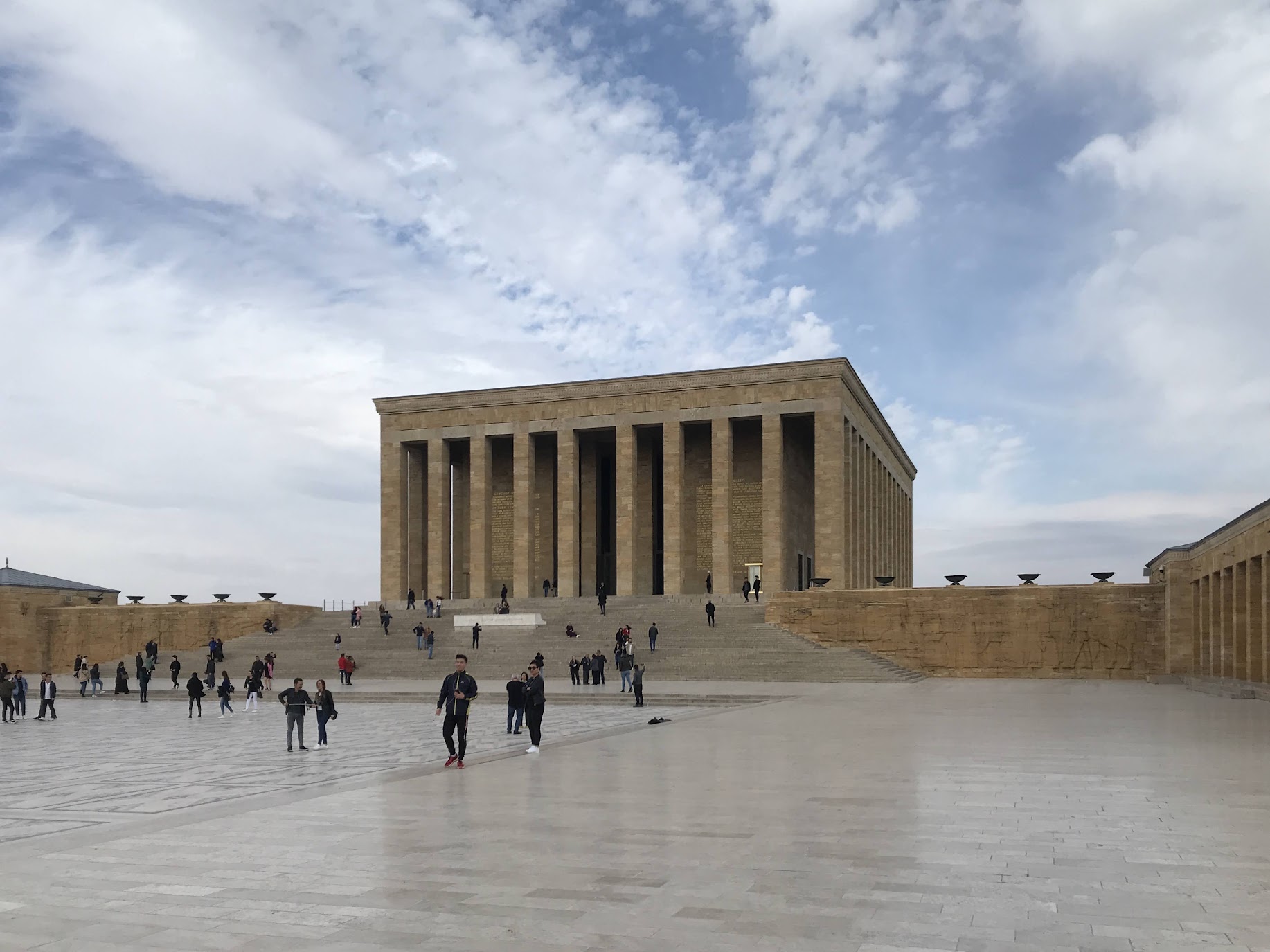
I didn’t plan on being in Ankara, of course. But the growing pandemic panic made it a convenient place to bail out of the country (and just in time, too — I managed to catch a flight to London the day before Turkey suspended all air routes with the UK).
So what did I think of Ankara? Hmm. I’d call my brief time there troubled, icy, and educational. Troubled because I spent much of it holed up in my hostel, chain drinking instant coffee and bumming smokes, letting the hourly news updates fuel my anxiety. Icy because I was acutely aware that the panic that had seized continental Europe had finally washed over Turkey (I even had trouble checking into my room due to virus fears). And educational because, in between the conspiratorial mutterings about COVID-19 and doubts around the Turkish government’s official infection numbers, I was privy to lengthy discussions among the hostel guests about the legacy of Kemalism, the current political and economic health of Turkey, and the impact and infamy of the Erdogan regime.
Being able to listen to all this seemed like a… strange privilege? It’s not often that an unplanned trip to a nation’s capital offers you an intellectual pulse check of the nation, but there you go.
Aswan (2020)
Posted 1 January 2021
Life on the Nile…
When I was in Egypt at the start of 2020, I was exclusively travelling by train up and down the course of the Nile. The view out the window is, at times, utterly striking. From one side, you can see rich agricultural lands, palm-lined islands, lazy feluccas on the water, and dense urban development. From the other, all you see is uninhabitable desolation. Egypt is a country beset on all sides by wastelands, desperately hugging a single, riverine lifeline. Banks of prosperity sharply demarcated by arid nothingness, with no gradients between the two. This is a country that stuns you with the notion of geography as destiny.
The train took me to Aswan — a small, laid-back city in the deep south of Egypt. Some of my best days in Egypt was spent here. I joined a group of couch surfers and their hosts in Aswan to go swimming in the Nile, followed up by a gorgeous sunset view from atop a desert escarpment.
A dip in the Nile? I ain’t afraid of no crocodiles! The water was freezing, however. Downing a can of Stella, the de facto national beer of Egypt, helped with my recovery. And it’s a surprisingly passable beer for a Muslim majority country. Beer was, after all, a lower-class staple in ancient, wheat-intensive Egypt. Let us give thanks to grain agriculture for (a) enabling the rise of oppressive, megaproject funding, centralised tax systems in early societies, and (b) creating booze for the plebian masses.
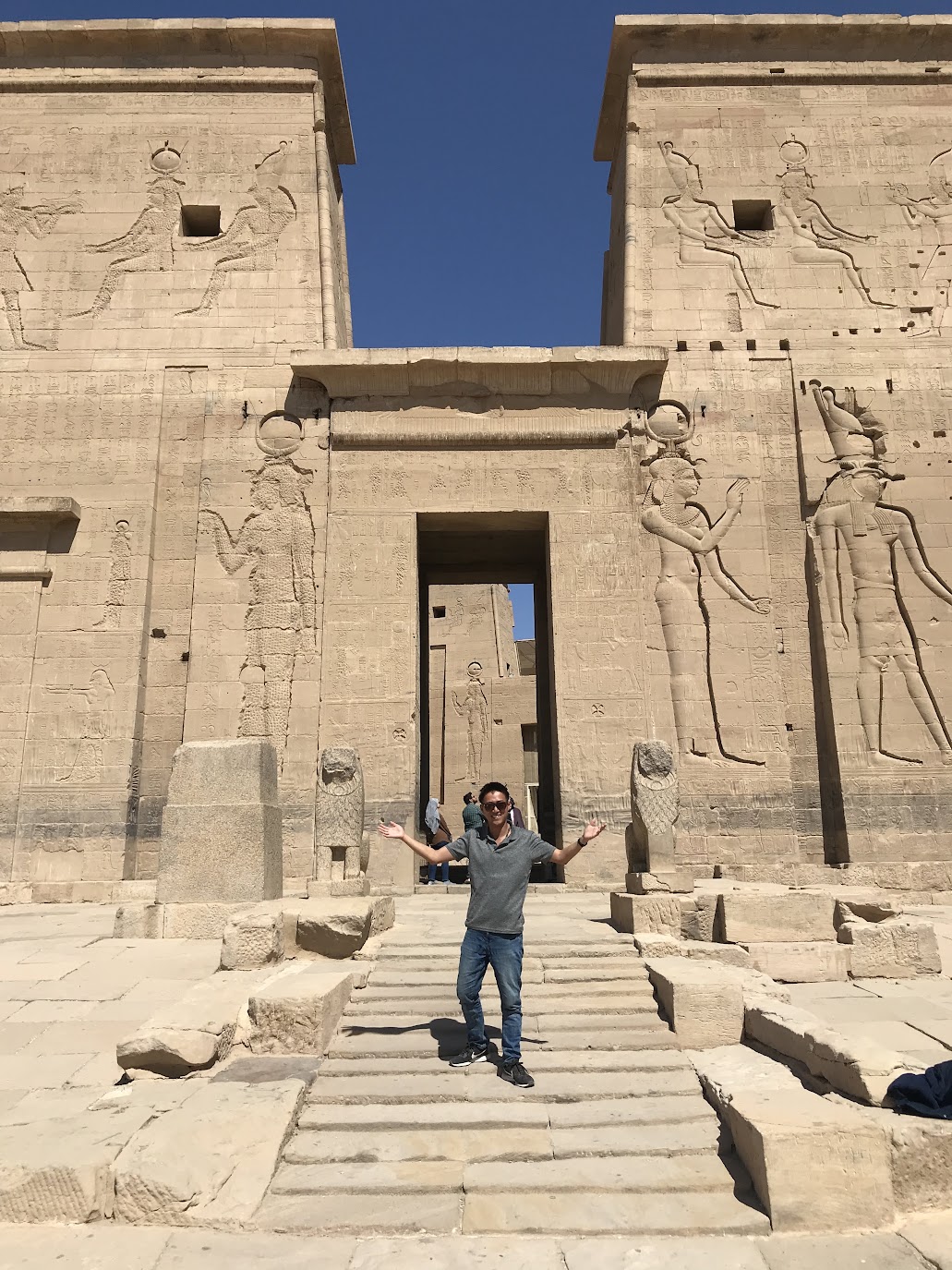
Welcome to Philae! Ancient ruins, many over 3,300 years old, on a picturesque island in the middle of a reservoir. Accessible only by boat, the island includes a temple to Isis, the goddess of fertility, and was also worked on by Ptolemaic and Roman builders, as well as later Christian ones (who stamped very noticeable Coptic crosses into the pagan stonework). Further, the whole complex was lifted up and relocated to its current location in the 1960s to save it from flooding as a result of a new dam project. Interesting… right?
Okay, time for a story! If much of Egypt’s past glory can be credited to the Nile, then a huge chunk of its 20th-century history can be credited to the construction of the Aswan High Dam.
Since the dawn of Egyptian civilisation, the yearly flooding of the Nile bought bounteous harvests but also harkened famine and doom when it failed. The solution? A big-ass dam to control the water flow. This was the dream of the anti-imperialist, pan-Arabist maverick President Gamal Abdel Nasser in the 1950s. But the problem was that it was expensive. Really expensive. So Nasser tried to play both the Americans and the Soviets for money and then nationalised the all-important Suez Canal to generate the necessary funds. In response, Israel, France, and the UK invaded Egypt. Boom. The Suez Crisis ensued. The invasion quickly backfired and these countries were forced to withdraw (effectively ringing the death knell for British imperial ambitions in the new world order).
As for the dam’s post-construction impact? An agricultural bonanza. National wheat yields tripled in the following decades. Egypt became insulated from devastating droughts. And, at one point, it provided the country with half its electricity. But the dam also messed with the local ecosystem, displaced tens of thousands of local Nubians, and, of course, threatened numerous precious archaeological sites.
A messy war. Huge numbers of displaced people. Relocated temples. Accelerated economic development. Damn, man.
Pictured below: the art of jabana at a Nubian guesthouse on a cool evening in Aswan. Coffee beans roasted on hot coals, ground down with spices using a mortar and pestle, then boiled in a long-necked clay pot. Palm fibres are used to filter the brew and it’s served very hot, very black, very sweet. Just the way I like it.
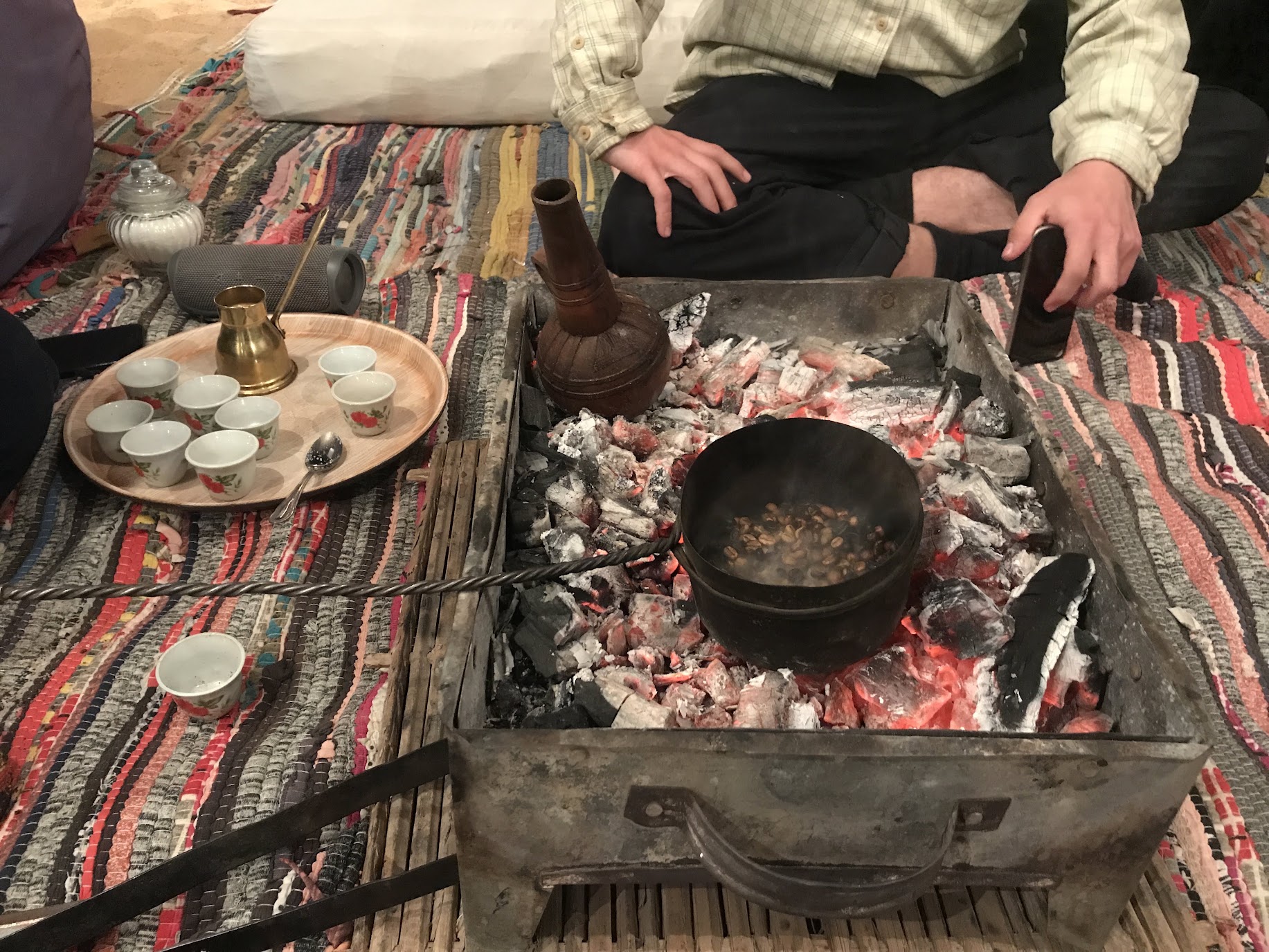
The Nubians. What am I remotely qualified to say about them? They are a group indigenous to Sudan and southern Egypt. Once there were even Nubian pharaohs but now they’re a people without their own nation — many of whom were forcibly displaced from their lands by the Aswan High Dam. It’s no wonder Rastafari aesthetics are so common in southern Egypt. Due to their uncertain place in the world, many Nubians have embraced the Rasta ethos of peace, harmony, and minority rights.
Along with traditional coffee, we listened to Nubian music and ate coal-roasted dates. All in all, a wonderful evening. I wasn’t expecting to experience any Nubian culture during my stay in Egypt so I was delighted to glimpse even a fragment of it. My only previous exposure to anything remotely Nubian was being a cast member in the Elton John musical “Aida” (a cheesy Romeo and Juliet story with topless Egyptian warriors and sultry Nubian princesses) during high school. No, seriously. My life has just been one wild culture trip after another.
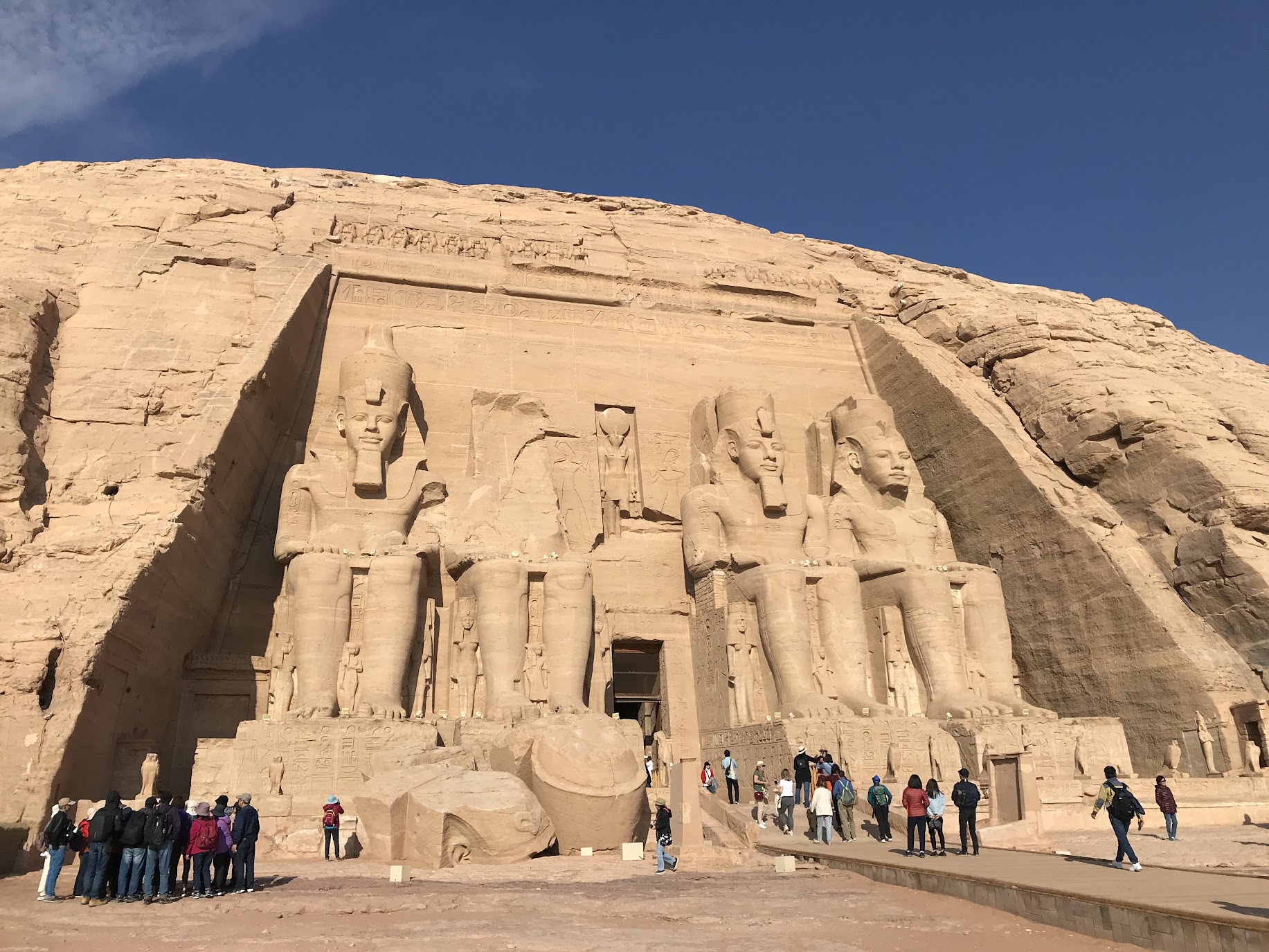
Glorious praise to Ramses the Great, chosen of Ra, challenger of Hittites and punisher of Libyans! All Egypt prospers under his benevolent protection!
The main attraction of travelling down to Aswan is to make it to Abu Simbel in the far southern reaches of Egypt — any further south and you’d be in Sudan! Getting to it was tough. I had to wake up before 4 am, take a three-hour-plus minibus ride there from Aswan, and then race to the ticket booth so I could see the place before it was completely swamped by other tourists. But in hindsight (and after a recovery nap or two) I believe it was worth the effort.
When you think of towering pharaonic carvings and rock temples in the desert, when you think of Ozymandias with his “frown, and wrinkled lip, and sneer of cold command”, you are thinking of the Great Temple of Ramses II at Abu Simbel. Four colossal statues of the king of kings flank the entrance to this 13th-century BC edifice. You see reliefs of captured foreign slaves on both sides of the entryway. There are potent, violent scenes of military conquest on the temple’s interior walls. Surely no other surviving structure of the ancient world can still project such indomitable, ferocious power.
Next to the Great Temple is a smaller temple dedicated to the sky goddess Hathor and Ramses’s royal wife Nefertari. And both these buildings lie on the banks of Lake Nasser, one of the largest man-made lakes in the world, which was created by the Aswan High Dam. This leads us to an impressive fact about Abu Simbel: like the Philae Temple Complex, the entire site had to be disassembled and rebuilt on higher ground in the 1960s to save it from rising waters as a result of the dam’s construction. This project required an international team of engineers and scientist and remains perhaps the most impressive archaeological rescue mission of all time.
Bloody hell, there should be a traveller’s game in Egypt where you drink a shot every time you hear about the Aswan High Dam… “And on the pedestal, these words appear: My name is Ozymandias, King of Kings; Look on my Works, ye Mighty, and despair! Nothing beside remains. Round the decay Of that colossal Wreck, boundless and bare The lone and level sands stretch far away.”
Cairo (2020)
Posted 1 May 2022
Welcome to Cairo, Egypt’s eclectic capital! In early 2020, after roaming around the sub-continent for almost two months, I made an exodus out of India and a flight into Egypt. This was my first time in Africa and the Middle East - and hopefully not my last! Anyway, here were some of the things I checked out…
Tahrir Square
Hurrah. My first morning in Cairo and I was standing in Tahrir Square, heart of the 2011 Egyptian revolution. Except it currently seems to be under renovation? Something to do with a controversial decision to plonk some pharaonic antiquities in the middle of it. Rather odd symbolism given the forward-looking vision this place represented not that long ago.
Egypt’s current political quagmire is something I don’t know enough about. But like the good political science major that I am, just give me some cheap local coffee, a shisha pipe, and a stack of old Economist magazines and I’ll claim to have figured it out in no time!
Khan el-Khalili
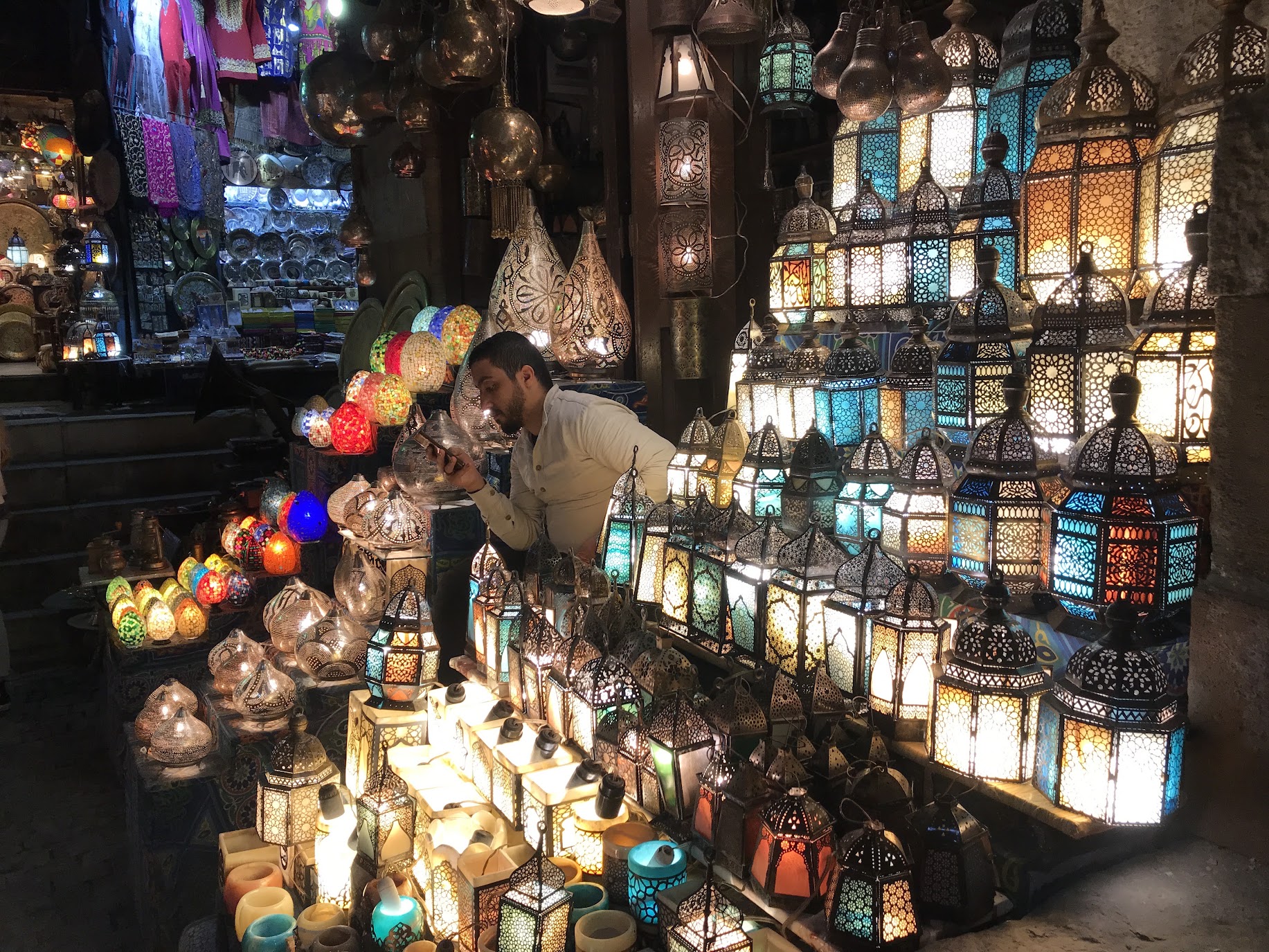
A photo of the most Instagrammable spot in Khan el-Khalili, a famous open-air bazaar in the middle of Islamic Cairo. Not that I’d fall for its wily, hashtaggy, picture-perfect charms or anything. Whoops.
I also whittled away the hours with fellow world travellers at El Fishawy, quite possibly the most famous coffeehouse in all of Egypt. Crammed into a narrow thoroughfare in the bazaar, this place is quite the frenzied experience. Street vendors hassle you every minute. Clumsy shoppers threaten to knock over your hookah. The cafe staff seem to be juggling too many tasks at once. And yet, despite the pandemonium, there’s music and laughter and a theatrical, smoke-drunk energy to it all that makes this place unforgettable.
Coptic Cairo
Coptic Cairo is a hushed and compact corner of Egypt’s capital unlike anywhere else in this mad city. As a visitor, it would be remiss to only notice the country’s mosques and pyramids — this country also has a very distinctive Coptic Christian minority, making up around 10 per cent of the population.
To be honest, I don’t know much about Coptic Christianity or any form of Christianity east of Rome that uses big, scary words like ‘patriarchate’, ‘autocephalous’, and ‘non-Chalcedonian’. What I do know is that Coptic Christians are the largest Christian community in the Middle East. That they follow their own calendar. That they have their own pope. And that, unfortunately, persecution and discrimination against them is a painful, ongoing problem in Egypt. All the more reason for travellers to remember that they even exist.
I visited the famous Hanging Church, the Saints Sergius and Bacchus Church, and the beautiful Church of St. George (which is actually a Greek Orthodox church).
The Citadel of Cairo
This is a medieval fortification built by none other than the legendary Crusader-stomping, warrior-gentleman Saladin. Although the citadel itself is not particularly thrilling (it’s a bunch of stone walls on a hill), it provides an excellent view of bustling, dusty Cairo and houses the beautiful Mohamed Ali Mosque.
This magnificent mosque, commissioned in the mid-1800s by Muhammad Ali Pasha, the founder of modern Egypt, happily rivals many grand European churches. I mean, just look at that incredible ceiling! Undoubtedly a masjid for the ages.
The Mosque of Ibn Tulun
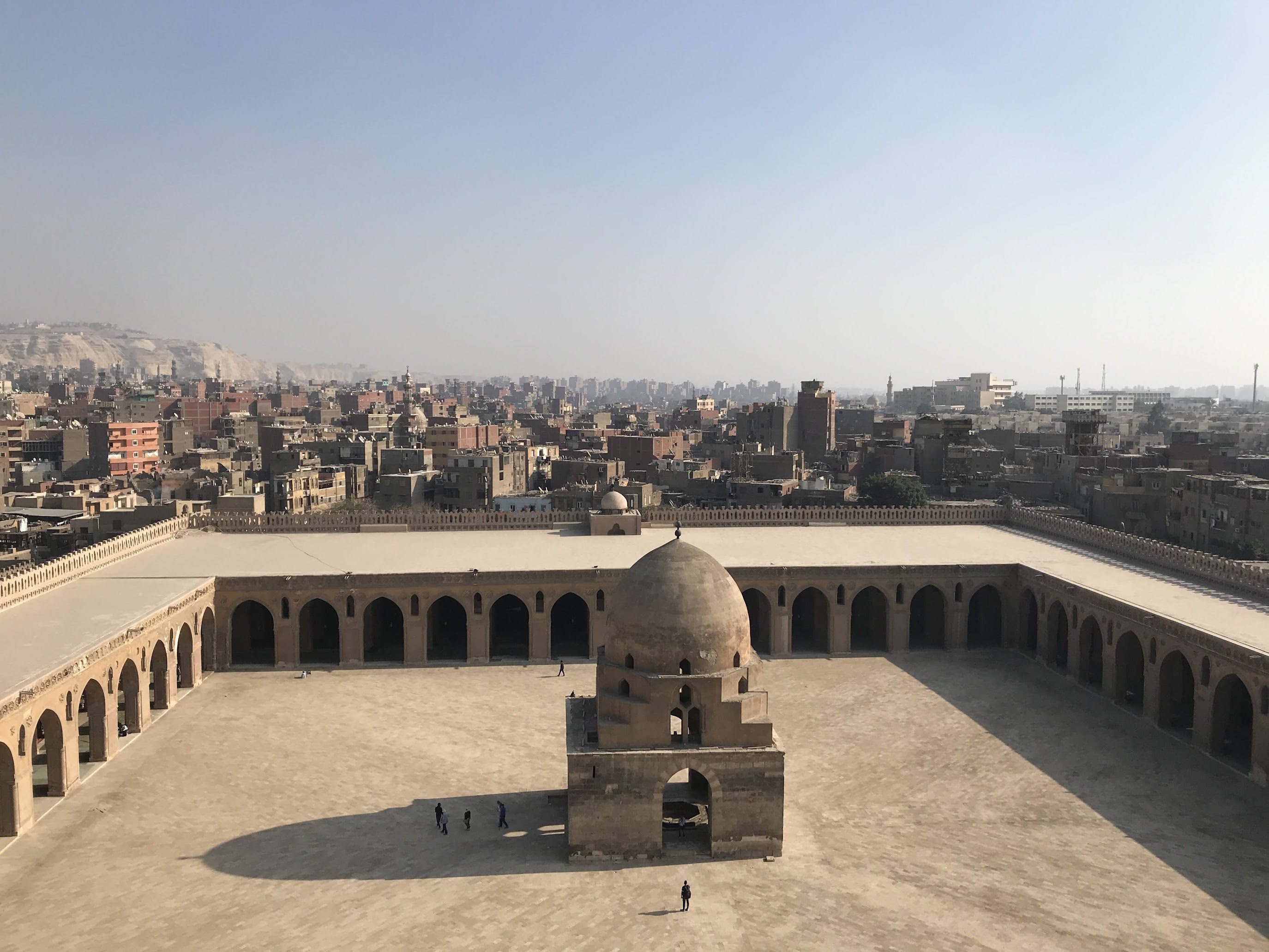
Commissioned by the founder of the Tulunid dynasty, this is a handsomely austere 9th-century mosque. Sun-starked and shadow-cut, it looks like the parched and lonely background of a Giorgio de Chirico painting.
You can also climb its minaret and view Cairo’s cityscape in its dense, concrete glory. A meadow of satellite dishes punctured by the occasional stiletto-sharp muezzin tower.
And even more of Islamic Cairo
Fragmented, sideways views of the Mosque-Madrassa of Sultan Hassan and the Al-Rifa’i Mosque. Two huge, skyward-yearning mosques standing right against each other at the foot of Cairo Citadel.
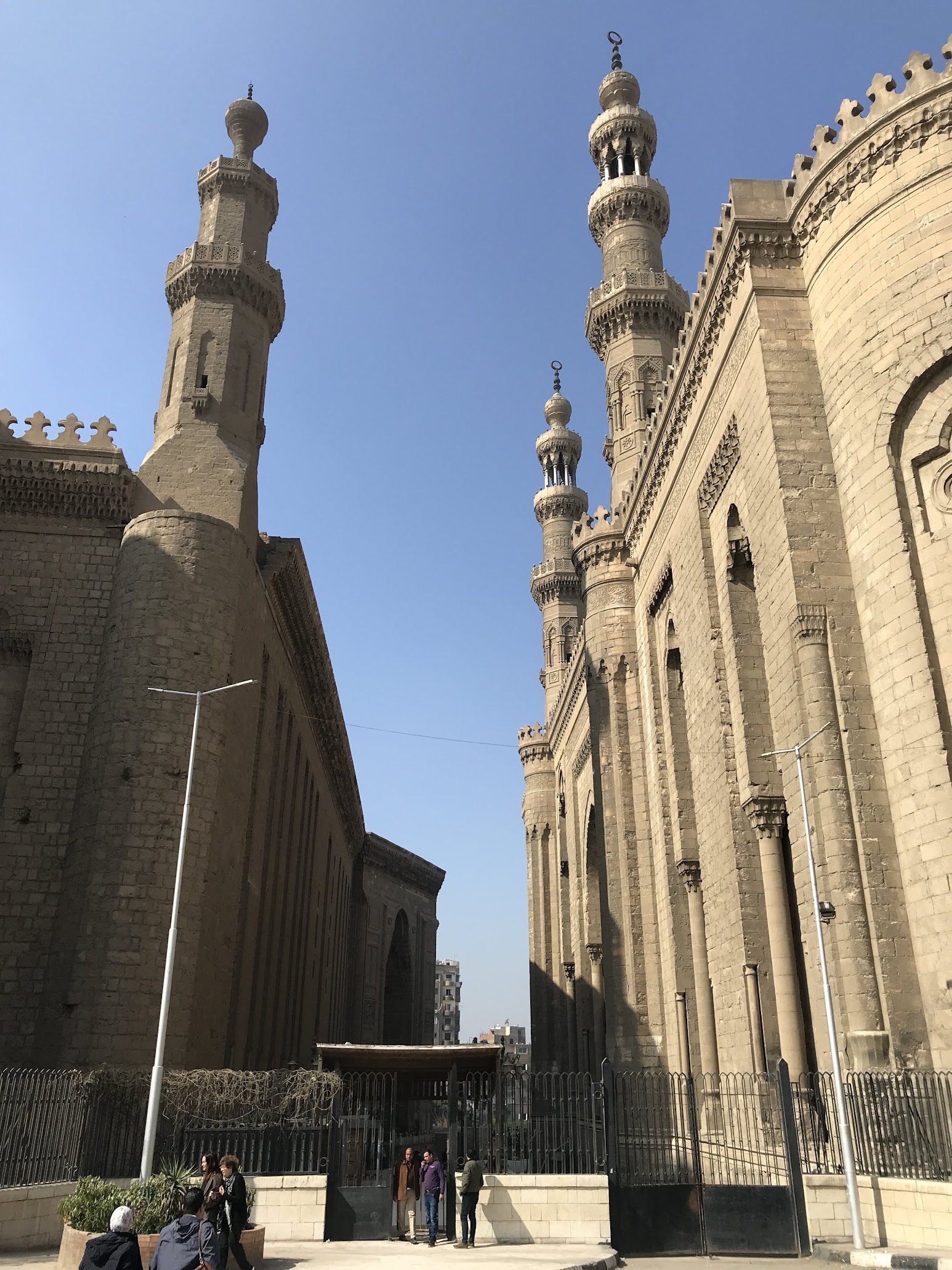
It’s almost impossible to suggest their volumes and textures through photographs: the gloominess of the lofty ceilings, the rich gravity of the wall patterns, the siesta-like drowsiness of an expansive courtyard… Photos are doomed to failure in places like this.
Egyptian food
Traditional Egyptian food? Yalla! Let’s talk about it:
Mulukhiyah and stuffed pigeon. Mulukhiyyah is a salty, slimy, and deliciously fragrant soup made from a vegetable called jute mallow. I can highly recommend it. As for the stuffed pigeon, yikes… It came with two different kinds of rice and the pigeon itself was stuffed with, well, even more rice. That’s too much goddamn rice, even for me!
Ful or ful medames. An Egyptian staple comprising stewed fava beans, some salad, and a whole lot of bread. This is Nile River peasant fuel at its finest and, except for the egg topping I specifically requested, entirely vegan. I’ve been a bit surprised to discover Egyptian cuisine is not as meat-heavy as I originally assumed.
Koshari. The national dish. Macaroni mixed with rice, lentils, tomato paste, chickpeas, and fried onions. And that’s it. Again, it’s effectively carbohydrate-intensive, vegan peasant fuel.
And to conclude, assorted views of Cairo and its urban surrounds
Many people dislike the relentless, messy hustle of Egypt’s capital (preferring, instead, to blitz through it on their way to the Pyramids and calmer, saner domains). But I took my time with this city and was ultimately won over by its eccentricities.
From its languid riverfront to its maddening markets, from its lawless traffic to its unkempt Parisian-style boulevards, from its feral cat hordes to its chain-smoking denizens, from its booming calls to prayer to its slothful shisha joints — oh, I’m genuinely going to miss this place.
So farewell Cairo. Au revoir and bshoof-ak ba’deen! Time for me to finally head off to quieter, saner domains.
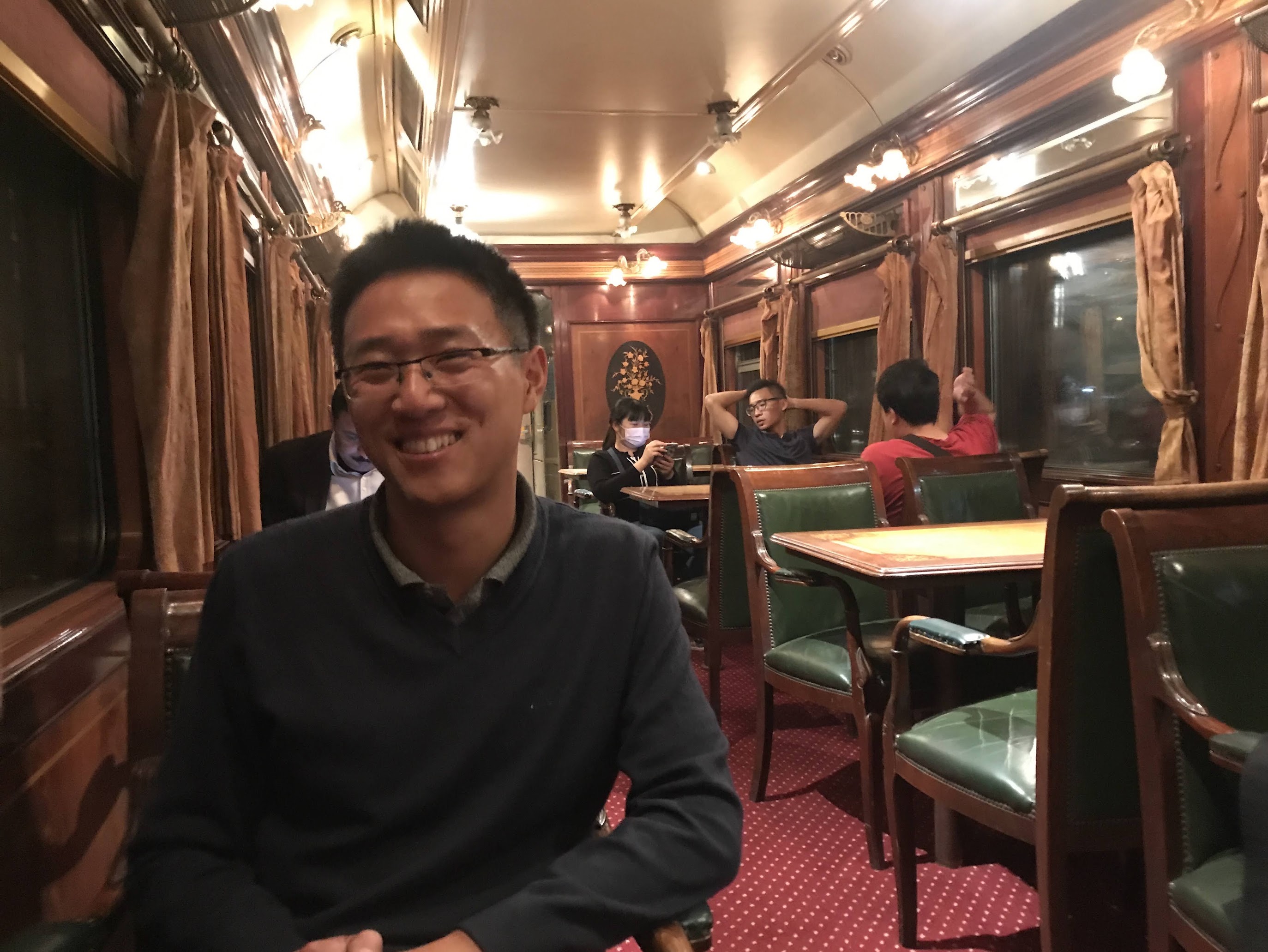
On the overnight train to Aswan in the south of Egypt…
Cappadocia (2020)
Posted 29 October 2020
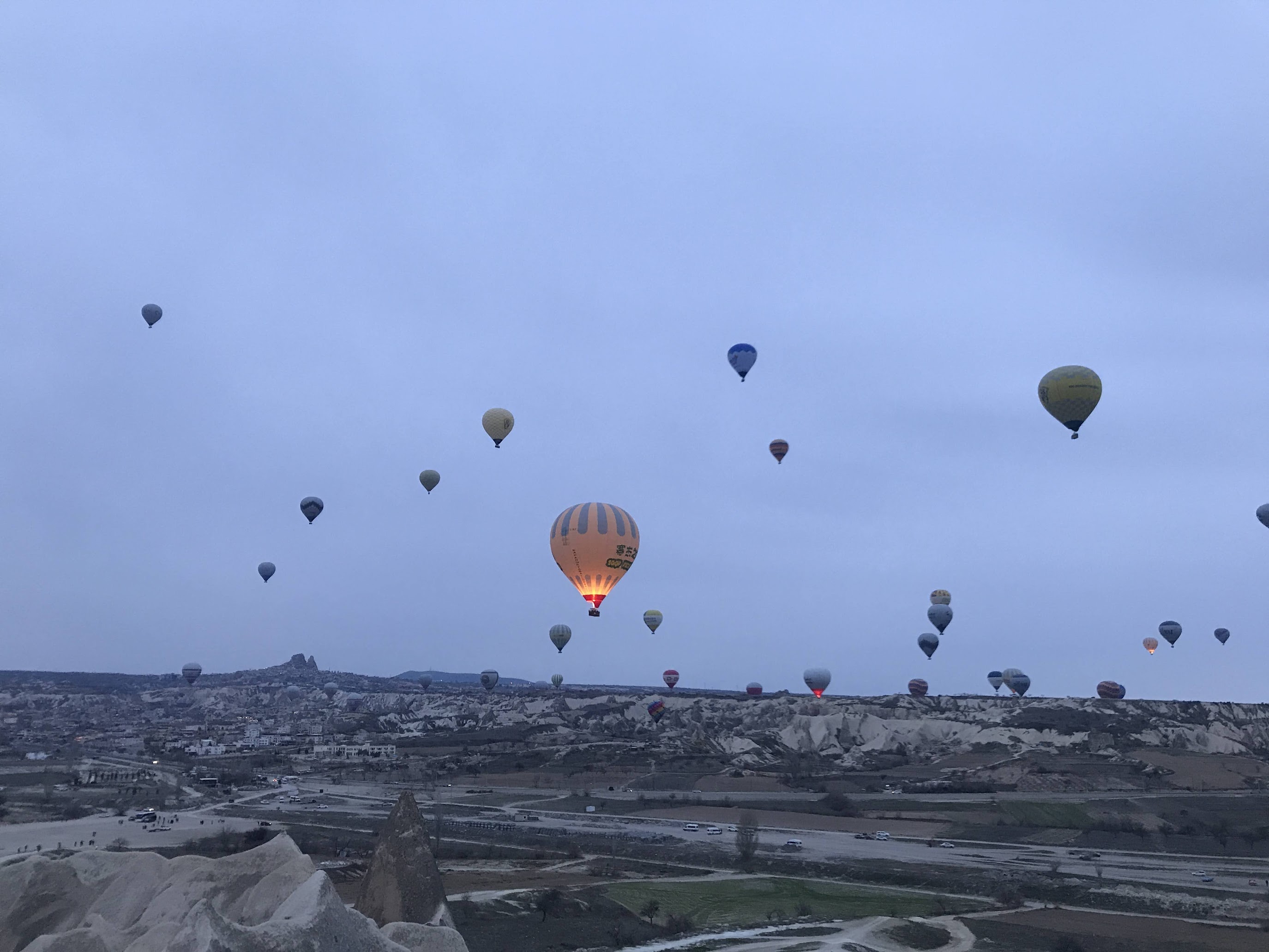
Hot air balloons of Cappadocia.
The otherworldly landscape of Central Anatolia
Stark and uncanny Cappadocia. An alien realm of fairy chimneys, moon-like earth, and hot air balloons floating at sunrise.
It is a land of exceptional geological wonder. Tent rocks. Fairy chimneys. Hoodoos. Call them what you will, the rock formations of Cappadocia are remarkable to behold. Since ancient times, people have carved churches, storehouses, caves, and anything else you can imagine into these rocks.
Cappadocia was a religious haven in the early days of Christianity when the young, upstart faith was being persecuted by the Roman Empire. Practitioners fled into this area and established monastic communities. Here, in this seemingly barren place, these people were able to survive.
When I wasn’t touring the region, I passed my time at a cosy European-style pension, or what I thought could reasonably pass as one. I drank cheap red wine. I smoked cheap cigarettes. There was a dusky French helper. There was a pesky cat. I talked late into the night with the other guests and we were served a hearty breakfast in the morning with terrible coffee. It was everything I could’ve wanted from the experience.
A mad thought came to me while I was staying at my pension, as the 2020 pandemic craziness slowly (or rather, rapidly) descended on the world. I recalled the premise of Boccaccio’s ‘The Decameron’: a group of men and women are sheltering in a villa on the outskirts of Florence to escape the Black Death and, to pass the time, they regale each other with tragic, clever, funny, and bawdry tales. Painfully apropos, if you ask me.
Maybe I should have done that. Stayed in that pension, waiting out pestilence by telling stories. Maybe. But it’s too late to know now. In another life, perhaps.
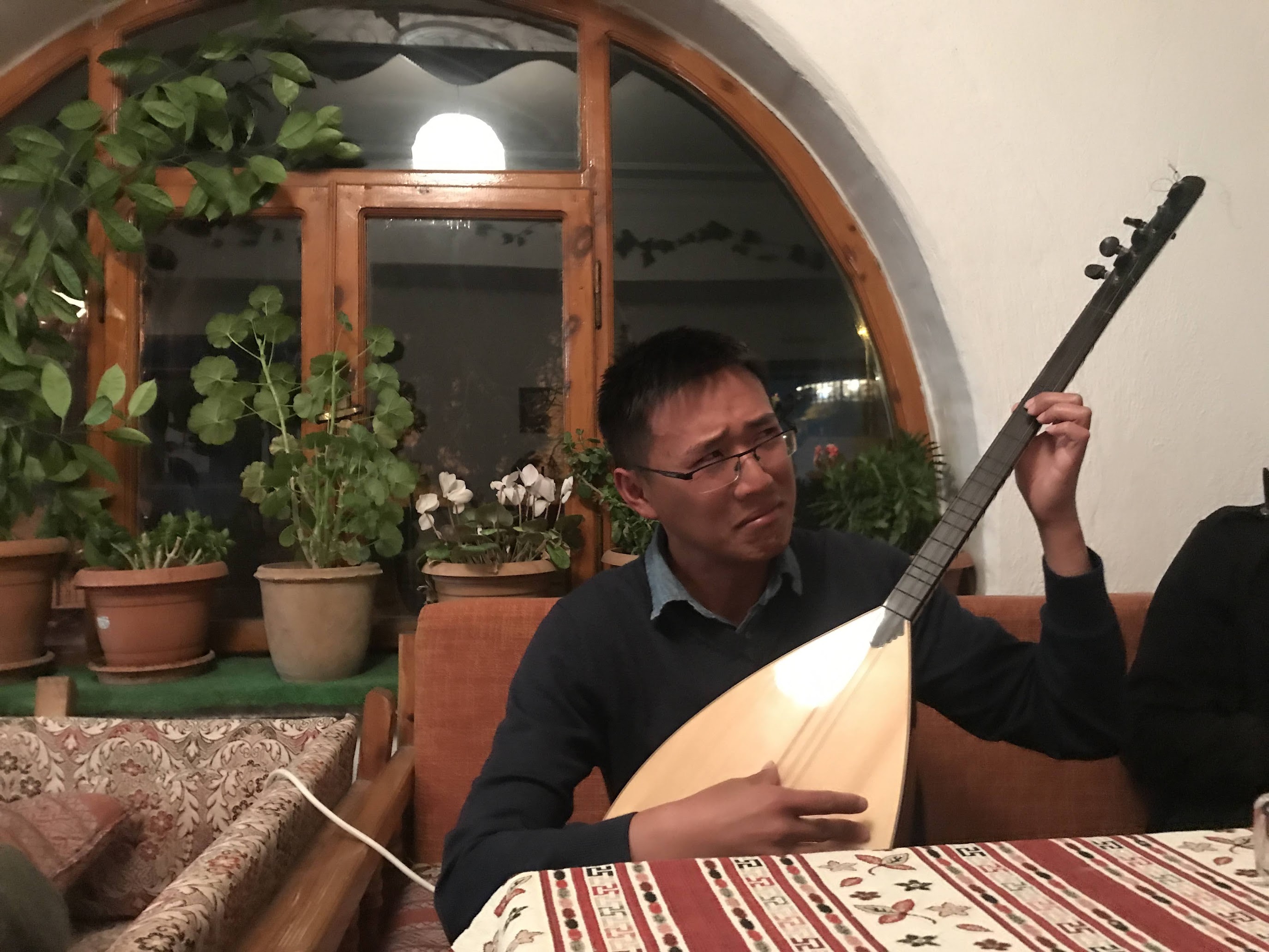
Depicted: yours truly, totally knowing how to play bağlama, a traditional Turkish stringed instrument.
Dahab, Egypt (2020)
Posted 10 October 2020
Dahab! A famous backpackers haunt on the southeast coastline of the Sinai Peninsula!
After a long, bumpy, and exhausting night bus out of Cairo (which included an unannounced 1 am bus swap and multiple security checkpoints), arriving here was like suddenly being tossed into an idyllic mirror universe. Dahab is carefree and beachy in an almost holiday-postcard-cliché sort of way and, in my honest opinion, it is what Goa should’ve been like.
My goal here in Dahab was simple. It was to scuba dive in the Red Sea, eat falafels, potter around and read books and, most importantly, mellow out for a couple of days. I think I succeeded.
And what is Dahab, exactly? Well, there’s a lot to comment on. There are the Russian holidaymakers and British pensioners. The quirky Egyptian restaurant owners and Bedouin locals. The usual-suspect-backpackers and marijuana smokers. There are dive shops and quad bike hires and desert adventure operators. It is a place to indulge and do everything at once and do nothing at all.
Pictured below: me with one of my new underwater buddies. Farewell landlubbers!
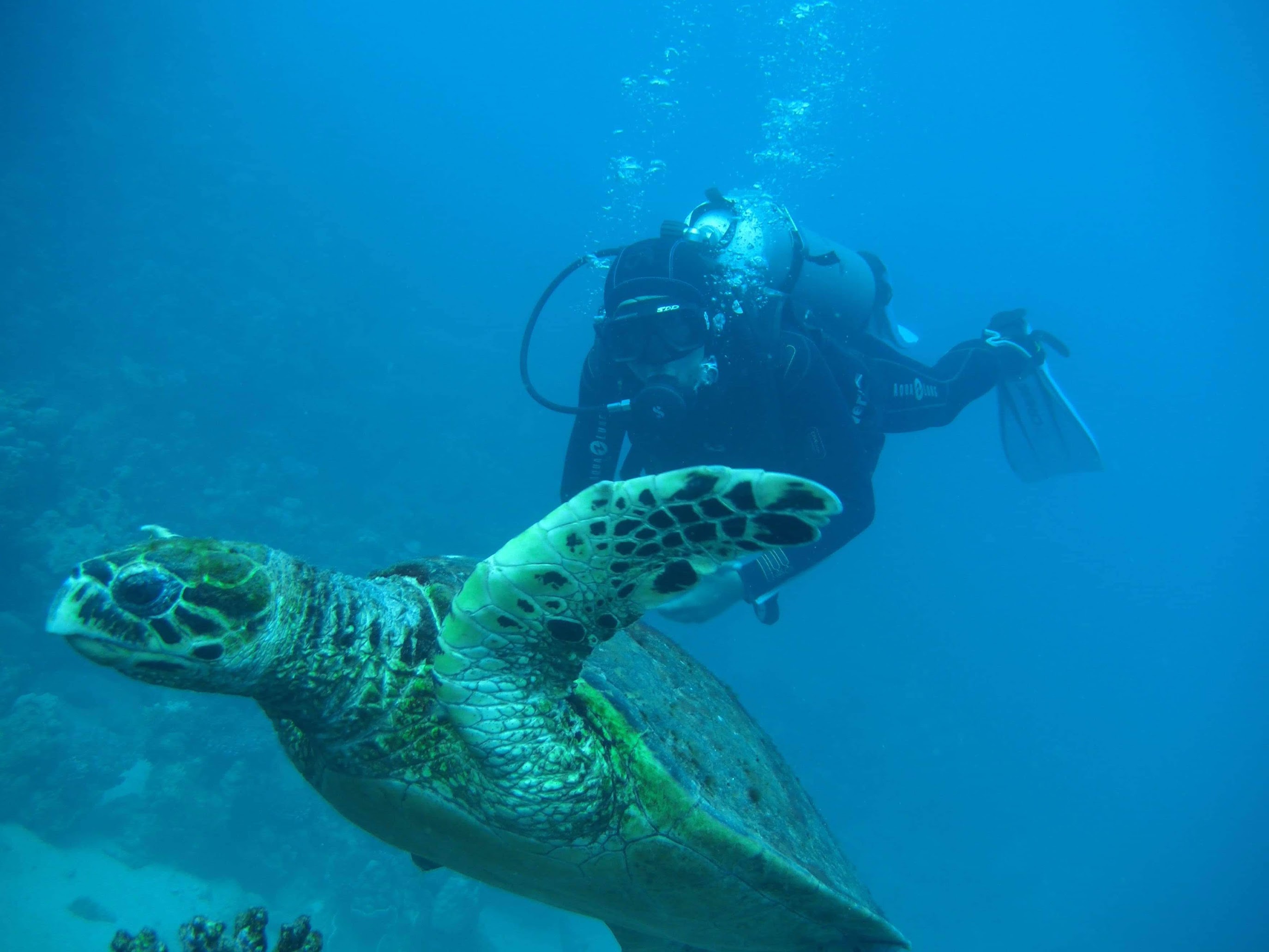
The coral reefs around this part of the Red Sea are superb. During my stay, I obtained my PADI Advanced Open Water certificate, giving me the ability to dive to 30 metres. With my newfound ability, I had the opportunity to explore the Blue Hole near Dahab, a submarine sinkhole with an internationally notorious reputation – it allegedly has the highest diver fatality rate of any dive site in the world. Thankfully, my dives there were beautiful and undramatic.
But this marvellous Egyptian story could not last forever.
My flawless plan to escape Egypt via a dodgy commuter ferry to Jordan sadly ended in failure. On the very morning I arrived at the port in Nuweiba, the ferry company decided to block all foreigners from boarding due to concerns over COVID-19 (this was just a few weeks before it was officially declared as a pandemic). Disaster!
So instead of spending my afternoon eating knafeh in the Hashemite Kingdom, I was stranded in a filthy, dilapidated South Sinai port town. Luckily, I had two equally unlucky French Canadian backpackers to keep me company while we waited for a bus to take us out of the “asshole of Egypt” (their words, not mine). So I wasted a whole day of travel but made two lovely new friends in the process. Hence, this episode is filed reaffirms the old adage: It’s not the destination that matters, but the friends you make along the way!
The good news is, I was able to fly out of Egypt and into Istanbul – a little manoeuvre I like to call ‘Failing to Byzantium’. Hah.
(P.S. As it later turned out, this ferry debacle was due to classic Middle Eastern miscommunication within the company — it has since allowed some nationalities to enter Jordan. Alas, the issue was resolved well after I had departed.)
Giza and Alexandria (2020)
Posted 24 February 2021
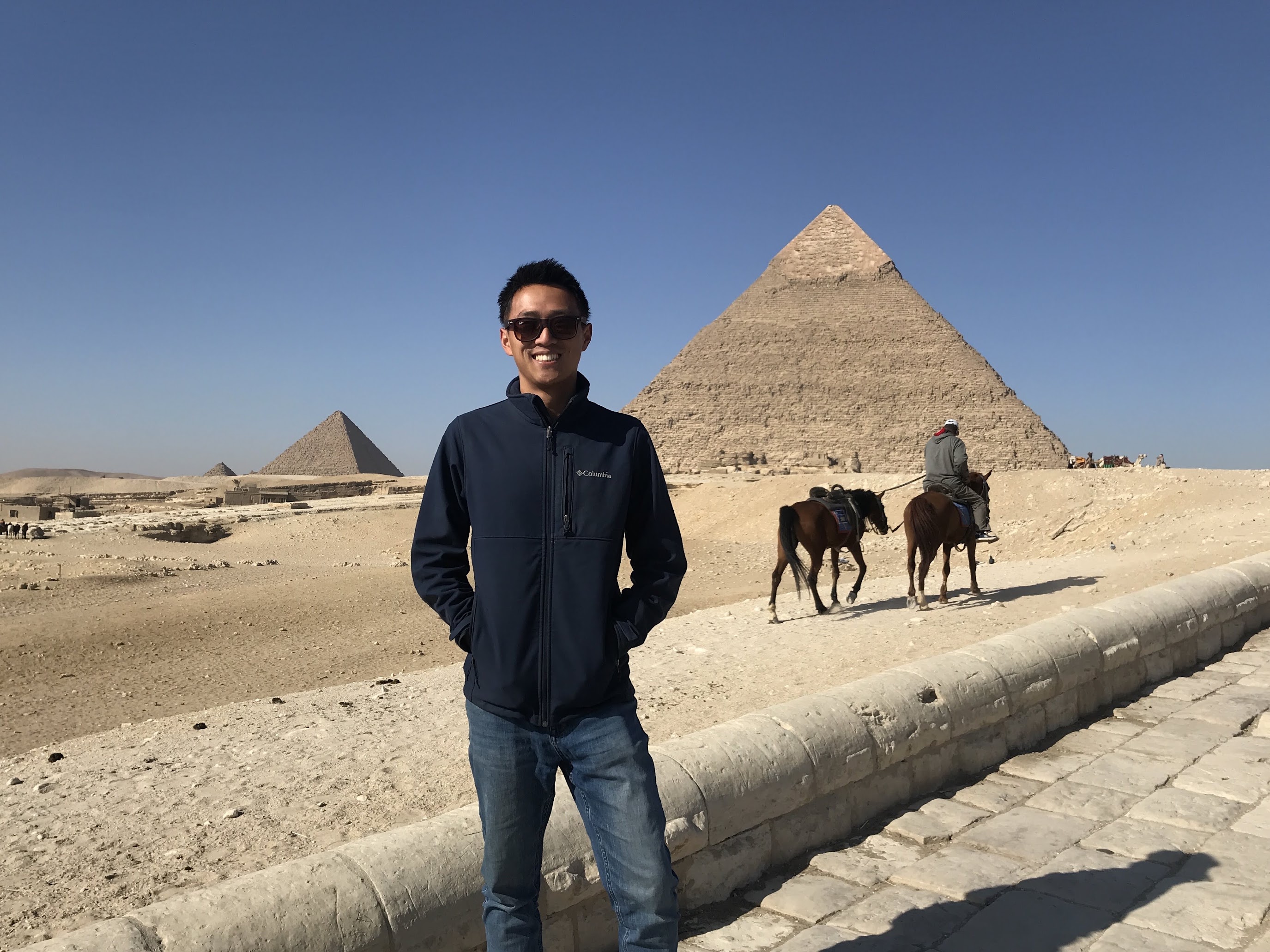
Yep. It was probably aliens.
Giza — home of the pyramids
Monumental. Cryptic. Iconic. Otherworldly. Mind-boggling. What else can a mere mortal possibly say about them? As the last surviving wonder of the ancient world, I had to make an effort to go see them. Done and dusted. I can finally move on with the rest of my life.
Fun fact #1: the mammoths were still alive when the Great Pyramid of Giza was built around 2580-2560 BC. Fun fact #2: the Pyramids of Giza were more ancient to the ancient Romans than the ancient Romans are to us. Fun fact #3: these piles of stone attract some, how shall I put it, very interesting perspectives. I’ve had all kinds of chats at my hostels about ‘world chakras’, ‘energy healing’, and ‘Atlanteans’. If you don’t bump into these modern pilgrims while exploring Egypt, you’re missing out.
Regrettably, my visit didn’t begin as intended. In my effort to (a) get there before the calvary of tourist buses, and (b) save money, I took a local minibus, promptly got lost, and was scammed into taking an overpriced horse buggy ride to the ticket office. I didn’t lose a painful amount of money, all things considered, but I was so angry with myself I was almost ready to punch out the next Egyptian tout that approached me! That’s the reality of travel for me — sometimes I’m a savvy globetrotter, sometimes I’m too anxious to make good decisions in the heat of the moment. My stock rises and my stock falls. I constantly need to remind myself how to move on and take the rough with the smooth…
Postscript: Despite being one of the most popular destinations on this planet, the Giza pyramid complex is shockingly ill-equipped for modern tourism. The ticket office is effectively a tin shack where you toss a guy some money. No credit card machines. No handy maps or information booths. Nothing. It’s a bit funny, but it’s also a reminder of the struggles that modern Egypt still faces.
Alexandria — the largest city on the Mediterranean
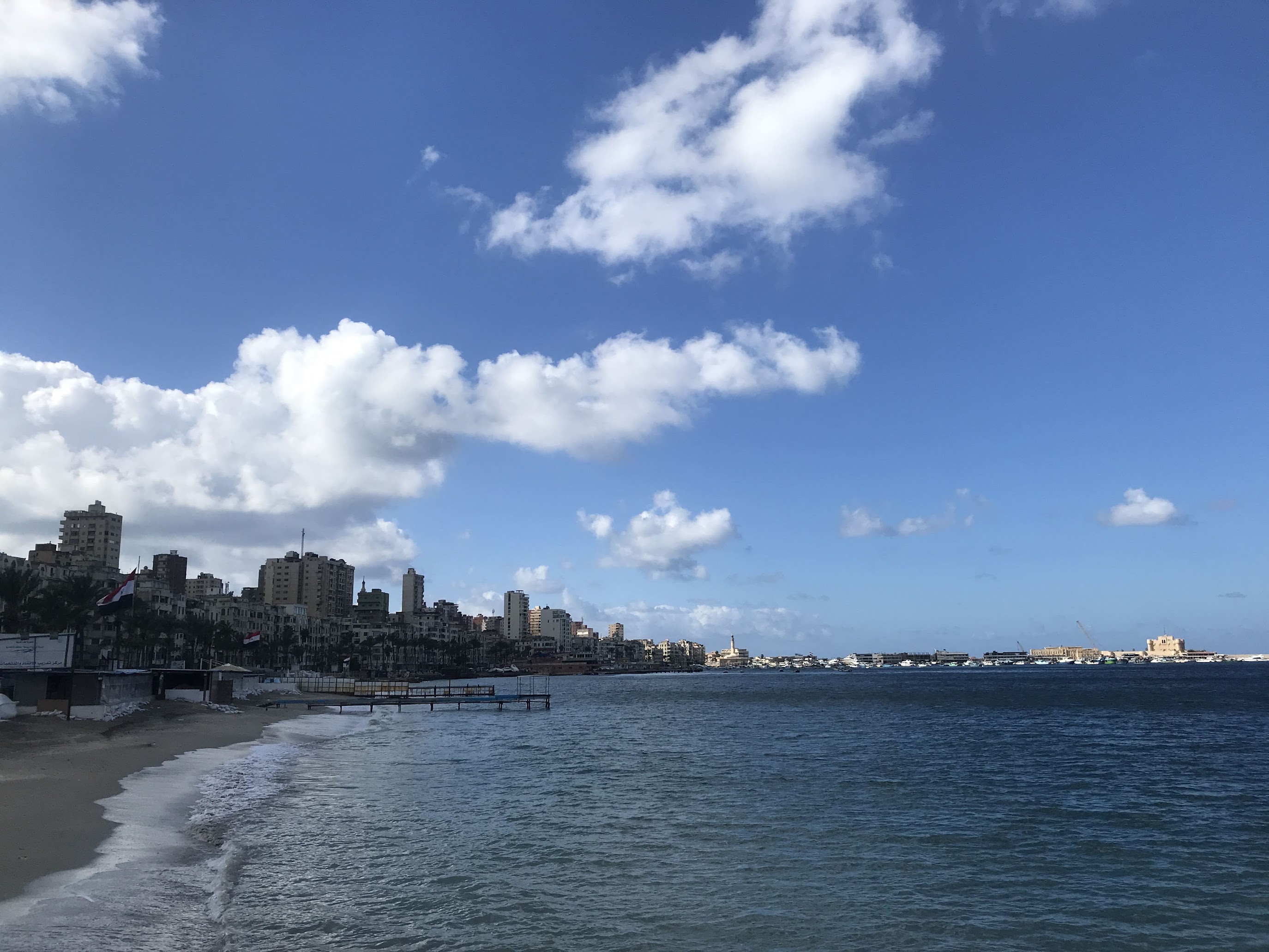
Brief remarks on a day trip out of Cairo to Alexandria, a chill (if somewhat grungy) coastal metropolis…
The people seem very friendly and have a penchant for taking selfies with the lone foreigner walking around. Checked out the waterfront promenade and gorged on the cheapest Mediterranean seafood I will likely ever find in my life. Also browsed the Bibliotheca Alexandrina, an ultra-modern Starfleet Academy-esque library built near the site of the ancient Library of Alexandria — may it rest in peace. Julius Caesar, you arsonist pig!
Some notes from the aspiring growth economists within myself: Consider the melancholic and rundown European-style building facades. Consider the battered and boxy black-and-yellow taxicabs that still roam Alexandria’s roads. Take away the smartphones and what you have are street scenes that look like they’re from the ’80s or ’70s. What does this tell us about urban technological progress, particularly in lower-middle-income economies like Egypt or elsewhere?
Goa (2020)
Posted 29 August 2020
Doing absolutely nothing on a beach in Goa
Goa! Multiple Indians have told me they think it’s heaven and multiple foreign travellers have told me they think it’s overrated. Experiencing a bit of Goa and musing on these disparities is a fascinating exercise. However, I wasn’t in Goa for intellectual entertainment. I was there to sit at the beach, read a book, and recover from my food poisoning in Hampi. Please note: chicken vindaloo and Kingfisher do not accelerate healing. Sure, I could’ve done some (dangerously) cheap water sports or joined a party. But idleness was my dominant mission.
It’s hard to get around Goa unless you are brave enough to ride a scooter, well-budgeted enough to afford Goa’s taxi cartel, or (like me) mad enough to take the rust bucket local buses everywhere. For that reason, I picked a fairly central location. Not one of the northern drug-and-party beaches, nor one of the southern yoga-and-wellness beaches, but an upmarket-ish interstice beach where everyone was Russian or a British pensioner (there were some Indian families too, which was reassuring). It was also surprisingly uncrowned for early January. I did not mind any of this. It was nice to finally touch the Arabian Sea.
On the question of authenticity: Is not discovering where so-called ‘real India’ is suspended just part of discovering ‘real India’? Plenty of Indians love Goa and many parts of it clearly cater to them. The very visible
Christianity-of-the-tropics (plentiful meat and alcohol, small wooden churches, little crosses and saints on overgrown verandas, pigs in backyards, etc.) and the Portuguese-style houses screams Goa’s unique legacy. Plus, the ‘lumpiness’ (for lack of a better word) of how India runs is still visible. Rough roads and chaotic traffic. Stray dogs on the beach. The masseuse at my sun bed having to stop and hide while a policeman strolled past. You never forget which country you’re in!
I’m not an idle person. I’m not a beach person. But I mildly enjoyed Goa. When the sun sets and the moon creeps into view on the beach at dusk, it’s the evening star, Venus, a perfect white dot, piercing the waning glow of day that captures your attention as you nurse your beer.
But after three days of lounging around on the beach in Goa doing very, very little, I decided enough was enough and forced myself to visit Old Goa, the former capital of Portuguese India.
Catholic India. Colonial Portugal. The Basilica of Bom Jesus, Se Cathedral, among others. The highlight for me was seeing the colossal ruins of the Church of St. Augustine. It’s not just the Hindus that have a monopoly on magnificent Indian ruins! Laterite makes for a striking building material. Forget the flowing marble church sculptures of continental Europe - much of the art within these structures was done by Goan craftsmen with Goan materials. The local influences push through and are worth pausing to admire.
Hampi (2020)
Posted 1 August 2021
FROM MY DIARY ENTRIES: This ruined expanse in the south Indian state of Karnataka was once the wealthy and powerful imperial capital of Vijayanagara, the “City of Victory”. At its peak in the 1500s, this Hindu city was said to be the second largest in the medieval world after Beijing. But the city was sacked by Muslim armies in 1565 and has remained abandoned ever since. Look on my Works, ye Mighty, and despair! Nothing beside remains…
DAY 1: I arrived via a bumpy overnight train from Mysore. This place has a bit of a reputation in India backpacking circles - namely cool ruins, hippies, bouldering, and very stoned people trying to climb large stones.
On my first afternoon here, I checked out the Tungabhadra River, the Monolith Bull, the Achyutaraya Temple, and hung out with the local lads.
I ended the day with one of the most spectacular sunset landscapes I’ve ever witnessed. It is a vast and mesmerising land of immense granite rocks, scattered as though the gods were playing marbles in ages past. A great evening and goodnight from atop Matanga Hill.
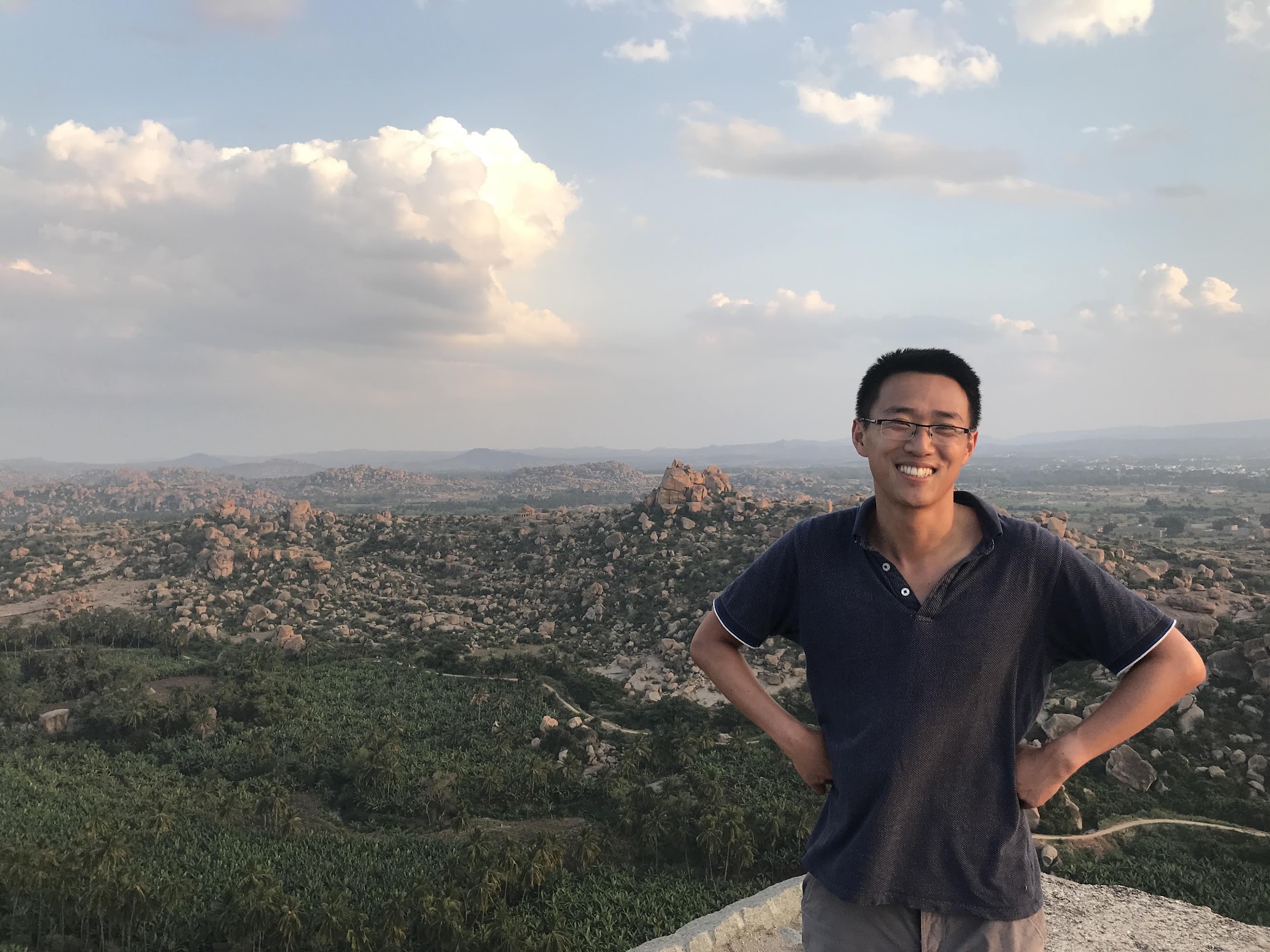
DAY 2: I spent a full day cycling and hiking to sightseeing destinations around Hampi. It’s certainly hard to know if I recorded everything down correctly! I ticked off Hemakuta Hill, Laksmi Narasimha Temple, Badavilinga Temple, Underground Shiva Temple, Hazara Rama Temple, the Royal Enclosure, Malyawanta Hill, the Saasivekaalu Ganesha, among others.
During my explorations, I bumped into a lot of domestic tourists who wanted my selfie and to know where I was from, especially given my appearance. Unfortunately, a complex story (Chinese heritage, New Zealand citizenship, Australian residency, etc.) doesn’t cut it! I eventually caved and just lied and said I was from China whenever people asked.
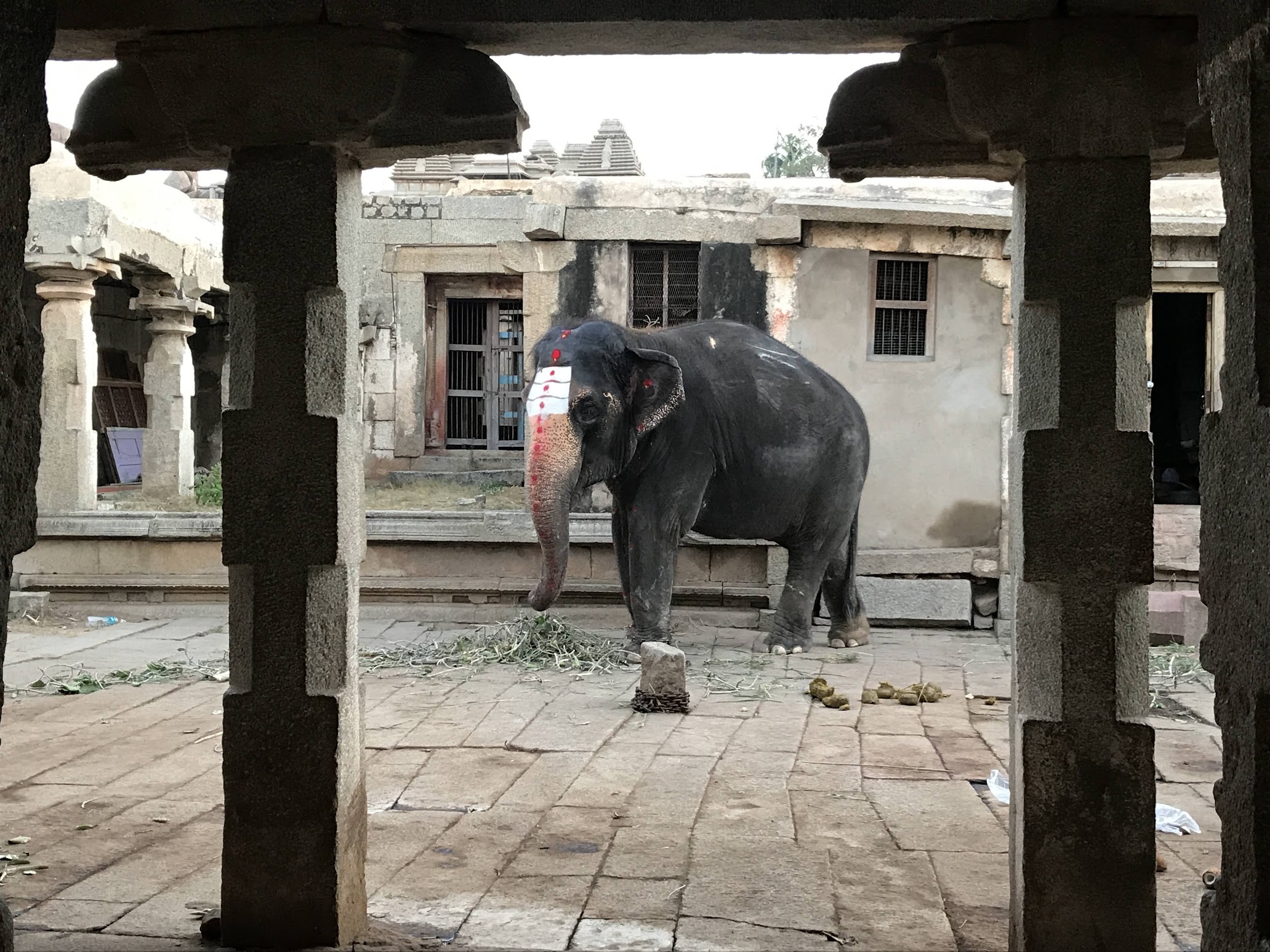
I finished day two by checking out the Virupaksha Temple near the local village, dedicated to a form of Shiva. It is believed to be one of the oldest functioning temple sites in India, being an active place of worship since the 7th century. Plus, the temple had some real head-banging trumpet and drum music going on as well when I visited.
The temple elephant in the photo, by the way, is ‘Lakshmi’. Apparently, if you hand her a ten-rupee note she’ll give you a blessing with her trunk. Cutesy fun? It’s worth noting the welfare for these animals isn’t the best…
It’s also worth noting that the main Hampi backpacking strip is very Hindu, which mens there’s no meat or alcohol to be found anywhere. Or you could just ask for the ‘pollo’, which is code for chicken and get your meat fix anyway. Ha!
DAY 3: Disaster! I was struck with travellers diarrhoea after (probably) eating a chocolate croissant that had been sitting out in the sun all day. This obviously meant no more cycling for me.
Thankfully, I met an Indian-Australian traveller at the guesthouse who had hired a rickshaw for the day. So I was able to hitch a lift with him. Plus, he helped me sneak into the paid sites on an Indian ticket (40 rupees as opposed to 600 for foreigners)! I probably shouldn’t say that too publicly. Though, I have had many Indians tell me they’re opposed to the extreme third-degree price discrimination of tourist sites.
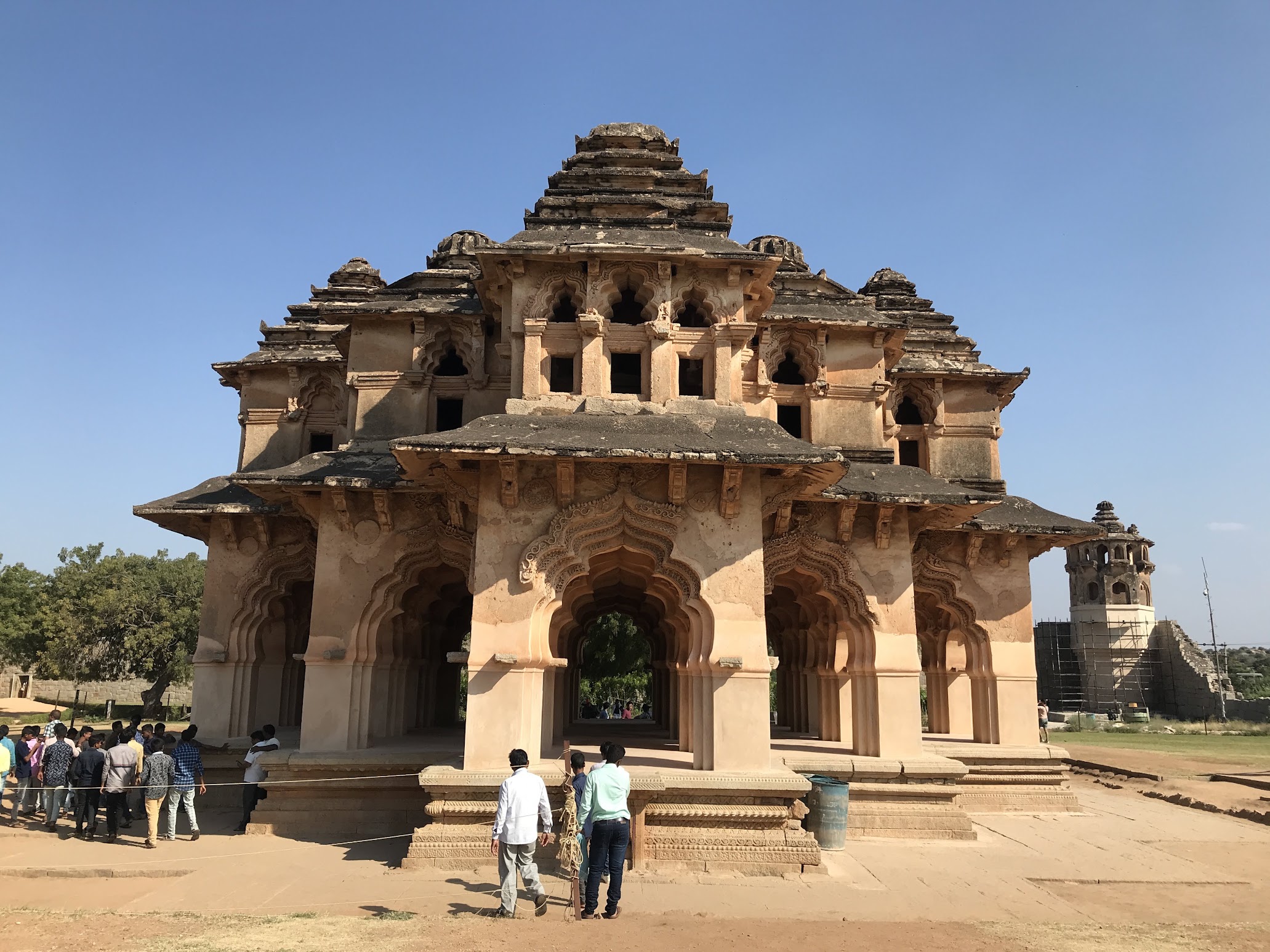
What I saw: the stunningly beautiful Vijaya Vitthala Temple, more lads who wanted selfies, the Lotus Mahal and Elephant Stables, and an evening religious ceremony on the banks of the Tungabhadra which ended in fireworks.
DAY 4: This was my final day in Hampi and it involved a cycling adventure north of the river!
My newfound Indian-Australian friend and I hiked the 575 (or so) steps up Anjaneyadri hill to the supposed birthplace of Hanuman, the ‘Monkey God’ and servant of Rama. We made many hearty shouts of ‘Jai Shri Ram!’ (‘Victory to Lord Rama!’) and ‘Jai Hanuman!’ (‘Victory to Hanuman!’) on the way to the top. At one point on the climb, I was handed a banana, which I fed to one of Hanuman’s many primate subjects squatting on the rocks.
I’ll drop in this over-worn quote now so I don’t have to repeat it in future writings: “In religion, every Indian is a millionaire.”
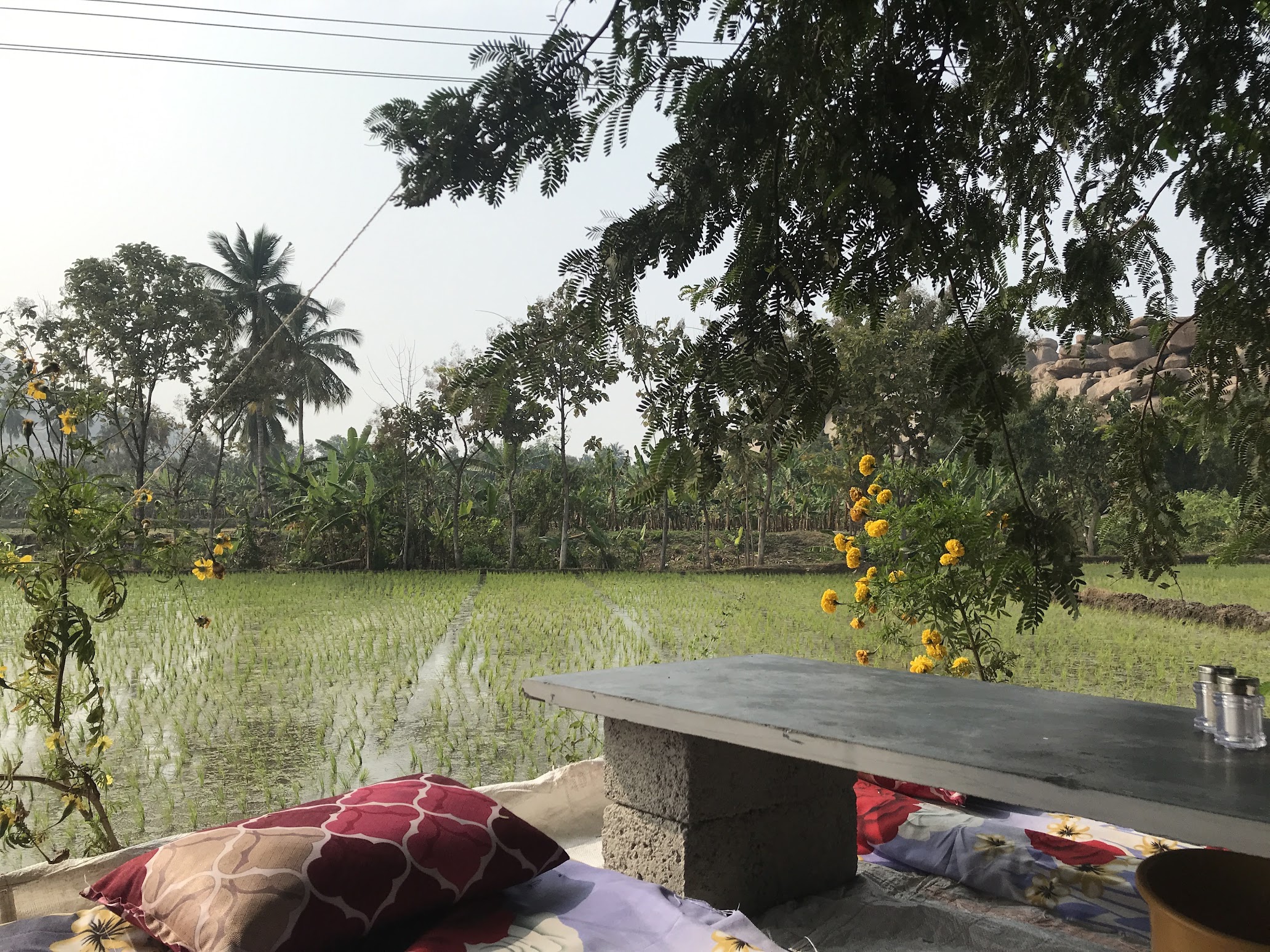
The Indian countryside is also fascinating to cycle through. Bullocks ploughing the muddy fields. Piles of chillies drying out in the sun. Women (and it seems to be only women) singing and planting rice in the paddy fields. Kids coming up to you and asking for money for “school pens”.
That’s the way things are here. There is beauty, there is boredom, there is backbreaking labour, there is poverty, there is a continuity to life and faith on the land that has remained unbroken for countless centuries.
Impressions of Delhi (2020)
Posted 12 September 2020
“Remember, Mister Premier, that Delhi is the capital of not one but two countries - two Indias. The Light and the Darkness both flow in to Delhi.” - Aravind Adiga, The White Tiger
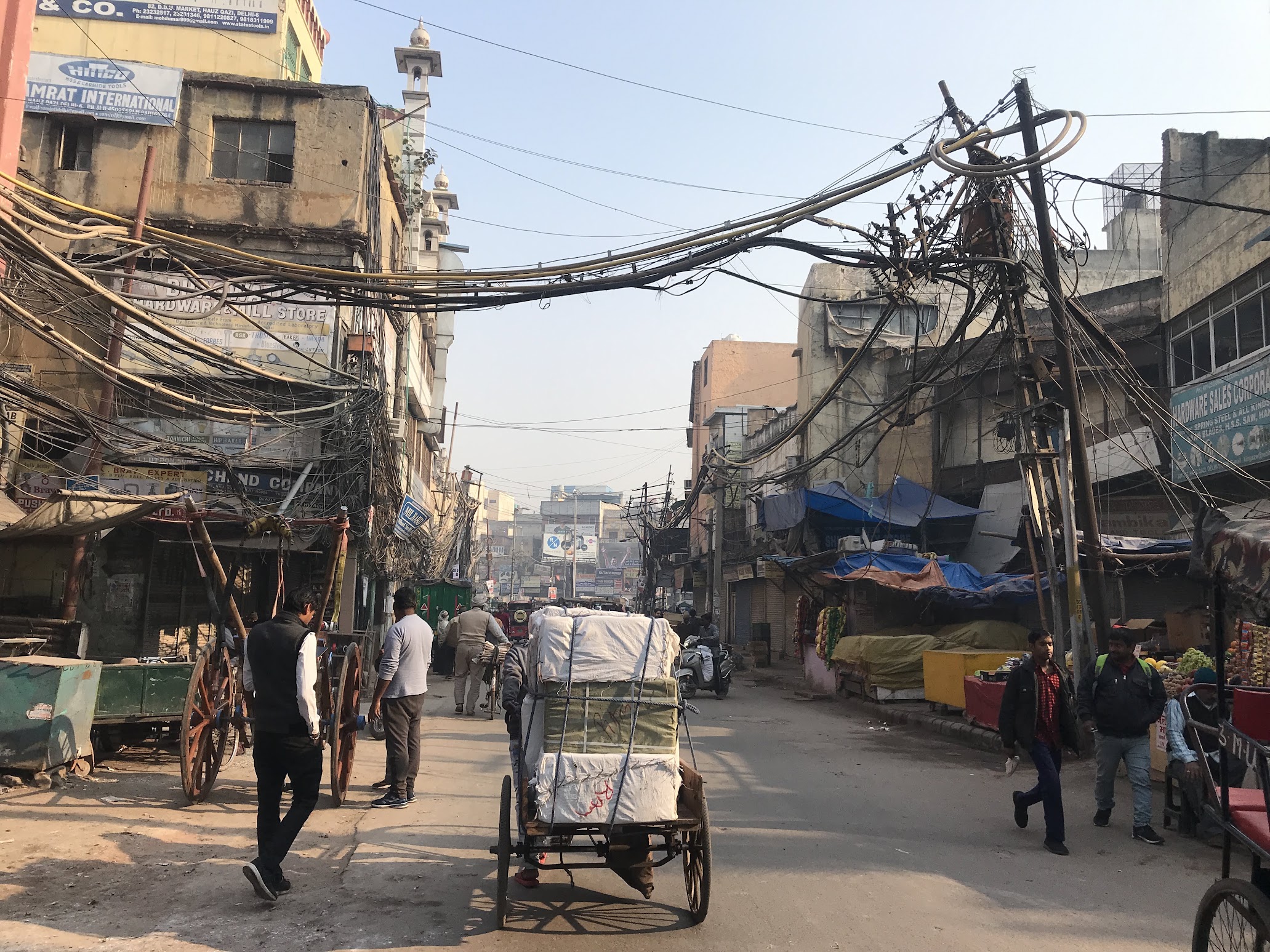
Delhi in the morning
Delhi is the whole subcontinent flowing into one place… It’s the only place in India where I’ve had people directly speaking Hindi to me. Makes sense. I’ve seen a lot of people with East Asian features from northeastern states (e.g. Assam and Manipur) and neighbouring countries like Nepal living and working here.
Delhi is a lot to breathe in… Aside from Beijing, this city has some of the worst air pollution I’ve ever encountered. It’s bloody awful. After a day of walking around the city, I was lightheaded and my snot was black
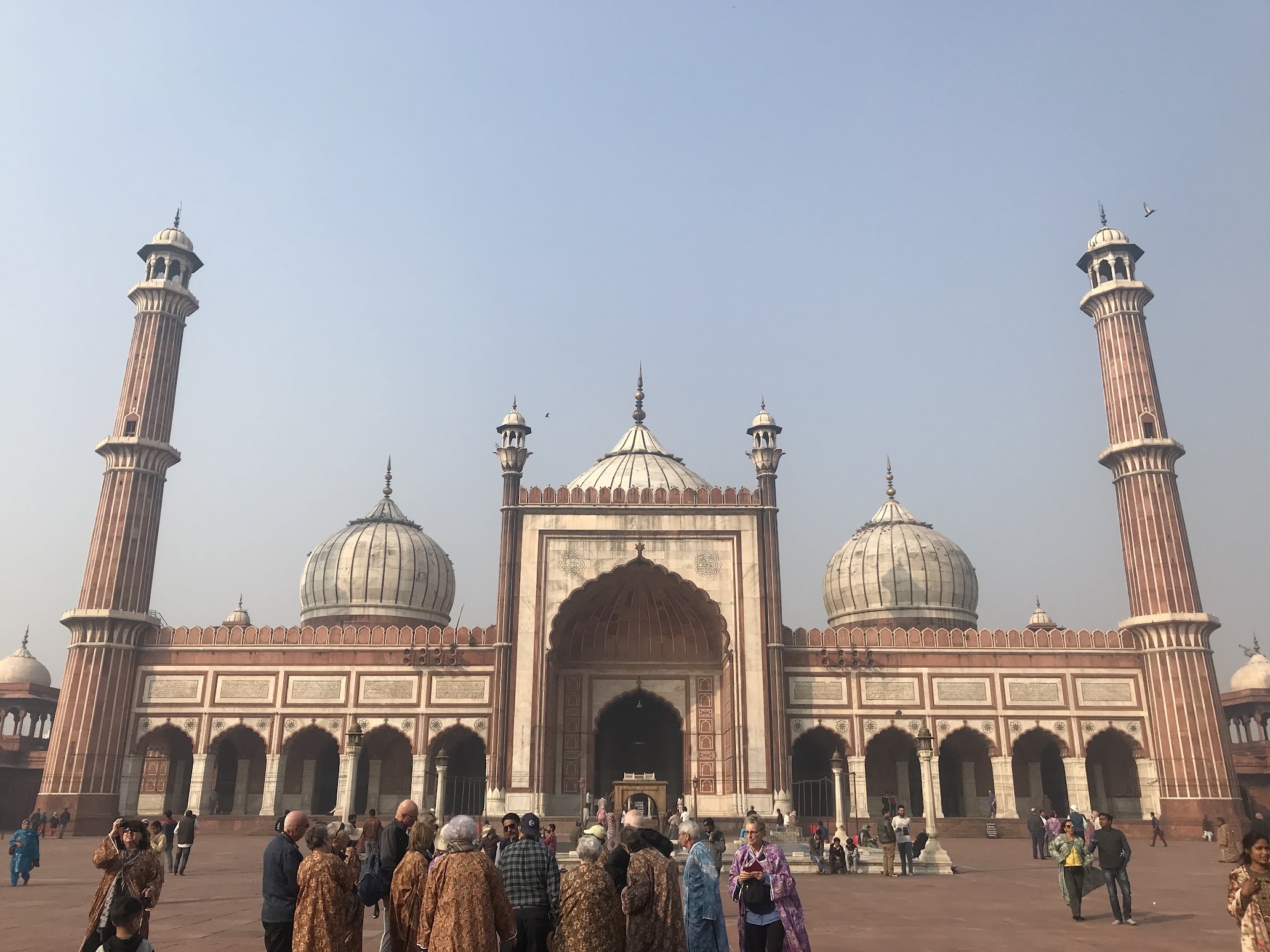
Jama Masjid
Delhi is grungy density at its finest… Old Delhi (where a colossal Mughal-era mosque, Jama Masjid, is located) is rundown and crowded to the point of perverse aesthetic perfection. Close by is Paharganj, a nightmare ghetto of cheap hotels and semi-broken neon signs. I stayed there and I loved it and hated it in equal measure.
Delhi is the ghost in the memorial…
Raj Ghat: a serene garden marking the spot of Gandhi’s cremation (which includes trees planted by not-so-Gandhi-like dignitaries such as Ho Chi Minh and Nicolae Ceausescu, the brutal dictator of communist Romania).
India Gate: a triumphal-arch-cum-tourist-trap honouring British Indian Army soldiers who died in the First World War and other conflicts.
The National War Memorial: constructed in 2014 under the Modi administration, it’s the most chest-thumping one I’ve been to in any country. Large bronze panels depict various battles where Indian soldiers inflicted heavy casualties or died fighting to the last man against Pakistani and Chinese forces. Opinions on what constitutes good taste at these places may vary.
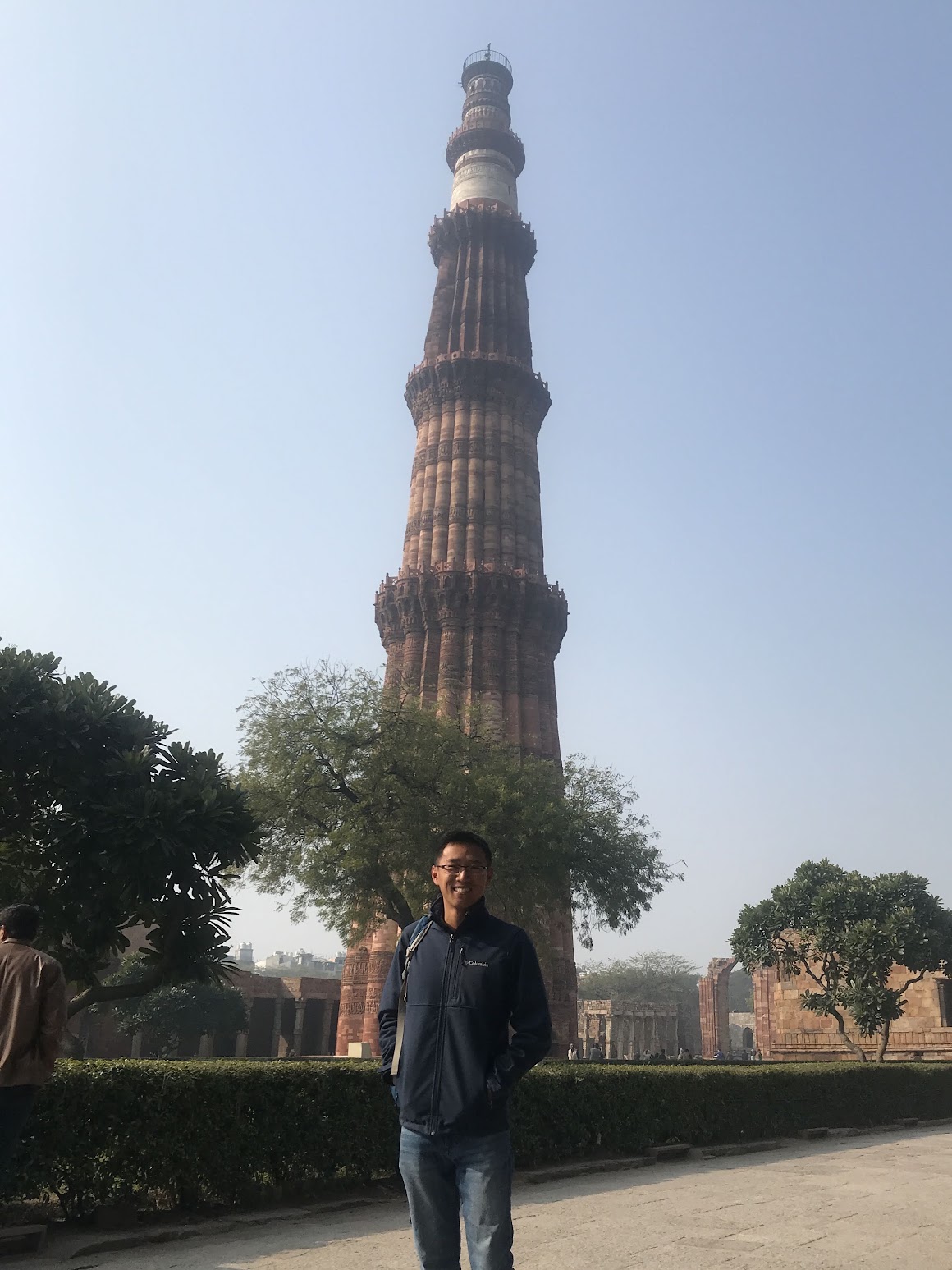
Qutb Minar
Delhi is a city both obsessed and apathetic about security… Everywhere you go in the heart of the city, policemen and soldiers toting Cold War-era surplus firearms. Every time you take the (beautifully modern and efficient) metro system, your bags are screened and you are frisked by officers. Of course, no one seems to give a shit — they just go through the motions. A great example is the metal detectors in all the hotel entrances. People come, people go, the detectors sometimes beep and sometimes don’t, and no one bats an eye.
Delhi is a rude city… I’ve had to snap at people and raise my voice just to get things done here. I think I became a bit too aggressive towards the end of my stay. Some of it is simply big-city brusqueness, but I reckon a better explanation is that everyone is just pissed they have to live in Delhi of all places. Mumbai is nicer, Chennai is hilariously messy, but Delhi is in a league of its own.
Delhi has some absolute marvels tucked within the grit… The Qutb Minar complex is a sensational place, filled with tombs and ruins of the Delhi Sultanate. Just check out that soaring, 73-metre tall sandstone minaret! Equally fascinating (for me, at least) are the elaborate Indo-Islamic designs and the bold, contrasting use of white marble and red sandstone in the complex. For some reason, seeing this building mixture made me crave both dairy milk and white chocolate at the same time.
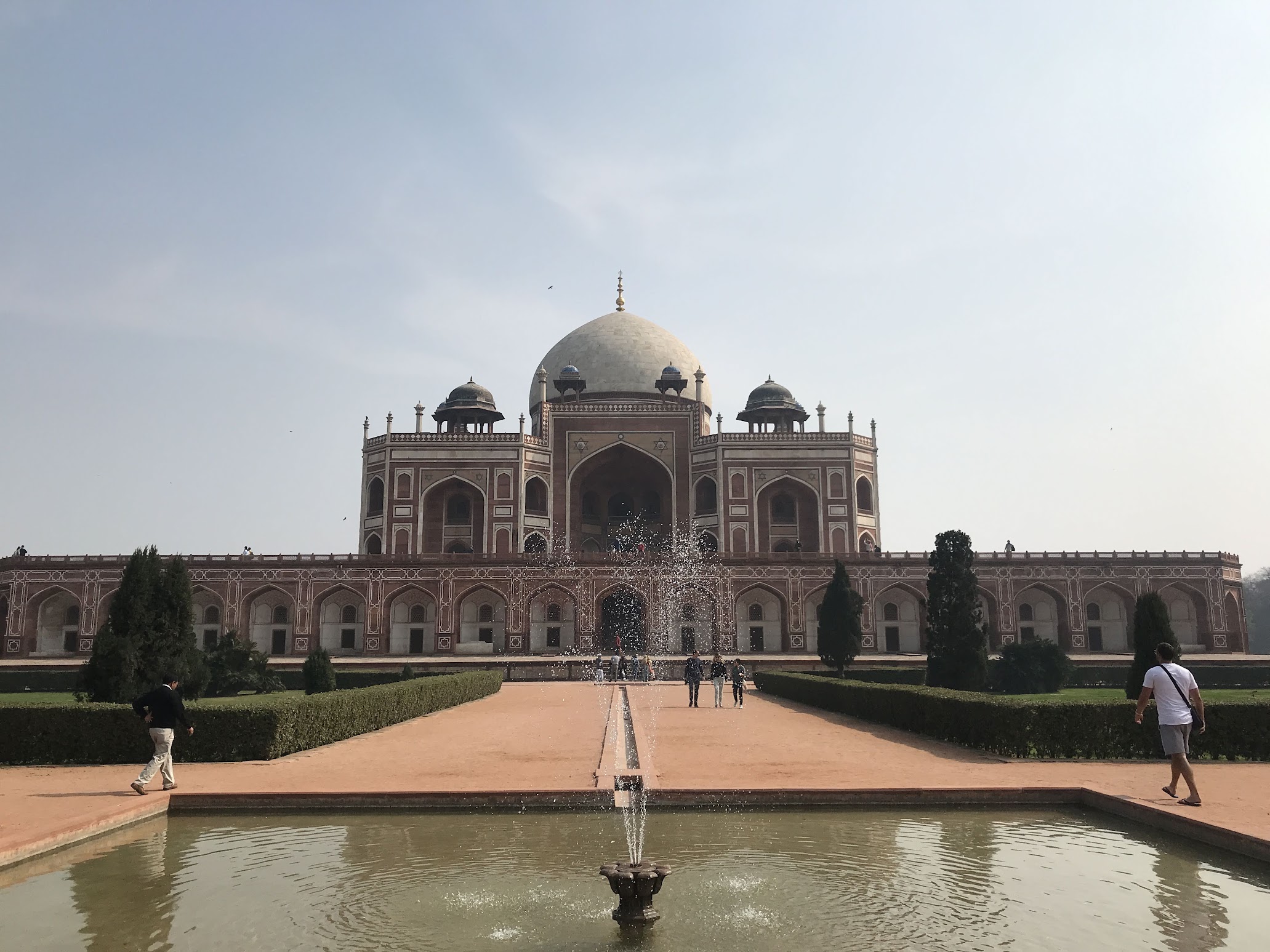
Humayun’s Tomb
Delhi is a testament to North India’s Islamic legacy… City of djinns, indeed. Although current issues in India surrounding Muslim identity and Hindu nationalism can be politely called a ‘fraught clusterfuck’ (I’ll never forget the awkward exchange I had with an Uber driver in Jaipur where he praised the Chinese government’s Xinjiang internment camps), Islam’s artistic impact on the country is enthralling. Look no further than Humayun’s Tomb Complex — home to the grandiose resting place of the second Mughal Empire, as well as other paradisiacal garden-tombs.
Delhi is the reason ‘Delhi belly’ is a thing… Alas, my luck ran out at the very end of my Indian odyssey and I was struck with severe traveller’s diarrhoea a second time. Whether I contracted it in the nation’s capital or elsewhere (the ‘Punjabi punisher’, perhaps?), I will never truly know. But I spent my last few precious days in Hindustan staggering around places like Humayun’s Tomb in an Imodium-induced fugue state. And I don’t even want to begin talking about the hellish 4 am flight I took out of Indira Gandhi International Airport, with my guts churning like the tea in a chai wallah’s pot.
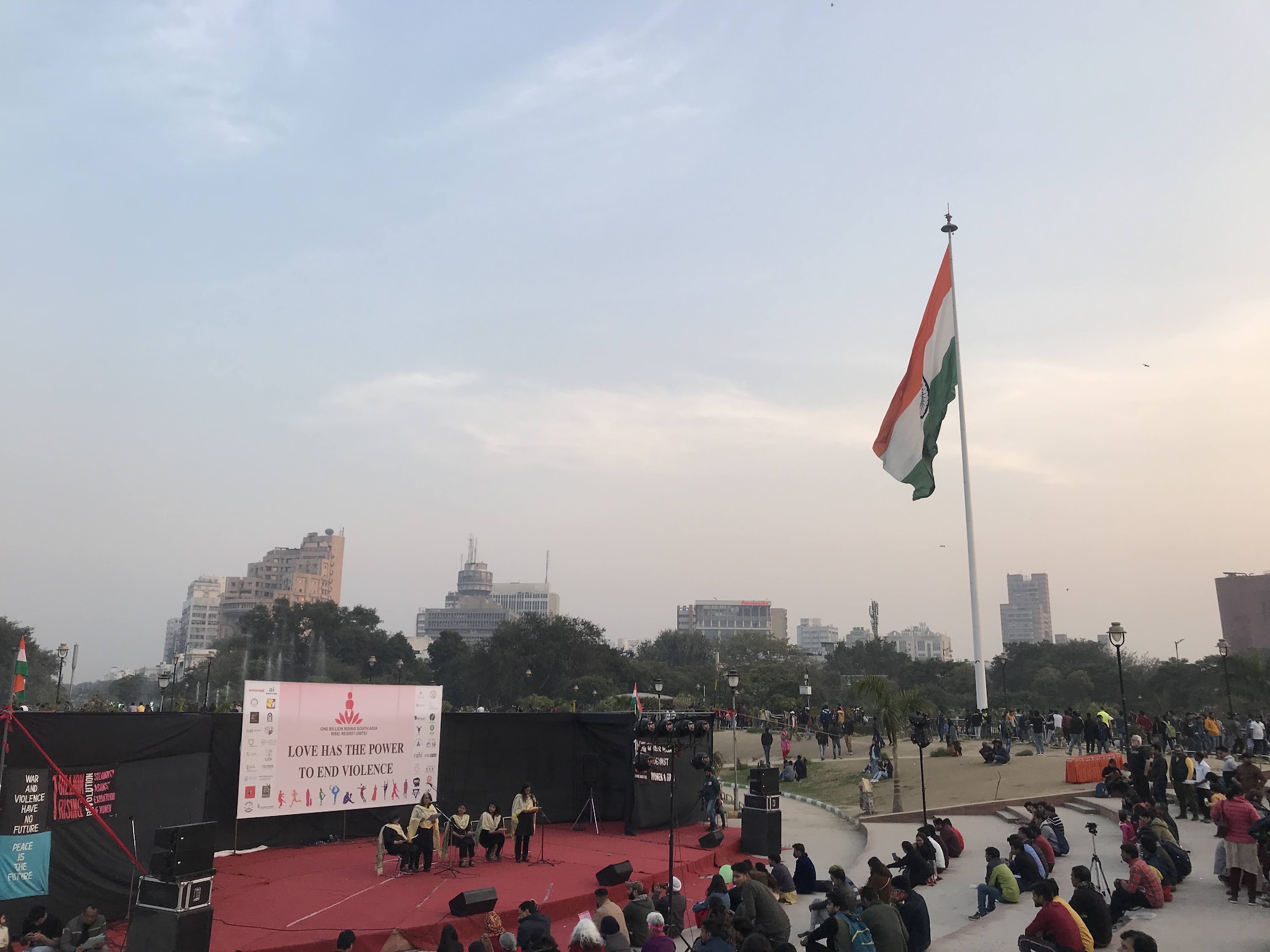
Flag of India at Central Park, Connaught Place
Delhi is the best place to become a ‘made man’ in the land of madcap travel… After I flew out of Delhi and into Cairo, I could only listen with mild amusement to people bemoaning the traffic, the hassling, the noise, and the dirtiness. My god. If only they knew the things I have experienced on the mean streets of Delhi. I’m not sure if anything can faze me anymore.
Delhi is business and loitering, adeptness and incompetence… It is Connaught Place, where I haggled for fake Ray-Bans outside a high-end sunglass store, was harassed by two skin-crawlingly obnoxious Indian lads, had to suffer the inefficient local post office, found superb exchange rates with back alley dealers, and watched dusklight creep over the ridiculously big Indian flag in Central Park.
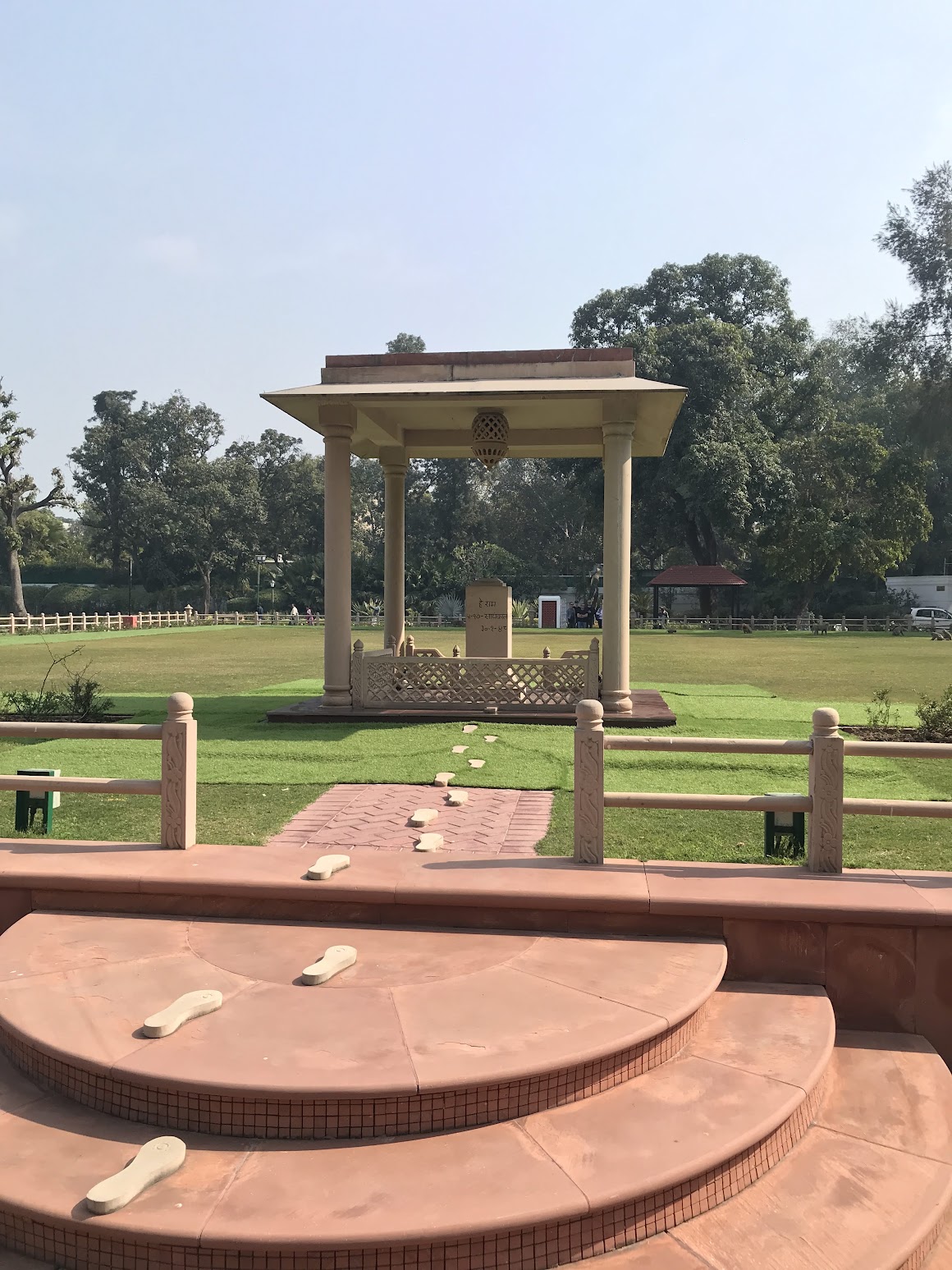
Gandhi Smriti
Delhi is the dream of a softer tomorrow… It is visiting Gandhi Smriti, seeing where Mahatma Gandhi spent the final days of life, reminding myself of what he stood for, and then following in his footsteps to the spot where he was assassinated.
Delhi is a cosmopolitan city but not an international one… The difference I felt between Mumbai and Delhi is the difference I felt between Shanghai and Beijing. Mumbai feels authentically global, with the dynamism to match, while Delhi is a bursting-at-the-seams capital that feels like it’s still sloughing off an entire nation’s complications.
Delhi is a reminder that every foreign locale, no matter how “westernised”, has quirks… On election day for the Delhi Legislative Assembly, I tried to have lunch at a restaurant in the snooty and arty Hauz Khas Village (think off-brand Greenwich Village) and was told by the haughty waitstaff that — because of the election — it was a designated ‘dry day’ in the capital and alcohol could not be served. But when I asked to see their list of mocktails, they informed me that was not possible since it was printed on a menu that also listed alcoholic drinks. Like, what the hell?
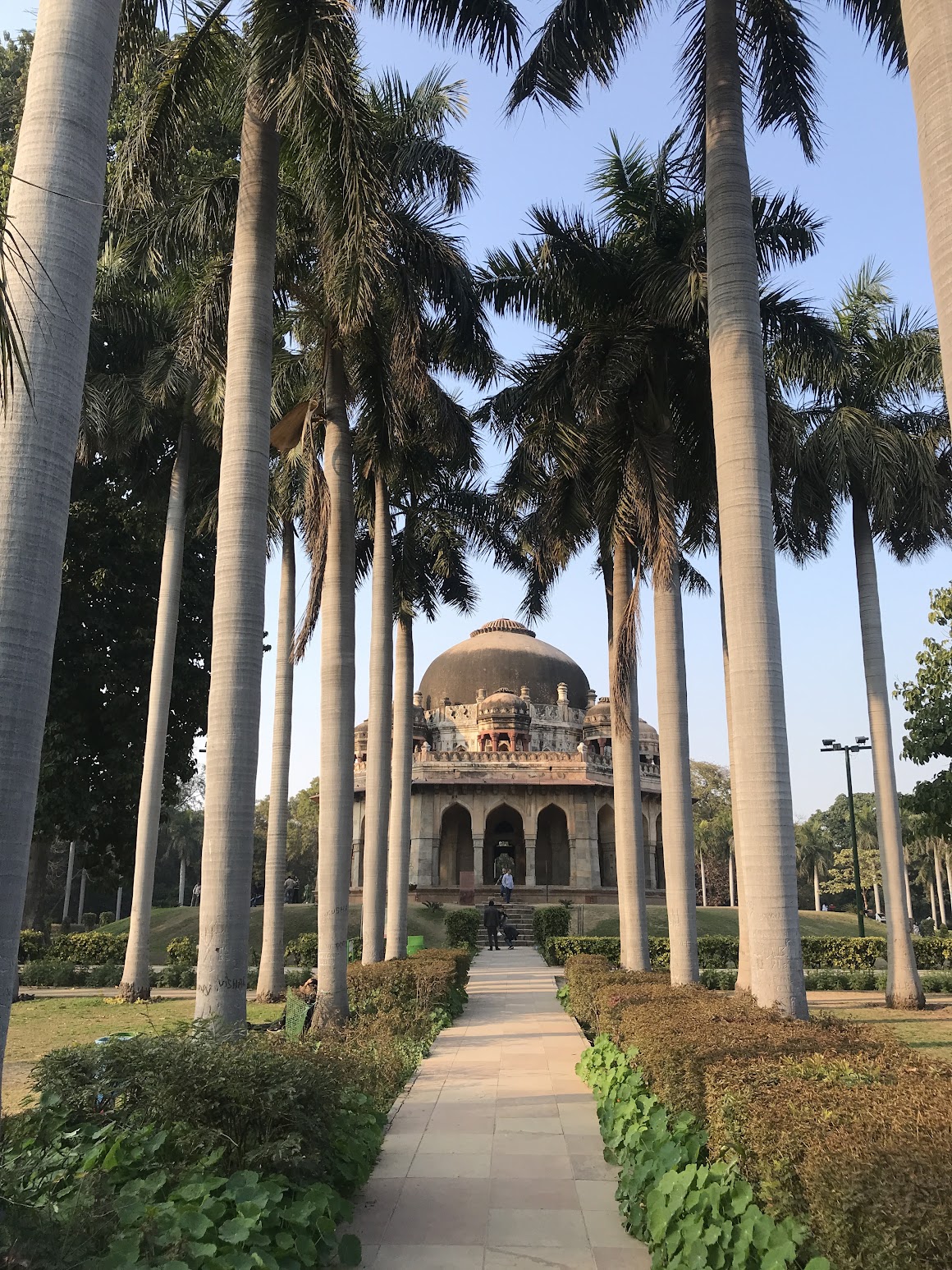
Delhi is about finding your own patch of grass… It is Lodhi Gardens, a pleasant and free city park, dotted with well-preserved tombs and monuments of the Delhi Sultanate, and populated by happy picnickers and backyard cricketers. One could almost be fooled into thinking they were back home.
Delhi is ugly and agreeable. Friendly and troublesome. It’s fun and it’ll also kick your ass if you’re not careful. I’m glad I saw it and I’ve seen more than enough.
Delhi is done! India is done! I’m out! Adios! It is finally over!
Istanbul (2020)
Posted 1 April 2022
They say I am between the East and the West. An identity crisis! Whose? Mine or theirs? Enough of this nonsense. Take the labels off and look at me. Just look. — “The Voice of Istanbul”, Gündüz Vassaf
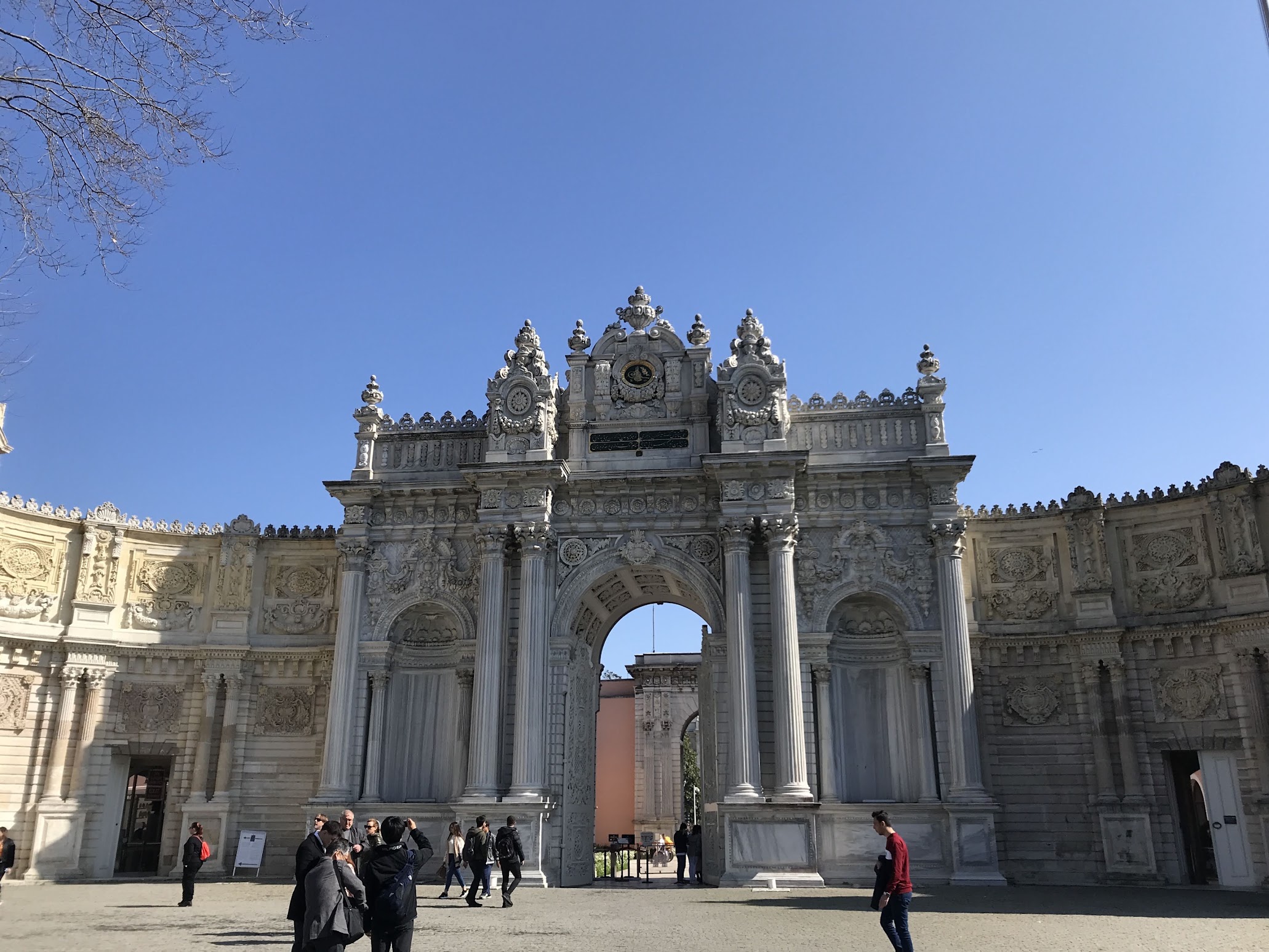
The Dolmabahçe Palace
This was the governmental nucleus of the Ottoman Empire for much of the 19th and early 20th centuries. But you won’t find the unique, medieval aesthetics of the caliphate at the height of its power anywhere here — Dolmabahçe was very much built to mimic the style of European royal abodes during that period. So much so that one could argue the palace demonstrates just how keen the Ottomans were to stave off secular decline and keep up with their more modern European neighbours.
It’s a mashup of Baroque, Rococo, and Neoclassical elements. Or so I am told. All I know is that I muttered “these rich motherfuckers…” to myself a couple of times during my tour of the palace. Grand chambers and monarchical opulence for sure. But throwing millions of liras at foreign decor didn’t cure the empire of being derided as the ‘sick man of Europe’. And the rest, as they say, was history.
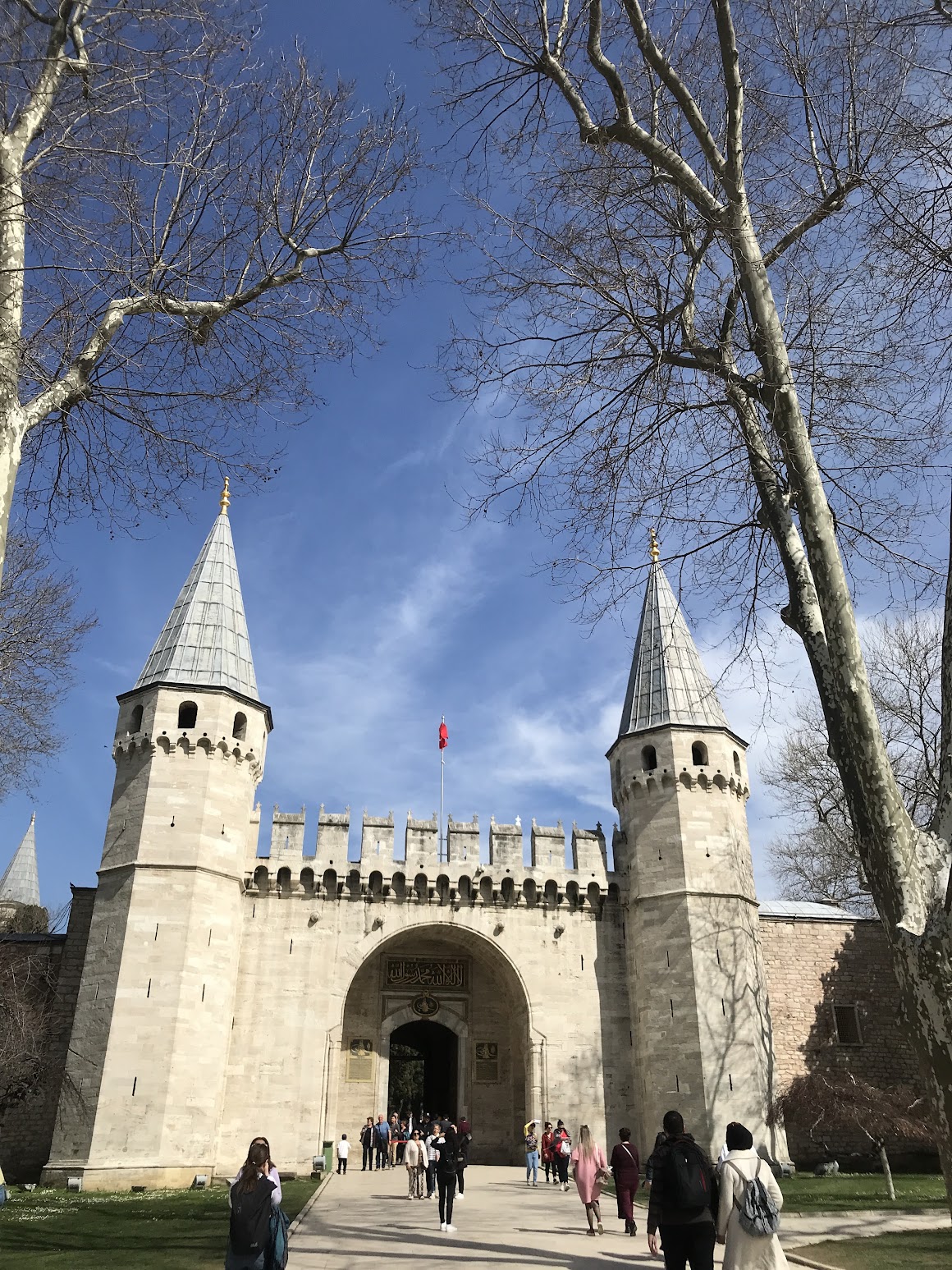
The Topkapı Palace
The dazzlingly lovely headquarters of the Ottoman sultans for many centuries, built only a few years after the Fall of Constantinople, and the doom of the Byzantine Empire, in 1453 at the hands of Mehmed the Conqueror.
I believe that if you want to understand where Europeans got their Orientalist notions of exotic Eastern decadence from, it’s worth seeing places like this first-hand and considering how a western observer of the era would’ve reacted to it all. Viziers and eunuchs, gold and silk, harems and concubines, backstabbers and cat’s-paws, sex and slavery, and rampant greed and cruelty in the guise of a complex imperial social order. This place is simply dripping with the facts and fictions of these oily, meaty imaginings.
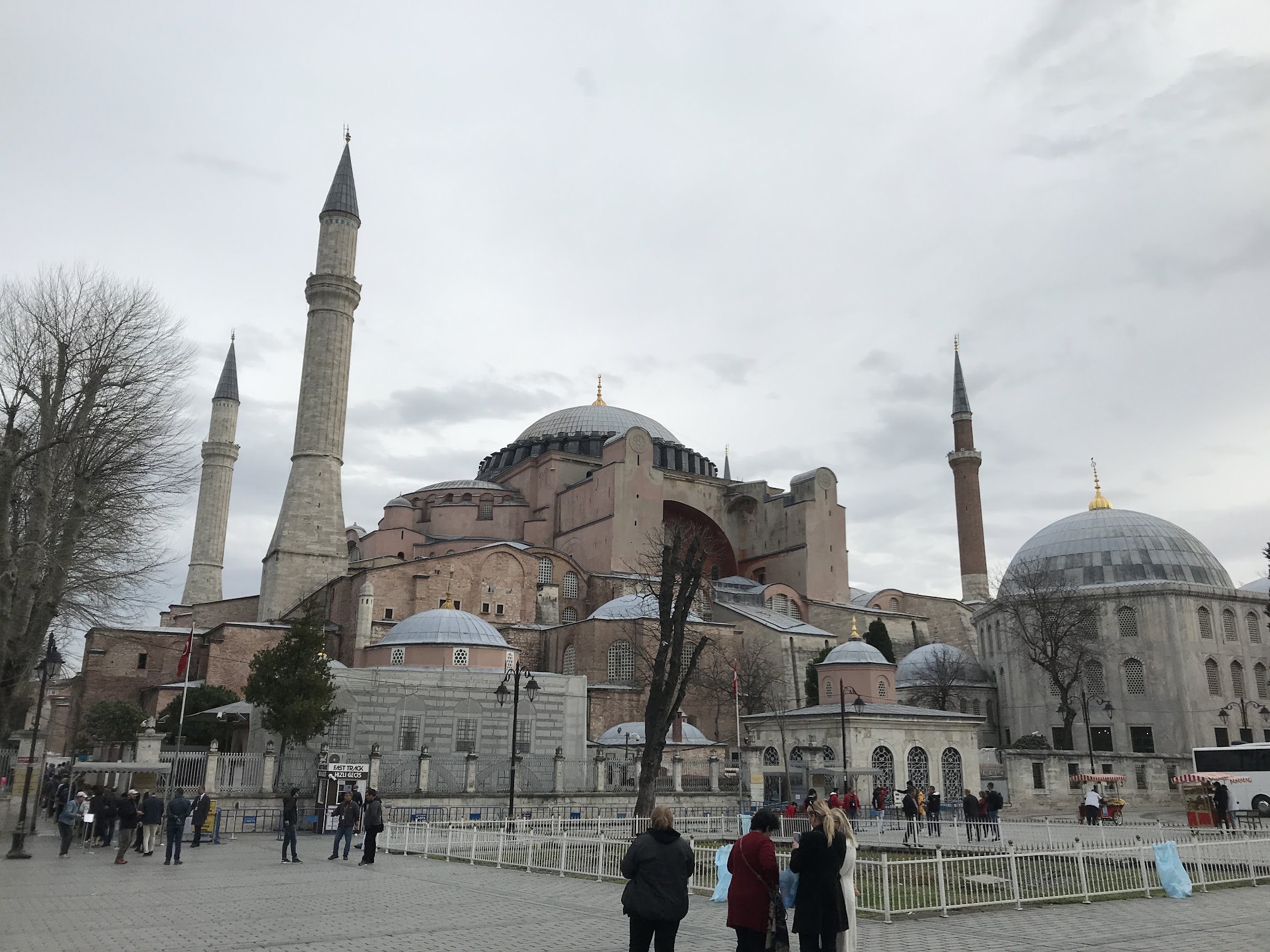
The Hagia Sofia
Why yes, it’s everyone’s favourite piece of Byzantine architecture!
The Hagia Sophia, if I dare say it, comes across a bit like a half-done homework project… if your school assignment required you to convert one of the largest engineering feats of late antiquity to another Abrahamic faith, that is. Very obvious Orthodox Christian bits are semi-overlaid by very obvious Islamic bits. The cathedral-to-mosque renovation looks a bit slapdash, although this is largely a side effect of its restoration and transformation into a secular museum under Mustafa Kemal.
So is the Hagia Sophia a cathedral? Is it a mosque? Or is it a historical museum? When I was in Istanbul, it was still the third option, though at the time it was unclear for how much longer.
Hooray for compromise… or so I thought. But then in July 2020, only a few months after I visited it, Turkish President Recep Tayyip Erdoğan redesignated the site as a mosque, triggering much domestic and international controversy.
And some other nearby attractions…
Close to the Hagia Sophia, I was also able to visit the twilight underworld of the Cisterna Basilica, the solemnly splendid Tomb of the Sultans, and the palatial Süleymaniye Mosque in the mizzle.
On these various visits, I spend a lot of time craning my head up at the Ottoman domed ceiling. I’m sure the future neck pain I’ll have was a worthy price to pay for being able to peer directly upwards at such decorative beauty.
And finally, the fantastic food of Turkey…
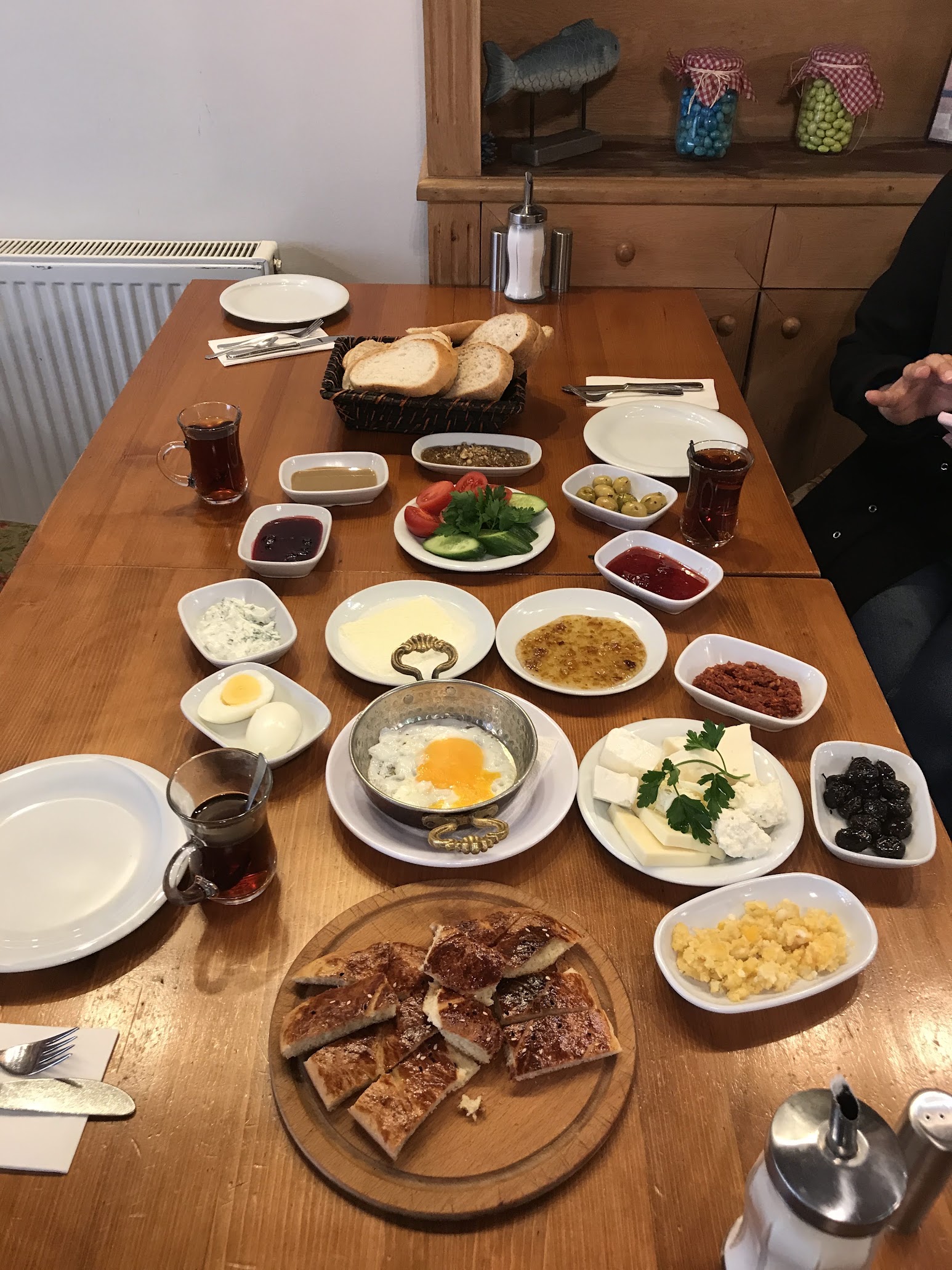
Let’s start with breakfast. Might I recommend an epic full-spread Turkish breakfast called ‘kahvalti’ (which literally translates to ‘before coffee’). Olives, eggs, spreads, dips, a suite of cheeses, and unlimited tea and bread. As you can imagine, I didn’t eat anything else for the rest of the day.
Is this the greatest breakfast I’ve ever had? Yes. Absolutely yes.
On other days, however, you’ll need to fuel yourself in Istanbul with its irresistible street food:
- Simit — a giant Turkish bagel. Uh, that’s it. If you ask for it to be stuffed with Nutella you will regret everything and nothing.
- Islak burger — a beloved Istanbul late-night snack. Islak means ‘wet’ in Turkish. It’s cheap, moist, greasy and disgusting… unless you happen to be drunk. Then it’s very, very delicious.
- Doner kebab — wow. I bet none of you know of this extremely rare and exotic dish. Why am I even sharing this? Way too obscure for you people to appreciate.
- Balik ekmek — a fish sandwich. It’s a whole grilled fish (with bones and whatnot) whacked between bread. Ta-da!
But save room for some fancier dinners and lunches as well. We have:
- Lahmacun. A thin, herby pizza thingy. I had mine with walnut and pomegranate which was weird but nice. Best paired with: ayran, a placid yoghurt-like drink that’s popular in this part of the world.
- Manti. A wonderful Turkish spiced meat dumpling thingo. Mine was deep-fried and popped on top of a yoghurt and eggplant mash. Best paired with: Bomonti, a pretty decent local beer.
- Moussaka. An eggplant and minced meat casserole… thing. Whatever it is, it was recommended to me and turned out to be fantastic. Best paired with: a large basket of free bread at a working-class restaurant I found off the Istanbul tourist trail.
- Baklava. Yes, not an actual meal, but I had to skip dinner after trying this glorious plate. Dental cavities are surely the Ottoman Empire’s most damaging legacy. Best paired with: tea without sugar thanks.
And at the end of the night, you’ll surely crave dessert. Alas! Istanbul is a cruel and difficult place for people who just need an ice cream as quickly as possible. Below is a video I took of the famous dondurma vendor’s act of teasing their customers who merely want a scoop of cold sugary goodness.
You won’t need a guidebook. Like all cities, I have my own sense of time. I am a labyrinth of layers that only makes sense without a compass. Trust me. Let yourself be, let yourself go. But be careful what you go away with. When you leave, all my empires, my religions, and passions will be your fertile soil wherever you go.
Jaipur (2020)
Posted 31 January 2021
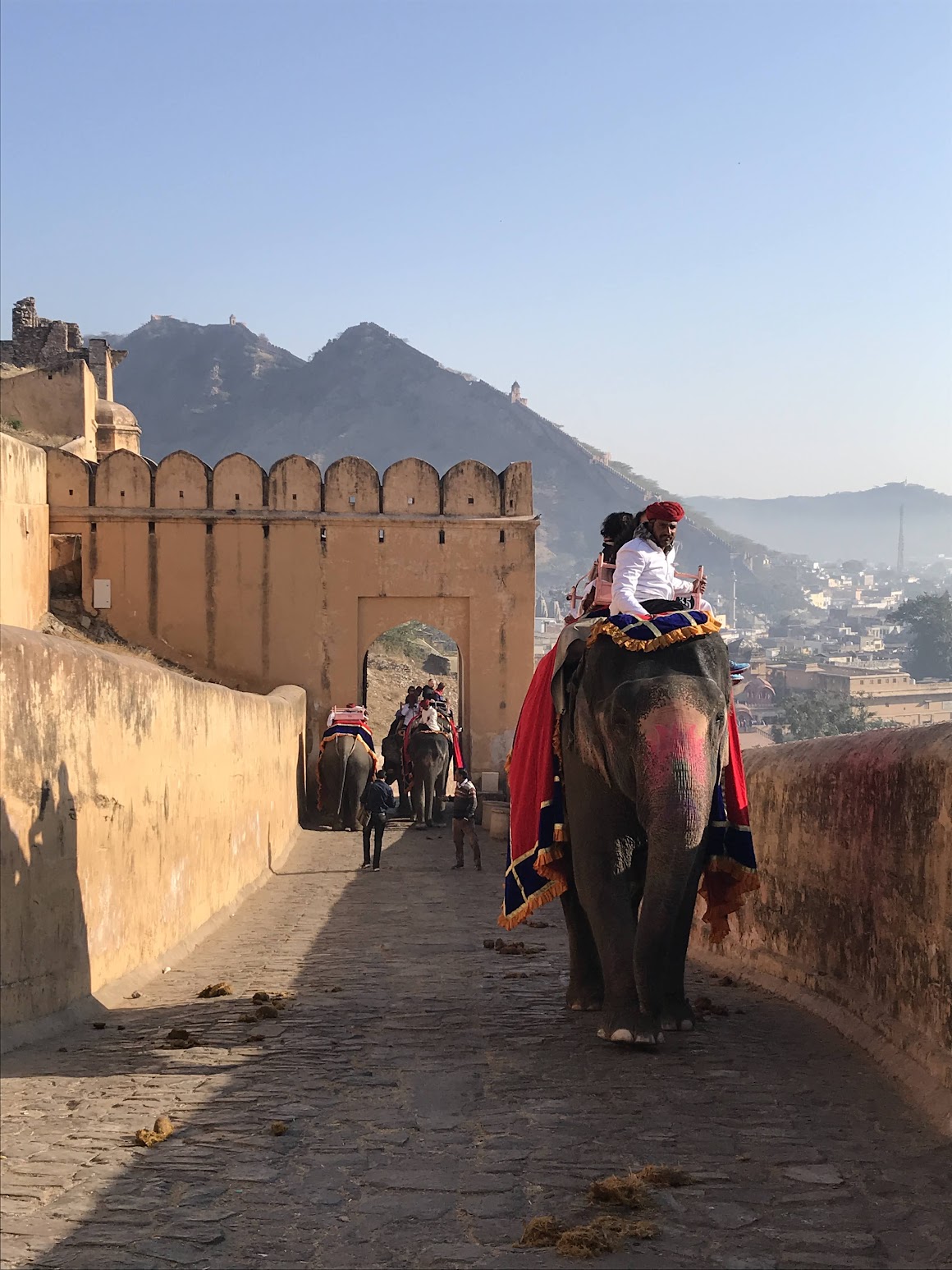
Elephant congestion, Rajasthan edition.
Welcome to Jaipur: the so-called ‘Pink City’
Some words on Jaipur, the capital of Rajasthan. This was my final stop in this great and diverse Indian state. It was a place I had greatly anticipated exploring. But, as I was warned by some fellow travellers during my trip, I began to feel the “Jaipur grind” after a few days.
Expectations have not fully met reality and past experience. It’s a busy, sprawling, impersonal city and once you knock off the main attractions (which seem plentiful, but can be easily visited in a short span of time) it can feel as though you’re at a loss of what to do next…
My advice for Jaipur: best take it slow. Sit at cafes. Reflect on the ups and downs of the trip so far. Plan ahead. Watch the world go by. Compose wistful and semi-informative blog posts.
I was also completely outraged by something else. Jaipur is famously called the “Pink City of India”. Now, I don’t know about you but nothing here looks remotely pink. More an orangey-red. This is surely the true Indian scam! I demand my bloody paisas back.
The Amber Fort: glorious and elephant congested
The Amber Fort! Once the fortress residence of the Jaipur royal family. Rajput and Mughal architecture blended into a big pile of sandstone and marble. I felt mild Potala Palace vibes, as well as Great Wall of China memories from the endless, winding defensive walls on the hills all around the central fort.
Admittedly, it is not my favourite Indian fort (that title goes to Mehrangarh Fort in Jodhpur) but it’s utterly majestic in the morning light. Just remember not to take the touristy elephant rides to the top. It is not a terribly ethical thing to do.
Like with many grand Indian buildings, the Amber Fort mainly inspiring from the outside. Apart from one or two impressive rooms, the interiors are bare-boned with semi-recent restoration work is evident throughout. The same can be said for the City Palace and Hawa Mahal, two other major attractions in the city. This is not an India specific problem, mind you. China too suffers the same issue with many of its large heritage structures.
But whereas the scant interiors of China can be explained by events like the Cultural Revolution, which gutted the entire country of its historical wealth, the reason here seems more opaque. Hypothesis: It’s a result of the anarchic, predatory impact of the British East India Company and direct Crown rule, compounded by a lack of modern state capacity to prioritise and preserve the country’s almost countless cultural sites.
Quick notes on Hawa Mahal and Jantar Mantar…
Hawa Mahal: “The Palace of Winds”, famed for its intricate (and potentially trypophobia inducing) hive-like window design. Not much to see on the inside. Best viewed from a pricey, hipster rooftop cafe in the area.
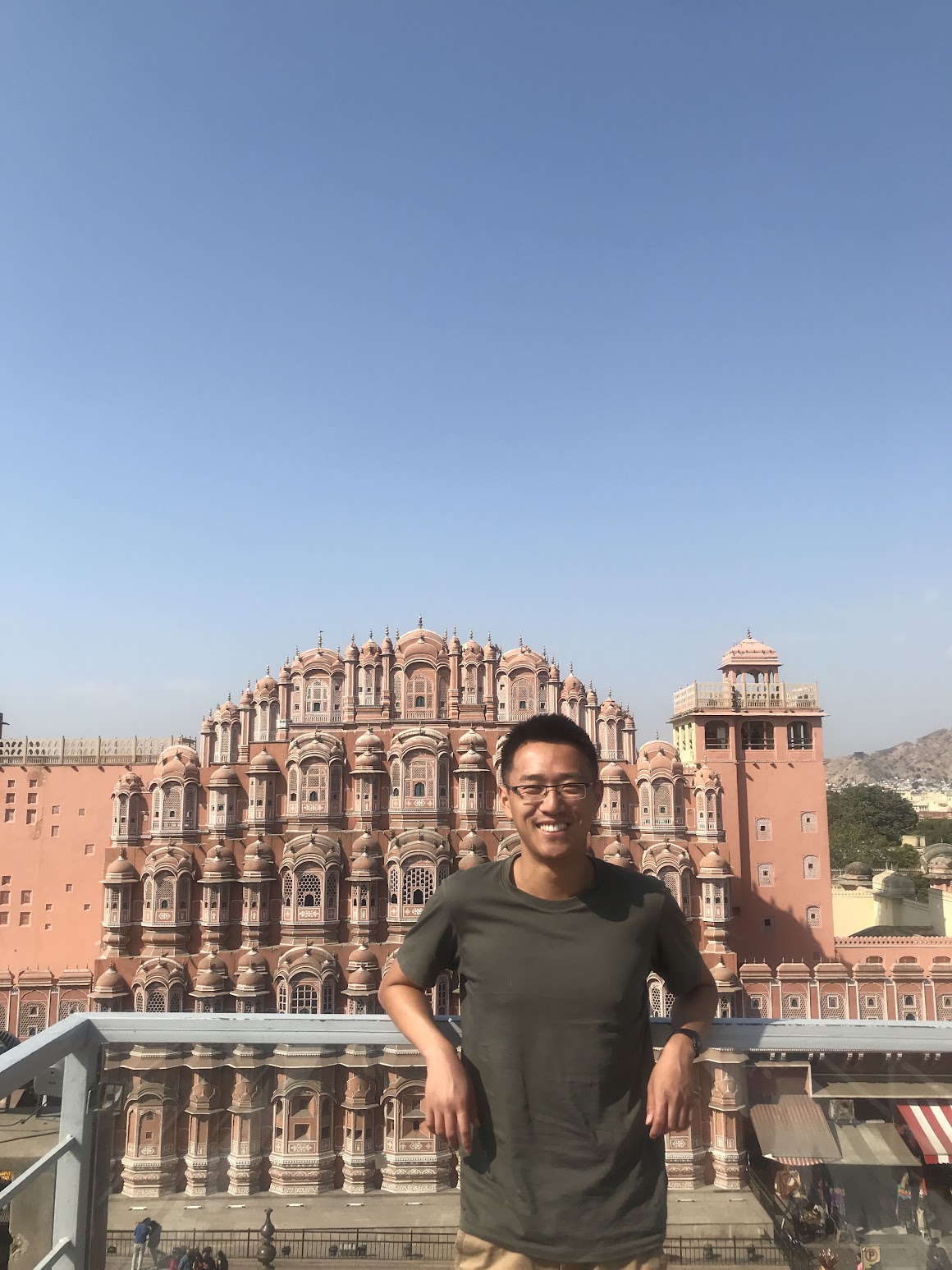
Jantar Mantar: Is it a highfalutin contemporary sculpture garden? Or a set of enormous and sophisticated 18th century astronomical instruments commissioned by Maharaja Jai Singh II of Jaipur? You decide!
Temple run: Jaipur edition
I dizzied forts and temples on the hills surrounding Jaipur. My overall impression: utilitarian strongholds, rundown holy sites, plenty of monkeys.
My discontented rickshaw driver rushed me around Nahargarh and Jaigarh Fort and was mainly interested in taking me to a crappy commission-paying shop (an expected side effect of a cheap hire). I’m also fairly sure that the trivial entrance fee the holy men charged for visiting the Galta Ji temple complex was a half-hearted scam. Whatever. These things happen.
A personal note to a future self: I need to stop stumbling into temple blessings out of boredom. I mean, I don’t believe in any of it and I don’t like having stuff put on my forehead or wrapped around my wrists (I remove them the moment I leave). Karma, reincarnation, curses, blessings, deities, prayers, sacrifices, all of it — I respect them up to a solid threshold, and I often find them intellectually absorbing to observe, but I should endeavour to keep them away from me with a much longer stick.
The Palace and the Museum
The City Palace of Jaipur. It’s alright. Had some cool archways and doors, I guess. The lavish throne room had pigeons flying around and shitting in it. The weapons gallery (i.e. “the murder wing”) showcased all the ingenious ways Indians tried to attach firearms to other weapons. Gun-swords. Gun-maces. Gun-crossbows. Gun-daggers. Sneaky-cane-swords-that-were-also-cane-guns.
The best corner of the palace was undoubtedly the painting and photography gallery. For one, it was dark and cool and cleverly curated; for another, there were few visitors and no guided tour groups. I can’t abide by paid museum guides. Museums are the ultimate space for me to exercise my introversion. Keep my own pace. Get away from the world. Study whatever displays catch my idiosyncratic attention.
Speaking of museums, the Albert Hall Museum was a pleasant surprise. I expected it to be lacklustre and only went because I was in that part of town. I think my favourite artefacts of India are its miniature paintings (where all the Deccan, Mughal, Rajput, etc. paintings look like they were all done by the same ten guys) and its remarkable religious sculptures.
And with Jaipur completed, I was finally done with Rajasthan! Afterwards, I took the train to this super obscure, off-the-beaten-path place called Agra. Dunno if you’ve ever heard of it but it has some well-regarded stuff.
Jaisalmer (2020)
Posted 4 April 2021
Greetings from Jaisalmer — The Golden City
Phwoar. What a place! This is the small and remote city of Jaisalmer, a sandstone settlement in the middle of the Thar Desert and once a medieval trading hub on the Silk Road. You can understand why both modern and bygone travellers fell in love with this place. It is the fantastical desert city that springs to mind when they think of ancient, exotic Arabia or Central Asia. Let’s discuss some points of interest in this seemingly magical part of the world, shall we?
The astonishing Jaisalmer Fort…
This is the giant 800-year-old citadel that sits at the heart of the city. It has been dubbed one of the world’s oldest “living forts” and has a resident population of around 4,000 people. I even managed to stay at a guesthouse inside the fort for the price of an Aussie coffee a night. It was worth it for the terrible plumbing and non-existent insulation. My room was effectively a medieval stone cell and I loved it.
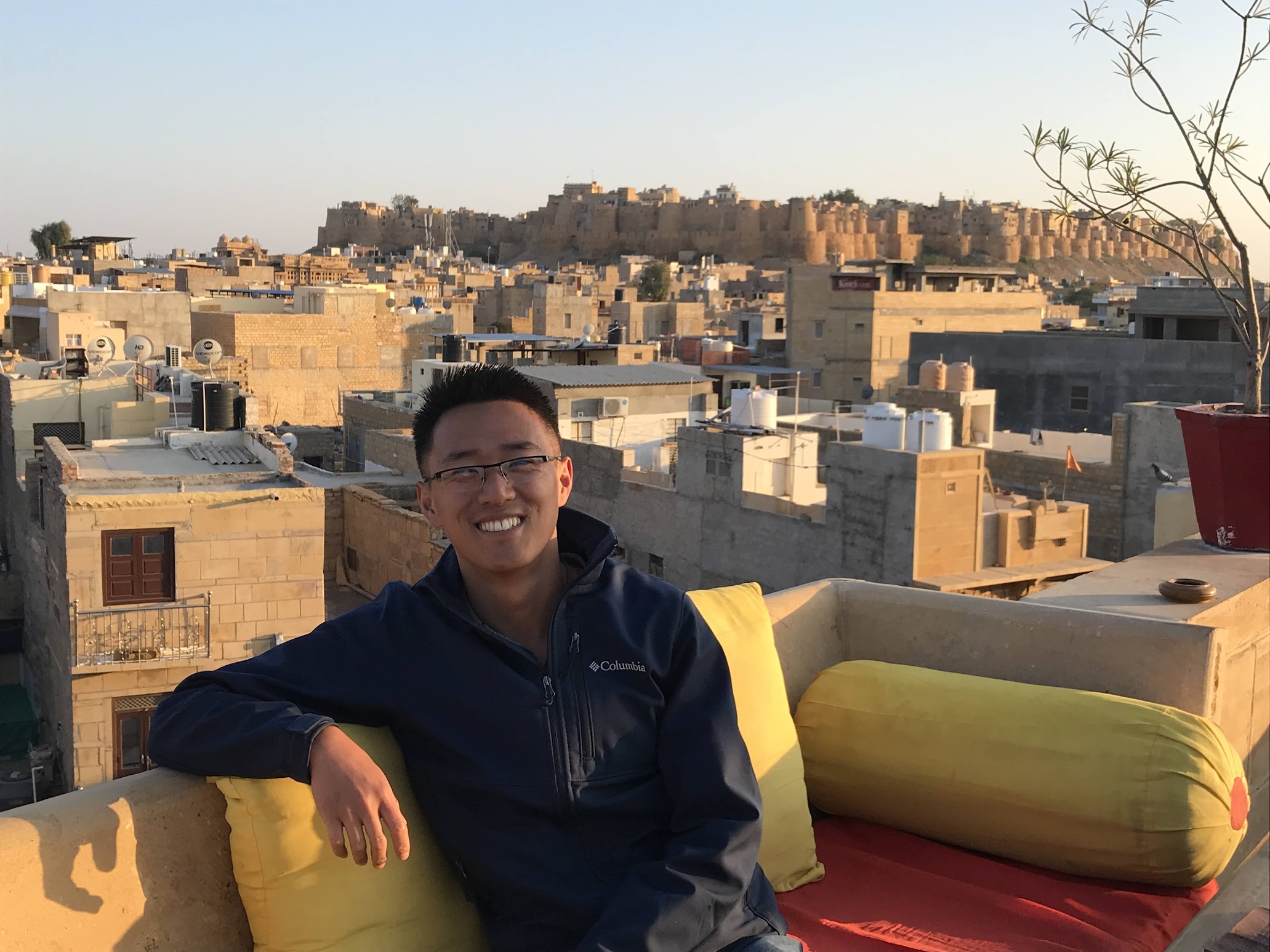
A bit of male pampering…
To get here, I took an exhausting overnight train ride from Jodhpur. To recover properly, there was only one logical course of action: bargain bin male pampering, Bhārat style. There’s actually a bit of a cottage industry on YouTube of people filming themselves getting old school, hole-in-the-wall Indian barbershop treatments like this. So why not get a snippet of the action?
At one point the barber put on what I can only describe as a video game ‘power fist’ and/or ‘vibro-weapon’ and started to seismically attack my scalp. The best and/or worst and/or strangest part was when he did a little earthquake rub right down my ear canal. Ah, the things I do for worldly experiences.
The (in)famous Bhang Shop of Jaisalmer…
Ah, yes. The notorious government authorised Bhang Shop at the foot of Jaisalmer Fort that was visited by none other than Anthony Bourdain when he filmed part of his Rajasthan episode in Jaisalmer. I had to, uh, briefly walk past it to take a quick photo, right?
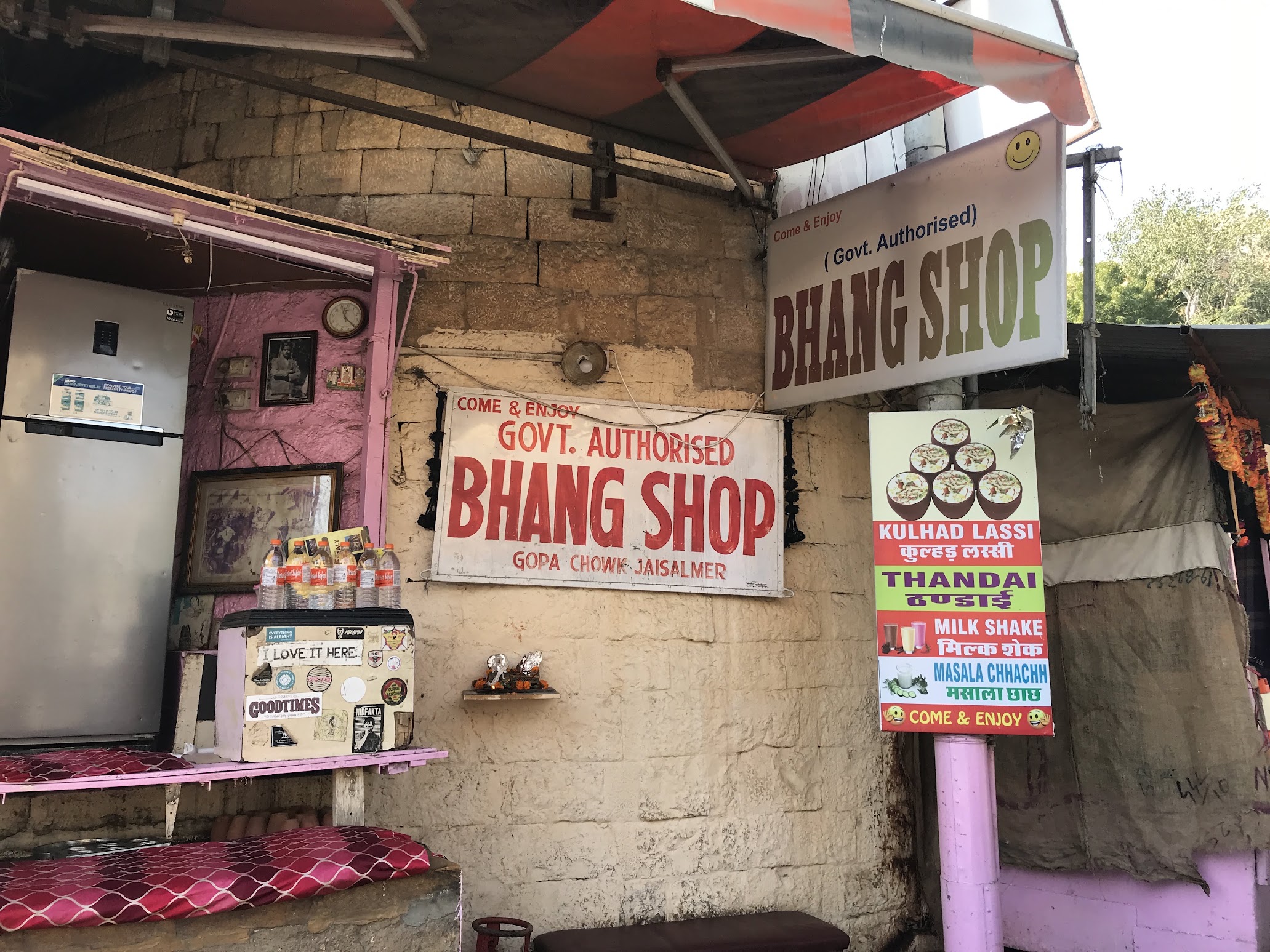
The two brothers who run this joint (sorry) have completely perfected their lines for the amusement of tourists. In no way whatsoever is this an authentic local establishment. When I said I was from Australia, Surya and his brother ‘Dr. Bhang’ (yep) told me how much they admired Nimbin. When they learnt I might be doing a desert safari, they suggested a pack of their special cookies to turn my camel ride into a “magic carpet ride”. And in a deep and serious voice, Surya informed me that “the desert is pain and pleasure. Bhang is a painkiller so the desert becomes only pleasure.” Sounds legit to me, mate.
The cultural and religious reasons behind cannabis consumption in India is fascinating. Academically fascinating. But let me emphasise the Glomar response: I can neither confirm nor deny anything.
A camel safari in the Thar Desert…
During my time here, I did a camel safari in the Great Indian Desert topped off by a magnificent sunset view. If my glutes could’ve handled it, I would’ve ridden my dromedary bad boy right across the Pakistani border. Alas, not my principle steed of choice.
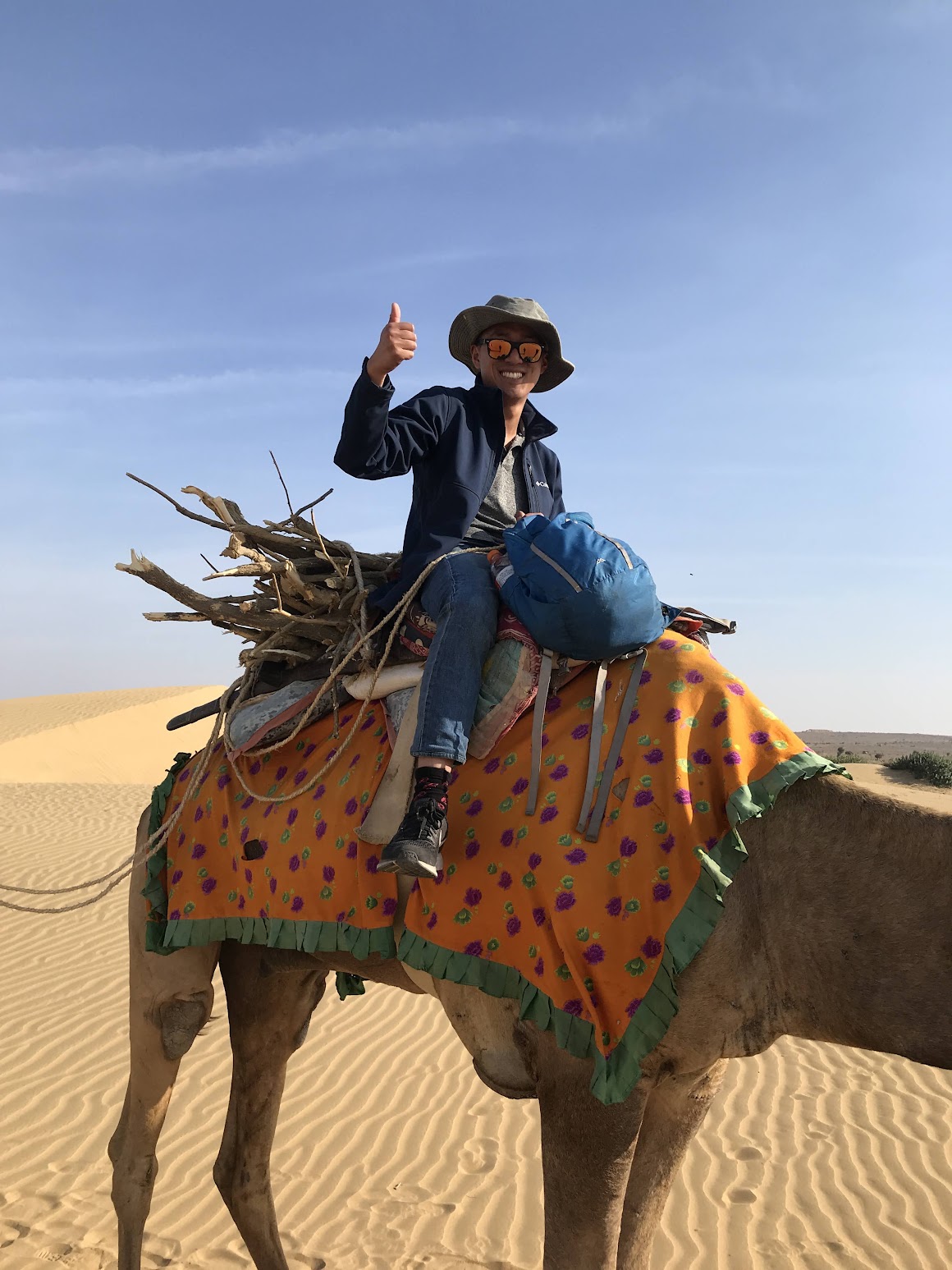
And also, photos are deceptive! The Thar Desert has some small dunes for sure, but it is nothing like the endless rolling sands of the Sahara. Much of the landscape is quite rocky, with plenty of vegetation and clusters of human infrastructure.
I know that I look very happy (and I mostly was). But behind the smiles for the camera, I never suspended my critical thinking. Jaisalmer is filled with dodgy bargain bin camel tours and I did my research to make sure I went with a good company. Even so, I was constantly alert to anything feeling off.
Were the camels healthy? Hard to say given the lack of familiarity most westerners have with these animals. Was it okay that the person leading my camel was about the age of ten? This potentially gets into thorny questions of local community norms and the opportunity costs for labour vs. schooling in developing economies. I am, very often, what the writer Malcolm Gladwell calls “the holy fool”. High threat detection, easily suspicious. If it takes the average person five minutes to drop their guard in a new situation, I’d happily take fifteen.
Not the best way to end a segment about a beautiful desert safari (and truly, I did enjoy myself) but I thought these points were worth sharing. I’m not a total hack fraud. Not yet.
Wealthy haveli façades…
These are the absurdly detailed havelis (traditional Indian mansions) of rich merchant families from Jaisalmer’s trade routing past. Sadly, as with many Indian heritage buildings, it’s much more impressive on the outside than on the inside. A literal façade.
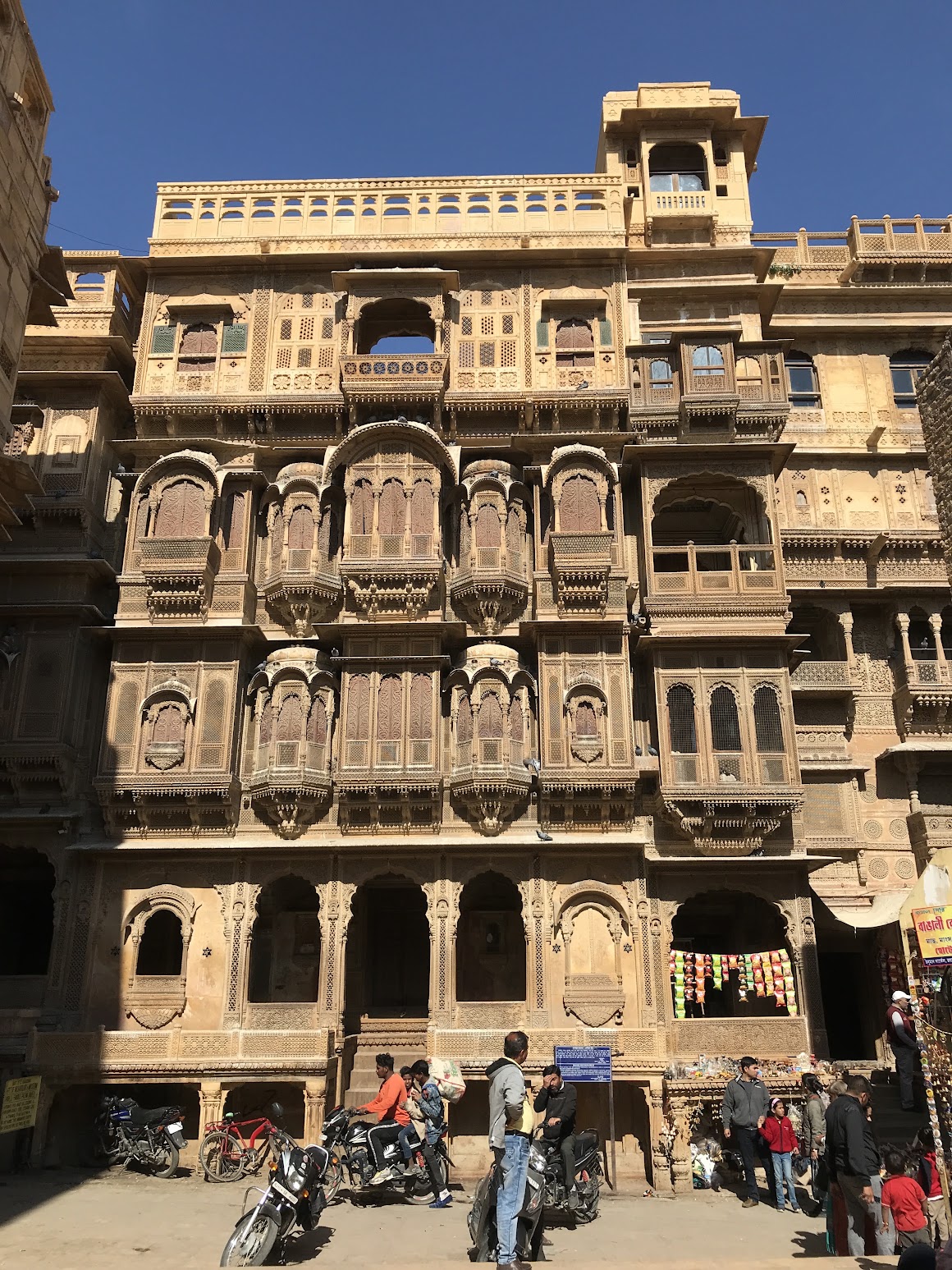
A Jain temple complex…
This sandstone Jain temple complex within Jaisalmer Fort dates back to the 12-16th century. If you are an intricate-stone-carving junkie, you will have an overdose here. I caved in and hired myself a guide whose explanation of Jainism made me even more confused.
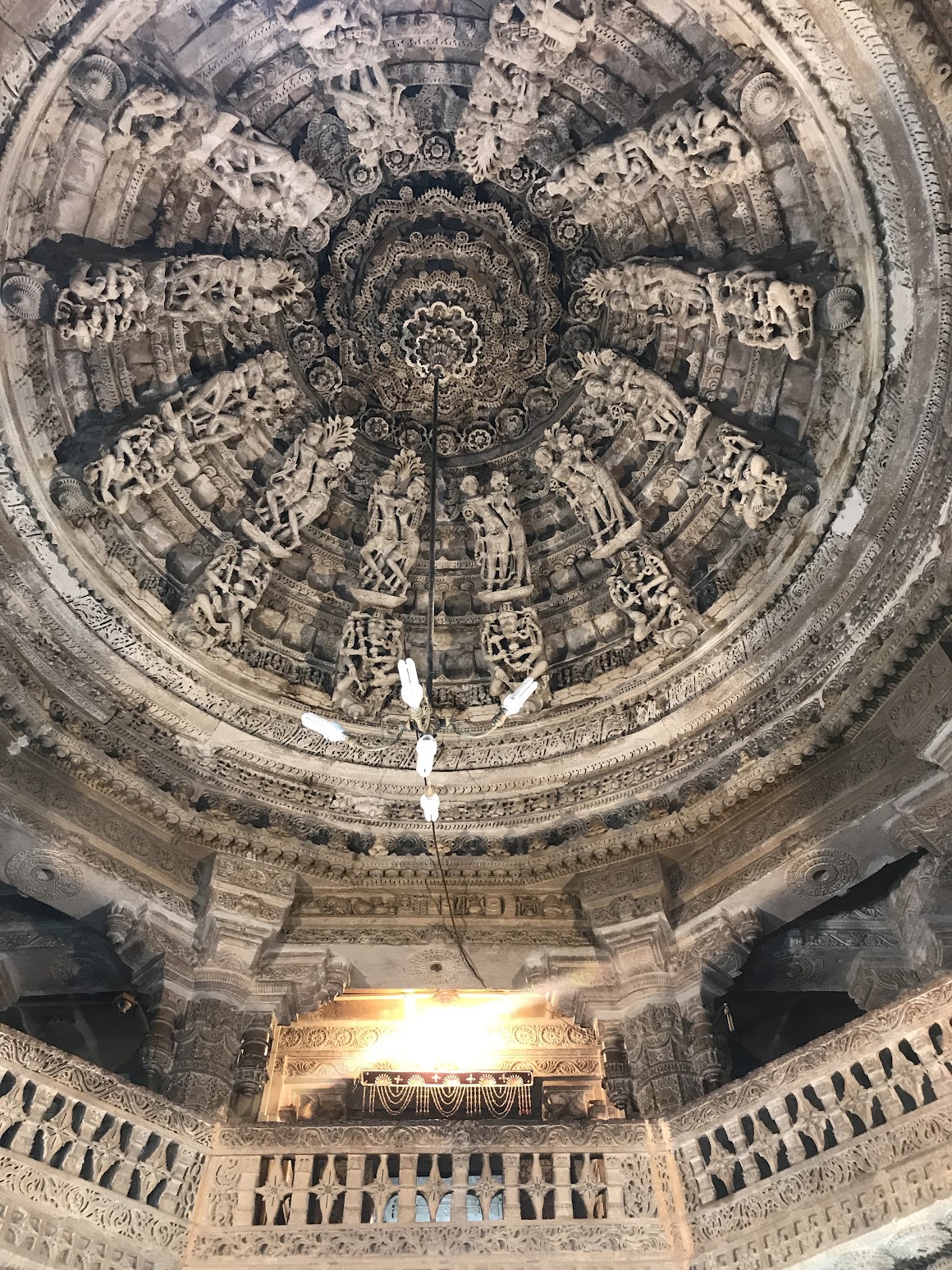
So they have no deities, only prophets? Wait, but aren’t they also an offshoot of Hinduism? Yet they don’t believe in reincarnation? But karma is a concept? And they all practice extreme non-violence? Or is it only their holy men that go to those extremes? My questions yielded few coherent answers. Oh well. There is always Wikipedia, I guess.
Two other points of interest in and around Jaisalmer…
The first is Gadisar Lake, a man-made water reservoir built in the 1400s where an American friend and I hired a creaky pedal boat to cruise around like the maharajas of yore. Look at us go!
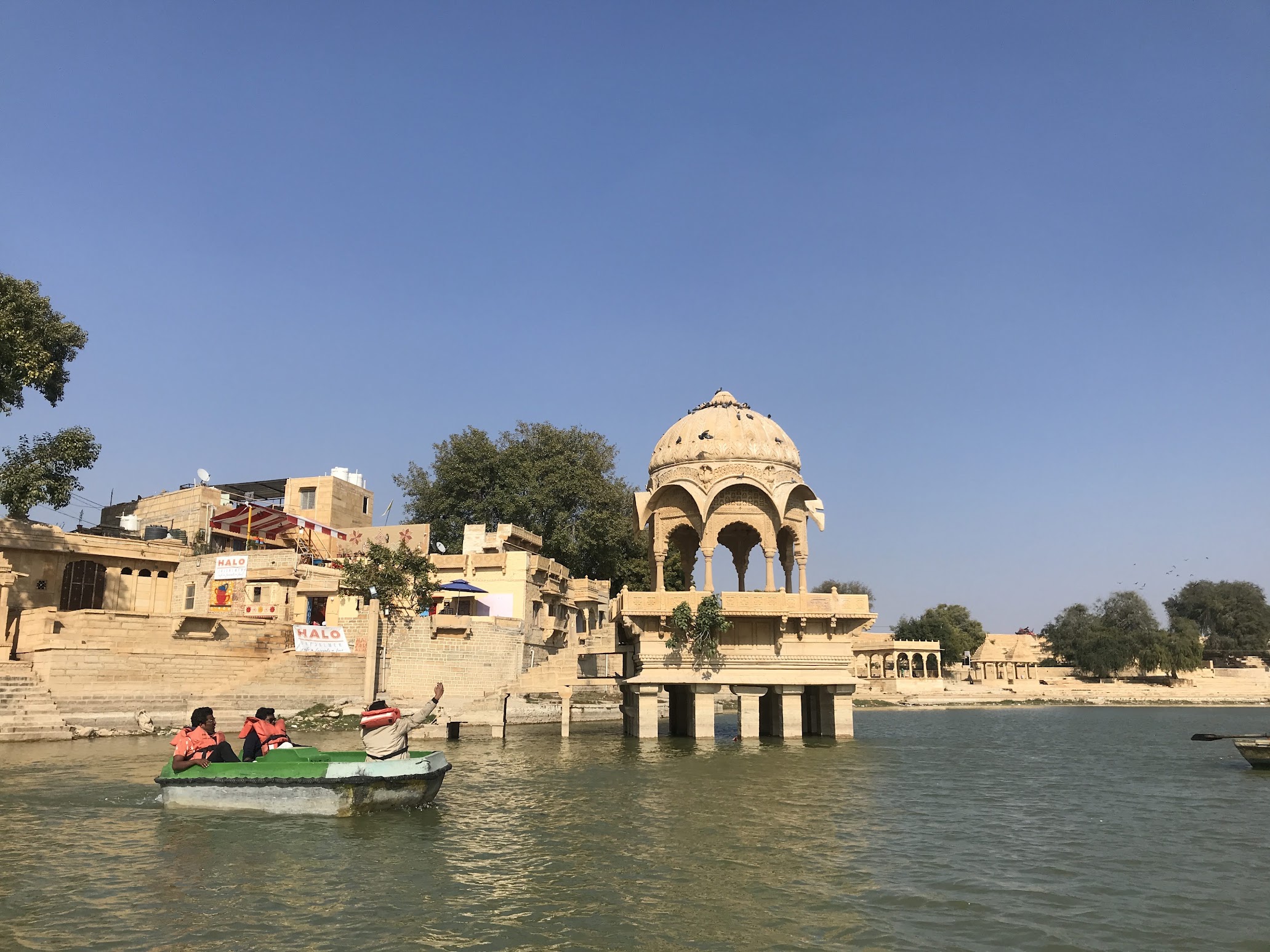
The second is Bada Bagh, a set of royal cenotaphs (known as “chhatri”) in a desert garden north of the city. Peaceful and crumbling. One shouldn’t visit too many of these places! I’d hate to remember India only as a land of tombs, necropolises, and marbled thanatocracies. Rich dead people have done very well here.
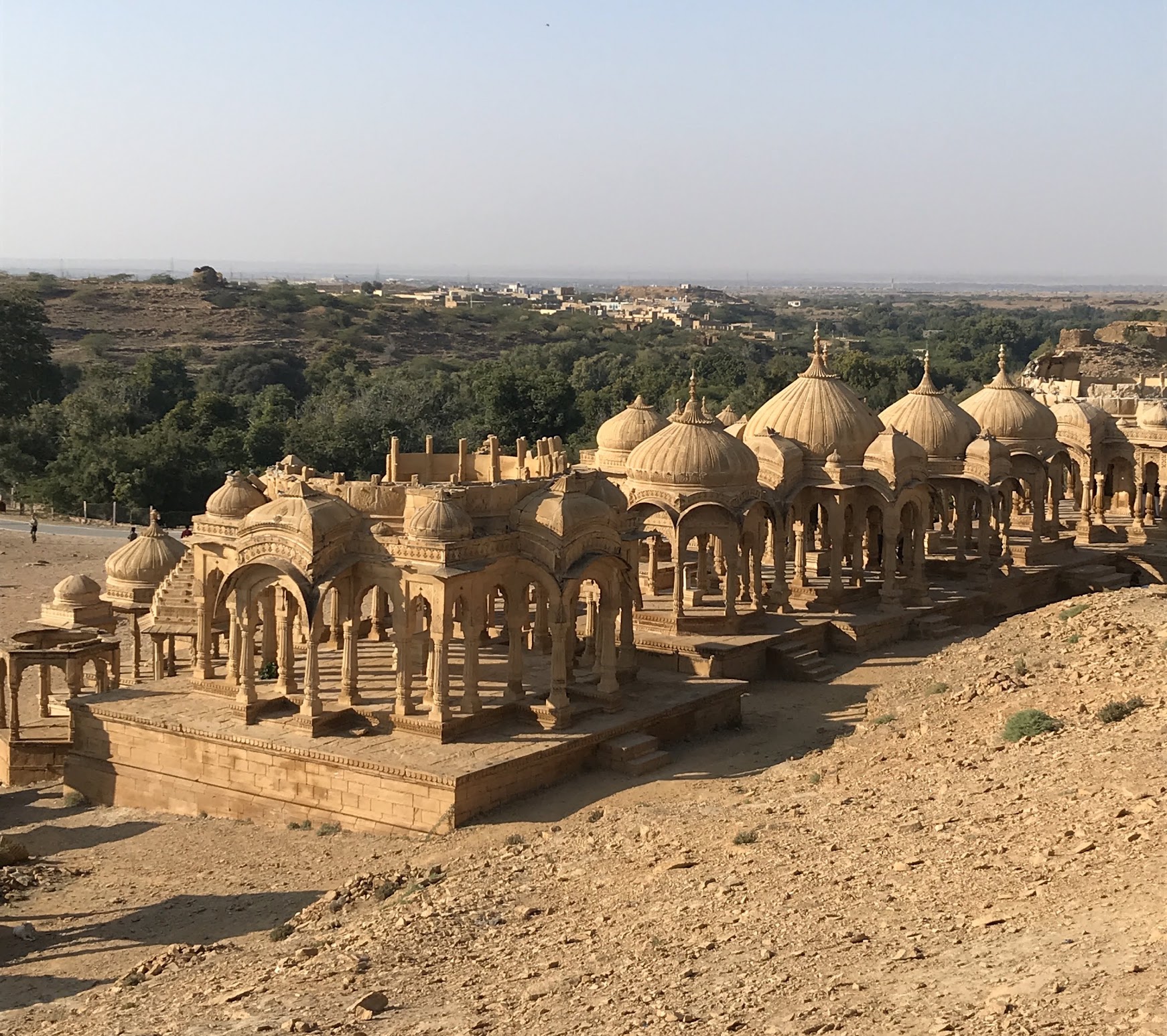
A scene from somewhere in the heart of the Thar Desert…
My photograph of Rajasthani village women carrying firewood on their heads while Jaisalmer Wind Park, one of the world’s largest onshore wind farms, spins away in the background. Rich and poor. High-tech and low-tech. Is this India in a nutshell? Or perhaps the world entire?
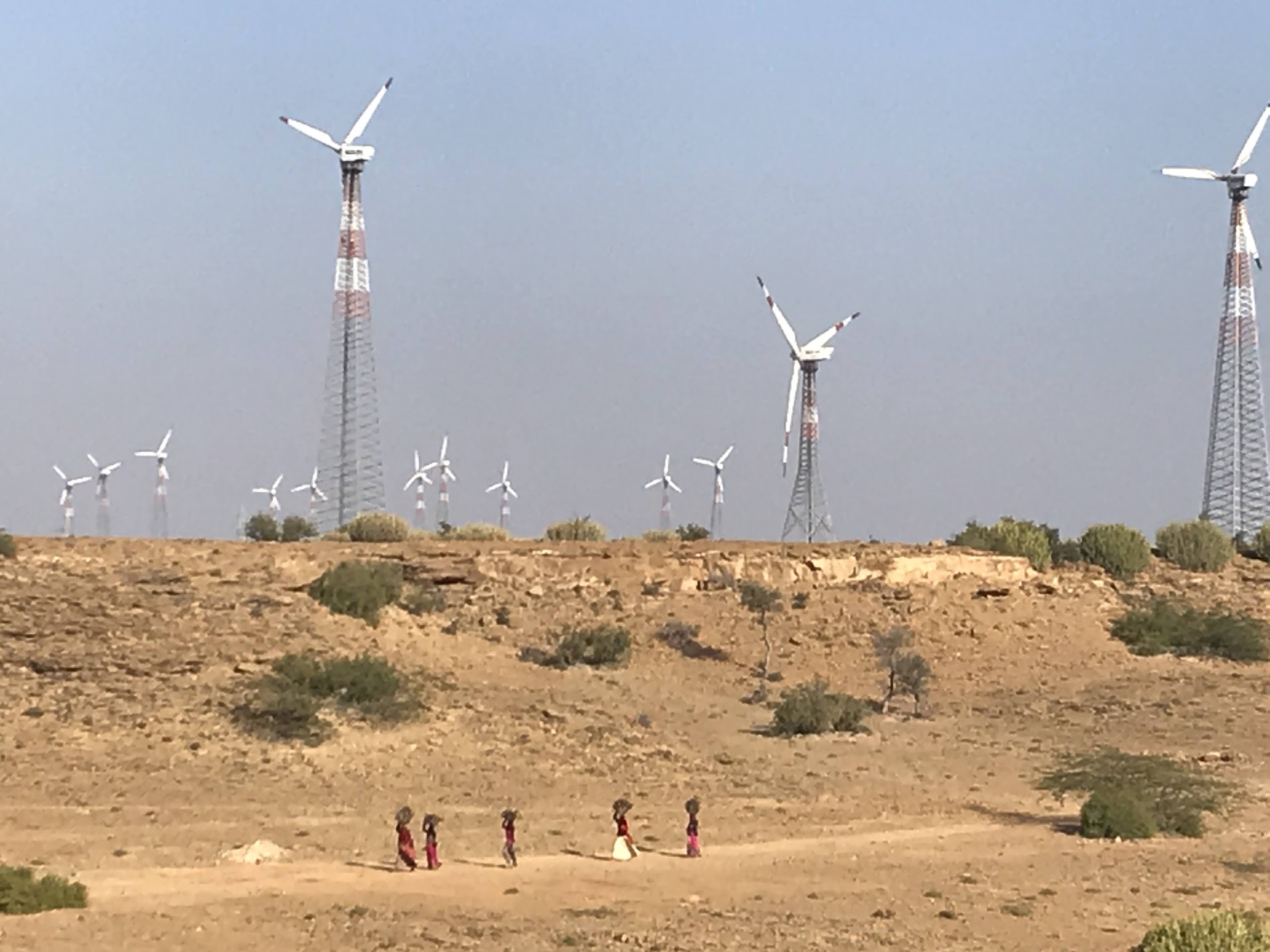
Change is the only constant. Change that, I imagine, is happening too quickly for some and not happening fast enough for many.
Jodhpur (2020)
Posted 4 September 2021
This is Jodhpur, Rajasthan. The Blue City. The Sun City. Gateway to the Thar Desert. And just look at that thing looming above us! A gigantic fort dominating the skyline of the entire city. Holy moly, it’s like I’m in a fantasy novel. It’s genuinely breathtaking.
Mehrangarh Fort — “The Sun Fort”
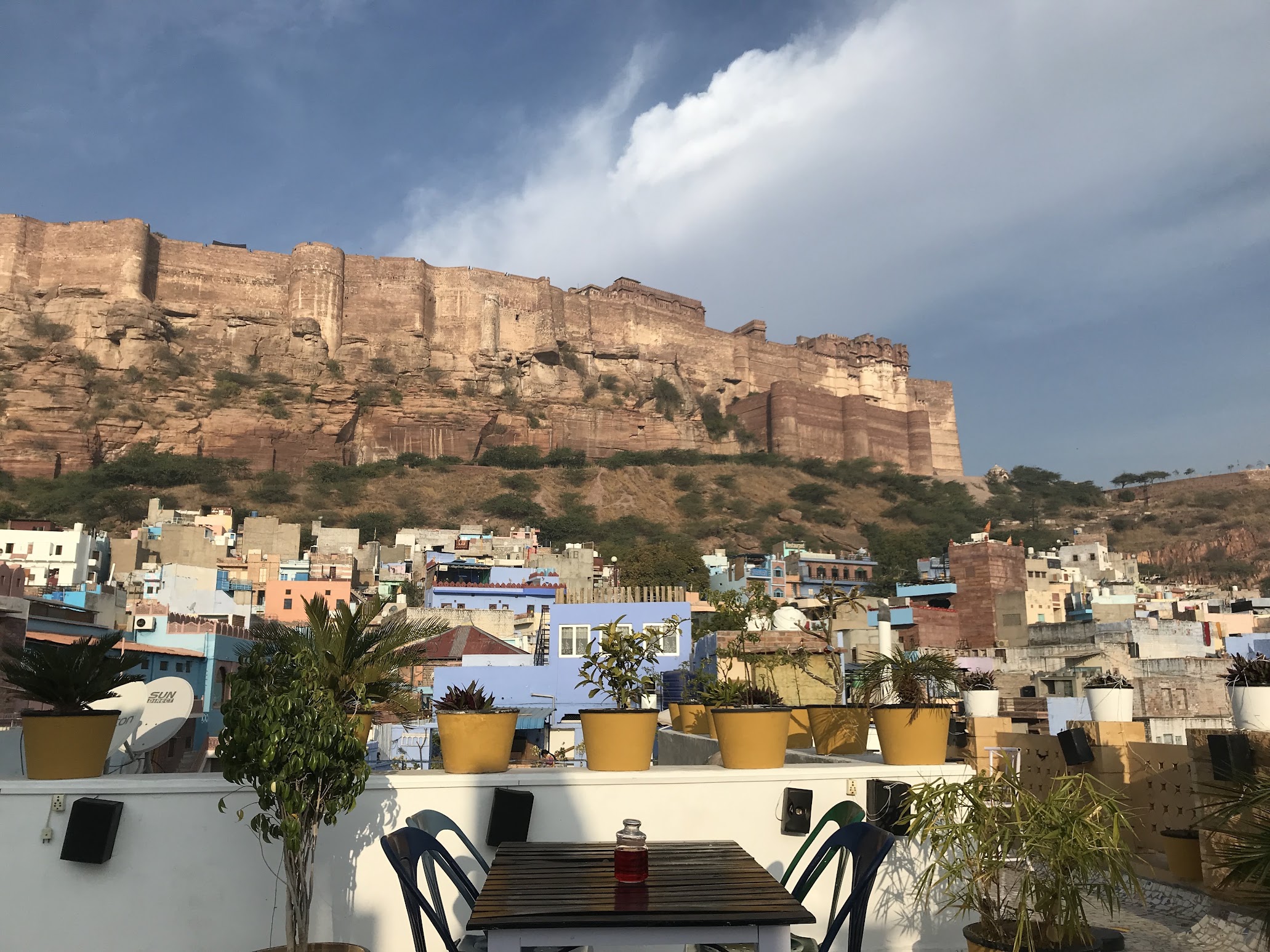
I’m a bit gobsmacked a human-made structure like this exists. Visiting Mehrangarh Fort was definitely one of the highlights of my trip to India so far.
It is a colossal, impregnable 500-year-old fortress of the Maharajas of Mewar. A brutal and imposing exterior with opulent royal chambers within. Pigeons and small green parrots flit in and around this desert titan. And it completely overpowers the skyline of Jodhpur’s old, blue city.
Rudyard Kipling, after visiting the fort, famously described it as “the work of angels, fairies and giants”. He’s absolutely right.
Royal treasures from the Mehrangarh Fort museum collection The Sun Fort also probably has the best audio tour I’ve done in India. The tour was fascinating throughout, with a modest but carefully curated royal museum collection. The best “exhibit” was the sleepy old man with a hookah kit who let us sniff a tin of opium powder (still a favourite of rural Rajasthan despite its illegality). “Good for digestion, good for sleep, good for sex,” he told us.
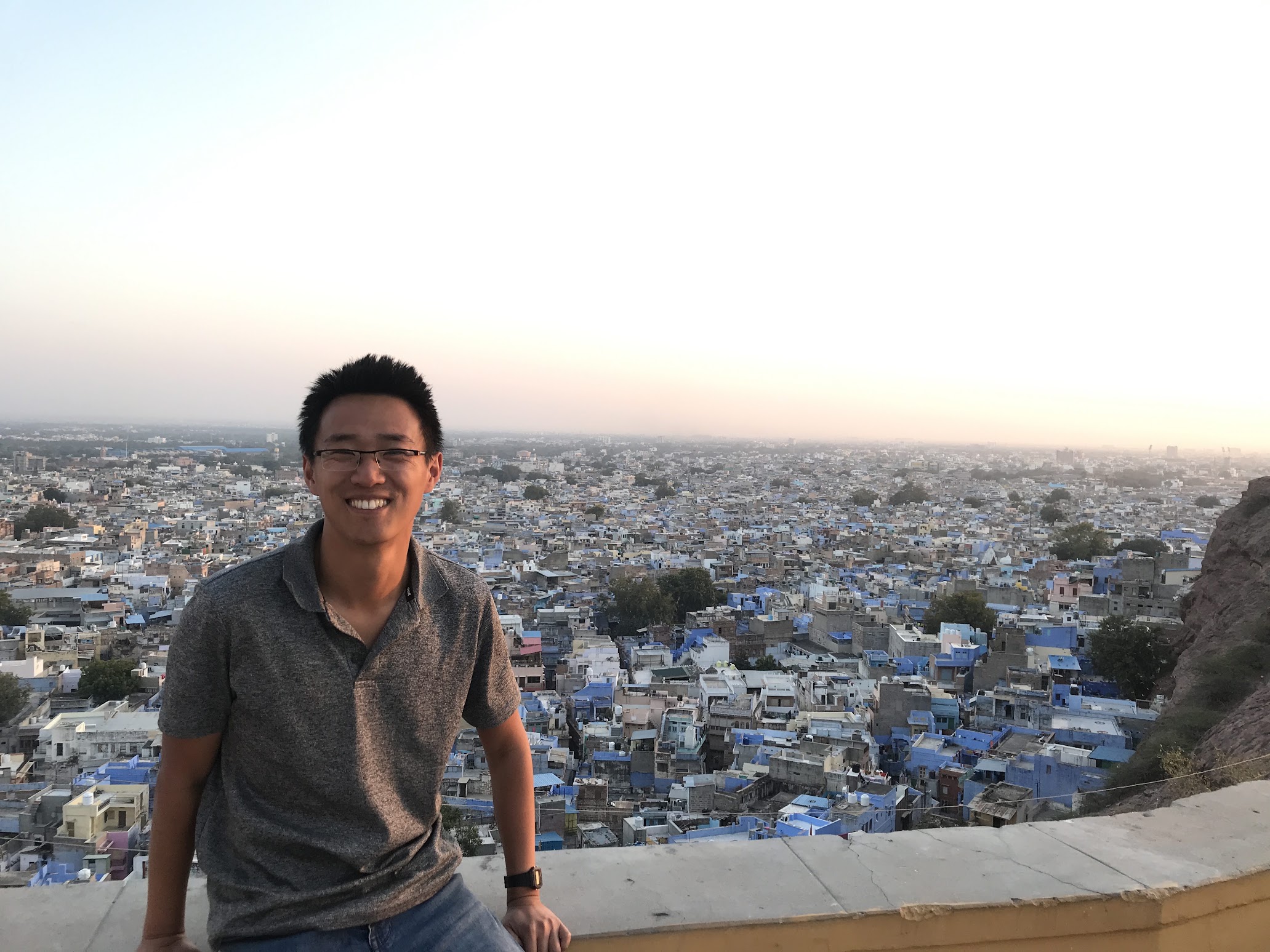
Blue, soothing Jodhpur Some chill, blue views of Jodhpur, Rajasthan.
Forget about Chefchaouen in Morocco! Here’s an alternative travel destination for your azure-cerulean-sky-blue-Instagram fix.
Jodhpur has a lot going for it (the food in the main market area is cheap and great) but it’s also one of the grungiest places I’ve been to so far in India. The trash problem seems worse. The stray dogs seem meaner. The scooters are a little more aggressive. Many streets are redolent of fecal matter and burnt rubbish, and open defecation (a perennial public health challenge in India) is more visible here than elsewhere. I’m not bothered very much by this kind of stuff anymore, but keep it in mind if you’re planning a visit!
Additional Jodhpur highlights
(1) The epic Toorji Ka Jhalra (Toorji’s Step Well) where the tourists come to take photos and the locals come to smoke ganja. Indian stepwells are the best.
(2) Jaswant Thada, the marble cenotaph and cremation grounds of the Jodhpur royal family. Dubbed the “Taj Mahal of Rajasthan” and you can see why.
(3) The bustling Sardar Market, which has excellent fruit juice, desserts, samosas, and a very, very good omelette shop.
(4) The Mandore Gardens, located on the city outskirts. The former ancient capital of the Jodhpur State, the gardens contain the stunningly sculpted cenotaphs of various dead and forgotten maharajas. It was also completely free to enter when I visited — a rarity for such a peaceful, well-preserved heritage site in India.
An addendum…
Black cowboy hats seem to be all the rage for Indian male tourists in their own country. There are ‘English Wine Shops’ and ‘German Bakeries’. Packets of instant noodles populate the shelves in little hole-in-wall convenience stores. Every shop seems to have the same bland Arial font for their storefront retail signs. As I walk past bored shopkeepers, they call out to me and try to guess my nationality. “Konichiwa!’” they say, “Ni hao!” Some even think I’m Nepali or from the North-eastern states of India based on my tanned backpacker’s complexion.
As my bus rumbles along the highway at night, I see Rajasthani men huddled around the fire with bottles, the only sources of light in the pitch-dark countryside. What stories are they telling each other on this cold desert night?
Luxor (2020)
Posted 24 January 2022
Luxor and The Valley of the Kings
Luxor, a city on the Nile River, stands at the site of the ancient pharaonic capital of Thebes. On Luxor’s East Bank is the Egyptian township proper with the popular Temple of Luxor and the Temple of Karnak. On its West Bank are the harsh desert visages, the burial place of pharaohs, and the stark archaeological iconography of so many people’s imagination.
Karnak Temple… If the must-see of Luxor’s West Bank is the Valley of the Kings, then the must-see of the East Bank is without a doubt the Karnak Temple Complex. Now, I readily admit that I have a penchant for exaggeration in my descriptions. I pop on my travel-tinted lenses and suddenly everything’s a little ‘beautiful this’ and ‘amazing that’, but I think that even without such worldly biases this place is awe-inspiring.
An immense religious site that first began life 4,000 years ago, Karnak is primarily dedicated to Amun-Re, the supreme patron deity of ancient Thebes (along with areas dedicated to his wife Mut, the divine mother goddess, and Mont, the falcon-headed god of war). To enter its Great Hypostyle Hall is to enter a forest of colossal stone columns. It is to truly become a human-ant surrounded by the workings of towering and ageless pagan gods.
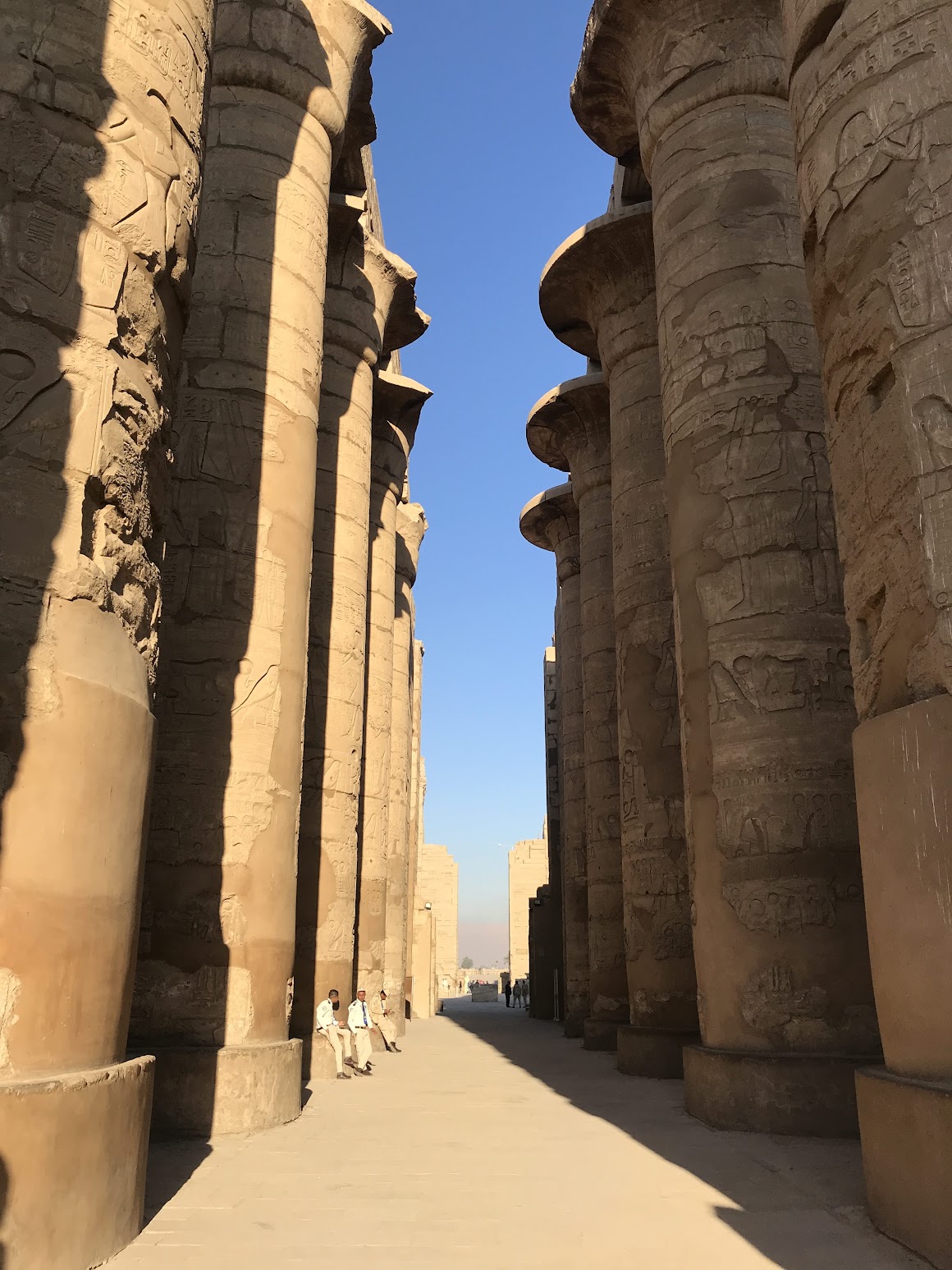
Immense. Colossal. Towering. How much further can I strain the thesaurus in search of fancy ways to say ‘very stupidly big’? I’m not certain, but they all apply to Karnak.
To appreciate just how powerful this place is, one should reach Karnak as soon as it opens (i.e. before any tour groups arrive) in order to become fully consumed by its enormous pillars in the chilly, honey-yellow morning light.
How much backbreaking labour went into this place! Consider the slavishly carved hieroglyphs, the heroically erected obelisks, the monstrous pylon gateways, the broad sacred lake, and the careful rows of sphinxes and headless god-kings. Can you feel the endless toil of craftsmen? The snap of ropes and the crush of wheels? The dust and sweat and the want of shade and water? Labour of labours for the king of kings.
Located away from all the tourists milling inside the Great Hypostyle Hall is the smaller, but no less impressive, Temple of Khonsu. Here you can admire ancient colours that have endured layers upon layers of neglect. Here you can listen to the small birds that nest and flitter within a canopy of aching stone. Here you are finally alone.
Let the sound of birds wash over you. Let it restore you like a sigh. This world can still be peaceful sometimes.
Luxor Temple, after dark…
This ancient complex sits on the Nile’s east bank, surrounded by busy shops, cafes, and restaurants. It’s been kicking around since 1400 BC and may or may not have served as the coronation site of new pharaohs. The temple was partially converted into a Christian church by the Romans, was occupied by Arab villagers in medieval times, and now has an active mosque in the middle of it. In other words, oodles of history.
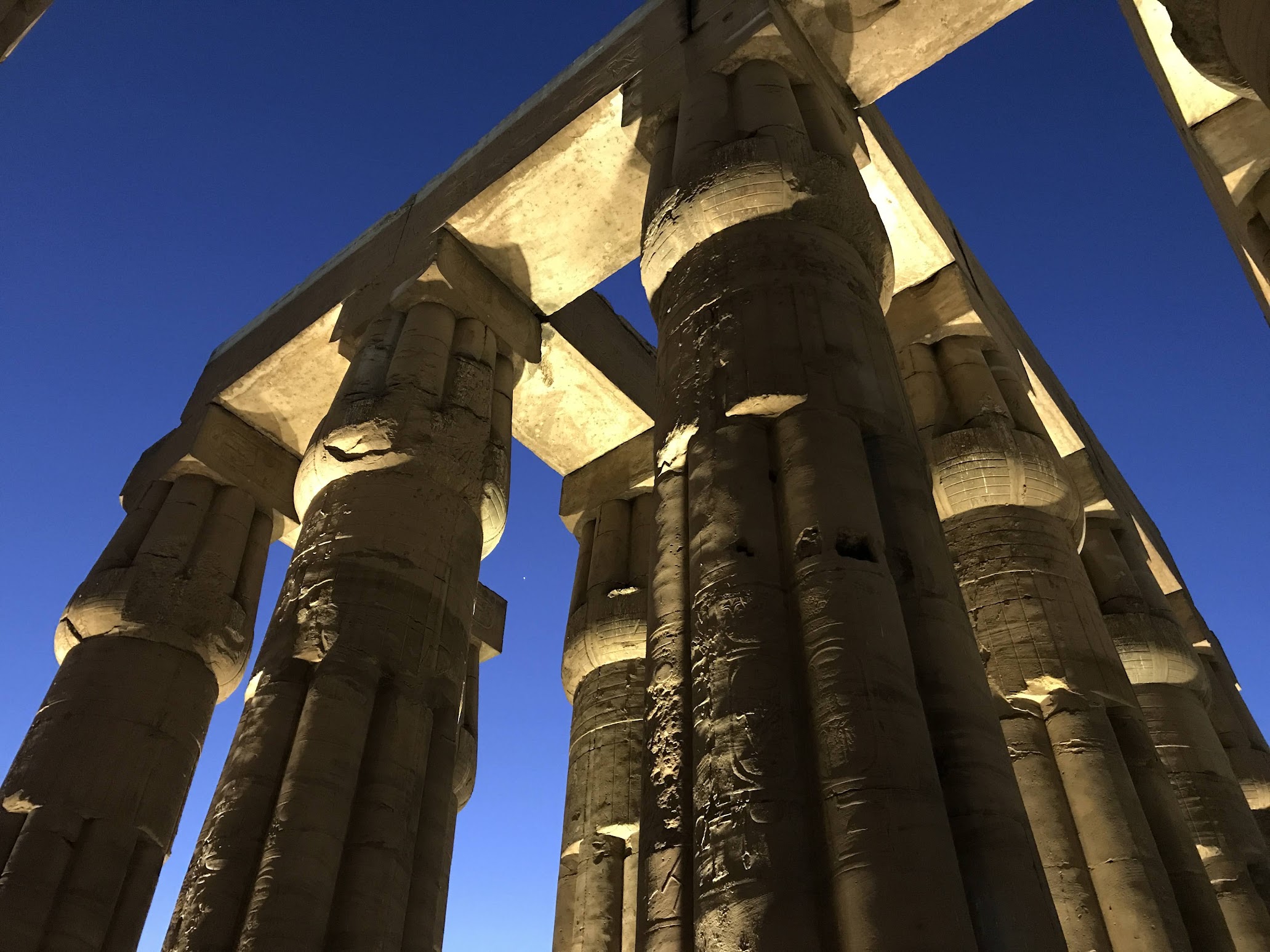
Many people opt to walk around it, peering in from the outside. But if you have the time and budget, I recommend purchasing a ticket to go inside — especially after dark, when the imposing columns and timeworn statues are lit up for dramatic effect.
Cycling towards the Valley of the Kings on the West Bank of Luxor…
Now it is time to venture across the Nile to Luxor’s West Bank. A stark desert landscape. Barren limestone hills. The dry morning heat and a solitary bird of prey in the sky above. Like venturing across another planet.
Exploring the West Bank with a janky, rented bicycle certainly isn’t the easiest way to do it! But for some reason, cycling around ancient ruins has just become a thing I do now. I did it at Angkor Wat, at Ayutthaya in Thailand, and I did it recently in Hampi.
I guess it’s the joy of setting your own pace, of having to work for your tourist attractions, and of exploring a locale in an economical, old-school manner. No reason to stop now.
The Tomb of the Nobles…
Filed under photos-I-technically-shouldn’t-have. Turns out a small, ahem, tip to the guards can turn a ‘no photo’ area into a “my friend, take as many photos as you want” one. Baksheesh, baby!
These are the 18th dynasty burial chambers of Sennofer, a royal gardener, and Rekhmire, a vizier of ancient Thebes, in a barely visited part of the West Bank known as the Tomb of the Nobles. Their decorations are sensational. Bright grape arbour ceilings. Scenes of craftsmen hard at work. Harvests, banquets, offerings. The colours pop like they were painted not that long ago.
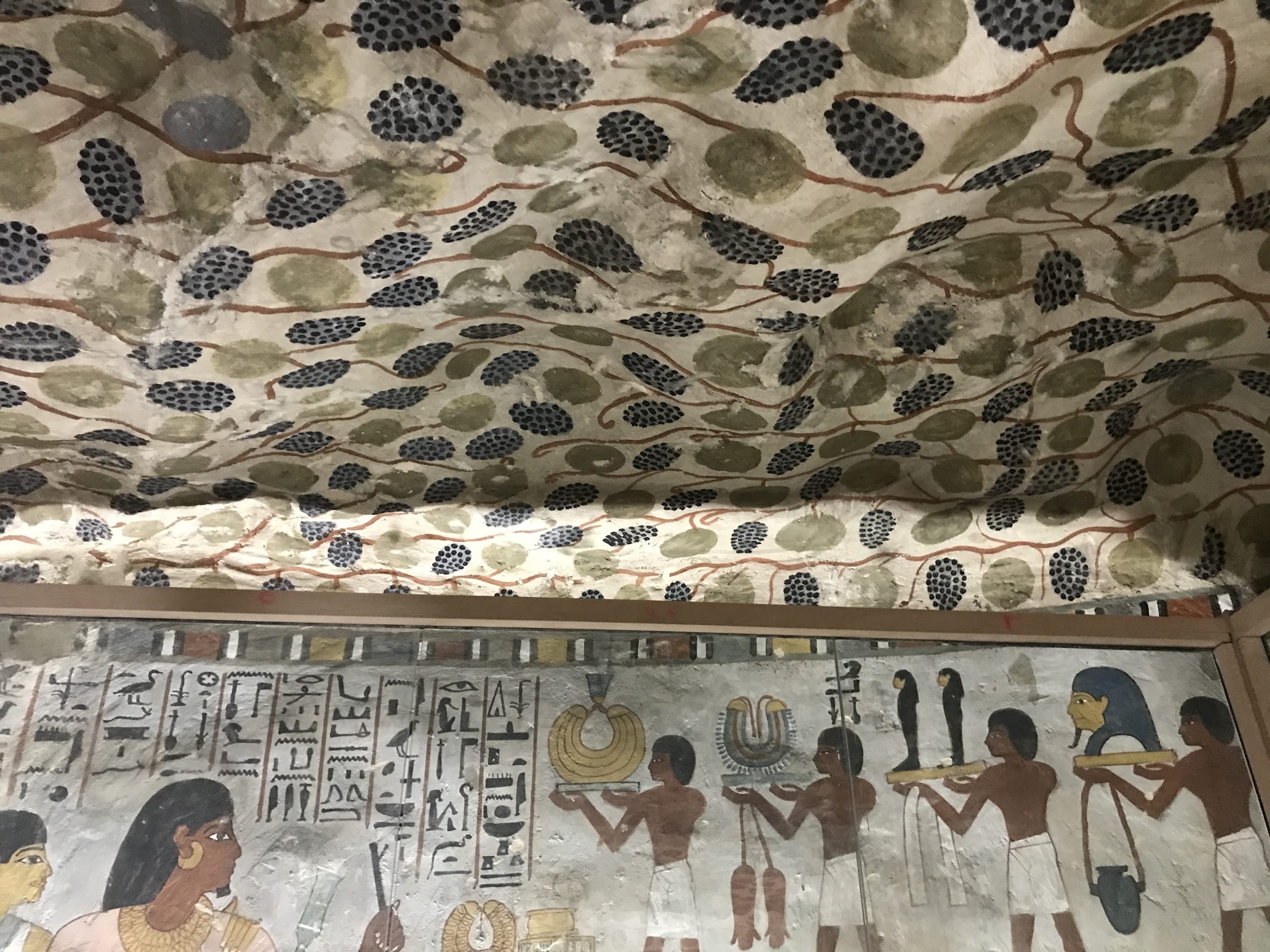
Unlike the sepulchres of the mighty pharaohs, which are mainly painted with religious themes, these tombs provide wonderful insights into everyday ancient Egyptian life. 10/10, would bribe again.
The Temple of Hatshepsut…
The Mortuary Temple of Hatshepsut on the West Bank was built for a powerful New Kingdom pharaoh. What a panorama with those timeless cliffs and that vivid desert sky!
It should be noted that the monument has undergone heavy restoration and reconstruction and there’s not a terrible amount to explore within. Still, you can’t beat that frontal view. It completely seizes the imagination the first time you see it.
Hatshepsut, you may be interested to know, was a woman. She was (to the best of our knowledge) the second-ever female pharaoh and is considered one of Ancient Egypt’s most successful rulers. On more than one occasion during my temple visit, I overheard female travellers talking excitedly about the fact that Hatshepsut was a woman and about her enduring legacy. History is evocative. It says as much about our present hopes and wants as it does about our distant past.
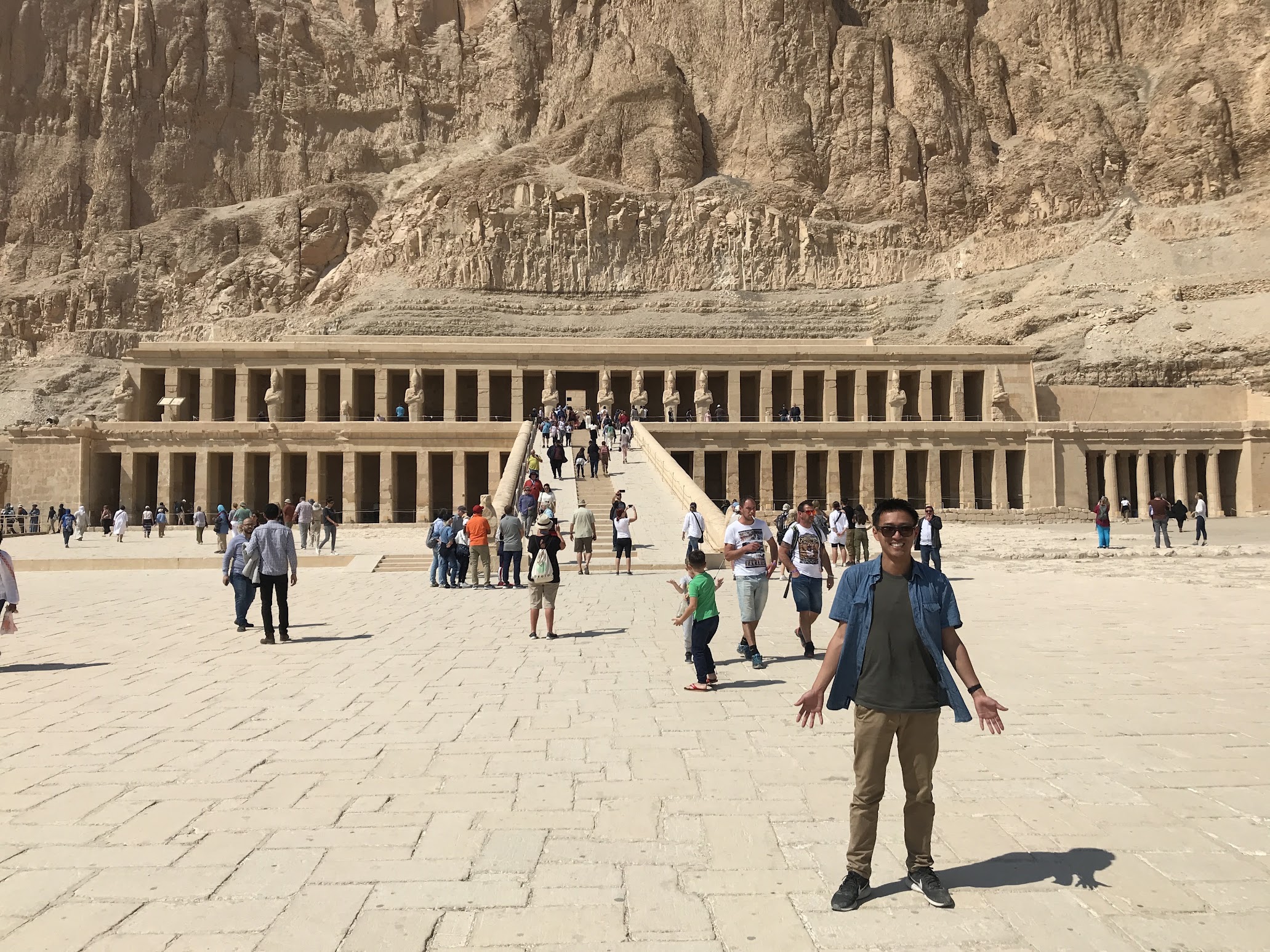
Ah, at last — the world-renowned Valley of the Kings…
Or as the ancient locals used to call it back in the day: “The Great and Majestic Necropolis of the Millions of Years of the Pharaoh, Life, Strength, Health in The West of Thebes”. Catchy.
Down and down I sank into the bowels of KV2, the tourist-swamped resting place of Ramesses IV; KV6, the pleasantly uncrowded burial site of Ramesses IX; and KV8, the sparse and claustrophobically deep tomb of Merneptah.
This was my katabasis, my descent into the underworld. There are over sixty chthonic tombs (only around a third of which belong to actual kings) from the 16th to 11th century BC spread throughout this area. Many of them are opulently coloured and meticulously decorated. A number of them plunge ridiculously deep into the bowels of the earth.
Hieroglyphs as far as the eye can see. Hexes and spells. The Book of the Dead. Mythological scenes and deities galore. And don’t forget tomb robbers, King Tut, and the curse of the pharaohs. Death has inspired an unparalleled art form within these chambers.
A brave and highly qualified archaeologist stands baffled before his discoveries in an ancient Egyptian tomb…
Welcome to KV9, the Tomb of Rameses V and Rameses VI. It is marvellous. The tomb is spacious, sensationally preserved, and sublimely colourful — the sepulchral highlight of my trip to the Valley of the Kings.
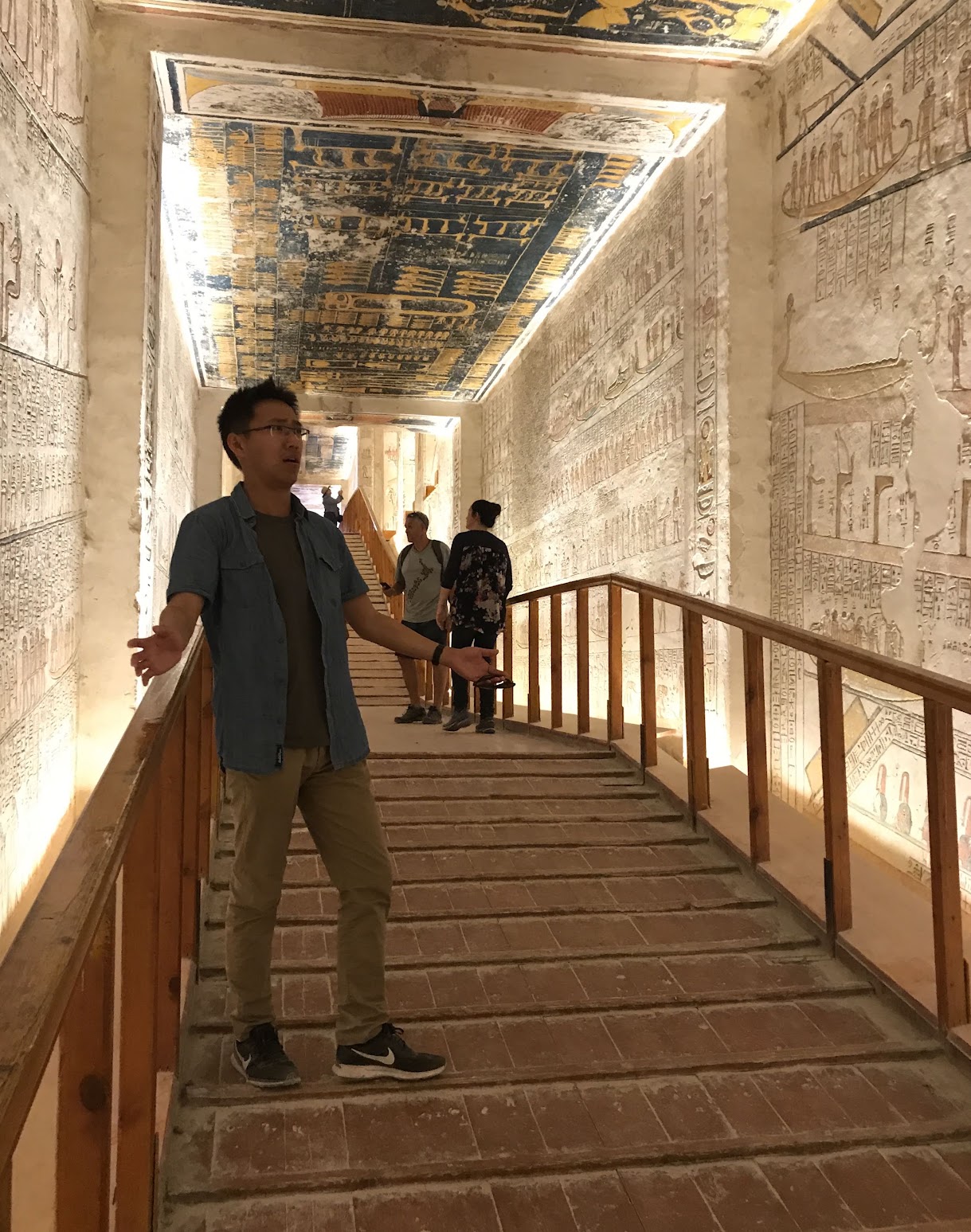
And it’s also weird. Really fucking weird. Some of the paintings on the walls are genuinely quite freaky looking, like something out of an unhinged fever dream. Elongated beings. Decapitated bodies. Serpentine and/or vermiform beasts. Man-animal hybrids. Wacky limbs and sinister grins. Maybe it was just the odd mood I was in, but this tomb seriously felt like a plunge down the rabbit (hieroglyph sign no. E34) hole.
And finally, a nighttime visit to Luxor Museum…
“Did I do the right thing, trying to escape into history? Did this ambition make any sense? After all, we encounter in historical accounts the very same things such as we thought we could flee in our time… we are never in the presence of unmediated history, but of history recounted, presented, history as it appeared to someone, as he or she believes it to have been. This has been the nature of the enterprise always, and the folly may be to believe one can resist it.”
— Ryszard Kapuscinski
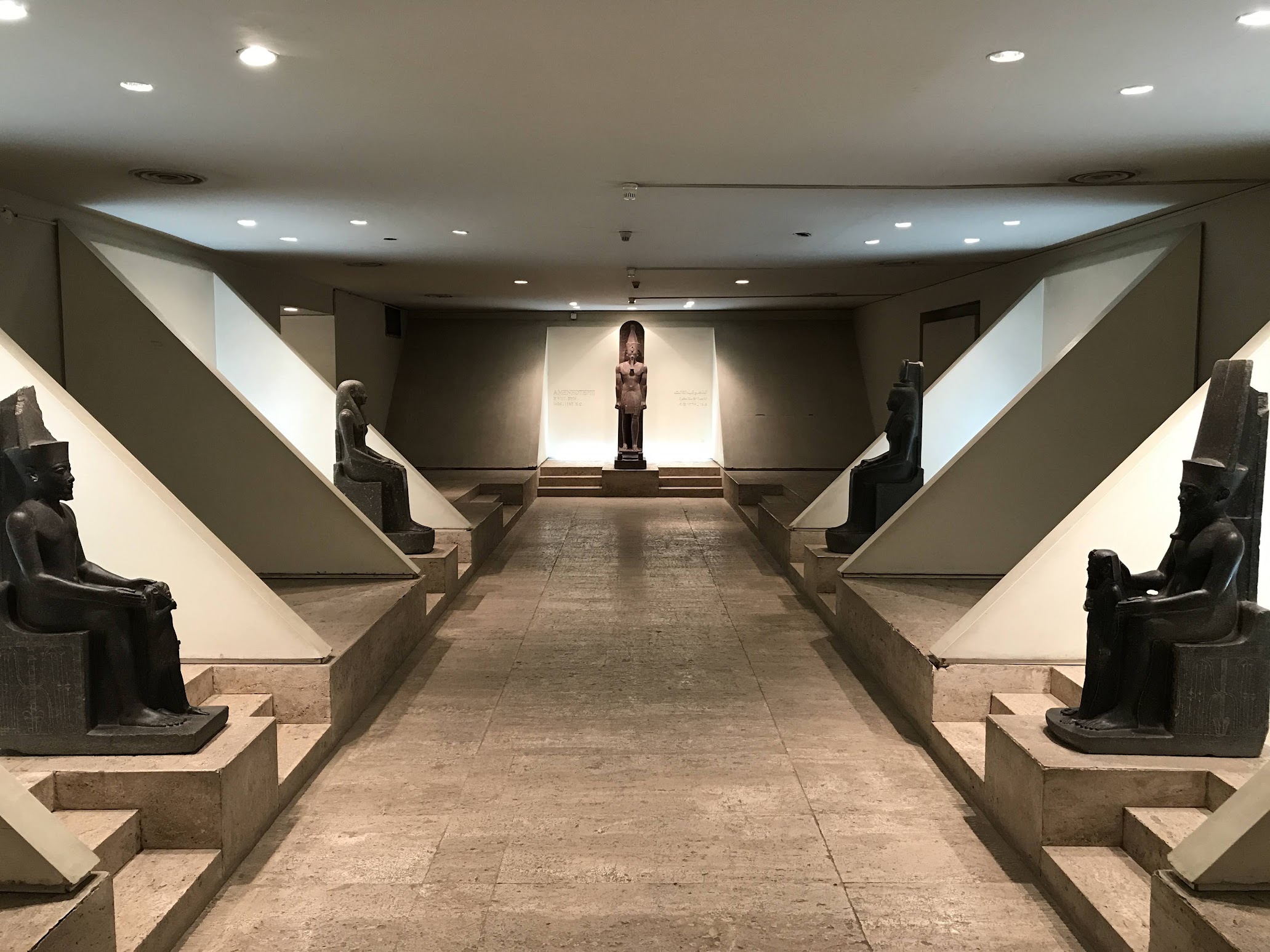
Malacca, Malaysia (2020)
Posted 4 July 2020
Malacca City — some lukewarm observations
Malacca. It is a city of over half a million people on the south-western coast of the Malay Peninsula. It is a major tourist attraction and its historic centre has been listed as a UNESCO World Heritage Site since 2008. It is a confluence of Malays, Tamils, Chinese, Peranakans, and other peoples. It is the story of the Portuguese seizing it from the Sultanate, the Dutch seizing it from Portuguese, the English taking control, and then union with the Malay States in the aftermath of the World War II. So much blood spilt for a place that is now a leisurely day trip from Kuala Lumpur…
Despite the high levels of cushy and, quite frankly, tacky tourism in the city, oddities abound. The Tan Kim Seng Bridge that crosses the Malacca River, the nexus of the historical city, is a deafening cacophony of birds in the evening and an action painting of droppings…
History can be found in unusual nooks. For instance, the mausoleum of Hang Jebat, a 15th-century local legendary warrior, can be found indignantly squeezed between an auto repair shop and a cookie store on a rarely explored side road. Meanwhile, the revolving panoramic tower a warbling, the Taming Sari Tower, makes of Malacca, extraterrestrial sound that resonates across much of the city…
As for the famous Christ Church Malacca, it is prosaic in a style that only the Anglicans can pull off. Nice to sit in. Strangely, I was the only one inside despite the throngs of tourists milling outside the church in the heat.
Nearby is the Stadthuys, a historical museum and former colonial Dutch city hall, which is believed to be the oldest surviving Dutch colonial building in Asia. It’s now a bland, mildly passable museum which also has an odd room upstairs dedicated to China–Malaysia foreign relationship over the decades. Lots of photos of Mao. Lots of photos of Xi.
Pictured below: the beautiful 16th-century hilltop ruins of Saint Paul’s Church, with its chunky and imposing old Portuguese tombstones…
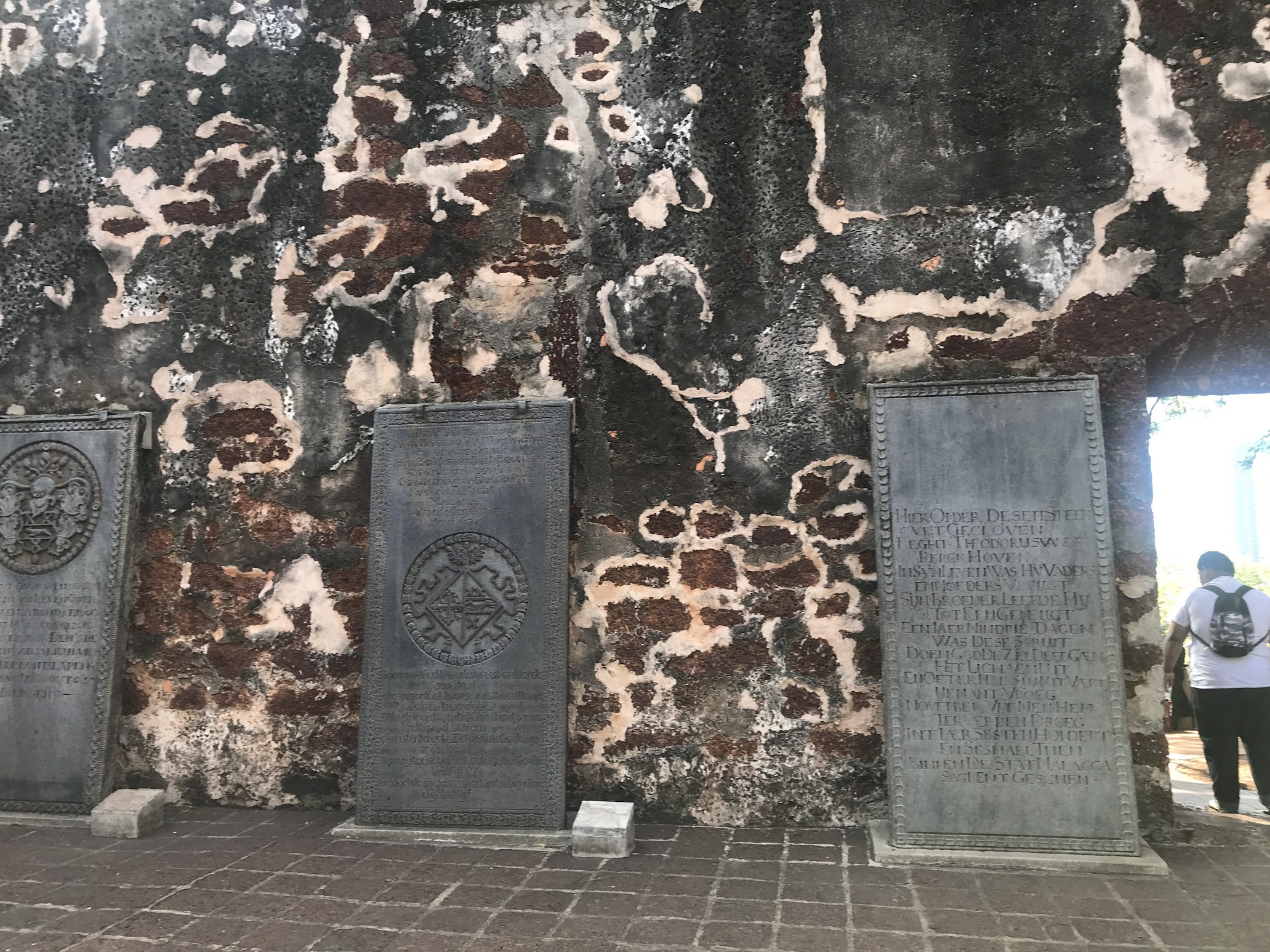
The Melaka Straits Mosque, built on stilts to make it appear at times as though it is floating about the waves, makes for a great visit, but it’s in a bad location. I wouldn’t recommend walking there like I did (just take a taxi instead) — not because it felt unsafe, but because it felt lonely and dull. Vacant lots, tenantless buildings, and silent construction sites. There is also an unoccupied and half-completed faux-European shopping boulevard nearby, which is a hollow and dispiritingly kitschy thing to see.
Malacca is ultimately a place of conflux. One can be walking behind some Indian tourists in a Chinese folk temple — partly distracted by the sight of Buddhist nuns across the road taking selfies — when the Islamic call to prayer starts blasting from around the corner…
Now for some notes on Malacca food. To be honest, I didn’t try a large variety, but I did manage to sample of few that caught my attention:
Putu piring. Piping hot balls of rice flour stuffed with shredded coconut and brown palm sugar. It was delicious for the first few bites but then quickly became too sickly sweet and floury to finish. Worth a try, but don’t expect to finish it.
Chicken rice balls. A famous Malacca dish. It’s cheap, it’s quick, and it’s no-frills and filling. Best eaten from a dinky plastic plate with lots of chilli paste. Just don’t think about how sanitary the kitchen is!
Cendol. An iced dessert with green rice flour jelly, mixed with coconut milk and drizzled with palm sugar syrup. Surprisingly not as sugary as I’d imagine it would be. I’m not the biggest fan of icy Asian desserts, but this was passably pleasant.
Finally, Malacca is synonymous with bombastic, fever-inducing bicycle rickshaws. Glum men pedalling middle-aged Chinese tourists around on flashing contraptions covered with plushy cartoon decorations, blasting “Gangnam Style”, “Let It Go”, or that cloying call-me-señorita song at painfully high volumes. They are a terror to behold.
Mumbai (2020)
Posted 1 April 2022
Salaam Bombay! This post provides some assorted remarks on my visit to Mumbai, India’s largest city. I didn’t expect to enjoy this city as much, but I’m happy to report it’s one of my favourite places in India. The history! The histrionics! The hardworking megacity hustle! Mumbai has all this and then some.
Here is yours truly at the Gateway of India. It was completed in 1924 to commemorate the arrival of King George V, the first British monarch to visit India, in 1911. Originally a symbol of British conquest and power, it has now become perhaps the most famous tourist icon of Mumbai.
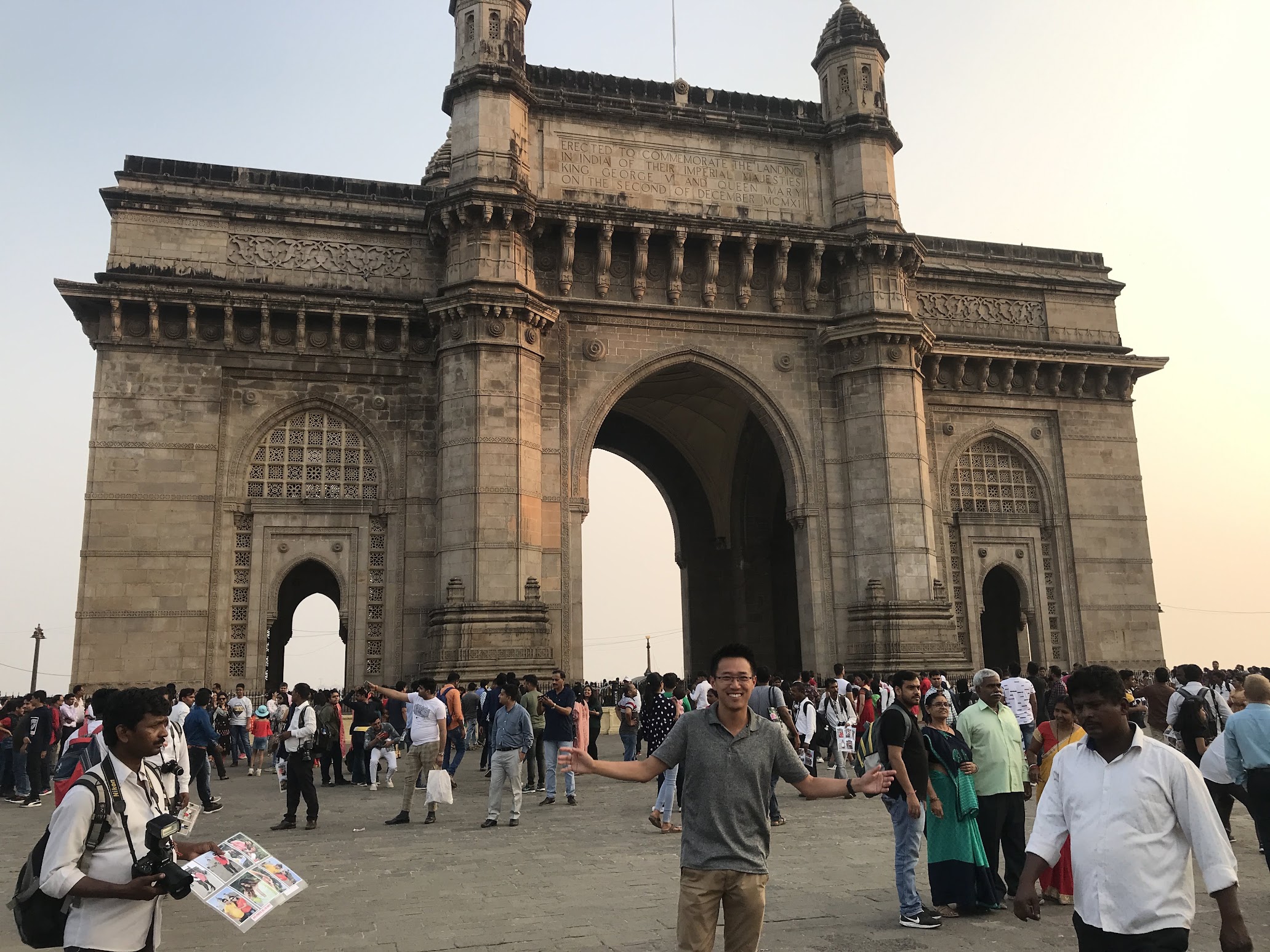
Oh my. The relentless photography touts! The pigeons! The postcard and fridge magnet sellers! And don’t forget the useless security checkpoint that was installed after the 2008 Mumbai terror attacks. O save us, British Raj! Come back and rule/ransack again! (Or actually, don’t.)
Mumbai, for me, is the Marine Drive on a thankfully-not-too-smoggy day, the opulent Taj Hotel (where I had to go through a security checkpoint to sit at the Starbucks there), the handsome Rajabai Clock Tower and the homely Mumbai Stock Exchange, and the stunning Chhatrapati Shivaji Maharaj Terminus during the day and at night — undoubtedly the grandest train station building I’ve ever seen in my life.
The old, austere British architecture of downtown Mumbai is wonderful to behold. That and how it contrasts with Mumbai’s frenetic energy (I was told that if you can cross the streets in Mumbai you can cross any street in the world).
“Indo-Saracenic” is the name of the architectural style. It’s a fancy way of saying that the British architects who designed the power projection structures of the British Raj were partly inspired by local styles — with a bias towards India’s Islamic, as opposed to Hindu, aesthetic legacy (hence the dated term “Saracenic”).
Mumbai, for me, is a very deafening stroll I took down Mohammed Ali Road in South Mumbai.
But Mumbai can also be confronting for the uninitiated. I’ve seen plenty of rough stuff in India, but here it is starker. Homeless camps and small children in rags next to luxury cars. Some of the unhealthiest strays I’ve ever seen. Beggars on the streets, or outside hospitals and temples, with brutal disfigurements. The reality of this city thrills and, of course, the reality of this city also bites.
One delightful discovery was the Mumbai “local” (i.e. the Mumbai Suburban Railway), one of the busiest and most infamously overcrowded commuter rail systems in the world. These are big, chunky industrial trains with completely open doors and windows for cheap ventilation. And they are dangerous! Official statistics put the number of deaths from trespassing the tracks and falling off the train between January and June 2019 at over 1,000 people. And that was apparently an improvement over previous years…
I also got lucky and managed to accidentally snap a pic of one of Mumbai’s famous dabbawalas in action (the man in white with a cap) on one of the trains. Dabbawalas make up a complicated bicycle-and-rail lunchbox delivery system that has been feeding Mumbai workers since the 1890s. Old school Indian Ubereats.
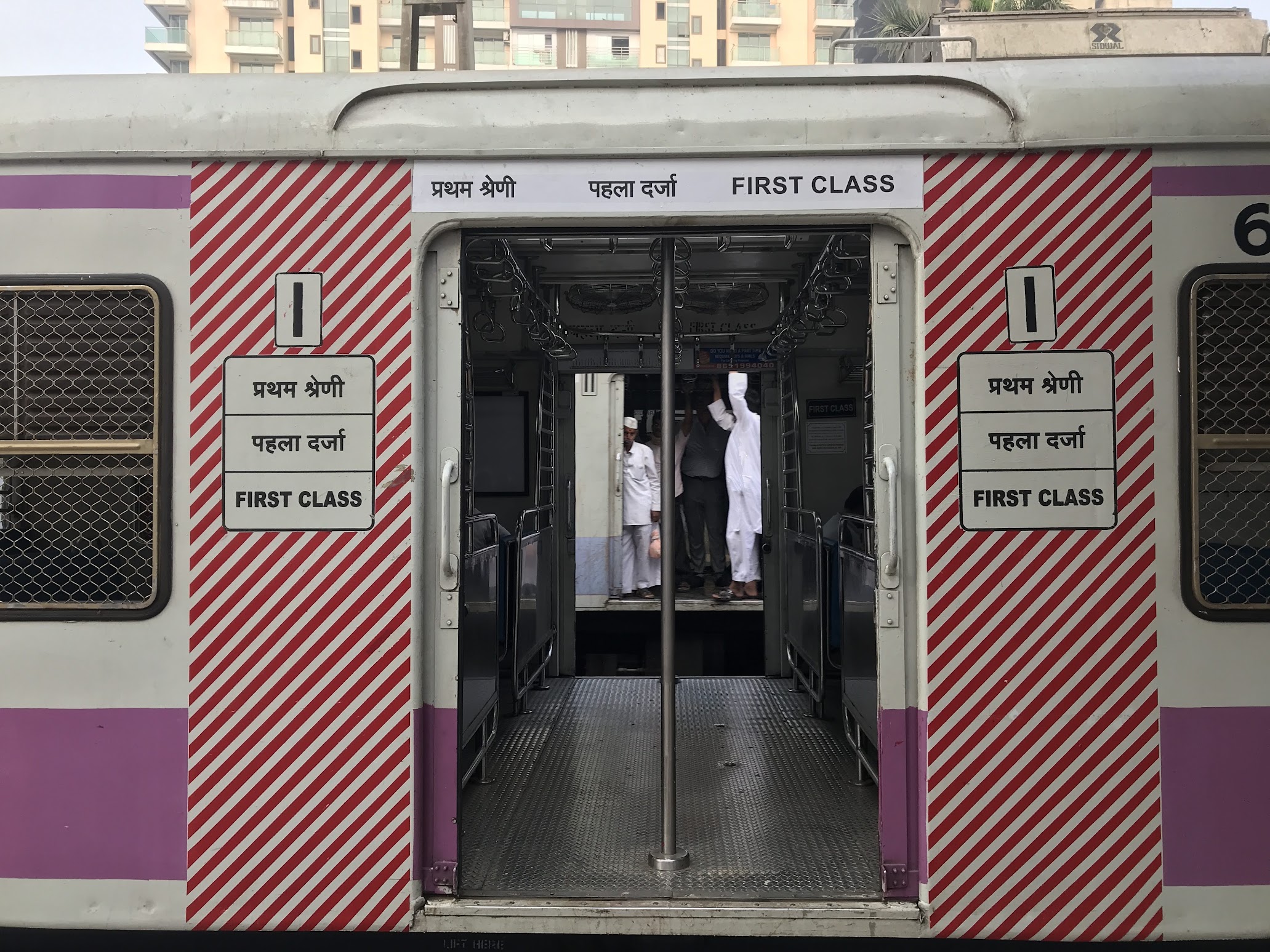
Another amazing aspect of Mumbai I was able to witness was the Dhohi Ghat — the world’s largest open-air laundromat. When I first saw it, I just stood there in wonder for ten minutes watching its microcosm of life and labour go by. I thought about all the countless inner worlds on this planet that I’ll never experience.
Some other highlights of my trip to Mumbai included:
Haji Ali Dargah — a mosque on a small island linked to the city by a narrow causeway. The tomb of a famous Sufi saint from Uzbekistan. Sadly a bit run-down at the moment. But I love the vibrant green colour they use in all the mosques here. Elephanta Caves — a series of predominantly Hindu cave temples on an island an hour’s ferry ride from Mumbai. A somewhat overpriced tourist trap but the first cave, with its stunning six-metre-high three-faced Shiva sculpture, is worth exploring.
Crawford Market — a bustling indoor wholesale market. Buy, buy, buy! Sell, sell, sell! Spices, teas, sweets, fruits, vegetables, pets, everything! Dharavi (no photos because of the tour policy) — it is one of the largest slums in India and one of the most densely populated places on Earth, with a population density of nearly 280,000 people per square km. I did a fascinating walking tour, conducted by an organisation that runs community development projects in the slum, that explored the dense industrial and residential warrens of Dharavi.
Bademiya — an iconic kebab joint in South Mumbai. India is a legendary place to be a vegetarian, but to go I don’t like the advice commonly given to non-vegetarian tourists visiting India that they have meatless to stay safe. If it’s a popular place and specialises in meat dishes (e.g. many Muslim-run local eateries in India) then I think you can go for it.
Speaking of food, Mumbai street food is a wonder. Friendly roadside vendors selling pure deliciousness for rock bottom prices? Yes, please. And not even once did I feel sick afterwards!
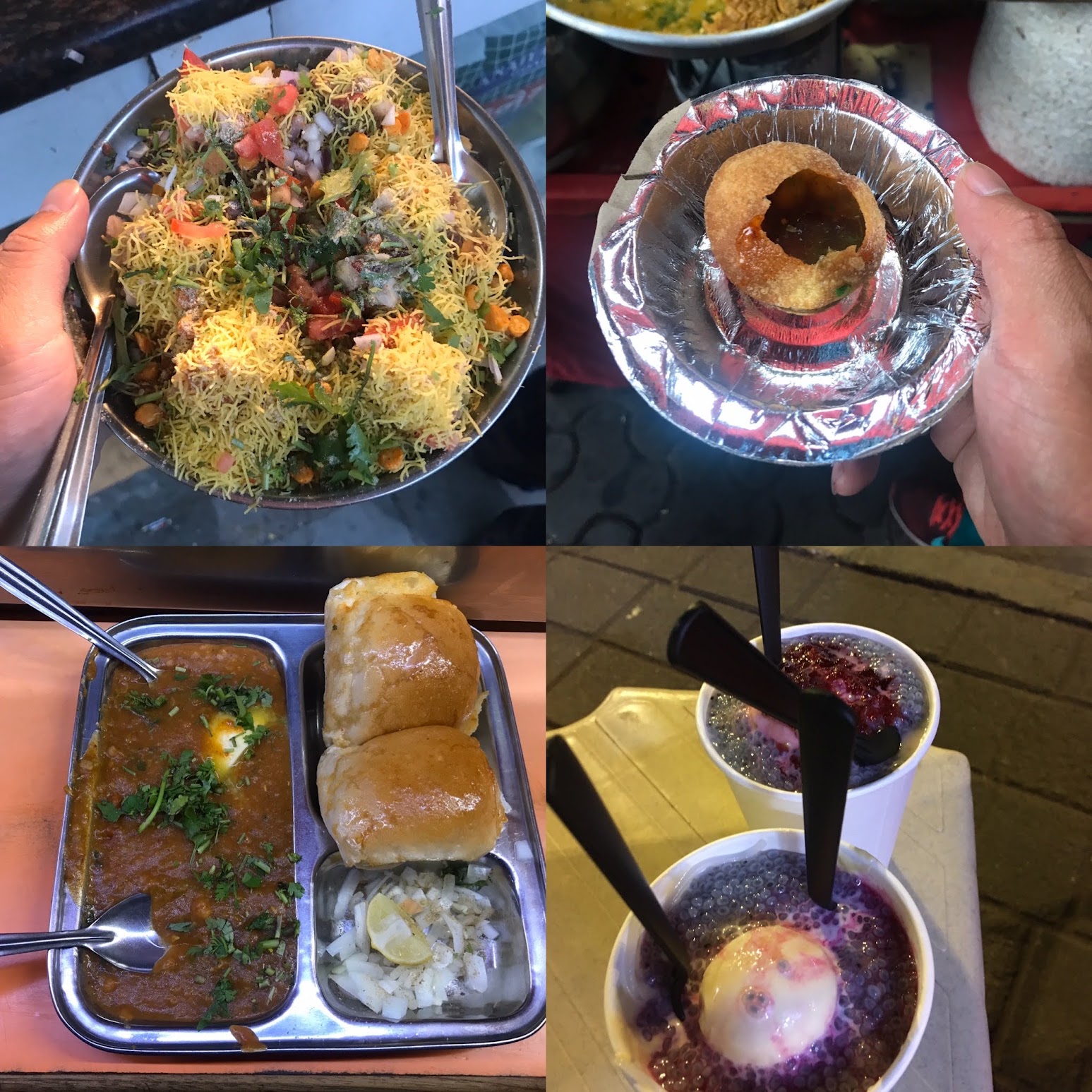
- Sev puri, a crispy deep-fried bread loaded with diced potatoes, onions, and chutneys.
- Pani puri, the same kind of bread but hollowed out and filled with flavoured water, chutney, chilli, and masala.
- Pav bhaji, a thick vegetable curry with cheap greasy bread rolls.
- Falooda, made of rose syrup, vermicelli, sweet milk; served with ice cream and other bits of decadence.
Don’t sell yourself short and avoid all the street food in India! If it’s a busy place, serving food out fast, and the stuff is fresh and vegetarian then I reckon your chances of avoiding the ol’ ‘Delhi belly’ are good. But never forget it’s still a game of chance. Caveat vorator! (Eater beware!)
However, Mumbai will be the first and last time I’ll ever try Indian Chinese cuisine. Like American Chinese food, it’s an adaptation of Chinese cooking to local tastes and has become its own unique culinary beast altogether.
To quote Wikipedia on the ‘Manchow soup’ I had for lunch: “Although the soup is named after Manchuria it does not resemble any that is normally found in the cuisines of the region.”
A more questionable thing I tried was paan. This is a sweet roll of betel leaf with chopped areca nut made for me by a grubby Mumbai street vendor for twenty rupees.
Nicer than the betel nut I chewed in Taiwan, but its effects are the same: very mild psychoactive stimulation with a side of addiction and oral cancer for long term users. Definitely a sometimes food, not an always food.
Now, I have two words for anyone interested in visiting Mumbai (or India in general): Indian sweets. Every day, while I was in Mumbai, I silently prayed to Vishnu, the great and holy preserver of the Trimūrti, that I did not have to visit an Indian dentist at the conclusion of my trip. I was thoroughly addicted during my subcontinental travels.
Gulab jamun. Jalebi. Soan papdi. Peda. Mysore pak. Falooda. Just to name a few of my desserty discoveries. What am I going to do without them being readily available in my life? I’m deeply anxious about it.
And on my final morning in Mumbai, I had a craving for a proper South Indian breakfast. Or more specifically, I had a craving for Tamil-style filter coffee, something which I thoroughly missed from the time I spent a few weeks prior in Chennai. Luckily, I found a place called the Madras Cafe in Colaba that served it extra strong, extra hot, extra sweet. Bingo.
I also ordered a rava sada dosa without knowing what it was. Whoa. How did they cook this thing? Also, how do I eat this thing?
Another filter coffee, please. I need another hit before catching my overnight train to Udaipur. Farewell Mumbai! Onwards and upwards.
Museums of Cairo (2020)
Posted 6 September 2020
Behold! Objects from the Egyptian Museum, the Museum of Islamic Art, and the Coptic Museum in Cairo, Egypt’s chaotic, bustling capital. I can’t help it, I’m a museum junkie.
The Egyptian Museum
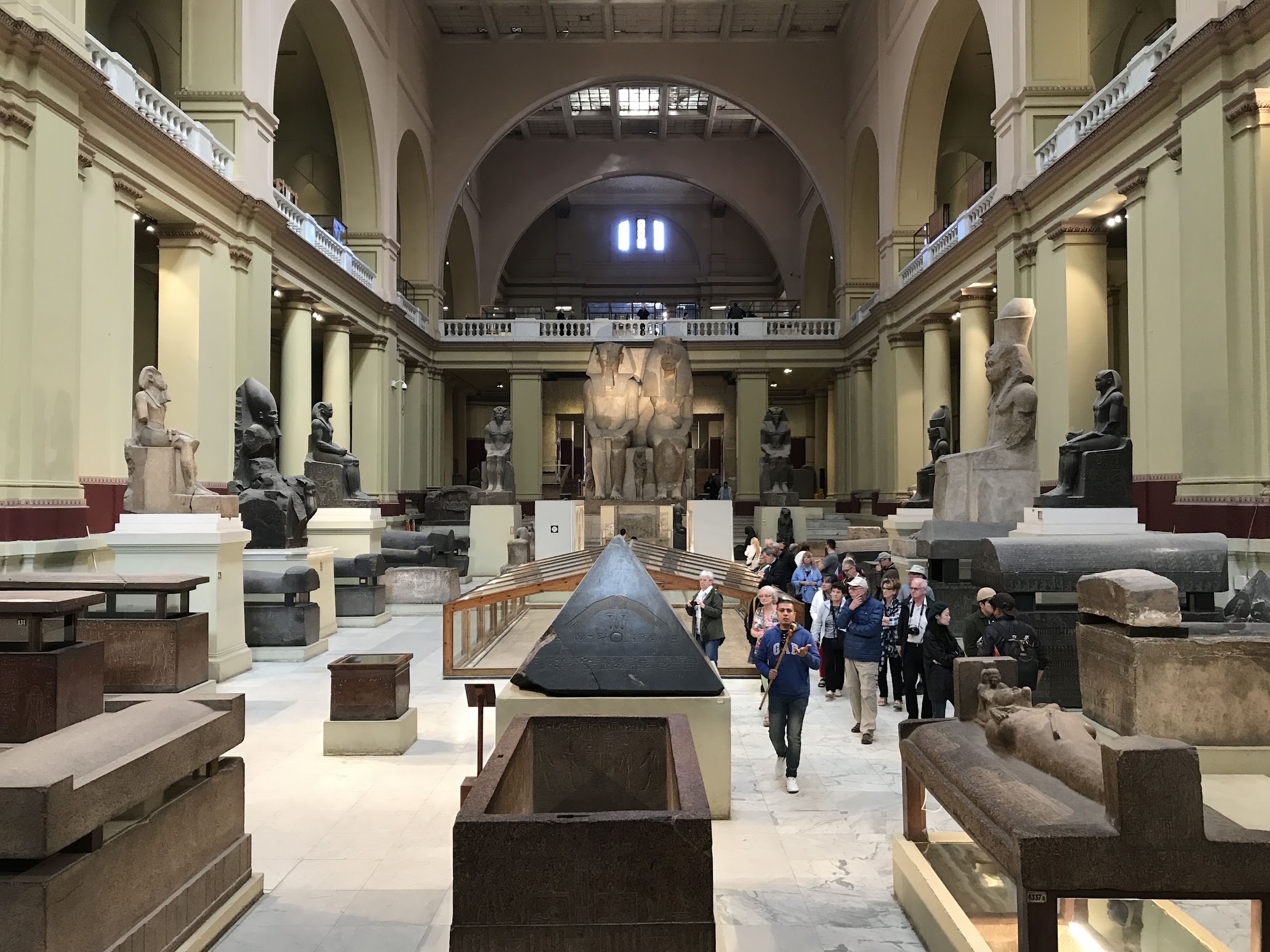
Holy smokes, this place is a mess. Often described as one of the most distinguished collections of antiquities in the world, this museum is the encapsulation of “quantity over quality”. It is a sprawling warehouse of dusty, poorly labelled artefacts from across the absurd span of Ancient Egyptian history. Many of its treasures are genuinely wonderful to behold (Tutankhamun’s room is a highlight, despite the guards constantly screaming at boomers to stop taking photos, and I thought the royal mummies were worth the extra ticket), but as soon as you venture beyond the main wings you’ll find yourself lost amidst rundown display cabinets filled with scrolls, coffins, amulets, tablets, sarcophagi, jewellery, and the like.
Good stamina is a must because if you aren’t battling through the noisy tour groups, or navigating messy construction areas, you are trying to wrap your head around whether this or that relic is from the New Kingdom or the Third Intermediate or the Middle Kingdom — or whether you actually care at all!
So what did I personally learn from this neglected stockroom? I learnt they were obsessed with symmetry, with flatness, with the serenity of the face. Power was everything and submission to it was everything else. Death constantly preyed on their minds, as did bounteous harvests and feasts of plenty. Before anyone else, they had mastered the art of shaping stone as though it was an afterthought. Their writing system was both sacred and a toil. Endurance was their one true god. Their entire civilisation was devoted to creating objects that would last a thousand dynasties. Even when they were ancient, they knew their ancestors were more ancient still.
Please note: the woeful state of the Egyptian Museum will hopefully not continue. A brand new archaeological museum is scheduled to open in Giza later this year and will, for all intents and purposes, replace the current site. So it’s likely that I was one of the final ‘seasons’ of tourists to have faced the disastrous, old-school Cairo museum experience. Lucky me.
The Museum of Islamic Art
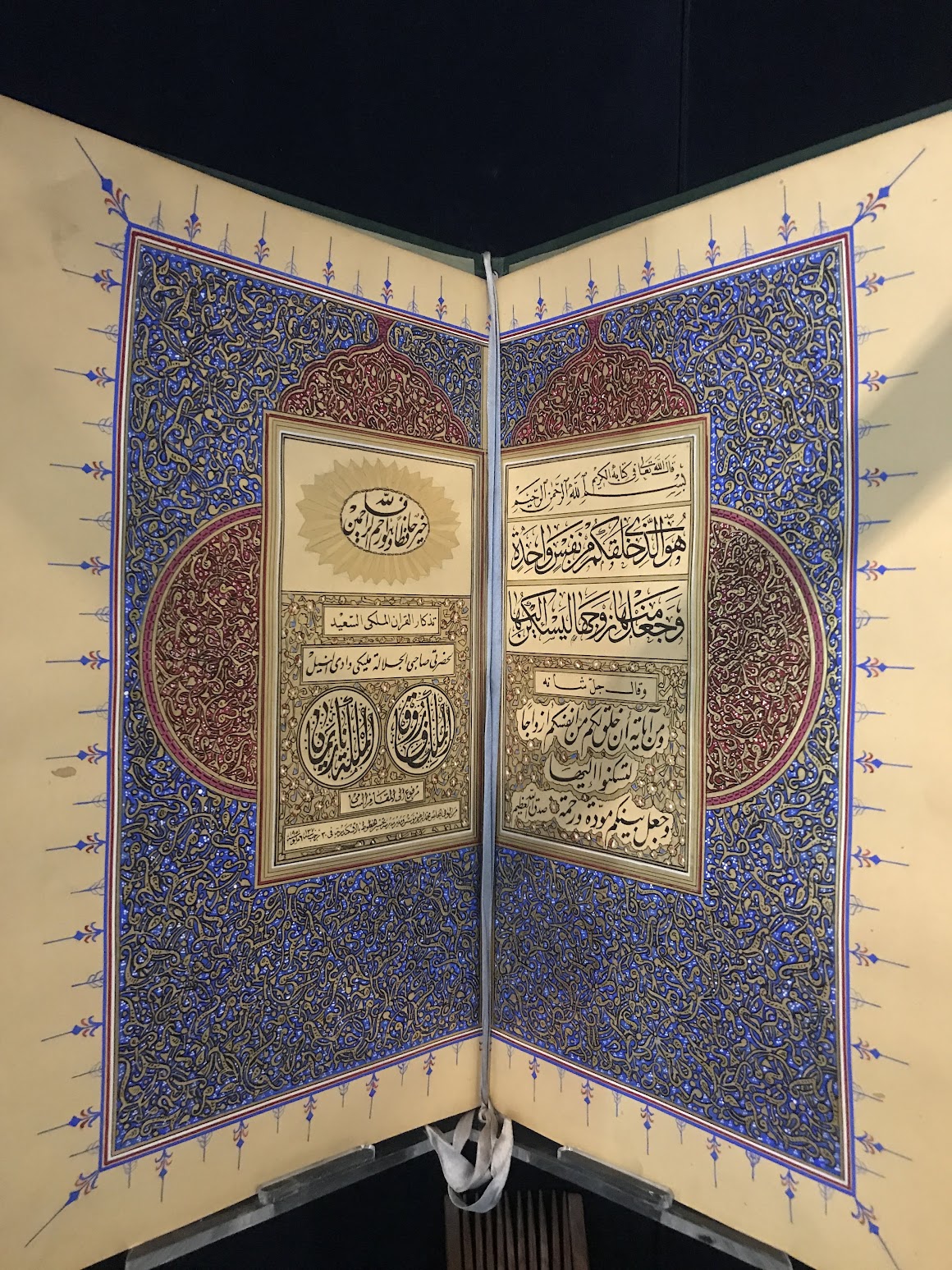
According to the Wikipedia page, which was undoubtedly edited by someone working there, it is “considered one of the greatest in the world”. Yeah, it’s pretty great (although the Islamic Arts Museum Malaysia gives it a run for its money). It certainly made me want to see more Persian stuff. And I felt like I could’ve stared at some of those geometrical designs for hours on end.
After visiting the Giza Pyramids and the Egyptian Museum, this place was an oasis. Clean, quiet, fascinating, and totally hassle-free. Best of all, I received a free guided tour by a Cairo University student who was volunteering at the museum for course credits.
Check this one out, art history nerds. There were, like, no other visitors in the entire building. My guess is that the museum fell off everyone’s radar after it was heavily damaged by a car bomb in 2014 that was targeting the Cairo police headquarters across the road, shutting the place down for a couple of years. But it’s been completely renovated and — judging from the large numbers of heavily armed policemen in the locale — in slightly safer airs at present
The Coptic Museum
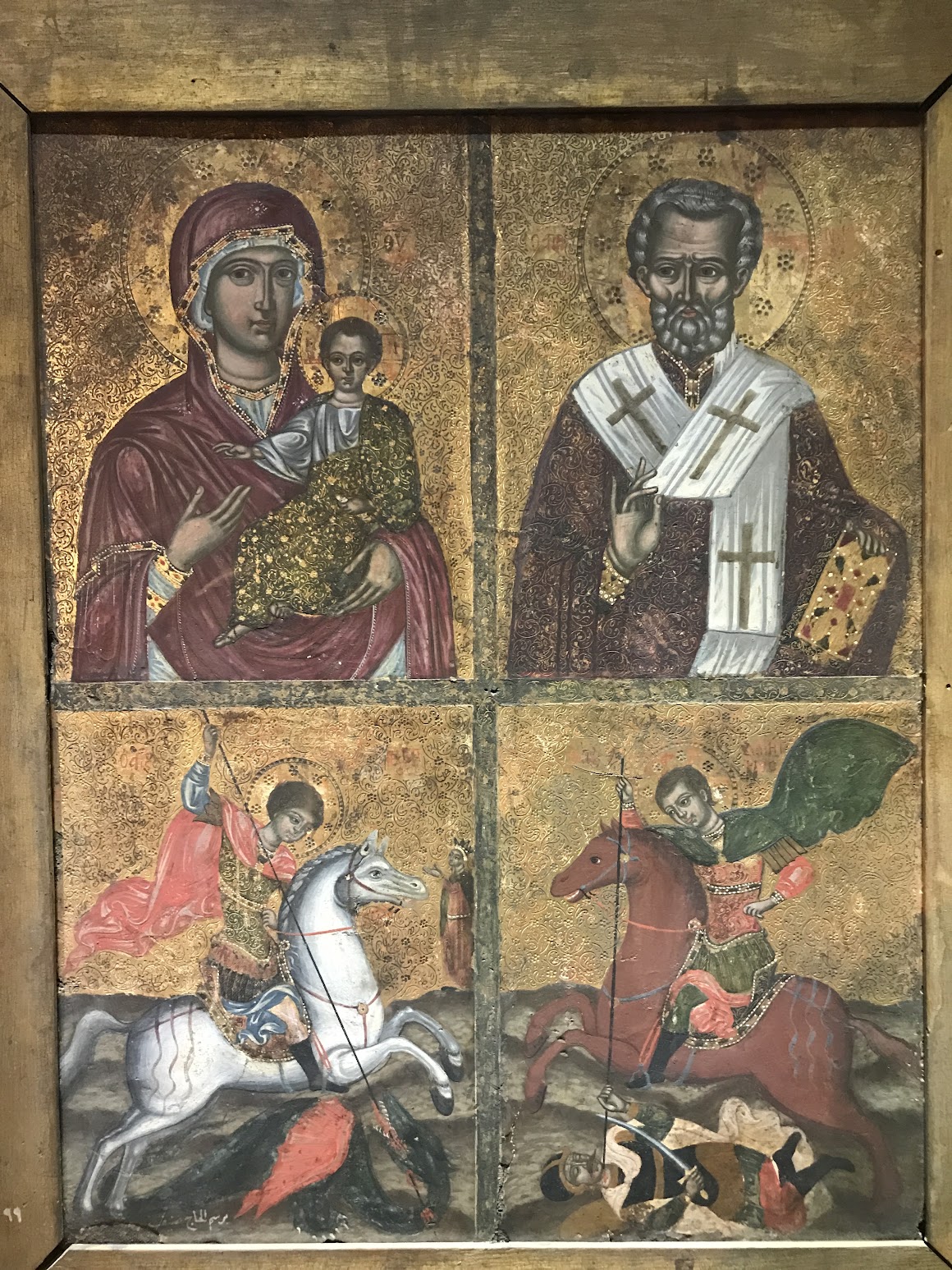
It’s a “comfy” museum that showcases a cross-section of Egypt’s Christian art across the centuries. Why do I say comfy? Because of how adorkable early Coptic paintings were. Not the most clever analysis, I know, but look at those big, childish eyes and bold, crayon-like streaks. I love it.
The most significant thing in the Coptic Museum is perhaps something that isn’t a painting or a sculpture: the “Gnostic Gospels”, a set of 4th-century manuscripts hidden in a clay pot that two Egyptian farmers accidentally found in 1945 while digging for fertiliser. You remember The Da Vinci Code, right? These manuscripts are where that novel got many of its kooky ideas from and where your weird New Age aunty probably got some of hers. They’re full of the more fun, mystical, and esoteric ideas that early Christian sects developed before they got stamped out for heresy.